
India Veterinary Industry Outlook to 2030
Region:India
Author(s):Paribhasha Tiwari
Product Code:KROD5110
Region:India
Author(s):Paribhasha Tiwari
Product Code:KROD5110
December 2024
89
Listen to the audio summary
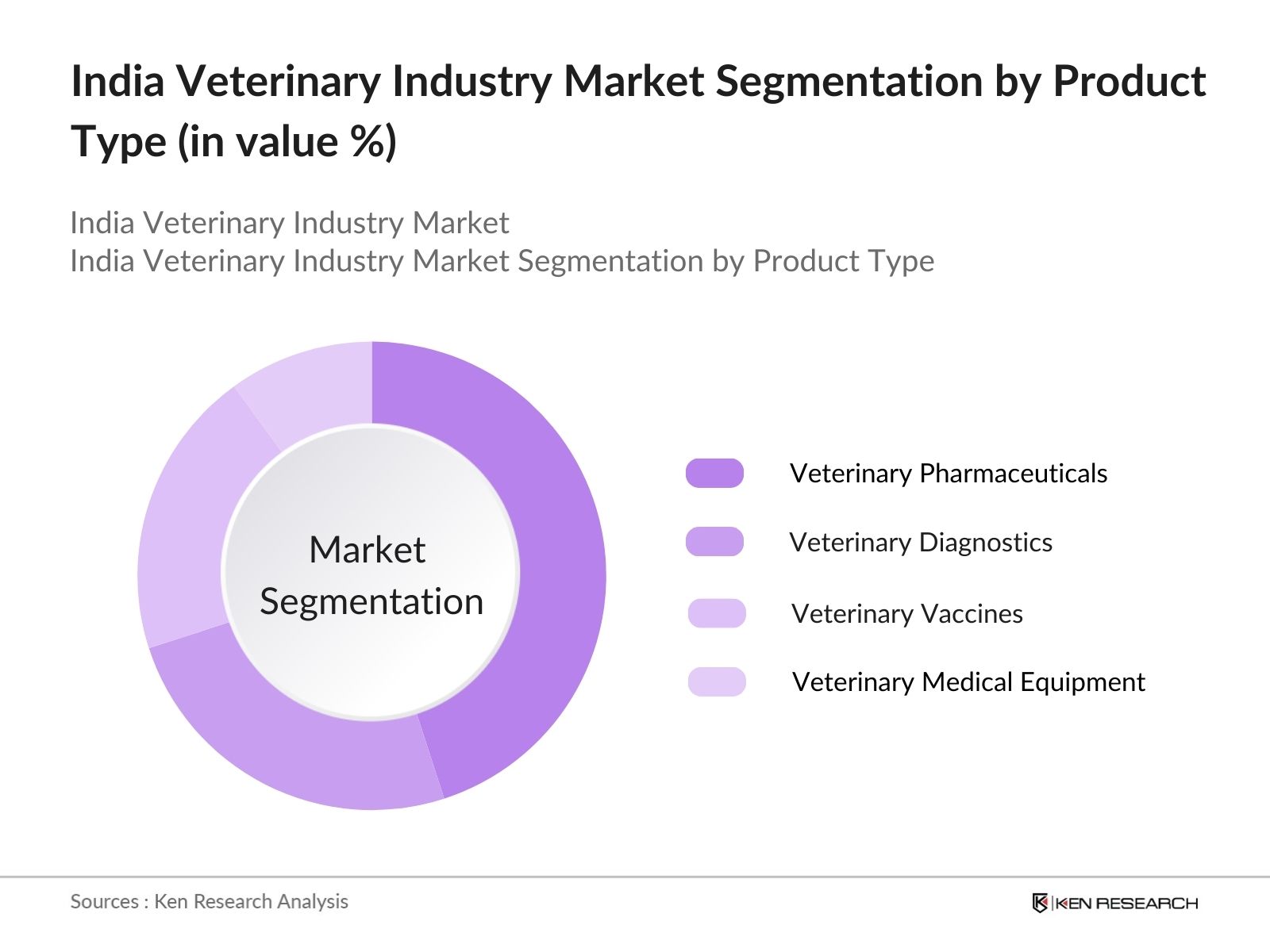
By Product Type: India's Veterinary Industry market is segmented by product type into veterinary pharmaceuticals, veterinary diagnostics, veterinary vaccines, and veterinary medical equipment. Among these, veterinary pharmaceuticals hold the dominant market share in India due to their critical role in treating various animal diseases and ensuring livestock health. This segment's dominance is driven by the growing prevalence of zoonotic diseases and the rising demand for antibiotics and anti-infectives in the livestock sector. Furthermore, the increasing investments in research and development for animal health products are also contributing to the rapid growth of this segment.
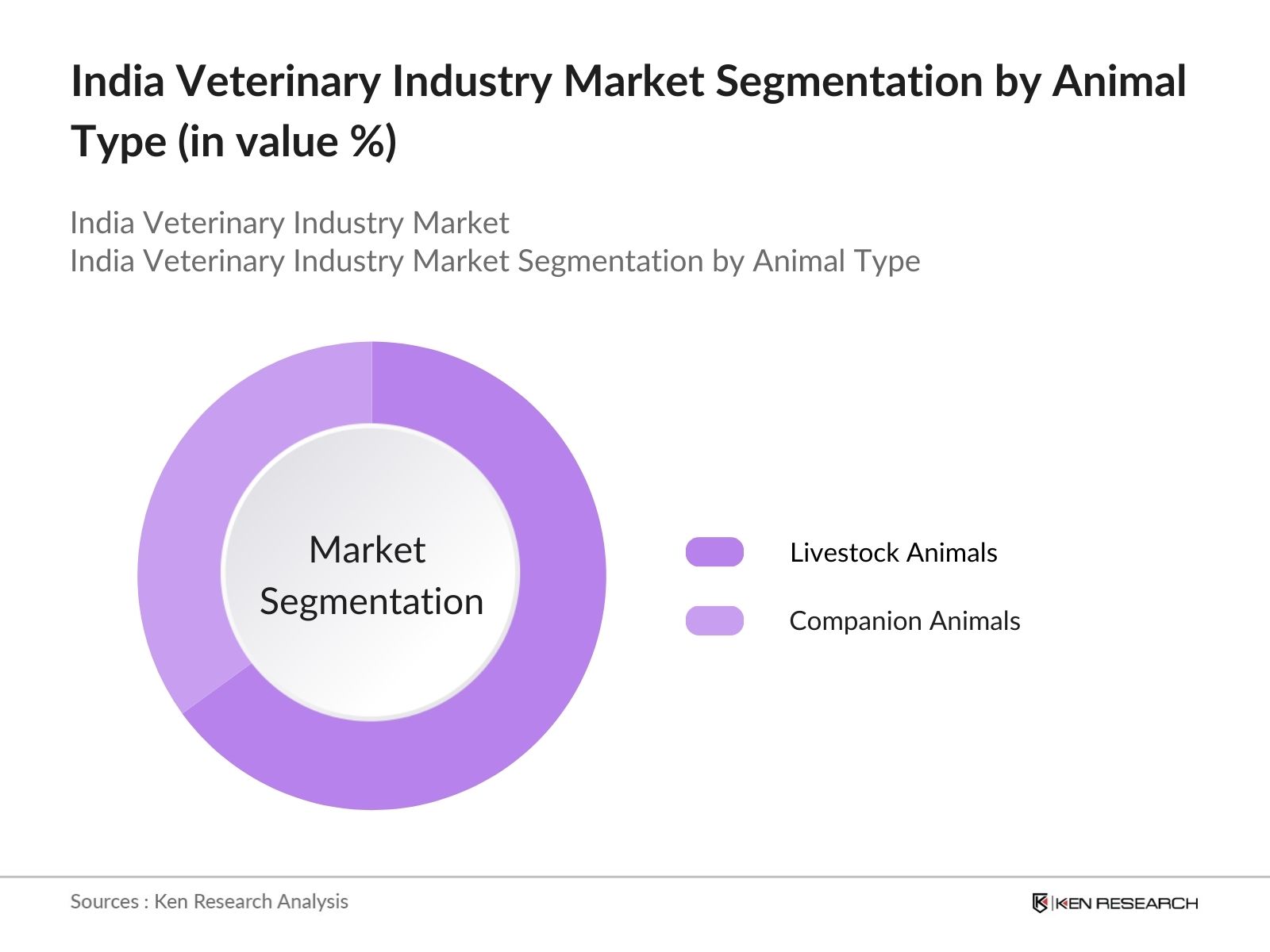
By Animal Type: The veterinary market in India is segmented by animal type into companion animals and livestock animals. Livestock animals, including cattle, poultry, and swine, dominate the market share due to India's agrarian economy, which is heavily reliant on livestock for income and sustenance. The livestock segments growth is driven by the increasing demand for meat, dairy products, and other animal-derived products, alongside government initiatives aimed at improving animal health through vaccination programs and disease control measures.
The India Veterinary Industry is characterized by the presence of several domestic and international players. These companies are competing on various parameters such as product innovation, market penetration, and price differentiation. Major companies are investing heavily in research and development to introduce advanced veterinary products, such as vaccines and diagnostics, aimed at improving animal health. This competitive landscape is further bolstered by the increasing collaboration between veterinary pharmaceutical companies and research institutes.
|
Company Name |
Establishment Year |
Headquarters |
Revenue (2023) |
Product Portfolio |
R&D Investment |
Market Share |
Key Partnerships |
Certifications |
Global Presence |
|
Zydus Animal Health |
1952 |
Ahmedabad, India |
- | - | - | - | - | - | - |
|
Merck Animal Health |
1891 |
New Jersey, USA |
- | - | - | - | - | - | - |
|
Zoetis |
1952 |
Parsippany, USA |
- | - | - | - | - | - | - |
|
Virbac |
1968 |
Carros, France |
- | - | - | - | - | - | - |
|
Hester Biosciences |
1987 |
Ahmedabad, India |
- | - | - | - | - | - | - |
Over the next five years, the India veterinary industry is expected to witness significant growth driven by factors such as increased awareness of animal health, rising pet ownership, and advancements in veterinary medical technology. The government's continuous efforts to improve livestock health, coupled with the introduction of various animal welfare programs, will further boost the demand for veterinary products and services. Additionally, the growing trend of telemedicine in veterinary care and the rising demand for companion animal diagnostics are set to fuel the industry's expansion. The increasing focus on rural healthcare development and the rising disposable incomes of consumers are also expected to drive the growth of the companion animal healthcare segment, leading to further investments in veterinary clinics and hospitals.
|
By Product Type |
Veterinary Pharmaceuticals Veterinary Diagnostics Veterinary Vaccines Veterinary Medical Equipment |
|
By Animal Type |
Companion Animals (Dogs, Cats, Other Pets) Livestock Animals (Cattle, Poultry, Swine, Sheep) |
|
By End-User |
Veterinary Hospitals Veterinary Clinics Animal Farms Research Institutes |
|
By Distribution Channel |
Retail Pharmacies Veterinary Hospitals & Clinics E-commerce Wholesalers & Distributors |
|
By Region |
North South East West |
1.1. Definition and Scope
1.2. Market Taxonomy
1.3. Market Growth Rate
1.4. Market Segmentation Overview
2.1. Historical Market Size
2.2. Year-On-Year Growth Analysis
2.3. Key Market Developments and Milestones
3.1. Growth Drivers (Rising Pet Ownership, Livestock Population, Animal Health Awareness, Disease Control Programs)
3.2. Market Challenges (High Cost of Veterinary Services, Lack of Skilled Veterinary Workforce, Regulatory Hurdles)
3.3. Opportunities (Emerging Veterinary Diagnostics, Increasing Investment in Animal Healthcare, Rural Veterinary Clinics)
3.4. Trends (Telemedicine in Veterinary Care, Advanced Veterinary Imaging, Genomics in Animal Health)
3.5. Government Regulation (Animal Welfare Acts, Livestock Insurance Programs, Disease Surveillance)
3.6. SWOT Analysis
3.7. Stakeholder Ecosystem
3.8. Porters Five Forces
3.9. Competition Ecosystem
4.1. By Product Type (In Value %)
4.1.1. Veterinary Pharmaceuticals
4.1.2. Veterinary Diagnostics
4.1.3. Veterinary Vaccines
4.1.4. Veterinary Medical Equipment
4.2. By Animal Type (In Value %)
4.2.1. Companion Animals (Dogs, Cats, Other Pets)
4.2.2. Livestock Animals (Cattle, Poultry, Swine, Sheep)
4.3. By End-User (In Value %)
4.3.1. Veterinary Hospitals
4.3.2. Veterinary Clinics
4.3.3. Animal Farms
4.3.4. Research Institutes
4.4. By Distribution Channel (In Value %)
4.4.1. Retail Pharmacies
4.4.2. Veterinary Hospitals & Clinics
4.4.3. E-commerce
4.4.4. Wholesalers & Distributors
4.5. By Region (In Value %)
4.5.1. North India
4.5.2. South India
4.5.3. East India
4.5.4. West India
5.1. Detailed Profiles of Major Companies
5.1.1. Zydus Animal Health
5.1.2. Merck Animal Health
5.1.3. Zoetis
5.1.4. Virbac
5.1.5. Hester Biosciences
5.1.6. Vetoquinol
5.1.7. Intas Pharmaceuticals
5.1.8. Elanco
5.1.9. Bayer Animal Health
5.1.10. Ceva Sant Animale
5.1.11. Boehringer Ingelheim
5.1.12. Neogen Corporation
5.1.13. Phibro Animal Health
5.1.14. SeQuent Scientific
5.1.15. Ashish Life Sciences Pvt Ltd.
5.2. Cross Comparison Parameters (Revenue, Market Share, Product Portfolio, Geographic Presence, R&D Investments, Partnerships, Certifications, Sustainability Initiatives)
5.3. Market Share Analysis
5.4. Strategic Initiatives
5.5. Mergers And Acquisitions
5.6. Investment Analysis
5.7. Venture Capital Funding
5.8. Government Grants
5.9. Private Equity Investments
6.1. Veterinary Council of India Guidelines
6.2. Animal Welfare Standards
6.3. Disease Surveillance Programs
6.4. Livestock Vaccination Mandates
6.5. Compliance Requirements
6.6. Certification Processes
7.1. Future Market Size Projections
7.2. Key Factors Driving Future Market Growth (Expansion of Companion Animal Market, Advances in Veterinary Diagnostics, Growing Investment in Veterinary Clinics)
8.1. By Product Type (In Value %)
8.2. By Animal Type (In Value %)
8.3. By End-User (In Value %)
8.4. By Distribution Channel (In Value %)
8.5. By Region (In Value %)
9.1. TAM/SAM/SOM Analysis
9.2. Customer Cohort Analysis
9.3. Marketing Initiatives
9.4. White Space Opportunity Analysis
Disclaimer Contact UsIn the initial phase, an ecosystem map was constructed to include all major stakeholders in the India Veterinary Industry. Desk research was performed using a combination of secondary sources, including proprietary databases, to identify and define key variables influencing the market dynamics.
Historical data from various government and industry reports were compiled and analyzed to assess market penetration and revenue generation across key segments. A detailed evaluation of the ratio between product types and their distribution channels was also performed.
To validate market hypotheses, interviews were conducted with industry experts from major veterinary pharmaceutical companies, livestock farms, and veterinary hospitals. These consultations provided crucial insights into market trends, helping refine the overall analysis.
The final stage involved synthesizing the collected data through a combination of top-down and bottom-up approaches, ensuring an accurate, comprehensive report on the India Veterinary Industry. Detailed insights from veterinary professionals further verified the reports conclusions.
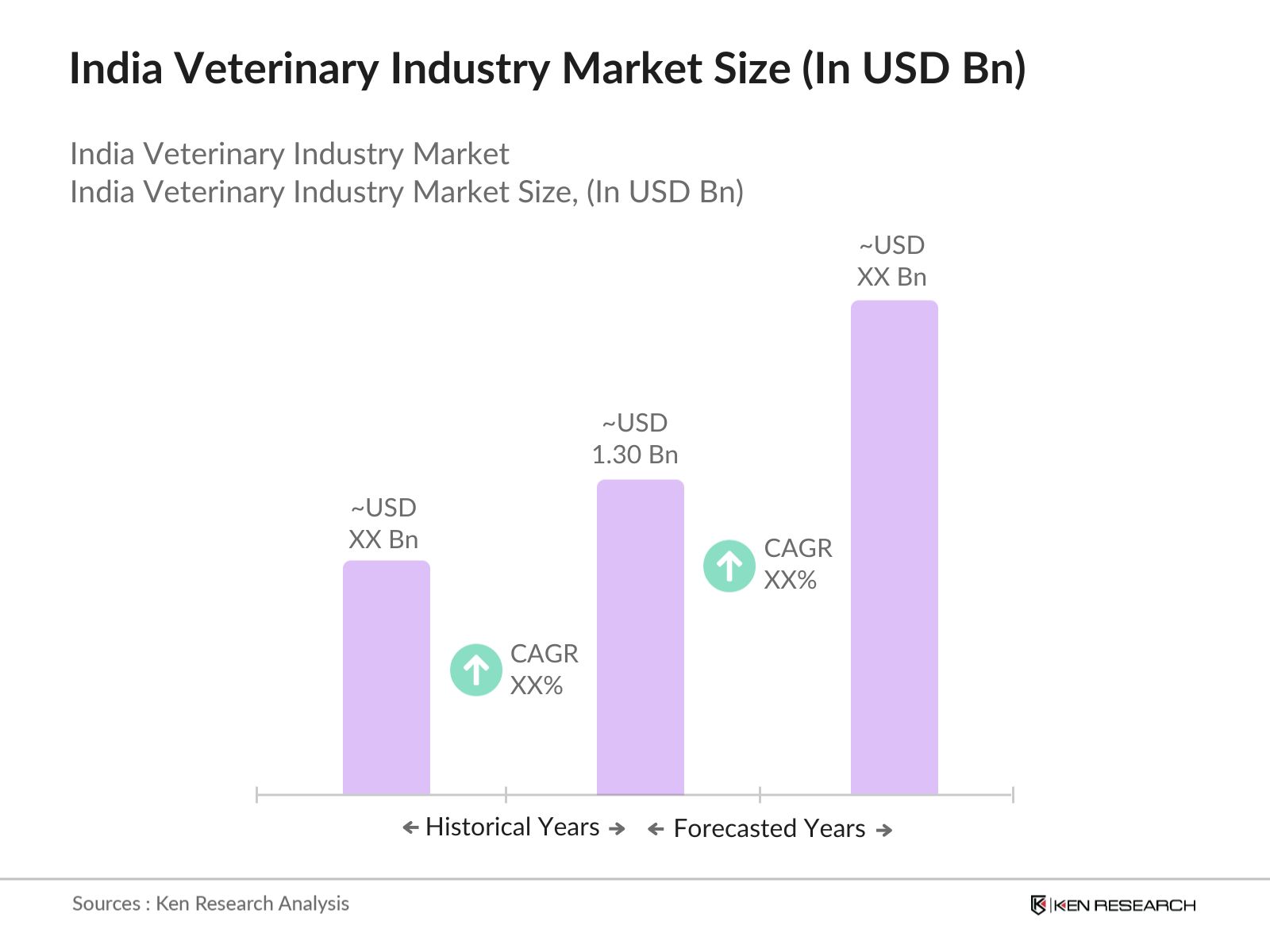
The India veterinary industry, valued at USD 1.30 billion, is driven by increasing demand for animal healthcare services and a rising number of pet owners across urban areas.
Challenges in the India veterinary market include the high cost of veterinary services, a lack of skilled professionals, and stringent regulatory requirements that hinder market penetration.
Major players in the India veterinary market include Zydus Animal Health, Merck Animal Health, Zoetis, Virbac, and Hester Biosciences, all of which dominate due to their extensive product portfolios and research investments.
Key growth drivers include increased pet ownership, government initiatives aimed at improving animal health, and the rising demand for advanced veterinary pharmaceuticals and diagnostics.

What makes us stand out is that our consultants follows Robust, Refine and Result (RRR) methodology. i.e. Robust for clear definitions, approaches and sanity checking, Refine for differentiating respondents facts and opinions and Result for presenting data with story

We have set a benchmark in the industry by offering our clients with syndicated and customized market research reports featuring coverage of entire market as well as meticulous research and analyst insights.

While we don't replace traditional research, we flip the method upside down. Our dual approach of Top Bottom & Bottom Top ensures quality deliverable by not just verifying company fundamentals but also looking at the sector and macroeconomic factors.

With one step in the future, our research team constantly tries to show you the bigger picture. We help with some of the tough questions you may encounter along the way: How is the industry positioned? Best marketing channel? KPI's of competitors? By aligning every element, we help maximize success.

Our report gives you instant access to the answers and sources that other companies might choose to hide. We elaborate each steps of research methodology we have used and showcase you the sample size to earn your trust.

If you need any support, we are here! We pride ourselves on universe strength, data quality, and quick, friendly, and professional service.