
India Waveguide Market Outlook to 2030
Region:Asia
Author(s):Shreya Garg
Product Code:KROD6555
December 2024
98
About the Report
India Waveguide Market Overview
- The India Waveguide market is valued at USD 202 million, based on a five-year historical analysis. The growth of this market is primarily driven by the increasing deployment of 5G infrastructure, advancements in radar and satellite communication systems, and rising defense investments. Furthermore, the demand for efficient signal transmission in high-frequency bands, coupled with innovations in miniaturization and material technology, has propelled the waveguide market. The growth of telecommunications, especially with the expansion of 5G networks and higher frequencies, has also contributed significantly to this market's expansion.
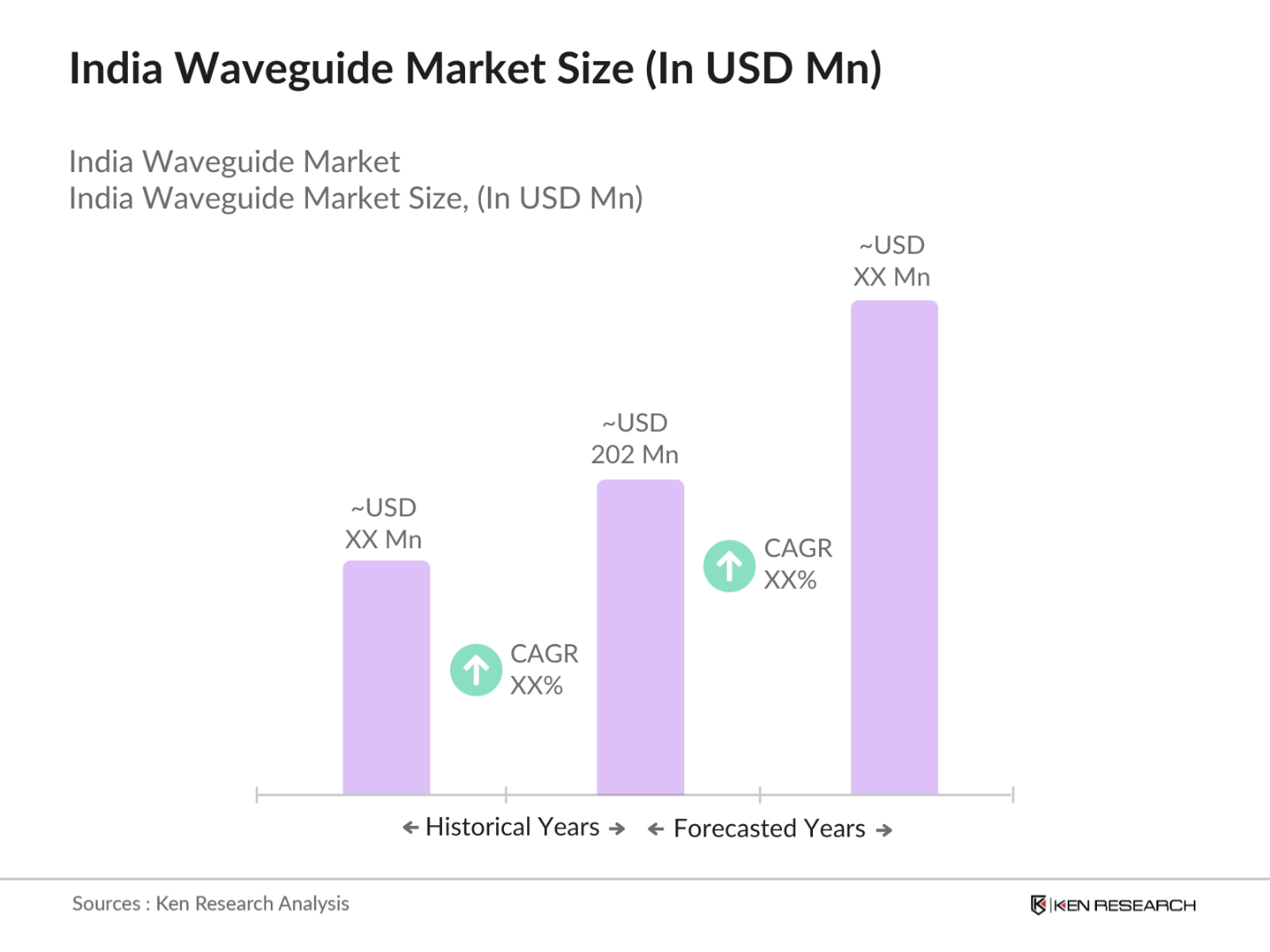
- India's waveguide market is dominated by major urban regions like Bengaluru, Hyderabad, and Pune, which serve as hubs for aerospace and defense, telecommunications, and research & development in advanced technologies. Bengaluru, known as the "Silicon Valley of India," is particularly significant due to its concentration of tech companies and defense manufacturing units. Additionally, the presence of key global players in these cities fosters innovation and access to international markets, solidifying their dominance in the waveguide industry.
- The Indian government has increased funding for research and innovation in waveguide technologies, particularly in materials science and telecommunications. In 2023, the Department of Science and Technology allocated INR 180 billion towards research initiatives, including grants for developing low-loss materials and more compact waveguide designs. Innovation tax credits for companies engaged in advanced manufacturing also provide additional support, helping manufacturers reduce costs while driving technological progress in the waveguide sector.
India Waveguide Market Segmentation
By Product Type: The market is segmented by product type into rectangular waveguides, circular waveguides, flexible waveguides, and rigid waveguides. Recently, rectangular waveguides have gained a dominant market share. This can be attributed to their widespread usage in telecommunications and radar systems due to their robust design and capability to handle high power levels efficiently. The rectangular structure allows better handling of electromagnetic waves in various defense applications, making them indispensable for high-frequency signal transmission. 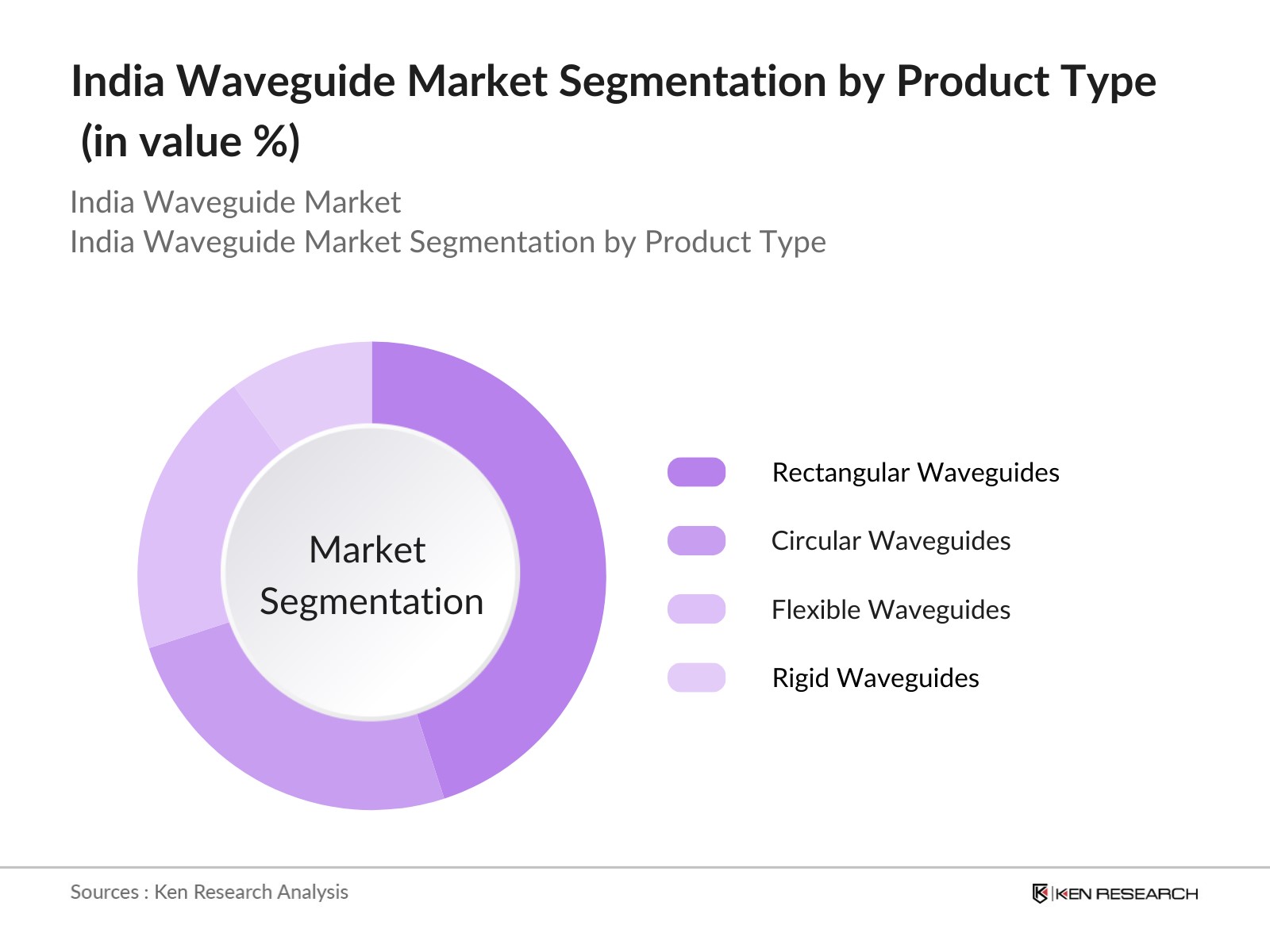
By Application: In terms of application, the waveguide market in India is segmented into telecommunications, defense and aerospace, industrial applications, healthcare, and automotive. Defense and aerospace hold the largest market share in this segment, primarily due to the government's heavy investment in modernizing military systems, including radar, satellite communication, and missile guidance technologies. Waveguides are critical for these high-frequency, high-power applications, making defense and aerospace the dominant sector in the waveguide application landscape. 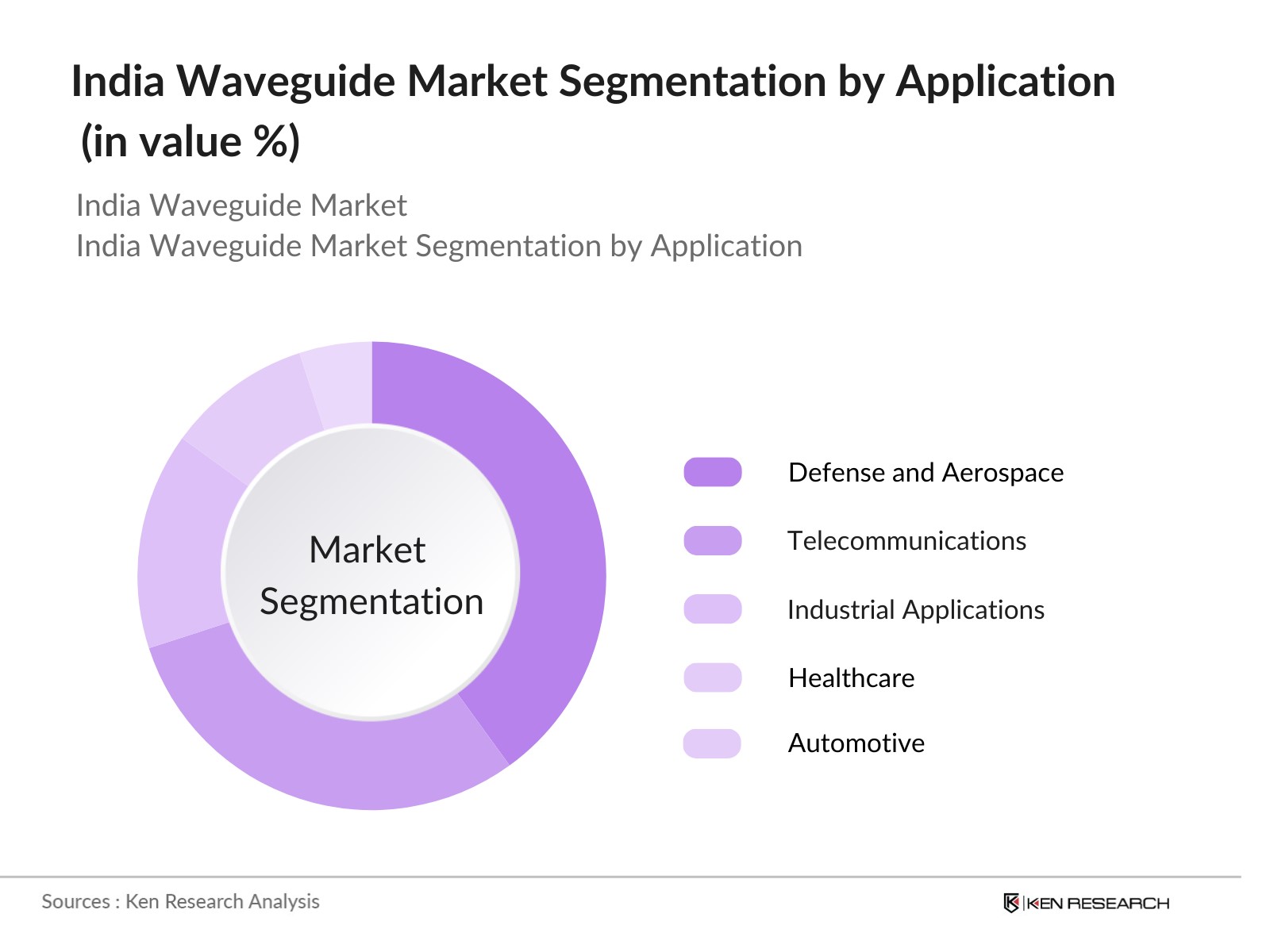
India Waveguide Market Competitive Landscape
The Indian waveguide market is dominated by a mix of local and international companies that are leading through innovation and strategic partnerships. The presence of global giants alongside strong domestic players ensures a competitive yet dynamic market environment. The market is highly competitive, with companies like Ducommun and Smiths Interconnect leading the charge in advanced waveguide technology. The Indian market also sees collaborations between international players and Indian defense organizations, driving innovation and pushing forward local manufacturing capabilities.
|
Company |
Establishment Year |
Headquarters |
Revenue (USD) |
Employees |
R&D Spending (USD) |
Waveguide Technology |
Product Range |
Global Presence |
Strategic Alliances |
|
Ducommun Incorporated |
1849 |
USA |
|||||||
|
Smiths Interconnect |
1851 |
UK |
|||||||
|
Cobham Plc |
1934 |
UK |
|||||||
|
Qorvo Inc. |
1991 |
USA |
|||||||
|
Teledyne Technologies |
1960 |
USA |
India Waveguide Industry Analysis
Growth Drivers
- Expanding Telecom Infrastructure: India's telecom sector has witnessed rapid infrastructure development, especially with the deployment of 5G networks, which are expected to enhance data transmission through high-frequency bands. In 2023, India had approximately 1.2 million kilometers of optic fiber laid across the country, supporting the rollouts of 5G services. This growth is crucial for waveguide technologies, which are essential for ensuring seamless data transmission in high-frequency 5G applications. According to Indias Department of Telecommunications, the government plans to further increase fiber penetration, which will drive demand for advanced waveguide solutions in telecom infrastructure.
- Military and Aerospace Advancements: Indias military modernization programs have heavily focused on advancements in radar systems and satellite communications, driving demand for waveguide components. In 2023, India allocated INR 5.94 trillion for defense, including projects focusing on radar and satellite technologies for improved surveillance and communication. Waveguides are critical in these applications due to their capacity to handle high-power transmissions with minimal signal loss. The Indian Space Research Organization (ISRO) has also been working on low-earth orbit (LEO) satellites, further increasing the need for waveguides in aerospace communications.
- Investment in Research & Development: India has been increasing its investment in research and development for waveguide technologies, focusing on innovations like material development and miniaturization of components. The Indian governments allocation of INR 180 billion for R&D in science and technology for 2023 highlights the commitment to advancing materials that enhance waveguide efficiency. This includes new dielectric materials and processes that allow waveguides to be more compact and energy-efficient, meeting the needs of telecom and aerospace sectors. Continuous R&D investment will play a pivotal role in making waveguides more versatile and cost-effective.
Market Challenges
- Competition from Alternative Technologies: Waveguides face strong competition from optical fibers and solid-state devices, which are becoming more cost-effective and easier to integrate. India's fiber-optic network expansion is growing rapidly, with the National Broadband Mission aiming to cover 6 lakh villages by 2024. While waveguides offer superior performance in certain high-frequency applications, optical fibers have become more prevalent in long-distance telecommunications. The adoption of solid-state devices in radar systems, which offer greater miniaturization and cost savings, also presents a formidable challenge to waveguide adoption.
- Regulatory Barriers: The waveguide market in India faces regulatory challenges, particularly in the allocation of frequency spectrums necessary for waveguide-based communications. TRAIs guidelines for spectrum allocation remain stringent, especially for high-frequency bands used in 5G and satellite communications. Compliance with these regulations often increases costs and delays for waveguide manufacturers. For instance, in 2023, companies were required to pay INR 77,000 crore in spectrum auction fees, reflecting the cost burden of operating in a tightly regulated frequency environment.
India Waveguide Market Future Outlook
Over the next five years, the India waveguide market is poised for significant growth due to the increasing investments in 5G infrastructure, expansion of satellite communication systems, and modernization of defense technologies. The government's continued push towards indigenization in defense manufacturing and the proliferation of IoT devices requiring high-frequency transmission will further drive market demand. Additionally, technological advancements, such as the miniaturization of waveguides and the use of innovative materials to reduce signal loss, are expected to bolster market growth.
Future Market Opportunities
- Growing Demand in Medical Applications: Waveguides are becoming increasingly important in the medical field, especially in applications like MRI machines and diagnostic imaging, where precise electromagnetic wave transmission is crucial. Indias healthcare sector continues to expand, with over 35,000 MRI machines installed in 2023, up from 28,000 in 2020. This surge in diagnostic imaging equipment will drive demand for waveguides that enable the accurate transmission of radiofrequency waves, improving the clarity and accuracy of imaging results. As the healthcare infrastructure grows, waveguides will find more applications in advanced medical technologies.
- Rising Defense Spending: Indias rising defense budget, which reached INR 5.94 trillion in 2023, includes significant investments in radar systems and missile technologies, both of which rely on waveguide components for efficient operation. The Indian Ministry of Defense has been ramping up the procurement of advanced radar systems for border surveillance, which require high-performance waveguides to handle high-frequency transmissions. This increase in defense spending provides a strong opportunity for waveguide manufacturers, especially as the country seeks to enhance its indigenous defense production.
Scope of the Report
|
Product Type |
Rectangular Waveguides Circular Waveguides Flexible Waveguides Rigid Waveguides |
|
Material |
Copper Waveguides Aluminum Waveguides Bronze Waveguides Other Materials |
|
Application |
Telecommunications Defense and Aerospace Healthcare Industrial Applications Automotive |
|
Frequency Range |
L-band S-band C-band X-band Ku-band |
|
Region |
North South East West |
Products
Key Target Audience
Telecommunications Companies
Defense Contractors
Satellite Communication Providers
Aerospace Manufacturers
Healthcare Equipment Manufacturers
Government and Regulatory Bodies (Ministry of Defense, Department of Telecommunications)
Investor and Venture Capitalist Firms
Automotive OEMs
Companies
Major Players
Ducommun Incorporated
Smiths Interconnect
Cobham Plc
Qorvo Inc.
Teledyne Technologies
Honeywell International Inc.
L3Harris Technologies
Thales Group
Ametek Inc.
API Technologies Corp.
SAGE Millimeter, Inc.
Radiall S.A.
Pasternack Enterprises, Inc.
Microwave Engineering Corporation
Fairview Microwave
Table of Contents
1. India Waveguide Market Overview
1.1. Definition and Scope
1.2. Market Taxonomy
1.3. Market Growth Rate (Waveguide technology adoption, CAGR indicators, regional trends)
1.4. Market Segmentation Overview (Waveguide types, end-user sectors, applications, frequency range)
2. India Waveguide Market Size (In USD Mn)
2.1. Historical Market Size (Value-driven growth, market penetration, demand vs. supply trends)
2.2. Year-On-Year Growth Analysis (Performance analysis, key growth metrics, influencing factors)
2.3. Key Market Developments and Milestones (Government policies, technological innovations, company expansions)
3. India Waveguide Market Analysis
3.1. Growth Drivers
3.1.1. Expanding Telecom Infrastructure (5G rollouts, fiber-optic networks)
3.1.2. Military and Aerospace Advancements (Radar systems, satellite communications)
3.1.3. Surge in IoT and 5G Demand (High-frequency bands, data transmission)
3.1.4. Investment in Research & Development (Material innovation, miniaturization of components)
3.2. Market Challenges
3.2.1. High Manufacturing Costs (Raw material scarcity, fabrication complexity)
3.2.2. Competition from Alternative Technologies (Optical fibers, solid-state devices)
3.2.3. Regulatory Barriers (Frequency spectrum allocation, compliance issues)
3.2.4. Lack of Skilled Workforce (Design complexities, technical expertise required)
3.3. Opportunities
3.3.1. Expansion of Satellite Communication (High-speed internet demand, low-earth orbit satellite launches)
3.3.2. Growing Demand in Medical Applications (MRI machines, diagnostic imaging)
3.3.3. Rising Defense Spending (Waveguide integration in radar, missile systems)
3.3.4. Adoption of Advanced Materials (Low-loss waveguides, compact solutions)
3.4. Trends
3.4.1. Use of Flexible and Miniature Waveguides (Space-saving designs, lightweight solutions)
3.4.2. Integration of 3D Printing in Waveguide Production (Cost-efficient, rapid prototyping)
3.4.3. Waveguides in Automotive Radar Systems (Self-driving technology, ADAS)
3.4.4. Increased Usage of Millimeter-Wave Waveguides (High-frequency spectrum, 5G networks)
3.5. Government Regulation
3.5.1. Telecom Regulatory Frameworks (Frequency allocation, infrastructure policies)
3.5.2. Defense and Aerospace Regulations (National security protocols, procurement policies)
3.5.3. Research and Innovation Funding (Government grants, innovation tax credits)
3.5.4. Import-Export Regulations (Tariff duties, restrictions on advanced technologies)
3.6. SWOT Analysis (Market Strengths, Weaknesses, Opportunities, Threats)
3.7. Stakeholder Ecosystem (Manufacturers, suppliers, government bodies, R&D institutes)
3.8. Porters Five Forces (Competitive rivalry, supplier power, buyer power, threat of substitutes, entry barriers)
3.9. Competition Ecosystem (Market structure, key competitors, market positioning)
4. India Waveguide Market Segmentation
4.1. By Product Type (In Value %)
4.1.1. Rectangular Waveguides
4.1.2. Circular Waveguides
4.1.3. Flexible Waveguides
4.1.4. Rigid Waveguides
4.2. By Material (In Value %)
4.2.1. Copper Waveguides
4.2.2. Aluminum Waveguides
4.2.3. Bronze Waveguides
4.2.4. Other Materials
4.3. By Application (In Value %)
4.3.1. Telecommunications
4.3.2. Defense and Aerospace
4.3.3. Healthcare
4.3.4. Industrial Applications
4.3.5. Automotive
4.4. By Frequency Range (In Value %)
4.4.1. L-band (1-2 GHz)
4.4.2. S-band (2-4 GHz)
4.4.3. C-band (4-8 GHz)
4.4.4. X-band (8-12 GHz)
4.4.5. Ku-band (12-18 GHz)
4.5. By Region (In Value %)
4.5.1. North
4.5.2. South
4.5.3. East
4.5.4. West
5. India Waveguide Market Competitive Analysis
5.1. Detailed Profiles of Major Companies
5.1.1. Ducommun Incorporated
5.1.2. Smiths Interconnect
5.1.3. Cobham Plc
5.1.4. Qorvo Inc.
5.1.5. Teledyne Technologies Incorporated
5.1.6. L3Harris Technologies
5.1.7. Thales Group
5.1.8. Honeywell International Inc.
5.1.9. Ametek Inc.
5.1.10. API Technologies Corp.
5.1.11. SAGE Millimeter, Inc.
5.1.12. Radiall S.A.
5.1.13. Pasternack Enterprises, Inc.
5.1.14. Microwave Engineering Corporation
5.1.15. Fairview Microwave
5.2. Cross Comparison Parameters (No. of Employees, Revenue, Manufacturing Capabilities, Product Portfolio, Regional Presence, R&D Spend, Product Customization Capabilities, Strategic Alliances)
5.3. Market Share Analysis (Top competitors by market share, product sales, regional presence)
5.4. Strategic Initiatives (Partnerships, product launches, market expansions)
5.5. Mergers and Acquisitions (Recent deals, market impact, consolidation trends)
5.6. Investment Analysis (Private equity inflow, venture capital, institutional investors)
5.7. Venture Capital Funding (Key investors, funding stages, investment rounds)
5.8. Government Grants (Research funding, tax incentives, waveguide innovation grants)
5.9. Private Equity Investments (Deals, portfolio companies, market expansion funding)
6. India Waveguide Market Regulatory Framework
6.1. Telecom and Frequency Standards (National frequency allocation, licensing policies)
6.2. Defense and Aerospace Compliance (Government tenders, security clearance requirements)
6.3. Certification Processes (Waveguide product certifications, international standards compliance)
7. India Waveguide Future Market Size (In USD Mn)
7.1. Future Market Size Projections (Growth outlook, expansion opportunities)
7.2. Key Factors Driving Future Market Growth (Technological advances, increased applications)
8. India Waveguide Future Market Segmentation
8.1. By Product Type (In Value %)
8.2. By Material (In Value %)
8.3. By Application (In Value %)
8.4. By Frequency Range (In Value %)
8.5. By Region (In Value %)
9. India Waveguide Market Analysts Recommendations
9.1. TAM/SAM/SOM Analysis (Market opportunity analysis)
9.2. Customer Cohort Analysis (Key buyers, purchasing behavior)
9.3. Marketing Initiatives (Brand positioning, customer engagement strategies)
9.4. White Space Opportunity Analysis (Untapped opportunities, niche segments)
Research Methodology
Step 1: Identification of Key Variables
In this phase, we map the entire waveguide ecosystem, identifying stakeholders across the telecommunications, defense, and healthcare industries. This step involves extensive secondary research, utilizing data from proprietary databases and government reports to outline key market drivers.
Step 2: Market Analysis and Construction
Historical market data is collected and analyzed, focusing on waveguide applications in various industries. Market penetration, customer usage trends, and technological advancements are evaluated to construct a comprehensive market analysis.
Step 3: Hypothesis Validation and Expert Consultation
Key market hypotheses are developed and validated through in-depth interviews with industry experts and waveguide manufacturers. This process ensures the accuracy of the data collected and provides real-world insights into the market.
Step 4: Research Synthesis and Final Output
The final phase involves engaging with key market players to corroborate market insights and data. The analysis is fine-tuned based on these inputs, ensuring that the market report provides actionable and reliable information.
Frequently Asked Questions
01. How big is the India Waveguide Market?
The India waveguide market is valued at USD 202 million, driven by increasing 5G infrastructure, defense modernization, and technological innovations in high-frequency transmission.
02. What are the challenges in the India Waveguide Market?
Key challenges in the India waveguide market include high manufacturing costs, competition from alternative technologies like optical fibers, and regulatory barriers related to frequency spectrum allocation.
03. Who are the major players in the India Waveguide Market?
Major players in the India waveguide market include Ducommun Incorporated, Smiths Interconnect, Cobham Plc, Qorvo Inc., and Teledyne Technologies, all of which have a strong presence in India.
04. What are the growth drivers of the India Waveguide Market?
Growth drivers in the India waveguide market include the expansion of 5G networks, increasing defense and aerospace applications, and rising demand for high-frequency transmission systems in various industries.
05. How is the defense sector contributing to the waveguide market?
The defense sector, with its demand for high-frequency radar and satellite communication systems, contributes significantly to the waveguide market, making it the largest application segment in India waveguide market.
Why Buy From Us?

What makes us stand out is that our consultants follows Robust, Refine and Result (RRR) methodology. i.e. Robust for clear definitions, approaches and sanity checking, Refine for differentiating respondents facts and opinions and Result for presenting data with story

We have set a benchmark in the industry by offering our clients with syndicated and customized market research reports featuring coverage of entire market as well as meticulous research and analyst insights.

While we don't replace traditional research, we flip the method upside down. Our dual approach of Top Bottom & Bottom Top ensures quality deliverable by not just verifying company fundamentals but also looking at the sector and macroeconomic factors.

With one step in the future, our research team constantly tries to show you the bigger picture. We help with some of the tough questions you may encounter along the way: How is the industry positioned? Best marketing channel? KPI's of competitors? By aligning every element, we help maximize success.

Our report gives you instant access to the answers and sources that other companies might choose to hide. We elaborate each steps of research methodology we have used and showcase you the sample size to earn your trust.

If you need any support, we are here! We pride ourselves on universe strength, data quality, and quick, friendly, and professional service.