
India Wax Market Outlook to 2030
Region:Asia
Author(s):Sanjeev
Product Code:KROD1216
October 2024
86
About the Report
India Wax Market Overview
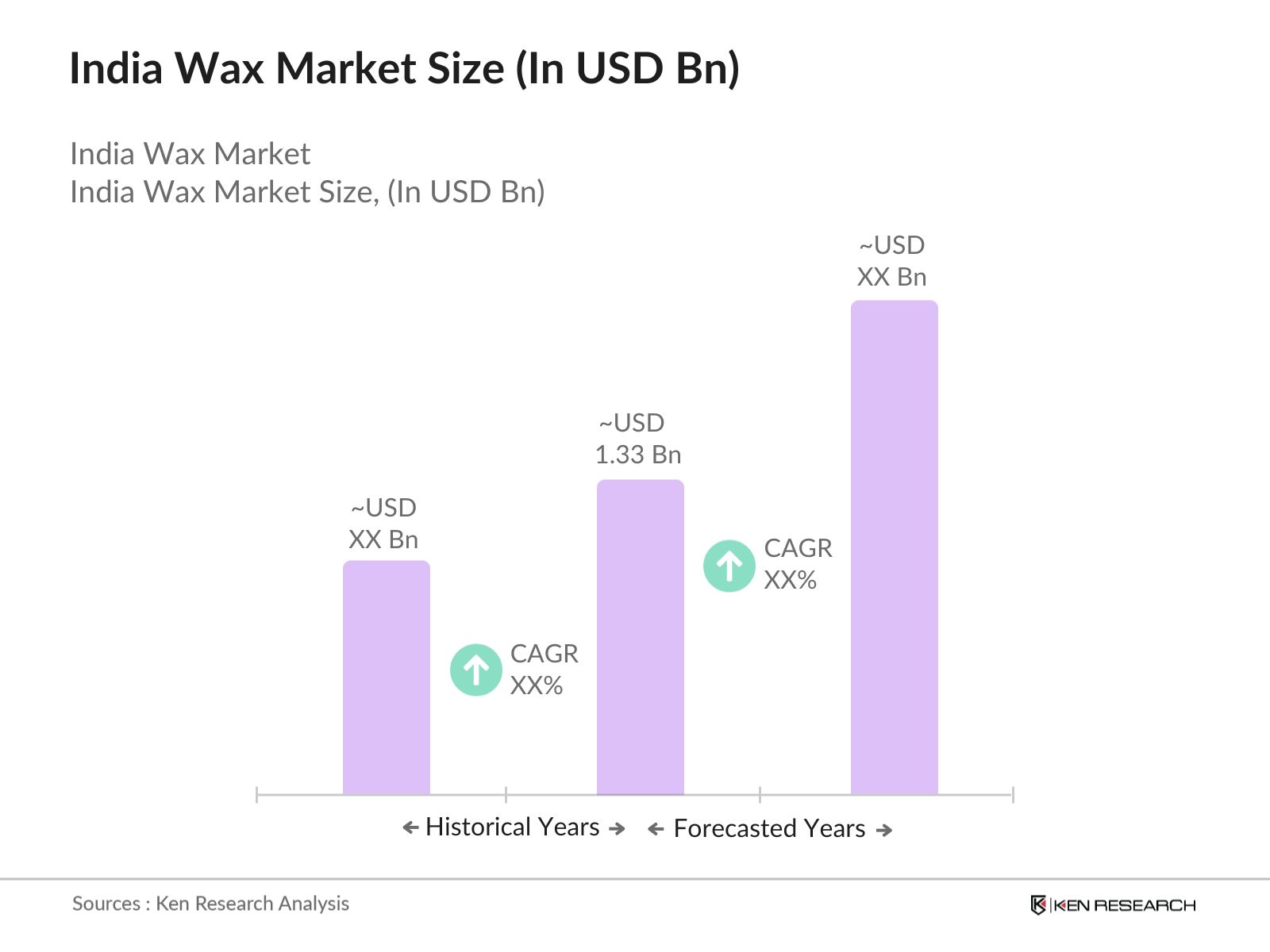
The India wax market is valued at USD 1.33 billion, based on a five-year historical analysis. It is driven by the increasing demand across various industries such as cosmetics, packaging, and pharmaceuticals. The demand for petroleum-based and natural waxes is steadily rising, thanks to their broad application in candle making, cosmetics, and food processing. The robust growth in Indias packaging industry, due to increasing e-commerce and retailing activities, has also contributed to the market's expansion. Major players in the industry are continuously enhancing their product lines to meet growing demands.
 Indias wax market dominance is observed in key cities like Mumbai, Delhi, and Bangalore due to their strong industrial base and robust consumer markets. Mumbai, being the financial capital, hosts a large number of manufacturing and distribution hubs for wax products, while Delhi and Bangalore benefit from a growing demand in cosmetics and personal care sectors. Additionally, these regions have advanced infrastructure, which promotes trade, production, and logistics, making them pivotal to the wax market.The Indian government has introduced stringent environmental regulations to minimize the ecological impact of wax production. In 2024, the Ministry of Environment, Forest and Climate Change enforced stricter compliance measures on emissions and waste management in the wax industry. These regulations require companies to adopt cleaner production methods and invest in eco-friendly technologies. Non-compliance with these regulations can result in significant fines and restrictions, compelling wax manufacturers to prioritize environmental sustainability.
India Wax Market Segmentation
Indias wax market is segmented by product type and by application.
- By Product Type: Indias wax market is segmented by product type into petroleum wax, natural wax, synthetic wax, and specialty wax. Currently, petroleum wax holds a dominant market share in the country under this segmentation. This is primarily due to the easy availability and low cost of petroleum-based waxes, which find widespread application in candle making, packaging, and industrial products. Indian manufacturers heavily rely on petroleum waxes due to their cost efficiency and well-established supply chains that ensure smooth availability.

- By Application: The market is further segmented by application into cosmetics, packaging, pharmaceuticals, food processing, and candle manufacturing. Among these, the cosmetics industry dominates with a significant market share. This is attributed to the growing popularity of wax-based cosmetics products, particularly in skincare and hair care applications. Additionally, the increasing demand for organic and natural cosmetics has given a push to the use of natural waxes like beeswax and carnauba wax in the formulation of these products.

India Wax Market Competitive Landscape
The India wax market is dominated by a few major players, both local and international, such as Sasol Ltd, ExxonMobil Corporation, and Indian Oil Corporation. These companies have a strong presence due to their extensive product portfolios, distribution networks, and research and development capabilities. The market sees consolidation around a few big players, reflecting their significant control over both supply and pricing mechanisms.
India Wax Market Analysis
Growth Drivers
- Increasing Demand from the Cosmetics Industry: The Indian cosmetics industry is experiencing a surge in demand for waxes, particularly in the production of lipsticks, creams, and lotions. In 2023, the Indian cosmetics market was valued at over INR 901 billion, with the wax market playing a crucial role in the formulation of skincare and haircare products. The rise of consumer spending, which reached INR 148 trillion in 2023, is fueling the cosmetics industry's expansion, driving the need for quality wax materials. The Ministry of Commerce and Industry has reported an increase in cosmetics exports, further boosting demand for raw materials like wax.
- Growing Adoption in the Packaging Sector: The Indian packaging sector has witnessed increased usage of waxes for moisture resistance and gloss enhancement in 2024, as the Indian packaging industry reached INR 3 trillion. Wax-coated products are in high demand for food and beverage packaging, contributing significantly to this market. The expansion of e-commerce, which grew by 18% in 2023, has spurred the demand for protective and durable packaging, with wax being a key material in ensuring product safety. The Ministry of Micro, Small, and Medium Enterprises supports this growth by promoting eco-friendly packaging initiatives, many of which rely on wax-based solutions.
- Rising Use in Pharmaceutical Applications: Pharmaceutical waxes are extensively used in controlled-release drug formulations and coating tablets to ensure stability. India's pharmaceutical exports reached USD 25 billion in 2023, bolstered by the use of waxes in various drug delivery systems. The growing focus on healthcare, supported by a government expenditure of INR 4.5 trillion in 2023, has driven pharmaceutical innovations, many of which utilize waxes for enhanced drug efficacy. Indias health sector, under the National Health Mission, continues to invest in pharmaceutical advancements, increasing the demand for waxes.
Market Challenges
- Fluctuating Raw Material Prices: The prices of raw materials such as petroleum-based paraffin wax fluctuate significantly, causing volatility in the Indian wax market. In 2023, crude oil prices ranged from USD 70 to 90 per barrel, directly impacting the cost of paraffin wax, a key component. This volatility increases production costs, which has been a significant concern for industries reliant on wax. Additionally, India's reliance on imports for crude oil, accounting for over 80% of its crude requirements in 2023, further exposes the wax industry to international price fluctuations.
- Supply Chain Disruptions: Supply chain disruptions caused by global events, including the COVID-19 pandemic and geopolitical tensions, have impacted the availability of raw materials like wax. In 2022, the Indian manufacturing sector reported a 10% delay in raw material imports, affecting the production of wax-based products. Furthermore, shipping costs increased by 25% in 2023 due to logistical challenges. The Ministry of Commerce and Industry has identified these disruptions as a key issue in maintaining steady supply lines for industries such as cosmetics, pharmaceuticals, and packaging, all of which rely heavily on wax.
India Wax Market Future Outlook
Over the next five years, the India wax market is poised for substantial growth, driven by increased demand for eco-friendly and sustainable waxes, particularly in the cosmetics and packaging sectors. Technological advancements in wax production, along with a growing consumer preference for natural products, will also play a crucial role in shaping the market dynamics. Additionally, government regulations promoting sustainability in industrial practices and packaging solutions are expected to positively impact the industry.
Market Opportunities
- Increased Application in Eco-Friendly Products: As environmental concerns grow; wax manufacturers are increasingly focusing on eco-friendly alternatives. In 2024, the Indian government introduced the Green Wax Initiative, promoting bio-based waxes in cosmetics and packaging. With Indias sustainable product market growing by 20% in 2023, the demand for bio-based and biodegradable waxes is on the rise. Companies that invest in eco-friendly waxes stand to benefit from this shift, particularly as Indian consumers and industries increasingly prioritize sustainability. The governments support through subsidies for green technology adoption has further incentivized this market segment.
- Rising Demand in Emerging Economies: Emerging economies in Asia and Africa are becoming key export destinations for Indias wax products. In 2023, Indias exports to African countries grew by 7%, driven by increased demand for waxes used in cosmetics and industrial applications. India's trade agreements with emerging markets, coupled with favorable export policies, have opened new avenues for growth. The Ministry of External Affairs has facilitated trade partnerships that promote wax exports, particularly in countries looking for cost-effective yet high-quality wax products.
Scope of the Report
|
||
|
By Flavor |
Cosmetics Packaging Pharmaceuticals Candle Manufacturing Food Processing |
|
|
By Ingredients |
Direct Sales Wholesalers E-Commerce Retailers |
|
|
By Distribution Channel |
Cosmetics and Personal Care Packaging Pharmaceutical Food and Beverage |
|
|
By Region |
North East West South |
Products
Key Target Audience
Wax Manufacturers
Packaging Industry Stakeholders
Cosmetics Industry Stakeholders
Pharmaceutical Companies
Food Processing Industry Stakeholders
Government and Regulatory Bodies (Bureau of Indian Standards, Ministry of Petroleum and Natural Gas)
Investors and Venture Capitalist Firms
Wax Traders and Distributors
Companies
Players Mentioned in the Report:
Sasol Ltd
ExxonMobil Corporation
The International Group, Inc.
Royal Dutch Shell PLC
Sinopec Corporation
The Blayson Group Ltd.
Strahl & Pitsch Inc.
Kerax Limited
H & R Group
Calumet Specialty Products Partners L.P.
Sasol Wax GmbH
Numaligarh Refinery Limited
Indian Oil Corporation
Tianshi Group
Gulf Wax Industries
Table of Contents
1. India Wax Market Overview
1.1. Definition and Scope
1.2. Market Taxonomy
1.3. Market Growth Rate
1.4. Market Segmentation Overview
2. India Wax Market Size (In USD Mn)
2.1. Historical Market Size
2.2. Year-On-Year Growth Analysis
2.3. Key Market Developments and Milestones
3. India Wax Market Analysis
3.1. Growth Drivers
3.1.1. Increasing Demand from the Cosmetics Industry
3.1.2. Growing Adoption in the Packaging Sector
3.1.3. Rising Use in Pharmaceutical Applications
3.1.4. Expanding Use in Candle Making Industry
3.2. Market Challenges
3.2.1. Fluctuating Raw Material Prices
3.2.2. Supply Chain Disruptions
3.2.3. High Energy Consumption in Production
3.3. Opportunities
3.3.1. Increased Application in Eco-Friendly Products
3.3.2. Rising Demand in Emerging Economies
3.3.3. Technological Advancements in Wax Production
3.4. Trends
3.4.1. Use of Synthetic Waxes
3.4.2. Development of Bio-based Wax Products
3.4.3. Use of Waxes in Food Processing
3.5. Government Regulations
3.5.1. Compliance with Environmental Regulations (Specific to Wax Industry)
3.5.2. Import/Export Tariff Regulations
3.5.3. Certifications for Product Safety
4. India Wax Market Segmentation
4.1. By Product Type (In Value %)
4.1.1. Petroleum Wax
4.1.2. Natural Wax
4.1.3. Synthetic Wax
4.1.4. Specialty Wax
4.2. By Application (In Value %)
4.2.1. Cosmetics
4.2.2. Packaging
4.2.3. Pharmaceuticals
4.2.4. Candle Manufacturing
4.2.5. Food Processing
4.3. By Distribution Channel (In Value %)
4.3.1. Direct Sales
4.3.2. Wholesalers
4.3.3. E-Commerce
4.3.4. Retailers
4.4. By End-User Industry (In Value %)
4.4.1. Cosmetics and Personal Care
4.4.2. Packaging Industry
4.4.3. Pharmaceutical Industry
4.4.4. Food and Beverage
4.5. By Region (In Value %)
4.5.1. North
4.5.2. South
4.5.3. East
4.5.4. West
5. India Wax Market Competitive Analysis
5.1. Detailed Profiles of Major Companies
5.1.1. Sasol Ltd
5.1.2. ExxonMobil Corporation
5.1.3. The International Group, Inc.
5.1.4. Royal Dutch Shell PLC
5.1.5. Sinopec Corporation
5.1.6. The Blayson Group Ltd.
5.1.7. Strahl & Pitsch Inc.
5.1.8. Kerax Limited
5.1.9. H & R Group
5.1.10. Calumet Specialty Products Partners L.P.
5.1.11. Sasol Wax GmbH
5.1.12. Numaligarh Refinery Limited
5.1.13. Indian Oil Corporation
5.1.14. Tianshi Group
5.1.15. Gulf Wax Industries
5.2. Cross Comparison Parameters (Revenue, Production Capacity, Product Portfolio, Market Share, Distribution Network, R&D Expenditure, Sustainability Initiatives, Regional Presence)
5.3. Market Share Analysis
5.4. Strategic Initiatives
5.5. Mergers and Acquisitions
5.6. Investment Analysis
5.7. Government Grants
5.8. Private Equity Investments
6. India Wax Market Regulatory Framework
6.1. Environmental Standards (Wax Industry Specific)
6.2. Compliance Requirements
6.3. Certification Processes
7. India Wax Future Market Size (In USD Mn)
7.1. Future Market Size Projections
7.2. Key Factors Driving Future Market Growth
8. India Wax Future Market Segmentation
8.1. By Product Type (In Value %)
8.2. By Application (In Value %)
8.3. By Distribution Channel (In Value %)
8.4. By End-User Industry (In Value %)
8.5. By Region (In Value %)
9. India Wax Market Analysts Recommendations
9.1. TAM/SAM/SOM Analysis
9.2. Market Entry Strategies
9.3. Customer Cohort Analysis
9.4. White Space Opportunity Analysis
Disclaimer
Contact Us
Research Methodology
Step 1: Identification of Key Variables
The initial phase involves mapping the India wax market by identifying all the key stakeholders across the value chain. This includes manufacturers, distributors, and end-users. Secondary research, coupled with proprietary databases, is utilized to gather relevant industry-level data and trends. The main objective is to define the key variables influencing the market, such as production volumes and consumer demand.
Step 2: Market Analysis and Construction
In this phase, historical data on the India wax market is gathered and analyzed to assess growth trends and industry penetration. Market ratios between suppliers and end-users are calculated, and revenue generation is forecasted based on past trends. Additionally, we assess the service quality provided by key market players to validate the accuracy of revenue estimates.
Step 3: Hypothesis Validation and Expert Consultation
We conduct in-depth interviews with market experts through CATIs (computer-assisted telephone interviews). These experts come from a wide range of companies in the wax market, offering valuable insights into operational practices and market trends. These consultations help validate our market hypotheses and refine the accuracy of the data collected.
Step 4: Research Synthesis and Final Output
The final stage involves engaging directly with manufacturers in the wax market to validate product performance, sales metrics, and customer preferences. This interaction helps complement our bottom-up approach to market analysis, ensuring the output reflects a comprehensive and accurate understanding of the India wax market.
Frequently Asked Questions
01 How big is the India Wax Market?
The India wax market was valued at USD 1.33 billion, driven by increasing demand across various industries such as cosmetics, pharmaceuticals, and packaging.
02 What are the challenges in the India Wax Market?
The India wax market faces challenges like fluctuating raw material prices, supply chain disruptions, and high energy consumption in the production process, which hinder the markets growth potential.
03 Who are the major players in the India Wax Market?
Key players in India wax market include Sasol Ltd, ExxonMobil Corporation, Indian Oil Corporation, and Kerax Limited. These companies dominate due to their extensive distribution networks, strong brand presence, and diverse product portfolios.
04 What are the growth drivers of the India Wax Market?
The primary growth drivers in India wax market include increasing demand from the cosmetics and packaging industries, the rise of e-commerce, and the growing preference for natural and eco-friendly waxes.
05 What are the trends in the India Wax Market?
Key trends n India wax market include the shift toward bio-based wax products, technological advancements in production, and increased use of waxes in food processing and pharmaceuticals.
Why Buy From Us?

What makes us stand out is that our consultants follows Robust, Refine and Result (RRR) methodology. i.e. Robust for clear definitions, approaches and sanity checking, Refine for differentiating respondents facts and opinions and Result for presenting data with story

We have set a benchmark in the industry by offering our clients with syndicated and customized market research reports featuring coverage of entire market as well as meticulous research and analyst insights.

While we don't replace traditional research, we flip the method upside down. Our dual approach of Top Bottom & Bottom Top ensures quality deliverable by not just verifying company fundamentals but also looking at the sector and macroeconomic factors.

With one step in the future, our research team constantly tries to show you the bigger picture. We help with some of the tough questions you may encounter along the way: How is the industry positioned? Best marketing channel? KPI's of competitors? By aligning every element, we help maximize success.

Our report gives you instant access to the answers and sources that other companies might choose to hide. We elaborate each steps of research methodology we have used and showcase you the sample size to earn your trust.

If you need any support, we are here! We pride ourselves on universe strength, data quality, and quick, friendly, and professional service.