
Indonesia Air Purifier Market Outlook to 2030
Region:Indonesia
Author(s):Shambhavi
Product Code:KROD2891
Region:Indonesia
Author(s):Shambhavi
Product Code:KROD2891
November 2024
86
By Product Type
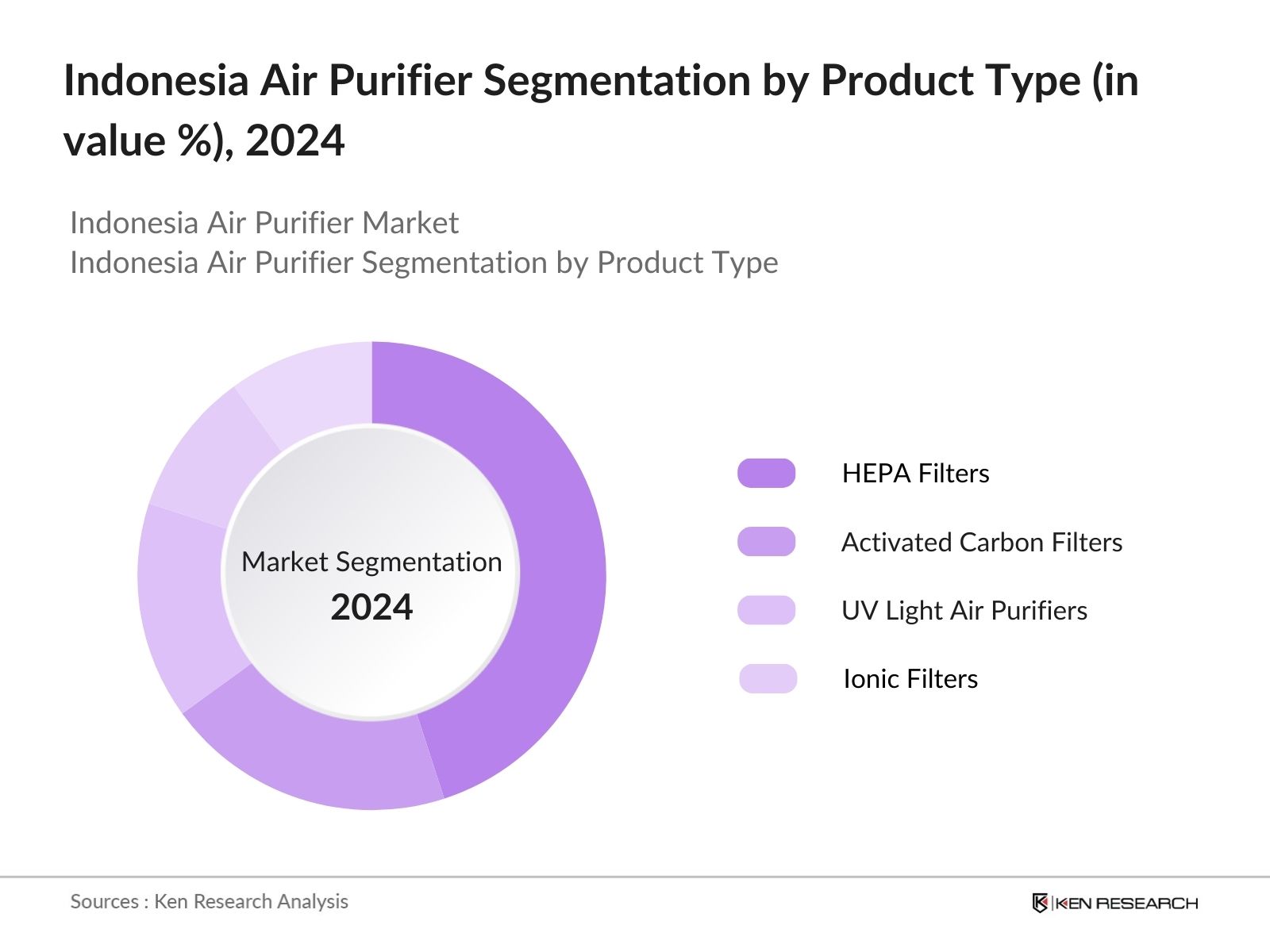
The Indonesia air purifier market is segmented by product type into HEPA filters, activated carbon filters, UV light air purifiers, ionic filters, and smart air purifiers. HEPA filters have a dominant market share under this segmentation, as they are highly effective at capturing fine particulate matter (PM2.5), which is a major contributor to air pollution in urban areas. Additionally, the growing awareness of HEPA filters efficiency in removing allergens and airborne contaminants makes them a preferred choice for consumers.
By Application
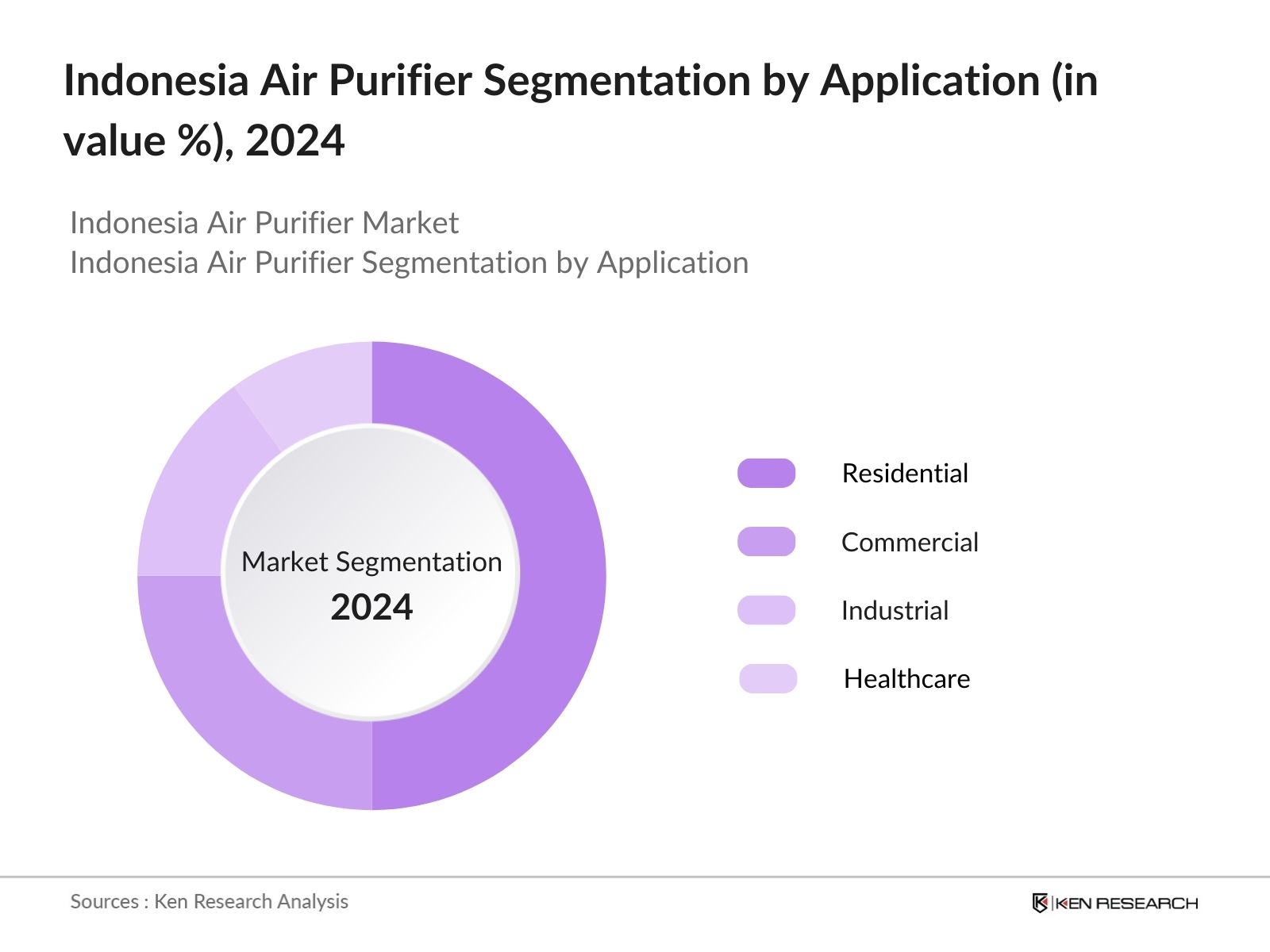
The air purifier market in Indonesia is further segmented by application into residential, commercial, industrial, and healthcare. The residential segment leads in market share, driven by increased consumer awareness about indoor air pollution and its effects on health. Growing concerns over respiratory issues caused by pollution, such as asthma and allergies, have led households to invest in air purifiers. The rising middle-class population and availability of cost-effective models have also contributed to the growth of this segment.
The Indonesia air purifier market is dominated by a mix of global giants and regional players. Companies like Xiaomi and Daikin hold a significant share due to their strong brand presence and competitive pricing strategies. These companies have leveraged e-commerce channels and local distributors to expand their reach. Additionally, partnerships with local retailers have helped these brands build trust among Indonesian consumers.
|
Company |
Establishment Year |
Headquarters |
Product Range |
Revenue (USD Mn) |
Employees |
Technology Focus |
Regional Presence |
Distribution Channel |
R&D Investment |
|
Xiaomi Corporation |
2010 |
Beijing, China |
|||||||
|
Daikin Industries Ltd. |
1924 |
Osaka, Japan |
|||||||
|
Sharp Corporation |
1912 |
Osaka, Japan |
|||||||
|
Philips Indonesia |
1891 |
Eindhoven, Netherlands |
|||||||
|
Coway Co., Ltd. |
1989 |
Seoul, South Korea |
Growth Drivers
Market Challenges
Over the next five years, the Indonesia air purifier market is expected to show significant growth, driven by a combination of factors including increasing pollution levels, government support for air quality improvement, and growing consumer demand for health and wellness products. Moreover, technological advancements, such as the integration of IoT and smart technologies, are expected to further enhance the demand for advanced air purification systems.
Opportunities
|
Segment |
Sub-Segment |
|
By Product Type |
HEPA Filters, Activated Carbon Filters, UV Light Air Purifiers, Ionic Filters, Smart Air Purifiers |
|
By Technology |
Mechanical Filters, Electronic Air Cleaners, Hybrid Air Purification Systems |
|
By Application |
Residential, Commercial (Offices, Malls, Hotels), Industrial (Manufacturing, Warehousing), Healthcare (Hospitals, Clinics) |
|
By Distribution Channel |
Offline Retail (Electronics Stores, Department Stores), Online Retail (E-commerce Platforms) |
|
By Region |
Java, Sumatra, Sulawesi, Kalimantan, Papua |
1.1. Definition and Scope
1.2. Market Taxonomy (Product Type, Technology Type, Application, Region)
1.3. Market Growth Rate
1.4. Market Segmentation Overview (By Product, Application, Technology, Distribution Channel, and Region)
2.1. Historical Market Size
2.2. Year-On-Year Growth Analysis (Y-o-Y)
2.3. Key Market Developments and Milestones (Technological Innovation, Government Initiatives)
3.1. Growth Drivers
3.1.1. Rising Air Pollution Levels (PM2.5, NOx, SOx levels)
3.1.2. Increasing Awareness on Indoor Air Quality
3.1.3. Government Initiatives on Clean Air (Specific Regulatory Programs)
3.1.4. Health Concerns and Respiratory Issues
3.2. Market Challenges
3.2.1. High Cost of Premium Air Purifiers
3.2.2. Low Penetration in Rural Areas
3.2.3. Lack of Consumer Awareness in Low-Income Segments
3.3. Opportunities
3.3.1. Expansion in E-Commerce and Omni-Channel Retailing
3.3.2. Growth in Smart and IoT-enabled Air Purifiers
3.3.3. Penetration into Emerging Tier-2 and Tier-3 Cities
3.4. Trends
3.4.1. Adoption of Energy-Efficient Models
3.4.2. Integration of HEPA and Activated Carbon Filters
3.4.3. Focus on UV and Photocatalytic Technologies
3.5. Government Regulations
3.5.1. Air Pollution Control Laws (National Ambient Air Quality Standards)
3.5.2. Incentives for Green Buildings and Energy-Efficient Devices
3.5.3. Import Regulations and Taxation on Air Purifiers
3.5.4. Environmental Sustainability Initiatives
3.6. SWOT Analysis
3.7. Stakeholder Ecosystem (Manufacturers, Distributors, Retailers, Government Bodies)
3.8. Porters Five Forces
3.9. Competition Ecosystem
4.1. By Product Type (In Value %)
4.1.1. HEPA Filters
4.1.2. Activated Carbon Filters
4.1.3. UV Light Air Purifiers
4.1.4. Ionic Filters
4.1.5. Smart Air Purifiers
4.2. By Technology (In Value %)
4.2.1. Mechanical Filters
4.2.2. Electronic Air Cleaners
4.2.3. Hybrid Air Purification Systems
4.3. By Application (In Value %)
4.3.1. Residential
4.3.2. Commercial (Offices, Malls, Hotels)
4.3.3. Industrial (Manufacturing, Warehousing)
4.3.4. Healthcare (Hospitals, Clinics)
4.4. By Distribution Channel (In Value %)
4.4.1. Offline Retail (Electronics Stores, Department Stores)
4.4.2. Online Retail (E-commerce Platforms)
4.5. By Region (In Value %)
4.5.1. Java
4.5.2. Sumatra
4.5.3. Sulawesi
4.5.4. Kalimantan
4.5.5. Papua
5.1. Detailed Profiles of Major Companies
5.1.1. Daikin Industries, Ltd.
5.1.2. Panasonic Corporation
5.1.3. Xiaomi Corporation
5.1.4. LG Electronics
5.1.5. Honeywell International Inc.
5.1.6. Philips Indonesia
5.1.7. Sharp Corporation
5.1.8. Dyson Ltd.
5.1.9. Coway Co., Ltd.
5.1.10. Blueair AB
5.1.11. Whirlpool Corporation
5.1.12. IQAir
5.1.13. Samsung Electronics
5.1.14. Bionaire Inc.
5.1.15. Winix Inc.
5.2. Cross Comparison Parameters (No. of Employees, Product Portfolio, Revenue, Market Share, Geographical Presence, R&D Investments, Strategic Initiatives, Local Partnerships)
5.3. Market Share Analysis
5.4. Strategic Initiatives (Partnerships, Product Launches, Technological Advancements)
5.5. Mergers And Acquisitions
5.6. Investment Analysis
5.7. Venture Capital Funding
5.8. Government Grants
5.9. Private Equity Investments
6.1. Environmental Standards (Air Quality Index, WHO Guidelines)
6.2. Compliance Requirements
6.3. Certification Processes (Energy Star, Clean Air Certification)
7.1. Future Market Size Projections
7.2. Key Factors Driving Future Market Growth (Sustainability, Smart City Integration)
8.1. By Product Type (In Value %)
8.2. By Technology (In Value %)
8.3. By Application (In Value %)
8.4. By Distribution Channel (In Value %)
8.5. By Region (In Value %)
9.1. TAM/SAM/SOM Analysis
9.2. Marketing Initiatives (Consumer Awareness Campaigns, Digital Marketing)
9.3. White Space Opportunity Analysis
9.4. Customer Retention Strategies
The initial phase involved constructing an ecosystem map encompassing all major stakeholders within the Indonesia Air Purifier Market. This step was underpinned by extensive desk research, utilizing a combination of secondary and proprietary databases to gather comprehensive industry-level information. The primary objective was to identify and define the critical variables that influence market dynamics.
In this phase, we compiled and analyzed historical data pertaining to the Indonesia Air Purifier Market. This included assessing market penetration, the ratio of air purifier brands to households, and revenue generation trends. Furthermore, an evaluation of sales data was conducted to ensure the accuracy of revenue estimates.
Market hypotheses were developed and subsequently validated through computer-assisted telephone interviews (CATI) with industry experts from air purifier manufacturers, distributors, and regulatory bodies. These consultations provided valuable insights directly from industry practitioners, refining and corroborating the market data.
The final phase involved direct engagement with multiple air purifier manufacturers to acquire detailed insights into product segments, sales performance, and consumer preferences. This interaction helped verify and complement the statistics derived from the bottom-up approach, ensuring a comprehensive, accurate, and validated analysis of the Indonesia Air Purifier market.
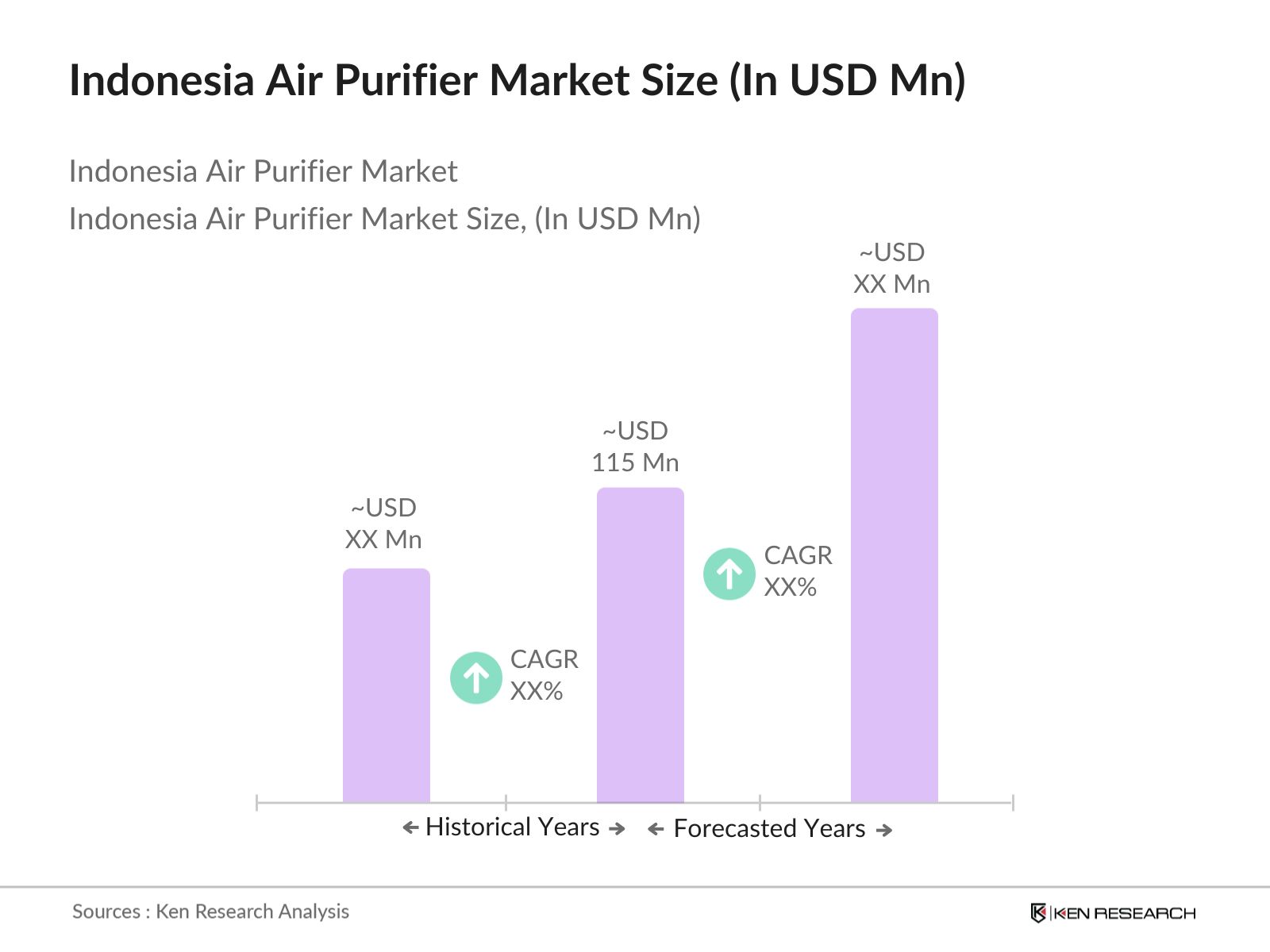
The Indonesia air purifier market is valued at USD 115 million, primarily driven by rising pollution levels and increased consumer demand for health-oriented solutions.
Challenges include high initial costs for premium air purifiers, lack of awareness among lower-income segments, and the limited reach of air purifier distribution channels in rural areas.
Key players in the market include Xiaomi Corporation, Daikin Industries Ltd., Sharp Corporation, Philips Indonesia, and Coway Co., Ltd., dominating through a combination of strong brand presence and innovative product offerings.
The market is propelled by factors such as increasing pollution levels, growing awareness of indoor air quality, and government initiatives to combat air pollution through regulatory measures and clean air programs.
Cities like Jakarta and Surabaya dominate the market due to their high population density, industrial activity, and worsening air quality, making them key regions for air purifier adoption.

What makes us stand out is that our consultants follows Robust, Refine and Result (RRR) methodology. i.e. Robust for clear definitions, approaches and sanity checking, Refine for differentiating respondents facts and opinions and Result for presenting data with story

We have set a benchmark in the industry by offering our clients with syndicated and customized market research reports featuring coverage of entire market as well as meticulous research and analyst insights.

While we don't replace traditional research, we flip the method upside down. Our dual approach of Top Bottom & Bottom Top ensures quality deliverable by not just verifying company fundamentals but also looking at the sector and macroeconomic factors.

With one step in the future, our research team constantly tries to show you the bigger picture. We help with some of the tough questions you may encounter along the way: How is the industry positioned? Best marketing channel? KPI's of competitors? By aligning every element, we help maximize success.

Our report gives you instant access to the answers and sources that other companies might choose to hide. We elaborate each steps of research methodology we have used and showcase you the sample size to earn your trust.

If you need any support, we are here! We pride ourselves on universe strength, data quality, and quick, friendly, and professional service.