
Indonesia Bottled Water Market Outlook to 2030
Region:Indonesia
Author(s):Vijay Kumar
Product Code:KROD6495
Region:Indonesia
Author(s):Vijay Kumar
Product Code:KROD6495
December 2024
92
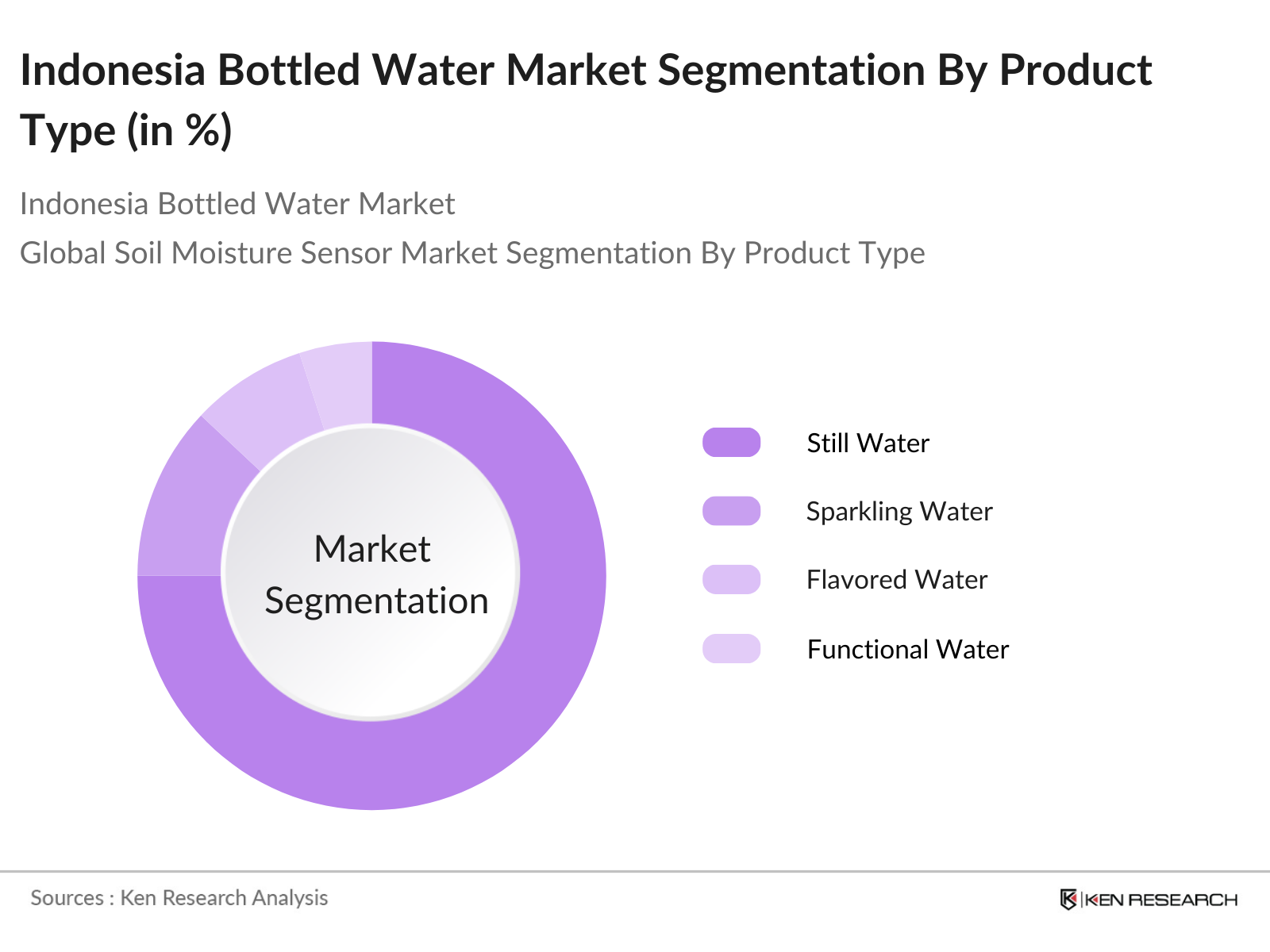
By Product Type: The Indonesia bottled water market is segmented by product type into still water, sparkling water, flavored water, and functional water. Still water holds the dominant market share in Indonesia, largely due to its widespread availability, affordability, and consumer preference for non-carbonated hydration options. Many leading brands focus on providing still water as their primary product, catering to the everyday consumption needs of a broad demographic across both urban and rural areas.
By Packaging Type: Indonesia's bottled water market is also segmented by packaging type into PET bottles, glass bottles, cans, and biodegradable packaging. PET bottles hold the largest market share, as they offer a lightweight, affordable, and convenient packaging solution for consumers. PET bottles are also widely recycled, making them a more sustainable option than other materials, which resonates with environmentally conscious consumers. Many companies have also introduced eco-friendly initiatives to improve PET bottle recycling rates.

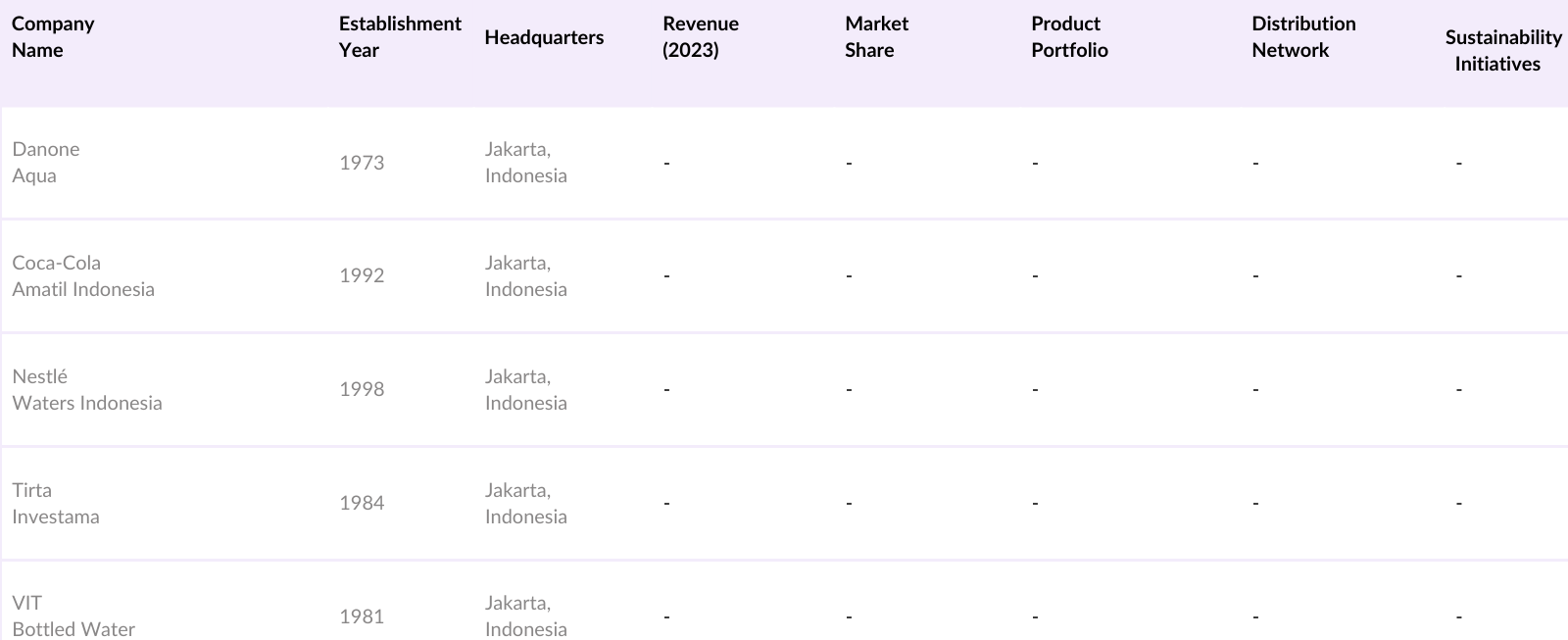
The Indonesian bottled water market is competitive, with both local and global players vying for market share. The market is characterized by a consolidation of major brands, including local market leaders like Danone Aqua and global players such as Coca-Cola Amatil Indonesia. These companies have achieved dominance through extensive distribution networks, strategic partnerships, and large-scale marketing efforts that resonate with a wide demographic of consumers. Innovation in packaging and product differentiation, such as the introduction of flavored and functional waters, also plays a critical role in maintaining a competitive edge.
Over the next five years, the Indonesia bottled water market is expected to witness significant growth driven by increasing consumer awareness of health benefits, expansion into untapped rural areas, and improvements in water infrastructure. The rise of premium and functional bottled water products, along with the trend towards eco-friendly and sustainable packaging, will also play a key role in shaping the future of the market.
|
Product Type |
Still Water Sparkling Water Flavored Water Functional Water |
|
Packaging Type |
PET Bottles Glass Bottles Cans Others (Biodegradable Packaging) |
|
Distribution Channel |
Supermarkets/Hypermarkets Convenience Stores Online Retail Direct Sales to Institutions |
|
Water Source |
Spring Water Mineral Water Purified Water |
|
Region |
Java Sumatra Bali Kalimantan Sulawesi |
1.1. Definition and Scope
1.2. Market Taxonomy
1.3. Market Growth Rate
1.4. Market Segmentation Overview
2.1. Historical Market Size
2.2. Year-On-Year Growth Analysis
2.3. Key Market Developments and Milestones
3.1. Growth Drivers
3.1.1. Urbanization and Population Growth
3.1.2. Increasing Health Consciousness
3.1.3. Government Regulations on Clean Drinking Water
3.1.4. Tourism and Hospitality Sector Demand
3.2. Market Challenges
3.2.1. Environmental Concerns Related to Plastic Waste
3.2.2. High Cost of Bottled Water Production
3.2.3. Regulatory Pressures on Water Sources
3.3. Opportunities
3.3.1. Growth in Premium Bottled Water Segment
3.3.2. Rising Demand for Sustainable Packaging
3.3.3. Expansion into Rural Areas with Safe Water Initiatives
3.4. Trends
3.4.1. Increased Adoption of Recycled Packaging
3.4.2. Shift Towards Plant-Based and Alkaline Water
3.4.3. Introduction of Smart Bottles and Digital Water Solutions
3.5. Government Regulation
3.5.1. National Water Quality Standards
3.5.2. Licensing and Water Resource Management
3.5.3. Initiatives for Reducing Plastic Waste
3.6. SWOT Analysis
3.7. Stakeholder Ecosystem
3.8. Porters Five Forces
3.9. Competition Ecosystem
4.1. By Product Type (In Value %)
4.1.1. Still Water
4.1.2. Sparkling Water
4.1.3. Flavored Water
4.1.4. Functional Water
4.2. By Packaging Type (In Value %)
4.2.1. PET Bottles
4.2.2. Glass Bottles
4.2.3. Cans
4.2.4. Others (Biodegradable Packaging)
4.3. By Distribution Channel (In Value %)
4.3.1. Supermarkets/Hypermarkets
4.3.2. Convenience Stores
4.3.3. Online Retail
4.3.4. Direct Sales to Institutions
4.4. By Water Source (In Value %)
4.4.1. Spring Water
4.4.2. Mineral Water
4.4.3. Purified Water
4.5. By Region (In Value %)
4.5.1. Java
4.5.2. Sumatra
4.5.3. Bali
4.5.4. Kalimantan
4.5.5. Sulawesi
5.1. Detailed Profiles of Major Competitors
5.1.1. Danone Aqua
5.1.2. Coca-Cola Amatil Indonesia
5.1.3. Nestl Waters Indonesia
5.1.4. Tirta Investama
5.1.5. PT Sumber Tirta
5.1.6. VIT Bottled Water
5.1.7. Le Minerale
5.1.8. Ades (Coca-Cola Company)
5.1.9. Club (Mayora Indah)
5.1.10. Cleo Pure Water
5.1.11. ALTO
5.1.12. Pristine Water
5.1.13. San Miguel Indonesia
5.1.14. Aqua 1000 (Tirta Investama)
5.1.15. Cheers Bottled Water
5.2. Cross Comparison Parameters (Revenue, Market Share, Product Offerings, Distribution Network, Sustainability Practices, Innovation Capabilities, Regional Presence, Marketing Strategies)
5.3. Market Share Analysis
5.4. Strategic Initiatives
5.5. Mergers and Acquisitions
5.6. Investment Analysis
5.7. Venture Capital Funding
5.8. Government Grants
5.9. Private Equity Investments
6.1. Water Source Licensing
6.2. Environmental Compliance for Packaging
6.3. Labeling and Health Standards
6.4. Waste Management Regulations
7.1. Future Market Size Projections
7.2. Key Factors Driving Future Market Growth
8.1. By Product Type (In Value %)
8.2. By Packaging Type (In Value %)
8.3. By Distribution Channel (In Value %)
8.4. By Water Source (In Value %)
8.5. By Region (In Value %)
9.1. TAM/SAM/SOM Analysis
9.2. Customer Cohort Analysis
9.3. Marketing Initiatives
9.4. White Space Opportunity Analysis
The initial stage of research involves identifying the core factors influencing the Indonesia bottled water market. This phase includes in-depth secondary research, encompassing reports from industry bodies, company websites, and proprietary databases, to map out the major stakeholders in the industry and determine the critical market variables.
Following data collection, the market is analyzed by examining historical trends, consumer preferences, and product penetration. This phase includes data-driven assessments of revenue, market share, and distribution channels to estimate current market dynamics and project future developments.
After constructing a market hypothesis, validation is achieved by consulting industry experts through interviews and surveys. These insights help refine the market projections and provide a clearer understanding of competitive strategies and consumer trends.
In the final phase, research findings are synthesized into actionable insights. This process includes direct interviews with key industry players to verify data accuracy, refine the competitive landscape, and ensure that all aspects of the market are comprehensively covered.
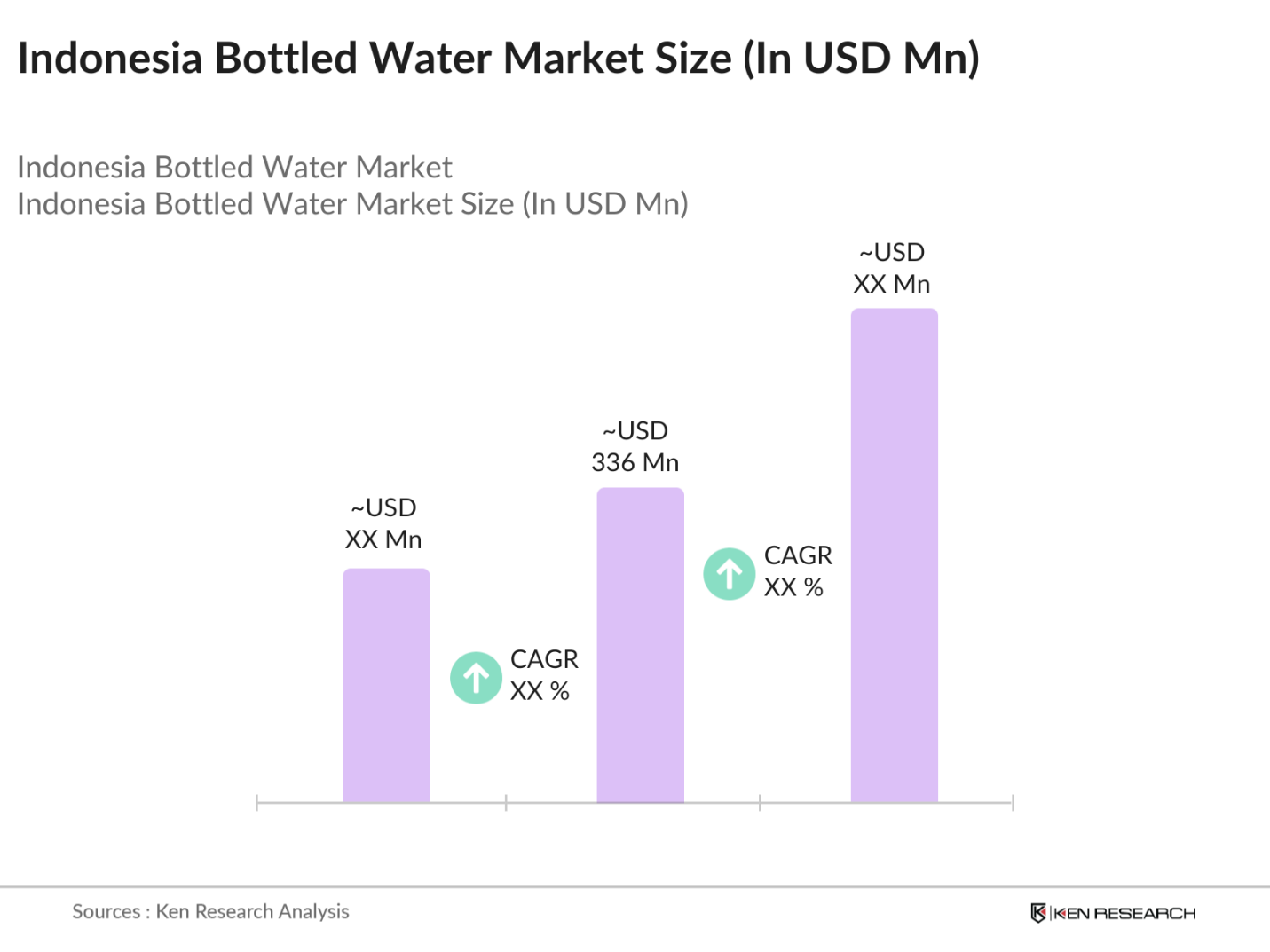
The Indonesia Bottled Water market is valued at USD 336 million, based on a five-year historical analysis. This market is primarily driven by the rising demand for safe drinking water due to concerns over tap water quality and increasing health consciousness among consumers.
Key challenges include environmental concerns related to plastic waste, high production costs, and regulatory pressures surrounding water resource usage. Sustainability is becoming increasingly important for companies in this sector.
Key players in the market include Danone Aqua, Coca-Cola Amatil Indonesia, Nestl Waters Indonesia, and Tirta Investama. These companies dominate due to their extensive distribution networks, strong brand presence, and innovative packaging solutions.
The market is driven by increasing health awareness, rising disposable incomes, and the expansion of premium water products. The shift towards eco-friendly packaging solutions is also contributing to market growth.

What makes us stand out is that our consultants follows Robust, Refine and Result (RRR) methodology. i.e. Robust for clear definitions, approaches and sanity checking, Refine for differentiating respondents facts and opinions and Result for presenting data with story

We have set a benchmark in the industry by offering our clients with syndicated and customized market research reports featuring coverage of entire market as well as meticulous research and analyst insights.

While we don't replace traditional research, we flip the method upside down. Our dual approach of Top Bottom & Bottom Top ensures quality deliverable by not just verifying company fundamentals but also looking at the sector and macroeconomic factors.

With one step in the future, our research team constantly tries to show you the bigger picture. We help with some of the tough questions you may encounter along the way: How is the industry positioned? Best marketing channel? KPI's of competitors? By aligning every element, we help maximize success.

Our report gives you instant access to the answers and sources that other companies might choose to hide. We elaborate each steps of research methodology we have used and showcase you the sample size to earn your trust.

If you need any support, we are here! We pride ourselves on universe strength, data quality, and quick, friendly, and professional service.