CHAPTER 1 - MARKET SUMMARY
Market Overview
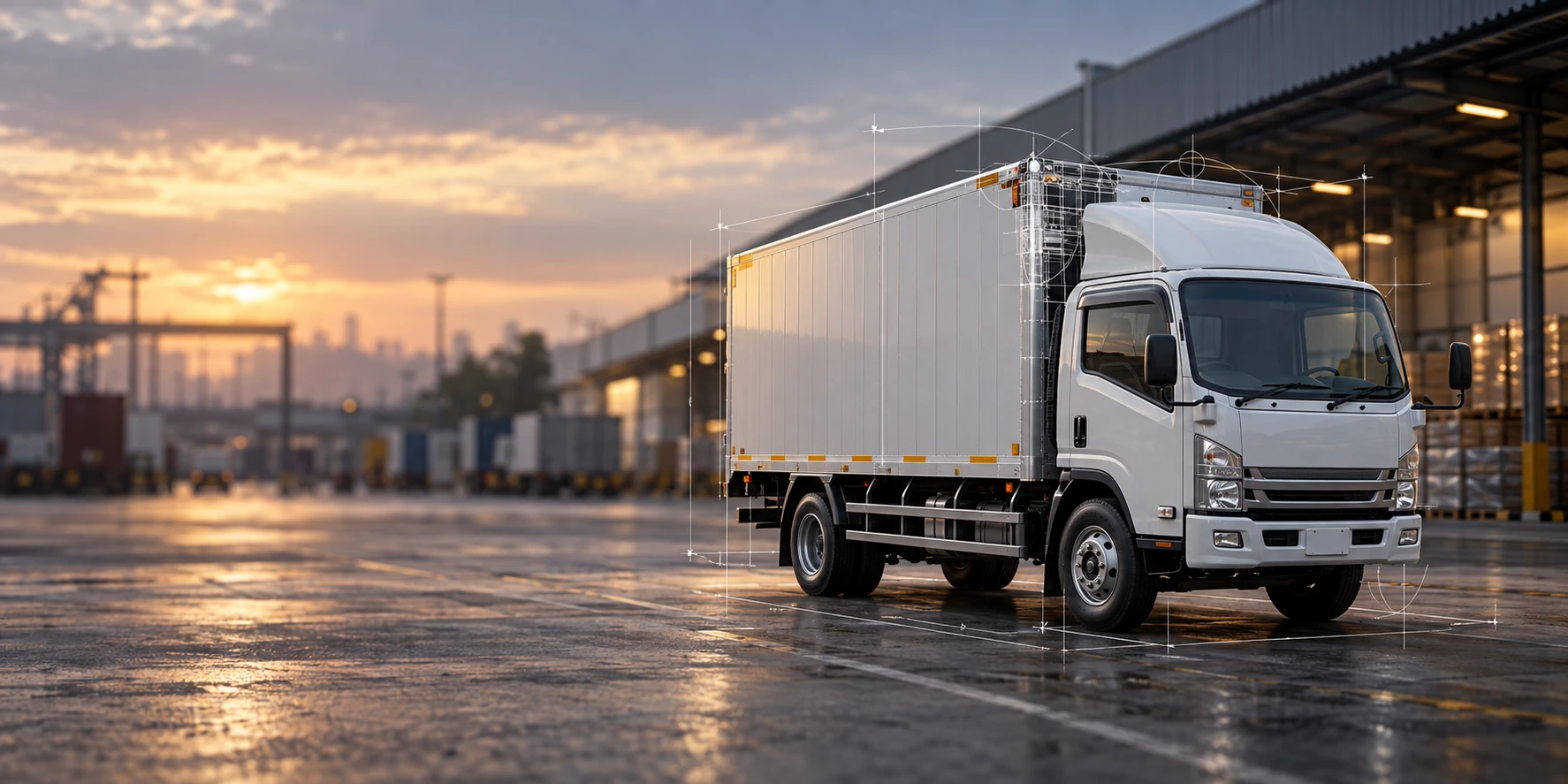
The Indonesia Box Truck Market operates through a linked ecosystem of chassis manufacturers, authorized dealers, bodybuilders, refrigeration integrators, financiers, and fleet operators. Demand is generated by recurring store replenishment, parcel distribution, industrial movement, and controlled-temperature deliveries. Digital payments reached 14.26 billion transactions in the fourth quarter of 2025, up 39.21% year-on-year, strengthening the transaction base behind route-intensive urban logistics.
Java is the market's primary operating hub because it concentrates consumers, manufacturing, warehouses, ports, and dealer infrastructure. The island generated 56.93% of Indonesia's 2025 economic output and contained 1,842.77 km of the country's 3,115.98 km toll-road network. This concentration improves route density, service utilization, body-repair access, and resale liquidity, making Java the preferred deployment geography for fleet operators.
Market Value
USD 1,126 million
2025
Dominant Region
Java
Dominant Segment
Light-Duty Box Trucks
fastest growing
Total Number of Players
48
Future Outlook
The Indonesia Box Truck Market is projected to expand from USD 1,126 Mn in 2025 to USD 1,727 Mn by 2031, representing a 7.39% forecast CAGR. The outlook moderates from the 13.34% historical CAGR recorded during 2020-2025, when post-pandemic normalization, replacement demand, and logistics investment lifted the market from a lower base. New box-truck sales are expected to rise from 39,800 units in 2025 to 56,800 units in 2031, while average selling prices increase from USD 28,291 to USD 30,405 per unit as refrigerated bodies, safety systems, and fleet connectivity gain mix.
Growth is expected to strengthen progressively after 2026 as compliance enforcement, cold-chain expansion, and route digitization improve replacement economics. Light-duty dry-freight trucks will remain the largest revenue pool because they serve urban retail and parcel routes, while refrigerated bodies will post the strongest configuration growth due to food, beverage, pharmaceutical, and healthcare distribution requirements. Java will retain the highest absolute demand, but Sumatra, Kalimantan, Sulawesi, and eastern Indonesia will support incremental fleet deployment. Suppliers combining localized chassis availability, certified body integration, financing access, uptime guarantees, and telematics will capture a disproportionate share of premium fleet contracts.
7.39%
Forecast CAGR
USD 1,727 Mn
2030 Projection
Base Year
2025
Historical Period
2020-2025
Forecast Period
2026-2031
Historical CAGR
13.34%
CHAPTER 2 - SCOPE OF REPORT
Scope of the Market
CHAPTER 3 - Key Stakeholders
Key Target Audience
Key stakeholders who can leverage from this market analysis for investment, strategy, and operational planning.
Investors
CAGR, fleet replacement, margins, consolidation, exit timing
Corporates
procurement cost, uptime, payload, route productivity, TCO
Government
ODOL compliance, road safety, logistics efficiency, localization
Operators
utilization, maintenance, telematics, body quality, residual value
Financial institutions
asset finance, credit risk, collateral, demand stability
CHAPTER 4 - Market Size & Growth
Market Size, Growth Forecast and Trends
This section evaluates the historical market size, analyzes year-over-year growth dynamics, and presents forecast projections supported by market performance indicators and demand-side drivers.
Historical & Projected Market Size ($ Million)
Year-over-Year Growth Rate (%)
Market Value vs Volume Growth (%)
Historical Market Performance (2020-2025)
Market value increased from USD 602 Mn in 2020 to USD 1,126 Mn in 2025, with the strongest annual expansion of 22.4% recorded in 2022. Unit sales advanced from 23,200 to 39,800 during the period, while the average selling price moved from USD 25,948 to USD 28,291 per vehicle. Growth eased to 4.4% in 2025 as broader vehicle demand softened, but the box-truck category retained support from replacement cycles, parcel routes, retail distribution, and food logistics. The historical value CAGR of 13.34% exceeded the 11.40% volume CAGR, indicating positive configuration and pricing mix.
Forecast Market Outlook (2026-2031)
Market value is forecast to rise from USD 1,199 Mn in 2026 to USD 1,727 Mn in 2031, producing a 7.39% CAGR from the 2025 base. Annual growth is expected to accelerate from 6.5% in 2026 to 8.4% in 2031 as compliance-led replacement, refrigerated body demand, and connected fleet systems deepen. Unit volumes are projected to reach 56,800 by 2031, equivalent to a 6.11% CAGR, while average selling prices increase to USD 30,405. Value growth therefore remains above volume growth as higher-specification bodies, financing packages, and uptime services expand supplier revenue per vehicle.
CHAPTER 5 - Market Data
Market Breakdown
The Indonesia Box Truck Market is moving from a post-recovery volume cycle toward a more balanced growth model driven by unit expansion, body complexity, and connected fleet adoption. The operating indicators below show where CEOs and investors can expect value creation to shift through 2031.
Year | Market Size (USD Mn) | YoY Growth (%) | New Box Truck Sales (Units) | Average Selling Price (USD/Unit) | Telematics-Enabled New Sales (%) | Period |
|---|---|---|---|---|---|---|
| 2020 | $602 Mn | +- | 23,200 | 25,948 | Forecast | |
| 2021 | $720 Mn | +19.6% | 27,000 | 26,667 | Forecast | |
| 2022 | $881 Mn | +22.4% | 32,000 | 27,531 | Forecast | |
| 2023 | $1,014 Mn | +15.1% | 35,800 | 28,324 | Forecast | |
| 2024 | $1,079 Mn | +6.4% | 38,000 | 28,395 | Forecast | |
| 2025 | $1,126 Mn | +4.4% | 39,800 | 28,291 | Forecast | |
| 2026 | $1,199 Mn | +6.5% | 42,200 | 28,412 | Forecast | |
| 2027 | $1,283 Mn | +7.0% | 44,900 | 28,575 | Forecast | |
| 2028 | $1,375 Mn | +7.2% | 47,800 | 28,766 | Forecast | |
| 2029 | $1,478 Mn | +7.5% | 50,800 | 29,094 | Forecast | |
| 2030 | $1,593 Mn | +7.8% | 53,800 | 29,610 | Forecast | |
| 2031 | $1,727 Mn | +8.4% | 56,800 | 30,405 | Forecast |
New Box Truck Sales
39,800 units, 2025, Indonesia. Scale advantages favor national dealer and service networks. Mitsubishi Fuso, Isuzu, and Hino recorded 25,613, 25,295, and 20,517 total retail vehicle sales respectively in 2025, indicating a deep commercial chassis base.
Average Selling Price
USD 28,291 per unit, 2025, Indonesia. Mix expansion depends on payload and body complexity. Mitsubishi Fuso lists box-compatible Canter variants at 5.15-ton and 8.25-ton gross vehicle weight, supporting differentiated pricing between urban and regional distribution applications.
Telematics-Enabled New Sales
38%, 2025, Indonesia. Compliance data integration increases the value of connected fleet platforms. Authorities inspected 2.32 million vehicles during January-October 2025 and linked weighbridge, weigh-in-motion, electronic registration, and enforcement systems, creating demand for auditable fleet data.
CHAPTER 6 - Segmentation
Market Segmentation Framework
Comprehensive analysis across key dimensions providing insights into market structure, consumer preferences, and distribution patterns.
No of Segments
7
Dominant Segment
Vehicle Class
Fastest Growing Segment
Body Configuration
Vehicle Class
Body Configuration
Payload Capacity
End-Use Industry
Customer Type
Sales Channel
Geography
Key Segmentation Takeaways
Comprehensive analysis across all extracted segmentation dimensions providing insights into market structure, consumer preferences, and distribution patterns.
Vehicle Class
Light-duty box trucks dominate because they combine access to dense urban routes, lower financing tickets, broad dealer availability, and compatibility with parcel, retail, and food distribution. Medium-duty trucks remain important for regional replenishment, while heavy-duty units serve narrower long-haul and high-capacity applications. Fleet replacement economics therefore depend most heavily on light-duty uptime, residual value, and body standardization.
Body Configuration
Refrigerated box bodies are the fastest-growing configuration as food, beverage, pharmaceutical, and healthcare networks require tighter temperature control and delivery traceability. Dry freight boxes remain the largest installed format, but insulated and secure designs broaden the premium mix. Suppliers that integrate refrigeration equipment, validated insulation, telematics, maintenance, and financing can capture higher revenue per vehicle and longer service relationships.
CHAPTER 7 - Regional Analysis
Regional Analysis
Indonesia ranks second among selected Southeast Asian box truck markets by modeled 2025 value, behind Thailand and ahead of Vietnam, Malaysia, and the Philippines. Its position reflects a large domestic vehicle market, localized commercial chassis production, expanding toll-road coverage, and a forecast growth rate above most mature peers.
Focus Country Ranking
2nd
Focus Country Market Size
USD 1,126 Mn (2025)
Focus Country CAGR (2026-2031)
7.39%
Focus Country Ranking
2nd
Focus Country Market Size
USD 1,126 Mn (2025)
Focus Country CAGR (2026-2031)
7.39%
Regional Analysis (Current Year)
Regional Analysis Comparison
| Metric | Thailand | Indonesia | Vietnam | Malaysia | Philippines |
|---|---|---|---|---|---|
| Market Size | USD 1,260 Mn | USD 1,126 Mn | USD 886 Mn | USD 642 Mn | USD 598 Mn |
| CAGR (%) | 5.2% | 7.39% | 8.1% | 4.8% | 6.7% |
Market Position
Indonesia's USD 1,126 Mn market ranks second in the peer set, supported by 803,687 total vehicle wholesales in 2025 and substantial domestic commercial-vehicle distribution infrastructure.
Growth Advantage
Indonesia's 7.39% forecast CAGR exceeds Thailand's modeled 5.2% and Malaysia's 4.8%, positioning it as a growth leader behind Vietnam's 8.1% expansion trajectory.
Competitive Strengths
Indonesia combines 3,115.98 km of toll roads with local plants capable of 80,000 Isuzu and 75,000 Hino units annually, supporting fleet availability, body integration, and service scale.
CHAPTER 8 - INDUSTRY ANALYSIS
Growth Drivers, Challenges & Opportunities
Comprehensive analysis of key factors shaping the Indonesia Box Truck Market, including growth catalysts, operational challenges, and emerging opportunities across production, distribution, and consumer segments.
Growth Drivers
Digital Commerce and Urban Route Density
- Digital payment transactions increased 39.21% year-on-year (Q4 2025, Indonesia), improving order frequency and supporting higher utilization for light-duty enclosed fleets serving merchants and consumers.
- Urban residents represented 59.4% of the population (2025, Indonesia), concentrating demand in city corridors where compact box trucks can outperform larger vehicles on route access and drop density.
- Transport and storage activity grew 8.98% year-on-year (Q4 2025, Indonesia), signaling revenue expansion for logistics operators and reinforcing replacement demand for dependable enclosed cargo fleets.
Road Connectivity and Distribution Reach
- Java contains 1,842.77 km of toll roads (2025, Indonesia), supporting dense hub-and-spoke distribution and improving daily trip economics for retail, parcel, and food delivery fleets.
- The national road network covered 47,603.39 km with 93.65% stable condition (2025, Indonesia), broadening reachable demand while lowering maintenance volatility for compliant vehicles.
- Average national-road travel time improved to 2.16 hours per 100 km (2025, Indonesia), while 95 km of new toll road (2025, Indonesia) expanded capacity, raising potential fleet utilization.
Fleet Renewal and Compliance-Led Procurement
- The government reaffirmed a Zero ODOL implementation agenda for 2027 (2025, Indonesia), encouraging fleets to replace non-compliant bodies with correctly dimensioned vehicles and documented payload specifications.
- Government weighing units inspected 2.32 million vehicles (January-October 2025, Indonesia), strengthening the business case for compliant bodies, axle-load monitoring, and auditable route operations.
- Isuzu and Hino manufacturing capacity reaches 80,000 and 75,000 units annually (latest disclosed, Indonesia), enabling localized supply, shorter lead times, and fleet specification flexibility.
Market Challenges
Soft Vehicle Cycle and Financing Pressure
- The market contracted from 865,723 units in 2024 to 803,687 units in 2025 (Indonesia), increasing competition for creditworthy buyers and pressuring discount-sensitive chassis margins.
- Isuzu retail sales were 25,295 units (2025, Indonesia), showing resilient commercial demand but also highlighting concentration among large brands with stronger financing and service ecosystems.
- Economic growth of 5.11% (2025, Indonesia) supports demand, yet slower vehicle purchases require suppliers to use leasing, maintenance bundles, and residual-value guarantees to unlock replacement cycles.
Compliance Complexity and Fragmented Body Quality
- Authorities began normalizing 300 overdimension vehicles (2025, East Java), demonstrating that body modifications can create retrofit costs, downtime, and residual-value risk for fleet owners.
- Box-compatible Canter variants span 5.15-ton and 8.25-ton gross vehicle weight (current products, Indonesia), requiring precise body, axle, payload, and route matching to avoid non-compliance.
- The 2027 Zero ODOL target (2025 policy, Indonesia) raises near-term engineering and certification requirements, favoring approved bodybuilders while increasing adjustment costs for informal conversion workshops.
Archipelagic Service and Utilization Economics
- Java and Sumatra account for 2,947.19 km of 3,115.98 km toll roads (2025, Indonesia), leaving thinner high-speed networks across eastern islands and raising service-delivery costs.
- National-road travel time of 2.16 hours per 100 km (2025, Indonesia) remains a material utilization variable, making route planning and preventive maintenance central to fleet profitability.
- The urban population reached 59.4% (2025, Indonesia), concentrating profitable routes in cities while creating lower backhaul density and longer service intervals in remote markets.
Market Opportunities
Refrigerated and Multi-Temperature Box Systems
- Fuso offers a 5.15-ton GVW Canter FE71 with chiller-body compatibility (current product, Indonesia), enabling bodybuilders and refrigeration integrators to monetize complete cold-delivery packages.
- Urban residents account for 59.4% of the population (2025, Indonesia), benefiting food distributors, healthcare suppliers, and retailers that require frequent, shorter temperature-controlled routes.
- Digital transactions grew 39.21% year-on-year (Q4 2025, Indonesia), supporting online grocery and medicine ordering; value capture requires validated insulation, refrigeration uptime, and route visibility.
Telematics and Compliance-as-a-Service
- Integration of four systems: JTO, WIM, BLUe, and ETLE (2025, Indonesia) supports subscription revenue for payload monitoring, driver alerts, compliance records, and fleet reporting.
- The 2027 Zero ODOL agenda (2025 policy, Indonesia) benefits OEMs, telematics providers, financiers, and insurers that can price risk using verified configuration and operating data.
- Indonesia processed 14.26 billion digital payment transactions (Q4 2025), demonstrating infrastructure readiness; wider fleet adoption requires affordable hardware, dealer installation, and open data interfaces.
Institutional and Cooperative Fleet Programs
- Near-term negotiations covered 35,000 six-wheel trucks (November 2025, Indonesia), offering OEMs and bodybuilders a pathway to standardized agricultural, food, and rural distribution configurations.
- The plan referenced 20,000 Mitsubishi Fuso and 15,000 Isuzu trucks (November 2025, Indonesia), benefiting suppliers with localized capacity, service reach, and scalable body integration.
- The program targets 80,000 cooperatives (November 2025, Indonesia); realization depends on financing, transparent tenders, route economics, operator training, and nationwide maintenance support.
CHAPTER 9 - Competitive Landscape
Competitive Landscape Overview
The market is concentrated among Japanese commercial-vehicle brands with localized assembly, dense dealer networks, and established bodybuilder relationships; entry barriers center on financing access, uptime assurance, homologation, parts availability, and residual value.
Market Share Distribution
Top 5 Players
Market Dynamics
8 new entrants in the past 5 years, indicating strong market attractiveness and growth potential.
Company Name | Market Share | Headquarters | Founding Year | Core Market Focus |
|---|---|---|---|---|
PT Krama Yudha Tiga Berlian Motors | ~28% | Jakarta, Indonesia | 1970 | Mitsubishi Fuso light- and medium-duty box-compatible chassis |
PT Isuzu Astra Motor Indonesia | ~27% | Jakarta, Indonesia | 1974 | Light- and medium-duty distribution truck platforms |
PT Hino Motors Sales Indonesia | ~21% | Jakarta, Indonesia | 2003 | Light-, medium-, and heavy-duty box-compatible chassis |
PT Toyota-Astra Motor | ~7% | Jakarta, Indonesia | 1971 | Dyna light-duty and medium-duty cargo chassis |
PT Astra Daihatsu Motor | ~5% | Jakarta, Indonesia | 1992 | Gran Max compact urban box-truck platforms |
PT Suzuki Indomobil Sales | ~4% | Jakarta, Indonesia | 1970 | Carry-based compact box-body conversions |
PT UD Astra Motor Indonesia | ~3% | Jakarta, Indonesia | 2019 | Kuzer and Croner regional distribution platforms |
PT Tata Motors Distribusi Indonesia | ~2% | Jakarta, Indonesia | - | Light- and medium-duty commercial truck platforms |
PT Hyundai Motors Indonesia | ~1% | Jakarta, Indonesia | - | Light commercial chassis for urban cargo bodies |
PT Mercedes-Benz Distribution Indonesia | ~1% | Jakarta, Indonesia | - | Heavy-duty chassis for high-capacity enclosed freight |
Cross Comparison Parameters
The report provides detailed cross-comparison of key players across 10 performance parameters to identify competitive strengths and weaknesses.
Box-Body-Compatible Chassis Sales
After-Sales Network Coverage
Box Truck Revenue Growth
Estimated EBITDA Margin
Analysis Covered
Market Share Analysis:
Benchmarks estimated player concentration across box-truck-compatible chassis sales nationally today.
Cross Comparison Matrix:
Compares network reach, fleet sales, revenue growth, and profitability metrics.
SWOT Analysis:
Evaluates strategic advantages, capability gaps, opportunities, and competitive threats systematically.
Pricing Strategy Analysis:
Assesses chassis, body, refrigeration, financing, and lifecycle pricing strategies comprehensively.
Company Profiles:
Details ownership, market focus, manufacturing footprint, and channel positioning nationwide.
CHAPTER 10 - REPORT TOC
Table of Contents
Market Assessment Phase
Supply-side and competitive intelligence covering market sizing, segmentation, competitive dynamics, regulatory landscape, and future forecasts.
Go-To-Market Strategy Phase
15 chapters
Entry strategy evaluation, execution roadmap, partner recommendations, and profitability outlook.
Survey Phase
8 chapters
Demand-side primary research conducted through structured interviews and online surveys with end users across priority metros and Tier 2/3 cities to capture consumption behavior, unmet needs, and purchase drivers.
Complete Report Coverage
201+ detailed sections covering every aspect of the market
143
Assessment Sections
58
Strategy Sections
CHAPTER 11 - Our Approach
Research Methodology
Desk Research
- Reviewed commercial vehicle registration datasets
- Mapped box-body configuration and pricing
- Assessed logistics and retail indicators
- Tracked ODOL enforcement policy milestones
Primary Research
- Interviewed OEM fleet sales directors
- Consulted bodybuilder engineering managers nationwide
- Surveyed logistics fleet operations heads
- Engaged commercial vehicle leasing managers
Validation and Triangulation
- Validated across 340 respondent interviews
- Reconciled chassis and body revenues
- Benchmarked unit volumes against registrations
- Tested ASPs across payload classes
CHAPTER 12 - FAQ
FAQs
Still have questions?
Our research team is here to help you find the right solution
CHAPTER 13 - Related Research
Explore Related Reports
Expand your market intelligence with complementary research across regions and adjacent markets.
Regional/Country ReportsRelated market analysis across key regions
Related market analysis across key regions
- Indonesia Box Truck Market Size, Share & Forecast, By Vehicle Class, Body Configuration & End-Use Industry, 2026–2031
- Vietnam Box Truck Market Size, Share & Forecast, By Vehicle Class, Body Configuration & End-Use Industry, 2026–2031
- Thailand Box Truck Market Size, Share & Forecast, By Vehicle Class, Body Configuration & End-Use Industry, 2026–2031
- Malaysia Box Truck Market Size, Share & Forecast, By Vehicle Class, Body Configuration & End-Use Industry, 2026–2031
- Philippines Box Truck Market Size, Share & Forecast, By Vehicle Class, Body Configuration & End-Use Industry, 2026–2031
Adjacent ReportsRelated markets and complementary research
Related markets and complementary research
- South Africa Logistics Management Software Market
- Japan Cold Chain Logistics Market Size, Share & Forecast, By Service Type, Mode of Transport & End-Use Industry, 2025–2032
- Germany Telematics Solutions Market
- Argentina Fleet Management Services Market Size, Share & Forecast, By Service Type, Customer Type & End-Use Industry, 2025–2032
- Qatar Automotive Financing Solutions Market
500+
Market Research Reports
50+
Countries Covered
15+
Industry Verticals