
Indonesia Business Market Outlook to 2030
Region:North America
Author(s):Rajat Galav
Product Code:KROD1239
May 2025
90
About the Report
Indonesia Business Market Overview
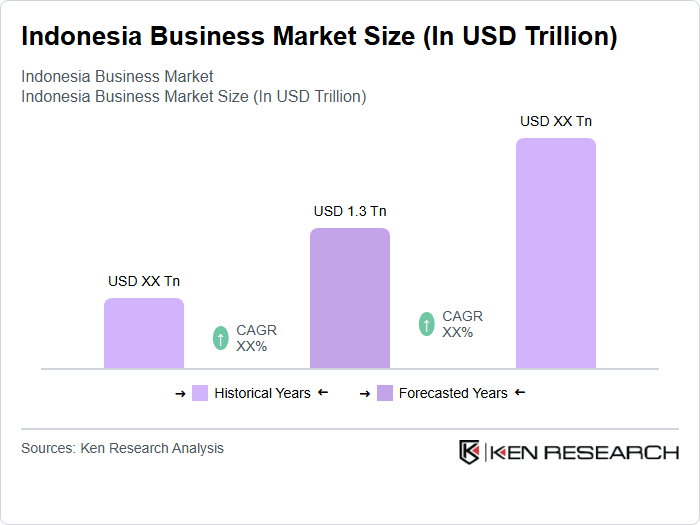
- The Indonesia Business Market is valued at USD 1.2 trillion, based on a five-year historical analysis. This growth is primarily driven by a combination of increasing foreign direct investment, a burgeoning middle class, and rapid digital transformation across various sectors. The rise in e-commerce and technology adoption has significantly contributed to the market's expansion, making it one of the most dynamic economies in Southeast Asia.
- Key cities such as Jakarta, Surabaya, and Bandung dominate the market due to their strategic locations, robust infrastructure, and concentration of business activities. Jakarta, as the capital, serves as the economic hub, attracting both local and international businesses. Surabaya and Bandung are also emerging as vital centers for trade and commerce, supported by their growing populations and improving logistics networks.
- In 2023, the Indonesian government implemented a new regulation aimed at enhancing the ease of doing business. This regulation includes the simplification of business licensing processes and the introduction of a one-stop service for business permits. The initiative is designed to attract more investments and streamline operations for both domestic and foreign companies, thereby fostering a more conducive business environment.
Indonesia Business Market Segmentation
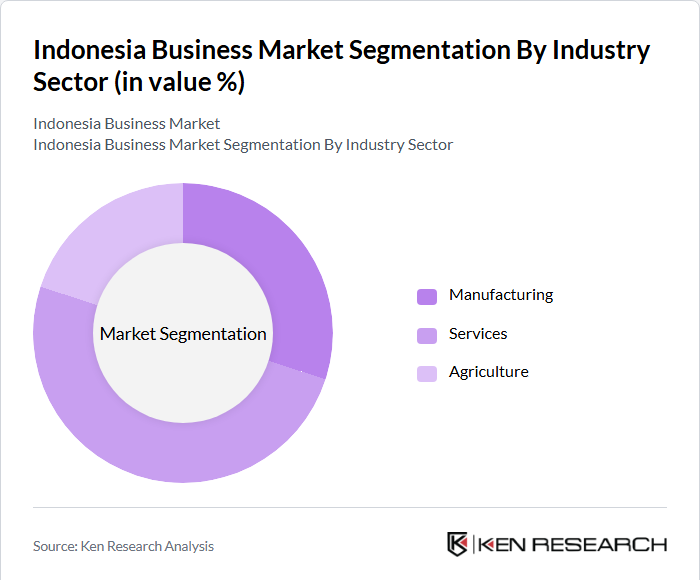
By Industry Sector: Indonesia's business market is segmented into various industry sectors, including manufacturing, services, and agriculture. Among these, the services sector is dominating the market, driven by the rapid growth of e-commerce, financial services, and tourism. The increasing consumer demand for convenience and digital solutions has led to a significant rise in online services, making this sector a key contributor to the overall market growth. The manufacturing sector, while substantial, is experiencing slower growth due to global supply chain challenges and competition from neighboring countries.
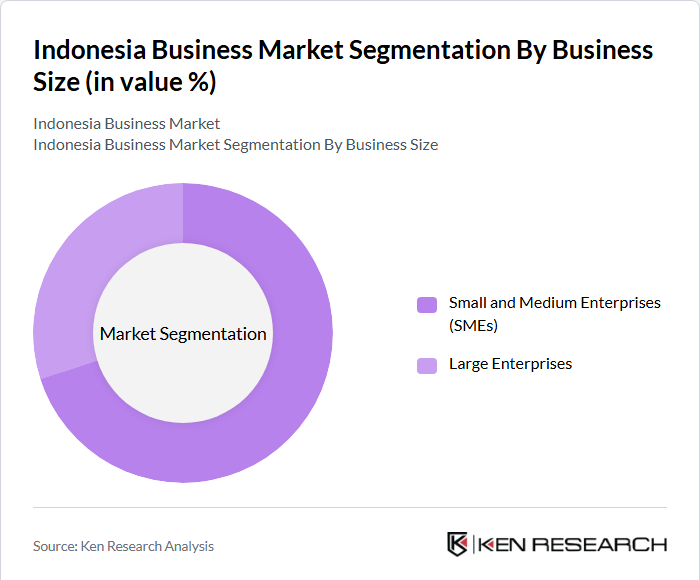
By Business Size: The market is also segmented by business size, primarily into small and medium enterprises (SMEs) and large corporations. SMEs dominate the market, accounting for a significant portion of employment and economic activity. The rise of digital platforms has enabled SMEs to access broader markets and resources, enhancing their competitiveness. Large corporations, while influential, face challenges in agility and innovation compared to their smaller counterparts, which are often more adaptable to changing market conditions.
Indonesia Business Market Competitive Landscape
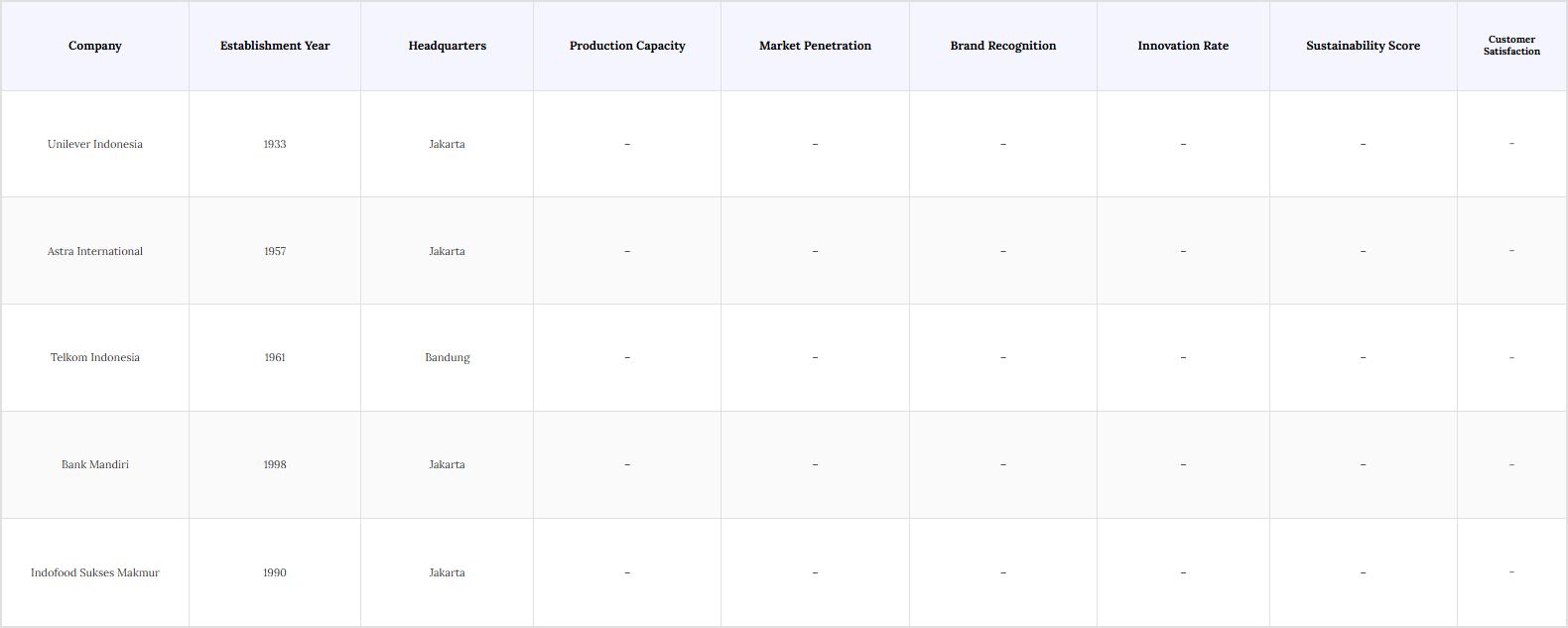
The Indonesia Business Market is characterized by a competitive landscape featuring both local and international players. Major companies are leveraging technology and innovation to enhance their market presence and operational efficiency. The presence of established firms alongside emerging startups creates a dynamic environment that fosters competition and drives growth.
Indonesia Business Market Industry Analysis
Growth Drivers
- Increasing Urbanization and Middle-Class Growth: Indonesia's urban population is projected to reach 68% by 2024, up from 56% in 2020, according to the World Bank. This urbanization is driving demand for various goods and services, as the middle class grew to 141 million by 2024. This demographic shift is creating new market opportunities, particularly in sectors like retail, housing, and transportation, as urban consumers seek improved living standards and access to modern amenities.
- Digital Transformation and E-commerce Expansion: The digital economy in Indonesia is anticipated to reach USD 124 billion by 2025, as reported by Google. This rapid growth in e-commerce is fueled by increased internet penetration, which is projected to hit 77% by 2024. Businesses are leveraging digital platforms to reach consumers more effectively, leading to a surge in online retail and service offerings, thus transforming traditional business models and enhancing market competitiveness.
- Government Initiatives to Boost Investment: The Indonesian government attracted USD 100 billion in foreign direct investment (FDI) in 2024, as part of its economic recovery plan. Initiatives such as the Omnibus Law are designed to simplify regulations and improve the investment climate. This proactive approach is expected to stimulate growth across various sectors, including manufacturing and technology, thereby enhancing the overall business environment and encouraging local and foreign investments.
Market Challenges
- Regulatory Hurdles and Bureaucratic Inefficiencies: Indonesia's complex regulatory environment poses significant challenges for businesses. The World Bank's Ease of Doing Business Index ranks Indonesia 73rd out of 190 countries, highlighting issues such as lengthy permit processes and inconsistent enforcement of regulations. These bureaucratic inefficiencies can deter investment and slow down business operations, impacting overall market growth and competitiveness.
- Infrastructure Deficiencies in Remote Areas: Despite improvements, Indonesia still faces significant infrastructure challenges, particularly in remote regions. The Asian Development Bank estimates that the country needs to invest USD 1.5 trillion in infrastructure by 2040 to support economic growth. Poor transportation and logistics networks hinder market access for businesses, especially in rural areas, limiting their ability to compete effectively and reach broader consumer bases.
Indonesia Business Market Future Outlook
In the coming years, the Indonesian business market is expected to continue its upward trajectory, driven by urbanization, digital transformation, and government support for investment. As the economy diversifies and adapts to global trends, sectors such as e-commerce and technology will likely see significant growth, creating new opportunities for businesses and investors alike.
Market Opportunities
- Rising Demand for Sustainable Products and Services: With increasing awareness of environmental issues, there is a growing market for sustainable goods. The government aims to reduce carbon emissions by 29% by 2030, creating opportunities for businesses that focus on eco-friendly products and practices.
- Growth in the Digital Economy and Fintech Solutions: The fintech sector in Indonesia is booming, driven by a young, tech-savvy population. This growth presents opportunities for businesses to innovate and offer digital financial services, catering to the unbanked population and enhancing financial inclusion.
Scope of the Report
| By Industry Sector | Manufacturing Services Agriculture |
| By Business Size | Small and Medium Enterprises (SMEs) Large Corporations |
| By Region | Java Sumatra Kalimantan Sulawesi Bali |
| By Customer Type | Individual Consumers Businesses Government |
| By Distribution Channel | Online Offline Direct Sales Retail |
Products
Key Target Audience
Investors and Venture Capitalist Firms
Government and Regulatory Bodies (e.g., Badan Koordinasi Penanaman Modal, Otoritas Jasa Keuangan)
Manufacturers and Producers
Distributors and Retailers
Technology Providers
Industry Associations
Financial Institutions
Export and Import Agencies
Companies
Players Mentioned in the Report
PT Astra International Tbk
Bank Mandiri
Telkom Indonesia
Unilever Indonesia
Gojek
PT Indofood Sukses Makmur Tbk
PT Bank Rakyat Indonesia (Persero) Tbk
PT Pertamina (Persero)
PT Garuda Indonesia (Persero) Tbk
PT Bukalapak.com Tbk
Table of Contents
1. Indonesia Business Market Overview
1.1. Definition and Scope
1.2. Market Taxonomy
1.3. Market Growth Rate
1.4. Market Segmentation Overview
2. Indonesia Business Market Size (In USD Bn)
2.1. Historical Market Size
2.2. Year-On-Year Growth Analysis
2.3. Key Market Developments and Milestones
3. Indonesia Business Market Market Analysis
3.1. Growth Drivers
3.1.1. Increasing Urbanization and Middle-Class Growth
3.1.2. Digital Transformation and E-commerce Expansion
3.1.3. Government Initiatives to Boost Investment
3.2. Market Challenges
3.2.1. Regulatory Hurdles and Bureaucratic Inefficiencies
3.2.2. Infrastructure Deficiencies in Remote Areas
3.2.3. Intense Competition and Market Saturation
3.3. Opportunities
3.3.1. Rising Demand for Sustainable Products and Services
3.3.2. Growth in the Digital Economy and Fintech Solutions
3.3.3. Expansion of Renewable Energy Initiatives
3.4. Trends
3.4.1. Shift Towards Sustainable Business Practices
3.4.2. Increasing Adoption of Artificial Intelligence and Automation
3.4.3. Growth of the Gig Economy and Freelancing
3.5. Government Regulation
3.5.1. Investment Policies and Incentives
3.5.2. Trade Agreements and Tariff Regulations
3.5.3. Labor Laws and Employment Regulations
3.5.4. Environmental Regulations and Compliance Standards
3.6. SWOT Analysis
3.7. Stake Ecosystem
3.8. Porter’s Five Forces
3.9. Competition Ecosystem
4. Indonesia Business Market Segmentation
4.1. By Industry Sector
4.1.1. Manufacturing
4.1.2. Services
4.1.3. Agriculture
4.2. By Business Size
4.2.1. Small and Medium Enterprises (SMEs)
4.2.2. Large Corporations
4.3. By Region
4.3.1. Java
4.3.2. Sumatra
4.3.3. Kalimantan
4.3.4. Sulawesi
4.3.5. Bali
4.4. By Customer Type
4.4.1. Individual Consumers
4.4.2. Businesses
4.4.3. Government
4.5. By Distribution Channel
4.5.1. Online
4.5.2. Offline
4.5.3. Direct Sales
4.5.4. Retail
5. Indonesia Business Market Competitive Analysis
5.1. Detailed Profiles of Major Companies
5.1.1. PT Astra International Tbk
5.1.2. Bank Mandiri
5.1.3. Telkom Indonesia
5.1.4. Unilever Indonesia
5.1.5. Gojek
5.1.6. PT Indofood Sukses Makmur Tbk
5.1.7. PT Bank Rakyat Indonesia (Persero) Tbk
5.1.8. PT Pertamina (Persero)
5.1.9. PT Garuda Indonesia (Persero) Tbk
5.1.10. PT Bukalapak.com Tbk
5.2. Cross Comparison Parameters
5.2.1. Market Share
5.2.2. Revenue Growth Rate
5.2.3. Customer Satisfaction Index
5.2.4. Brand Recognition Score
5.2.5. Innovation Index
5.2.6. Operational Efficiency Ratio
5.2.7. Employee Engagement Level
5.2.8. Sustainability Score
6. Indonesia Business Market Regulatory Framework
6.1. Environmental Standards
6.2. Compliance Requirements
6.3. Certification Processes
7. Indonesia Business Market Future Market Size (In USD Bn)
7.1. Future Market Size Projections
7.2. Key Factors Driving Future Market Growth
8. Indonesia Business Market Future Market Segmentation
8.1. By Industry Sector
8.1.1. Manufacturing
8.1.2. Services
8.1.3. Agriculture
8.2. By Business Size
8.2.1. Small and Medium Enterprises (SMEs)
8.2.2. Large Corporations
8.3. By Region
8.3.1. Java
8.3.2. Sumatra
8.3.3. Kalimantan
8.3.4. Sulawesi
8.3.5. Bali
8.4. By Customer Type
8.4.1. Individual Consumers
8.4.2. Businesses
8.4.3. Government
8.5. By Distribution Channel
8.5.1. Online
8.5.2. Offline
8.5.3. Direct Sales
8.5.4. Retail
9. Indonesia Business Market Analysts’ Recommendations
9.1. TAM/SAM/SOM Analysis
9.2. Customer Cohort Analysis
9.3. Marketing Initiatives
9.4. White Space Opportunity Analysis
Research Methodology
Step 1: Identification of Key Variables
The initial phase involves mapping out the critical components of the Indonesia Business Market, focusing on key sectors, consumer behavior, and regulatory influences. This step relies on extensive desk research, utilizing secondary data sources such as industry reports, government publications, and market studies to identify the variables that significantly impact market trends and dynamics.
Step 2: Market Segmentation and Analysis
In this phase, we will segment the Indonesia Business Market into distinct categories based on industry, geography, and consumer demographics. This segmentation will be supported by quantitative analysis of historical market data, allowing for a clearer understanding of market size, growth rates, and competitive landscape across different segments.
Step 3: Stakeholder Interviews and Expert Insights
To enrich the research findings, we will conduct in-depth interviews with key stakeholders, including business leaders, industry analysts, and policymakers. These qualitative insights will help validate the quantitative data and provide a nuanced understanding of market challenges, opportunities, and emerging trends that may not be captured through secondary research alone.
Step 4: Data Synthesis and Reporting
The final phase involves synthesizing the collected data into a coherent report that outlines the findings, insights, and forecasts for the Indonesia Business Market. This report will integrate both quantitative and qualitative analyses, ensuring that the conclusions drawn are well-supported and actionable for stakeholders looking to navigate the market landscape through 2029.
Frequently Asked Questions
01. How big is the Indonesia Business Market?
The Indonesia Business Market is valued at USD 1.2 trillion, driven by factors such as increasing demand, technological advancements, and supportive government initiatives.
02. What are the key challenges in the Indonesia Business Market?
Key challenges in the Indonesia Business Market include intense competition, regulatory complexities, and infrastructure limitations affecting market dynamics.
03. Who are the major players in the Indonesia Business Market?
Major players in the Indonesia Business Market include PT Astra International Tbk, Bank Mandiri, Telkom Indonesia, Unilever Indonesia, Gojek, among others.
04. What are the growth drivers for the Indonesia Business Market?
The primary growth drivers for the Indonesia Business Market are increasing consumer demand, favorable policies, innovation, and substantial investment inflows.
Why Buy From Us?

What makes us stand out is that our consultants follows Robust, Refine and Result (RRR) methodology. i.e. Robust for clear definitions, approaches and sanity checking, Refine for differentiating respondents facts and opinions and Result for presenting data with story

We have set a benchmark in the industry by offering our clients with syndicated and customized market research reports featuring coverage of entire market as well as meticulous research and analyst insights.

While we don't replace traditional research, we flip the method upside down. Our dual approach of Top Bottom & Bottom Top ensures quality deliverable by not just verifying company fundamentals but also looking at the sector and macroeconomic factors.

With one step in the future, our research team constantly tries to show you the bigger picture. We help with some of the tough questions you may encounter along the way: How is the industry positioned? Best marketing channel? KPI's of competitors? By aligning every element, we help maximize success.

Our report gives you instant access to the answers and sources that other companies might choose to hide. We elaborate each steps of research methodology we have used and showcase you the sample size to earn your trust.

If you need any support, we are here! We pride ourselves on universe strength, data quality, and quick, friendly, and professional service.