
Indonesia Cloud Analytics Market Outlook to 2030
Region:Indonesia
Author(s):Shubham Kashyap
Product Code:KROD3782
Region:Indonesia
Author(s):Shubham Kashyap
Product Code:KROD3782
December 2024
81
The Indonesia cloud analytics market is characterized by the presence of both global and local players competing to capture market share. Key players include AWS, Microsoft, Google Cloud, Oracle, SAP, and IBM. These companies are focusing on offering comprehensive cloud analytics solutions that cater to the diverse needs of Indonesian businesses, from data storage to advanced analytics and artificial intelligence (AI) capabilities.
Additionally, local players such as Telkom Indonesia and XL Axiata are partnering with global technology providers to deliver cloud services tailored to the Indonesian market. The competitive landscape is also marked by strategic partnerships, mergers, and acquisitions, as companies seek to expand their product portfolios and strengthen their market presence.
|
Company Name |
Establishment Year |
Headquarters |
Revenue (2023) |
Employees |
Key Products |
Key Clients |
Partnerships |
|
AWS |
2006 |
USA |
|||||
|
Microsoft |
1975 |
USA |
|||||
|
Google Cloud |
2008 |
USA |
|||||
|
Oracle |
1977 |
USA |
|||||
|
Telkom Indonesia |
1965 |
Indonesia |
Growth Drivers
Market Challenges
The Indonesia cloud analytics market is expected to experience robust growth over the next five years, driven by technological advancements, increasing cloud adoption, and government support for digitalization. The market will likely see further innovation in areas such as artificial intelligence (AI), machine learning (ML), and advanced data visualization tools, enabling businesses to extract deeper insights from their data.
Future Market Opportunities
|
Deployment Model |
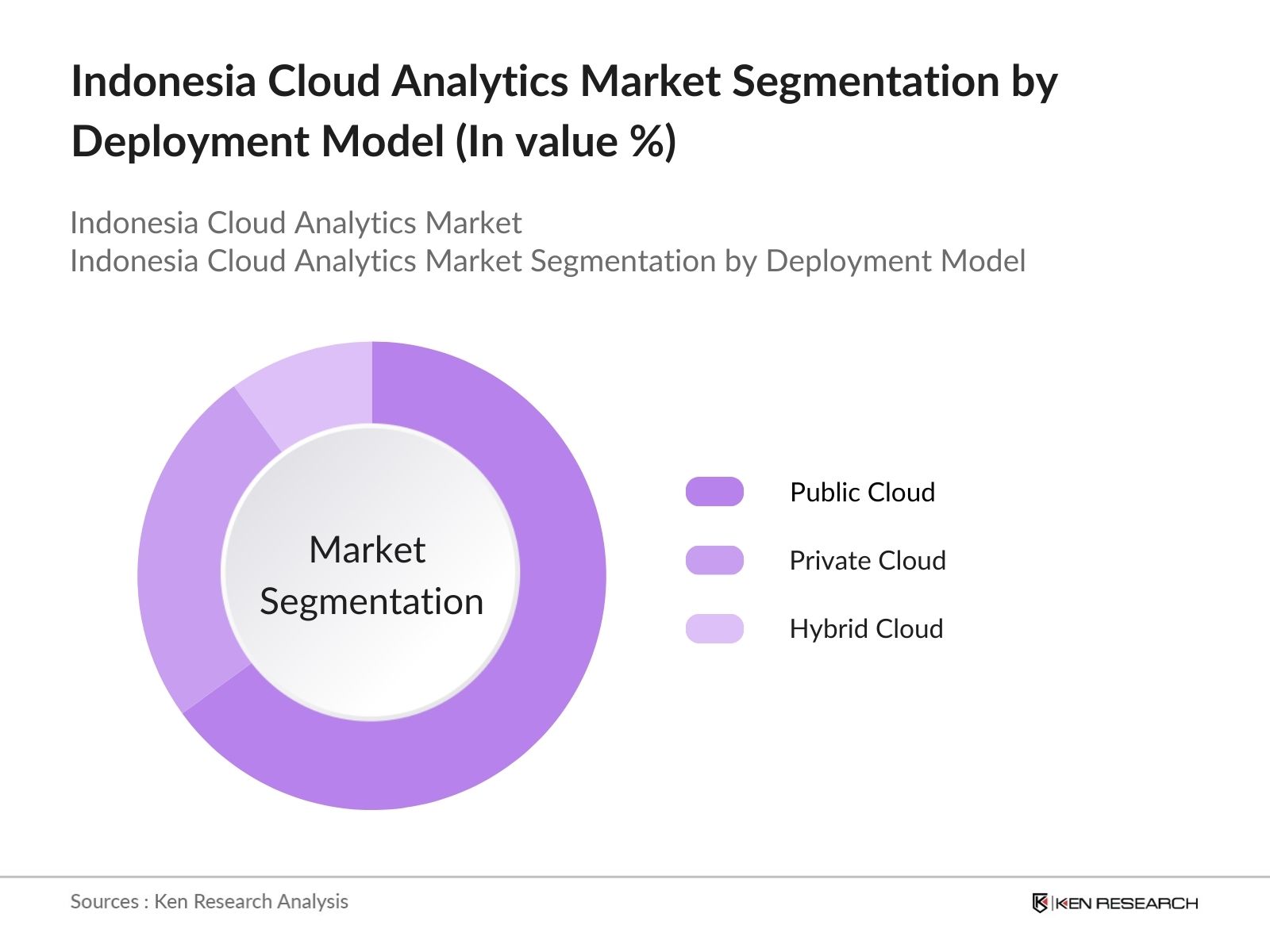
Public Cloud Private Cloud Hybrid Cloud |
|
Industry Vertical |
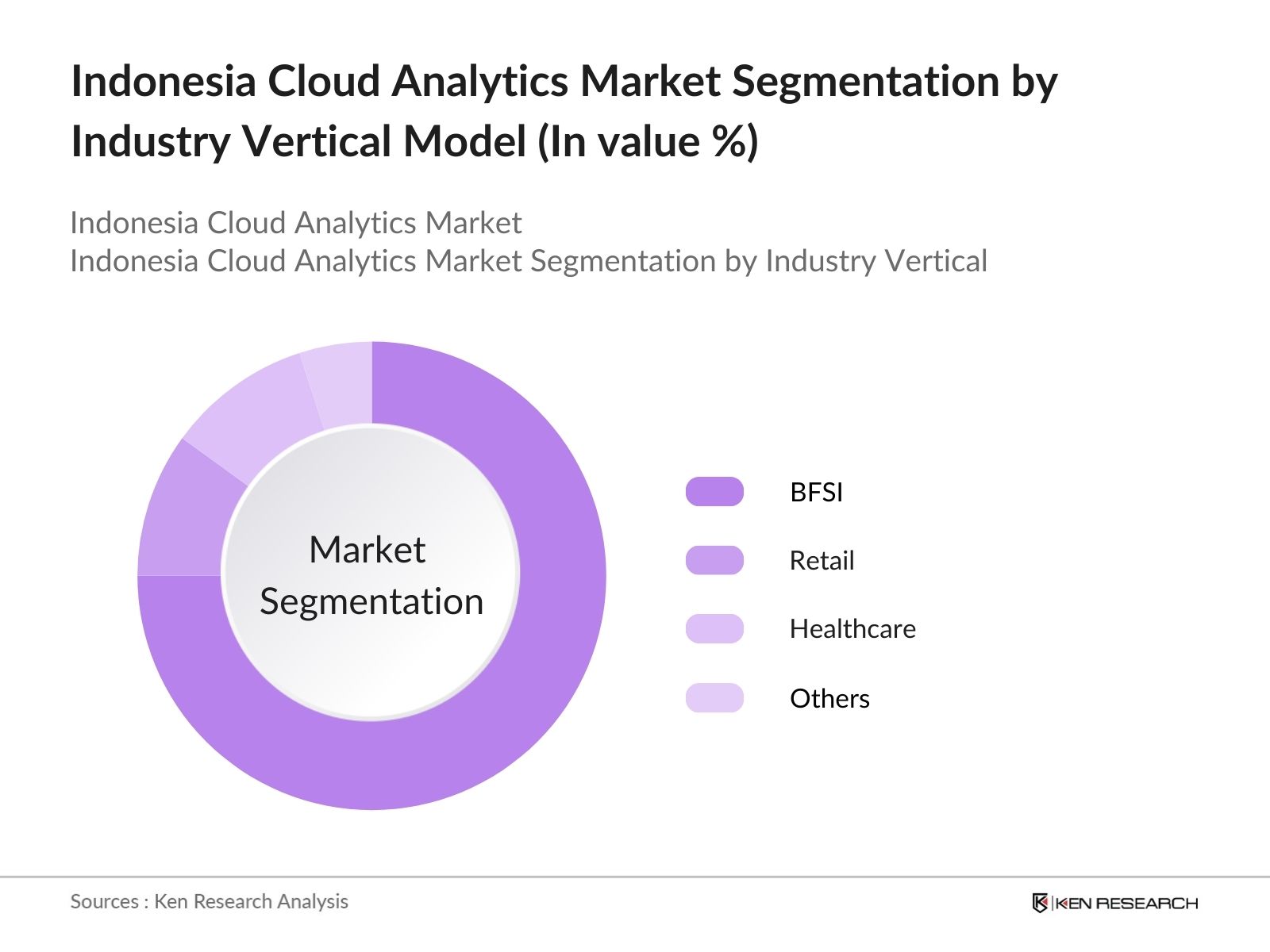
BFSI Retail Healthcare Manufacturing Government |
|
Analytics Type |
Descriptive Analytics Predictive Analytics Prescriptive Analytics |
|
Organization Size |
Large Enterprises SMEs |
|
By Region |
Java Sumatra Kalimantan Sulawesi Bali |
1.1. Definition and Scope
1.2. Market Taxonomy
1.3. Market Growth Rate (Cloud Adoption Rate, Infrastructure Growth, Cloud Spend)
1.4. Market Segmentation Overview
2.1. Historical Market Size
2.2. Year-On-Year Growth Analysis
2.3. Key Market Developments and Milestones (Cloud Infrastructure Expansion, Digital Transformation Projects)
3.1. Growth Drivers
3.1.1. Digital Transformation Initiatives (Government and Private Sector)
3.1.2. Increasing Data Generation (Big Data, IoT, Social Media, E-Commerce)
3.1.3. Cloud-First Policies by Enterprises
3.1.4. Cloud Analytics for Real-Time Insights
3.2. Market Challenges
3.2.1. Data Security and Privacy Concerns (Regulations like PDP Bill)
3.2.2. Limited Cloud Talent and Workforce Skill Gap
3.2.3. Connectivity and Infrastructure Issues in Remote Areas
3.3. Opportunities
3.3.1. Hybrid Cloud Deployments
3.3.2. AI and Machine Learning Integration with Cloud Analytics
3.3.3. Rising Demand from SMEs and Startups for Cloud Analytics
3.4. Trends
3.4.1. Multi-Cloud Strategy Adoption
3.4.2. Growth of Edge Computing and Cloud Analytics
3.4.3. Data-as-a-Service (DaaS) in Indonesia
3.5. Government Regulation
3.5.1. Data Localization Policies (GR 71, Ministry of ICT Regulations)
3.5.2. Supportive Tax Incentives for Digital Economy
3.5.3. Indonesia's 4.0 Industry Initiative and Cloud Adoption Support
3.5.4. Public Cloud Adoption Guidelines by Government Entities
3.6. SWOT Analysis
3.6.1. Strengths
3.6.2. Weaknesses
3.6.3. Opportunities
3.6.4. Threats
3.7. Stake Ecosystem (Cloud Providers, System Integrators, Analytics Software Vendors)
3.8. Porters Five Forces Analysis
3.8.1. Threat of New Entrants
3.8.2. Bargaining Power of Suppliers
3.8.3. Bargaining Power of Buyers
3.8.4. Threat of Substitutes
3.8.5. Industry Rivalry
3.9. Competitive Ecosystem Analysis
4.1. By Deployment Model (In Value %)
4.1.1. Public Cloud
4.1.2. Private Cloud
4.1.3. Hybrid Cloud
4.2. By Industry Vertical (In Value %)
4.2.1. BFSI
4.2.2. Retail
4.2.3. Healthcare
4.2.4. Manufacturing
4.2.5. Government
4.3. By Analytics Type (In Value %)
4.3.1. Descriptive Analytics
4.3.2. Predictive Analytics
4.3.3. Prescriptive Analytics
4.4. By Organization Size (In Value %)
4.4.1. Large Enterprises
4.4.2. SMEs
4.5. By Cloud Service Type (In Value %)
4.5.1. IaaS (Infrastructure-as-a-Service)
4.5.2. PaaS (Platform-as-a-Service)
4.5.3. SaaS (Software-as-a-Service)
5.1 Detailed Profiles of Major Competitors
5.1.1. AWS
5.1.2. Microsoft Azure
5.1.3. Google Cloud
5.1.4. IBM
5.1.5. Oracle
5.1.6. SAP
5.1.7. Telkom Indonesia
5.1.8. XL Axiata
5.1.9. Alibaba Cloud
5.1.10. Cloudera
5.1.11. Qlue
5.1.12. Gojek
5.1.13. Tokopedia
5.1.14. Dynatrace
5.1.15. Tableau
5.2 Cross Comparison Parameters (No. of Employees, Headquarters, Inception Year, Revenue, Cloud Services Offered, Market Presence, Key Clients, Strategic Partnerships)
5.3 Market Share Analysis
5.4 Strategic Initiatives
5.5 Mergers and Acquisitions
5.6 Investment Analysis
5.7 Government Initiatives and Impact on Cloud Analytics
6.1 Data Protection Regulations (PDP Bill, GDPR Alignment)
6.2 Compliance Requirements for Cloud Providers
6.3 Certification Processes for Cloud Analytics Solutions (ISO, SOC, etc.)
7.1 Future Market Size Projections
7.2 Key Factors Driving Future Market Growth (Cloud AI, Data Lakes, Advanced Analytics)
8.1 By Deployment Model (In Value %)
8.2 By Industry Vertical (In Value %)
8.3 By Analytics Type (In Value %)
8.4 By Organization Size (In Value %)
8.5 By Cloud Service Type (In Value %)
9.1 TAM/SAM/SOM Analysis
9.2 Cloud Adoption Trends and Forecast
9.3 White Space Opportunity Analysis
9.4 Strategic Marketing Insights for Cloud Analytics Providers
The initial step involves mapping all stakeholders within the Indonesia Cloud Analytics market. Extensive desk research and use of proprietary databases were employed to identify critical variables, such as cloud adoption rates and analytics service providers.
This phase involved analyzing historical data on cloud analytics usage in Indonesia, including the penetration rates of cloud services across different industries. Market penetration, revenue generation, and the ratio of cloud service providers were assessed.
Market hypotheses were formulated and validated through expert interviews with cloud service providers and analytics software vendors. Insights were gathered through in-depth consultations to ensure the reliability of data points.
The final stage involved synthesizing data gathered from cloud analytics providers and verifying it with primary research. This ensured a comprehensive and accurate depiction of the Indonesia Cloud Analytics market.
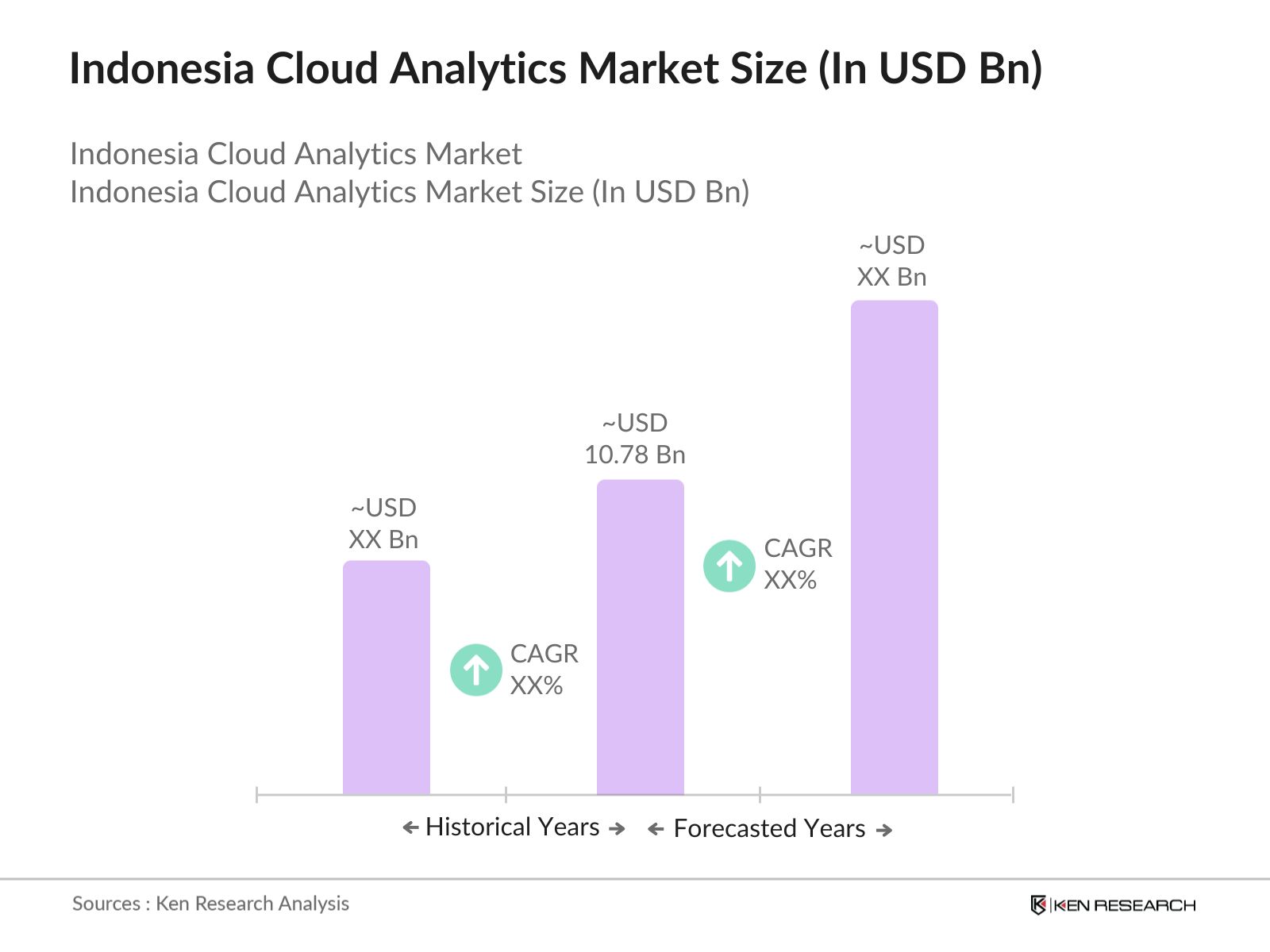
The Indonesia Cloud Analytics market is valued at USD 10.78 billion, driven by the rapid adoption of digital transformation initiatives across multiple industries. The market is growing due to increased investments in cloud infrastructure and advanced data analytics solutions.
Challenges in the Indonesia Cloud Analytics market include data privacy and security concerns, limited connectivity in remote areas, and a shortage of skilled professionals to manage cloud platforms and analytics solutions. These factors may hinder the growth of the market in certain regions.
Key players in the Indonesia Cloud Analytics market include AWS, Microsoft Azure, Google Cloud, Telkom Indonesia, and XL Axiata. These companies dominate due to their advanced cloud analytics offerings and partnerships with local businesses.
Growth drivers in the Indonesia Cloud Analytics market include increased digital transformation efforts, the rising demand for real-time data insights, and government support for cloud adoption. The integration of AI and machine learning in cloud analytics is also driving market expansion.

What makes us stand out is that our consultants follows Robust, Refine and Result (RRR) methodology. i.e. Robust for clear definitions, approaches and sanity checking, Refine for differentiating respondents facts and opinions and Result for presenting data with story

We have set a benchmark in the industry by offering our clients with syndicated and customized market research reports featuring coverage of entire market as well as meticulous research and analyst insights.

While we don't replace traditional research, we flip the method upside down. Our dual approach of Top Bottom & Bottom Top ensures quality deliverable by not just verifying company fundamentals but also looking at the sector and macroeconomic factors.

With one step in the future, our research team constantly tries to show you the bigger picture. We help with some of the tough questions you may encounter along the way: How is the industry positioned? Best marketing channel? KPI's of competitors? By aligning every element, we help maximize success.

Our report gives you instant access to the answers and sources that other companies might choose to hide. We elaborate each steps of research methodology we have used and showcase you the sample size to earn your trust.

If you need any support, we are here! We pride ourselves on universe strength, data quality, and quick, friendly, and professional service.