
Indonesia Data Center Networking Market Outlook to 2030
Region:Indonesia
Author(s):Meenakshi Bisht
Product Code:KROD6749
Region:Indonesia
Author(s):Meenakshi Bisht
Product Code:KROD6749
December 2024
96
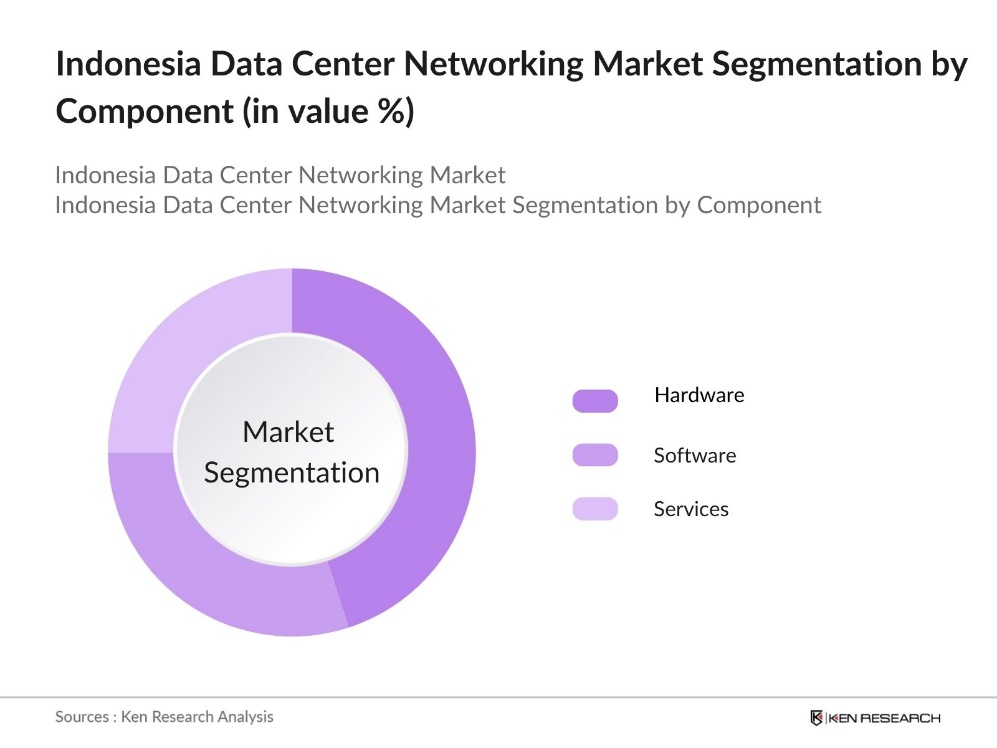
By Component: The market is segmented by component into hardware, software, and services. Recently, hardware holds a dominant share within the market component segmentation. This is largely due to Indonesias increasing focus on establishing robust physical infrastructures that can support high data processing and storage capacities. Leading companies prioritize hardware for scalable networks, ensuring low-latency connectivity and security, which are crucial for operational efficiency in Indonesias data-driven industries.
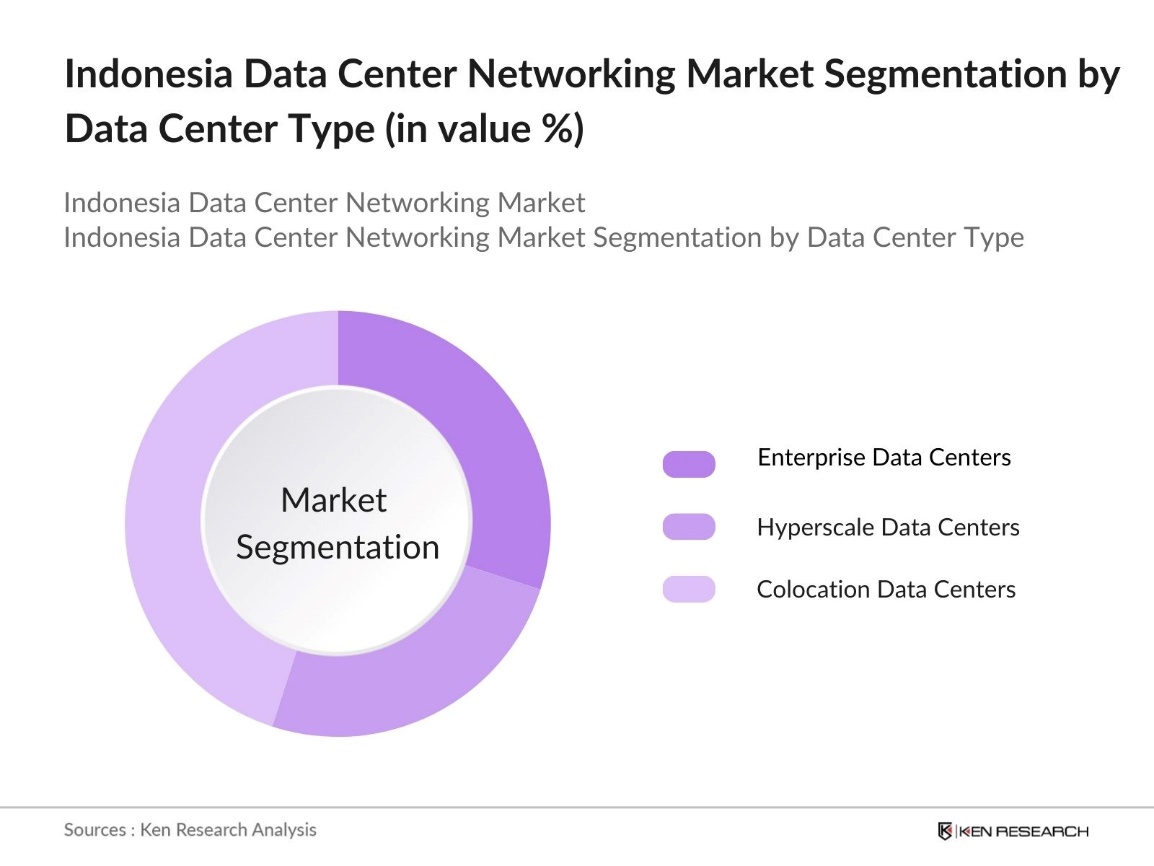
By Data Center Type: The market is segmented by data center type into enterprise, hyperscale, and colocation data centers. Colocation data centers have gained a significant market share, driven by a growing trend among businesses to outsource data management functions to specialized providers. This preference helps reduce capital expenditures on in-house infrastructure, as colocation centers offer scalability, security, and regulatory compliance, aligning with the needs of various Indonesian enterprises and global tech firms establishing a local presence.
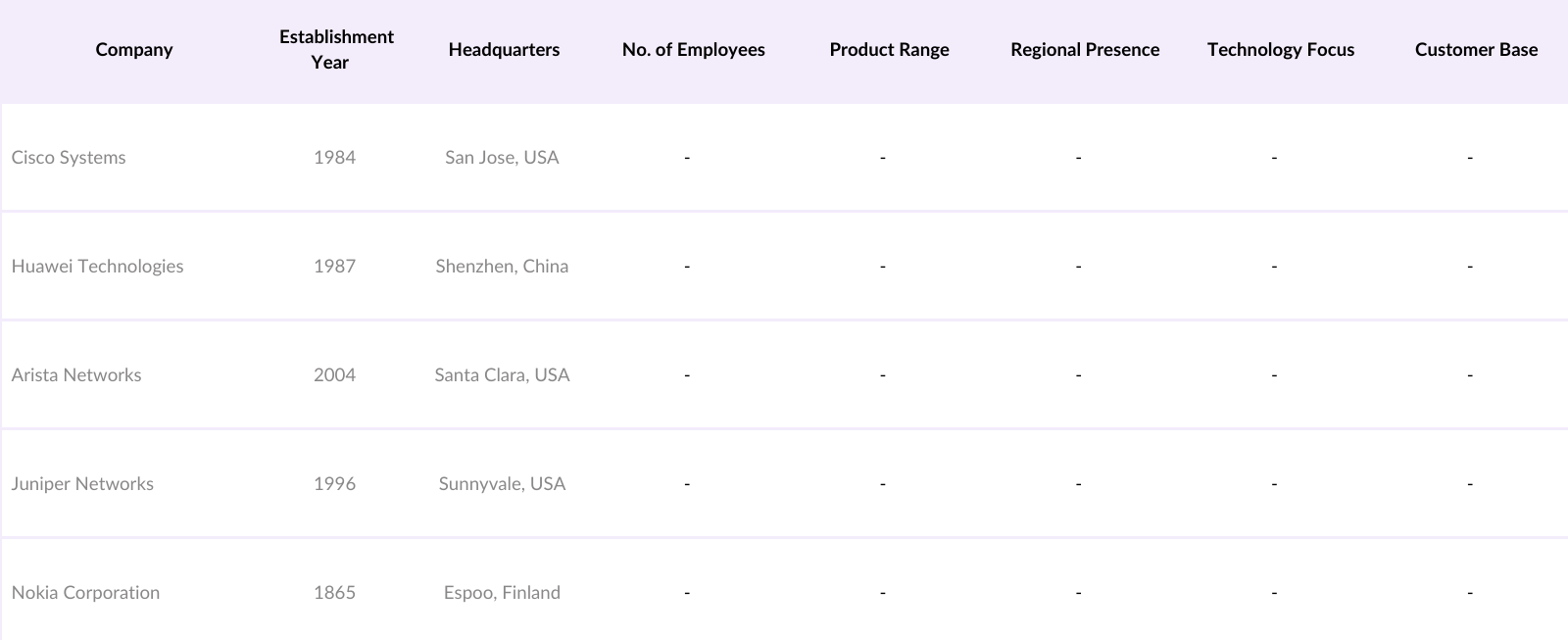
The Indonesia Data Center Networking Market is dominated by a select number of key players, each bringing extensive expertise and advanced networking solutions tailored for the regions unique digital requirements. Companies such as Cisco Systems and Huawei Technologies stand out for their infrastructure prowess, while local companies are increasingly collaborating with global players to improve scalability and service offerings.
In the coming years, the Indonesia Data Center Networking Market is anticipated to experience further growth, attributed to sustained demand for digital solutions and connectivity. Key factors include the expansion of edge computing, governmental support for IT infrastructure development, and an expected surge in cloud service adoption. These elements collectively signal a promising future for data centers as Indonesia moves towards a digitally integrated economy.
|
By Component |
Hardware |
|
By Data Center Type |
Enterprise Data Centers |
|
By Network Type |
Local Area Network (LAN) |
|
By Application |
Cloud Computing |
|
By Region |
North |
1.1. Definition and Scope
1.2. Market Taxonomy
1.3. Key Growth Indicators
1.4. Market Segmentation Overview
2.1. Historical Market Size Analysis
2.2. Year-On-Year Growth Trends
2.3. Key Developments and Strategic Milestones
3.1. Market Drivers
3.1.1. Rise in Data-Driven Operations
3.1.2. Increase in Cloud Adoption
3.1.3. Growth in IoT Deployments
3.1.4. Regulatory Support for Data Sovereignty
3.2. Market Challenges
3.2.1. High Setup Costs
3.2.2. Network Security Concerns
3.2.3. Skilled Workforce Shortage
3.3. Opportunities
3.3.1. Expansion of Edge Computing
3.3.2. Partnerships with Hyperscale Providers
3.3.3. Regional Network Integration
3.4. Emerging Trends
3.4.1. Software-Defined Networking (SDN)
3.4.2. Network Virtualization
3.4.3. Integration with Green Energy Solutions
3.5. Regulatory Framework
3.5.1. Data Protection Regulations
3.5.2. Compliance Standards (ISO, SOC)
3.5.3. Government Incentives for Data Centers
3.6. Stakeholder Ecosystem
3.7. Porters Five Forces Analysis
3.8. Competitive Landscape Overview
4.1. By Component (In Value %)
4.1.1. Hardware
4.1.2. Software
4.1.3. Services
4.2. By Data Center Type (In Value %)
4.2.1. Enterprise Data Centers
4.2.2. Hyperscale Data Centers
4.2.3. Colocation Data Centers
4.3. By Network Type (In Value %)
4.3.1. Local Area Network (LAN)
4.3.2. Wide Area Network (WAN)
4.3.3. Metro Area Network (MAN)
4.4. By Application (In Value %)
4.4.1. Cloud Computing
4.4.2. Artificial Intelligence
4.4.3. High-Performance Computing
4.5. By Region (In Value %)
4.5.1. North
4.5.2. South
4.5.3. East
4.5.4. West
5.1. Detailed Profiles of Major Competitors
5.1.1. Cisco Systems
5.1.2. Huawei Technologies
5.1.3. Arista Networks
5.1.4. Juniper Networks
5.1.5. Hewlett Packard Enterprise (HPE)
5.1.6. Dell Technologies
5.1.7. Extreme Networks
5.1.8. Nokia Corporation
5.1.9. NEC Corporation
5.1.10. Fortinet Inc.
5.1.11. VMware Inc.
5.1.12. IBM Corporation
5.1.13. Check Point Software Technologies
5.1.14. ZTE Corporation
5.1.15. Broadcom Inc.
5.2. Cross Comparison Parameters (Product Portfolio, R&D Investment, Market Presence, Strategic Partnerships, Data Center Certifications, Customer Segmentation, Regional Coverage, Revenue Share)
5.3. Market Share Analysis
5.4. Strategic Initiatives (Collaborations, New Product Launches, Regional Expansions)
5.5. Mergers & Acquisitions
5.6. Investment Landscape (Venture Capital, Private Equity, Government Funding)
5.7. Technology Advancements and Patents
5.8. Service-Level Agreement (SLA) Standards and Compliance
6.1. Compliance with Data Sovereignty Laws
6.2. Certification Standards (ISO, Uptime Institute)
6.3. Cybersecurity Mandates
6.4. Environmental Regulations and Green Certifications
7.1. By Component (In Value %)
7.2. By Data Center Type (In Value %)
7.3. By Network Type (In Value %)
7.4. By Application (In Value %)
7.5. By Region (In Value %)
8.1. Market Penetration Strategies
8.2. Expansion in High-Growth Regions
8.3. Technology Differentiation Opportunities
8.4. Long-Term Investment Opportunities
Disclaimer Contact UsThe research begins with identifying crucial variables influencing the Indonesia Data Center Networking Market. An extensive review of the current digital landscape in Indonesia is conducted, covering primary stakeholders such as telecom providers, government bodies, and key technology firms.
Data for this phase includes analyzing market penetration levels, adoption rates of advanced networking solutions, and assessing bandwidth requirements across various industries. Historical and present-day data are processed to construct an accurate market landscape.
Primary interviews with industry experts, including technology heads and infrastructure managers, validate the data gathered. These consultations provide real-world insights into operational and security challenges within data center networks in Indonesia.
This phase involves aggregating findings from both primary and secondary sources to produce a cohesive report. In this synthesis, qualitative data is reconciled with quantitative metrics to present a holistic and reliable view of the Indonesia Data Center Networking Market.
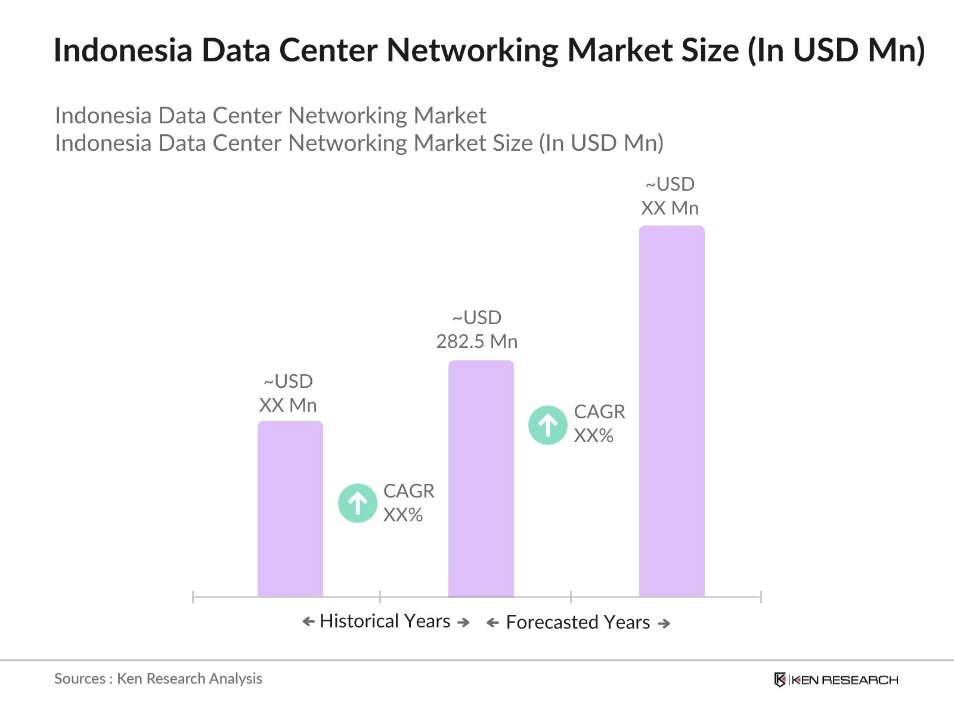
The Indonesia Data Center Networking Market is valued at USD 282.5 million, driven by digital transformation, increased cloud adoption, and government initiatives supporting the IT sector.
Key challenges in Indonesia Data Center Networking Market include high initial setup costs, regulatory compliance requirements, and a limited skilled workforce, which collectively impact the operational efficiency of the data centers.
Major players in Indonesia Data Center Networking Market include Cisco Systems, Huawei Technologies, Arista Networks, Juniper Networks, and Nokia Corporation, each offering advanced networking solutions for varied applications.
The Indonesia Data Center Networking Market growth drivers are centered on increased digitalization, cloud-based applications, expansion of IoT, and the governments commitment to modernizing Indonesias IT infrastructure.

What makes us stand out is that our consultants follows Robust, Refine and Result (RRR) methodology. i.e. Robust for clear definitions, approaches and sanity checking, Refine for differentiating respondents facts and opinions and Result for presenting data with story

We have set a benchmark in the industry by offering our clients with syndicated and customized market research reports featuring coverage of entire market as well as meticulous research and analyst insights.

While we don't replace traditional research, we flip the method upside down. Our dual approach of Top Bottom & Bottom Top ensures quality deliverable by not just verifying company fundamentals but also looking at the sector and macroeconomic factors.

With one step in the future, our research team constantly tries to show you the bigger picture. We help with some of the tough questions you may encounter along the way: How is the industry positioned? Best marketing channel? KPI's of competitors? By aligning every element, we help maximize success.

Our report gives you instant access to the answers and sources that other companies might choose to hide. We elaborate each steps of research methodology we have used and showcase you the sample size to earn your trust.

If you need any support, we are here! We pride ourselves on universe strength, data quality, and quick, friendly, and professional service.