
Indonesia Digital Camera Market Outlook to 2030
Region:Indonesia
Author(s):Shreya Garg
Product Code:KROD10604
Region:Indonesia
Author(s):Shreya Garg
Product Code:KROD10604
December 2024
94
By Product Type: The market is segmented by product type into DSLR cameras, mirrorless cameras, compact cameras, and action cameras. Recently, mirrorless cameras have gained a dominant share in the market under the product type segmentation. This is due to their compact size, improved autofocus systems, and superior video capabilities compared to traditional DSLRs. Brands like Sony and Canon have been at the forefront, offering mirrorless models that cater to both amateur and professional photographers, making them a preferred choice. 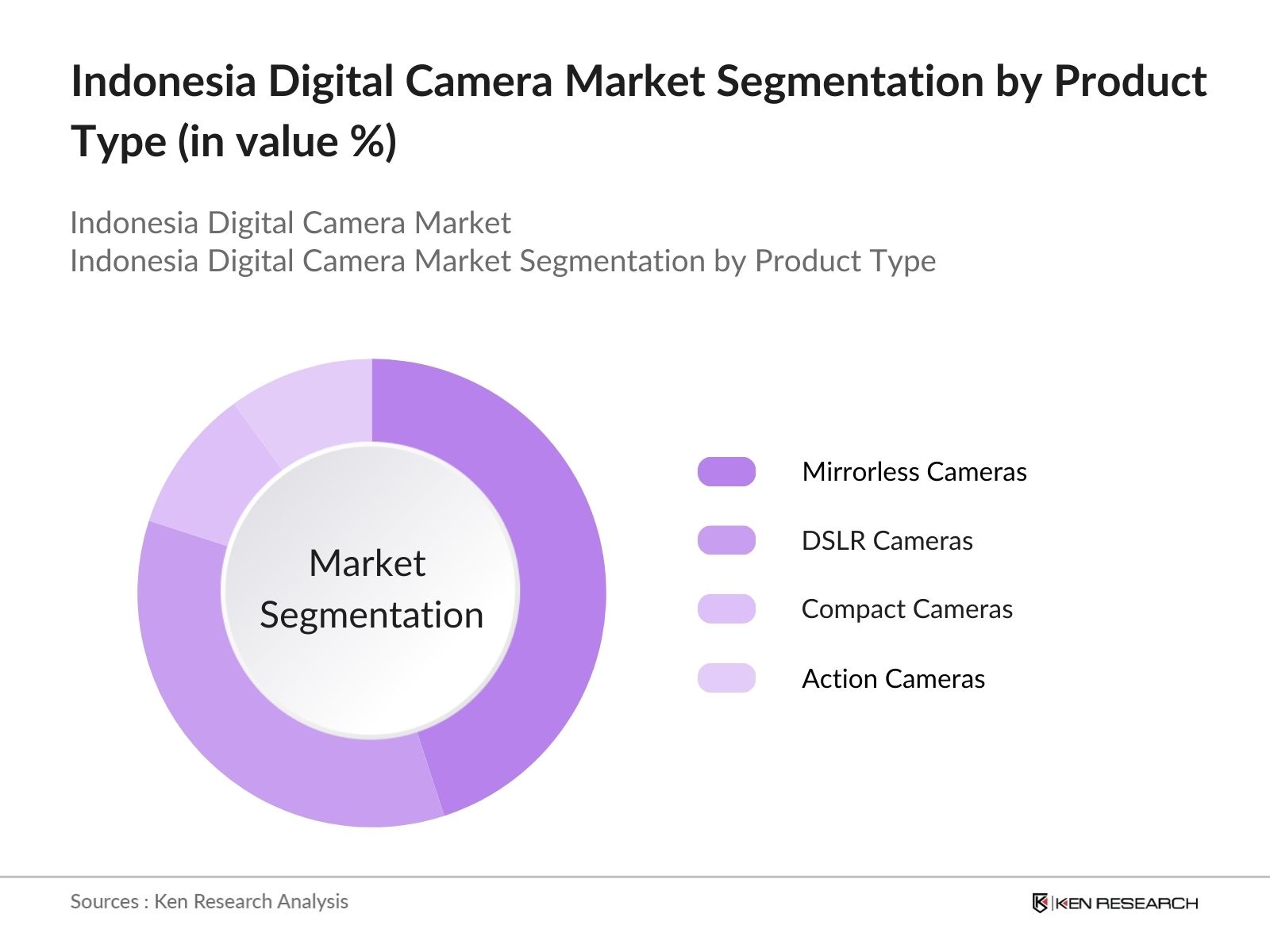
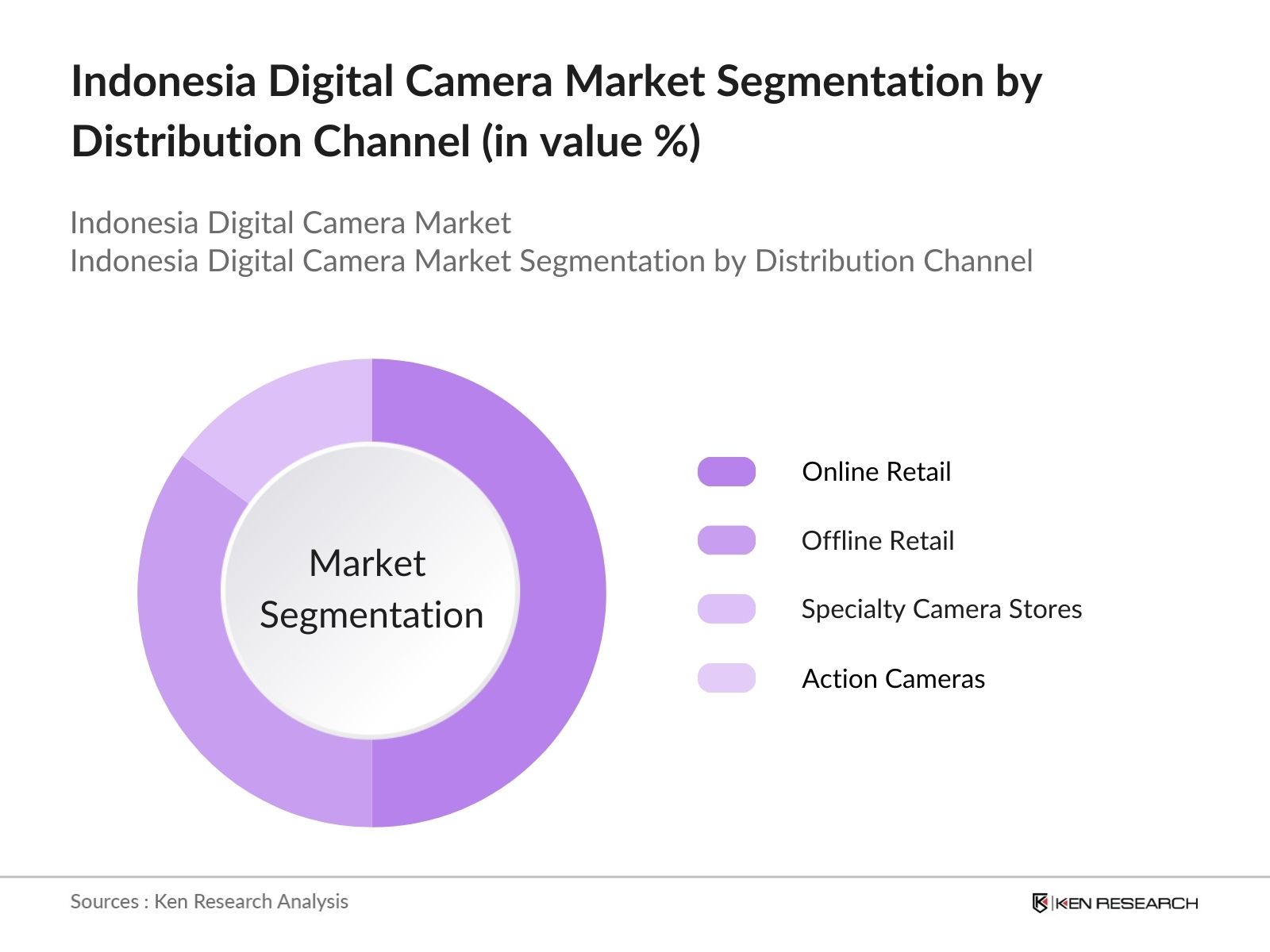
By Distribution Channel: The market is segmented by distribution channel into online retail, action camera, offline retail, and specialty camera stores. Online retail channels hold a dominant share in this segmentation due to the convenience and variety they offer. Platforms like Tokopedia and Shopee have made it easier for consumers to compare models, read reviews, and purchase cameras without needing to visit a physical store. The growing penetration of e-commerce and attractive online discounts have further contributed to this trend.
The Indonesia Digital Camera market is dominated by key global and regional players. These companies leverage technological innovation and strong brand loyalty to maintain their market positions. The market shows a concentration of global brands that have a strong focus on research and development, helping them introduce advanced features in their products. This competition results in a market where innovation and product differentiation are key.
|
Company |
Establishment Year |
Headquarters |
Product Range |
Distribution Network |
R&D Focus |
Customer Reach |
Marketing Strategy |
After-Sales Service |
Local Manufacturing Presence |
|
Canon Inc. |
1937 |
Tokyo, Japan |
|||||||
|
Sony Corporation |
1946 |
Tokyo, Japan |
|||||||
|
Nikon Corporation |
1917 |
Tokyo, Japan |
|||||||
|
Fujifilm Holdings |
1934 |
Tokyo, Japan |
|||||||
|
Panasonic Corporation |
1918 |
Osaka, Japan |
Over the next five years, the Indonesia Digital Camera market is expected to witness steady growth. Factors such as increasing consumer demand for high-resolution content, growth in vlogging, and a rise in professional photography are likely to drive this trend. Furthermore, continued technological advancements in mirrorless cameras and video capabilities will attract a new segment of consumers who seek high-quality, compact devices. E-commerce expansion and better distribution networks will further enhance market accessibility, contributing to sustained demand.
|
By Product Type |
DSLR Cameras Mirrorless Cameras Compact Cameras Action Cameras |
|
By Application |
Consumer Photography Professional Photography Commercial Video Production |
|
By Distribution Channel |
Online Retail Offline Retail Specialty Camera Stores |
|
By Price Range |
Entry-Level Cameras Mid-Range Cameras High-End Cameras |
|
By Region |
Java Sumatra Bali & Nusa Tenggara Sulawesi Kalimantan |
1.1. Definition and Scope
1.2. Market Taxonomy
1.3. Market Dynamics Overview
1.4. Value Chain Analysis
2.1. Historical Market Size
2.2. Year-On-Year Growth Analysis
2.3. Key Market Developments and Technological Milestones
2.4. Market Adoption Rate
3.1. Growth Drivers
3.1.1. Rising Photography Trends (e.g., Social Media Influence)
3.1.2. Increasing Disposable Income
3.1.3. Technological Advancements in Camera Sensors
3.1.4. Government Initiatives to Promote Tourism
3.2. Market Challenges
3.2.1. Competition from Smartphone Cameras
3.2.2. High Import Duties and Tariffs
3.2.3. Limited Local Manufacturing Capabilities
3.3. Opportunities
3.3.1. Growth in Vlogging and Content Creation
3.3.2. Demand for Mirrorless Cameras
3.3.3. E-commerce Expansion and Online Sales
3.4. Trends
3.4.1. Integration of AI in Autofocus and Image Processing
3.4.2. Rise of Mirrorless Cameras Over DSLRs
3.4.3. Demand for Compact and Lightweight Models
3.5. Government Regulations
3.5.1. Import Regulations for Electronic Goods
3.5.2. Environmental Compliance for Electronic Waste
3.5.3. Tax Incentives for Local Manufacturing
3.6. SWOT Analysis
3.7. Industry Stakeholder Ecosystem
3.8. Porters Five Forces Analysis
3.9. Competitive Landscape Overview
4.1. By Product Type (In Value %)
4.1.1. DSLR Cameras
4.1.2. Mirrorless Cameras
4.1.3. Compact Cameras
4.1.4. Action Cameras
4.2. By Application (In Value %)
4.2.1. Consumer Photography
4.2.2. Professional Photography
4.2.3. Commercial Video Production
4.3. By Distribution Channel (In Value %)
4.3.1. Online Retail
4.3.2. Offline Retail
4.3.3. Specialty Camera Stores
4.4. By Price Range (In Value %)
4.4.1. Entry-Level Cameras
4.4.2. Mid-Range Cameras
4.4.3. High-End Cameras
4.5. By Region (In Value %)
4.5.1. Java
4.5.2. Sumatra
4.5.3. Bali & Nusa Tenggara
4.5.4. Sulawesi
4.5.5. Kalimantan
5.1. Detailed Profiles of Major Companies
5.1.1. Canon Inc.
5.1.2. Nikon Corporation
5.1.3. Sony Corporation
5.1.4. Panasonic Corporation
5.1.5. Fujifilm Holdings Corporation
5.1.6. Olympus Corporation
5.1.7. Ricoh Imaging Company, Ltd.
5.1.8. Leica Camera AG
5.1.9. GoPro Inc.
5.1.10. Sigma Corporation
5.1.11. Xiaomi Corporation (Yi Camera)
5.1.12. DJI (Action Cameras)
5.1.13. Samsung Electronics Co., Ltd.
5.1.14. Insta360 (360-Degree Cameras)
5.1.15. Hasselblad
5.2. Cross Comparison Parameters (Product Portfolio, Market Presence, Distribution Network, R&D Investment, Pricing Strategy, Marketing Strategy, Production Facilities, Customer Reach)
5.3. Market Share Analysis (In Value %)
5.4. Strategic Initiatives
5.5. Mergers & Acquisitions
5.6. Investment Analysis
5.7. R&D Focus and Innovations
5.8. Government Support for Innovation
6.1. Import Regulations for Digital Cameras
6.2. Standards and Certifications for Electronic Devices
6.3. Environmental Policies for E-Waste Management
6.4. Export Subsidies for Locally Assembled Products
7.1. Future Market Size Projections
7.2. Factors Driving Future Market Growth
7.3. Key Technological Trends Impacting Growth
8.1. By Product Type (In Value %)
8.2. By Application (In Value %)
8.3. By Distribution Channel (In Value %)
8.4. By Price Range (In Value %)
8.5. By Region (In Value %)
9.1. TAM/SAM/SOM Analysis
9.2. Marketing and Distribution Strategy
9.3. Investment Focus Areas
9.4. White Space Opportunities Analysis
The initial phase involves constructing an ecosystem map encompassing all major stakeholders within the Indonesia Digital Camera Market. This step is underpinned by extensive desk research, utilizing a combination of secondary and proprietary databases to gather comprehensive industry-level information. The primary objective is to identify and define the critical variables that influence market dynamics.
In this phase, we will compile and analyze historical data pertaining to the Indonesia Digital Camera Market. This includes assessing market penetration, the ratio of marketplaces to service providers, and the resultant revenue generation. Furthermore, an evaluation of service quality statistics will be conducted to ensure the reliability and accuracy of the revenue estimates.
Market hypotheses will be developed and subsequently validated through computer-assisted telephone interviews (CATIs) with industry experts representing a diverse array of companies. These consultations will provide valuable operational and financial insights directly from industry practitioners, which will be instrumental in refining and corroborating the market data.
The final phase involves direct engagement with multiple digital camera manufacturers to acquire detailed insights into product segments, sales performance, consumer preferences, and other pertinent factors. This interaction will serve to verify and complement the statistics derived from the bottom-up approach, thereby ensuring a comprehensive, accurate, and validated analysis of the Indonesia Digital Camera market.
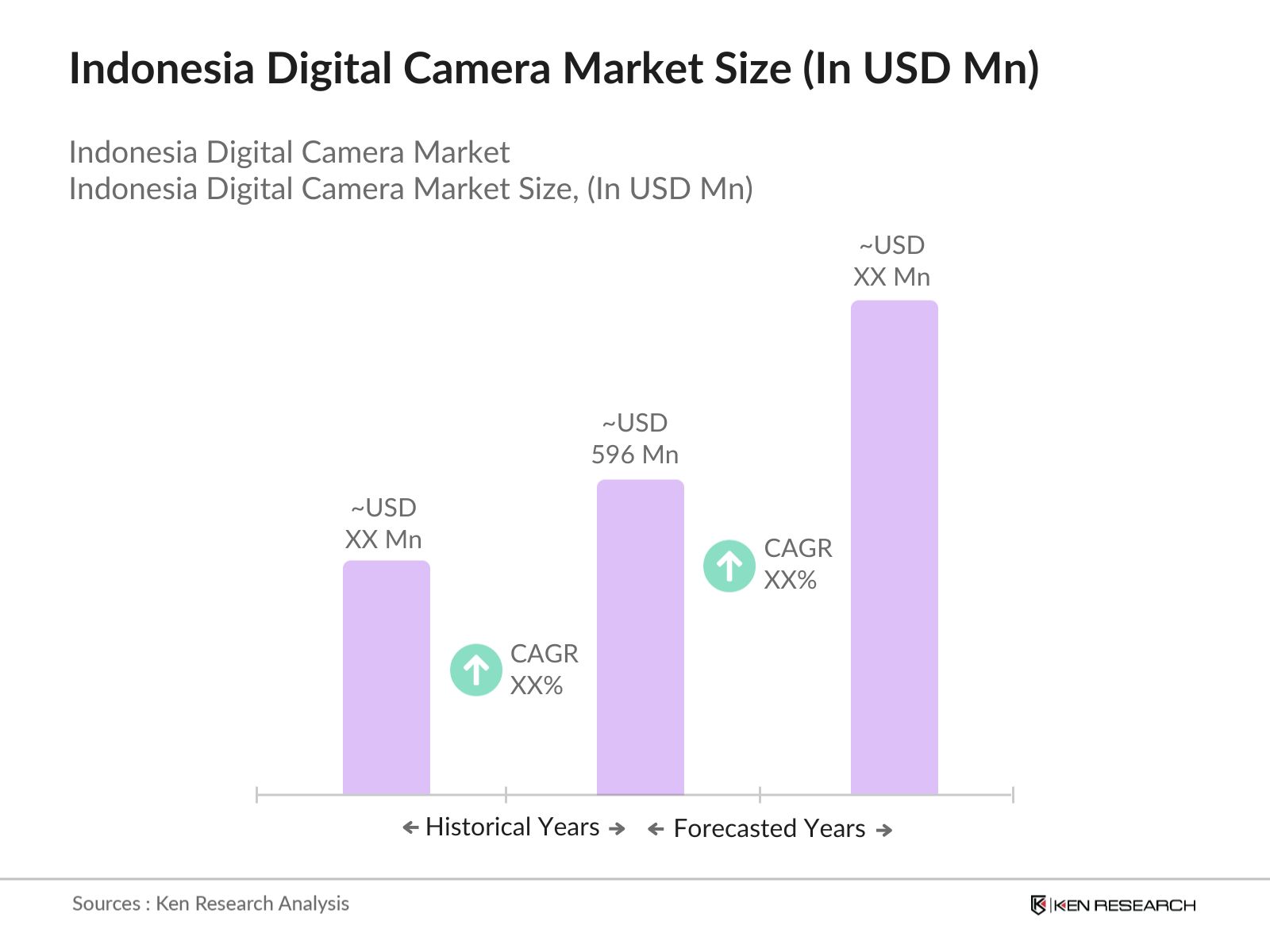
The Indonesia Digital Camera market is valued at USD 596 million, driven by the rising popularity of social media and the demand for high-quality imaging devices among content creators.
Challenges in the Indonesia Digital Camera market include intense competition from smartphone cameras, high import duties, and limited local manufacturing capabilities, which affect pricing and availability.
Key players in the Indonesia Digital Camera market include Canon Inc., Nikon Corporation, Sony Corporation, Fujifilm Holdings Corporation, and Panasonic Corporation. These companies dominate due to their strong product portfolios and focus on R&D.
Growth in the Indonesia Digital Camera market is driven by factors like increasing interest in travel photography, the rise of vlogging, and technological advancements such as AI-based autofocus systems in cameras.
Java's dense population and urban centers create a large consumer base, while Bali's status as a global tourism hotspot drives demand for professional photography equipment in the Indonesia Digital Camera market.

What makes us stand out is that our consultants follows Robust, Refine and Result (RRR) methodology. i.e. Robust for clear definitions, approaches and sanity checking, Refine for differentiating respondents facts and opinions and Result for presenting data with story

We have set a benchmark in the industry by offering our clients with syndicated and customized market research reports featuring coverage of entire market as well as meticulous research and analyst insights.

While we don't replace traditional research, we flip the method upside down. Our dual approach of Top Bottom & Bottom Top ensures quality deliverable by not just verifying company fundamentals but also looking at the sector and macroeconomic factors.

With one step in the future, our research team constantly tries to show you the bigger picture. We help with some of the tough questions you may encounter along the way: How is the industry positioned? Best marketing channel? KPI's of competitors? By aligning every element, we help maximize success.

Our report gives you instant access to the answers and sources that other companies might choose to hide. We elaborate each steps of research methodology we have used and showcase you the sample size to earn your trust.

If you need any support, we are here! We pride ourselves on universe strength, data quality, and quick, friendly, and professional service.