
Indonesia E-Commerce Market Outlook to 2030
Region:Indonesia
Author(s):Shubham Kashyap
Product Code:KROD4453
Region:Indonesia
Author(s):Shubham Kashyap
Product Code:KROD4453
December 2024
88
The e-commerce market in Indonesia is highly competitive, with local and international players striving to capture market share. Major players include marketplace giants like Shopee, Tokopedia, and Lazada, which have established strong consumer bases due to extensive marketing strategies and collaborations with local sellers. Global players such as Amazon are also eyeing the Indonesian market, given its lucrative potential.
In addition to large-scale platforms, the D2C segment is seeing rapid growth, with brands focusing on building direct relationships with customers to offer personalized experiences. Social media platforms are also becoming key sales channels, particularly for small businesses and independent sellers who rely on social media influencers to reach wider audiences. The competitive landscape is expected to intensify as more players enter the market, further driving innovation and customer-centric solutions.
|
Company Name |
Establishment Year |
Headquarters |
User Base |
Monthly Active Users |
No. of Sellers |
Payment Integration |
Delivery Speed |
Customer Support |
|
Shopee |
2015 |
Singapore |
||||||
|
Tokopedia |
2009 |
Indonesia |
||||||
|
Lazada |
2012 |
Singapore |
||||||
|
Bukalapak |
2010 |
Indonesia |
||||||
|
Blibli |
2011 |
Indonesia |
Growth Drivers
Market Challenges
The Indonesia e-commerce market is expected to maintain its upward growth, driven by an increasingly digital-savvy population, rising middle-class incomes, and continuous improvements in digital infrastructure. As more consumers become accustomed to online shopping, the market is set to experience sustained growth across various product categories. Moreover, with growing investment in the digital economy and e-commerce start-ups, the market will continue to evolve and offer new opportunities for both local and international players.
Future Market Opportunities
|
By Product Type |
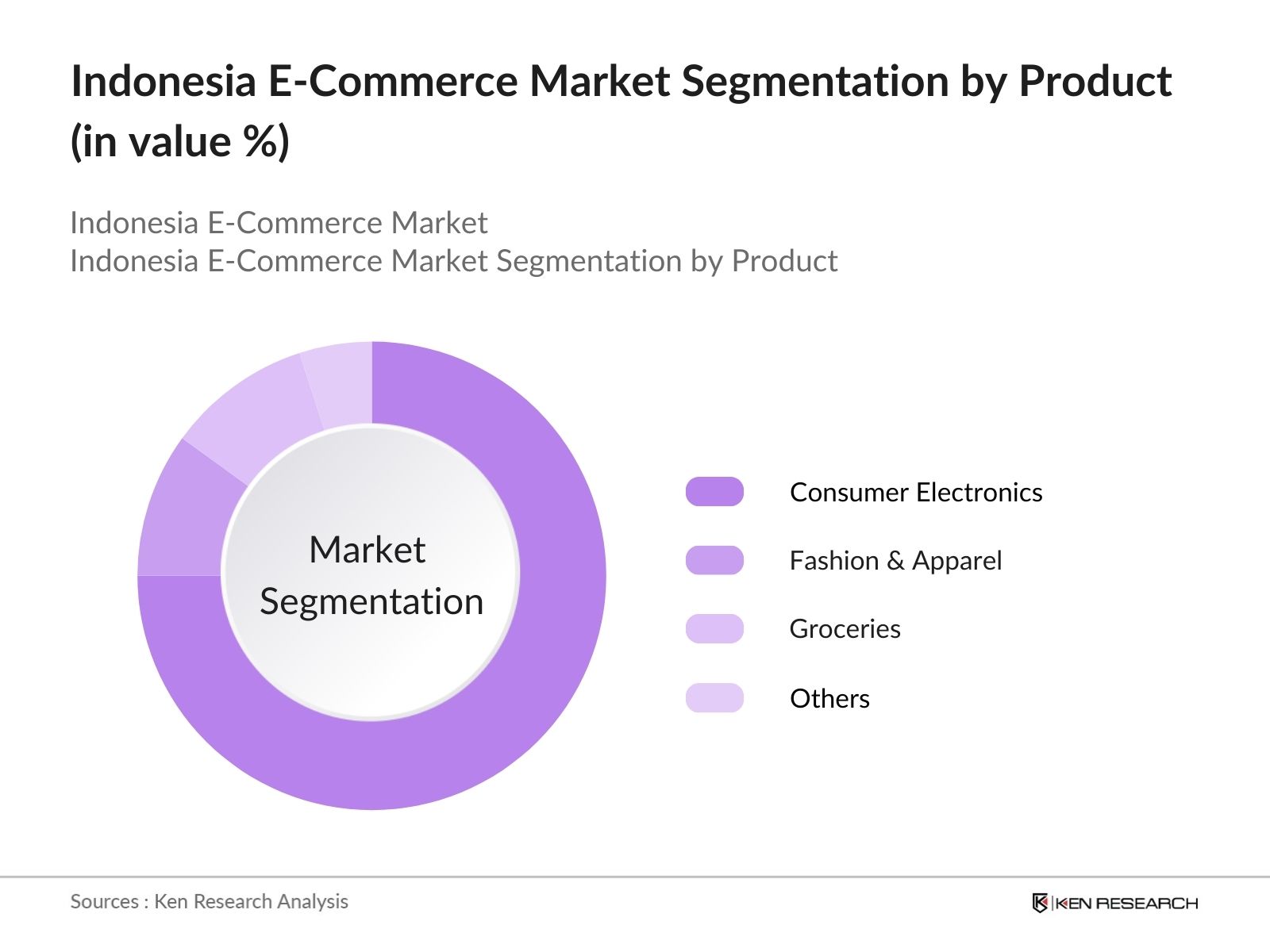
Consumer Electronics Fashion & Apparel Groceries Personal Care Others |
|
By Distribution Channel |
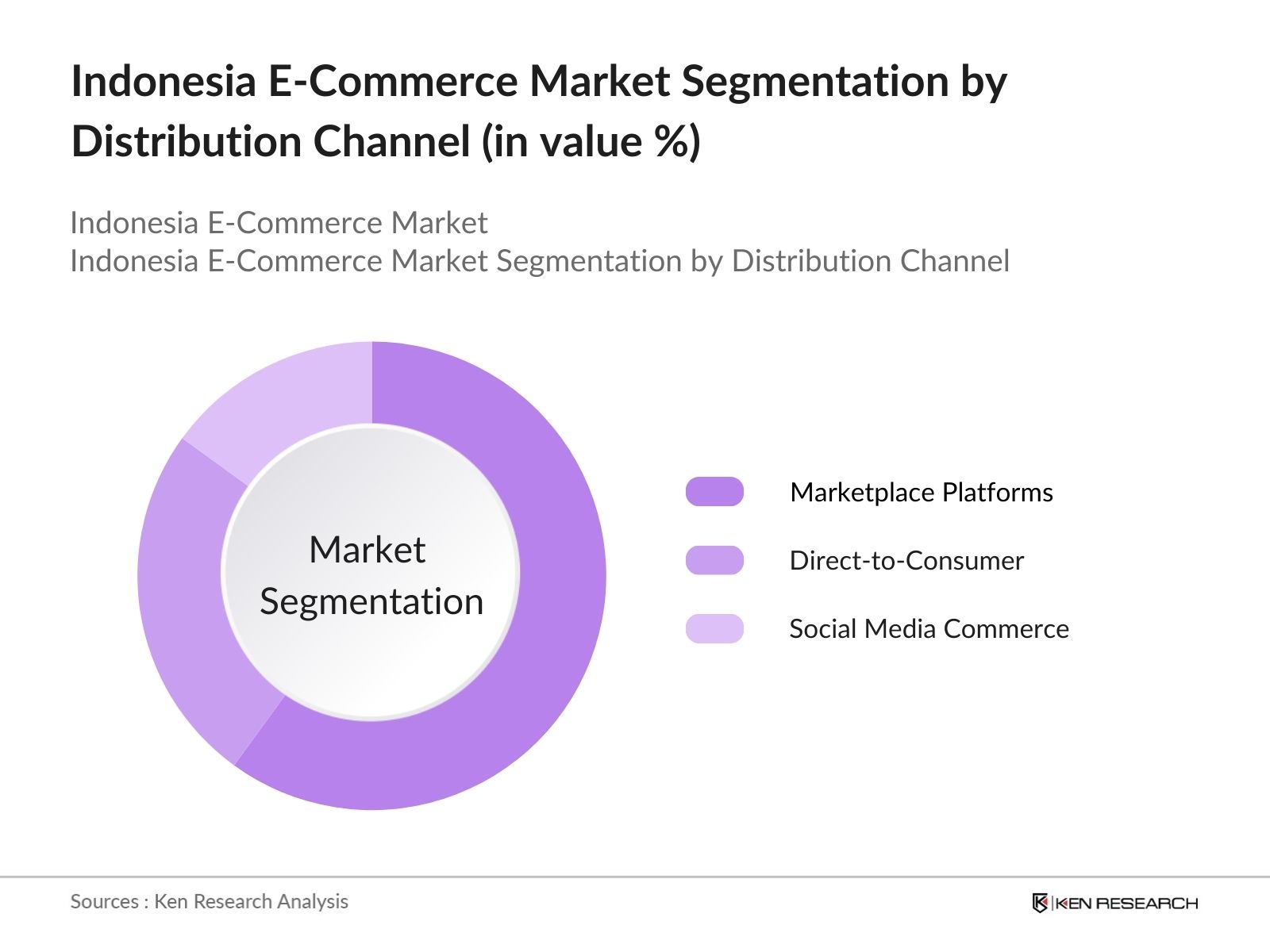
Marketplace Platforms Direct-to-Consumer Websites Social Media Commerce |
|
By Payment Method |
E-Wallets Bank Transfers Cash on Delivery (COD) |
|
By Region |
Java Sumatra Kalimantan Sulawesi Papua |
1.1. Definition and Scope
1.2. Market Taxonomy
1.3. Market Growth Rate
1.4. Market Segmentation Overview
2.1. Historical Market Size
2.2. Year-On-Year Growth Analysis
2.3. Key Market Developments and Milestones
3.1. Growth Drivers
3.1.1. Rising Internet Penetration (66% Population)
3.1.2. Digital Payment Adoption (Digital Wallets, E-Wallet Penetration)
3.1.3. Government Initiatives (Making Indonesia 4.0, E-Commerce Roadmap)
3.1.4. Expansion of Middle-Class Population (Middle-Income Spending Trends)
3.2. Market Challenges
3.2.1. Logistical and Infrastructure Challenges (Island Geography, High Delivery Costs)
3.2.2. Intense Market Competition (Marketplace Dominance, Heavy Discounts)
3.2.3. Counterfeit Products (Brand Trust Issues, Online Sales of Counterfeits)
3.3. Opportunities
3.3.1. Expansion in Tier-2 and Tier-3 Cities (Regional E-Commerce Penetration)
3.3.2. Growing Demand for Niche E-Commerce (Personalized Shopping, Subscription Models)
3.3.3. Integration of Digital Payments (Growth of E-Wallets, Fintech Solutions)
3.4. Trends
3.4.1. Mobile Commerce (M-Commerce Growth, Smartphone Adoption)
3.4.2. Social Commerce (Social Media Shopping, Influencer Marketing)
3.4.3. Omnichannel Strategies (Physical-Online Integration, Customer Experience)
3.5. Government Regulation
3.5.1. E-Commerce Roadmap
3.5.2. Taxation and Compliance (PPh 21, VAT on Digital Goods)
3.5.3. Digital Economy Regulations (Data Protection, Cybersecurity Laws)
3.6. SWOT Analysis
3.7. Stake Ecosystem (Retailers, Logistics, Payment Providers)
3.8. Porters Five Forces Analysis
3.9. Competitive Ecosystem
4.1. By Product Type (In Value %)
4.1.1. Consumer Electronics
4.1.2. Fashion & Apparel
4.1.3. Groceries
4.1.4. Personal Care
4.1.5. Others
4.2. By Distribution Channel (In Value %)
4.2.1. Marketplace Platforms (Shopee, Tokopedia, Lazada)
4.2.2. Direct-to-Consumer Websites
4.2.3. Social Media Commerce (Instagram, Facebook, TikTok)
4.3. By Payment Method (In Value %)
4.3.1. E-Wallets (OVO, GoPay, Dana)
4.3.2. Bank Transfers
4.3.3. Cash on Delivery (COD)
4.4. By Region (In Value %)
4.4.1. Java
4.4.2. Sumatra
4.4.3. Kalimantan
4.4.4. Sulawesi
4.4.5. Papua
5.1. Detailed Profiles of Major Companies
5.1.1. Shopee
5.1.2. Tokopedia
5.1.3. Lazada
5.1.4. Bukalapak
5.1.5. Blibli
5.1.6. JD.ID
5.1.7. Zalora
5.1.8. Amazon
5.1.9. Orami
5.1.10. Ralali
5.1.11. Sociolla
5.1.12. Bhinneka
5.1.13. iStyle
5.1.14. Elevenia
5.1.15. Qoo10
5.2. Cross Comparison Parameters (User Base, Market Reach, Revenue, Fulfillment Capacity, No. of Sellers, Service Quality, Mobile App Ratings, Delivery Speed)
5.3. Market Share Analysis
5.4. Strategic Initiatives (Expansion, Partnerships, Digital Marketing)
5.5. Mergers and Acquisitions
5.6. Investment Analysis
5.7. Venture Capital Funding
5.8. Government Grants
5.9. Private Equity Investments
6.1. E-Commerce Law (UU ITE)
6.2. Taxation and Compliance (VAT, Import Duties)
6.3. Data Protection (PDP Law, Cross-Border Data Transfers)
7.1. Future Market Size Projections
7.2. Key Factors Driving Future Market Growth
8.1. By Product Type (In Value %)
8.2. By Distribution Channel (In Value %)
8.3. By Payment Method (In Value %)
8.4. By Region (In Value %)
9.1. TAM/SAM/SOM Analysis
9.2. Consumer Cohort Analysis (Digital Natives, Digital Adopters, Traditional Shoppers)
9.3. Marketing Initiatives (Influencer Marketing, Social Media Ad Spend, SEO Strategies)
9.4. White Space Opportunity Analysis
This phase involves creating an ecosystem map covering all key stakeholders in the Indonesia e-commerce market. Extensive desk research, utilizing proprietary databases and secondary resources, will be conducted to gather data on the key variables that influence the market, including consumer behavior, logistics challenges, and digital payment trends.
In this step, historical data will be compiled and analyzed, focusing on market growth, digital transactions, and service quality. The analysis will ensure an accurate assessment of the market, evaluating the impact of variables such as digital penetration and payment method preferences on overall revenue generation.
Industry hypotheses will be developed and validated through telephone interviews with e-commerce industry experts and key stakeholders from prominent companies. This consultation will provide deep insights into market operations, logistics issues, and consumer trends, ensuring the reliability of data and accuracy of findings.
The final phase involves direct interaction with e-commerce platform operators, logistics companies, and retailers to verify the gathered data. This will ensure a comprehensive and validated analysis of Indonesias e-commerce market, including product segmentation, customer demographics, and operational challenges.
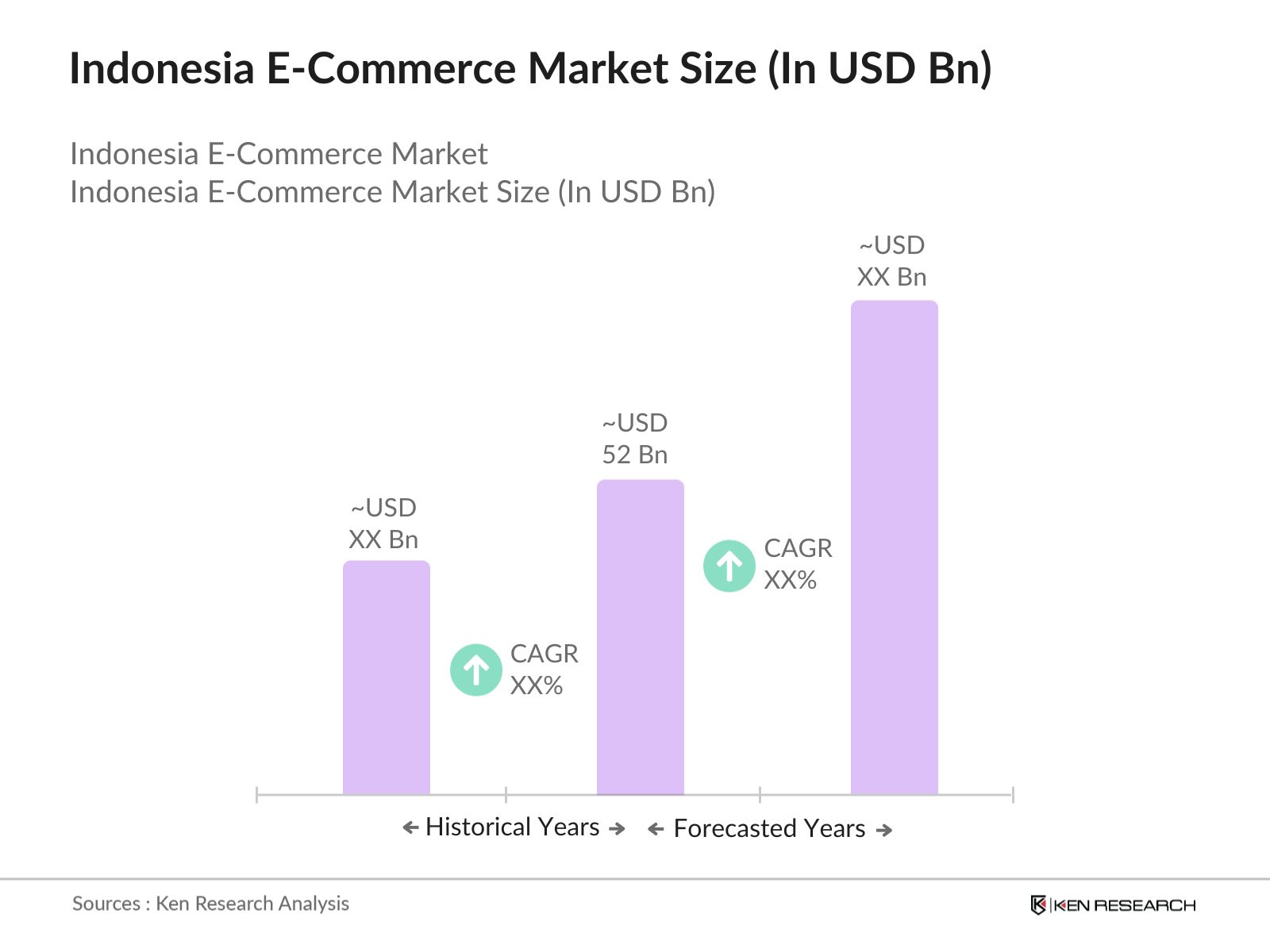
The Indonesia e-commerce market was valued at USD 52 billion, driven by the rise of internet penetration, mobile adoption, and the growing middle-class population's shift toward online shopping.
Challenges in the Indonesia e-commerce market include logistical issues in reaching remote areas, high competition from large marketplace platforms, and the influx of counterfeit products, which undermines brand integrity.
Key players in Indonesia e-commerce the market include Shopee, Tokopedia, Lazada, Bukalapak, and Blibli. These companies dominate due to their strong digital presence, extensive seller networks, and competitive pricing strategies.
The Indonesia e-commerce market is driven by rising internet penetration, the rapid adoption of digital payment methods, and the increasing demand for convenience shopping among urban and younger consumers.

What makes us stand out is that our consultants follows Robust, Refine and Result (RRR) methodology. i.e. Robust for clear definitions, approaches and sanity checking, Refine for differentiating respondents facts and opinions and Result for presenting data with story

We have set a benchmark in the industry by offering our clients with syndicated and customized market research reports featuring coverage of entire market as well as meticulous research and analyst insights.

While we don't replace traditional research, we flip the method upside down. Our dual approach of Top Bottom & Bottom Top ensures quality deliverable by not just verifying company fundamentals but also looking at the sector and macroeconomic factors.

With one step in the future, our research team constantly tries to show you the bigger picture. We help with some of the tough questions you may encounter along the way: How is the industry positioned? Best marketing channel? KPI's of competitors? By aligning every element, we help maximize success.

Our report gives you instant access to the answers and sources that other companies might choose to hide. We elaborate each steps of research methodology we have used and showcase you the sample size to earn your trust.

If you need any support, we are here! We pride ourselves on universe strength, data quality, and quick, friendly, and professional service.