
Indonesia Furniture Market Outlook 2030
Region:Asia
Author(s):Shivani Mehra
Product Code:KROD6825
Region:Asia
Author(s):Shivani Mehra
Product Code:KROD6825
November 2024
99
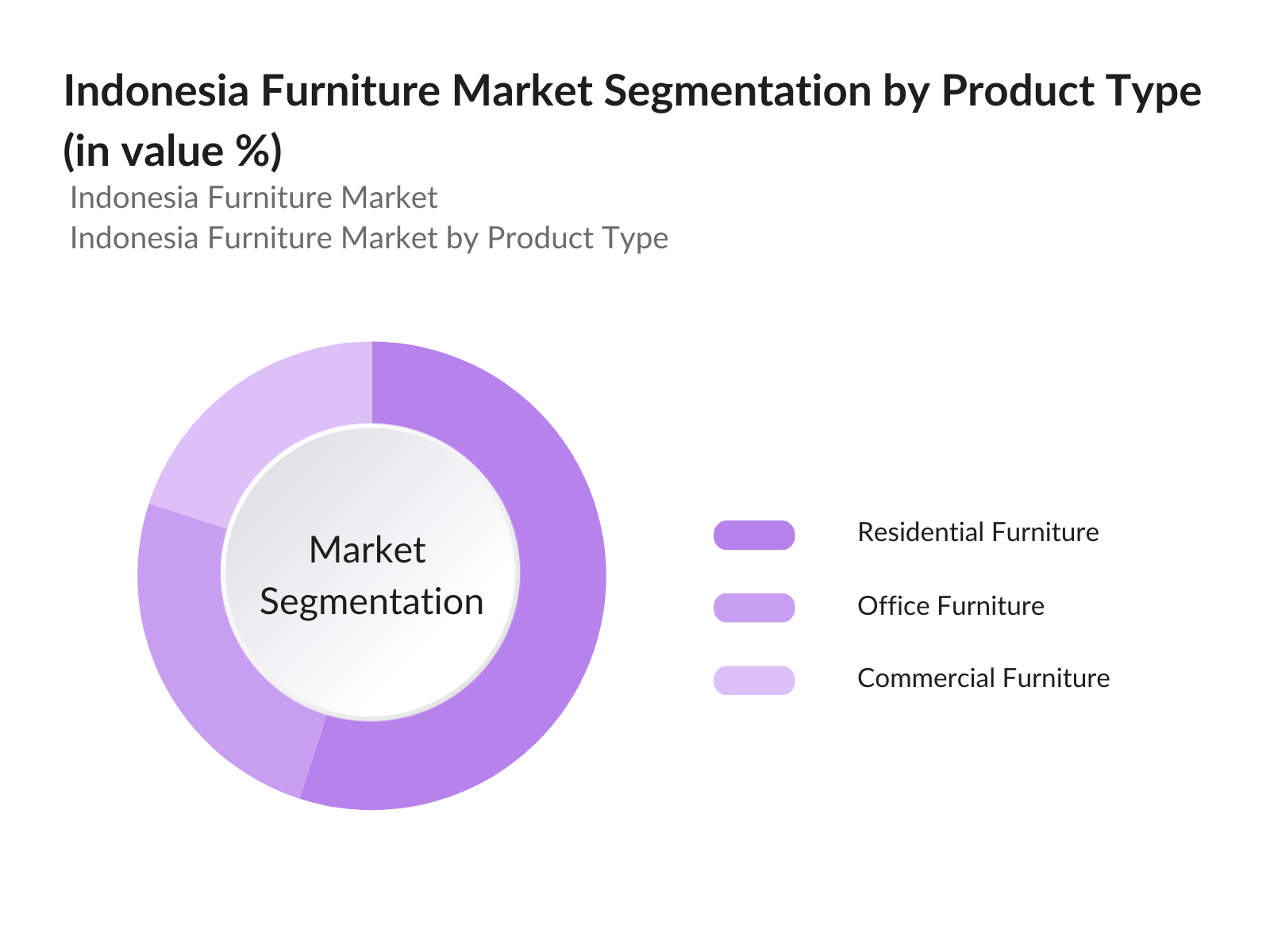
By Product Type: The Indonesia furniture market is segmented by product type into residential furniture, office furniture, and commercial furniture. Residential furniture holds a dominant market share due to the rising trend of home ownership and interior design awareness among urban dwellers. The surge in residential real estate projects, coupled with growing demand for home improvement products, has contributed significantly to this segments growth. The popularity of modular and space-saving furniture in small urban apartments has also boosted the sales of residential furniture.
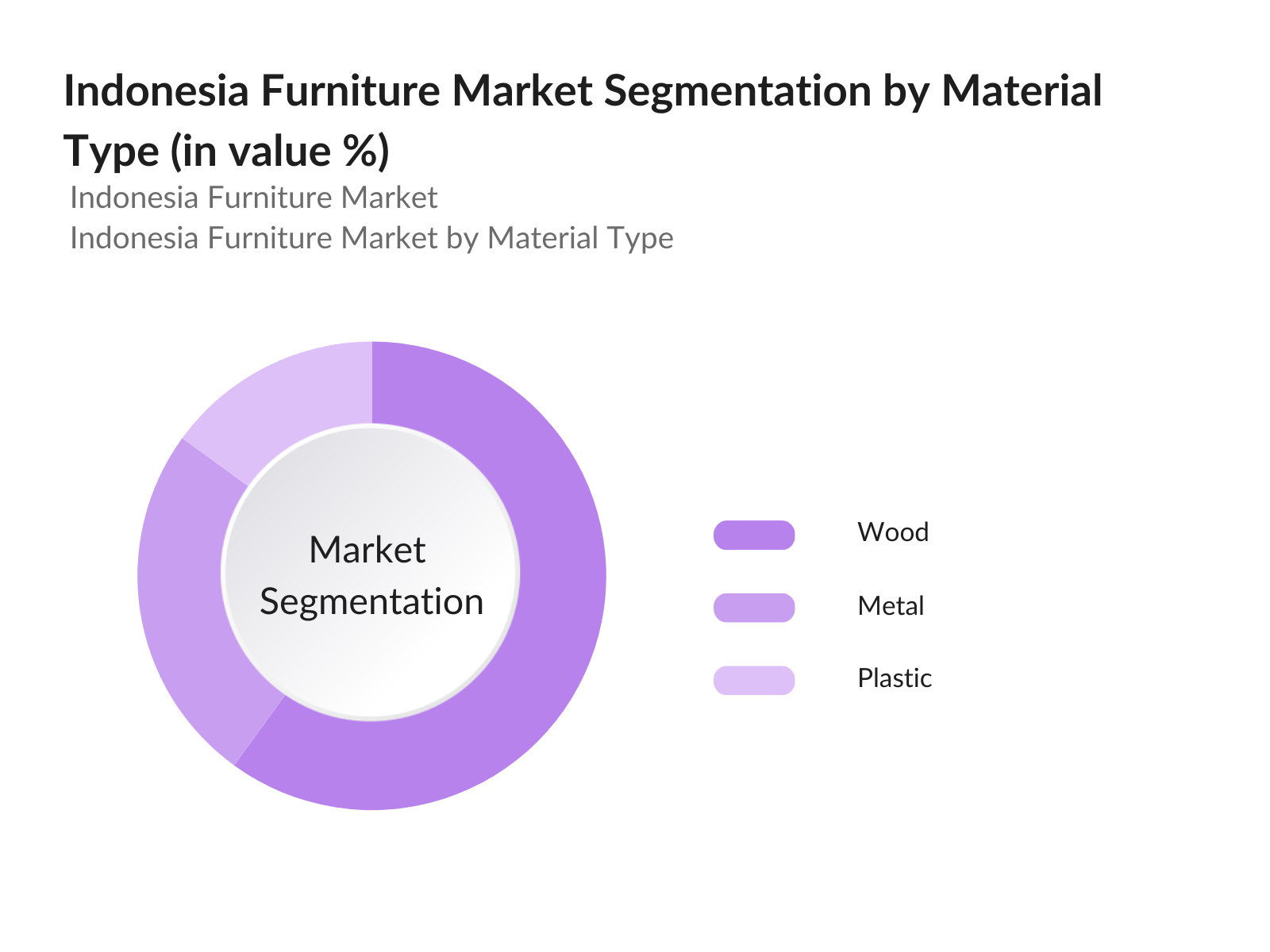
By Material Type: The Indonesia furniture market is also segmented by material type into wood, metal, and plastic. Wooden furniture dominates the segment due to its aesthetic appeal and durability, which are highly valued by Indonesian consumers. Wood is a traditional and preferred material in Indonesia due to the countrys rich forestry resources, making it readily available and affordable for local manufacturers. Metal furniture is also gaining popularity, particularly in the office and commercial sectors, for its durability and modern design appeal.
The Indonesia furniture market is dominated by a mix of domestic and international players. Major companies are focusing on product diversification, e-commerce strategies, and expanding their retail footprint to cater to increasing consumer demand.
|
Company Name |
Establishment Year |
Headquarters |
Revenue (2023) |
Number of Employees |
Product Portfolio |
Global Presence |
Strategic Initiatives |
Manufacturing Capacity |
|
PT Chitose Internasional Tbk |
1979 |
Jakarta, Indonesia |
USD 500 million |
|||||
|
IKEA Indonesia |
1943 |
Sweden (Jakarta branch) |
USD 3 billion |
|||||
|
PT Fabelio |
2015 |
Jakarta, Indonesia |
USD 250 million |
|||||
|
Vivere Group |
1984 |
Jakarta, Indonesia |
USD 750 million |
|||||
|
PT Olympic Furniture |
1983 |
Bogor, Indonesia |
USD 600 million |
Market Growth Drivers
Market Challenges:
Over the next five years, the Indonesia furniture market is expected to experience substantial growth, driven by increasing urbanization, higher disposable incomes, and a growing interest in home improvement. The market is also benefiting from advancements in technology, such as 3D printing for furniture design and customization, along with a growing trend toward eco-friendly and sustainable materials. With government initiatives to promote local manufacturing, the market outlook remains positive for both domestic and international players.
Market Opportunities:
|
By Material Type |
Wood Metal Plastic Others |
|
By Product Type |
Residential Furniture Commercial Furniture Office Furniture |
|
By Distribution Channel |
Online Channels Offline Stores |
|
By End-User |
Domestic Commercial Institutional |
|
By Region |
North-East Midwest West Coast Southern States |
1.1. Definition and Scope
1.2. Market Taxonomy
1.3. Market Growth Rate
1.4. Market Segmentation Overview
2.1. Historical Market Size
2.2. Year-On-Year Growth Analysis
2.3. Key Market Developments and Milestones
3.1. Growth Drivers
3.1.1. Rising Disposable Income
3.1.2. Urbanization and Real Estate Expansion
3.1.3. Demand for Customizable and Modular Furniture
3.1.4. Increase in Online Furniture Sales
3.2. Market Challenges
3.2.1. Supply Chain Disruptions
3.2.2. Competition from Low-Cost Import Furniture
3.2.3. High Manufacturing Costs
3.3. Opportunities
3.3.1. Sustainable and Eco-Friendly Furniture
3.3.2. Export Growth Potential
3.3.3. Expansion into Emerging Regions
3.4. Trends
3.4.1. Adoption of Smart Furniture
3.4.2. Focus on Ergonomic Design
3.4.3. Increasing Use of Technology in Manufacturing
3.5. Government Regulations
3.5.1. National Quality Standards for Furniture
3.5.2. Tariffs and Import Regulations
3.5.3. Policies Supporting Local Manufacturing
3.6. SWOT Analysis
3.7. Stakeholder Ecosystem
3.8. Porters Five Forces
3.9. Competition Ecosystem
Indonesia Furniture Market Segmentation
4.1. By Material Type (In Value %)
4.1.1. Wood
4.1.2. Metal
4.1.3. Plastic
4.1.4. Others
4.2. By Product Type (In Value %)
4.2.1. Residential Furniture
4.2.2. Commercial Furniture
4.2.3. Office Furniture
4.3. By Distribution Channel (In Value %)
4.3.1. Online Channels
4.3.2. Offline Stores
4.4. By End-User (In Value %)
4.4.1. Domestic
4.4.2. Commercial
4.4.3. Institutional
4.5. By Region (In Value %)
4.5.1. Jakarta
4.5.2. Surabaya
4.5.3. Bandung
4.5.4. Others
Indonesia Furniture Market Competitive Analysis
5.1. Detailed Profiles of Major Companies
5.1.1. PT Chitose Internasional Tbk
5.1.2. PT Fabelio
5.1.3. Vivere Group
5.1.4. PT Informa
5.1.5. IKEA Indonesia
5.1.6. PT Ciputra Graha Mitra
5.1.7. PT Olympic Furniture
5.1.8. PT Ace Hardware Indonesia
5.1.9. PT Wisanka Indonesia
5.1.10. PT Indovickers
5.1.11. PT Mebelcraft Indonesia
5.1.12. PT Cellini Indonesia
5.1.13. PT Santai Nusantara
5.1.14. PT Bangun Cipta Indonesia
5.1.15. PT Buana Mas Furniture
5.2. Cross-Comparison Parameters (Headquarters, Manufacturing Capacity, Revenue, Product Portfolio, Market Share, Number of Employees, Global Reach, Strategic Partnerships)
5.3. Market Share Analysis
5.4. Strategic Initiatives
5.5. Mergers and Acquisitions
5.6. Investment Analysis
5.7. Government Grants and Support
Indonesia Furniture Market Regulatory Framework
6.1. Compliance with Environmental Standards
6.2. Local Content Requirement Policies
6.3. Certification Processes
6.4. Industry Standards and Guidelines
Indonesia Furniture Future Market Size (In USD Bn)
7.1. Future Market Size Projections
7.2. Key Factors Driving Future Growth
Indonesia Furniture Future Market Segmentation
8.1. By Material Type (In Value %)
8.2. By Product Type (In Value %)
8.3. By Distribution Channel (In Value %)
8.4. By End-User (In Value %)
8.5. By Region (In Value %)
9.1. TAM/SAM/SOM Analysis
9.2. Customer Cohort Analysis
9.3. Market Entry Strategies
9.4. White Space Opportunity Analysis
The first step involves mapping the entire Indonesia furniture market ecosystem. This process includes extensive secondary research to identify key stakeholders such as manufacturers, distributors, retailers, and consumers. The objective is to define the critical variables influencing market dynamics, such as material demand, consumer preferences, and regulatory frameworks.
This phase involves compiling historical data for the Indonesia furniture market. A thorough analysis of consumer behavior trends, retail performance, and material usage will be conducted. Additionally, data on the supply chain and manufacturing capacity will be analyzed to assess the overall market environment.
In this phase, market hypotheses developed during the initial research will be validated through interviews with industry experts. These consultations will provide insights into operational challenges, product innovations, and future growth strategies.
The final phase will involve synthesizing the data collected from both primary and secondary sources. The research findings will be consolidated into a comprehensive report, providing actionable insights and data-backed forecasts for the Indonesia furniture market.
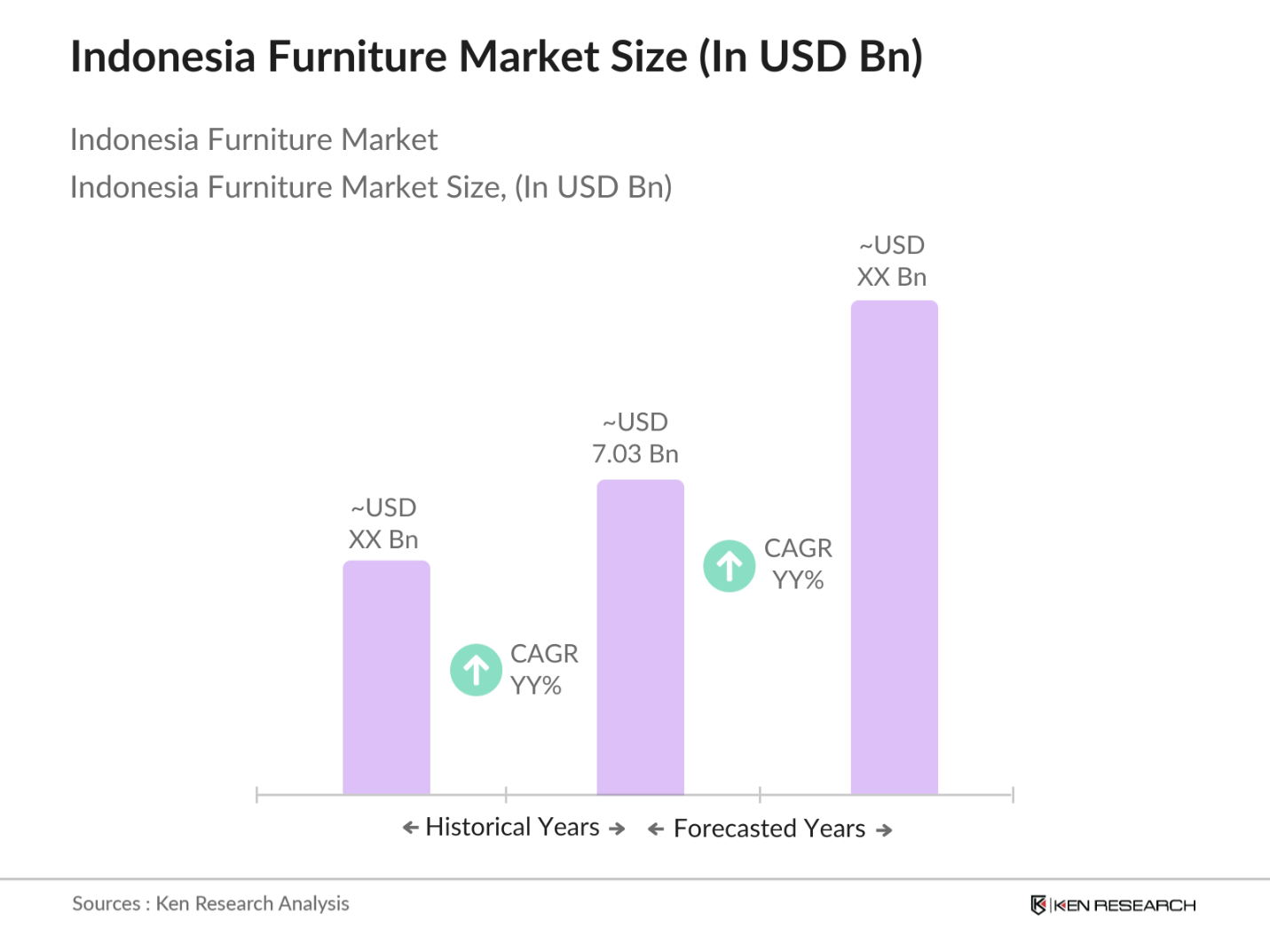
The Indonesia furniture market is valued at USD 7.03 billion, driven by rising disposable incomes and increased urbanization.
Challenges include high manufacturing costs, competition from imported low-cost furniture, and supply chain disruptions due to volatile raw material prices.
Key players include PT Chitose Internasional Tbk, IKEA Indonesia, Vivere Group, PT Fabelio, and PT Olympic Furniture.
Growth is propelled by urbanization, increased demand for modular and customizable furniture, and rising disposable incomes across major cities like Jakarta and Surabaya.

What makes us stand out is that our consultants follows Robust, Refine and Result (RRR) methodology. i.e. Robust for clear definitions, approaches and sanity checking, Refine for differentiating respondents facts and opinions and Result for presenting data with story

We have set a benchmark in the industry by offering our clients with syndicated and customized market research reports featuring coverage of entire market as well as meticulous research and analyst insights.

While we don't replace traditional research, we flip the method upside down. Our dual approach of Top Bottom & Bottom Top ensures quality deliverable by not just verifying company fundamentals but also looking at the sector and macroeconomic factors.

With one step in the future, our research team constantly tries to show you the bigger picture. We help with some of the tough questions you may encounter along the way: How is the industry positioned? Best marketing channel? KPI's of competitors? By aligning every element, we help maximize success.

Our report gives you instant access to the answers and sources that other companies might choose to hide. We elaborate each steps of research methodology we have used and showcase you the sample size to earn your trust.

If you need any support, we are here! We pride ourselves on universe strength, data quality, and quick, friendly, and professional service.