
Indonesia Healthcare Providers Market Outlook to 2030
Region:Indonesia
Author(s):Sanjeev
Product Code:KROD3632
Region:Indonesia
Author(s):Sanjeev
Product Code:KROD3632
November 2024
83
Indonesia Healthcare Providers Market Overview
Indonesia Healthcare Providers Market Segmentation
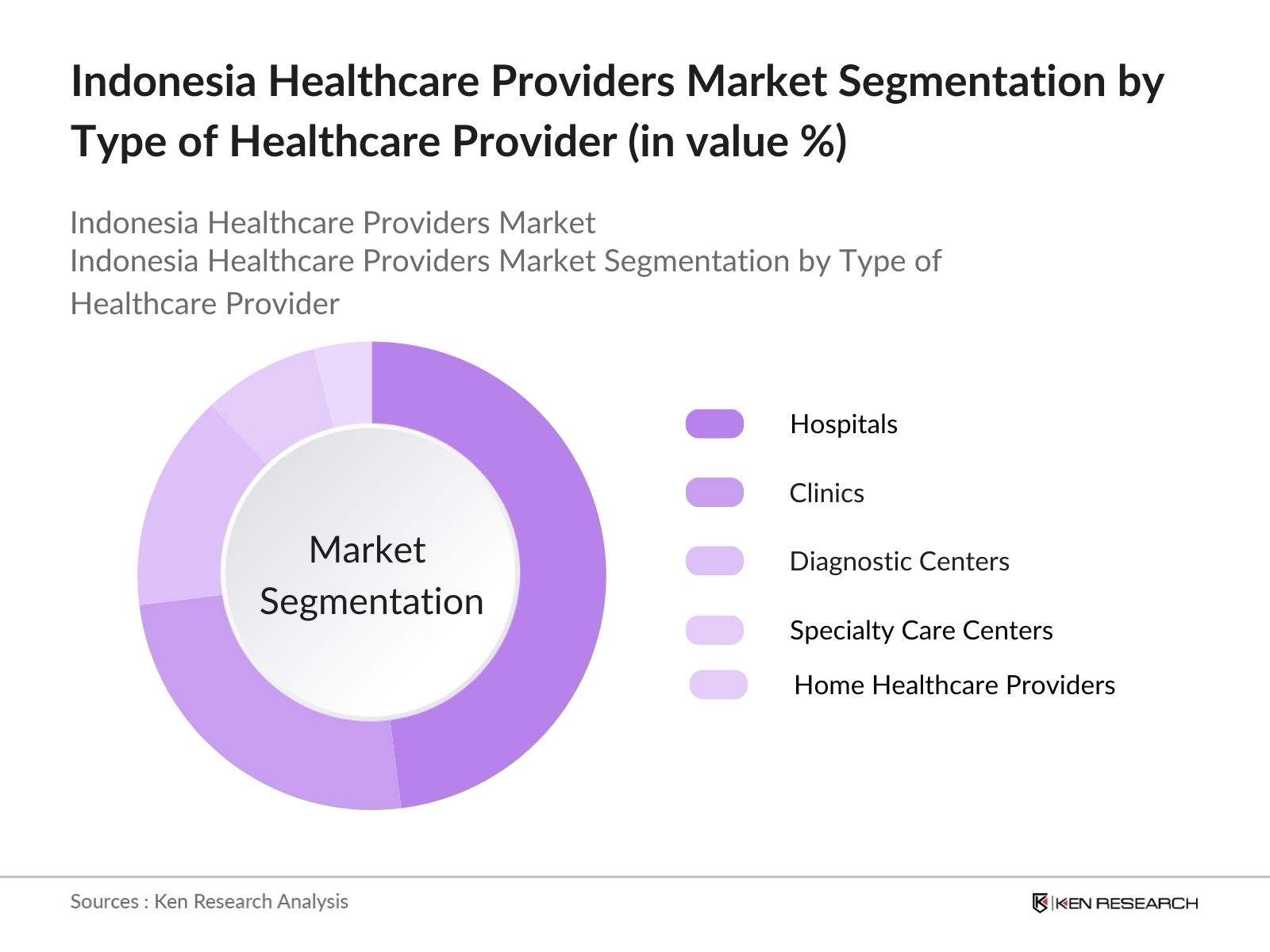
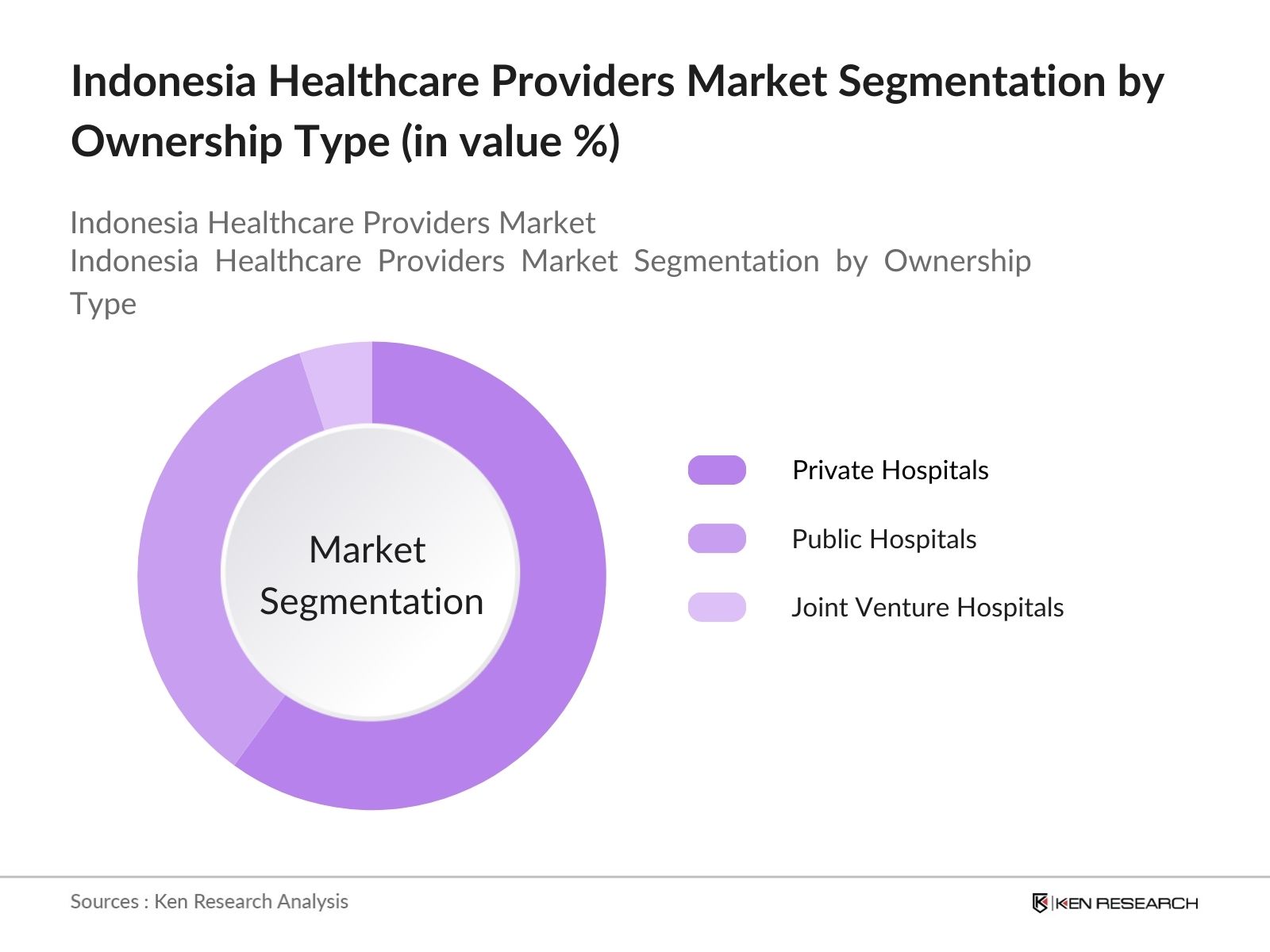
The Indonesia Healthcare Providers Market is segmented by healthcare provider and by ownership type.
Indonesia Healthcare Providers Market Competitive Landscape
The Indonesia Healthcare Providers Market is highly competitive, with a mix of local and international healthcare providers. The market is dominated by private hospital groups such as Siloam International Hospitals and Mitra Keluarga. These players continue to expand their footprint, driven by increasing demand for specialized healthcare services and advancements in medical technology. Smaller, regional healthcare providers also hold significant market shares, especially in less urbanized regions. Strategic partnerships with foreign healthcare providers, the introduction of advanced healthcare infrastructure, and a focus on patient-centric care are some of the key strategies used by leading players.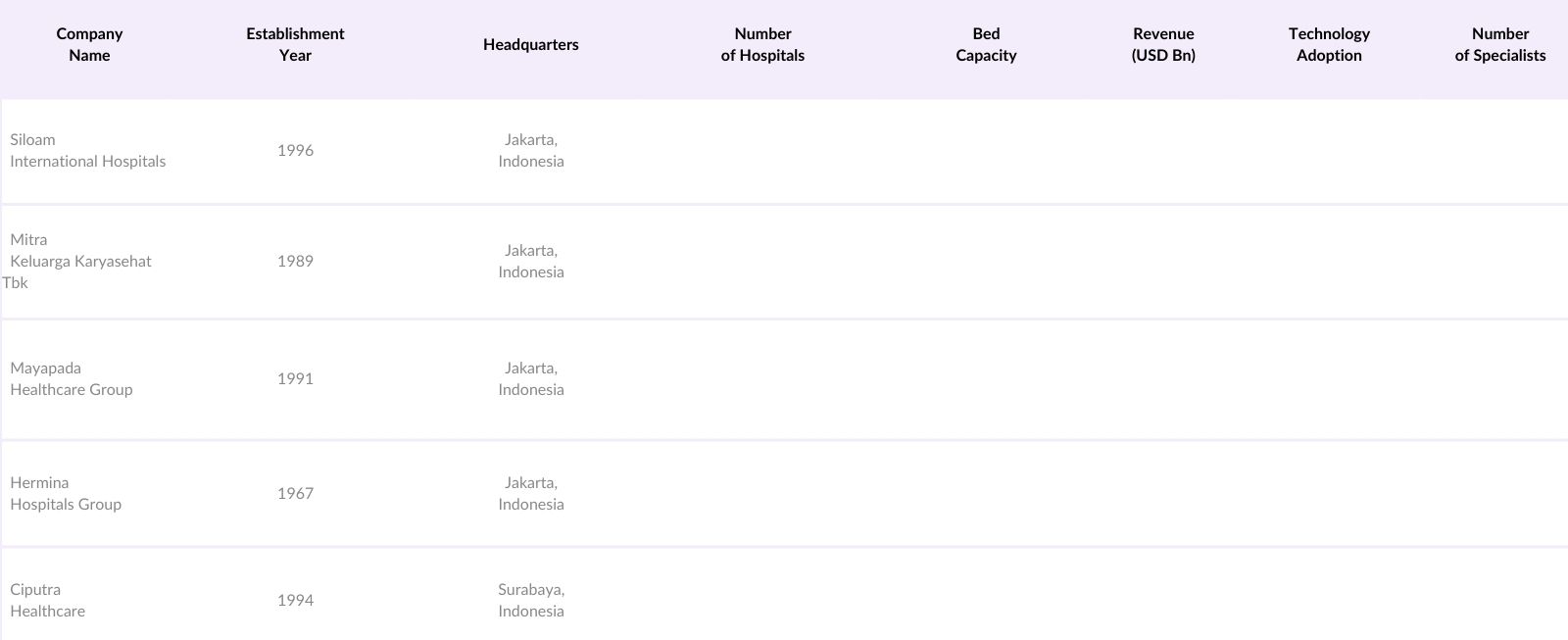
Indonesia Healthcare Providers Market Analysis
Growth Drivers
Market Challenges
High Out-of-Pocket Expenditure: Despite the JKN program, out-of-pocket expenditure remains high in Indonesia, with 2024 estimates showing that 32% of healthcare payments are made directly by individuals. This is due to gaps in insurance coverage and limitations on the types of services covered under JKN. Such high out-of-pocket costs hinder access to necessary care for many Indonesians, especially for specialized treatments, and put pressure on healthcare providers to balance affordability with service quality.
Infrastructure Gaps in Rural Areas: Indonesia's healthcare infrastructure remains unevenly distributed, particularly in rural and remote areas where 45% of the population resides. In 2023, there were only 1.2 hospital beds per 1,000 people, with rural regions significantly underserved. Healthcare providers face challenges in expanding services to these regions due to inadequate infrastructure, a shortage of medical equipment, and logistical difficulties. The government has announced plans to invest in rural healthcare, but significant gaps remain, impacting accessibility and quality of care.
Indonesia Healthcare Providers Market Future Outlook
Over the next five years, the Indonesia Healthcare Providers Market is expected to witness strong growth, driven by continuous government investment in healthcare infrastructure, expansion of the JKN scheme, and a rising demand for specialized healthcare services. The growing middle-class population, coupled with increasing awareness of healthcare options, is expected to fuel market expansion. Furthermore, advancements in digital healthcare technologies, such as telemedicine and electronic health records, will play a significant role in shaping the future of the healthcare market.
Market Opportunities
|
Hospitals, Clinics, Diagnostic Centers Specialty Care Centers Home Healthcare Providers |
|
|
By Ownership Type |
Public Hospitals Private Hospitals Joint Venture Hospitals |
|
By Service Type |
Outpatient Services Inpatient Services Emergency Care Rehabilitation Services |
|
By Payment Method |
Out-of-Pocket BPJS (Universal Healthcare) Private Insurance Employer-Sponsored |
|
By Region |
North East West South |
Key Target Audience
1.1. Definition and Scope
1.2. Market Taxonomy
1.3. Market Growth Rate
1.4. Market Segmentation Overview
2.1. Historical Market Size
2.2. Year-On-Year Growth Analysis
2.3. Key Market Developments and Milestones
3.1. Growth Drivers
3.1.1. Population Growth and Aging
3.1.2. Rising Prevalence of Chronic Diseases
3.1.3. Increasing Medical Tourism
3.1.4. Government Initiatives (e.g., JKN - Jaminan Kesehatan Nasional)
3.2. Market Challenges
3.2.1. High Out-of-Pocket Expenditure
3.2.2. Infrastructure Gaps in Rural Areas
3.2.3. Shortage of Skilled Medical Professionals
3.3. Opportunities
3.3.1. Digital Healthcare and Telemedicine Expansion
3.3.2. Private Sector Investment Opportunities
3.3.3. Partnerships with International Healthcare Providers
3.4. Trends
3.4.1. Adoption of Electronic Health Records (EHR)
3.4.2. Integration of Artificial Intelligence in Diagnosis
3.4.3. Increasing Focus on Specialized Care Centers
3.5. Government Regulation
3.5.1. National Health Insurance (BPJS) Framework
3.5.2. Hospital Accreditation Standards
3.5.3. Medical Licensing and Certifications
3.5.4. Healthcare Data Privacy Laws
3.6. SWOT Analysis
3.7. Stakeholder Ecosystem
3.8. Porters Five Forces Analysis
3.9. Competition Ecosystem
4.1. By Type of Healthcare Provider (In Value %)
4.1.1. Hospitals
4.1.2. Clinics
4.1.3. Diagnostic Centers
4.1.4. Specialty Care Centers
4.1.5. Home Healthcare Providers
4.2. By Ownership Type (In Value %)
4.2.1. Public Hospitals
4.2.2. Private Hospitals
4.2.3. Joint Venture Hospitals
4.3. By Service Type (In Value %)
4.3.1. Outpatient Services
4.3.2. Inpatient Services
4.3.3. Emergency Care
4.3.4. Rehabilitation Services
4.4. By Region (In Value %)
4.4.1. North
4.4.2. East
4.4.3. West
4.4.4. South
4.5. By Payment Method (In Value %)
4.5.1. Out-of-Pocket
4.5.2. BPJS (Universal Healthcare)
4.5.3. Private Insurance
4.5.4. Employer-Sponsored
5.1. Detailed Profiles of Major Companies
5.1.1. Siloam International Hospitals
5.1.2. PT Mitra Keluarga Karyasehat Tbk
5.1.3. Mayapada Healthcare Group
5.1.4. RS Bunda Group
5.1.5. Medistra Hospitals
5.1.6. Hermina Hospitals Group
5.1.7. Ciputra Healthcare
5.1.8. Pondok Indah Healthcare Group
5.1.9. Omni Hospitals Group
5.1.10. Rumah Sakit Premier Bintaro
5.1.11. Pertamedika Indonesia Healthcare Corporation
5.1.12. Awal Bros Hospital Group
5.1.13. RSIA Harapan Kita
5.1.14. Kasih Ibu Hospital Group
5.1.15. Bhakti Timah Hospital
5.2. Cross Comparison Parameters (Inception Year, Headquarters, No. of Hospitals, Bed Capacity, Revenue, Market Share, Patient Satisfaction Ratings, Technology Integration Level)
5.3. Market Share Analysis
5.4. Strategic Initiatives
5.5. Mergers and Acquisitions
5.6. Investment Analysis
5.7. Venture Capital Funding
5.8. Private Equity Investments
6.1. Healthcare Licensing Regulations
6.2. National Health Insurance (BPJS) Compliance
6.3. Medical Equipment Standards
6.4. Patient Data Protection Guidelines
7.1. Future Market Size Projections
7.2. Key Factors Driving Future Market Growth
8.1. By Type of Healthcare Provider (In Value %)
8.2. By Ownership Type (In Value %)
8.3. By Service Type (In Value %)
8.4. By Region (In Value %)
8.5. By Payment Method (In Value %)
9.1. TAM/SAM/SOM Analysis
9.2. Customer Cohort Analysis
9.3. Marketing Initiatives
9.4. White Space Opportunity Analysis
The first phase involves identifying and analyzing all the major stakeholders within the Indonesia Healthcare Providers Market. Extensive desk research is conducted using secondary data from proprietary databases and credible industry reports. The aim is to understand the key variables that drive market growth, such as healthcare infrastructure and patient demographics.
In this phase, historical data is collected to assess the performance of the Indonesia Healthcare Providers Market. This includes the number of healthcare providers, hospital bed capacities, and healthcare spending patterns. Revenue estimates are constructed based on service offerings, and key performance indicators are evaluated for accuracy.
Market hypotheses are validated through direct interviews and consultations with healthcare providers and industry experts. The insights gathered from these professionals ensure that the market estimates reflect actual industry performance and growth potential.
Finally, a comprehensive report is developed that synthesizes all the gathered data, ensuring that the analysis is both detailed and accurate. This report provides insights into healthcare provider services, market segmentation, and competitive strategies, validated through a bottom-up approach.
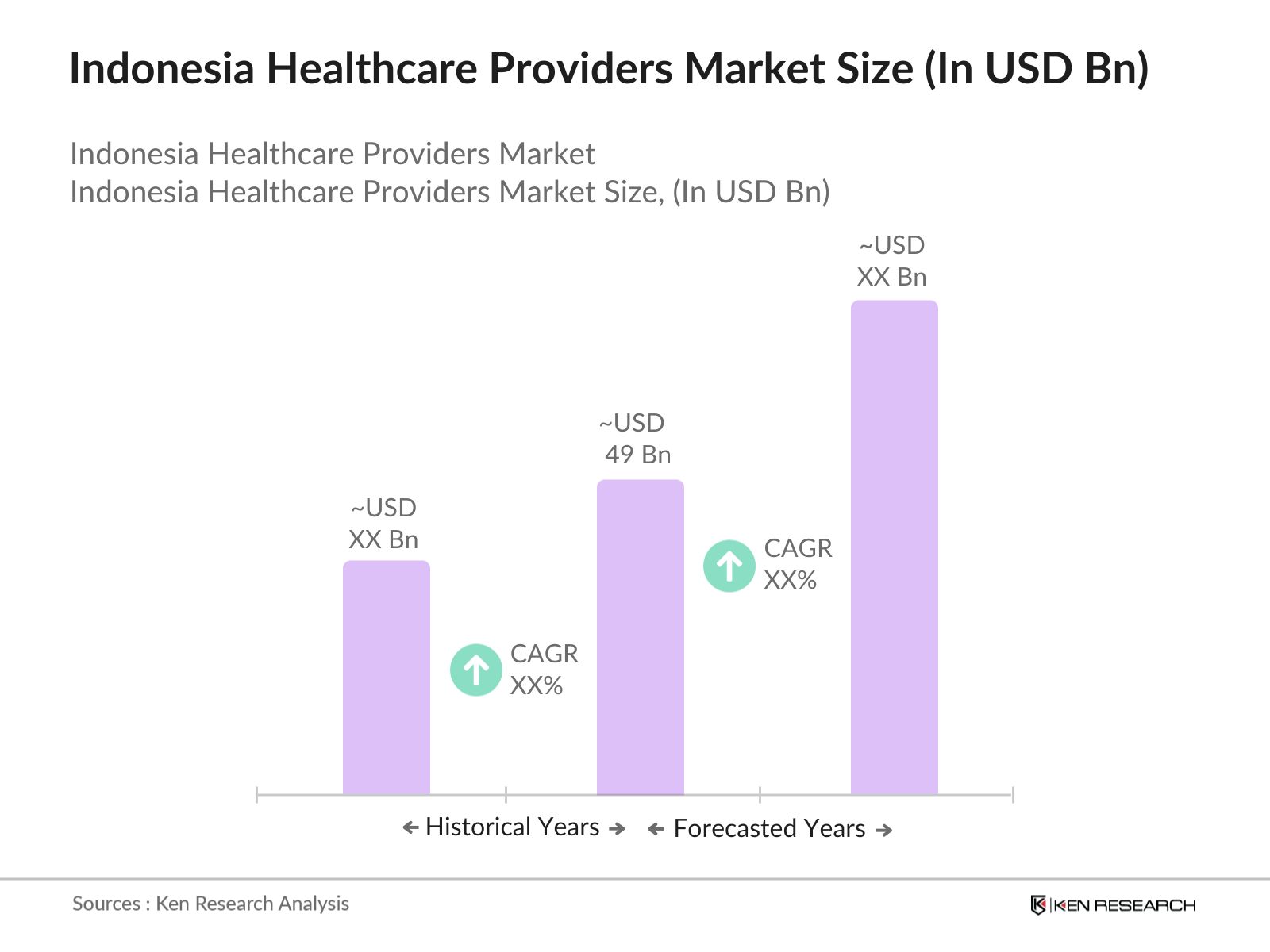
The Indonesia Healthcare Providers Market is valued at USD 49 billion, driven by factors such as the JKN scheme, increasing demand for specialized healthcare, and significant private investment in healthcare facilities.
Key challenges in Indonesia Healthcare Providers Market include high out-of-pocket expenses for patients, limited healthcare infrastructure in rural areas, and a shortage of skilled medical professionals, especially in specialized fields.
Key players in Indonesia Healthcare Providers Market include Siloam International Hospitals, Mitra Keluarga Karyasehat Tbk, Mayapada Healthcare Group, and Hermina Hospitals Group, which dominate the market due to their extensive networks and superior healthcare services.
Indonesia Healthcare Providers Market Growth is driven by the expanding middle-class population, rising healthcare awareness, the government's JKN initiative, and increased private sector investments in medical technology and hospital infrastructure.
The Indonesia Healthcare Providers Market is witnessing trends such as the adoption of telemedicine, integration of artificial intelligence in diagnostics, and increasing investment in private healthcare facilities focused on specialized care.

What makes us stand out is that our consultants follows Robust, Refine and Result (RRR) methodology. i.e. Robust for clear definitions, approaches and sanity checking, Refine for differentiating respondents facts and opinions and Result for presenting data with story

We have set a benchmark in the industry by offering our clients with syndicated and customized market research reports featuring coverage of entire market as well as meticulous research and analyst insights.

While we don't replace traditional research, we flip the method upside down. Our dual approach of Top Bottom & Bottom Top ensures quality deliverable by not just verifying company fundamentals but also looking at the sector and macroeconomic factors.

With one step in the future, our research team constantly tries to show you the bigger picture. We help with some of the tough questions you may encounter along the way: How is the industry positioned? Best marketing channel? KPI's of competitors? By aligning every element, we help maximize success.

Our report gives you instant access to the answers and sources that other companies might choose to hide. We elaborate each steps of research methodology we have used and showcase you the sample size to earn your trust.

If you need any support, we are here! We pride ourselves on universe strength, data quality, and quick, friendly, and professional service.