
Indonesia Heat Pump Market Outlook to 2030
Region:Indonesia
Author(s):Shambhavi
Product Code:KROD2826
Region:Indonesia
Author(s):Shambhavi
Product Code:KROD2826
November 2024
82
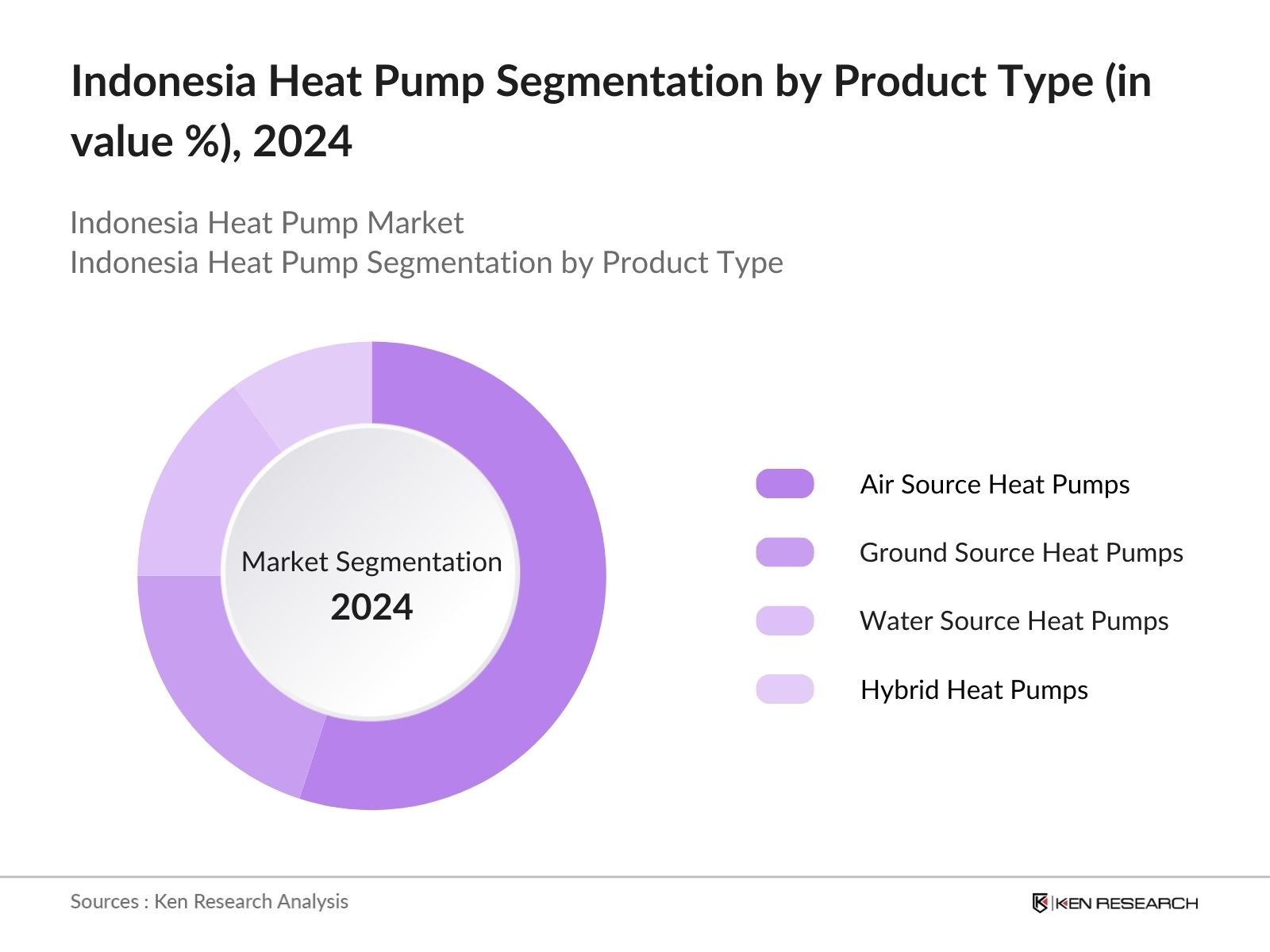
By Product Type: Indonesia's heat pump market is segmented by product type into air source heat pumps, ground source heat pumps, water source heat pumps, and hybrid heat pumps. Air source heat pumps dominate this segment due to their ease of installation and lower initial costs compared to ground and water source alternatives. Moreover, air source heat pumps are highly adaptable for both residential and commercial use, making them a preferred option for consumers seeking energy-efficient solutions without heavy infrastructural changes.
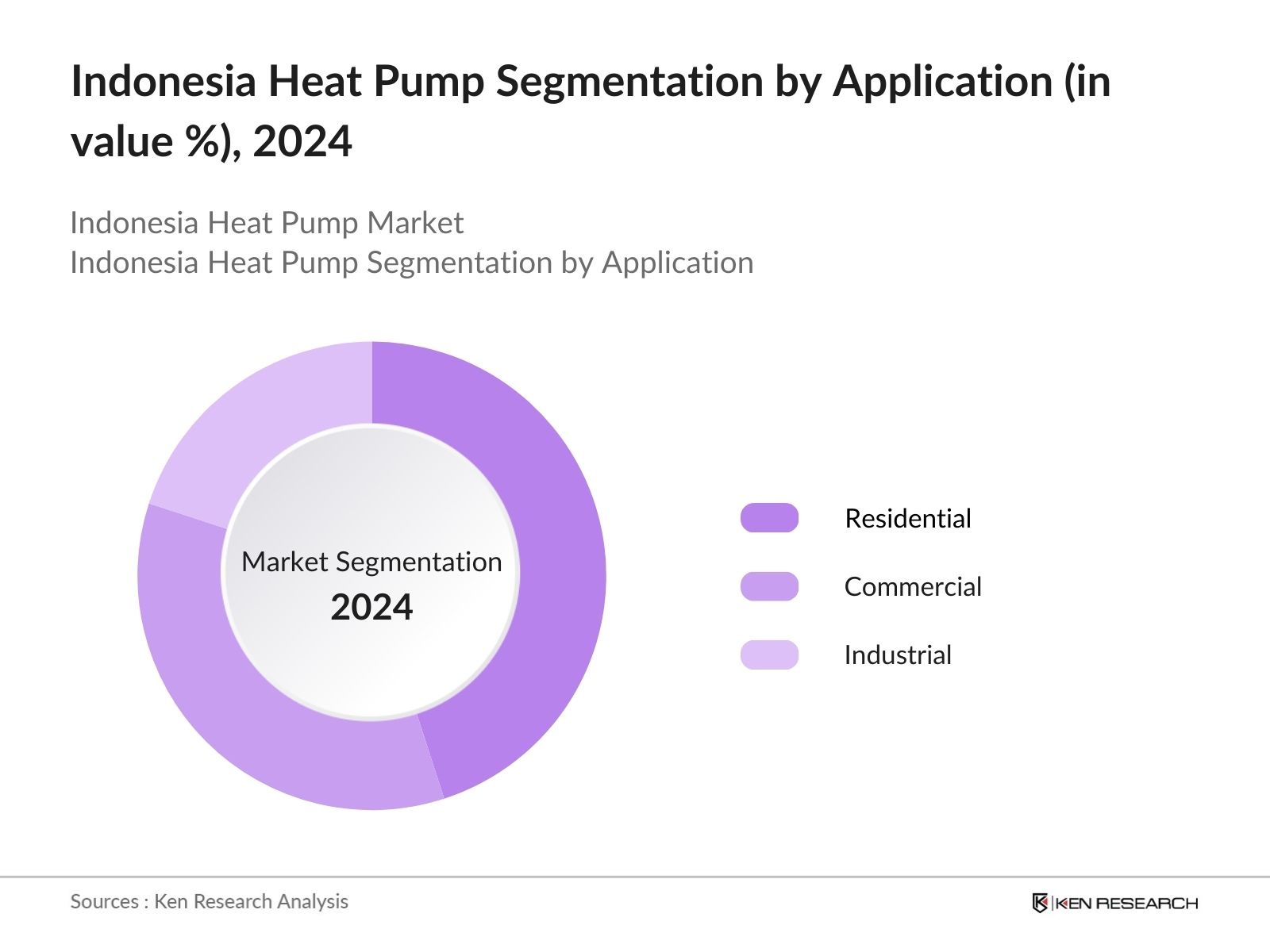
By Application: The heat pump market in Indonesia is segmented by application into residential, commercial, and industrial sectors. The residential sector holds the highest market share, as there has been a significant push toward energy-efficient home heating solutions. Government subsidies for green energy technologies, combined with rising consumer awareness of environmental issues, have accelerated the adoption of heat pumps in homes, especially in urban areas.
The Indonesia heat pump market is dominated by a few key global and regional players, each with a strong market presence and innovative product offerings. Companies like Daikin Industries Ltd., Mitsubishi Electric, and LG Electronics have maintained their dominance through technological advancements and strong distribution networks. These players focus on energy-efficient solutions, often backed by robust research and development, to meet the growing demand for sustainable technologies in Indonesia.
|
Company Name |
Established Year |
Headquarters |
R&D Expenditure |
Energy Efficiency Rating |
Product Range |
Global Presence |
Strategic Partnerships |
Revenue (2023) |
|
Daikin Industries Ltd. |
1924 |
Osaka, Japan |
||||||
|
Mitsubishi Electric |
1921 |
Tokyo, Japan |
||||||
|
LG Electronics Inc. |
1958 |
Seoul, South Korea |
||||||
|
Panasonic Corporation |
1918 |
Osaka, Japan |
||||||
|
Toshiba Corporation |
1875 |
Tokyo, Japan |
Over the next five years, the Indonesia heat pump market is expected to experience robust growth, driven by continuous advancements in green technologies and government support for renewable energy adoption. The increasing focus on energy efficiency standards and the expansion of smart city projects will play a crucial role in accelerating heat pump adoption across the residential, commercial, and industrial sectors. Additionally, the rise in public awareness about environmental sustainability will further fuel market growth.
|
Segment |
Sub-Segment |
|
Product Type |
Air Source Heat Pumps, Ground Source Heat Pumps, Water Source Heat Pumps, Hybrid Heat Pumps |
|
Application |
Residential, Commercial, Industrial |
|
Technology |
Vapor Compression, Absorption |
|
End-User |
Heating, Cooling, Water Heating |
|
Region |
Java, Sumatra, Kalimantan, Sulawesi, Papua |
1.1. Definition and Scope
1.2. Market Taxonomy
1.3. Market Growth Rate
1.4. Market Segmentation Overview
2.1. Historical Market Size
2.2. Year-on-Year Growth Analysis
2.3. Key Market Developments and Milestones
3.1. Growth Drivers (Energy Efficiency, Renewable Energy Adoption, Climate Initiatives)
3.1.1. Rising Energy Costs
3.1.2. Government Incentives for Green Technology
3.1.3. Growing Adoption of Renewable Energy
3.1.4. Urbanization and Infrastructure Development
3.2. Market Challenges (Technological Integration, High Installation Costs)
3.2.1. High Initial Investment
3.2.2. Complex Maintenance Requirements
3.2.3. Lack of Skilled Workforce
3.3. Opportunities (Market Expansion, Technological Advancements)
3.3.1. Integration with Smart Technologies
3.3.2. Rural Electrification Projects
3.3.3. Solar-Heat Pump Hybrid Systems
3.4. Trends (Decarbonization, Smart Home Integration)
3.4.1. Integration of IoT in Heat Pumps
3.4.2. Growth in Residential Heat Pump Adoption
3.4.3. Focus on Zero Carbon Emissions
3.5. Government Regulation (Energy Efficiency Standards, Carbon Emission Norms)
3.5.1. National Energy Efficiency Policies
3.5.2. Renewable Energy Targets
3.5.3. Public-Private Partnerships for Green Energy
3.6. SWOT Analysis
3.7. Stakeholder Ecosystem
3.8. Porters Five Forces Analysis
3.9. Competitive Landscape
4.1. By Product Type (In Value %)
4.1.1. Air Source Heat Pumps
4.1.2. Ground Source Heat Pumps
4.1.3. Water Source Heat Pumps
4.1.4. Hybrid Heat Pumps
4.2. By Application (In Value %)
4.2.1. Residential
4.2.2. Commercial
4.2.3. Industrial
4.3. By Technology (In Value %)
4.3.1. Vapor Compression
4.3.2. Absorption
4.4. By End-User (In Value %)
4.4.1. Heating
4.4.2. Cooling
4.4.3. Water Heating
4.5. By Region (In Value %)
4.5.1. Java
4.5.2. Sumatra
4.5.3. Kalimantan
4.5.4. Sulawesi
4.5.5. Papua
5.1. Detailed Profiles of Major Companies
5.1.1. Daikin Industries Ltd.
5.1.2. Mitsubishi Electric Corporation
5.1.3. LG Electronics Inc.
5.1.4. Panasonic Corporation
5.1.5. Toshiba Corporation
5.1.6. NIBE Energy Systems
5.1.7. Stiebel Eltron GmbH & Co. KG
5.1.8. Viessmann Group
5.1.9. Danfoss A/S
5.1.10. Bosch Thermotechnology
5.1.11. A.O. Smith Corporation
5.1.12. Carrier Corporation
5.1.13. Rheem Manufacturing Company
5.1.14. Fujitsu General Limited
5.1.15. Glen Dimplex Group
5.2. Cross Comparison Parameters (Revenue, Market Share, Product Offerings, Energy Efficiency Ratings, R&D Expenditure, Number of Patents, Global Presence, Strategic Alliances)
5.3. Market Share Analysis
5.4. Strategic Initiatives
5.5. Mergers & Acquisitions
5.6. Investment Analysis
5.7. Government Grants and Subsidies
5.8. Private Equity Investments
6.1. National Energy Efficiency Programs
6.2. Renewable Energy Targets
6.3. Environmental Compliance and Certifications
7.1. Future Market Size Projections
7.2. Key Factors Driving Future Market Growth
8.1. By Product Type (In Value %)
8.2. By Application (In Value %)
8.3. By Technology (In Value %)
8.4. By End-User (In Value %)
8.5. By Region (In Value %)
9.1. TAM/SAM/SOM Analysis
9.2. Customer Cohort Analysis
9.3. Marketing Strategies
9.4. Opportunity Analysis for Expansion
The first step involves creating an ecosystem map identifying all the stakeholders in the Indonesia heat pump market. Using desk research, secondary data sources, and proprietary databases, the key variables such as market drivers, restraints, and industry dynamics were identified to understand the overall market landscape.
This stage includes analyzing historical data related to heat pump sales, application trends, and regional demand distribution. The gathered data is then processed to form a market estimation model to understand the market penetration and revenue generation ratios across the market segments.
To validate the data, we conduct expert interviews using computer-assisted telephone interviews (CATIs) with industry leaders, manufacturers, and key players. This helps refine the hypotheses based on real-world market dynamics and financial insights.
Finally, the data is synthesized, and interactions with industry manufacturers help validate the findings. This data is then cross-verified and refined for the final market estimation, ensuring a comprehensive and reliable report for business professionals.
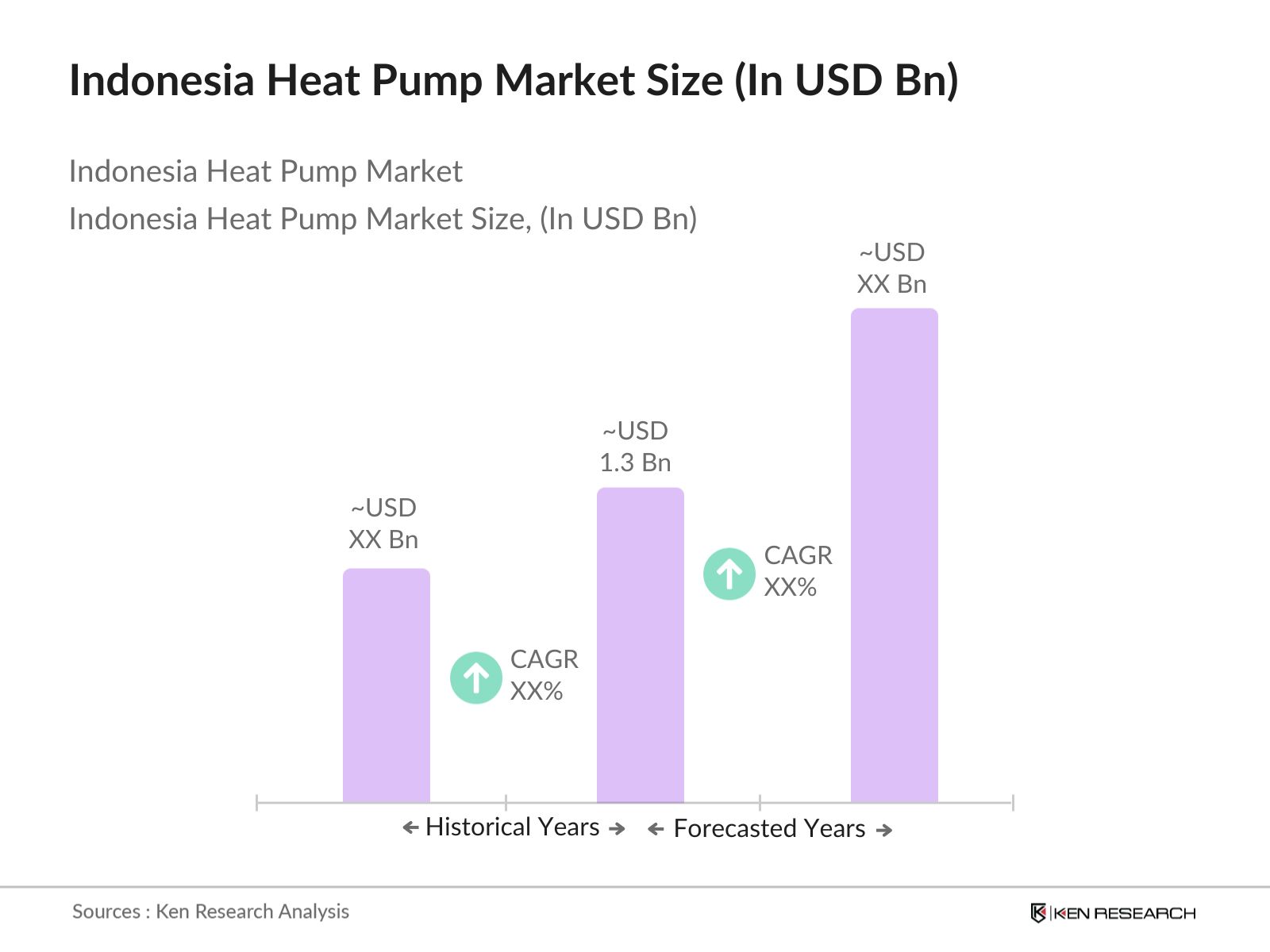
The Indonesia heat pump market is valued at USD 1.3 billion, driven by the rising adoption of energy-efficient systems and the growing need for sustainable heating and cooling solutions across residential, commercial, and industrial sectors.
Challenges include the high initial cost of installation, lack of skilled workforce for maintaining advanced systems, and integration issues with existing infrastructure, especially in older residential buildings.
Key players in the Indonesia heat pump market include Daikin Industries Ltd., Mitsubishi Electric, LG Electronics, Panasonic Corporation, and Toshiba Corporation. These companies dominate due to their technological advancements and established distribution networks.
Growth drivers include the rising focus on energy efficiency, increasing energy costs, and government initiatives to reduce carbon emissions. Additionally, urbanization and the expansion of smart city projects in major cities contribute to the market's growth.

What makes us stand out is that our consultants follows Robust, Refine and Result (RRR) methodology. i.e. Robust for clear definitions, approaches and sanity checking, Refine for differentiating respondents facts and opinions and Result for presenting data with story

We have set a benchmark in the industry by offering our clients with syndicated and customized market research reports featuring coverage of entire market as well as meticulous research and analyst insights.

While we don't replace traditional research, we flip the method upside down. Our dual approach of Top Bottom & Bottom Top ensures quality deliverable by not just verifying company fundamentals but also looking at the sector and macroeconomic factors.

With one step in the future, our research team constantly tries to show you the bigger picture. We help with some of the tough questions you may encounter along the way: How is the industry positioned? Best marketing channel? KPI's of competitors? By aligning every element, we help maximize success.

Our report gives you instant access to the answers and sources that other companies might choose to hide. We elaborate each steps of research methodology we have used and showcase you the sample size to earn your trust.

If you need any support, we are here! We pride ourselves on universe strength, data quality, and quick, friendly, and professional service.