
Indonesia Heating and Cooling Market Outlook to 2030
Region:Asia
Author(s):Vijay Kumar
Product Code:KROD6621
Region:Asia
Author(s):Vijay Kumar
Product Code:KROD6621
November 2024
84
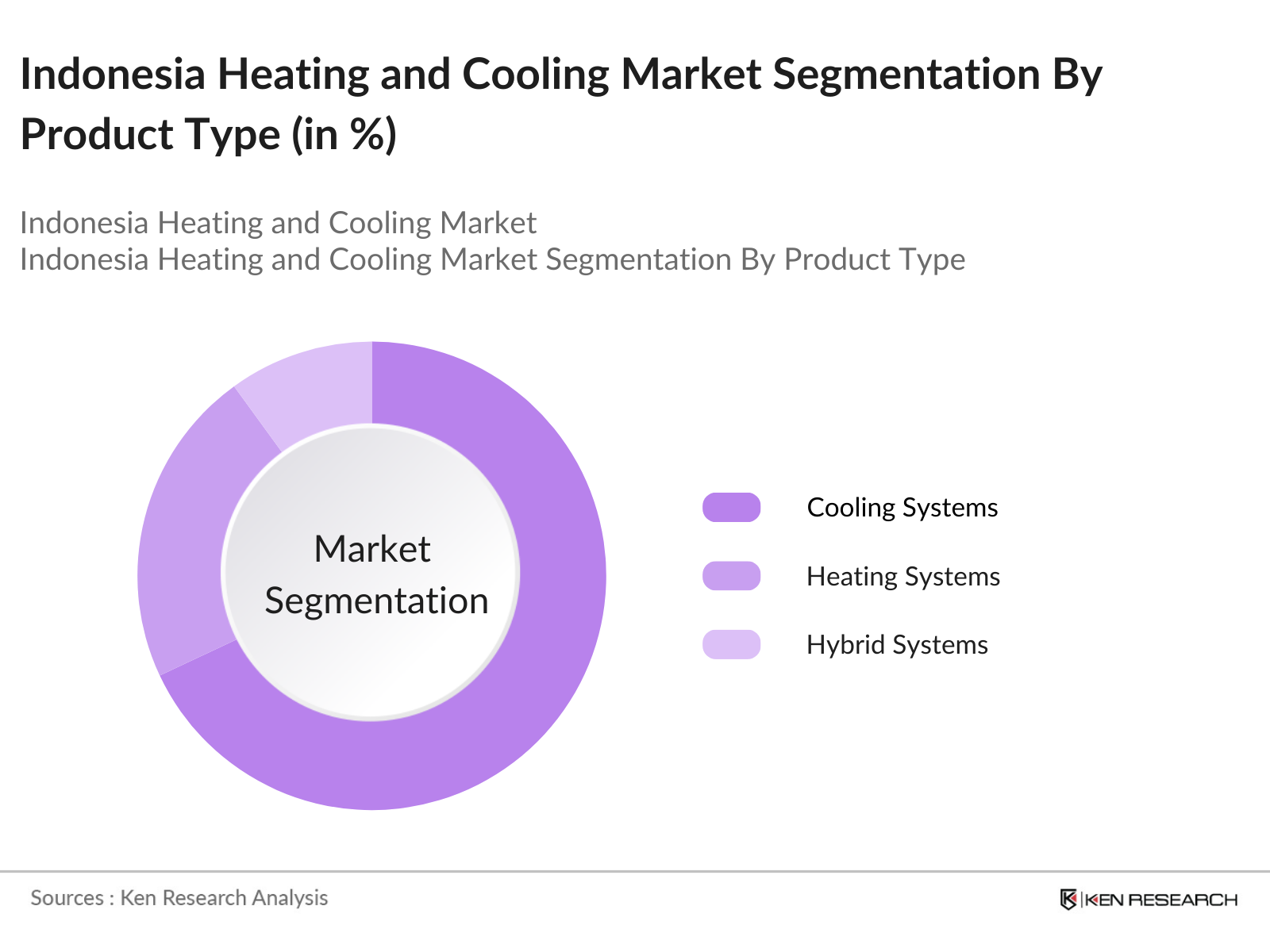
By Product Type: The Indonesia Heating and Cooling market is segmented by product type into heating systems, cooling systems, and hybrid systems. Recently, cooling systems have a dominant market share due to the countrys tropical climate, which demands extensive use of air conditioners and ventilation systems. Cooling systems are essential in both residential and commercial settings, with air conditioners becoming a staple in households.
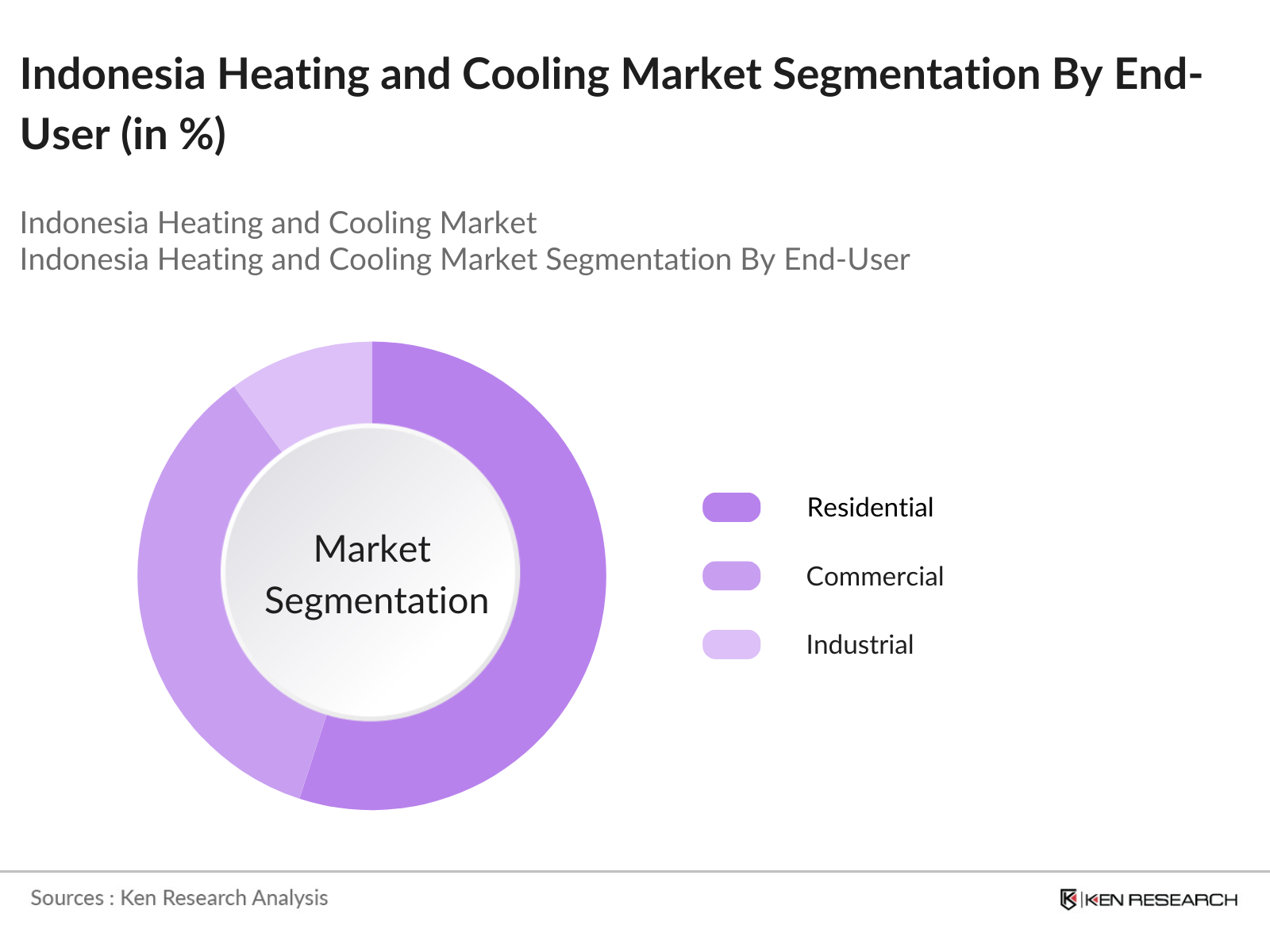
By End-Use Sector: The market is also segmented by end-use sector into residential, commercial, and industrial. The residential sector dominates the market, holding a substantial share due to the increased adoption of air conditioners and energy-efficient HVAC systems among urban households. The residential market benefits from government initiatives to promote green buildings and energy-efficient homes, which encourage consumers to invest in advanced cooling and heating systems.
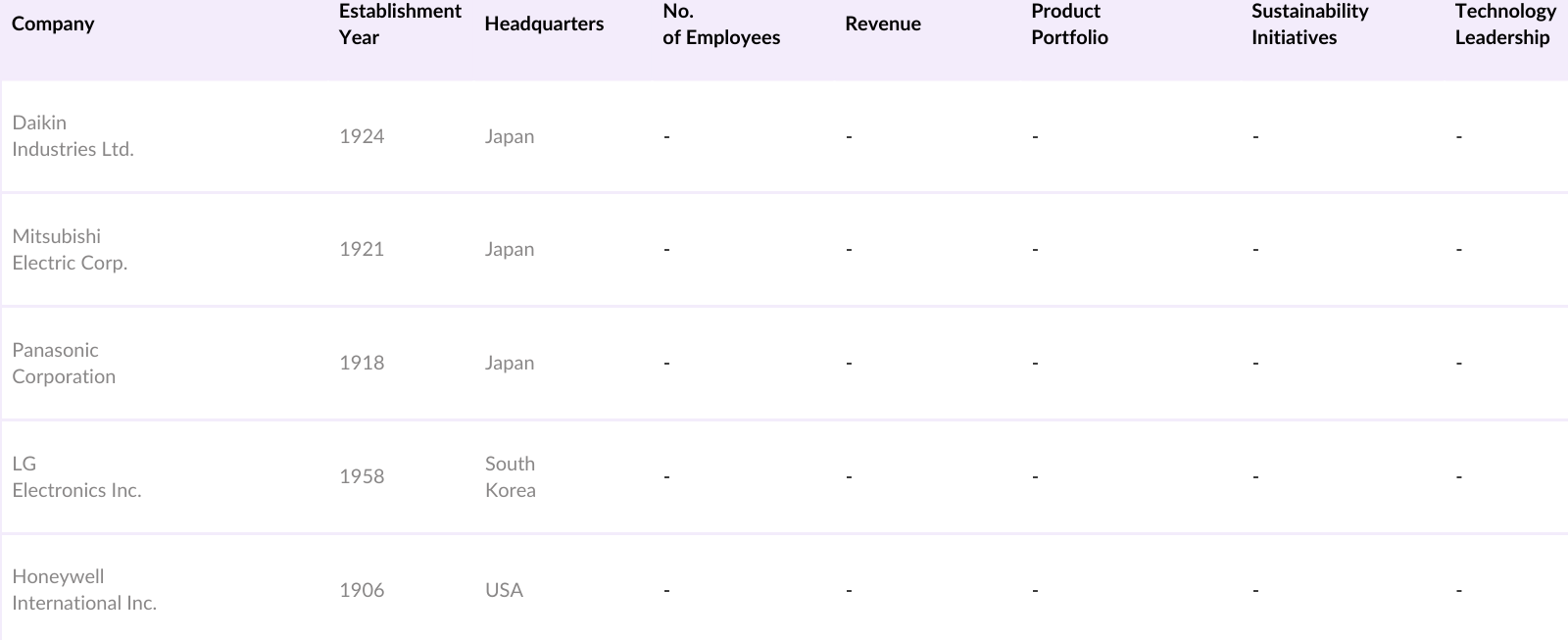
The Indonesia Heating and Cooling market is characterized by the presence of several major players who dominate the industry. These players focus on product innovation, energy efficiency, and sustainability to remain competitive in the market. The competition is marked by the introduction of smart systems and environmentally friendly solutions to meet regulatory requirements and consumer demand for green technologies.
Over the next five years, the Indonesia Heating and Cooling market is expected to exhibit significant growth driven by increased urbanization, the expansion of commercial and residential infrastructures, and a rising demand for energy-efficient solutions. Innovations in renewable energy sources such as solar-powered cooling systems and smart HVAC technologies will also play a key role in driving market growth.
|
Product Type |
Heating Systems Cooling Systems Hybrid Systems |
|
End-Use Sector |
Residential Commercial Industrial |
|
Energy Source |
Fossil Fuel-Based Renewable Energy-Based Electric |
|
Technology |
Centralized Systems Decentralized Systems Smart Systems |
|
Region |
Java Sumatra Kalimantan Sulawesi Bali & Nusa Tenggara |
1.1. Definition and Scope
1.2. Market Taxonomy
1.3. Market Growth Rate
1.4. Market Segmentation Overview
2.1. Historical Market Size
2.2. Year-On-Year Growth Analysis
2.3. Key Market Developments and Milestones
3.1. Growth Drivers
3.1.1. Increasing Urbanization and Industrial Development
3.1.2. Rising Demand for Energy-Efficient Solutions
3.1.3. Government Initiatives for Energy Conservation
3.1.4. Expansion of Commercial and Residential Infrastructures
3.2. Market Challenges
3.2.1. High Initial Costs for Advanced Systems
3.2.2. Limited Awareness in Rural Areas
3.2.3. Fluctuations in Energy Prices
3.2.4. Inconsistent Infrastructure for Sustainable Energy Solutions
3.3. Opportunities
3.3.1. Technological Innovations in Smart HVAC Systems
3.3.2. Investments in Renewable Energy-Based Cooling Solutions
3.3.3. Expanding Construction Sector
3.3.4. International Collaborations in Green Building Standards
3.4. Trends
3.4.1. Integration of IoT in Heating and Cooling Systems
3.4.2. Adoption of Smart City Projects in Major Urban Areas
3.4.3. Transition to Solar-Powered HVAC Systems
3.4.4. Growing Popularity of Hybrid Heating Systems
3.5. Regulatory Framework
3.5.1. National Energy Efficiency Standards for HVAC
3.5.2. Government Subsidies for Energy-Efficient Appliances
3.5.3. Emission Reduction Targets in Cooling Systems
3.5.4. Public-Private Partnerships in Renewable Heating Solutions
3.6. SWOT Analysis
3.7. Stakeholder Ecosystem
3.8. Porters Five Forces
3.9. Competition Ecosystem
4.1. By Product Type (In Value %)
4.1.1. Heating Systems (Boilers, Heat Pumps)
4.1.2. Cooling Systems (Air Conditioners, Ventilation)
4.1.3. Hybrid Systems
4.2. By End-Use Sector (In Value %)
4.2.1. Residential
4.2.2. Commercial
4.2.3. Industrial
4.3. By Energy Source (In Value %)
4.3.1. Fossil Fuel-Based Systems
4.3.2. Renewable Energy-Based Systems (Solar, Geothermal)
4.3.3. Electric Systems
4.4. By Technology (In Value %)
4.4.1. Centralized Systems
4.4.2. Decentralized Systems
4.4.3. Smart Systems (IoT-Enabled)
4.5. By Region (In Value %)
4.5.1. Java
4.5.2. Sumatra
4.5.3. Kalimantan
4.5.4. Sulawesi
4.5.5. Bali and Nusa Tenggara
5.1. Detailed Profiles of Major Companies 5.1.1. Daikin Industries Ltd.
5.1.2. Panasonic Corporation
5.1.3. Mitsubishi Electric Corporation
5.1.4. LG Electronics Inc.
5.1.5. Carrier Corporation
5.1.6. Samsung Electronics Co., Ltd.
5.1.7. Haier Group Corporation
5.1.8. Trane Technologies Plc
5.1.9. Hitachi Ltd.
5.1.10. Honeywell International Inc.
5.1.11. Johnson Controls International Plc
5.1.12. Fujitsu General Ltd.
5.1.13. Toshiba Carrier Corporation
5.1.14. Gree Electric Appliances Inc.
5.1.15. Midea Group Co., Ltd.
5.2. Cross Comparison Parameters
(No. of Employees, Headquarters, Inception Year, Revenue, Global Reach, Product Portfolio, Innovation Initiatives, Sustainability Practices)
5.3. Market Share Analysis
5.4. Strategic Initiatives
5.5. Mergers and Acquisitions
5.6. Investment Analysis
5.7. Venture Capital Funding
5.8. Government Grants
5.9. Private Equity Investments
6.1. Environmental Compliance Standards
6.2. Energy Efficiency Regulations
6.3. Certification and Labelling Requirements
6.4. Import and Export Regulations
7.1. Future Market Size Projections
7.2. Key Factors Driving Future Market Growth
8.1. By Product Type (In Value %)
8.2. By End-Use Sector (In Value %)
8.3. By Energy Source (In Value %)
8.4. By Technology (In Value %)
8.5. By Region (In Value %)
9.1. TAM/SAM/SOM Analysis
9.2. Customer Cohort Analysis
9.3. Marketing Initiatives
9.4. White Space Opportunity Analysis
The first step involves constructing an ecosystem map of the Indonesia Heating and Cooling market, identifying all key stakeholders. Extensive desk research was conducted using secondary and proprietary databases to gather comprehensive industry data. The goal was to outline critical variables such as energy consumption patterns, consumer preferences, and regulatory influences.
This phase included compiling historical data on market size, product penetration, and revenue generation. The team analyzed the share of heating and cooling systems in various sectors, evaluating service quality and energy efficiency metrics. Data from government reports and industry publications were used to ensure accuracy.
Market hypotheses were developed and validated through consultations with industry experts using computer-assisted telephone interviews (CATIS). These interviews helped refine market data and provided insights into operational challenges and financial performance from manufacturers and service providers.
Finally, direct engagements with heating and cooling system manufacturers provided detailed insights into consumer preferences, product segments, and sales trends. This approach ensured a thorough and validated analysis of the market, combining top-down and bottom-up research methodologies.
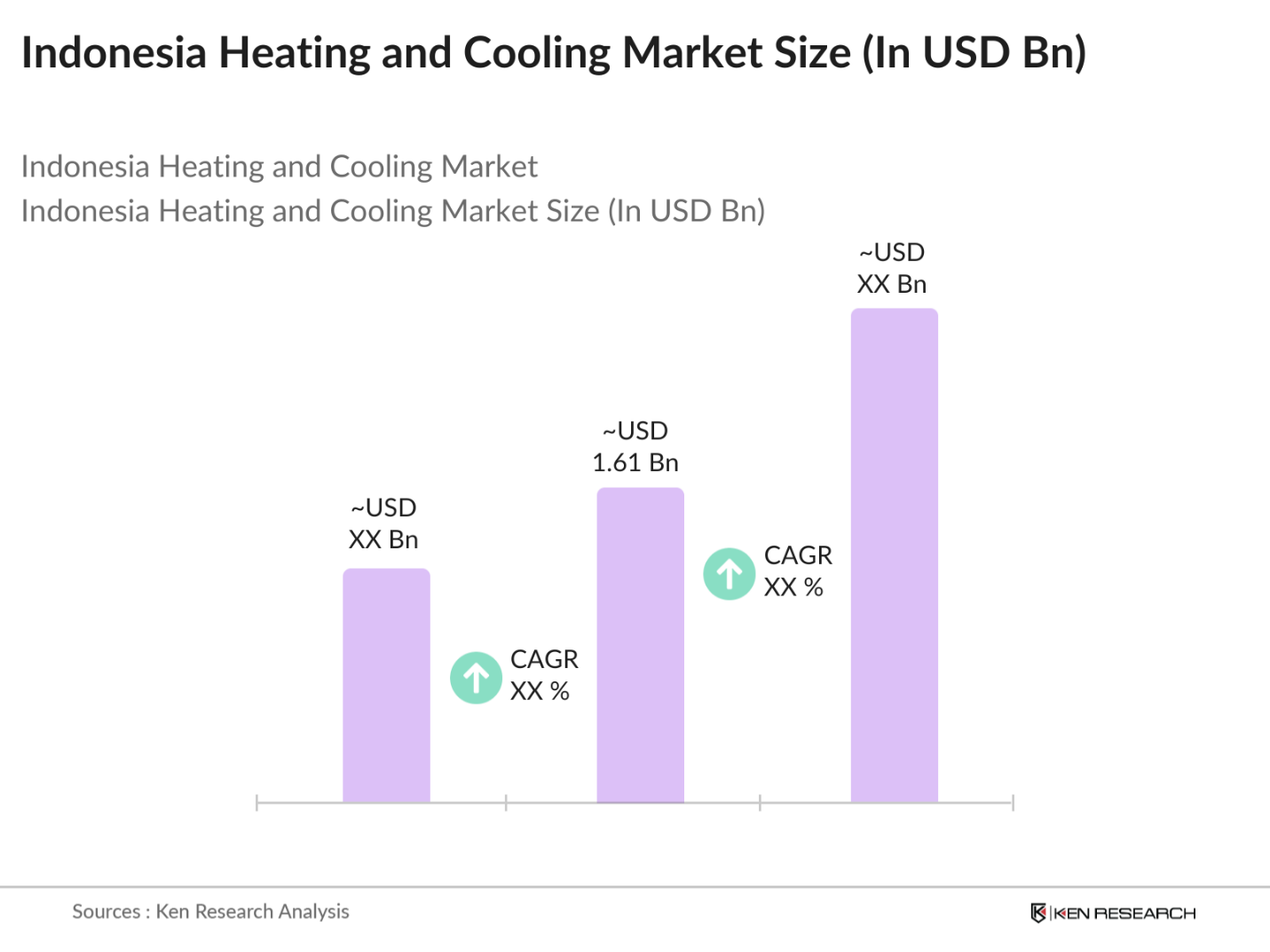
The Indonesia Heating and Cooling market is valued at USD 1.61 billion, based on a five-year historical analysis. This market is primarily driven by the rapid urbanization and increasing middle-class population, which has led to a surge in demand for energy-efficient HVAC systems in residential, commercial, and industrial settings.
The major challenges include high initial costs for advanced HVAC systems, fluctuating energy prices, and limited awareness about energy-efficient solutions in rural areas. Moreover, inconsistent infrastructure for renewable energy poses a challenge for market growth.
Key players include Daikin Industries Ltd., Panasonic Corporation, Mitsubishi Electric Corporation, LG Electronics Inc., and Carrier Corporation. These companies dominate the market due to their strong product portfolios, sustainability initiatives, and innovation in smart HVAC technologies.
The market is driven by rapid urbanization, government initiatives for energy conservation, and rising consumer demand for energy-efficient and eco-friendly heating and cooling systems. Technological advancements such as IoT integration and solar-powered HVAC systems are also contributing to market growth.

What makes us stand out is that our consultants follows Robust, Refine and Result (RRR) methodology. i.e. Robust for clear definitions, approaches and sanity checking, Refine for differentiating respondents facts and opinions and Result for presenting data with story

We have set a benchmark in the industry by offering our clients with syndicated and customized market research reports featuring coverage of entire market as well as meticulous research and analyst insights.

While we don't replace traditional research, we flip the method upside down. Our dual approach of Top Bottom & Bottom Top ensures quality deliverable by not just verifying company fundamentals but also looking at the sector and macroeconomic factors.

With one step in the future, our research team constantly tries to show you the bigger picture. We help with some of the tough questions you may encounter along the way: How is the industry positioned? Best marketing channel? KPI's of competitors? By aligning every element, we help maximize success.

Our report gives you instant access to the answers and sources that other companies might choose to hide. We elaborate each steps of research methodology we have used and showcase you the sample size to earn your trust.

If you need any support, we are here! We pride ourselves on universe strength, data quality, and quick, friendly, and professional service.