
Indonesia Hospitality Real Estate Market Outlook to 2030
Region:Indonesia
Author(s):Abhinav kumar
Product Code:KROD9336
Region:Indonesia
Author(s):Abhinav kumar
Product Code:KROD9336
November 2024
93
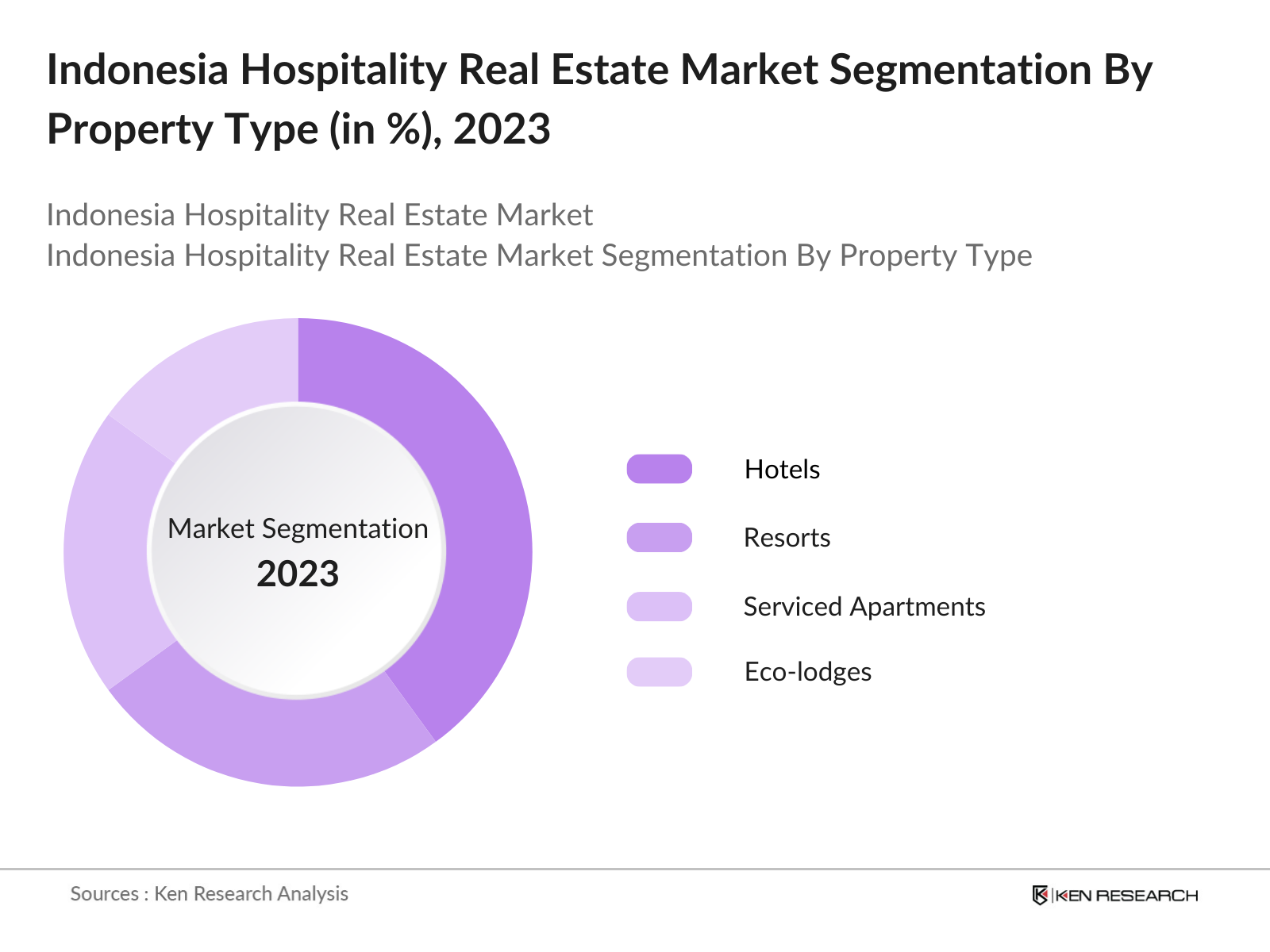
By Property Type: The Indonesia Hospitality Real Estate Market is segmented by property type into hotels, resorts, serviced apartments, and eco-lodges. Recently, hotels have maintained a dominant market share in Indonesia under the segmentation of property type, largely due to the steady inflow of international and domestic travelers. Major brands like Marriott and Hilton have established a strong presence, boosting the dominance of the hotel segment.
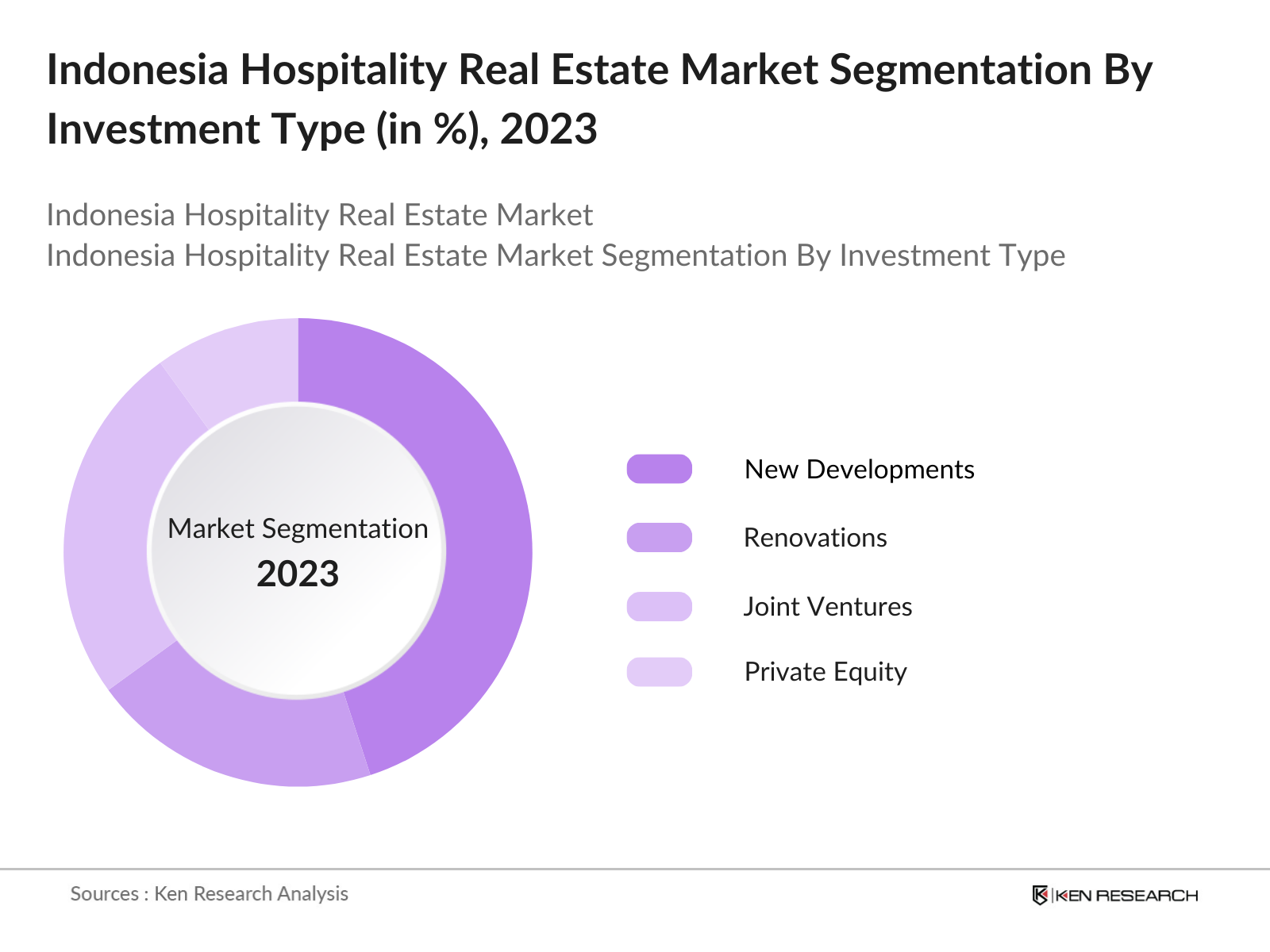
By Investment Type: The Indonesia Hospitality Real Estate Market is segmented by investment type into new developments, renovations, joint ventures, and private equity. New developments have a leading market share in Indonesias hospitality real estate investment, fueled by the increasing demand for unique and modern accommodations. The governments incentives for new projects and the demand for high-quality facilities contribute significantly to the growth of this segment.
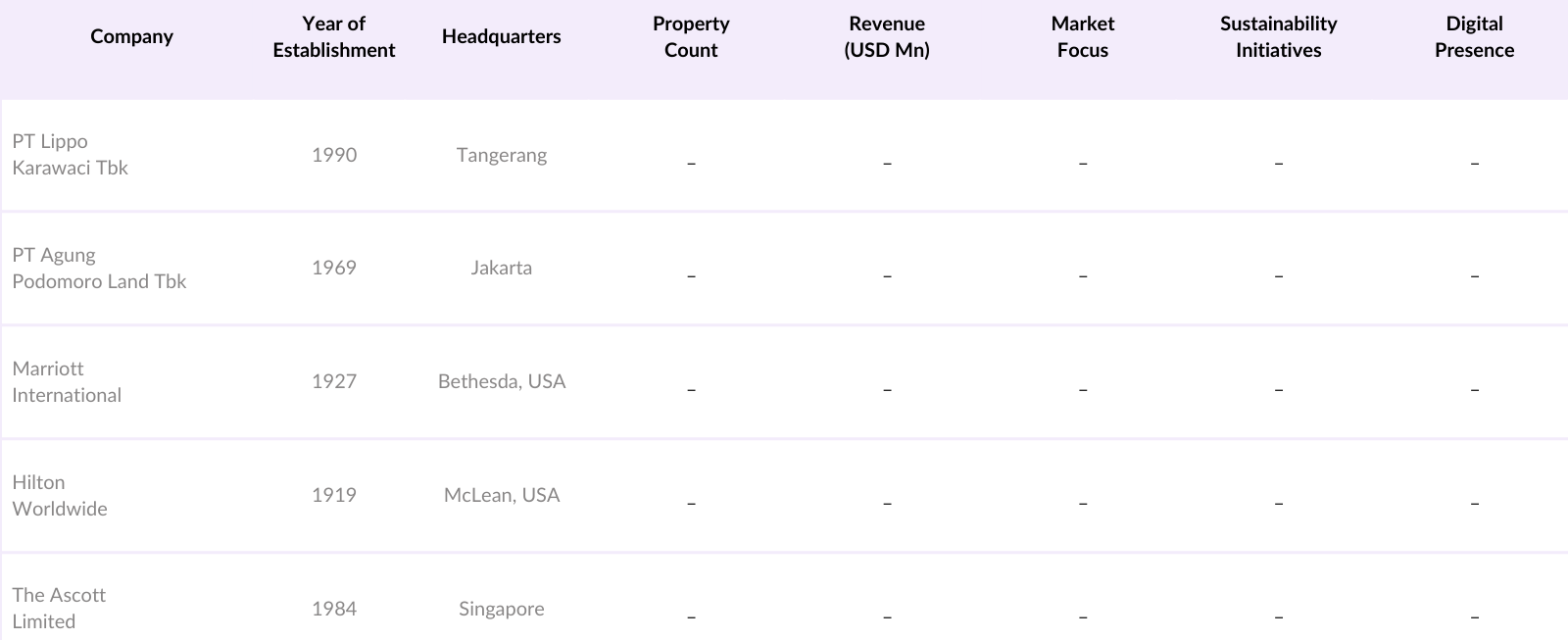
The Indonesia Hospitality Real Estate Market is dominated by both local and international players, such as PT Lippo Karawaci Tbk, PT Agung Podomoro Land Tbk, and international brands like Marriott and Hilton. This consolidation indicates a strong influence from key industry leaders in shaping the market's trends and strategies.
Over the next five years, the Indonesia Hospitality Real Estate Market is expected to experience significant growth, supported by government initiatives, increased foreign investment, and the expansion of tourism in emerging regions. With a focus on sustainable developments and the integration of digital services, the market will continue to attract both local and international investors.
|
Property Type |
Hotels and Accommodations Resorts and Spas Serviced Apartments Boutique Hotels, Eco-lodges |
|
Investment Type |
New Developments Renovations Partnerships and Joint Ventures Private Equity Real Estate Investment Trusts (REITs) |
|
End-User Type |
Leisure Business and MICE Medical Tourism Cultural and Eco-tourism |
|
Service Type |
Property Management Hospitality Consulting Marketing and Branding Facility Operations Financing and Investment Services |
|
Region |
Java, Bali Sumatra Sulawesi Kalimantan |
1.1 Definition and Scope
1.2 Market Taxonomy
1.3 Market Growth Rate
1.4 Market Segmentation Overview
2.1 Historical Market Size
2.2 Year-On-Year Growth Analysis
2.3 Key Market Developments and Milestones
3.1 Growth Drivers
3.1.1 Surge in International Tourism
3.1.2 Government Infrastructure Support
3.1.3 Rise in Domestic Travel and Staycations
3.1.4 Expansion of Business Travel and MICE Activities
3.2 Market Challenges
3.2.1 Regulatory and Licensing Constraints
3.2.2 Environmental and Sustainability Compliance
3.2.3 Competition from Alternative Accommodation Options
3.3 Opportunities
3.3.1 Development of Emerging Tourist Destinations
3.3.2 Adoption of Smart and Green Hospitality Solutions
3.3.3 Increased Investment in Eco-friendly Properties
3.4 Trends
3.4.1 Digital Solutions Integration in Guest Services
3.4.2 Rise in Boutique and Lifestyle Hotels
3.4.3 Focus on Health and Wellness Amenities
3.5 Government Regulations
3.5.1 Foreign Investment Policies
3.5.2 Tax Incentives for Hospitality Projects
3.5.3 Zoning and Land Use Regulations
3.5.4 Environmental Compliance Standards
3.6 SWOT Analysis
3.7 Stakeholder Ecosystem
3.8 Porters Five Forces Analysis
3.9 Competitive Landscape
4.1 By Property Type (In Value %)
4.1.1 Hotels and Accommodations
4.1.2 Resorts and Spas
4.1.3 Serviced Apartments
4.1.4 Boutique Hotels
4.1.5 Eco-lodges
4.2 By Investment Type (In Value %)
4.2.1 New Developments
4.2.2 Renovations
4.2.3 Partnerships and Joint Ventures
4.2.4 Private Equity
4.2.5 Real Estate Investment Trusts (REITs)
4.3 By End-User Type (In Value %)
4.3.1 Leisure
4.3.2 Business and MICE
4.3.3 Medical Tourism
4.3.4 Cultural and Eco-tourism
4.4 By Service Type (In Value %)
4.4.1 Property Management
4.4.2 Hospitality Consulting
4.4.3 Marketing and Branding
4.4.4 Facility Operations
4.4.5 Financing and Investment Services
4.5 By Region (In Value %)
4.5.1 Java
4.5.2 Bali
4.5.3 Sumatra
4.5.4 Sulawesi
4.5.5 Kalimantan
5.1 Detailed Profiles of Major Competitors
5.1.1 PT Lippo Karawaci Tbk
5.1.2 PT Agung Podomoro Land Tbk
5.1.3 Ciputra Development
5.1.4 Pakuwon Jati Tbk
5.1.5 PT Surya Semesta Internusa Tbk
5.1.6 AccorHotels Indonesia
5.1.7 Marriott International
5.1.8 Hilton Worldwide
5.1.9 The Ascott Limited
5.1.10 RedDoorz Indonesia
5.1.11 OYO Rooms Indonesia
5.1.12 Aryaduta Hotels
5.1.13 Santika Indonesia Hotels & Resorts
5.1.14 Archipelago International
5.1.15 Swiss-Belhotel International
5.2 Cross Comparison Parameters (Revenue, Portfolio Size, Headquarters, Year of Establishment, Number of Properties, Market Presence, Customer Base, Sustainability Practices)
5.3 Market Share Analysis
5.4 Strategic Initiatives
5.5 Mergers and Acquisitions
5.6 Investment Analysis
5.7 Private Equity and Venture Capital Investments
5.8 Government Grants
6.1 Product Approval Process
6.2 Compliance Standards
6.3 Certification and Licensing Requirements
6.4 Import Tariffs and Tax Regulations
7.1 Future Market Size Projections
7.2 Key Factors Driving Future Market Growth
8.1 By Property Type (In Value %)
8.2 By Investment Type (In Value %)
8.3 By End-User Type (In Value %)
8.4 By Service Type (In Value %)
8.5 By Region (In Value %)
9.1 TAM/SAM/SOM Analysis
9.2 Customer Cohort Analysis
9.3 Targeted Marketing Strategies
9.4 White Space Opportunity Analysis
Disclaimer Contact UsThe initial phase focuses on mapping the entire ecosystem of stakeholders in the Indonesia Hospitality Real Estate Market. This includes a thorough analysis of key players, market dynamics, and influential variables. Extensive desk research was conducted using secondary databases to form an accurate picture of the market structure.
In this stage, historical data was compiled and analyzed to understand market growth trends, penetration rates, and the revenue generation process. An evaluation of consumer behavior and property development cycles was undertaken to ensure the reliability of revenue estimates.
Market assumptions were developed and validated through structured interviews with industry experts. These consultations provided essential insights into the operational and financial aspects of the hospitality real estate sector in Indonesia, refining the initial market data.
The final phase involved direct engagement with real estate developers and hospitality managers to gain deeper insights into occupancy rates, investment trends, and customer preferences. This interaction allowed for a comprehensive and validated analysis of the Indonesia Hospitality Real Estate Market.
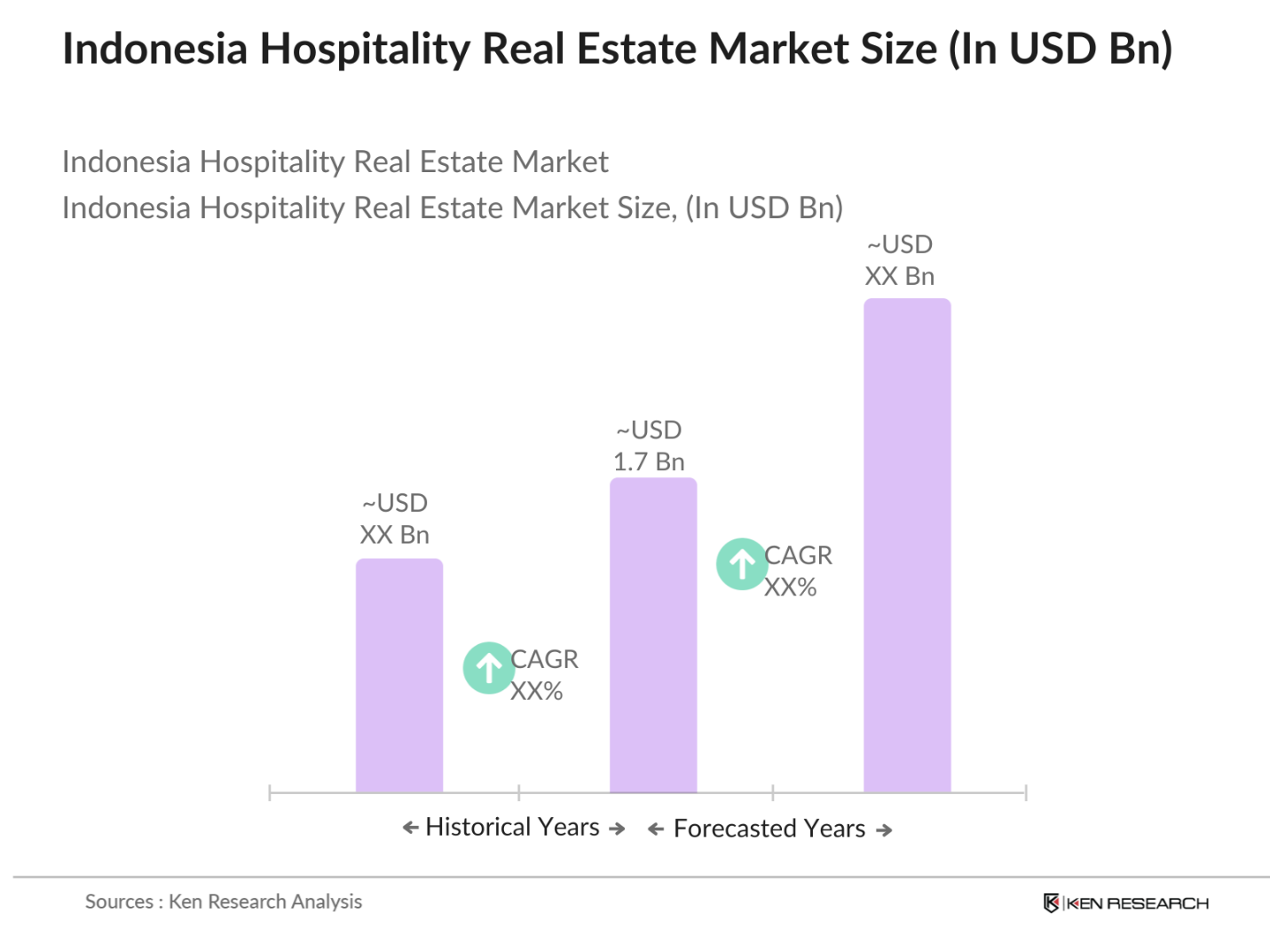
The Indonesia Hospitality Real Estate Market is valued at USD 1.7 billion, driven by high tourism demand, government incentives, and rising consumer interest in eco-friendly accommodations.
The market faces regulatory hurdles, environmental compliance requirements, and strong competition from alternative accommodations. Additionally, challenges in sustainable development add to market complexity.
Key players include PT Lippo Karawaci Tbk, PT Agung Podomoro Land Tbk, Marriott International, Hilton Worldwide, and The Ascott Limited, which lead the market due to their strong brand presence and property portfolio.
Growth is driven by an increase in international tourism, government infrastructure initiatives, the rise of domestic travel, and the popularity of business travel and MICE activities.

What makes us stand out is that our consultants follows Robust, Refine and Result (RRR) methodology. i.e. Robust for clear definitions, approaches and sanity checking, Refine for differentiating respondents facts and opinions and Result for presenting data with story

We have set a benchmark in the industry by offering our clients with syndicated and customized market research reports featuring coverage of entire market as well as meticulous research and analyst insights.

While we don't replace traditional research, we flip the method upside down. Our dual approach of Top Bottom & Bottom Top ensures quality deliverable by not just verifying company fundamentals but also looking at the sector and macroeconomic factors.

With one step in the future, our research team constantly tries to show you the bigger picture. We help with some of the tough questions you may encounter along the way: How is the industry positioned? Best marketing channel? KPI's of competitors? By aligning every element, we help maximize success.

Our report gives you instant access to the answers and sources that other companies might choose to hide. We elaborate each steps of research methodology we have used and showcase you the sample size to earn your trust.

If you need any support, we are here! We pride ourselves on universe strength, data quality, and quick, friendly, and professional service.