
Indonesia Infant Nutrition Market Outlook to 2030
Region:Indonesia
Author(s):Yogita Sahu
Product Code:KROD11091
Region:Indonesia
Author(s):Yogita Sahu
Product Code:KROD11091
November 2024
97
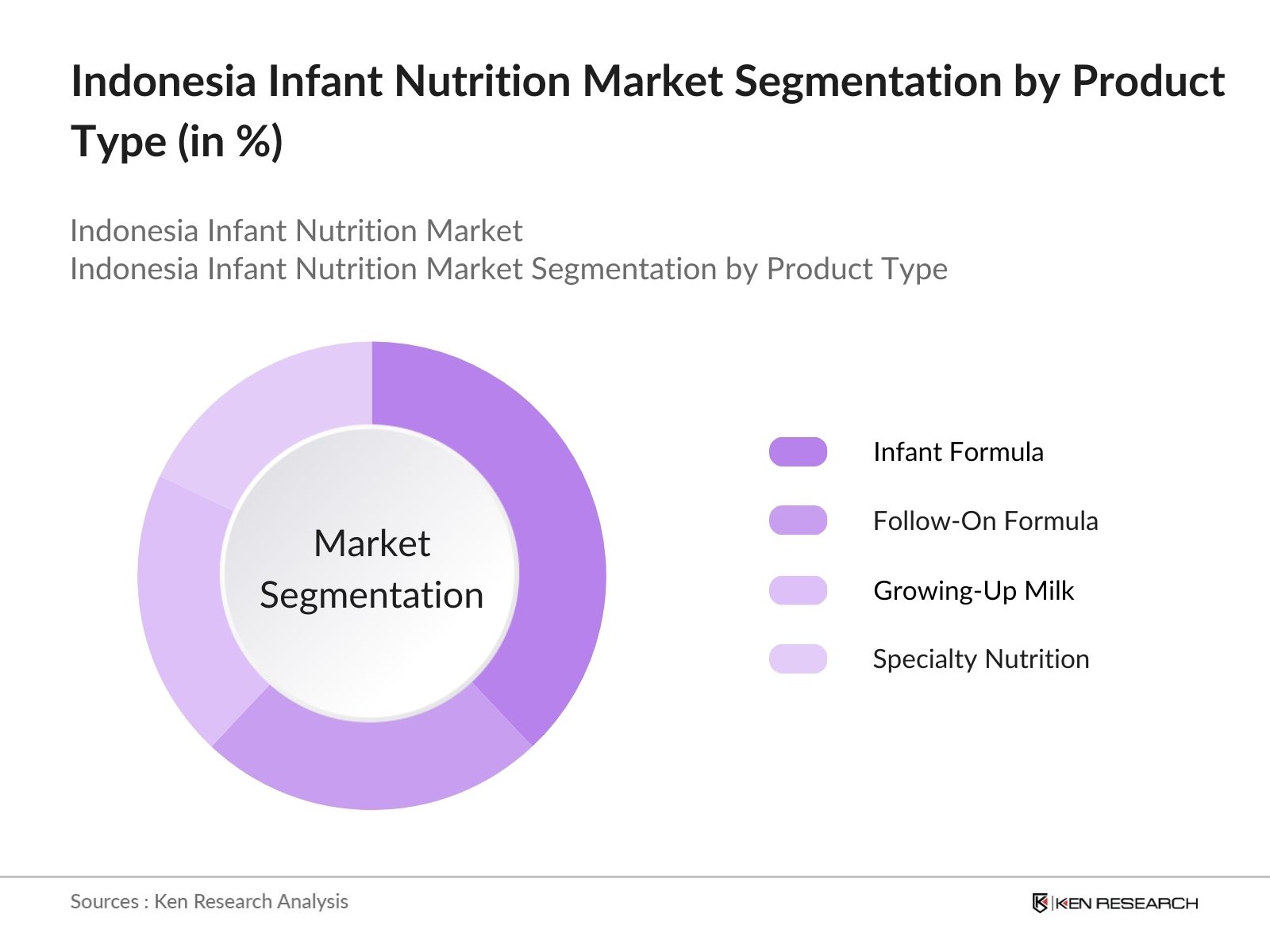
By Product Type: The market is segmented by product type into Infant Formula, Follow-On Formula, Growing-Up Milk, and Specialty Nutrition. Recently, Infant Formula holds a significant market share due to its essential role in infant development, particularly among families where breastfeeding is not a feasible option. The demand for specialized formulas that cater to various health needs, such as hypoallergenic or lactose-free options, has also contributed to the dominance of this segment.
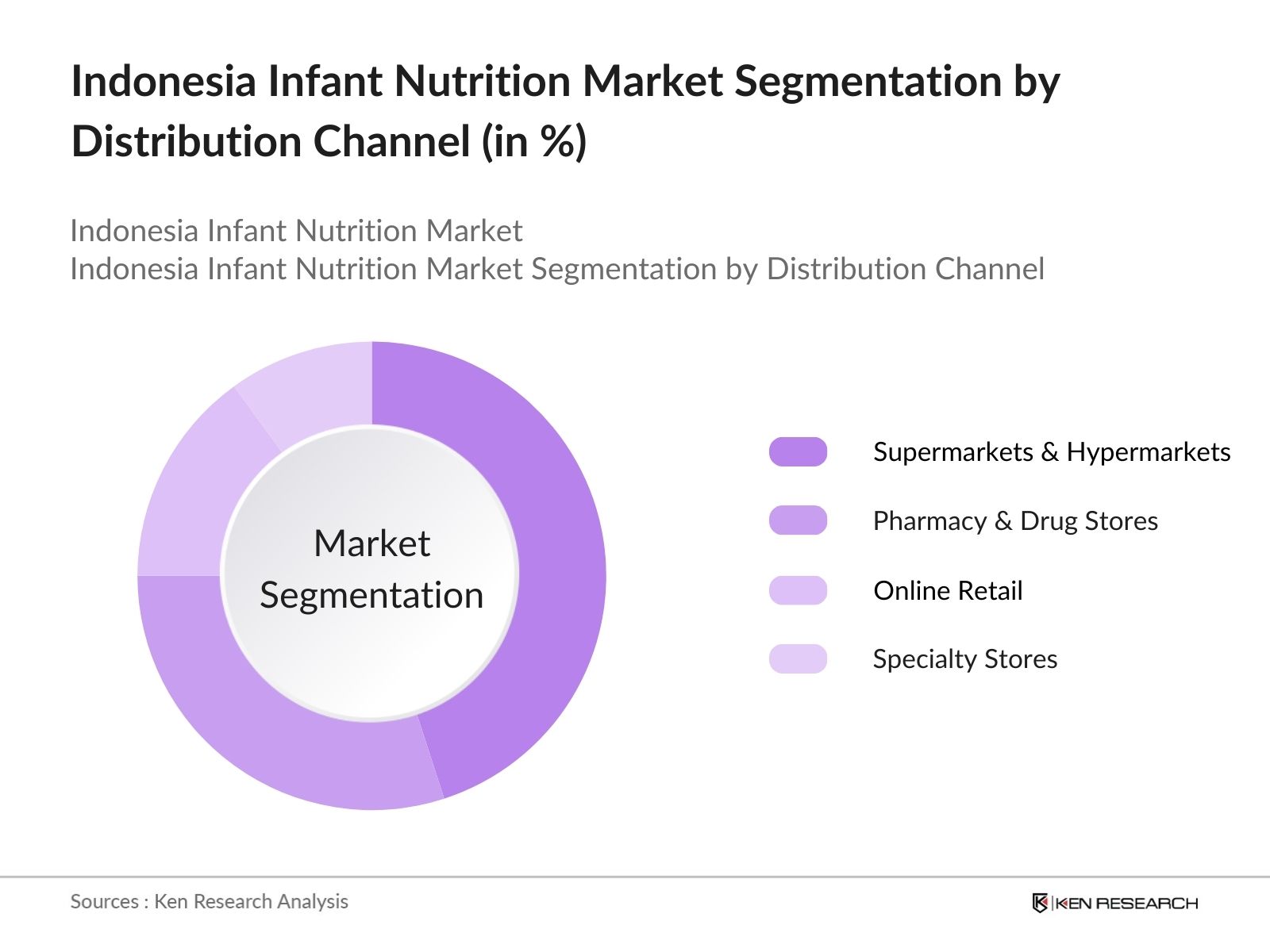
By Distribution Channel: Distribution channels for Indonesias Infant Nutrition market include Supermarkets and Hypermarkets, Pharmacy and Drug Stores, Online Retail, and Specialty Stores. Supermarkets and Hypermarkets dominate this segmentation, primarily because they offer a wide range of brands and provide a convenient shopping experience for busy parents. Their accessibility and attractive promotional strategies make them the preferred choice for infant nutrition products in urban and suburban areas.
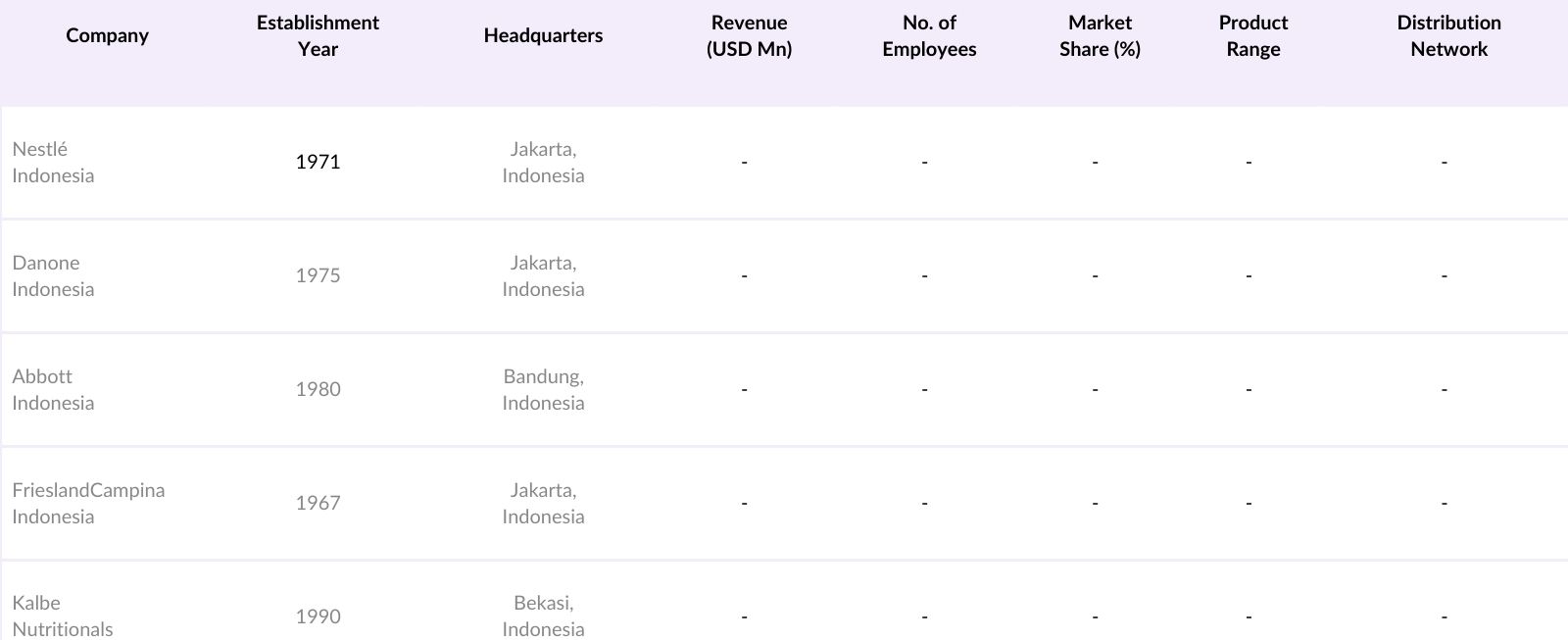
The market is dominated by several key players who have established a strong foothold through extensive product portfolios and effective distribution networks. Major players, including Nestl Indonesia and Danone, lead due to their recognized brands and continuous innovation to meet evolving consumer needs.
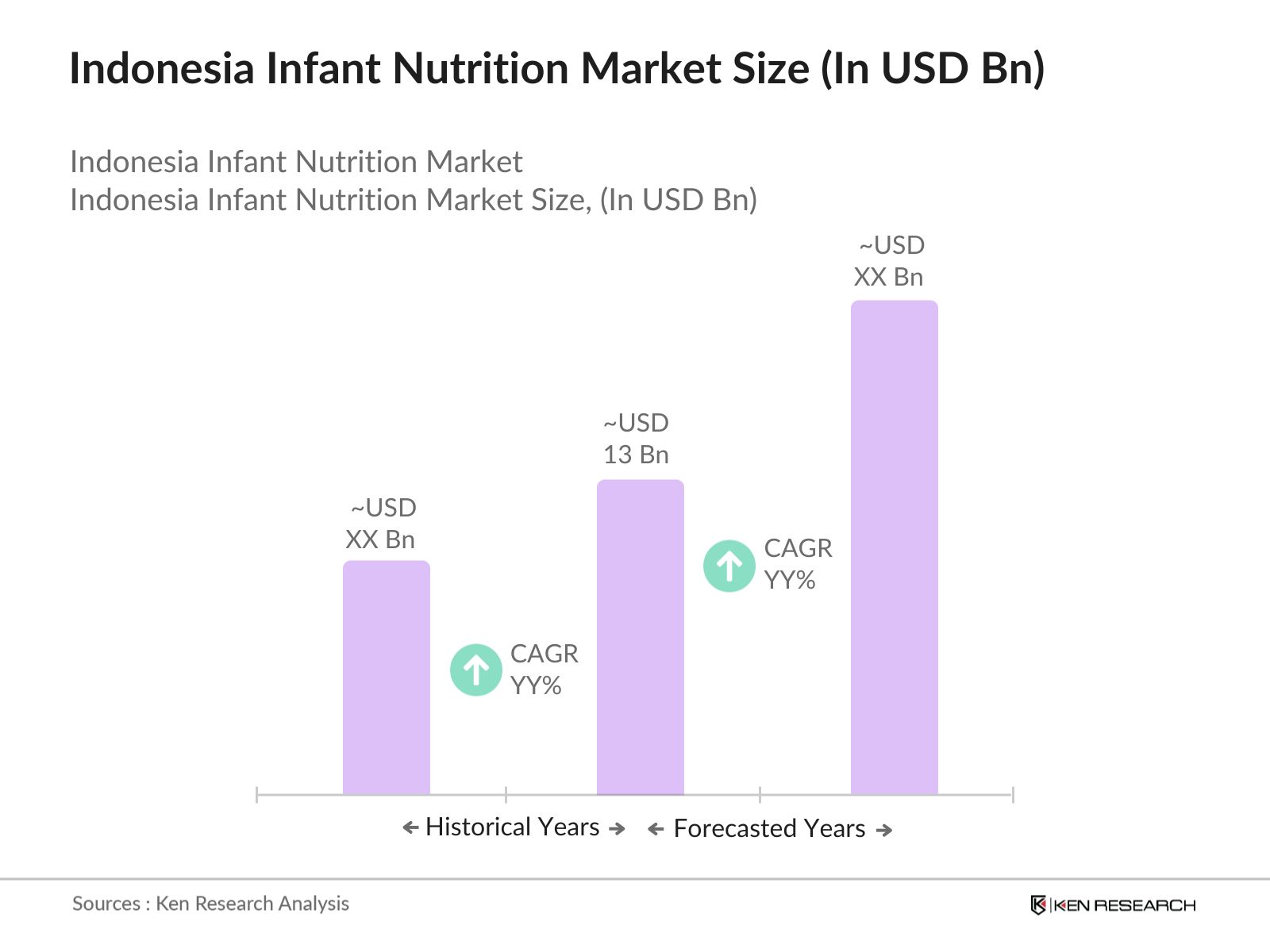
Over the next few years, the Indonesia Infant Nutrition industry is expected to see notable growth driven by increasing parental awareness of child health, advancements in product formulations, and the rising popularity of organic infant products.
|
By Product Type |
Infant Formula |
|
By Distribution Channel |
Supermarkets and Hypermarkets |
|
By Packaging Type |
Metal Cans |
|
By Age Group |
0-6 Months |
|
By Region |
Java |
1.1 Definition and Scope
1.2 Market Taxonomy
1.3 Market Growth Rate
1.4 Market Segmentation Overview
2.1 Historical Market Size
2.2 Year-On-Year Growth Analysis
2.3 Key Market Developments and Milestones
3.1 Growth Drivers
3.1.1 Increasing Urbanization and Women Workforce Participation
3.1.2 Rising Awareness of Infant Health and Nutrition
3.1.3 Supportive Government Policies
3.1.4 Expanding Distribution Networks
3.2 Market Challenges
3.2.1 High Cost of Specialized Nutrition Products
3.2.2 Limited Accessibility in Rural Regions
3.2.3 Competition from Breastfeeding Campaigns
3.3 Opportunities
3.3.1 Innovation in Product Formulations
3.3.2 Potential in E-commerce and Digital Marketing
3.3.3 Expansion into Smaller Cities and Villages
3.4 Trends
3.4.1 Organic and Natural Infant Nutrition Products
3.4.2 Increasing Demand for Dairy-Free and Lactose-Free Formulas
3.4.3 Personalized Nutrition Solutions
3.5 Regulatory Landscape
3.5.1 Labeling and Advertising Regulations
3.5.2 Quality and Safety Standards
3.5.3 Import and Export Policies
3.6 SWOT Analysis
3.7 Stakeholder Ecosystem
3.8 Porters Five Forces Analysis
3.9 Competitive Ecosystem
4.1 By Product Type (in Value %)
4.1.1 Infant Formula
4.1.2 Follow-On Formula
4.1.3 Growing-Up Milk
4.1.4 Specialty Nutrition
4.2 By Distribution Channel (in Value %)
4.2.1 Supermarkets and Hypermarkets
4.2.2 Pharmacy and Drug Stores
4.2.3 Online Retail
4.2.4 Specialty Stores
4.3 By Packaging Type (in Value %)
4.3.1 Metal Cans
4.3.2 Glass Bottles
4.3.3 Plastic Containers
4.4 By Age Group (in Value %)
4.4.1 0-6 Months
4.4.2 6-12 Months
4.4.3 12-36 Months
4.5 By Region (in Value %)
4.5.1 Java
4.5.2 Sumatra
4.5.3 Kalimantan
4.5.4 Sulawesi
4.5.5 Papua
5.1 Detailed Profiles of Major Companies
5.1.1 Nestl Indonesia
5.1.2 Danone Indonesia
5.1.3 Abbott Indonesia
5.1.4 FrieslandCampina Indonesia
5.1.5 Mead Johnson Indonesia
5.1.6 Wyeth Nutrition
5.1.7 Kalbe Nutritionals
5.1.8 Morinaga Nutritional Foods
5.1.9 Indofood CBP Sukses Makmur
5.1.10 Sari Husada
5.1.11 Arla Foods
5.1.12 Heinz ABC Indonesia
5.1.13 Bebelac
5.1.14 Nutricia
5.1.15 HiPP Indonesia
5.2 Cross Comparison Parameters (No. of Employees, Revenue, Headquarters, Regional Presence, Product Portfolio, Market Share, Brand Recognition, Digital Marketing Reach)
5.3 Market Share Analysis
5.4 Strategic Initiatives
5.5 Mergers and Acquisitions
5.6 Investment Analysis
5.7 Private Equity Investments
6.1 Labeling Standards
6.2 Import Tariffs and Trade Restrictions
6.3 Safety and Quality Certification Processes
7.1 Future Market Size Projections
7.2 Key Factors Driving Future Market Growth
8.1 By Product Type (in Value %)
8.2 By Distribution Channel (in Value %)
8.3 By Packaging Type (in Value %)
8.4 By Age Group (in Value %)
8.5 By Region (in Value %)
9.1 TAM/SAM/SOM Analysis
9.2 Consumer Cohort Analysis
9.3 Strategic Marketing Initiatives
9.4 White Space Opportunity Analysis
Disclaimer Contact Us
In this initial phase, a comprehensive ecosystem map was constructed, capturing all significant stakeholders within the Indonesia Infant Nutrition Market. This process was supported by in-depth desk research and involved identifying variables that influence the market dynamics, including consumer behavior, product types, and distribution channels.
Historical data on market size, growth trends, and distribution channels was compiled to assess the market structure. This included reviewing sales volumes, consumer demographics, and the preferences driving revenue. A rigorous evaluation of quality standards in infant nutrition further supported the credibility of revenue projections.
To validate the preliminary hypotheses, consultations were conducted with industry experts, including nutrition product distributors and pediatricians. This step provided valuable insights into the operational and market-specific aspects, which were essential for refining the market projections and analyzing consumer trends.
The concluding phase involved a thorough synthesis of primary and secondary data, including insights from leading infant nutrition companies in Indonesia. This ensured a well-rounded, verified analysis of the market, culminating in a comprehensive, data-backed market report.
The Indonesia Infant Nutrition Market is valued at USD 13 billion, with demand fueled by urbanization, increased health awareness, and rising disposable income.
Challenges in the Indonesia Infant Nutrition Market include high costs associated with premium infant nutrition products, limited accessibility in rural areas, and competition from breastfeeding awareness campaigns.
Key players in the Indonesia Infant Nutrition Market include Nestl Indonesia, Danone Indonesia, Abbott Indonesia, FrieslandCampina Indonesia, and Kalbe Nutritionals, known for their strong market presence and diverse product offerings.
Key drivers in the Indonesia Infant Nutrition Market are the growing awareness of infant health, rising disposable incomes, and increasing numbers of working parents seeking reliable nutrition solutions for their children.

What makes us stand out is that our consultants follows Robust, Refine and Result (RRR) methodology. i.e. Robust for clear definitions, approaches and sanity checking, Refine for differentiating respondents facts and opinions and Result for presenting data with story

We have set a benchmark in the industry by offering our clients with syndicated and customized market research reports featuring coverage of entire market as well as meticulous research and analyst insights.

While we don't replace traditional research, we flip the method upside down. Our dual approach of Top Bottom & Bottom Top ensures quality deliverable by not just verifying company fundamentals but also looking at the sector and macroeconomic factors.

With one step in the future, our research team constantly tries to show you the bigger picture. We help with some of the tough questions you may encounter along the way: How is the industry positioned? Best marketing channel? KPI's of competitors? By aligning every element, we help maximize success.

Our report gives you instant access to the answers and sources that other companies might choose to hide. We elaborate each steps of research methodology we have used and showcase you the sample size to earn your trust.

If you need any support, we are here! We pride ourselves on universe strength, data quality, and quick, friendly, and professional service.