
Indonesia Insecticide Market Outlook to 2030
Region:Indonesia
Author(s):Yogita Sahu
Product Code:KROD8198
Region:Indonesia
Author(s):Yogita Sahu
Product Code:KROD8198
December 2024
84
Listen to the audio summary
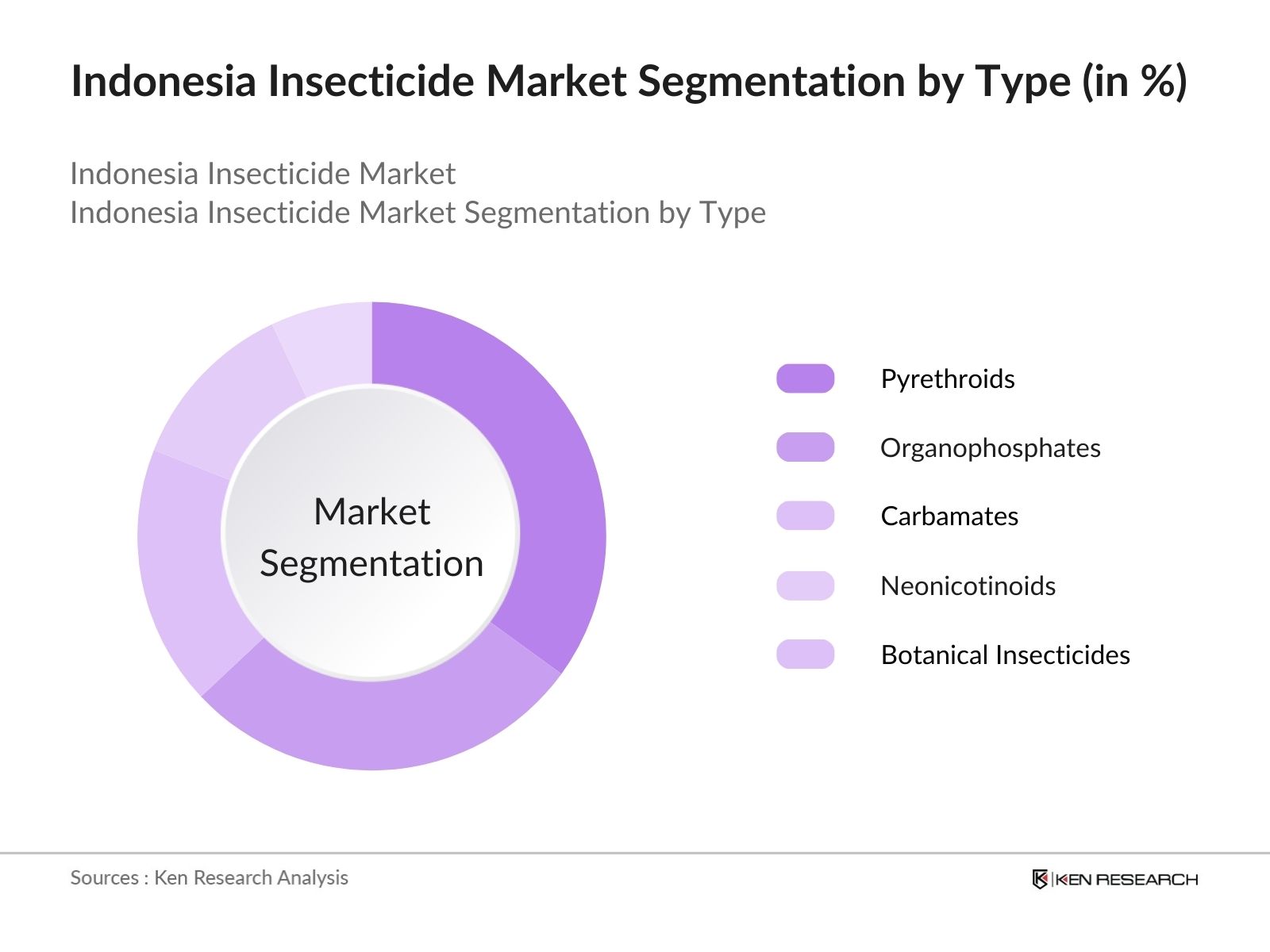
By Type: The market is segmented by type into pyrethroids, organophosphates, carbamates, neonicotinoids, and botanical insecticides. Pyrethroids dominate this segment due to their effectiveness in controlling a wide range of pests and their lower toxicity compared to other chemicals. Additionally, pyrethroids have a faster action against insects, which makes them ideal for crops with high pest infestation rates like rice.
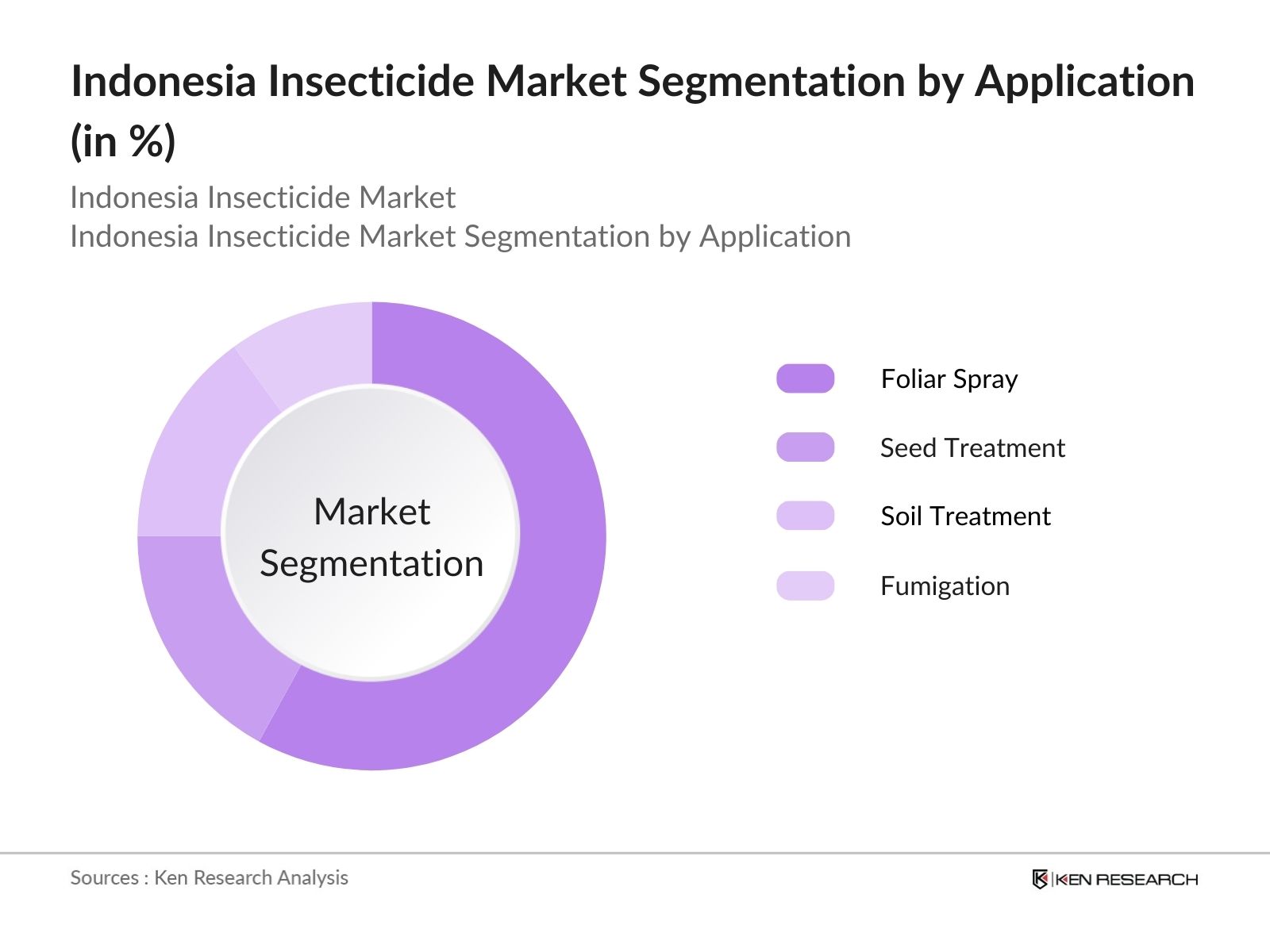
By Application Mode: By application mode, the insecticide market is segmented into foliar spray, seed treatment, soil treatment, and fumigation. Foliar spray is the most commonly used method, accounting for the largest market share. This method allows for precise insecticide application directly on crops, ensuring that the pest populations are controlled without affecting the soil or neighboring crops. Foliar sprays have seen widespread adoption due to their effectiveness in protecting high-yield crops like rice and oil palm.
The market is competitive, with both international and domestic players vying for market share. Companies such as Bayer AG and Syngenta are key international players, while PT Petrokimia Gresik and PT Indo Acidatama Tbk dominate the local market.
|
Company Name |
Establishment Year |
Headquarters |
Number of Products |
Revenue (USD Million) |
Key Market (Crop Type) |
Active Ingredients Used |
R&D Investment (USD Million) |
|
Bayer AG |
1863 |
Leverkusen, Germany |
|||||
|
Syngenta |
2000 |
Basel, Switzerland |
|||||
|
PT Petrokimia Gresik |
1972 |
Gresik, Indonesia |
|||||
|
FMC Corporation |
1883 |
Philadelphia, USA |
|||||
|
PT Indo Acidatama Tbk |
1984 |
Solo, Indonesia |
The Indonesia Insecticide industry is expected to show moderate growth over the next five years, driven by the increasing use of integrated pest management systems, the rising need for food security, and the adoption of digital farming techniques.
|
By Type |
Pyrethroids Organophosphates Carbamates Neonicotinoids Botanical Insecticides |
|
By Application Mode |
Foliar Spray Seed Treatment Soil Treatment Fumigation |
|
By Crop Type |
Cereals & Grains Oilseeds & Pulses Fruits & Vegetables Others |
|
By Formulation |
Wettable Powder Emulsifiable Concentrate Granules Microencapsulated Suspension |
|
By Region |
North East West South |
1.1 Definition and Scope
1.2 Market Taxonomy
1.3 Market Growth Rate (in USD and Volume)
1.4 Market Segmentation Overview
2.1 Historical Market Size (in Revenue and Volume)
2.2 Year-On-Year Growth Analysis
2.3 Key Market Developments and Milestones
3.1 Growth Drivers (Pest Management, Adoption of Biological Insecticides)
3.1.1 Increasing Insect Pest Infestation
3.1.2 Advancements in Insecticide Formulations
3.1.3 Rising Demand for Eco-Friendly Products
3.1.4 Increasing Use in Major Crops (Rice, Oil Palm)
3.2 Market Challenges (Regulatory Hurdles, Active Ingredient Dependency)
3.2.1 Import Dependence on Active Ingredients
3.2.2 High Regulatory Compliance for Pesticide Residue
3.2.3 Lack of Awareness about Biological Insecticides
3.2.4 Variability in Climatic Conditions Affecting Application Efficacy
3.3 Opportunities (Innovative Solutions, Digital Farming Techniques)
3.3.1 Expansion of Integrated Pest Management
3.3.2 Use of IoT in Precision Agriculture
3.3.3 Growing Demand for Seed Treatment Solutions
3.3.4 Partnerships with Global Agrochemical Companies
3.4 Trends (Sustainability and Environmental Focus)
3.4.1 Increased Adoption of Biological and Botanical Insecticides
3.4.2 Shift Towards Low Residue Pesticides
3.4.3 Growth of Digital and Precision Farming Solutions
3.4.4 Use of Formulations like Microencapsulated Suspensions
3.5 Government Regulation
3.5.1 Indonesia Pesticide Regulation Overview
3.5.2 Maximum Residue Level (MRL) Compliance
3.5.3 Import Tariff and Taxation for Active Ingredients
3.5.4 Public-Private Partnership Initiatives for Eco-Friendly Pesticides
3.6 SWOT Analysis
3.7 Stake Ecosystem
3.8 Porters Five Forces Analysis
3.9 Competition Ecosystem
4.1 By Type (In Value %)
4.1.1 Pyrethroids
4.1.2 Organophosphates
4.1.3 Carbamates
4.1.4 Neonicotinoids
4.1.5 Botanical Insecticides
4.2 By Application Mode (In Value %)
4.2.1 Foliar Spray
4.2.2 Seed Treatment
4.2.3 Soil Treatment
4.2.4 Fumigation
4.3 By Crop Type (In Value %)
4.3.1 Cereals & Grains
4.3.2 Oilseeds & Pulses
4.3.3 Fruits & Vegetables
4.3.4 Other Crop Types
4.4 By Formulation (In Value %)
4.4.1 Wettable Powder
4.4.2 Emulsifiable Concentrate
4.4.3 Granules
4.4.4 Microencapsulated Suspension
4.5 By Region (In Value %)
4.5.1 North
4.5.2 East
4.5.3 West
4.5.4 South
5.1 Detailed Profiles of Major Companies
5.1.1 Bayer AG
5.1.2 Syngenta Group
5.1.3 UPL Limited
5.1.4 FMC Corporation
5.1.5 ADAMA Agricultural Solutions Ltd
5.1.6 Corteva Agriscience
5.1.7 BASF SE
5.1.8 Sumitomo Chemical
5.1.9 PT Petrokimia Gresik
5.1.10 PT Nufarm Indonesia
5.1.11 Sinar Mas Agro Resources & Technology
5.1.12 PT Indo Acidatama Tbk
5.1.13 PT Dharma Guna Wibawa
5.1.14 PT Saraswanti Utama
5.1.15 PT Sintas Kurama Perdana
5.2 Cross Comparison Parameters (Revenue, Market Share, Headquarters, No. of Products)
5.3 Market Share Analysis
5.4 Strategic Initiatives (Partnerships, Product Launches)
5.5 Mergers and Acquisitions
5.6 Investment and Funding Analysis
6.1 Compliance to Environmental and Safety Standards
6.2 Certification and Approval Processes
6.3 Trade and Import Regulations
6.4 Pest Control Regulations
7.1 Future Market Size Projections
7.2 Key Factors Driving Future Growth
8.1 By Type (In Value %)
8.2 By Application Mode (In Value %)
8.3 By Crop Type (In Value %)
8.4 By Formulation (In Value %)
8.5 By Region (In Value %)
9.1 TAM/SAM/SOM Analysis
9.2 Customer Cohort Analysis
9.3 Product Development and Innovation Recommendations
9.4 White Space Opportunity Analysis
The first step involves mapping out key stakeholders in the Indonesia Insecticide Market, from agrochemical manufacturers to regulatory bodies. Comprehensive desk research was performed to gather industry data from government sources, industry reports, and proprietary databases to identify crucial variables like market drivers, challenges, and competitive positioning.
We analyzed historical data on insecticide usage trends and revenue figures. A detailed breakdown of the market, including penetration levels by different types of insecticides and application methods, was created to validate market projections. The data was cross-referenced with various public and private sector reports to ensure accuracy.
Our initial market estimates were refined through consultations with industry experts, including agrochemical specialists and distributors. These consultations provided invaluable insights into emerging trends, such as the shift toward bio-insecticides, and were instrumental in hypothesis validation.
The research culminated in the final report, which synthesizes the findings from expert consultations, proprietary data, and desk research. The analysis was supplemented by insights from local agrochemical producers and importers, ensuring the datas reliability.
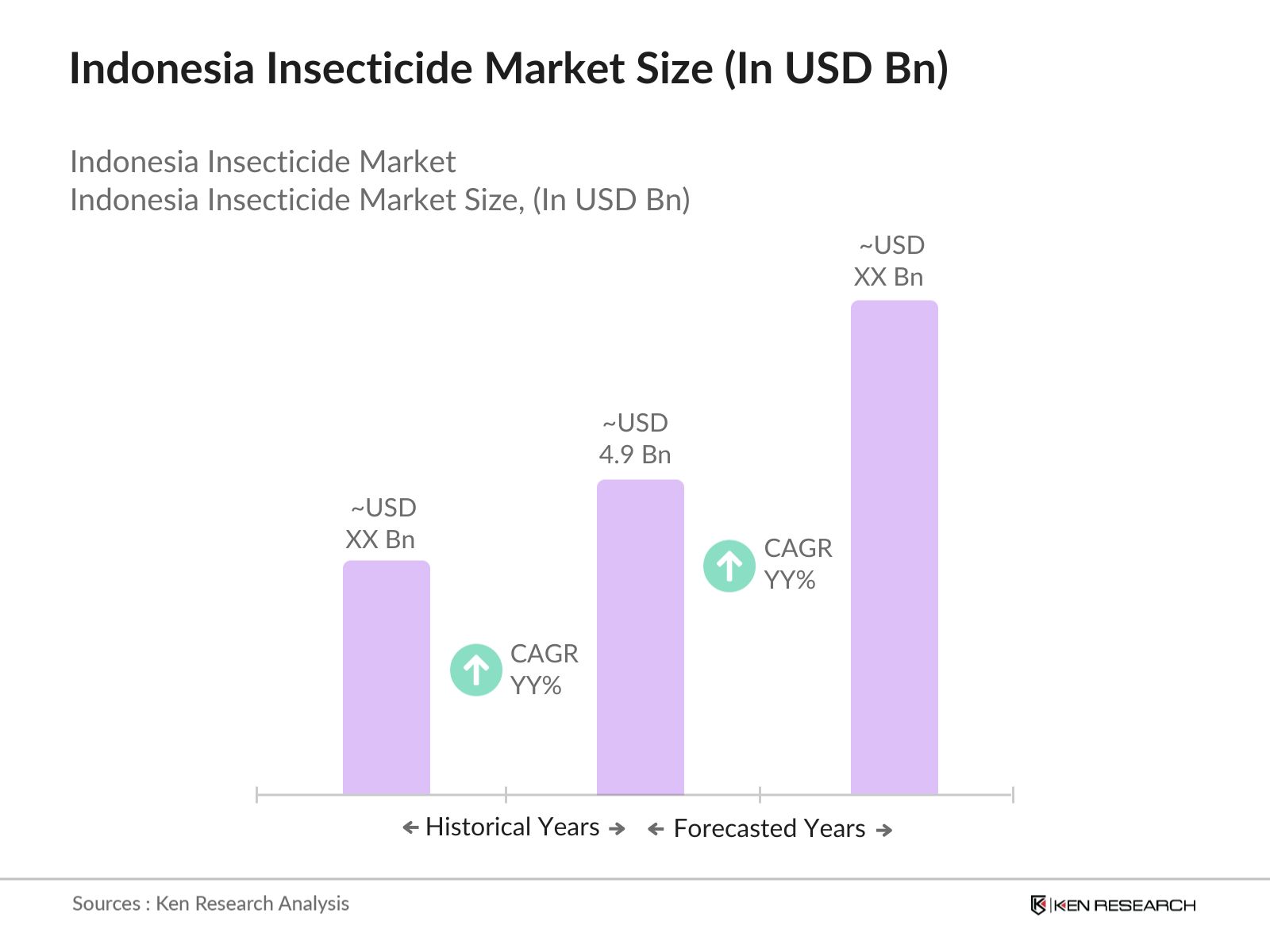
The Indonesia Insecticide Market is valued at USD 4.9 billion, driven by a rise in agricultural activities and the need for effective pest control solutions.
Challenges in the Indonesia Insecticide Market include dependence on imported active ingredients, fluctuating raw material costs, and stringent government regulations regarding pesticide residue levels.
Key players in the Indonesia Insecticide Market include Bayer AG, Syngenta, PT Petrokimia Gresik, and FMC Corporation, who dominate the market due to their extensive product offerings and strong distribution networks.
Growth drivers in the Indonesia Insecticide Market include the increasing demand for food security, advancements in insecticide formulations, and the adoption of integrated pest management techniques.
The Indonesia Insecticide Market is being shaped by the rise of biological insecticides, increased use of digital farming technologies, and growing environmental awareness among farmers.

What makes us stand out is that our consultants follows Robust, Refine and Result (RRR) methodology. i.e. Robust for clear definitions, approaches and sanity checking, Refine for differentiating respondents facts and opinions and Result for presenting data with story

We have set a benchmark in the industry by offering our clients with syndicated and customized market research reports featuring coverage of entire market as well as meticulous research and analyst insights.

While we don't replace traditional research, we flip the method upside down. Our dual approach of Top Bottom & Bottom Top ensures quality deliverable by not just verifying company fundamentals but also looking at the sector and macroeconomic factors.

With one step in the future, our research team constantly tries to show you the bigger picture. We help with some of the tough questions you may encounter along the way: How is the industry positioned? Best marketing channel? KPI's of competitors? By aligning every element, we help maximize success.

Our report gives you instant access to the answers and sources that other companies might choose to hide. We elaborate each steps of research methodology we have used and showcase you the sample size to earn your trust.

If you need any support, we are here! We pride ourselves on universe strength, data quality, and quick, friendly, and professional service.