Ken Research Logo

Indonesia IoT Technology Market Outlook to 2030

Region:Asia

Author(s):Abhinav kumar

Product Code:KROD445

Published On

January 2025

Total pages

84

About the Report

Indonesia IoT Technology Market Overview 

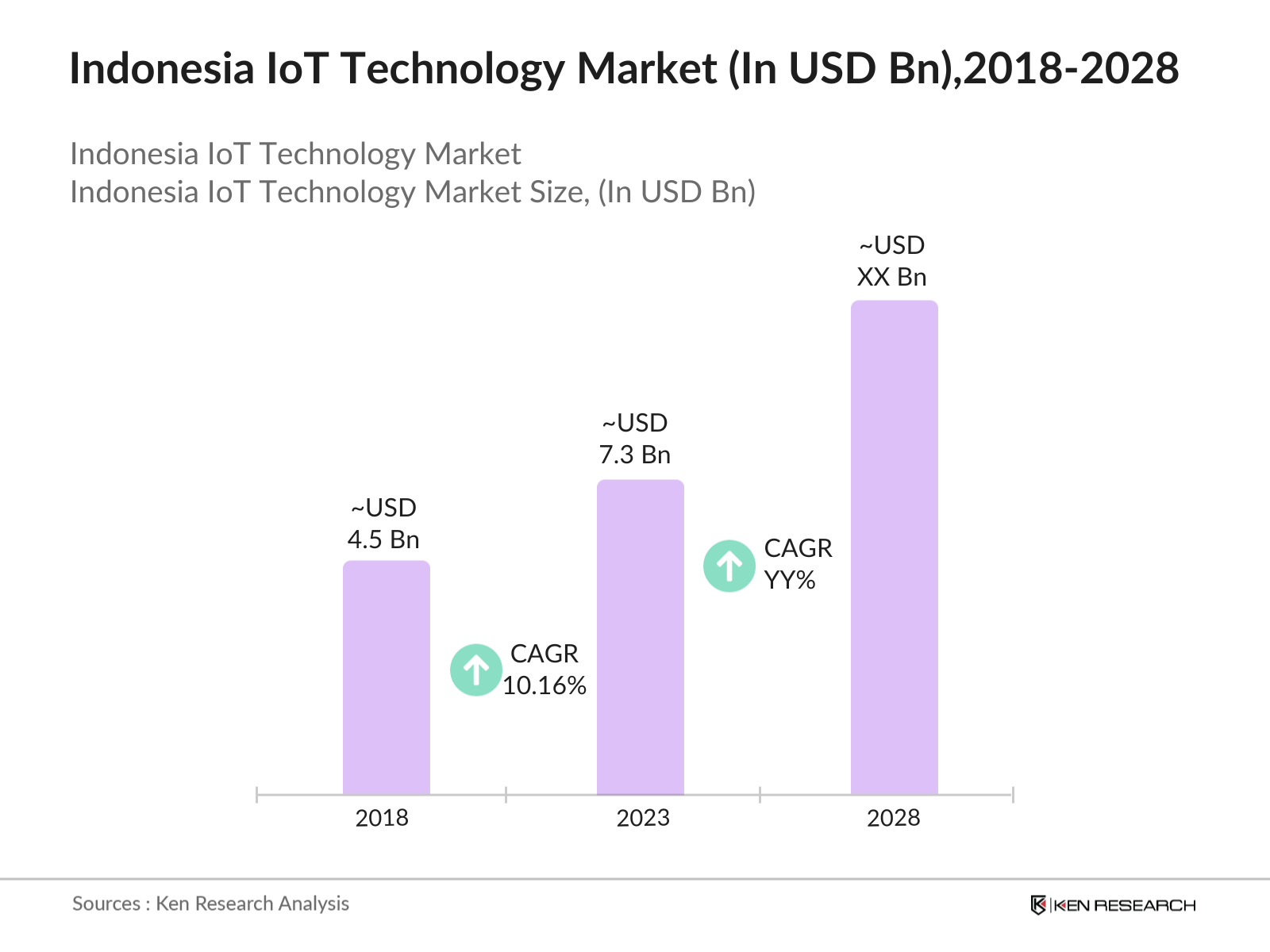
  • The Indonesia IoT (Internet of Things) technology market has experienced growth from 2018 to 2023, expanding from a market size of $4.5 billion in 2018 to $7.3 billion in 2023. This rapid growth, representing a CAGR of 10.16%, is driven by several factors, including the increased adoption of smart devices.
  • The key players in the Indonesian IoT technology market include Telkom Indonesia, XL Axiata, Huawei, Ericsson, and Siemens. These companies are driving market growth through innovative IoT solutions and extensive infrastructure investments, positioning themselves as leaders in the rapidly expanding IoT ecosystem.
  • In 2023, Telkom Indonesia announced the launch of its IoT platform, "Antares," aimed at enhancing the IoT ecosystem in Indonesia. This platform supports various IoT applications, including fleet management, smart metering, and asset tracking, by offering scalable and secure connectivity solutions.
  • In West Indonesia, the smart city initiatives have led to the deployment of over 1,000 smart traffic lights, reducing traffic congestion since 2022. Additionally, the city has implemented over 500 smart waste management systems, which have improved waste collection efficiency.

Indonesia IoT Technology Market Size

Indonesia IoT Technology Market Segmentation 

The Indonesia IoT Technology Market can be segmented based on several factors like by product type, application and region.
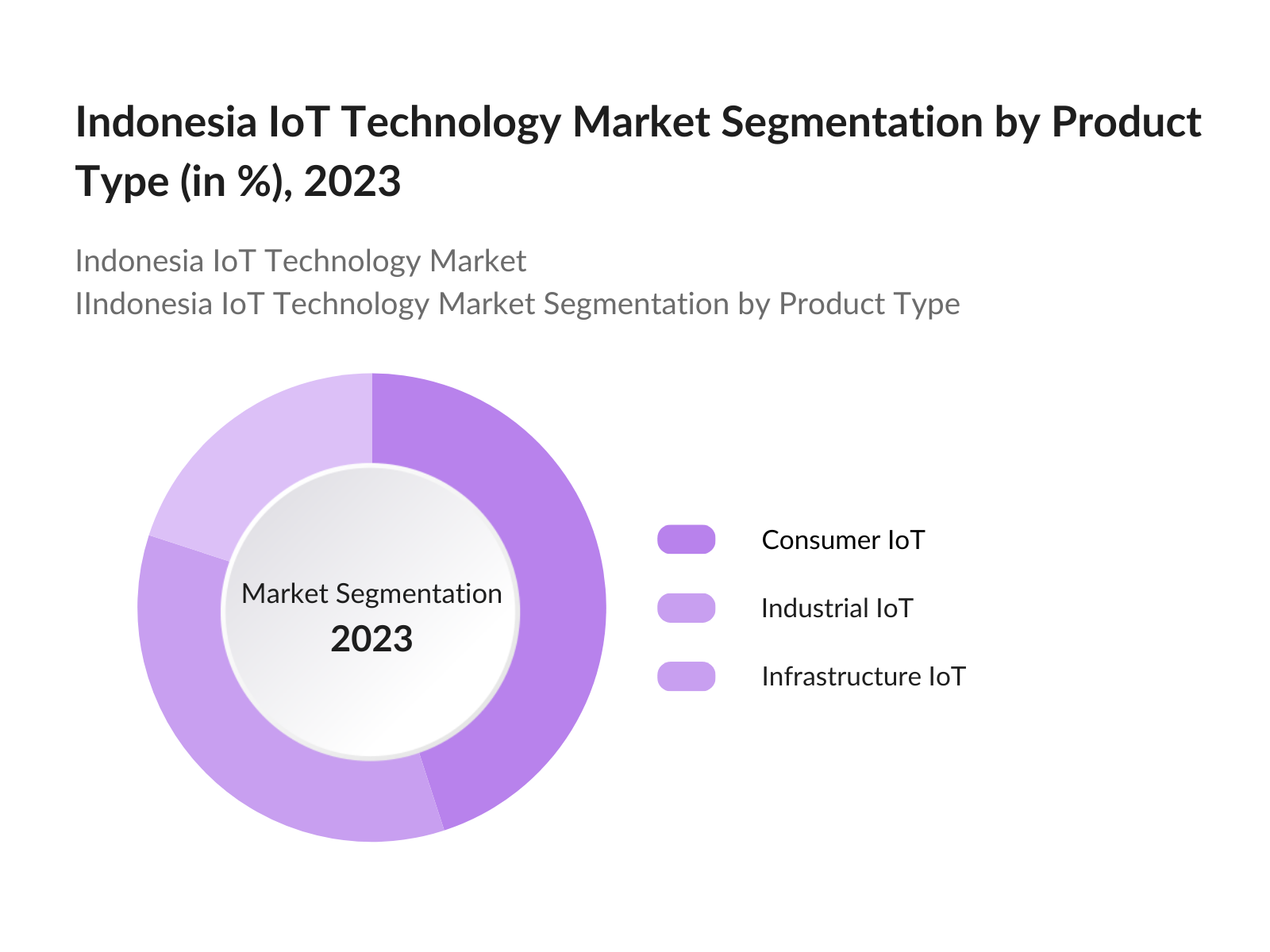
  • By Product Type: The Indonesia IoT Technology Market is segmented by product type into consumer IoT, industrial IoT, and infrastructure IoT. In 2023, consumer IoT dominated the market due to the increasing popularity of smart home solutions and wearable technology. Companies like Xiaomi and Samsung have been significant contributors to this segment's growth.

Indonesia IoT technology Market Segmentation By Product Type

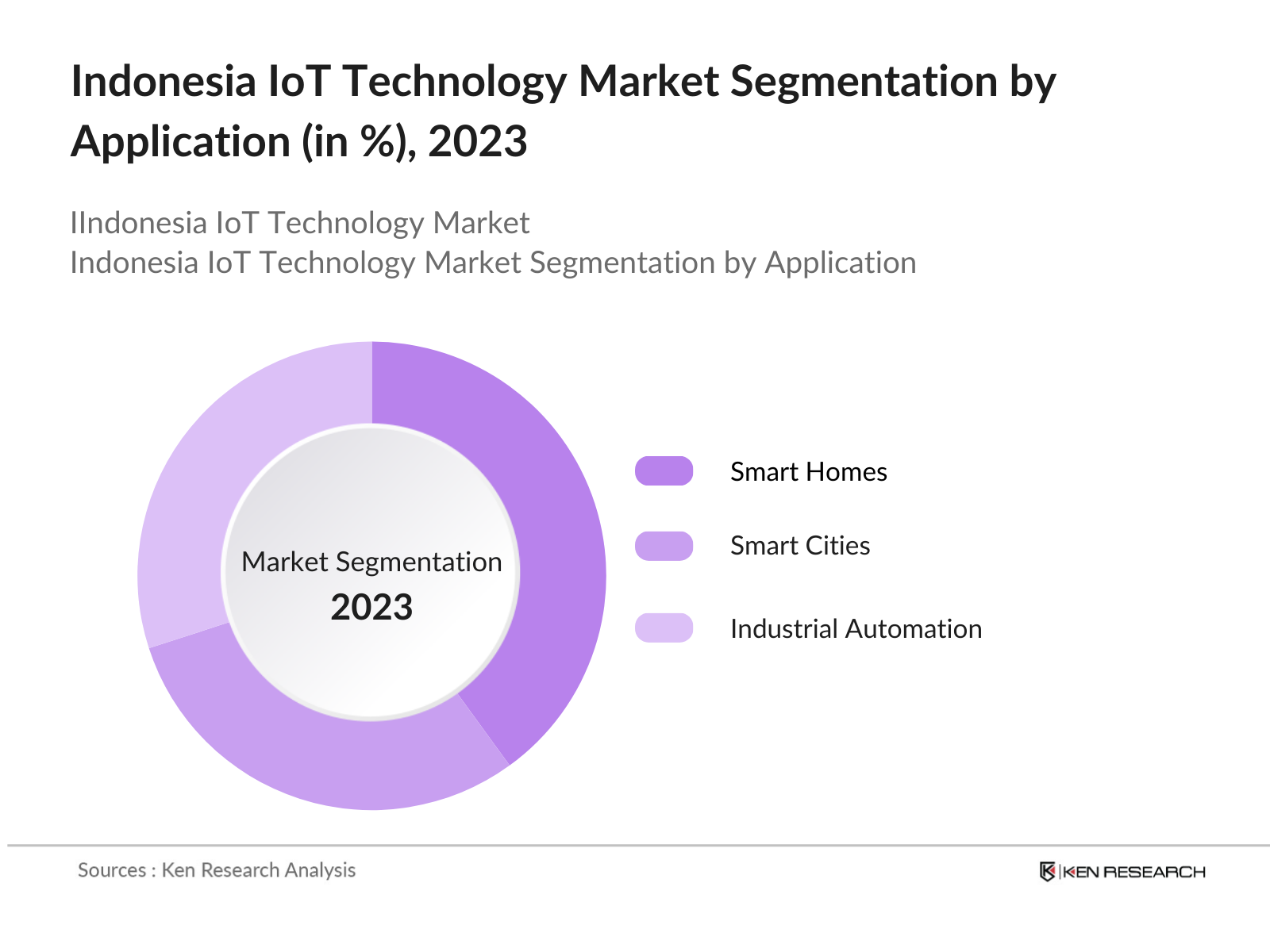
  • By Application: The Indonesia IoT Technology Market is segmented by application into smart homes, smart cities, and industrial automation. In 2023, Smart Homes dominated the market, driven by the increasing adoption of smart home devices such as smart speakers, thermostats, and security systems.

Indonesia IoT technology Market Segmentation By Application

  • By Region: The Indonesia IoT Technology Market is segmented into North, South, East, and West Indonesia. In 2023, North Indonesia dominated due the increasing deployment of IoT solutions in agriculture and fisheries, which are key economic activities in this area.

Indonesia IoT Technology Market Competitive Landscape 

Company Name

Establishment Year

Headquarters

Telkom Indonesia

1965

Jakarta

XL Axiata

1989

Jakarta

Huawei

1987

Shenzhen, China

Ericsson

1876

Stockholm, Sweden

Siemens

1847

Munich, Germany

  • In 2023, Telkom Indonesia launched "Antares," an IoT platform aimed at enhancing the IoT ecosystem. The platform supports applications like fleet management and smart metering, with over 10,000 devices already connected within the first year of launch.
  • In 2023, XL Axiata partnered with Ericsson to roll out 5G networks across Indonesia. This $500 million project focuses on enhancing IoT connectivity, with plans to cover over 100 cities by the end of 2024, supporting numerous IoT applications in various sectors.

Indonesia IoT Technology Market Analysis 

Indonesia IoT Technology Market Growth Drivers: 

  • Increased IoT Device Adoption: In 2023, Indonesia saw the number of IoT devices surpass 150 million, up from 100 million in 2022. The growth in device adoption is driven by sectors like healthcare, where IoT-enabled devices such as remote patient monitors are becoming increasingly prevalent.
  • Expansion of 5G Networks: By the end of 2023, Indonesia had established 5G networks in over 50 cities, facilitating faster and more reliable IoT connectivity. This infrastructure improvement is critical for the deployment of IoT applications in industries such as manufacturing and logistics.
  • Rise in Industrial Automation: The adoption of IoT in manufacturing and logistics has led to the implementation of over 1,000 smart factories by 2023. These factories utilize IoT for predictive maintenance, real-time monitoring, and supply chain optimization, resulting in a reduction of operational costs by over $100 million annually.

Indonesia IoT Technology Market Challenges: 

  • Data Security Concerns: In 2023, Indonesia experienced over 500,000 cyberattacks targeting IoT devices, highlighting significant security vulnerabilities. The lack of robust cybersecurity measures in many IoT implementations poses a major challenge for the market's growth.
  • Regulatory Uncertainty: The absence of standardized regulations for IoT deployments has created a cautious environment for investment. In 2023, majority of IoT projects received regulatory approval, causing delays and increased costs for businesses.

Indonesia IoT Technology Market Government Initiatives: 

  • Smart City Programs: The "100 Smart Cities" initiative, launched by the Indonesian government, aims to transform urban areas with IoT technologies. In 2023, the government invested USD 200 million in this program, covering infrastructure for smart lighting, traffic management, and waste management systems across 50 cities.
  • National Digital Transformation Strategy: Announced in 2023, this strategy focuses on integrating IoT into public services and industries. The government allocated USD 150 million for developing IoT frameworks and supporting startups through grants and subsidies, fostering innovation in the IoT sector.

Indonesia IoT Technology Market Outlook 

In the coming years, Indonesia's IoT technology market is poised for exponential growth, driven by advancements in connectivity infrastructure and the rising adoption of smart devices across industries.

Future Trends:

  • Expansion of Smart City Initiatives: By 2028, Indonesia is expected to have fully implemented smart city projects in over 100 cities, driven by continued government investment and private sector collaboration. These projects will incorporate advanced IoT technologies to improve urban living, transportation, and public safety.
  • Growth in Industrial IoT Adoption: The industrial sector is projected to see widespread IoT adoption, with over 10,000 smart factories expected by 2028. These factories will utilize IoT for predictive maintenance, real-time monitoring, and supply chain optimization, significantly enhancing productivity and reducing operational costs.

Scope of the Report

By Product Type 

Consumer IoT

Industrial IoT

Infrastructure IoT

By Application 

Smart Homes

Smart Cities

Industrial Automation

By Region 

North 

South 

East 

West 

Products

Key Target Audience – Organizations and Entities who can benefit by Subscribing This Report:  

  • Telecommunication Companies

  • IoT Device Manufacturers

  • Government Agencies (e.g., Ministry of Communication and Information Technology)

  • Industrial Automation Companies

  • Healthcare Providers

  • Transportation and Logistics Companies

  • Utilities and Energy Providers

  • Agricultural Technology Companies

  • Banks and Financial Institutions

  • Consumer Electronics Manufacturers

  • IT and Software Development Firms

Time Period Captured in the Report:  

  • Historical Period: 2018-2023 

  • Base Year: 2023 

  • Forecast Period: 2023-2028 

Companies

Players Mentioned in the Report:  

  • Telkom Indonesia

  • XL Axiata

  • Huawei

  • Ericsson

  • Siemens

  • Samsung

  • Xiaomi

  • Cisco Systems

  • IBM

  • Microsoft

  • Oracle

  • Intel

  • SAP

  • Bosch

  • GE Digital

  • Schneider Electric

  • Honeywell

  • ABB

  • Hitachi

  • Rockwell Automation

Table of Contents

Table of Contents:   

1. Indonesia IoT Technology Market Overview

1.1 Indonesia IoT Technology Market Taxonomy 

2. Indonesia IoT Technology Market Size (in USD Mn), 2018-2023 

3. Indonesia IoT Technology Market Analysis 

3.1 Indonesia IoT Technology Market Growth Drivers 

3.2 Indonesia IoT Technology Market Challenges and Issues 

3.3 Indonesia IoT Technology Market Trends and Development 

3.4 Indonesia IoT Technology Market Government Regulation 

3.5 Indonesia IoT Technology Market SWOT Analysis 

3.6 Indonesia IoT Technology Market Stake Ecosystem 

3.7 Indonesia IoT Technology Market Competition Ecosystem

4. Indonesia IoT Technology Market Segmentation, 2023 

4.1 Indonesia IoT Technology Market Segmentation by Product Type (in value %), 2023 

4.2 Indonesia IoT Technology Market Segmentation by Application (in value %), 2023 

4.3 Indonesia IoT Technology Market Segmentation by Region (in value %), 2023

5. Indonesia IoT Technology Market Competition Benchmarking 

5.1 Indonesia IoT Technology Market Cross-Comparison (no. of employees, company overview, business strategy, USP, recent development, operational parameters, financial parameters and advanced analytics)

6. Indonesia IoT Technology Future Market Size (in USD Mn), 2023-2028

7. Indonesia IoT Technology Future Market Segmentation, 2028 

7.1 Indonesia IoT Technology Market Segmentation by Product Type (in value %), 2028 

7.2 Indonesia IoT Technology Market Segmentation by Application (in value %), 2028 

7.3 Indonesia IoT Technology Market Segmentation by Region (in value %), 2028 

8. Indonesia IoT Technology Market Analysts’ Recommendations 

8.1 Indonesia IoT Technology Market TAM/SAM/SOM Analysis 

8.2 Indonesia IoT Technology Market Customer Cohort Analysis 

8.3 Indonesia IoT Technology Market Marketing Initiatives 

8.4 Indonesia IoT Technology Market White Space Opportunity Analysis 

Disclaimer

Contact Us

Research Methodology

Step 1: Identifying Key Variables 

Ecosystem creation for all the major entities and referring to multiple secondary and proprietary databases to perform desk research around market to collate industry level information.  

Step 2: Market Building 

Collating statistics on Indonesia IoT technology market over the years, penetration of marketplaces and service providers ratio to compute revenue generated for Indonesia IoT technology market. We will also review service quality statistics to understand revenue generated which can ensure accuracy behind the data points shared.  

Step 3: Validating and Finalizing  

Building market hypothesis and conducting CATIs with industry experts belonging to different companies to validate statistics and seek operational and financial information from company representatives.  

Step 4: Research Output  

Our team will approach multiple IoT technology companies and distributors companies and understand nature of product segments and sales, consumer preference and other parameters, which will support us validate statistics derived through bottom to top approach from IoT technology companies and distributors companies. 

Frequently Asked Questions

1. How big is Indonesia IoT Technology Market?

The Indonesia IoT technology market was valued at USD 7.3 billion in 2023, driven by increased adoption of smart devices, enhanced connectivity infrastructure, and significant investments in IoT solutions across various industries.

2. What are the challenges in Indonesia IoT Technology Market?

Challenges include data security concerns, regulatory uncertainty, high implementation costs, and a shortage of skilled professionals in IoT technology. The market also faces issues related to the standardization of IoT deployments and cybersecurity vulnerabilities.

3. Who are the major players in the Indonesia IoT Technology Market?

Key players in the market include Telkom Indonesia, XL Axiata, Huawei, Ericsson, and Siemens. These companies lead due to their robust infrastructure, extensive IoT solution offerings, and strategic partnerships.

4. What are the growth drivers of Indonesia IoT Technology Market?

The market is driven by increased IoT device adoption, government support and investment, expansion of 5G networks, and the rise in industrial automation. These factors contribute significantly to the market's rapid growth and technological advancements.

Why Buy From Us?

RRR
Refine Robust Result (RRR) Framework

What makes us stand out is that our consultants follows Robust, Refine and Result (RRR) methodology. i.e. Robust for clear definitions, approaches and sanity checking, Refine for differentiating respondents facts and opinions and Result for presenting data with story

Our Reach Is Unmatched

We have set a benchmark in the industry by offering our clients with syndicated and customized market research reports featuring coverage of entire market as well as meticulous research and analyst insights.

Research
Shifting the Research Paradigm

While we don't replace traditional research, we flip the method upside down. Our dual approach of Top Bottom & Bottom Top ensures quality deliverable by not just verifying company fundamentals but also looking at the sector and macroeconomic factors.

Insite
More Insights-Better Decisions

With one step in the future, our research team constantly tries to show you the bigger picture. We help with some of the tough questions you may encounter along the way: How is the industry positioned? Best marketing channel? KPI's of competitors? By aligning every element, we help maximize success.

Trust
Transparency and Trust

Our report gives you instant access to the answers and sources that other companies might choose to hide. We elaborate each steps of research methodology we have used and showcase you the sample size to earn your trust.

support
Round the Clock Support

If you need any support, we are here! We pride ourselves on universe strength, data quality, and quick, friendly, and professional service.

Why Client Choose Us?

400000+ Reports in repository
150+ Consulting project a year
100+ Analysts
8000+ Client Queries in 2022