
Indonesia Medical Technology Market Outlook to 2030
Region:Indonesia
Author(s):Yogita Sahu
Product Code:KROD11121
Region:Indonesia
Author(s):Yogita Sahu
Product Code:KROD11121
December 2024
100
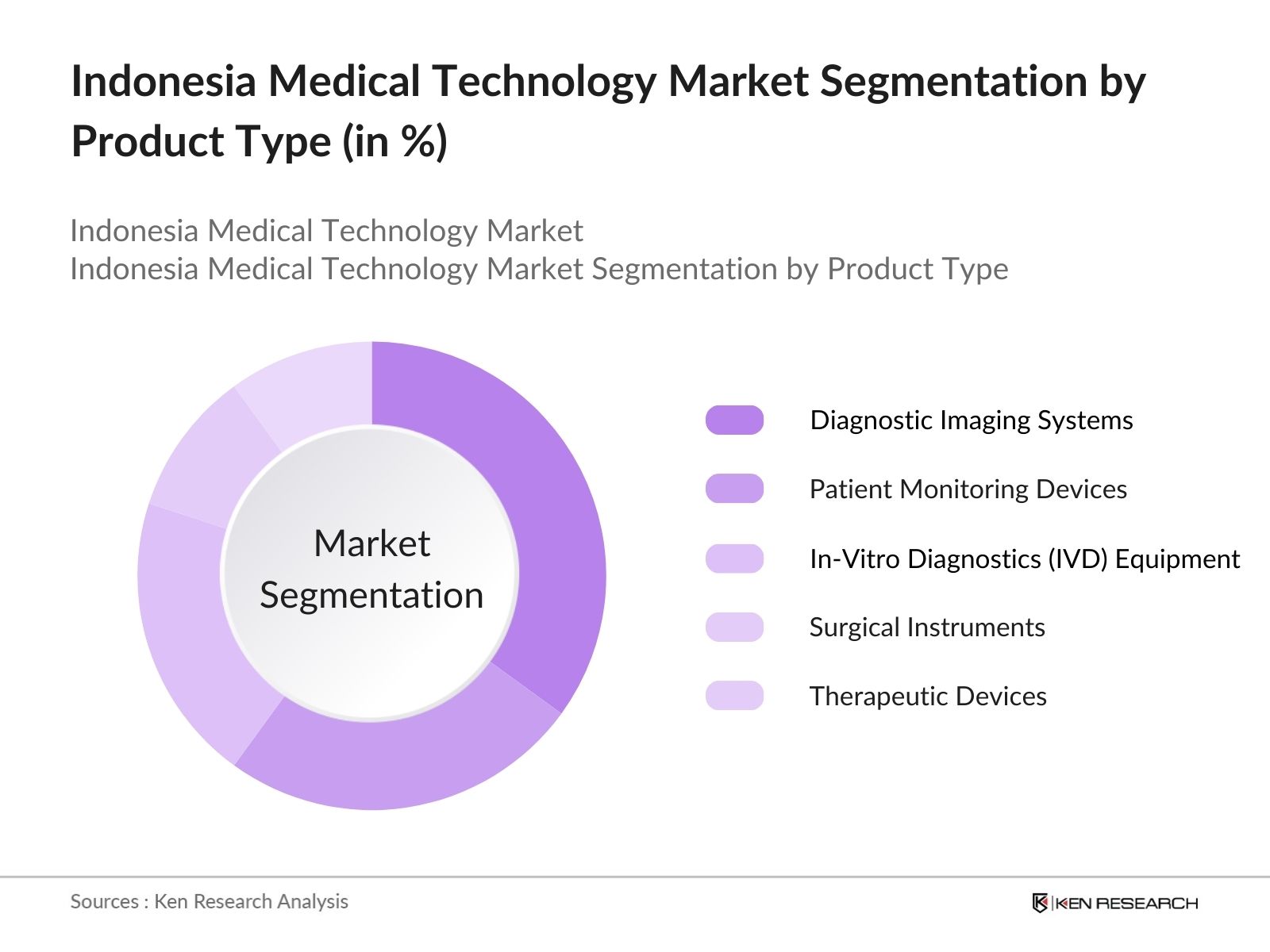
By Product Type: The market is segmented by product type into diagnostic imaging systems, patient monitoring devices, in-vitro diagnostics (IVD) equipment, surgical instruments, and therapeutic devices. Diagnostic imaging systems lead this segment due to their critical role in early disease detection and the government's support for equipping healthcare facilities with modern diagnostic tools. The need for efficient imaging solutions, such as MRI and CT scanners, to address the increasing disease burden is a driving factor for this segments dominance.
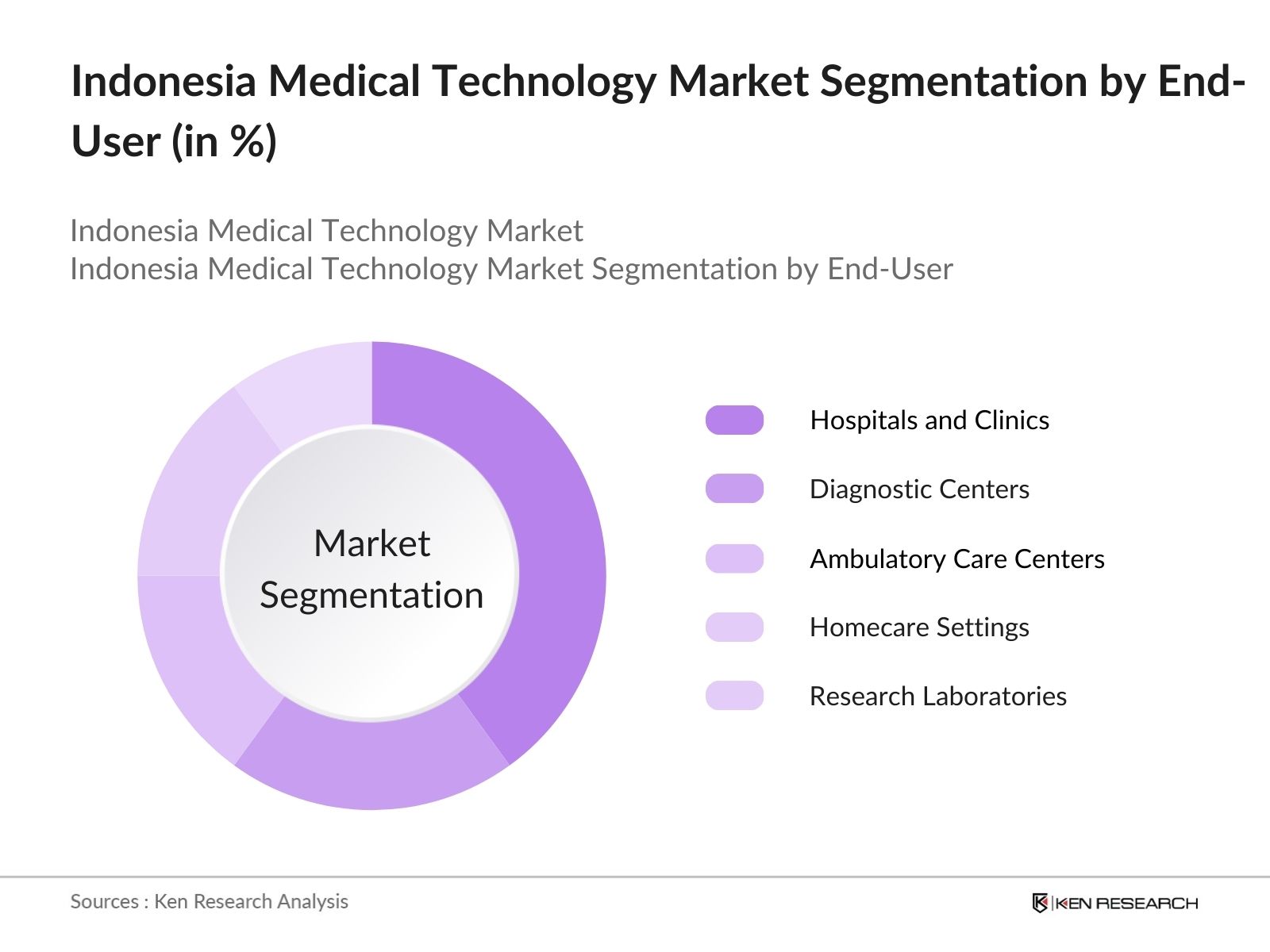
By End-User: The market is also segmented by end-user, including hospitals and clinics, diagnostic centers, ambulatory care centers, homecare settings, and research laboratories. Hospitals and clinics dominate this segment, reflecting their role as primary healthcare providers. Hospitals and clinics are increasingly adopting advanced medical technology solutions to improve patient outcomes and streamline healthcare delivery. With continued investments in hospital infrastructure, this segment remains crucial for market growth.
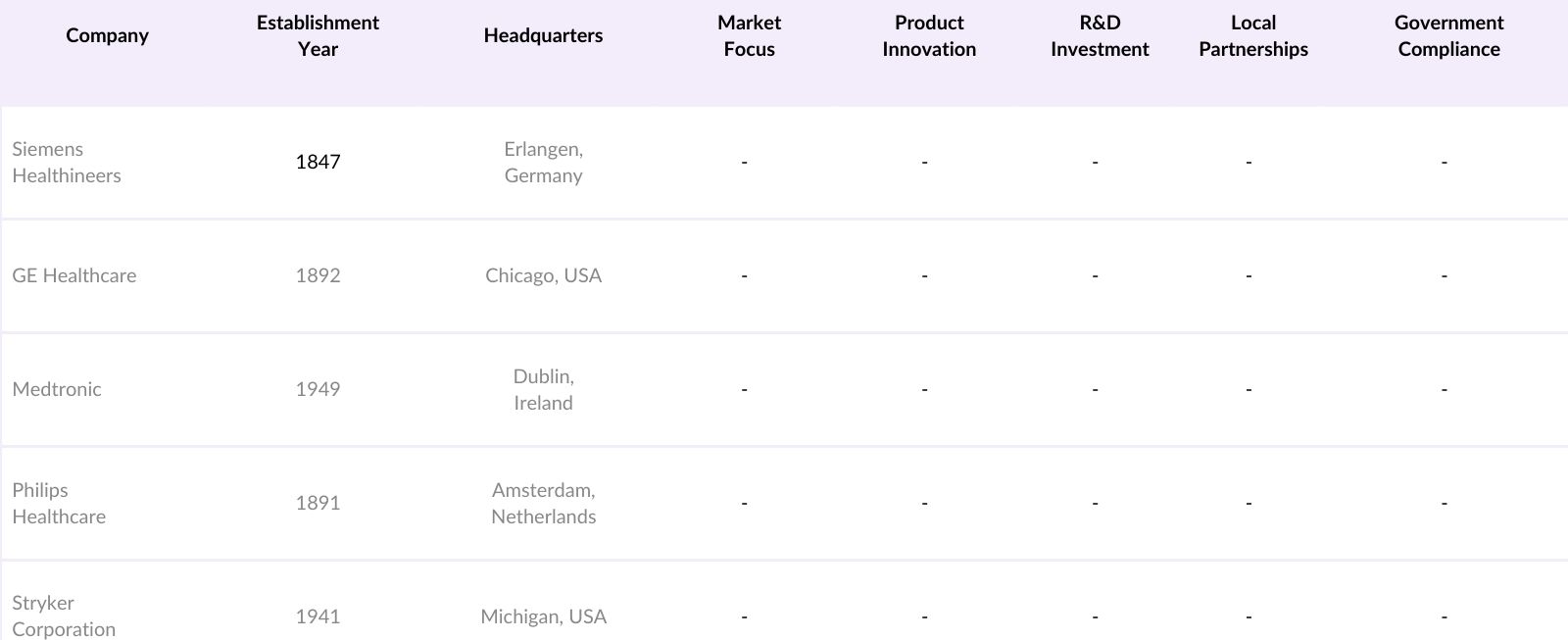
The market is characterized by prominent international players and a few emerging local companies. Global firms like Siemens Healthineers, GE Healthcare, and Medtronic dominate due to their extensive product portfolios, high-quality standards, and reputation.
Over the next five years, the Indonesia Medical Technology industry is expected to expand, driven by a surge in demand for advanced diagnostic and monitoring solutions. Government investments, rising healthcare expenditures, and increased private sector participation will contribute to this growth.
|
Product Type |
Diagnostic Imaging Systems Patient Monitoring Devices In-Vitro Diagnostics (IVD) Equipment Surgical Instruments Therapeutic Devices |
|
End-User |
Hospitals and Clinics Diagnostic Centers Ambulatory Care Centers Homecare Settings Research Laboratories |
|
Technology |
Digital Health and Telemedicine Wearable Devices Robotics and AI in Healthcare 3D Printing for Medical Applications Biotech and Genomics |
|
Application |
Cardiology Oncology Neurology Orthopedics General Healthcare |
|
Region |
North East West South |
1.1. Definition and Scope
1.2. Market Taxonomy
1.3. Market Growth Rate
1.4. Market Segmentation Overview
2.1. Historical Market Size
2.2. Year-On-Year Growth Analysis
2.3. Key Market Developments and Milestones
3.1. Growth Drivers
3.1.1. Technological Advancements
3.1.2. Increasing Healthcare Expenditure
3.1.3. Aging Population & Chronic Disease Prevalence
3.1.4. Government Initiatives and Support
3.2. Market Challenges
3.2.1. High Capital Requirements
3.2.2. Regulatory Compliance
3.2.3. Data Security Concerns
3.3. Opportunities
3.3.1. Expansion of Telemedicine
3.3.2. Rising Demand for Wearable Devices
3.3.3. Integration of AI in Diagnostics
3.4. Trends
3.4.1. Adoption of Robotics in Surgeries
3.4.2. Increase in Portable Diagnostics Devices
3.4.3. IoT Integration in Medical Devices
3.5. Government Regulations
3.5.1. Medical Device Regulations (BPOM and MOH Standards)
3.5.2. Import Restrictions and Compliance
3.5.3. National Health Program Initiatives
3.6. SWOT Analysis
3.7. Stakeholder Ecosystem
3.8. Porter’s Five Forces
3.9. Competitive Landscape Ecosystem
4.1. By Product Type (In Value %)
4.1.1. Diagnostic Imaging Systems
4.1.2. Patient Monitoring Devices
4.1.3. In-Vitro Diagnostics (IVD) Equipment
4.1.4. Surgical Instruments
4.1.5. Therapeutic Devices
4.2. By End-User (In Value %)
4.2.1. Hospitals and Clinics
4.2.2. Diagnostic Centers
4.2.3. Ambulatory Care Centers
4.2.4. Homecare Settings
4.2.5. Research Laboratories
4.3. By Technology (In Value %)
4.3.1. Digital Health and Telemedicine
4.3.2. Wearable Devices
4.3.3. Robotics and AI in Healthcare
4.3.4. 3D Printing for Medical Applications
4.3.5. Biotech and Genomics
4.4. By Application (In Value %)
4.4.1. Cardiology
4.4.2. Oncology
4.4.3. Neurology
4.4.4. Orthopedics
4.4.5. General Healthcare
4.5. By Region (In Value %)
4.5.1. North
4.5.2. East
4.5.3. West
4.5.4. South
5.1. Detailed Profiles of Major Companies
5.1.1. Medtronic
5.1.2. Siemens Healthineers
5.1.3. Philips Healthcare
5.1.4. GE Healthcare
5.1.5. Stryker Corporation
5.1.6. Abbott Laboratories
5.1.7. Johnson & Johnson
5.1.8. Roche Diagnostics
5.1.9. Olympus Corporation
5.1.10. Canon Medical Systems
5.1.11. Terumo Corporation
5.1.12. BD (Becton, Dickinson and Company)
5.1.13. Zimmer Biomet
5.1.14. Danaher Corporation
5.1.15. Boston Scientific
5.2. Cross Comparison Parameters (Product Portfolio, Headquarters, Inception Year, Revenue, Market Reach, Product Innovation, R&D Investment, Regulatory Compliance)
5.3. Market Share Analysis
5.4. Strategic Initiatives
5.5. Mergers and Acquisitions
5.6. Investment Analysis
5.7. Government Grants and Incentives
5.8. Private Equity and Venture Capital Involvement
6.1. Licensing Requirements
6.2. Compliance with International Standards (ISO, CE Marking)
6.3. Certification Processes for Medical Devices
7.1. Future Market Size Projections
7.2. Key Factors Driving Future Growth
8.1. By Product Type (In Value %)
8.2. By End-User (In Value %)
8.3. By Technology (In Value %)
8.4. By Application (In Value %)
8.5. By Region (In Value %)
9.1. TAM/SAM/SOM Analysis
9.2. Customer Segment Analysis
9.3. Marketing Initiatives
9.4. Identification of White Space Opportunities
The initial step involved mapping the Indonesian Medical Technology ecosystem. This included a detailed review of stakeholders such as healthcare providers, device manufacturers, and government bodies to understand key variables affecting the market.
Historical market data was analyzed to understand the evolution of product demand and adoption across different healthcare settings. Insights from credible industry reports were incorporated to ensure accuracy in revenue estimation.
Market hypotheses were developed and validated through interviews with industry experts, including product managers and regulatory professionals. These insights refined our data on market drivers, challenges, and growth areas.
Finally, comprehensive interactions with medical technology companies provided further insights into market-specific factors, enabling a holistic analysis that aligns with current and future market trends.
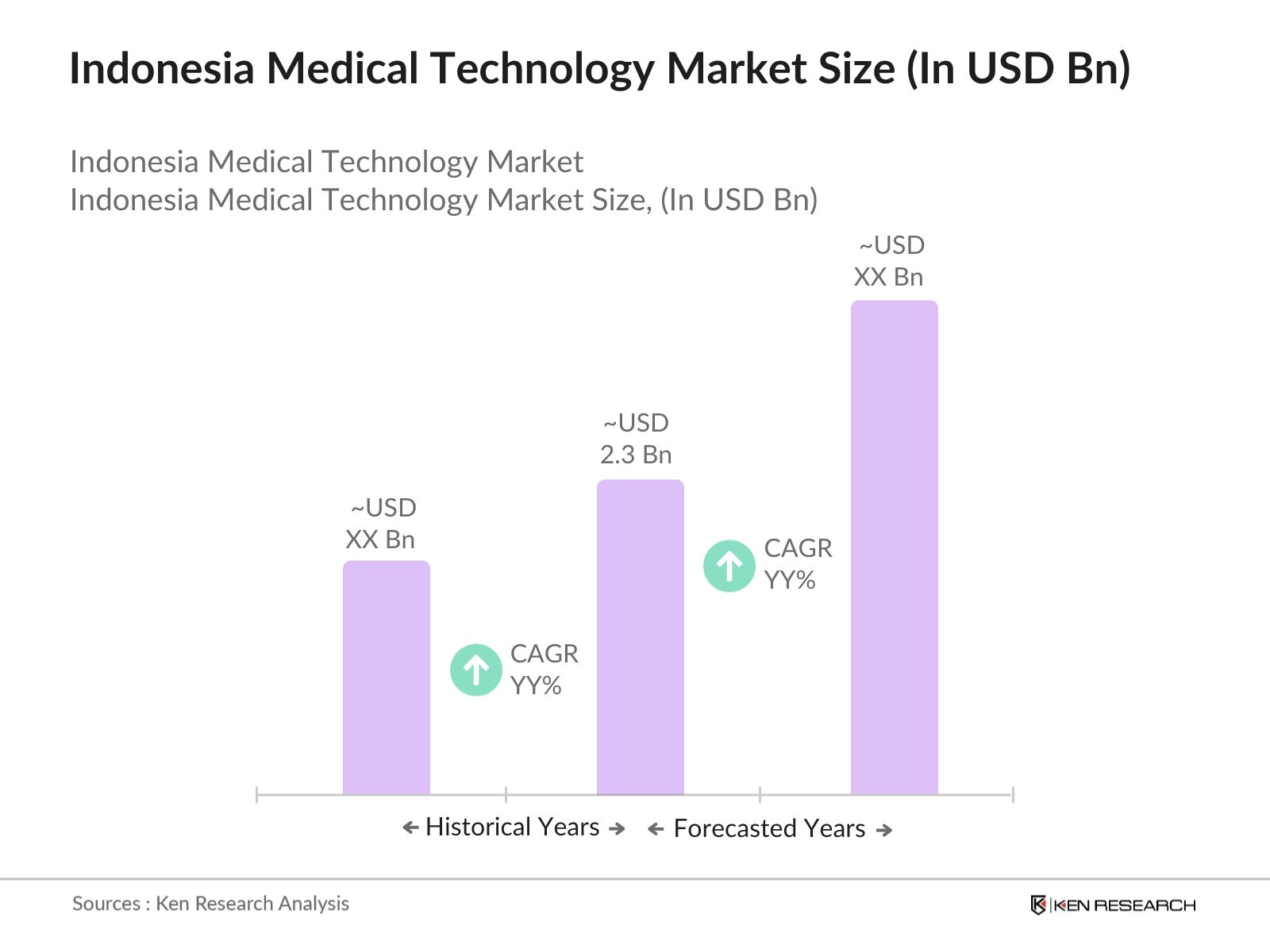
The Indonesia Medical Technology Market was valued at USD 2.3 billion, with growth attributed to increased healthcare spending, technological advancements, and supportive government policies.
Challenges in the Indonesia Medical Technology Market include high initial investment costs, regulatory compliance, and a need for skilled personnel to manage and operate advanced medical devices.
Major players in the Indonesia Medical Technology Market include Siemens Healthineers, GE Healthcare, Medtronic, Philips Healthcare, and Stryker Corporation, all of which dominate due to extensive product ranges and strong distribution networks.
Key growth drivers in the Indonesia Medical Technology Market are the rising prevalence of chronic diseases, advancements in diagnostics, and government initiatives focused on improving healthcare access.

What makes us stand out is that our consultants follows Robust, Refine and Result (RRR) methodology. i.e. Robust for clear definitions, approaches and sanity checking, Refine for differentiating respondents facts and opinions and Result for presenting data with story

We have set a benchmark in the industry by offering our clients with syndicated and customized market research reports featuring coverage of entire market as well as meticulous research and analyst insights.

While we don't replace traditional research, we flip the method upside down. Our dual approach of Top Bottom & Bottom Top ensures quality deliverable by not just verifying company fundamentals but also looking at the sector and macroeconomic factors.

With one step in the future, our research team constantly tries to show you the bigger picture. We help with some of the tough questions you may encounter along the way: How is the industry positioned? Best marketing channel? KPI's of competitors? By aligning every element, we help maximize success.

Our report gives you instant access to the answers and sources that other companies might choose to hide. We elaborate each steps of research methodology we have used and showcase you the sample size to earn your trust.

If you need any support, we are here! We pride ourselves on universe strength, data quality, and quick, friendly, and professional service.