
Indonesia Motorcycle Helmet Market Outlook to 2030
Region:Indonesia
Author(s):Sanjeev
Product Code:KROD5768
Region:Indonesia
Author(s):Sanjeev
Product Code:KROD5768
December 2024
99
Listen to the audio summary
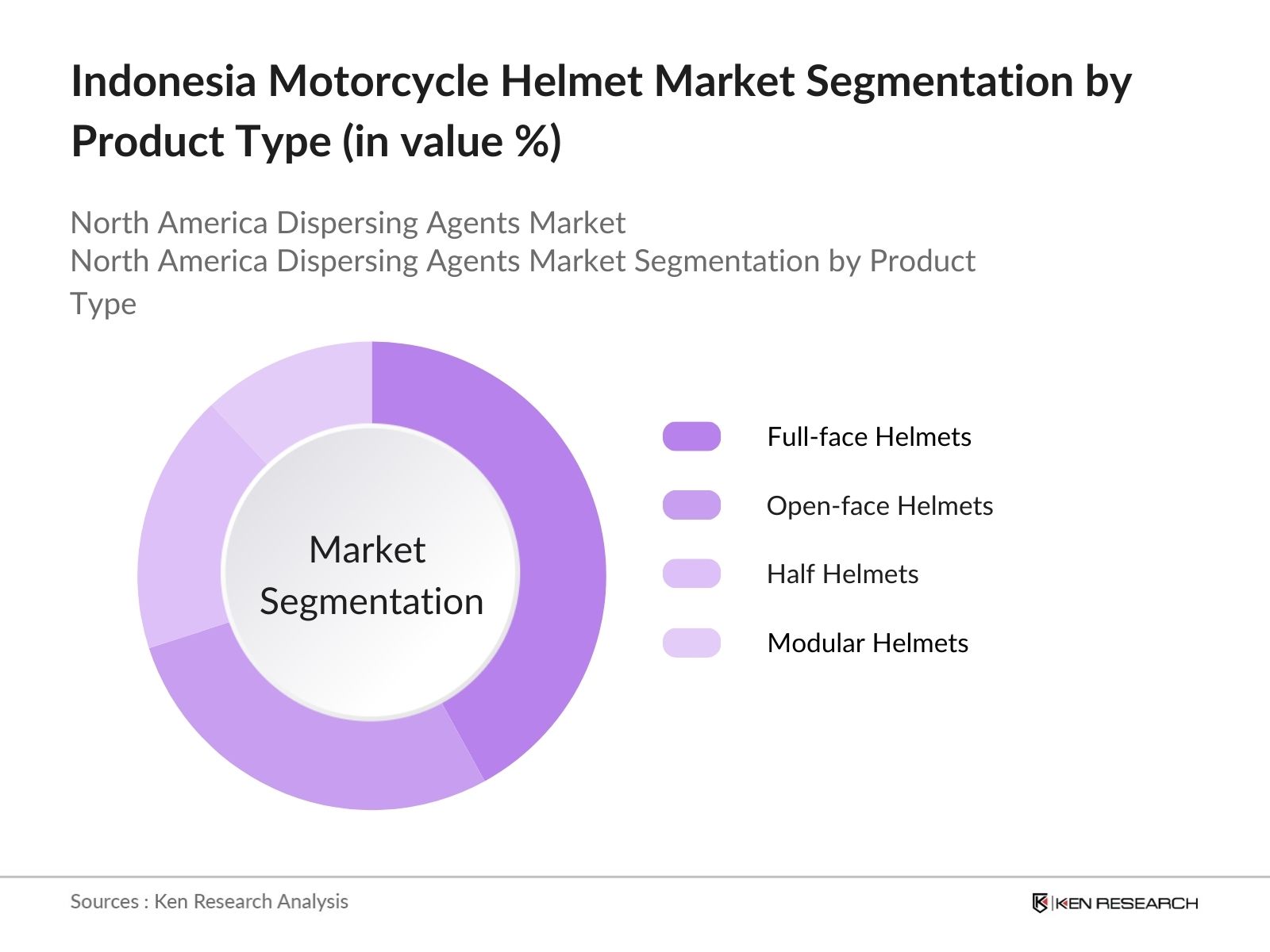
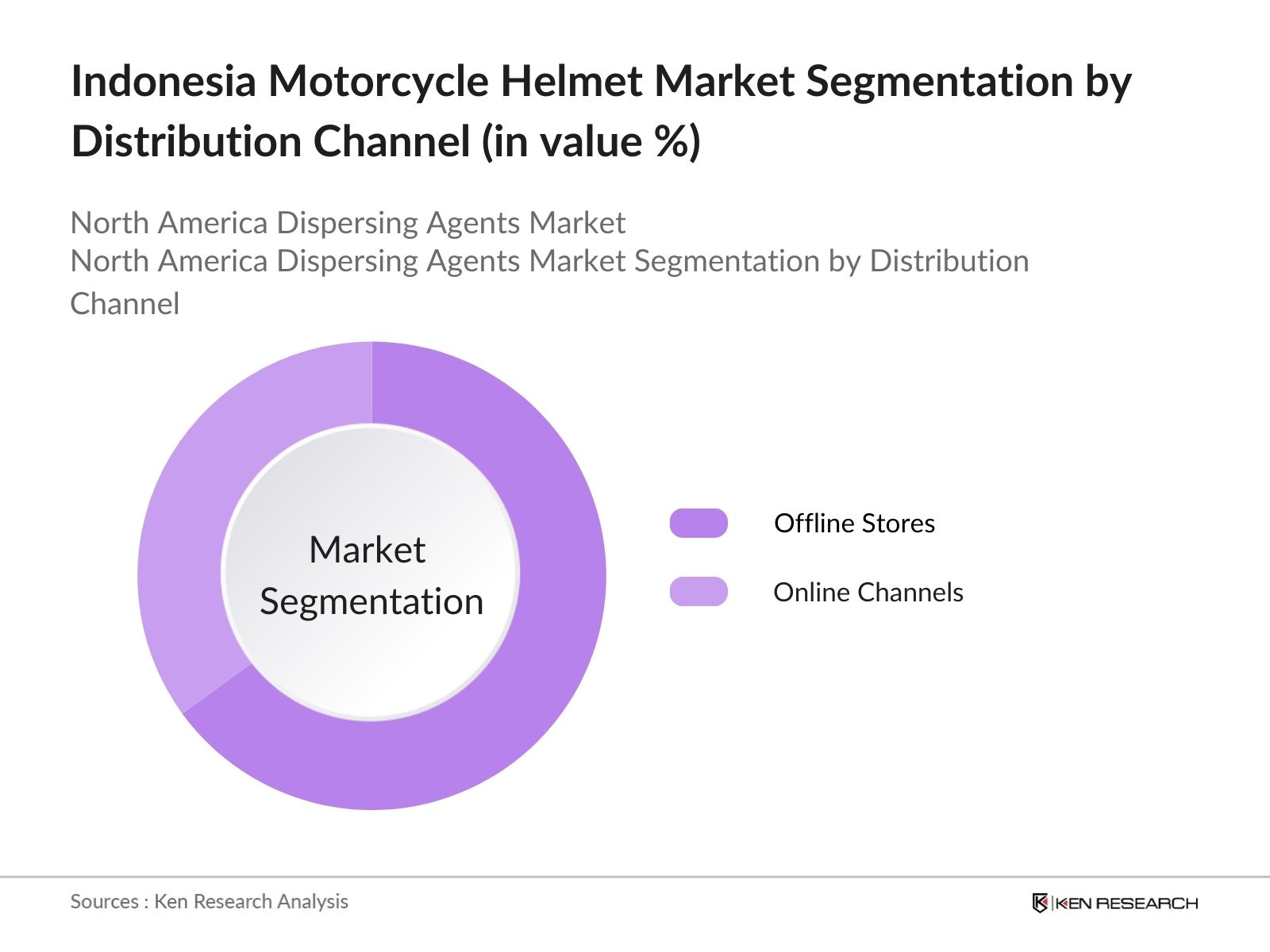
The Indonesia Motorcycle Helmet market is segmented by product type and by distribution channel.
The Indonesia Motorcycle Helmet Market is characterized by a few key players, with both local and international companies competing for market share. This competitive landscape has been shaped by factors such as the availability of certified helmets, government regulations on safety, and the growing influence of premium and smart helmets.
|
Company |
Year Established |
Headquarters |
Helmet Certifications |
Revenue (USD Mn) |
Local Manufacturing Units |
|
PT Tarakusuma Indah |
1980 |
Jakarta |
|||
|
NHK Indonesia |
1987 |
Surabaya |
|||
|
RSV Helmet |
2015 |
Bandung |
|||
|
Shoei Co. Ltd. |
1959 |
Tokyo, Japan |
|||
|
KYT Helmet |
1998 |
Tangerang |
Over the next five years, the Indonesia Motorcycle Helmet Market is expected to see steady growth, driven by the rising number of motorcycle users, government efforts to improve road safety, and increasing consumer demand for higher-quality, certified helmets. The expansion of e-commerce platforms and the growing popularity of premium helmet brands are likely to fuel further market development. Moreover, technological advancements such as the integration of smart features in helmets are expected to offer new growth opportunities.
1.1. Definition and Scope
1.2. Market Taxonomy
1.3. Market Growth Rate (Helmet adoption, two-wheeler vehicle sales, motorcycle accidents data)
1.4. Market Segmentation Overview
2.1. Historical Market Size
2.2. Year-on-Year Growth Analysis
2.3. Key Market Developments and Milestones
3.1. Growth Drivers
3.1.1. Increase in Two-Wheeler Sales (Urbanization, rise in middle-class income, automotive industry trends)
3.1.2. Stricter Safety Regulations (Indonesia's traffic and safety policies, penalty enforcement)
3.1.3. Rise in Awareness of Road Safety (Government road safety campaigns, public awareness)
3.1.4. Growing Popularity of Premium Helmets (Rising disposable income, influence of international brands)
3.2. Market Challenges
3.2.1. Price Sensitivity Among Consumers (Affordability of premium brands, local helmet production costs)
3.2.2. Counterfeit Helmets (Proliferation of non-certified helmets, enforcement challenges)
3.2.3. Lack of Helmet Usage in Rural Areas (Low adoption rates, cultural and behavioral factors)
3.3. Opportunities
3.3.1. Rising Motorcycle Tourism (Adventure tourism, demand for specialized helmets)
3.3.2. Expansion of E-commerce Platforms (Increased online retail sales of helmets)
3.3.3. Customization and Personalization Trends (Demand for unique designs and features)
3.4. Trends
3.4.1. Integration of Smart Technology (Bluetooth connectivity, smart safety features)
3.4.2. Lightweight and Eco-Friendly Materials (Innovative helmet designs, sustainability trends)
3.4.3. Growth of Women Riders (Gender-specific helmets, targeted marketing campaigns)
3.5. Government Regulation
3.5.1. Helmet Certification Standards (SNI certification, import-export restrictions)
3.5.2. Traffic Violation Penalties (Updated laws, helmet usage enforcement)
3.5.3. Public Awareness Campaigns (Collaboration between government and manufacturers)
3.6. SWOT Analysis
3.7. Stakeholder Ecosystem (Helmet manufacturers, distributors, regulatory bodies, consumer groups)
3.8. Porters Five Forces Analysis (Market entry barriers, competitive landscape, buyer-supplier dynamics)
3.9. Competitive Ecosystem
4.1. By Product Type (In Value %)
4.1.1. Full-face Helmets
4.1.2. Open-face Helmets
4.1.3. Half-helmets
4.1.4. Modular Helmets
4.2. By End-user (In Value %)
4.2.1. Commuters
4.2.2. Sports Bikers
4.2.3. Adventure Tourers
4.2.4. Women Riders
4.3. By Material (In Value %)
4.3.1. ABS (Acrylonitrile Butadiene Styrene)
4.3.2. Fiberglass
4.3.3. Carbon Fiber
4.3.4. Polycarbonate
4.4. By Distribution Channel (In Value %)
4.4.1. Offline Stores
4.4.2. Online Channels
4.5. By Region (In Value %)
4.5.1. Java
4.5.2. Sumatra
4.5.3. Kalimantan
4.5.4. Sulawesi
4.5.5. Papua
5.1. Detailed Profiles of Major Companies
5.1.1. PT Tarakusuma Indah
5.1.2. NHK Indonesia
5.1.3. KYT Helmet
5.1.4. INK Helmet
5.1.5. RSV Helmet
5.1.6. Zeus Helmets
5.1.7. Shoei Co. Ltd.
5.1.8. Arai Helmet Ltd.
5.1.9. HJC Helmets
5.1.10. Bell Helmets
5.1.11. Nolan Helmets
5.1.12. AGV Helmets
5.1.13. Shark Helmets
5.1.14. LS2 Helmets
5.1.15. Schuberth GmbH
5.2. Cross Comparison Parameters (Revenue, Market Share, Number of Dealers, Helmet Production Capacity, Local Distribution Networks, Regional Presence, Helmet Certification Standards, R&D Investments)
5.3. Market Share Analysis
5.4. Strategic Initiatives (Product launches, safety awareness campaigns, local manufacturing investments)
5.5. Mergers and Acquisitions
5.6. Investment Analysis
5.7. Venture Capital Funding
5.8. Government Grants
5.9. Private Equity Investments
6.1. Certification Processes (SNI certification, compliance processes)
6.2. Safety Compliance Requirements (Helmet safety standards, testing methodologies)
6.3. Import and Export Regulations (Tariff policies, certification requirements for imports)
7.1. Future Market Size Projections
7.2. Key Factors Driving Future Market Growth
8.1. By Product Type (In Value %)
8.2. By End-user (In Value %)
8.3. By Material (In Value %)
8.4. By Distribution Channel (In Value %)
8.5. By Region (In Value %)
9.1. TAM/SAM/SOM Analysis
9.2. Customer Cohort Analysis
9.3. Marketing Initiatives (Targeted advertising, safety collaboration programs)
9.4. White Space Opportunity Analysis
The first step involves identifying key factors influencing the Indonesia Motorcycle Helmet Market. A detailed ecosystem map is constructed based on in-depth secondary research, which encompasses consumer preferences, regulatory frameworks, and competitive strategies within the industry.
Historical data is compiled and analyzed to assess market penetration, product preferences, and market growth. This phase involves evaluating market performance through structured desk research, which provides insights into consumer trends and revenue estimations.
To validate market hypotheses, consultations are conducted with industry experts via interviews and surveys. This expert feedback helps refine the analysis and verify data accuracy, ensuring that insights reflect real-time market conditions.
This final phase integrates feedback from industry stakeholders and synthesizes all data into a comprehensive report. The findings include detailed insights into market segmentation, competitive dynamics, and future growth potential, ensuring a robust and actionable output for business professionals.
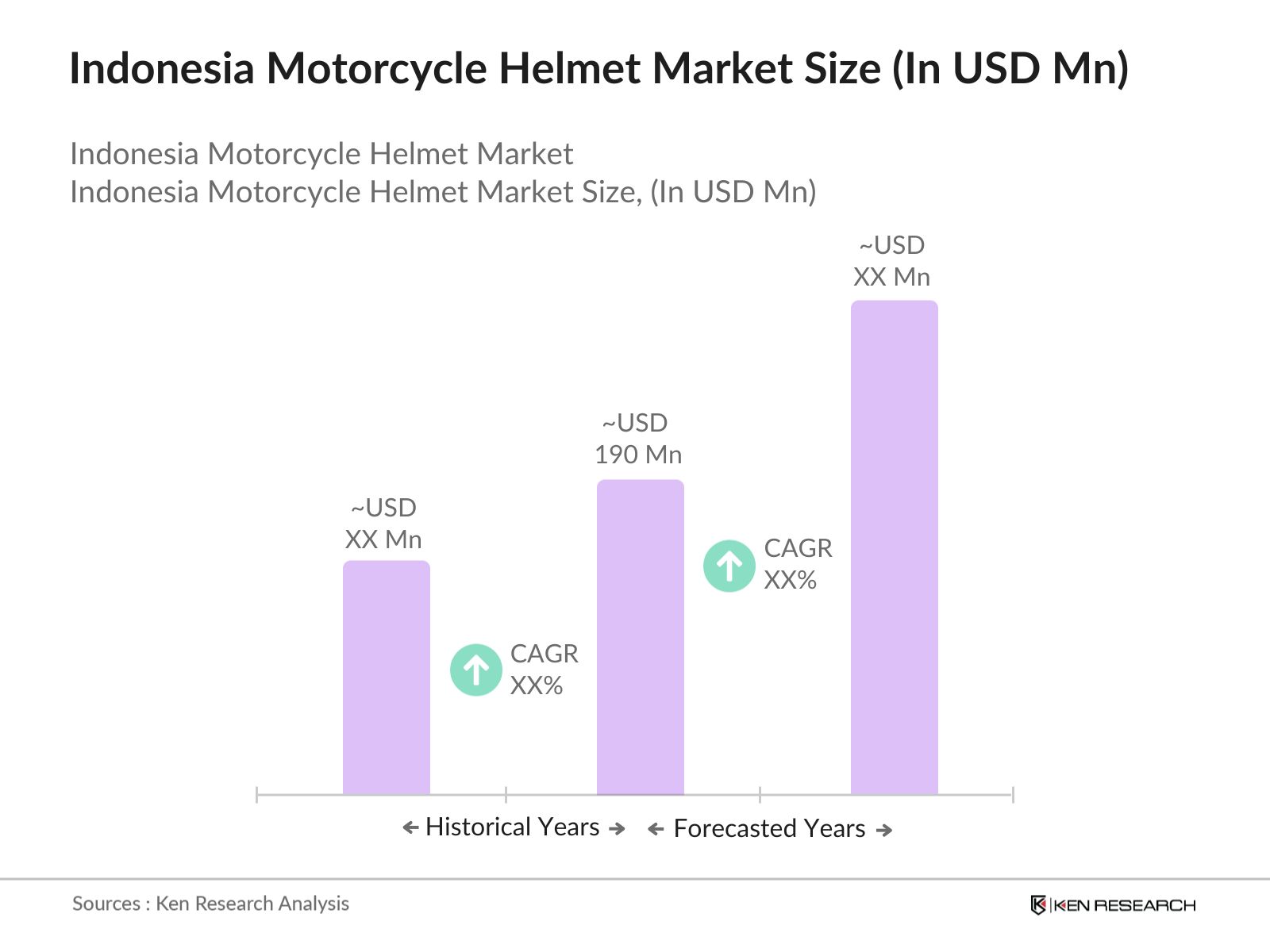
The Indonesia Motorcycle Helmet Market is valued at USD 190 million, driven by high two-wheeler ownership and government enforcement of helmet safety regulations.
Challenges in Indonesia Motorcycle Helmet Market include the proliferation of counterfeit helmets, consumer price sensitivity, and low adoption rates of helmets in rural areas, where road safety laws are less strictly enforced.
Indonesia Motorcycle Helmet Market Key players include PT Tarakusuma Indah, NHK Indonesia, KYT Helmet, RSV Helmet, and Shoei Co. Ltd. These companies dominate due to their strong manufacturing capabilities and compliance with safety standards.
Indonesia Motorcycle Helmet Market Growth is propelled by factors such as the rising number of motorcycle riders, increasing government safety campaigns, and a shift toward premium helmets with enhanced safety features.
The rise of e-commerce platforms is increasing helmet accessibility, offering consumers more variety, convenience, and competitive pricing, particularly in urban regions where online shopping is prevalent.

What makes us stand out is that our consultants follows Robust, Refine and Result (RRR) methodology. i.e. Robust for clear definitions, approaches and sanity checking, Refine for differentiating respondents facts and opinions and Result for presenting data with story

We have set a benchmark in the industry by offering our clients with syndicated and customized market research reports featuring coverage of entire market as well as meticulous research and analyst insights.

While we don't replace traditional research, we flip the method upside down. Our dual approach of Top Bottom & Bottom Top ensures quality deliverable by not just verifying company fundamentals but also looking at the sector and macroeconomic factors.

With one step in the future, our research team constantly tries to show you the bigger picture. We help with some of the tough questions you may encounter along the way: How is the industry positioned? Best marketing channel? KPI's of competitors? By aligning every element, we help maximize success.

Our report gives you instant access to the answers and sources that other companies might choose to hide. We elaborate each steps of research methodology we have used and showcase you the sample size to earn your trust.

If you need any support, we are here! We pride ourselves on universe strength, data quality, and quick, friendly, and professional service.