
Indonesia Outdoor Equipment Market Outlook to 2030
Region:Indonesia
Author(s):Yogita Sahu
Product Code:KROD8158
Region:Indonesia
Author(s):Yogita Sahu
Product Code:KROD8158
December 2024
90
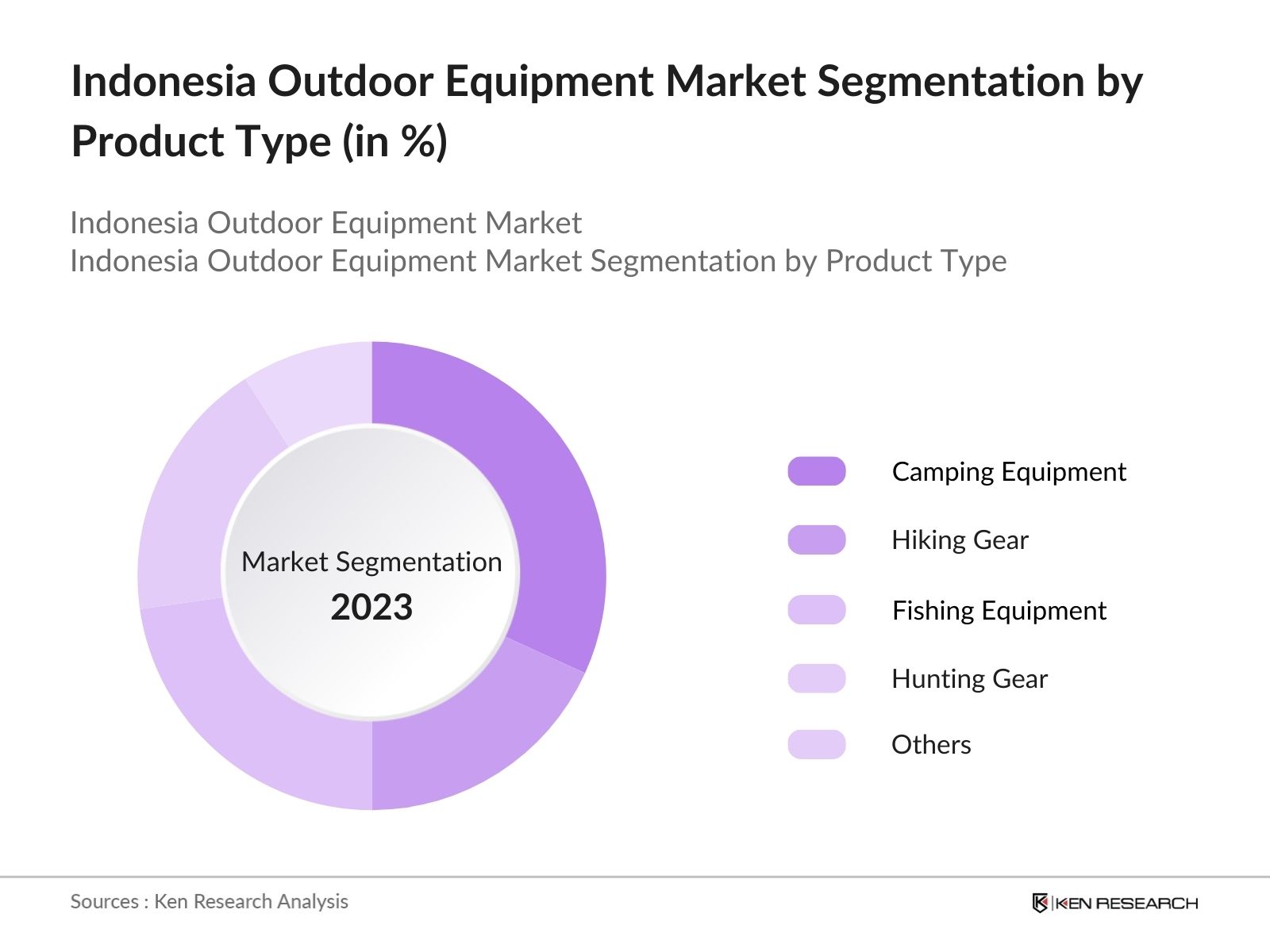
By Product Type: The market is segmented by product type into camping equipment, hiking gear, fishing equipment, hunting gear, and others. Currently, camping equipment dominates the market due to the increasing popularity of eco-friendly and adventure tourism, with both locals and international tourists seeking immersive outdoor experiences. Established brands in this segment have capitalized on this trend by offering a diverse range of products, including tents, backpacks, and portable cooking equipment, catering to both novice and seasoned campers.
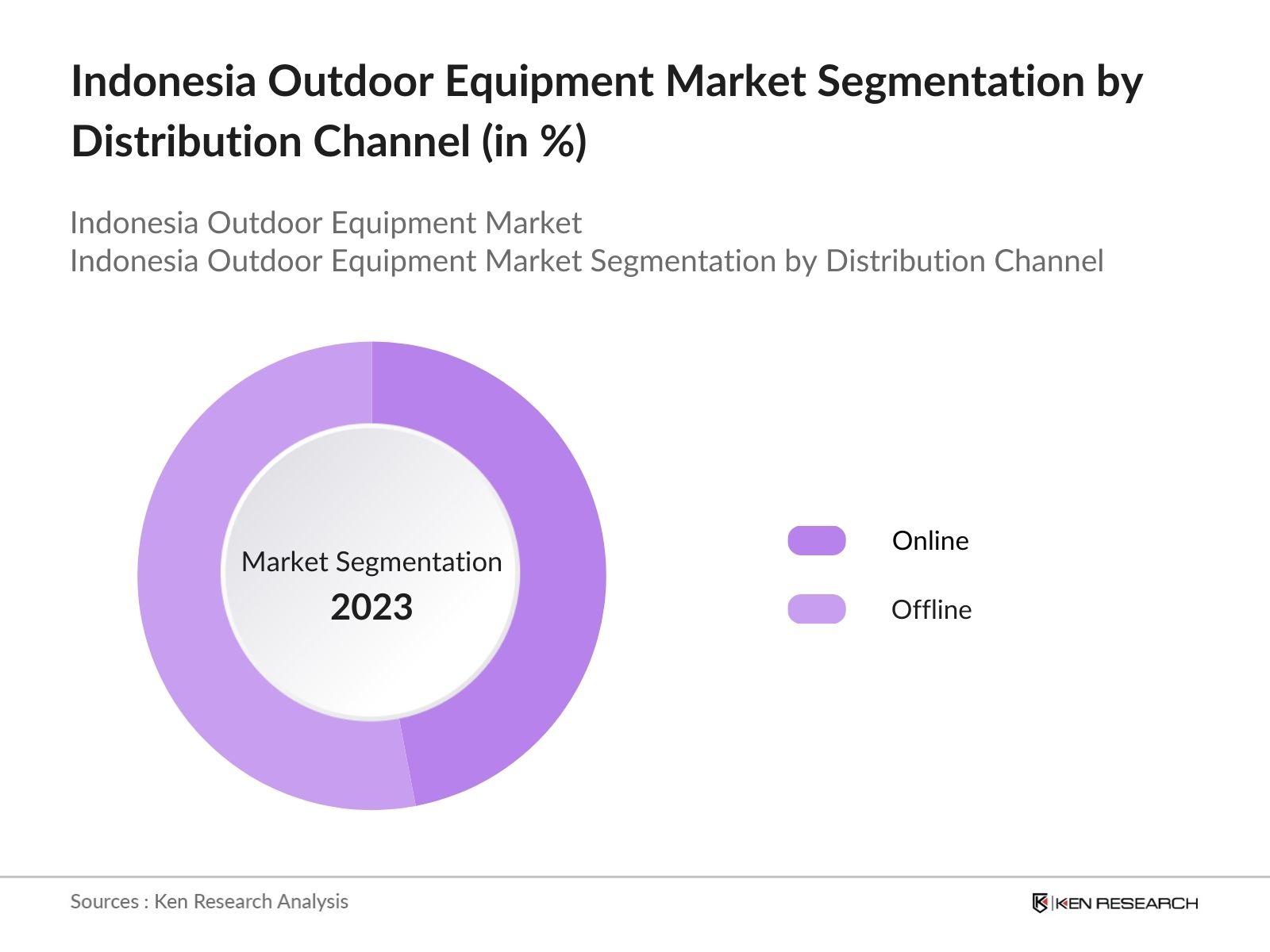
By Distribution Channel: The market is further segmented by distribution channels into online and offline channels, including specialty stores, supermarkets, and hypermarkets. The online segment has been gaining prominence, especially post-pandemic, as more consumers prefer to purchase equipment through e-commerce platforms for convenience. This shift is driven by easy access to product comparisons, home delivery, and discount offerings.
The market in Indonesia is competitive, with several domestic and international players vying for market share. Decathlon, a major international brand, has seen widespread adoption due to its affordable pricing and wide product range.
|
Company Name |
Establishment Year |
Headquarters |
Product Range |
Distribution Network |
Local Manufacturing |
Sustainability Initiatives |
Innovation Pipeline |
Revenue (2023, USD) |
|
Decathlon |
1976 |
France |
||||||
|
Eiger Adventure |
1989 |
Indonesia |
||||||
|
North Face |
1968 |
USA |
||||||
|
Patagonia |
1973 |
USA |
||||||
|
Columbia Sportswear |
1938 |
USA |
Over the next five years, the Indonesia outdoor equipment industry is expected to witness growth, driven by rising consumer interest in adventure sports, government support for eco-tourism, and the increasing trend toward sustainable products.
|
By Product Type |
Camping Equipment Hiking Gear Fishing Equipment Hunting Gear Others |
|
By Activity Type |
Camping Fishing Trekking Mountaineering Extreme Sports |
|
By Distribution Channel |
Online Offline (Specialty Stores, Supermarkets, Hypermarkets) |
|
By Region |
North East West South |
|
By End-User |
Individual Consumers Institutional Buyers Government Organizations |
1.1. Definition and Scope
1.2. Market Taxonomy
1.3. Market Growth Rate
1.4. Market Segmentation Overview
2.1. Historical Market Size
2.2. Year-On-Year Growth Analysis
2.3. Key Market Developments and Milestones
3.1. Growth Drivers (Consumer Demand, Environmental Impact, Fitness Trends, Sports Activities)
3.2. Market Challenges (Logistics Costs, Regulatory Compliance, Product Durability, Import Tariffs)
3.3. Opportunities (Rural Expansion, Eco-Friendly Equipment, E-Commerce Penetration, Adventure Tourism)
3.4. Trends (Sustainability, Customization, Multi-purpose Equipment, Smart Technologies Integration)
3.5. Government Regulation (Custom Duties, Environmental Regulations, Safety Standards, Product Certification)
3.6. SWOT Analysis
3.7. Stakeholder Ecosystem
3.8. Porters Five Forces
3.9. Competition Ecosystem
4.1. By Product Type (In Value %)
Camping Equipment
Hiking Gear
Fishing Equipment
Hunting Gear
Others
4.2. By Activity Type (In Value %)
Camping
Fishing
Trekking
Mountaineering
Extreme Sports
4.3. By Distribution Channel (In Value %)
Online
Offline (Specialty Stores, Supermarkets, Hypermarkets)
4.4. By Region (In Value %)
North
East
West
South
4.5. By End-User (In Value %)
Individual Consumers
Institutional Buyers (Tourist Agencies, Event Organizers)
Government Organizations (Environmental, Sports)
5.1. Detailed Profiles of Major Companies
5.1.1. Decathlon
5.1.2. Columbia Sportswear
5.1.3. North Face
5.1.4. Patagonia
5.1.5. Coleman
5.1.6. Eiger Adventure
5.1.7. Adidas Outdoor
5.1.8. Nike ACG
5.1.9. Black Diamond Equipment
5.1.10. Osprey Packs
5.1.11. Jack Wolfskin
5.1.12. Outdoor Research
5.1.13. Sea to Summit
5.1.14. Lafuma
5.1.15. REI Co-op
5.2. Cross Comparison Parameters (Revenue, Product Portfolio, Distribution Reach, Sustainability Initiatives, Technical Features, Innovation Pipeline, Local Manufacturing, Market Penetration)
5.3. Market Share Analysis
5.4. Strategic Initiatives
5.5. Mergers and Acquisitions
5.6. Investment Analysis
5.7. Government Grants
5.8. Venture Capital Funding
6.1. Environmental Standards
6.2. Certification Requirements
6.3. Compliance Regulations
6.4. Import/Export Regulations
7.1. Future Market Size Projections
7.2. Key Factors Driving Future Market Growth
8.1. By Product Type (In Value %)
8.2. By Activity Type (In Value %)
8.3. By Distribution Channel (In Value %)
8.4. By Region (In Value %)
8.5. By End-User (In Value %)
9.1. TAM/SAM/SOM Analysis
9.2. Customer Cohort Analysis
9.3. White Space Opportunity Analysis
9.4. Marketing Initiatives
This step involves mapping the outdoor equipment ecosystem in Indonesia, identifying major stakeholders and market drivers. It draws from secondary research and proprietary databases to gather industry-level insights, focusing on factors like product demand, consumer behavior, and regulatory trends.
We gathered and analyzed historical data on the markets performance, focusing on growth drivers, consumption trends, and key regions. This phase helped estimate the markets value and pinpoint the dominant segments.
Market hypotheses were tested and validated through interviews with industry experts and stakeholders. Their feedback contributed to refining our data and ensuring accuracy in terms of operational insights.
Finally, direct interactions with manufacturers and retailers were conducted to acquire detailed insights into product offerings, sales performance, and consumer preferences, ensuring a robust, accurate analysis.
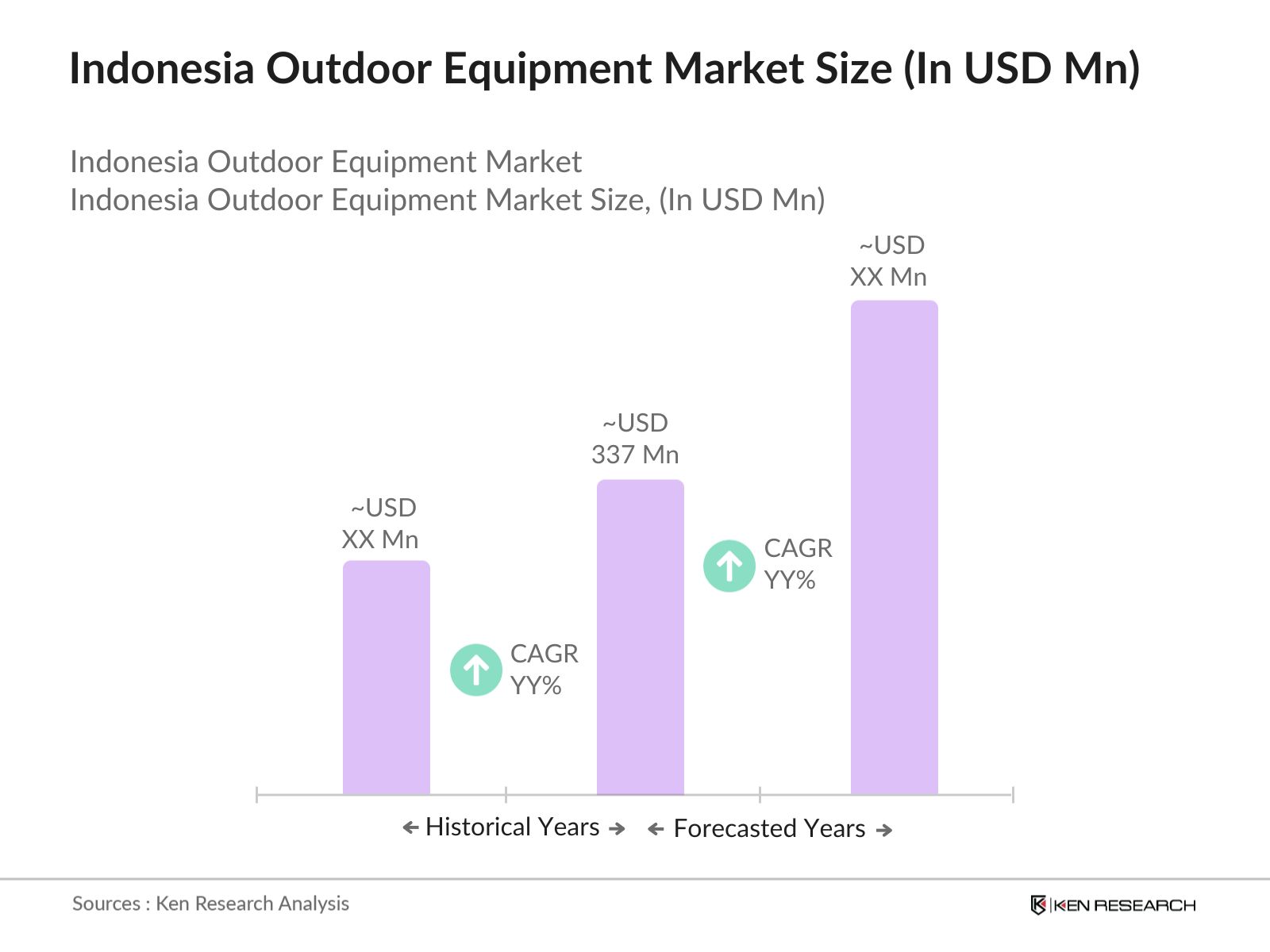
The Indonesia outdoor equipment market was valued at USD 337 million, driven by increasing interest in adventure tourism and eco-friendly recreation.
Challenges in the Indonesia outdoor equipment market include regulatory barriers, logistics costs, and competition from global brands. Additionally, fluctuations in tourism numbers due to external factors like pandemics can impact demand.
Key players in the Indonesia outdoor equipment market include Decathlon, Eiger Adventure, North Face, Patagonia, and Columbia Sportswear, each leveraging unique strategies to capture market share.
Key drivers in the Indonesia outdoor equipment market include rising disposable incomes, expanding middle-class consumers, the growth of domestic adventure tourism, and government support for eco-tourism initiatives.
The Indonesia outdoor equipment market is expected to grow steadily over the next five years, bolstered by increasing demand for high-quality, durable outdoor gear and expanding retail channels in both urban and rural areas.

What makes us stand out is that our consultants follows Robust, Refine and Result (RRR) methodology. i.e. Robust for clear definitions, approaches and sanity checking, Refine for differentiating respondents facts and opinions and Result for presenting data with story

We have set a benchmark in the industry by offering our clients with syndicated and customized market research reports featuring coverage of entire market as well as meticulous research and analyst insights.

While we don't replace traditional research, we flip the method upside down. Our dual approach of Top Bottom & Bottom Top ensures quality deliverable by not just verifying company fundamentals but also looking at the sector and macroeconomic factors.

With one step in the future, our research team constantly tries to show you the bigger picture. We help with some of the tough questions you may encounter along the way: How is the industry positioned? Best marketing channel? KPI's of competitors? By aligning every element, we help maximize success.

Our report gives you instant access to the answers and sources that other companies might choose to hide. We elaborate each steps of research methodology we have used and showcase you the sample size to earn your trust.

If you need any support, we are here! We pride ourselves on universe strength, data quality, and quick, friendly, and professional service.