
Indonesia Prescription Drugs Market Outlook to 2030
Region:Indonesia
Author(s):Yogita Sahu
Product Code:KROD9151
Region:Indonesia
Author(s):Yogita Sahu
Product Code:KROD9151
December 2024
80
Listen to the audio summary
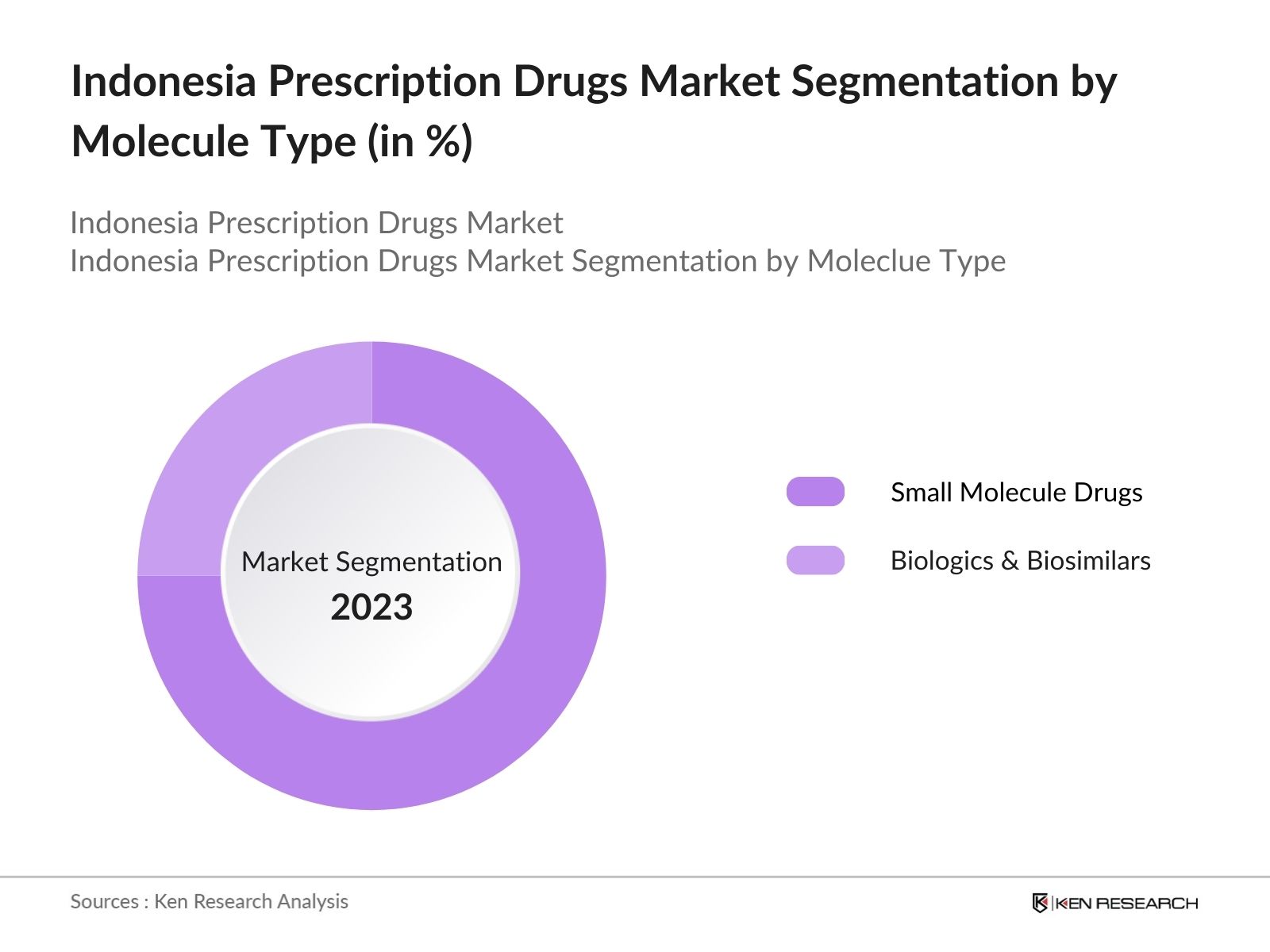
By Molecule Type: The market is segmented by molecule type into small molecule drugs and biologics & biosimilars. Currently, small molecule drugs hold the dominant market share due to their established presence in treating common illnesses such as cardiovascular and respiratory diseases. They are easier to manufacture, store, and distribute across Indonesias wide geographic spread, making them accessible to a large segment of the population.
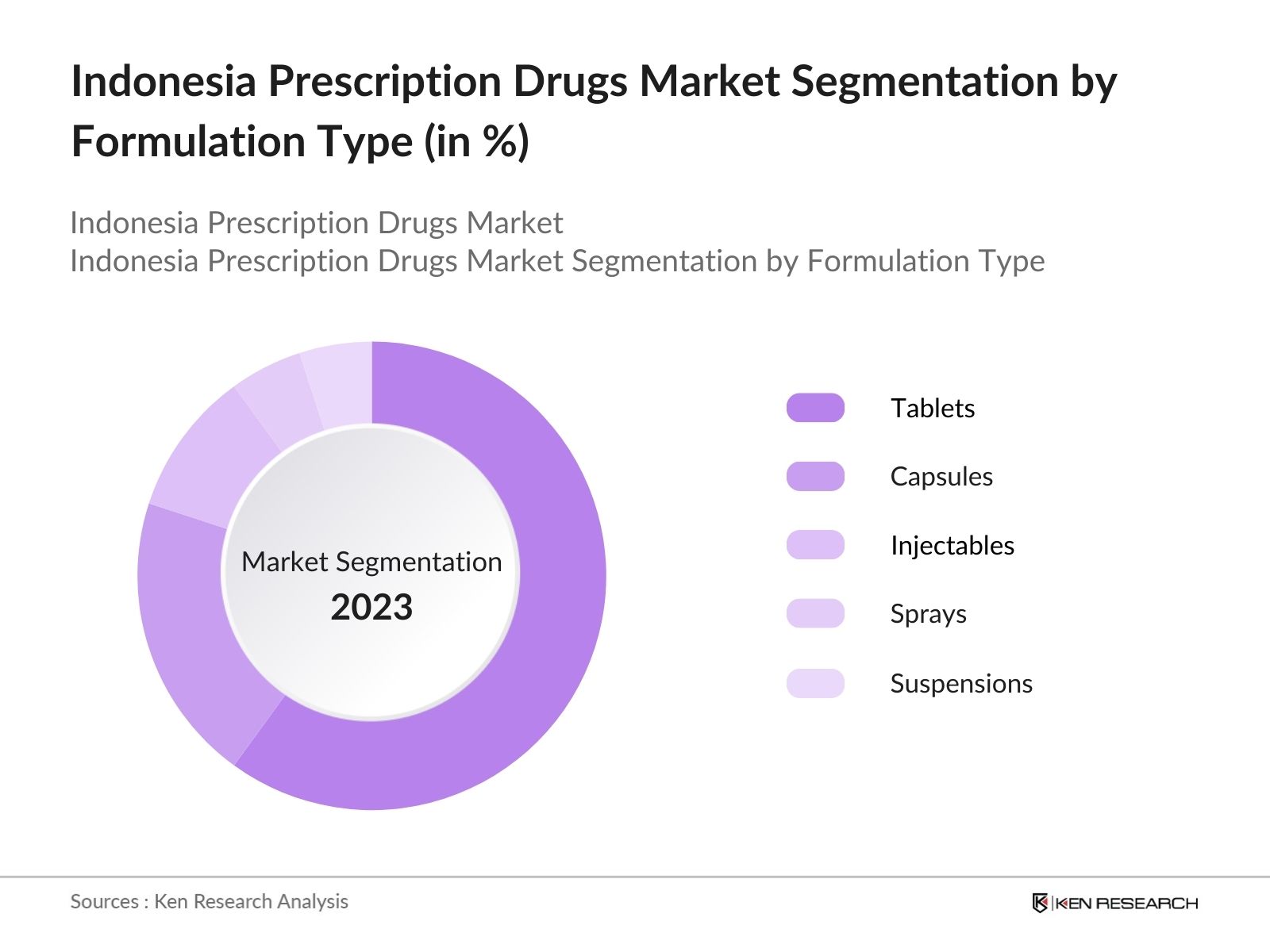
By Formulation Type: The market is segmented by formulation into tablets, capsules, injectables, sprays, and suspensions. Tablets dominate the formulation segment, holding the largest market share. This is due to the ease of consumption, storage, and widespread familiarity among patients and healthcare providers. Additionally, tablets are a cost-effective option, which aligns with the countrys goal of making affordable medication available to a majority of its population through the National Health Insurance program.
The market is characterized by a mixture of domestic and international players. Local manufacturers such as Kalbe Farma and Bio Farma dominate the market with a strong focus on generic drugs, which constitute a significant portion of the total pharmaceutical sales.
|
Company Name |
Establishment Year |
Headquarters |
Revenue (USD Bn) |
Product Focus |
R&D Investments |
Number of Employees |
Global Presence |
Recent Acquisitions |
|
Kalbe Farma |
1966 |
Jakarta |
||||||
|
Bio Farma |
1890 |
Bandung |
||||||
|
Kimia Farma |
1957 |
Jakarta |
||||||
|
Pfizer Indonesia |
1849 |
Jakarta |
||||||
|
Novartis Indonesia |
1996 |
Jakarta |
Over the next five years, the Indonesia Prescription Drugs industry is poised for growth, driven by the continued expansion of the National Health Insurance program, rising healthcare expenditure, and increasing prevalence of non-communicable diseases such as diabetes and cardiovascular conditions.
|
Molecule Type |
Small Molecule Drugs Biologics & Biosimilars |
|
Formulation Type |
Tablets Capsules Injectables |
|
Therapy Area |
Cardiovascular Oncology Respiratory Diseases |
|
Prescription Type |
Prescription Drugs OTC Medicines |
|
Route of Administration |
Oral Topical Parenteral |
|
Region |
North East West South |
1.1 Definition and Scope
1.2 Market Taxonomy
1.3 Market Growth Rate
1.4 Market Segmentation Overview
2.1 Historical Market Size
2.2 Year-On-Year Growth Analysis
2.3 Key Market Developments and Milestones
3.1 Growth Drivers (Increased health awareness, government initiatives for JKN)
3.2 Market Challenges (Reliance on imported raw materials, regulatory hurdles)
3.3 Opportunities (Expansion of universal health coverage, local manufacturing capacity)
3.4 Trends (Growth in generic drugs, biosimilars demand rise)
3.5 Government Regulation (Regulatory framework for drug approvals, import reduction initiatives)
3.6 SWOT Analysis
3.7 Stakeholder Ecosystem
3.8 Porters Five Forces Analysis
3.9 Competition Ecosystem
4.1 By Molecule Type (In Value %)
4.1.1 Small Molecule Drugs
4.1.2 Biologics & Biosimilars
4.2 By Formulation Type (In Value %)
4.2.1 Tablets
4.2.2 Capsules
4.2.3 Injectables
4.3 By Therapy Area (In Value %)
4.3.1 Cardiovascular
4.3.2 Oncology
4.3.3 Respiratory Diseases
4.4 By Prescription Type (In Value %)
4.4.1 Prescription Drugs
4.4.2 OTC Medicines
4.5 By Route of Administration (In Value %)
4.5.1 Oral
4.5.2 Topical
4.5.3 Parenteral
4.6 By Region (In Value %)
4.6.1 North
4.6.2 East
4.6.3 West
4.6.4 South
5.1 Detailed Profiles of Major Competitors
5.1.1 Kalbe Farma
5.1.2 Bio Farma
5.1.3 Kimia Farma
5.1.4 Indofarma
5.1.5 Phapros
5.1.6 Darya-Varia
5.1.7 Pfizer Indonesia
5.1.8 Sanofi
5.1.9 Novartis Indonesia
5.1.10 Merck
5.1.11 Bayer Indonesia
5.1.12 GlaxoSmithKline
5.1.13 Boehringer Ingelheim
5.1.14 Roche Indonesia
5.1.15 Takeda Indonesia
5.2 Cross Comparison Parameters (No. of Employees, Revenue, Headquarters, R&D Investment)
5.3 Market Share Analysis
5.4 Strategic Initiatives
5.5 Mergers and Acquisitions
5.6 Investment Analysis
5.7 Government Grants and Private Investments
6.1 Regulatory Approvals and Processes
6.2 Compliance and Certification Requirements
6.3 Pricing and Reimbursement Policies
7.1 Future Market Projections
7.2 Key Factors Driving Future Growth
8.1 By Molecule Type (In Value %)
8.2 By Formulation Type (In Value %)
8.3 By Therapy Area (In Value %)
8.4 By Prescription Type (In Value %)
8.5 By Route of Administration (In Value %)
8.6 By Region (In Value %)
9.1 TAM/SAM/SOM Analysis
9.2 Marketing Initiatives and Target Audience
9.3 White Space Opportunity Analysis
This step involves identifying the primary drivers, barriers, and market opportunities in the Indonesia Prescription Drugs Market. Extensive secondary research was conducted, leveraging proprietary data, government publications, and pharmaceutical industry reports.
Data was gathered and analyzed to assess market size, growth trends, and distribution channels. Special attention was given to segment-specific trends, such as the dominance of small molecule drugs and tablets.
Data hypotheses were validated through consultation with industry experts and healthcare professionals in Indonesia. Their insights helped confirm market dynamics, particularly regarding government regulations and local manufacturing capacity.
All data points were synthesized into a cohesive market report, cross-checked for accuracy with industry standards, and validated through interviews with pharmaceutical companies to ensure reliability.
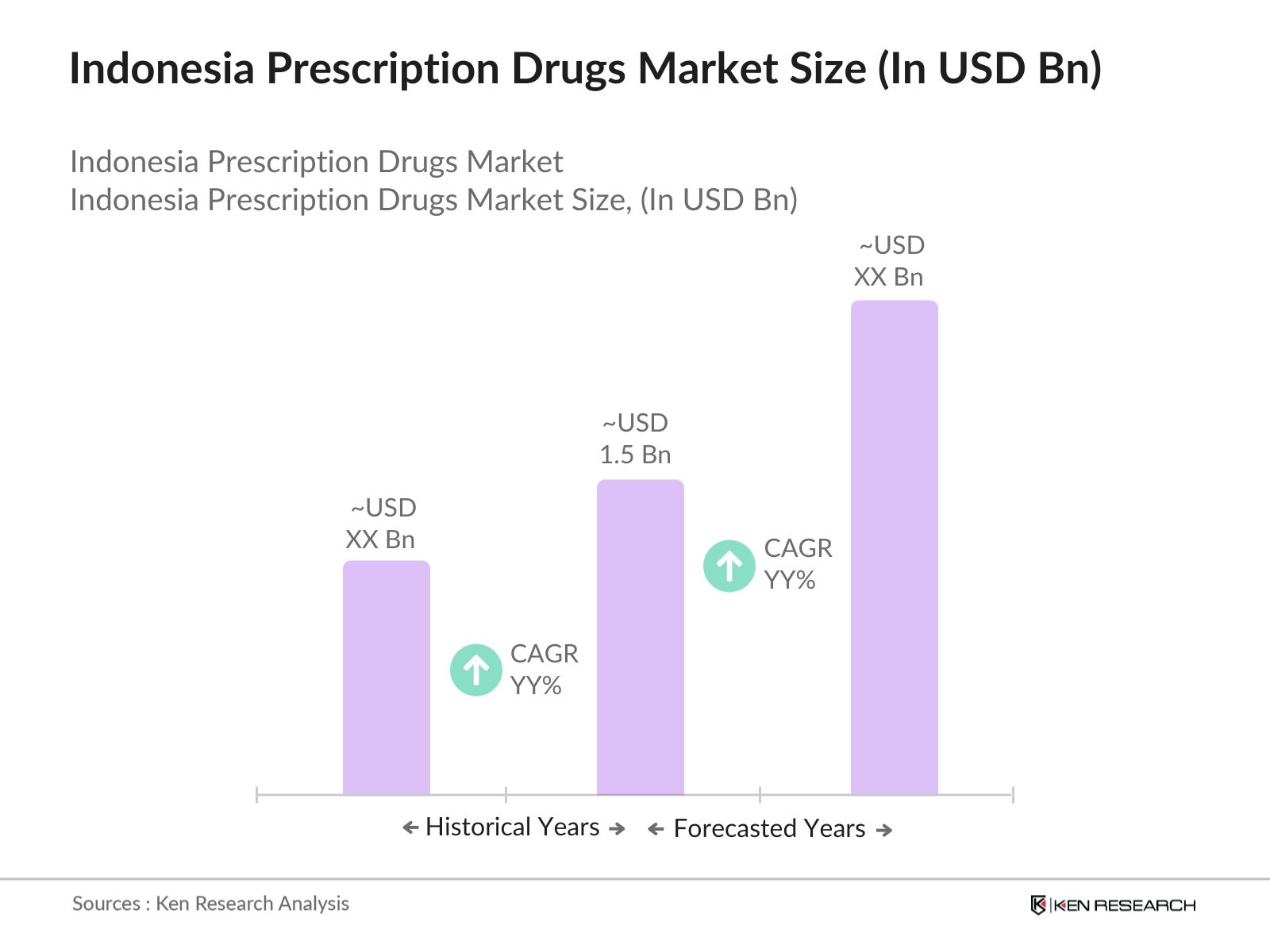
The Indonesia Prescription Drugs market is valued at USD 1.5 billion, based on a comprehensive analysis of healthcare expenditure and demand for essential medications.
Challenges in the Indonesia Prescription Drugs market include the country's heavy reliance on imported raw materials for drug manufacturing, which increases costs and impacts profitability. Regulatory hurdles and compliance requirements also present challenges for market players.
Key players in the Indonesia Prescription Drugs market include Kalbe Farma, Bio Farma, Pfizer Indonesia, and Novartis Indonesia, all of which dominate through strong distribution networks and diversified product portfolios.
The Indonesia Prescription Drugs market is driven by the expansion of healthcare coverage under the National Health Insurance program, increasing healthcare expenditure, and the rising prevalence of chronic diseases such as diabetes and hypertension.
The Indonesia Prescription Drugs market is expected to grow substantially over the next five years, supported by government initiatives aimed at improving healthcare access and promoting local drug manufacturing.

What makes us stand out is that our consultants follows Robust, Refine and Result (RRR) methodology. i.e. Robust for clear definitions, approaches and sanity checking, Refine for differentiating respondents facts and opinions and Result for presenting data with story

We have set a benchmark in the industry by offering our clients with syndicated and customized market research reports featuring coverage of entire market as well as meticulous research and analyst insights.

While we don't replace traditional research, we flip the method upside down. Our dual approach of Top Bottom & Bottom Top ensures quality deliverable by not just verifying company fundamentals but also looking at the sector and macroeconomic factors.

With one step in the future, our research team constantly tries to show you the bigger picture. We help with some of the tough questions you may encounter along the way: How is the industry positioned? Best marketing channel? KPI's of competitors? By aligning every element, we help maximize success.

Our report gives you instant access to the answers and sources that other companies might choose to hide. We elaborate each steps of research methodology we have used and showcase you the sample size to earn your trust.

If you need any support, we are here! We pride ourselves on universe strength, data quality, and quick, friendly, and professional service.