















Indonesia RFID (Radio Frequency Identification) Market Outlook to 2030
Region:Asia
Author(s):Shreya Garg
Product Code:KROD4000
November 2024
90
About the Report
Indonesia RFID (Radio Frequency Identification) Market Overview
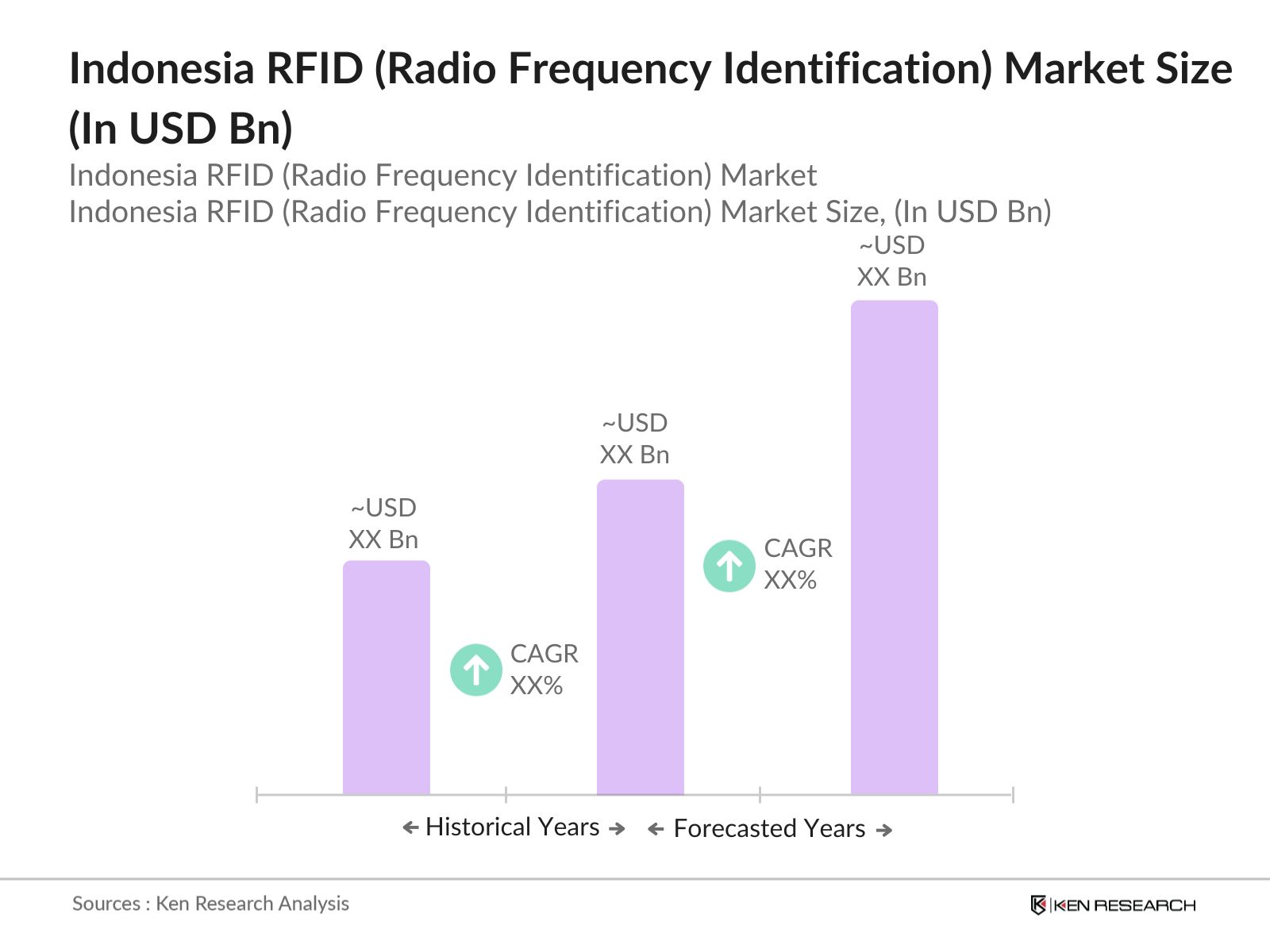
- The Indonesia RFID (Radio Frequency Identification) market has experienced notable growth, this is reflected by Asia-pacific RFID (Radio Frequency Identification) market reaching a valuation of USD18.23 billion in 2023.This growth is primarily driven by the increasing adoption of RFID technology across various sectors such as retail, manufacturing, logistics, and healthcare. The need for efficient tracking systems, inventory management, and data collection has led to widespread use of RFID tags and readers.
- The key players in the Indonesia RFID market include Zebra Technologies, NXP Semiconductors, Avery Dennison Corporation, Alien Technology, and Honeywell International Inc. These companies are leading the market by offering innovative RFID solutions and technologies that cater to the diverse needs of various industries.
- In June 2023, Zebra introduced the TC22/TC27 mobile computer, designed for small and medium-sized businesses (SMBs) across various industries, including retail in Indonesia. This device features Zebra Mobility DNA tools for improved device management and security, which could facilitate better inventory tracking and management in retail environments utilizing RFID technology.
- The Jakarta metropolitan area dominates the Indonesia RFID market. This dominance is attributed to the high concentration of retail chains, manufacturing hubs, and logistics companies in the region. The advanced infrastructure, higher adoption rates of new technologies, and the presence of major RFID solution providers in Jakarta contribute to its leading position in the market.
Indonesia RFID (Radio Frequency Identification) Market Segmentation
The market can be segmented by various factors like product type, application, and region.
By Product Type: The Indonesia RFID market is segmented by product type into RFID tags, RFID readers, and RFID software. In 2023, RFID tags held a dominant market share. The widespread use of RFID tags across various industries for tracking and inventory management has contributed to their dominance. The increasing demand for efficient supply chain management solutions and the adoption of smart technologies in retail and logistics have led to the growth of the RFID tags segment.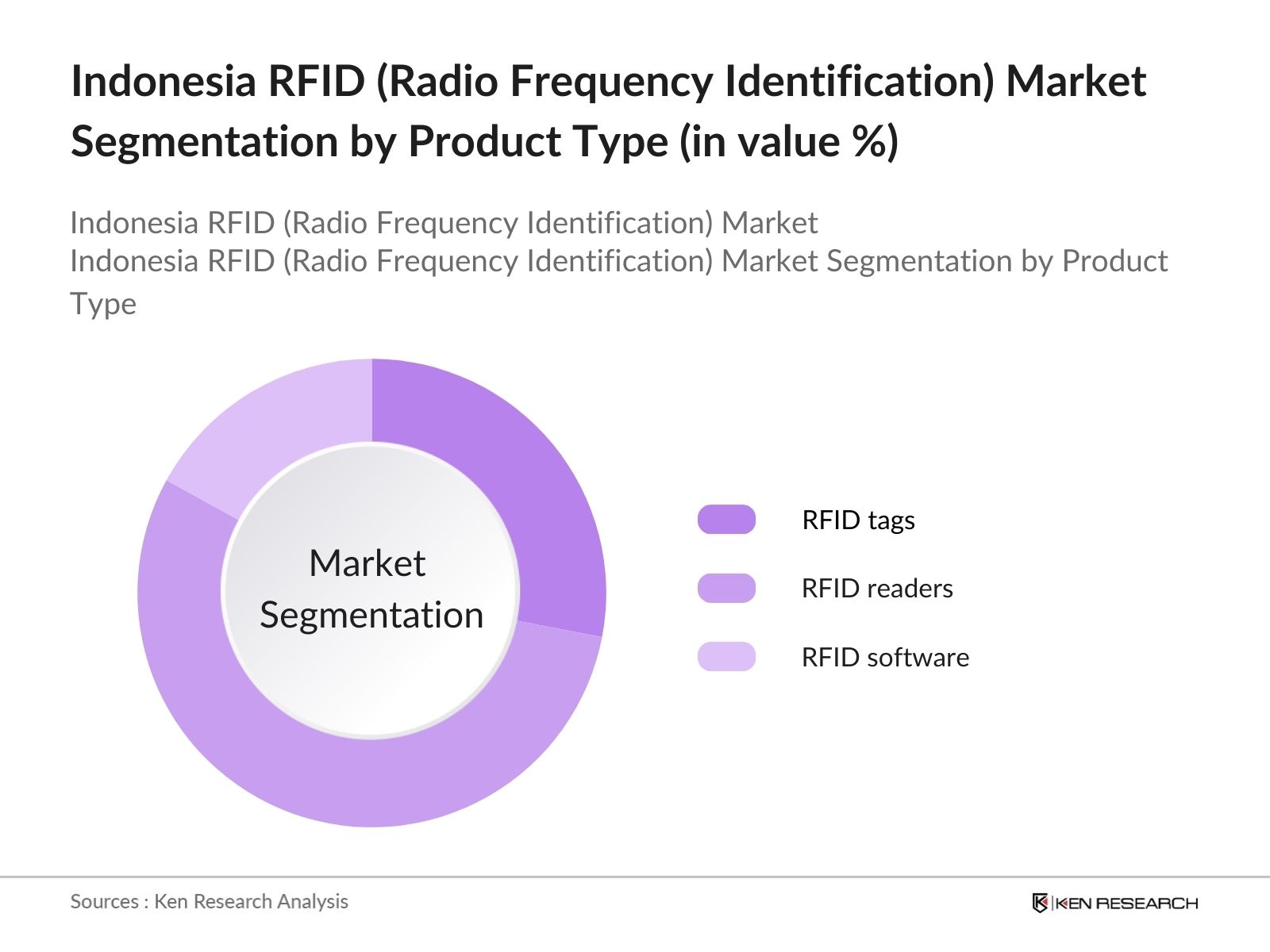
By Application: The Indonesia RFID market is segmented by application into retail, manufacturing, logistics, and healthcare. In 2023, the retail segment had the largest market share. The retail industry's need for accurate inventory management, real-time data collection, and efficient stock tracking has driven the adoption of RFID technology. Additionally, the implementation of RFID systems to prevent theft and improve customer experience has contributed to the segment's dominance.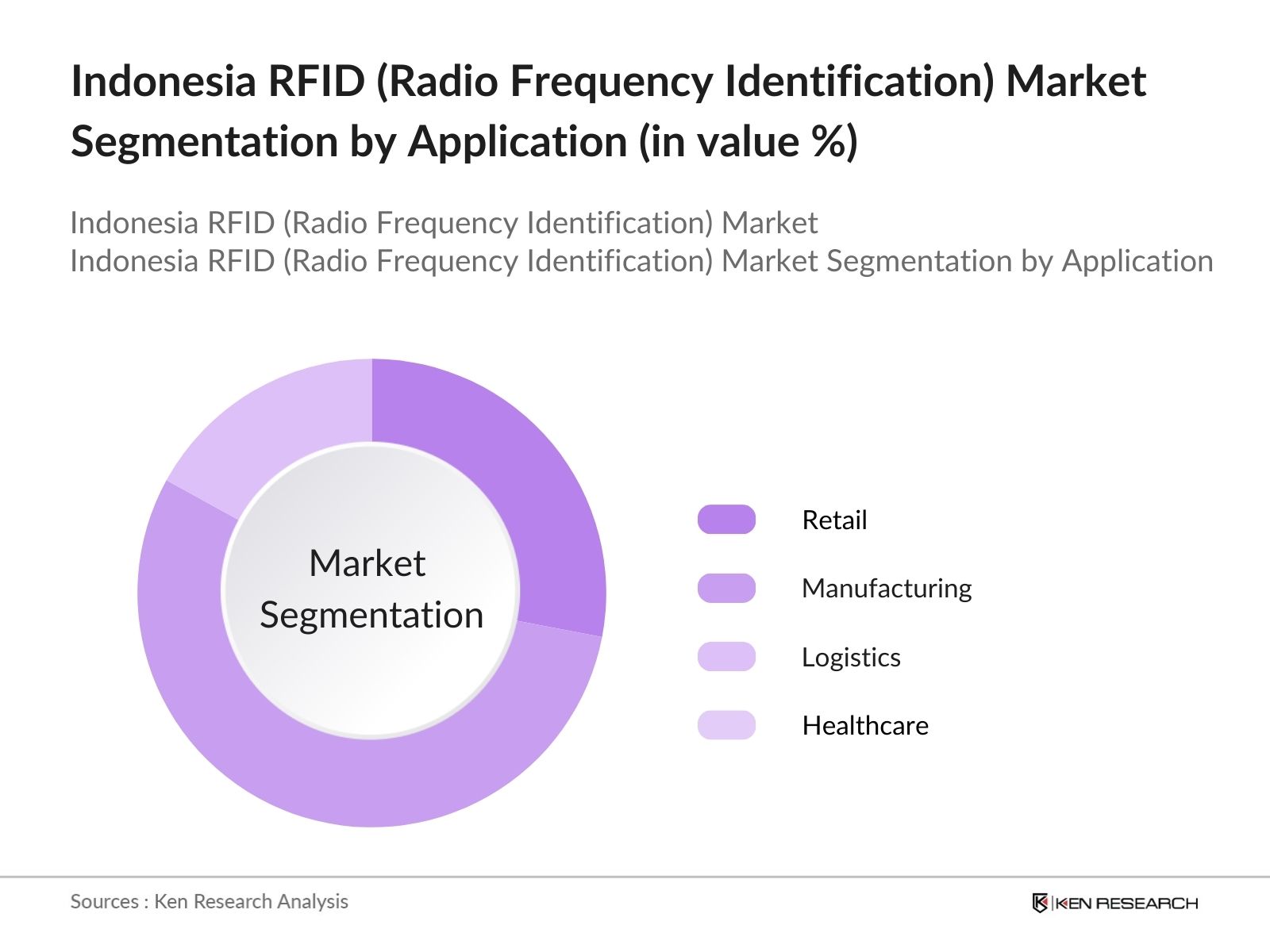
By Region: The Indonesia RFID market is segmented by region into north, south, east, and west. In 2023, the West region held a dominant market share. The presence of major retail chains, manufacturing hubs, and logistics companies and its surrounding areas has driven the high adoption of RFID technology. The advanced infrastructure and higher concentration of businesses in the West region contribute to its leading position in the market.
Indonesia RFID (Radio Frequency Identification) Market Competitive Landscape
|
Company |
Establishment Year |
Headquarters |
|
Zebra Technologies |
1969 |
Illinois, USA |
|
NXP Semiconductors |
2006 |
Eindhoven, NL |
|
Avery Dennison Corporation |
1935 |
Ohio, USA |
|
Alien Technology |
1994 |
California, USA |
|
Honeywell International Inc. |
1906 |
North Carolina, USA |
- Avery Dennison Corporation: In 2023, Avery Dennison Corporation announced a strategic partnership with an Indonesian logistics company to deploy an RFID-based tracking system. The project, valued at USD 4 million, aims to enhance the efficiency of logistics operations and improve asset tracking, highlighting Avery Dennison's role in advancing RFID technology in Indonesia.
- Honeywell International Inc.: Honeywell International Inc. introduced a new range of RFID-enabled handheld devices in 2024, designed to improve data collection and inventory management in various industries. These devices offer enhanced durability, better performance, and advanced connectivity features, making them suitable for use in harsh industrial environments.
Indonesia RFID (Radio Frequency Identification) Industry Analysis
Growth Drivers
- Increasing Adoption in the Retail Sector: The retail sector in Indonesia is increasingly adopting RFID technology for efficient inventory management and to enhance customer experience. RFID enables real-time tracking of inventory, allowing retailers to have a more accurate view of stock levels and reduce out-of-stock situations.This helps optimize inventory levels and minimize overstocking.
- Expansion of the Logistics Industry: The logistics industry in Indonesia is a noteworthy driver for the RFID market. RFID technology improves inventory accuracy within logistics operations. Companies that adopt RFID see their inventory count accuracy go from 63% to 95%. This high level of accuracy is essential for logistics firms that handle vast quantities of goods and need to minimize discrepancies in stock levels.
- Healthcare Sector Innovations: The healthcare sector's demand for improved supply chain management has led to increased RFID adoption. RFID helps in real-time tracking of inventory, ensuring that medical supplies are adequately stocked and reducing waste, it also helps in facilitation of accurate patient identification, which is essential for reducing medical errors.
Challenges
- Privacy and Data Security Concerns: There is a growing apprehension regarding the protection of sensitive information stored on RFID tags. Ensuring that this data is safeguarded against unauthorized access is crucial for gaining consumer trust and encouraging widespread adoption of RFID technology. This high cost is a barrier for small and medium-sized enterprises (SMEs), limiting widespread adoption.
- High Initial Investment Costs: Despite the benefits, the high initial cost of implementing RFID systems remains a challenge for many businesses in Indonesia. The cost of implementing RFID systems can be prohibitive, particularly for SMEs. This initial financial barrier can deter businesses from adopting RFID solutions, thereby limiting market penetration and growth.
Government Initiatives
- RFID Technology in Agriculture: Minister Suharso Monoarfa is promoting the use of RFID tags for monitoring livestock, which could enhance food security and prevent biodiversity loss. This initiative is part of a broader strategy to improve agricultural practices in Indonesia, according to Monoarfa, RFID tags could help monitor the health of livestock, especially the adequacy of nutrition in cattle.
- Healthcare Modernization Plan: The Asian Infrastructure Investment Bank (AIIB) is providing a funding of USD 999 million to Indonesia for the "Modernization of the Health System" project, which aims to increase the availability of functional equipment in public health facilities and improve the utilization of public health services with installation of systems like RFID across Indonesia.
Indonesia RFID (Radio Frequency Identification) Market Future Outlook
Looking ahead, the Indonesia RFID market is projected to continue its growth route. The adoption of RFID technology is expected to expand further across various sectors, driven by the need for efficient supply chain management, real-time data analytics, and enhanced security measures.
Future Market Trends
- Adoption in Indonesia: By 2028, the combination of RFID and IoT technologies will allows real-time monitoring and analysis, which can improve decision-making processes in agriculture for various applications such as livestock tracking, crop monitoring, and supply chain management. This shift will be a part of a broader trend where smart farming practices will be adopted to optimize yields and improve sustainability.
- Expansion of RFID in Public Transportation: The public transportation sector in Indonesia will see a massive increase in RFID adoption. By 2028, the government plans to equip all major transportation hubs, including airports, bus terminals, and train stations, with RFID-based ticketing and tracking systems.
Scope of the Report
|
By Product Type |
RFID tags RFID readers RFID software |
|
By Application |
Retail Logistics Healthcare |
|
By Region |
North South East West |
Products
Key Target Audience Organizations and Entities Who Can Benefit by Subscribing This Report:
Manufacturing Companies
Logistics Providers
Healthcare Facilities
Banks and Financial Institutes
Investors and VC Firms
RFID Technology Providers
E-commerce Companies
Supply Chain Management Firms
Investors and VC Firms
Ministry of Communication and Information Technology
Ministry of Trade
Time Period Captured in the Report:
Historical Period: 2018-2023
Base Year: 2023
Forecast Period: 2023-2028
Companies
Players Mentioned in the Report:
Zebra Technologies
NXP Semiconductors
Avery Dennison Corporation
Alien Technology
Honeywell International Inc.
Smartrac N.V.
Impinj, Inc.
HID Global
GAO RFID Inc.
Invengo Information Technology Co., Ltd.
Checkpoint Systems, Inc.
Nedap N.V.
Savi Technology, Inc.
CAEN RFID S.r.l.
Identiv, Inc.
Table of Contents
1. Indonesia RFID Market Overview
1.1. Definition and Scope
1.2. Market Taxonomy
1.3. Market Growth Rate
1.4. Market Segmentation Overview
2. Indonesia RFID Market Size (In USD Billion)
2.1. Historical Market Size
2.2. Year-On-Year Growth Analysis
2.3. Key Market Developments and Milestones
3. Indonesia RFID Market Analysis
3.1. Growth Drivers
3.1.1. Adoption in Retail and Logistics
3.1.2. Government Initiatives for Digitalization
3.1.3. Technological Advancements
3.1.4. Increasing Demand for Supply Chain Visibility
3.2. Market Challenges
3.2.1. High Implementation Costs
3.2.2. Data Privacy Concerns
3.2.3. Lack of Standardization
3.3. Opportunities
3.3.1. Expansion into Healthcare Sector
3.3.2. Integration with IoT
3.3.3. Development of Low-Cost RFID Solutions
3.4. Trends
3.4.1. Shift Towards UHF RFID Systems
3.4.2. Growth in RFID Sensor Market
3.4.3. Increased Use in Asset Tracking
3.5. Government Regulations
3.5.1. National Digital Economy Framework
3.5.2. Import and Export Regulations
3.5.3. Data Protection Laws
3.6. SWOT Analysis
3.7. Stakeholder Ecosystem
3.8. Porter’s Five Forces Analysis
3.9. Competitive Landscape
4. Indonesia RFID Market Segmentation
4.1. By Product Type (In Value %)
4.1.1. Tags
4.1.2. Readers
4.1.3. Software & Services
4.2. By Frequency (In Value %)
4.2.1. Low Frequency (LF)
4.2.2. High Frequency (HF)
4.2.3. Ultra-High Frequency (UHF)
4.3. By Application (In Value %)
4.3.1. Retail
4.3.2. Logistics & Supply Chain
4.3.3. Healthcare
4.3.4. Agriculture
4.3.5. Transportation
4.4. By Form Factor (In Value %)
4.4.1. Cards
4.4.2. Labels
4.4.3. Key Fobs
4.4.4. Implants
4.5. By Material (In Value %)
4.5.1. Plastic
4.5.2. Paper
4.5.3. Metal
4.5.4. Glass
6. Indonesia RFID Market Competitive Analysis
6.1. Detailed Profiles of Major Companies
6.1.1. PT. Solusi RFID Indonesia
6.1.2. PT. RFID Indonesia
6.1.3. PT. Inti Data Utama
6.1.4. PT. Auto ID Indonesia
6.1.5. PT. Sumber Berkat Anugerah
6.1.6. PT. Smart Identification
6.1.7. PT. Teknologi RFID Indonesia
6.1.8. PT. Global RFID Technology
6.1.9. PT. RFID Solutions
6.1.10. PT. Indosat RFID
6.1.11. PT. RFID Nusantara
6.1.12. PT. RFID Prima
6.1.13. PT. RFID Teknologi
6.1.14. PT. RFID Mandiri
6.1.15. PT. RFID Sejahtera
6.2. Cross Comparison Parameters (Number of Employees, Headquarters, Inception Year, Revenue, Product Portfolio, Market Share, Regional Presence, Strategic Initiatives)
6.3. Market Share Analysis
6.4. Strategic Initiatives
6.5. Mergers and Acquisitions
6.6. Investment Analysis
6.6.1. Venture Capital Funding
6.6.2. Government Grants
6.6.3. Private Equity Investments
7. Indonesia RFID Market Regulatory Framework
7.1. Industry Standards
7.2. Compliance Requirements
7.3. Certification Processes
8. Indonesia RFID Market Future Outlook (In USD Billion)
8.1. Future Market Size Projections
8.2. Key Factors Driving Future Market Growth
9. Indonesia RFID Market Analysts’ Recommendations
9.1. Total Addressable Market (TAM), Serviceable Available Market (SAM), and Serviceable Obtainable Market (SOM) Analysis
9.2. Customer Cohort Analysis
9.3. Marketing Initiatives
9.4. White Space Opportunity Analysis
Disclaimer
Contact Us
Research Methodology
Step: 1 Identifying Key Variables:
Ecosystem creation for all the major entities and referring to multiple secondary and proprietary databases to perform desk research around market to collate industry level information.
Step: 2 Market Building:
Collating statistics on Indonesia RFID market over the years, penetration of marketplaces and service providers ratio to compute revenue generated for Indonesia RFID market. We will also review service quality statistics to understand revenue generated which can ensure accuracy behind the data points shared.
Step: 3 Validating and Finalizing:
Building market hypothesis and conducting CATIs with industry experts belonging to different companies to validate statistics and seek operational and financial information from company representatives.
Step: 4 Research Output:
Our team will approach multiple RFID service providers and understand nature of product segments and sales, consumer preference and other parameters, which will support us validate statistics derived through bottom to top approach from RFID companies.
Frequently Asked Questions
01 How big is Indonesia RFID Market?
The Indonesia RFID (Radio Frequency Identification) market has experienced notable growth, this is reflected by Asia-pacific RFID (Radio Frequency Identification) market reaching a valuation of USD18.23 billion in 2023.This growth is primarily driven by the increasing adoption of RFID technology across various sectors such as retail, manufacturing, logistics, and healthcare.
02 What are the growth drivers of the Indonesia RFID Market?
Key growth drivers in the Indonesia RFID Market include the retail sector's need for efficient inventory management, government support for smart city initiatives, healthcare modernization, and the logistics industry's expansion, collectively driving RFID technology adoption and investments.
03 What are challenges faced by Indonesia RFID Market?
Challenges in the Indonesia RFID Market include high initial implementation costs, technical complexity and integration issues, data privacy and security concerns, and limited awareness and understanding of RFID technology among businesses, particularly SMEs.
04 Who are the major players in the Indonesia RFID Market?
Major players in the Indonesia RFID Market include Zebra Technologies, NXP Semiconductors, Avery Dennison Corporation, Alien Technology, and Honeywell International Inc., all leading the market with innovative RFID solutions and extensive product portfolios.
Why Buy From Us?

What makes us stand out is that our consultants follows Robust, Refine and Result (RRR) methodology. i.e. Robust for clear definitions, approaches and sanity checking, Refine for differentiating respondents facts and opinions and Result for presenting data with story

We have set a benchmark in the industry by offering our clients with syndicated and customized market research reports featuring coverage of entire market as well as meticulous research and analyst insights.

While we don't replace traditional research, we flip the method upside down. Our dual approach of Top Bottom & Bottom Top ensures quality deliverable by not just verifying company fundamentals but also looking at the sector and macroeconomic factors.

With one step in the future, our research team constantly tries to show you the bigger picture. We help with some of the tough questions you may encounter along the way: How is the industry positioned? Best marketing channel? KPI's of competitors? By aligning every element, we help maximize success.

Our report gives you instant access to the answers and sources that other companies might choose to hide. We elaborate each steps of research methodology we have used and showcase you the sample size to earn your trust.

If you need any support, we are here! We pride ourselves on universe strength, data quality, and quick, friendly, and professional service.