
Indonesia Renewable Energy Market Outlook to 2030
Region:Indonesia
Author(s):Sanjeev
Product Code:KROD3294
Region:Indonesia
Author(s):Sanjeev
Product Code:KROD3294
November 2024
89
By Energy Source: The market is segmented by energy source into solar energy, wind energy, hydro energy, biomass, and geothermal. In this category, geothermal energy holds a dominant market share due to Indonesias vast geothermal resources, with over 30,000 MW of potential. The country has made significant investments in this area, particularly in Sumatra and Java, due to the availability of abundant geothermal reserves. These regions are home to some of the largest geothermal power plants in the world, which are critical to Indonesias energy mix.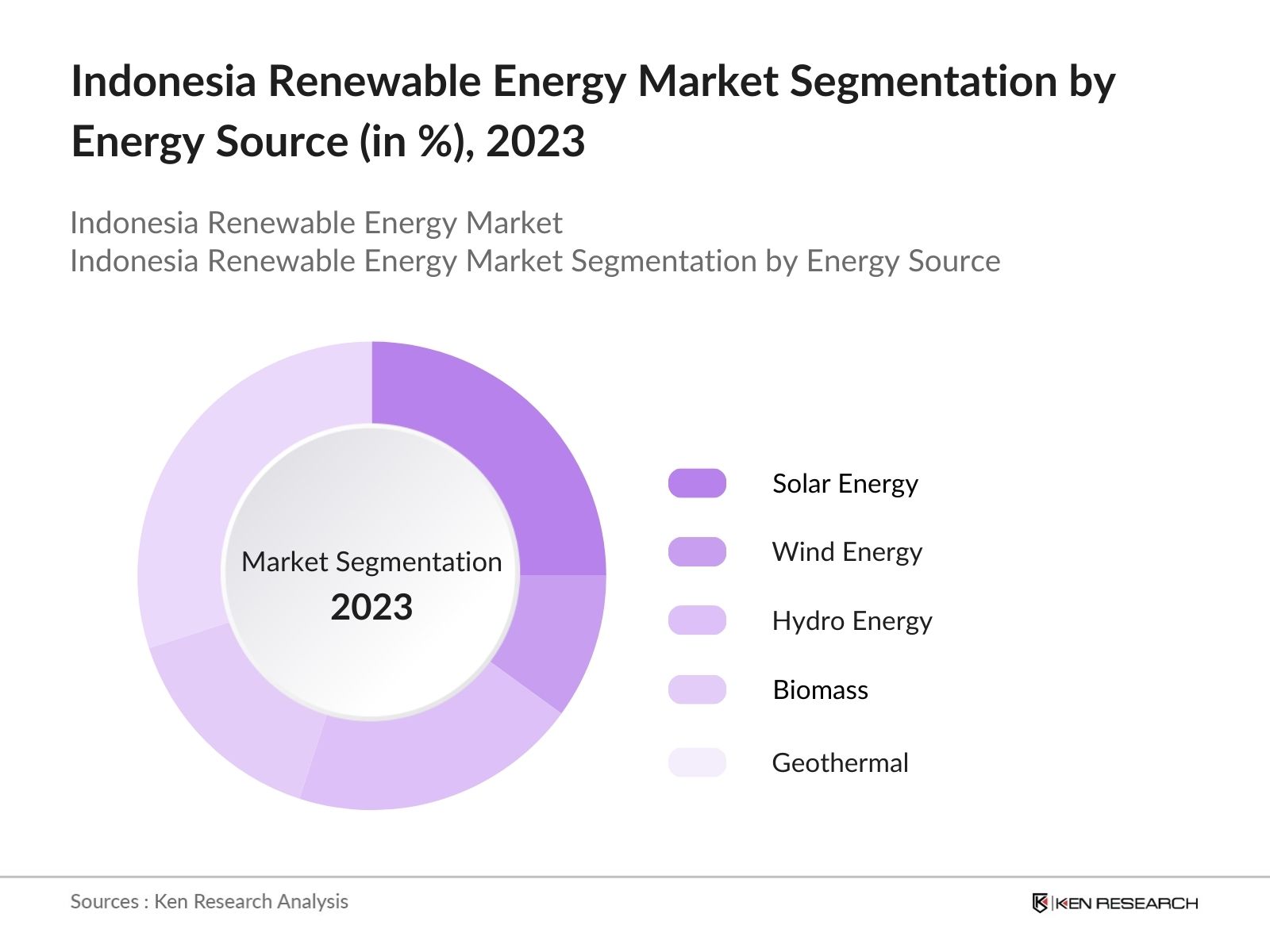
By Application: The market is also segmented by application into utility-scale renewable projects, commercial installations, residential installations, and off-grid systems. Utility-scale renewable projects account for the largest share due to the Indonesian governments push for large-scale renewable energy projects to meet growing energy demands. The utility-scale projects, particularly geothermal and hydropower, dominate as they provide a more stable and consistent energy supply compared to small-scale, intermittent solar or wind installations. These projects are crucial in fulfilling Indonesia's renewable energy targets.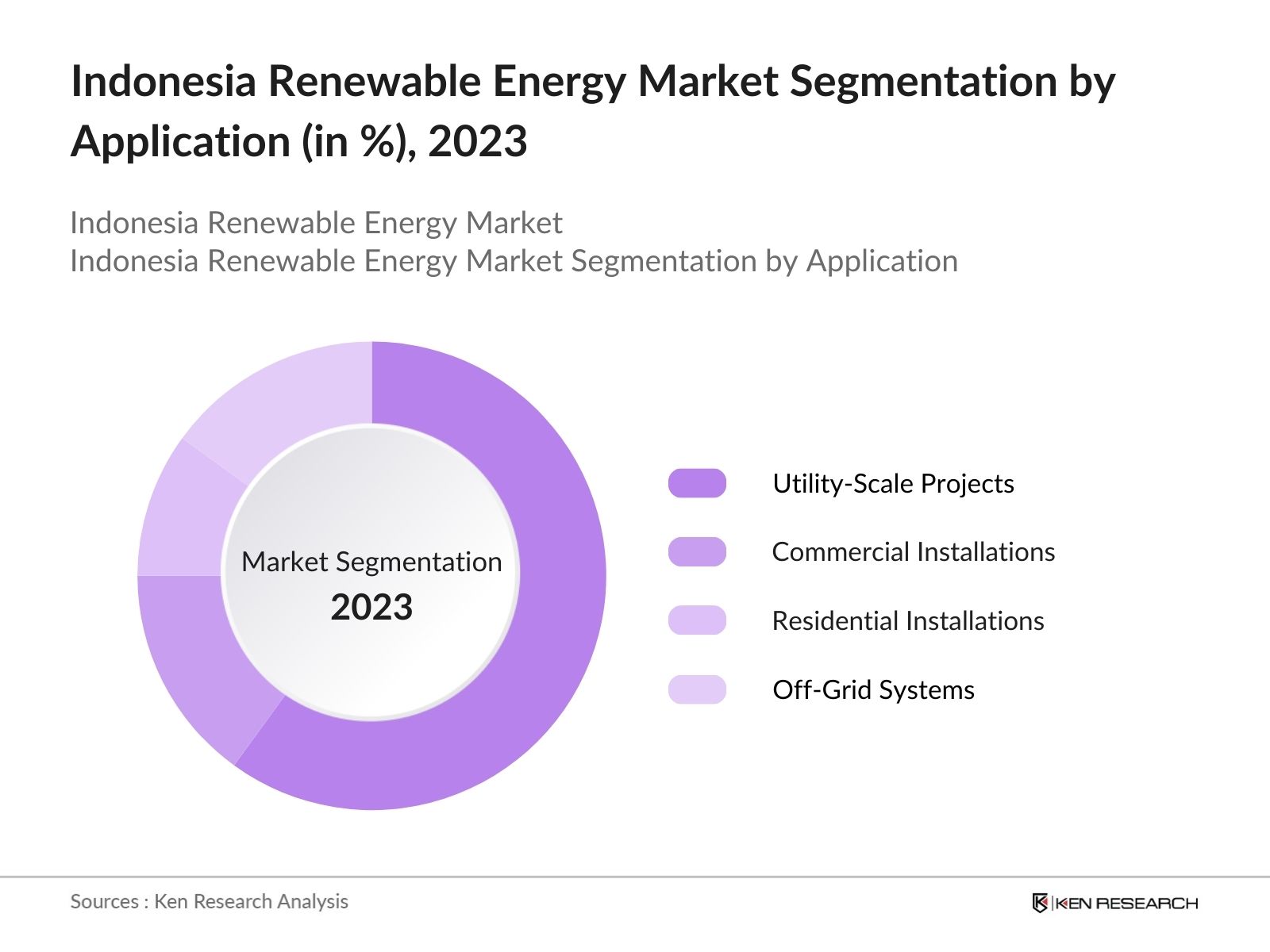
The Indonesia Renewable Energy market is dominated by a mix of domestic and international players who play a significant role in shaping the markets dynamics. Key players are involved in large-scale projects ranging from geothermal to solar energy, bolstered by foreign investments and government incentives. The competitive landscape is influenced by various strategic initiatives such as partnerships, mergers, and investment in cutting-edge renewable technologies.
|
Company |
Established |
Headquarters |
Number of Employees |
Revenue (USD Bn) |
Product Portfolio |
R&D Investment (USD Mn) |
Key Clients |
Global Reach |
Technological Innovations |
|
Pertamina |
1957 |
Jakarta, Indonesia |
|||||||
|
PLN (Perusahaan Listrik Negara) |
1965 |
Jakarta, Indonesia |
|||||||
|
Star Energy Geothermal |
2003 |
Jakarta, Indonesia |
|||||||
|
PT Supreme Energy |
2007 |
Jakarta, Indonesia |
|||||||
|
Engie Indonesia |
2005 |
Jakarta, Indonesia |
Indonesia Renewable Energy Market Growth Drivers
Market Challenges
Over the next few years, the Indonesia Renewable Energy market is expected to witness continued expansion, driven by the governments consistent efforts to meet renewable energy targets. The countrys energy policies focus on increasing the use of clean energy sources while reducing dependence on fossil fuels. Technological advancements, such as the deployment of storage solutions for intermittent renewables, and the increasing availability of green financing options, will likely fuel future growth. Additionally, regional collaborations and foreign investments will be instrumental in helping Indonesia achieve its energy transition goals.
Future Market Opportunities
|
By Energy Source |
Solar Wind Hydro Biomass Geothermal |
|
By Technology |
Photovoltaic Systems CSP Wind Turbines Hydro Plants Biomass Systems |
|
By Application |
Utility-Scale Commercial Industrial Residential Off-Grid |
|
By Region |
North East West South |
1.1. Definition and Scope
1.2. Market Taxonomy
1.3. Market Growth Rate (Renewable Energy Installed Capacity Growth, Contribution to Total Energy Mix, Investment Growth Rate)
1.4. Market Segmentation Overview
2.1. Historical Market Size (Renewable Energy Sector Investment, Installed Capacity - MW)
2.2. Year-On-Year Growth Analysis (Renewable Energy Generation, Energy Mix Shifts, Policy Driven Growth)
2.3. Key Market Developments and Milestones (Major Projects, Policy Milestones, International Collaborations)
3.1. Growth Drivers
3.1.1. Government Regulations (Renewable Energy Targets, National Energy Policy)
3.1.2. Declining Technology Costs (Solar PV, Wind, Hydro)
3.1.3. Increasing Energy Demand (Population Growth, Electrification Rate)
3.1.4. Foreign Direct Investments (FDI) (FDI Regulations, Green Investment Incentives) 3.2. Market Challenges
3.2.1. Infrastructure Constraints (Grid Limitations, Transmission Losses)
3.2.2. Financing Issues (High Capital Expenditure, Risk Aversion)
3.2.3. Regulatory Uncertainty (Changing Policy Environment, Permitting Delays)
3.2.4. Land Acquisition and Environmental Concerns (Land Availability, Environmental Impact) 3.3. Opportunities
3.3.1. Rural Electrification (Off-Grid Solar, Micro-Hydro, Small-Scale Biomass)
3.3.2. International Funding and Collaboration (Multilateral Agency Investments, Climate Financing)
3.3.3. Technological Innovations (Energy Storage Solutions, Smart Grids, Digitalization)
3.3.4. Private Sector Participation (Public-Private Partnerships, Corporate PPA Models) 3.4. Trends
3.4.1. Hybrid Renewable Systems (Solar-Wind Hybrid, Solar-Storage Hybrid)
3.4.2. Floating Solar Projects (Innovative Solar Installations on Water Bodies)
3.4.3. Decentralized Energy Solutions (Microgrids, Distributed Generation)
3.4.4. Green Hydrogen Projects (Emerging Hydrogen Sector, Energy Storage Applications) 3.5. Government Regulation
3.5.1. Renewable Energy Laws and Mandates (Regulation No. 50/2017, Presidential Decree 22/2017)
3.5.2. Feed-in Tariffs (Solar, Wind, Biomass, Geothermal)
3.5.3. Energy Mix Targets (RUEN - National Energy Plan, 23% Renewable by 2025)
3.5.4. Tax and Investment Incentives (Tax Holidays, Reduced Import Duties for Equipment)
3.5.5. International Agreements (Paris Agreement Commitments, ASEAN Clean Energy Agenda) 3.6. SWOT Analysis
3.7. Stakeholder Ecosystem (Energy Producers, Investors, Regulatory Authorities, NGOs)
3.8. Porters Five Forces
3.8.1. Bargaining Power of Suppliers (Equipment Manufacturers, Raw Materials Providers)
3.8.2. Bargaining Power of Buyers (State-Owned Enterprises, Private Offtakers)
3.8.3. Threat of Substitutes (Traditional Energy Sources)
3.8.4. Threat of New Entrants (Market Entry Barriers, Technological Competence)
3.8.5. Competitive Rivalry (Competition among Solar, Wind, Geothermal, Biomass Energy Providers) 3.9. Competition Ecosystem (Major Companies in Solar, Wind, Biomass, Geothermal)
4.1. By Energy Type (In Value %)
4.1.1. Solar
4.1.2. Wind
4.1.3. Hydro
4.1.4. Biomass
4.1.5. Geothermal
4.2. By Application (In Value %)
4.2.1. Residential
4.2.2. Commercial
4.2.3. Industrial
4.2.4. Utility-Scale Projects
4.3. By Region (In Value %)
4.3.1. Java
4.3.2. Sumatra
4.3.3. Kalimantan
4.3.4. Sulawesi
4.3.5. Bali & Nusa Tenggara
4.4. By Project Scale (In Value %)
4.4.1. Small-Scale Projects
4.4.2. Large-Scale Projects
4.4.3. Microgrid Projects
4.5. By Financing Source (In Value %)
4.5.1. Government Funding
4.5.2. Private Investment
4.5.3. Multilateral Agencies
4.5.4. Green Bonds and ESG Investment
5.1. Detailed Profiles of Major Companies
5.1.1. PT PLN (Persero)
5.1.2. Star Energy
5.1.3. Pertamina Geothermal Energy
5.1.4. Medco Power Indonesia
5.1.5. Terregra Asia Energy
5.1.6. Akuo Energy Indonesia
5.1.7. Supreme Energy
5.1.8. Vena Energy
5.1.9. Adaro Power
5.1.10. Cirebon Energi Prasarana
5.1.11. Northstar Pacific
5.1.12. PT Bukit Asam
5.1.13. Sumberdaya Sewatama
5.1.14. PT Pertamina (Renewables)
5.1.15. New Energy Nexus Indonesia
5.2. Cross Comparison Parameters
5.2.1. Installed Capacity (MW)
5.2.2. Number of Projects
5.2.3. Revenue (USD Bn)
5.2.4. Project Pipeline (MW)
5.2.5. Market Share
5.2.6. Strategic Partnerships
5.2.7. International Collaborations
5.2.8. Regional Presence 5.3. Market Share Analysis
5.4. Strategic Initiatives
5.5. Mergers and Acquisitions
5.6. Investment Analysis
5.7. Venture Capital Funding
5.8. Government Grants
5.9. Private Equity Investments
6.1. Renewable Energy Certification (Sustainability Certification, IRENA Initiatives)
6.2. Environmental Impact Assessments
6.3. Compliance Requirements (Environmental Licensing, Grid Access Regulations)
6.4. Local Content Requirements
6.5. Power Purchase Agreements (PPA) Guidelines
7.1. Future Market Size Projections
7.2. Key Factors Driving Future Market Growth
8.1. By Energy Type (In Value %)
8.2. By Application (In Value %)
8.3. By Region (In Value %)
8.4. By Project Scale (In Value %)
8.5. By Financing Source (In Value %)
9.1. TAM/SAM/SOM Analysis
9.2. Customer Cohort Analysis
9.3. White Space Opportunity Analysis
9.4. Key Market Entry Strategies
The initial step includes a comprehensive ecosystem mapping of all key stakeholders in the Indonesia Renewable Energy market. This is achieved through extensive desk research utilizing proprietary databases to identify critical variables, such as energy generation capacity, project pipeline, and regulatory frameworks.
Historical data on Indonesias renewable energy sector is compiled and analyzed, focusing on capacity addition and revenue generation trends. This analysis also examines the influence of government initiatives and investment patterns on the markets development.
Market hypotheses are formulated based on the data collected and validated through structured interviews with industry experts. These consultations provide practical insights into the operational dynamics of renewable energy projects in Indonesia.
The final phase integrates all data collected from primary and secondary research sources, followed by verification through interviews with renewable energy firms. This ensures the accuracy and comprehensiveness of the market analysis provided.
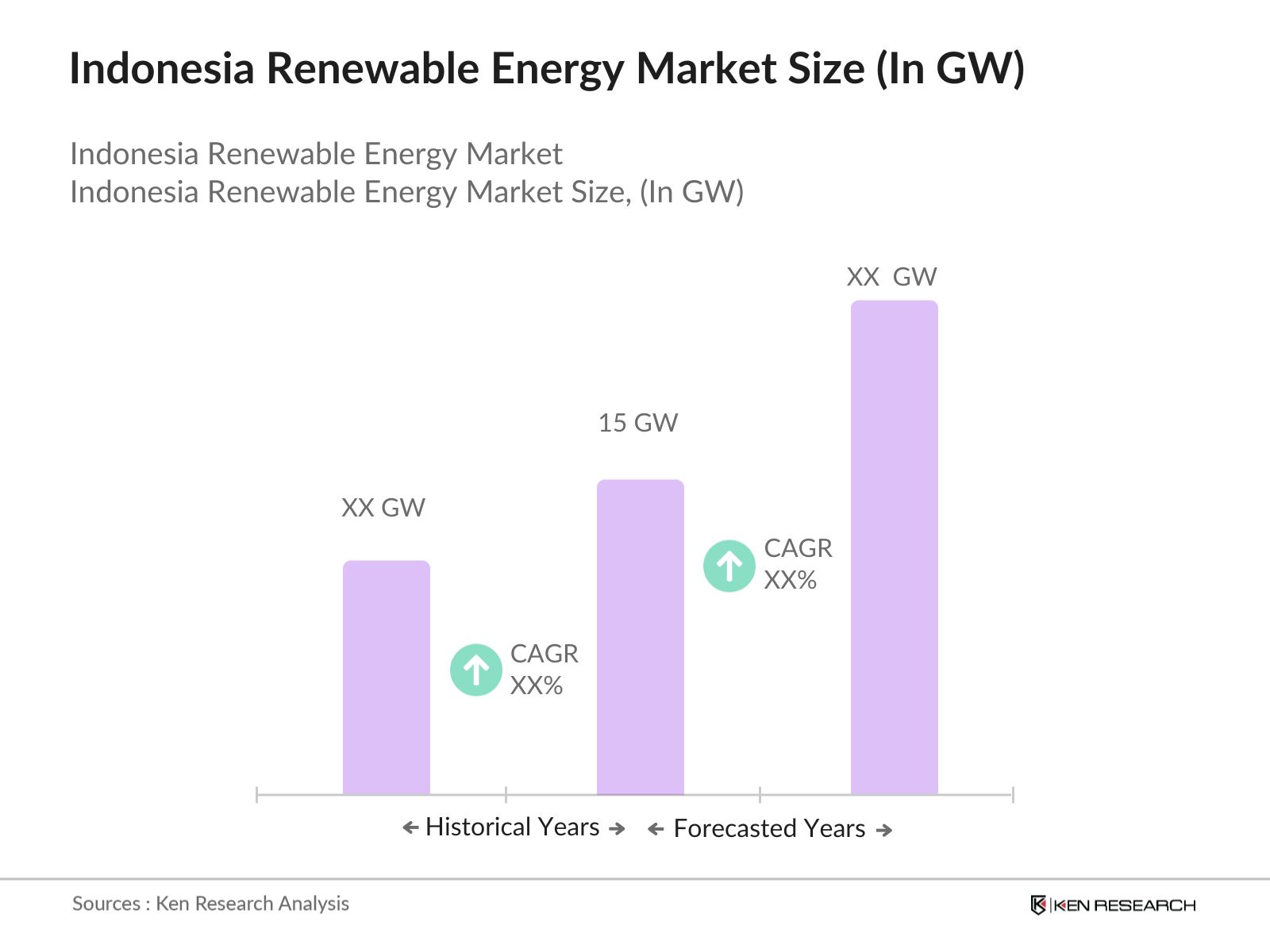
The Indonesia Renewable Energy market size in terms of installed based is expected to grow 15 Gigawatts, driven by government efforts to increase the share of renewable energy in the energy mix and significant foreign investments in solar and geothermal projects.
Challenges include regulatory hurdles, lack of grid infrastructure, and high initial capital costs. Additionally, the intermittent nature of renewable energy sources such as solar and wind poses a challenge for energy reliability.
Key players in the market include Pertamina, PLN, Star Energy Geothermal, PT Supreme Energy, and Medco Power Indonesia. These companies dominate due to their involvement in large-scale projects and strategic investments.
The market is driven by government renewable energy targets, decreasing costs of renewable technologies, and foreign investments. Off-grid solutions and rural electrification initiatives are also playing a crucial role in market expansion.
Geothermal and utility-scale renewable projects dominate the market, driven by Indonesias vast geothermal resources and government initiatives aimed at promoting large-scale renewable energy projects to meet the countrys energy needs.

What makes us stand out is that our consultants follows Robust, Refine and Result (RRR) methodology. i.e. Robust for clear definitions, approaches and sanity checking, Refine for differentiating respondents facts and opinions and Result for presenting data with story

We have set a benchmark in the industry by offering our clients with syndicated and customized market research reports featuring coverage of entire market as well as meticulous research and analyst insights.

While we don't replace traditional research, we flip the method upside down. Our dual approach of Top Bottom & Bottom Top ensures quality deliverable by not just verifying company fundamentals but also looking at the sector and macroeconomic factors.

With one step in the future, our research team constantly tries to show you the bigger picture. We help with some of the tough questions you may encounter along the way: How is the industry positioned? Best marketing channel? KPI's of competitors? By aligning every element, we help maximize success.

Our report gives you instant access to the answers and sources that other companies might choose to hide. We elaborate each steps of research methodology we have used and showcase you the sample size to earn your trust.

If you need any support, we are here! We pride ourselves on universe strength, data quality, and quick, friendly, and professional service.