
Indonesia Software Market Outlook to 2030
Region:Indonesia
Author(s):Meenakshi Bisht
Product Code:KROD5888
Region:Indonesia
Author(s):Meenakshi Bisht
Product Code:KROD5888
December 2024
93
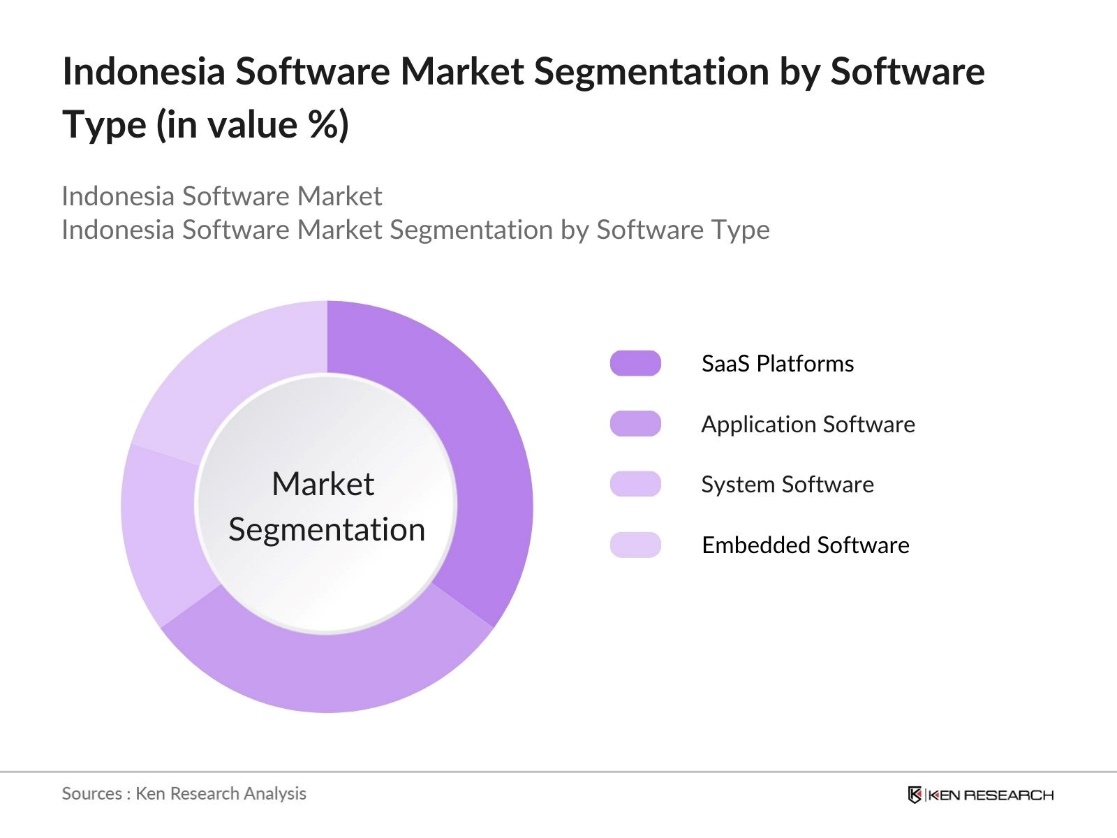
By Software Type: The Indonesia Software Market is segmented by software type into system software, application software, embedded software, and SaaS platforms. SaaS platforms hold a dominant market share due to the flexibility, cost-efficiency, and scalability they provide for businesses of all sizes. The subscription-based model of SaaS platforms, combined with the growing need for remote work solutions, is contributing to its rising popularity. This trend is further accelerated by the increasing digital transformation across industries such as banking, e-commerce, and retail.
By End-User Industry: The Indonesia Software Market is also segmented by end-user industry into healthcare, banking & financial services, education, government, and manufacturing. The banking & financial services industry leads this segment, as financial institutions continue to invest heavily in advanced software solutions to enhance customer experience, ensure security, and streamline operations. The rise of fintech and digital banking services further drives demand for cutting-edge software solutions in this sector.

The market is shaped by a mix of global giants and local players, with intense competition driving innovation. Major global software providers like Microsoft and Oracle have established a significant presence in Indonesia, leveraging their cloud solutions and enterprise software portfolios. Local IT companies are also rising in prominence by offering localized solutions that cater to Indonesias unique business environment and regulatory landscape.
|
Company Name |
Establishment Year |
Headquarters |
Software Focus |
Revenue (USD Bn) |
Key Products |
Cloud Service Adoption |
Number of Employees |
Geographic Presence |
|
Microsoft Indonesia |
1995 |
Jakarta |
||||||
|
Oracle Indonesia |
1989 |
Jakarta |
||||||
|
SAP Indonesia |
1999 |
Jakarta |
||||||
|
PT Telkom Indonesia |
1965 |
Jakarta |
||||||
|
PT Google Cloud Indonesia |
2015 |
Jakarta |
Over the next few years, the Indonesia Software Market is expected to witness significant growth driven by the continuous digital transformation initiatives, increasing demand for cloud-based services, and the rapid growth of e-commerce and fintech industries. With the government actively supporting IT infrastructure development and digital literacy programs, businesses across various sectors are embracing software solutions to optimize operations and enhance productivity.
|
By Software Type |
System Software Application Software Embedded Software SaaS Platforms |
|
By End-User Industry |
Healthcare Banking & Financial Services Education Government Manufacturing |
|
By Deployment Model |
On-Premise Cloud-Base Hybrid |
|
By Enterprise Size |
Small & Medium Enterprises (SMEs) Large Enterprises |
|
By Region |
Java Sumatra Kalimantan Sulawesi Papua |
1.1. Definition and Scope
1.2. Market Taxonomy
1.3. Market Growth Rate
1.4. Market Segmentation Overview
2.1. Historical Market Size
2.2. Year-On-Year Growth Analysis
2.3. Key Market Developments and Milestones
3.1. Growth Drivers (Cloud Adoption, Digital Transformation Initiatives, Government Policies)
3.1.1. Increasing Demand for Cloud-Based Solutions
3.1.2. Growing Digitalization Across Industries
3.1.3. Favorable Government Policies for IT Sector Development
3.1.4. Expanding Tech Start-up Ecosystem
3.2. Market Challenges (High Software Licensing Costs, Skills Gap)
3.2.1. High Licensing and Maintenance Costs for Advanced Software
3.2.2. Limited Availability of Skilled Software Developers
3.2.3. Slow Adoption of New Technologies by SMEs
3.2.4. Cybersecurity Concerns
3.3. Opportunities (Rising Demand for SaaS, Digital Government Programs)
3.3.1. Growth of Software-as-a-Service (SaaS) Market
3.3.2. Government Initiatives Supporting E-Governance and Digital Services
3.3.3. Opportunities in Mobile App Development
3.3.4. Integration of AI and Automation Technologies
3.4. Trends (Cloud-Native Applications, Remote Work Tools)
3.4.1. Adoption of Cloud-Native Applications
3.4.2. Increasing Use of Remote Work and Collaboration Tools
3.4.3. Growth in Custom Software Development Services
3.4.4. Rise in Open-Source Software Adoption
3.5. Government Regulations (Digital Economy Policies, Data Protection)
3.5.1. Digital Economy Regulations by Indonesia Government
3.5.2. Data Protection and Cybersecurity Laws
3.5.3. Compliance Standards for Software Licensing
3.5.4. Tax Incentives for IT Sector
3.6. SWOT Analysis (Strengths, Weaknesses, Opportunities, Threats)
3.7. Stakeholder Ecosystem (Developers, SaaS Providers, IT Consultants)
3.8. Porters Five Forces Analysis (Competitive Rivalry, Threat of New Entrants)
3.9. Competitive Landscape Analysis
4.1. By Software Type (In Value %)
4.1.1. System Software
4.1.2. Application Software
4.1.3. Embedded Software
4.1.4. SaaS Platforms
4.2. By End-User Industry (In Value %)
4.2.1. Healthcare
4.2.2. Banking & Financial Services
4.2.3. Education
4.2.4. Government
4.2.5. Manufacturing
4.3. By Deployment Model (In Value %)
4.3.1. On-Premise
4.3.2. Cloud-Based
4.3.3. Hybrid
4.4. By Enterprise Size (In Value %)
4.4.1. Small & Medium Enterprises (SMEs)
4.4.2. Large Enterprises
4.5. By Region (In Value %)
4.5.1. Java
4.5.2. Sumatra
4.5.3. Kalimantan
4.5.4. Sulawesi
4.5.5. Papua
5.1. Detailed Profiles of Major Companies
5.1.1. Microsoft Indonesia
5.1.2. Oracle Indonesia
5.1.3. SAP Indonesia
5.1.4. PT NetApp Indonesia
5.1.5. PT IBM Indonesia
5.1.6. PT Accenture Indonesia
5.1.7. PT Google Cloud Indonesia
5.1.8. PT Dell Technologies Indonesia
5.1.9. Fujitsu Indonesia
5.1.10. PT Alibaba Cloud Indonesia
5.1.11. Red Hat Indonesia
5.1.12. PT Salesforce Indonesia
5.1.13. Infosys Technologies Indonesia
5.1.14. PT Huawei Technologies Indonesia
5.1.15. PT VMWare Indonesia
5.2. Cross Comparison Parameters (Revenue, Number of Employees, Software Portfolio, Cloud Services Adoption, Customer Base, Data Center Presence, Market Penetration, Geographic Reach)
5.3. Market Share Analysis (In Value %)
5.4. Strategic Initiatives (R&D Investments, Cloud Expansion, Local Partnerships)
5.5. Mergers and Acquisitions
5.6. Investment Analysis (Venture Capital, Private Equity)
5.7. Government Grants and Tax Incentives
5.8. Private Equity Investments
6.1. Data Localization Laws
6.2. Intellectual Property Rights in Software
6.3. Licensing and Compliance Standards
6.4. Open-Source Software Regulations
7.1. Future Market Size Projections
7.2. Key Factors Driving Future Market Growth
8.1. TAM/SAM/SOM Analysis
8.2. Customer Cohort Analysis
8.3. Marketing Initiatives
8.4. White Space Opportunity Analysis
The initial step involved developing an ecosystem map for the Indonesia Software Market, identifying major stakeholders and analyzing market drivers. This phase included extensive desk research, utilizing proprietary databases, government reports, and secondary data from industry bodies to gather relevant insights.
This phase focused on compiling historical data related to the market, evaluating the penetration of software solutions in various industries, and assessing revenue generation trends. A thorough analysis of software usage across industries helped in constructing a reliable revenue model.
Market hypotheses were validated through interviews with industry experts, including software developers and IT service providers, ensuring that the data was grounded in practical insights. These consultations provided critical operational and financial information.
The final stage involved synthesizing all collected data, refining the market estimates, and producing a comprehensive analysis. Direct consultations with software vendors ensured the reliability of the market projections, aligning them with the bottom-up approach used for the study.
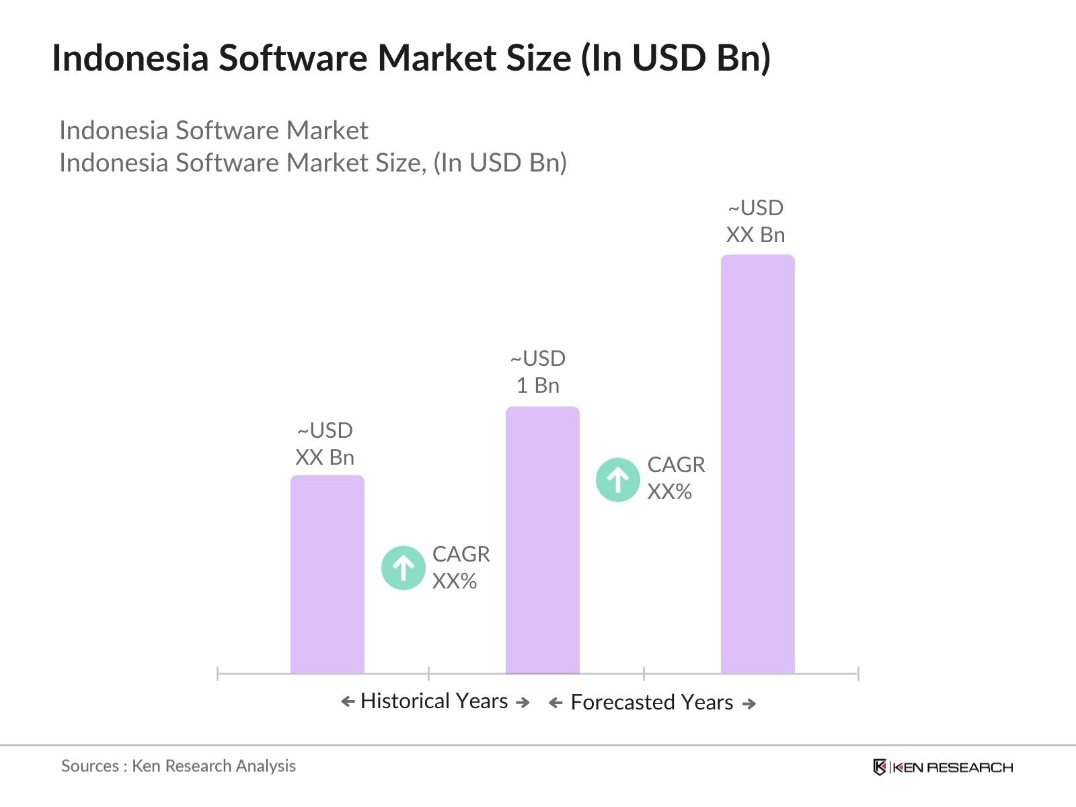
The Indonesia Software Market is valued at USD 1 billion, driven by growing demand for cloud-based solutions and software-as-a-service platforms across industries like banking, healthcare, and education.
Key challenges in Indonesia Software Market include the high cost of advanced software licenses, a shortage of skilled developers, and cybersecurity concerns, which have hindered the adoption of new technologies by small and medium enterprises.
Major players in Indonesia Software Market include Microsoft Indonesia, Oracle Indonesia, PT Telkom Indonesia, SAP Indonesia, and PT Google Cloud Indonesia, dominating due to their strong cloud offerings and extensive market presence.
The Indonesia Software Market growth is driven by increasing digital transformation initiatives, growing adoption of cloud-based services, and government policies aimed at supporting IT infrastructure development.

What makes us stand out is that our consultants follows Robust, Refine and Result (RRR) methodology. i.e. Robust for clear definitions, approaches and sanity checking, Refine for differentiating respondents facts and opinions and Result for presenting data with story

We have set a benchmark in the industry by offering our clients with syndicated and customized market research reports featuring coverage of entire market as well as meticulous research and analyst insights.

While we don't replace traditional research, we flip the method upside down. Our dual approach of Top Bottom & Bottom Top ensures quality deliverable by not just verifying company fundamentals but also looking at the sector and macroeconomic factors.

With one step in the future, our research team constantly tries to show you the bigger picture. We help with some of the tough questions you may encounter along the way: How is the industry positioned? Best marketing channel? KPI's of competitors? By aligning every element, we help maximize success.

Our report gives you instant access to the answers and sources that other companies might choose to hide. We elaborate each steps of research methodology we have used and showcase you the sample size to earn your trust.

If you need any support, we are here! We pride ourselves on universe strength, data quality, and quick, friendly, and professional service.