















Indonesia Stone Market Outlook to 2029
Region:Asia
Author(s):Rebecca Mary Reji
Product Code:KRO031
June 2025
90
About the Report
Indonesia Stone Market Overview
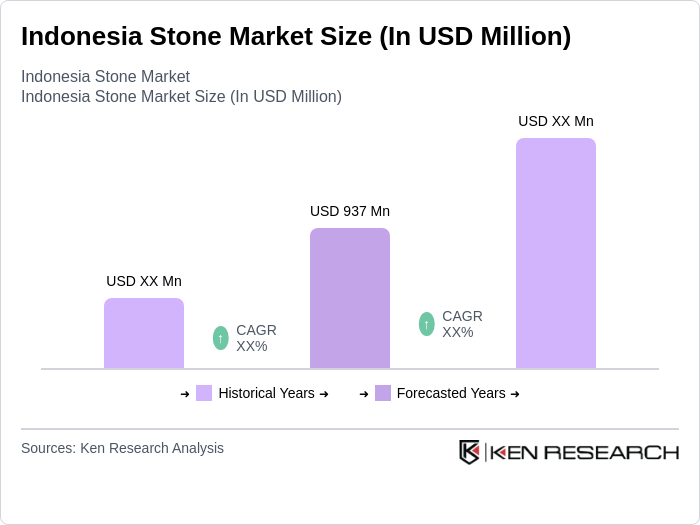
- The Indonesia stone market was valued at USD 937 million. Growth is driven by booming construction, rising demand for decorative stones, and expanding infrastructure projects, with natural stones favored for residential and commercial uses due to their durability and aesthetic appeal.
- The key players in Indonesia’s natural stone market include Jakarta, Surabaya, and Bandung. Jakarta leads due to urbanization and infrastructure development, driving high demand. Surabaya and Bandung benefit from proximity to abundant stone quarries and a growing middle class, fueling demand for quality stone products. These cities dominate due to strategic locations and robust construction activities supporting market growth.
- The Indonesian government has not specifically implemented new 2023 regulations mandating environmental impact assessments or incentives exclusively for sustainable stone mining. However, recent regulatory updates, including Government Regulation and amendments to mining laws, focus on improving mining area management, legal certainty, and promoting domestic mineral processing, indirectly supporting sustainable practices in the mining sector.
Indonesia Stone Market Segmentation
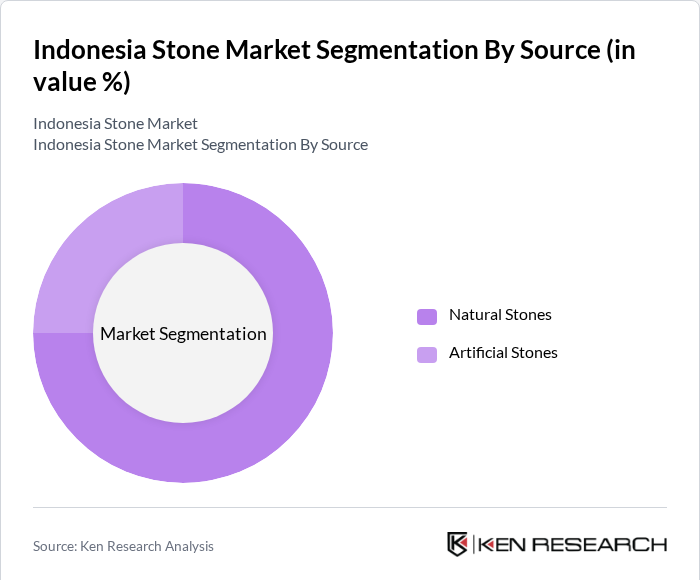
By Source: The market is segmented into natural stones and artificial stones. Natural stones, including granite, marble, and limestone, dominate the market due to their aesthetic appeal and durability. The increasing trend of using natural stones in residential and commercial projects, driven by consumer preferences for sustainable materials, has led to a significant rise in their demand. Artificial stones, while gaining traction due to their cost-effectiveness and versatility, still lag behind in market share compared to natural stones.
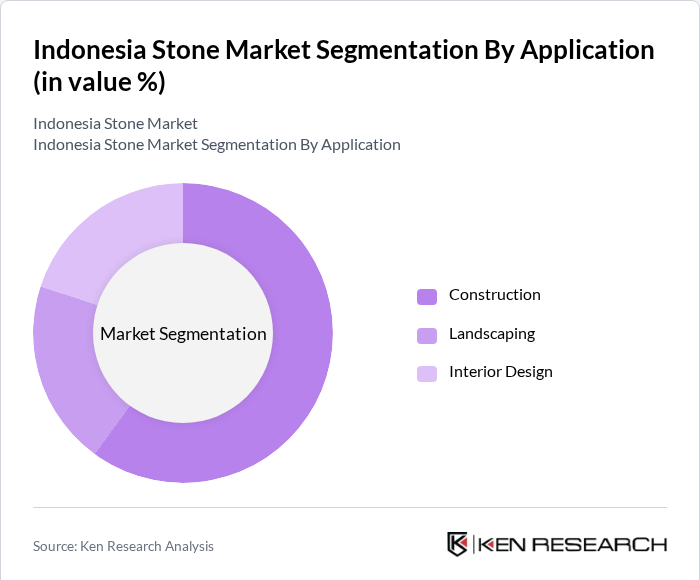
By Application: The primary applications of stone in the market include construction, landscaping, and interior design. The construction segment holds the largest share, driven by the ongoing infrastructure projects and urban development initiatives across Indonesia. The demand for stones in landscaping and interior design is also on the rise, as consumers increasingly seek to enhance the aesthetic appeal of their properties. This trend is particularly evident in urban areas where outdoor spaces are being transformed into green landscapes.
Indonesia Stone Market Competitive Landscape
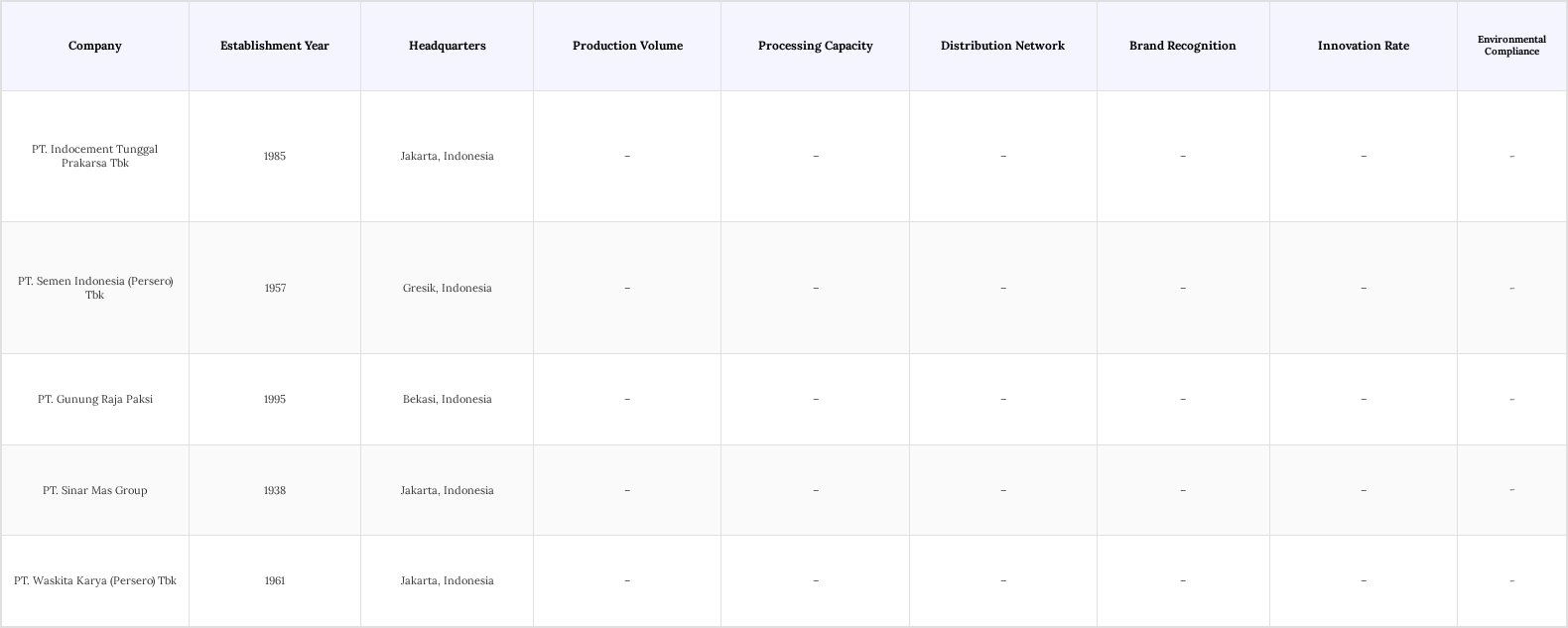
The Indonesia Stone Market is characterized by a competitive landscape with several key players, including PT. Indocement Tunggal Prakarsa Tbk, PT. Semen Indonesia (Persero) Tbk, and PT. Gunung Raja Paksi. These companies are known for their extensive product portfolios and strong distribution networks, which enable them to meet the growing demand for stone products in various applications.
Indonesia Stone Market Industry Analysis
Growth Drivers
- Increasing Demand for Construction Materials: Indonesia’s construction sector is growing steadily, supported by substantial government infrastructure projects and rising private investments. The population is expected to reach approximately 277 million by 2024, increasing the need for housing and commercial developments. This urbanization and economic growth are driving demand for stone materials used in foundations, facades, and landscaping. Major projects like the new capital city, Nusantara, and extensive road and transportation initiatives further propel the market, significantly boosting demand for construction materials nationwide.
- Rising Urbanization and Infrastructure Development: Indonesia’s urban population is projected to reach around 165.7 million in 2024, accounting for approximately 59% of the total population. This rapid urbanization drives extensive infrastructure development, including roads, bridges, and public facilities. The government’s commitment to investing USD 450 billion in infrastructure over the next five years further boosts demand for stone products, which are essential for these projects. This combination of urban growth and massive infrastructure spending is a key driver of expansion in Indonesia’s stone industry.
- Growing Interest in Sustainable Building Practices: Sustainability is gaining momentum in Indonesia’s construction sector, with green building certifications increasing by about 15% annually. Builders and consumers are prioritizing eco-friendly materials and energy-efficient designs, aligning with the government’s Net Zero Emissions goals. Natural stone, valued for its environmental benefits and durability, is increasingly used in sustainable projects. This shift supports market growth and reflects broader trends toward green construction, driven by rising environmental awareness, regulatory support, and initiatives like the “3 Million Houses” program promoting affordable, sustainable housing.
Market Challenges
- Fluctuating Raw Material Prices: The stone market faces challenges due to the volatility in raw material prices. Factors such as global supply chain disruptions and changes in mining regulations contribute to this instability. Such price fluctuations can impact profit margins for manufacturers and lead to increased costs for consumers, posing a significant challenge to market stability and growth.
- Environmental Regulations and Compliance Costs: The Indonesia stone market faces challenges due to increasing environmental regulations and stricter mining laws. These regulations require companies to invest in sustainable mining practices, pollution control, and land rehabilitation, which increases operational costs
Indonesia Stone Market Future Outlook
The Indonesia stone market is poised for significant growth, driven by ongoing urbanization and a shift towards sustainable construction practices. As the government continues to invest in infrastructure, the demand for stone products is expected to rise. Additionally, technological advancements in stone processing will enhance product quality and efficiency. Companies that adapt to these trends and focus on eco-friendly solutions will likely capture a larger market share, positioning themselves favorably for future opportunities.
Market Opportunities
- Expansion into Emerging Markets: The Indonesia stone market is expected to grow annually by urbanization and infrastructure development. Emerging Southeast Asian markets, fueled by rising middle-class income, offer stone manufacturers significant opportunities, with regional demand growth supporting expansion and increased sales in construction materials across developing economies.
- Technological Advancements in Stone Processing: Innovations in stone processing technology, including automated cutting and advanced finishing, can reduce production costs by up to 25-27%, enhancing efficiency and product quality. These advancements enable companies to offer customized stone products, meeting growing demand in the interior design and construction sectors while improving profit margins and competitive positioning in the Indonesia stone market.
Scope of the Report
| By Source |
Natural Stones Artificial Stones |
| By Application |
Construction Landscaping Interior Design |
| By Region |
Java Bali Sumatra Kalimantan |
| By End-User |
Residential Commercial Industrial |
| By Distribution Channel |
Direct Sales Online Sales Retail Stores |
Products
Key Target Audience
Investors and Venture Capitalist Firms
Government and Regulatory Bodies (e.g., Ministry of Energy and Mineral Resources, Ministry of Environment and Forestry)
Manufacturers and Producers
Distributors and Retailers
Construction and Infrastructure Companies
Architectural and Design Firms
Mining and Quarrying Companies
Financial Institutions
Companies
Players Mentioned in the Report:
PT. Indocement Tunggal Prakarsa Tbk
PT. Semen Indonesia (Persero) Tbk
PT. Gunung Raja Paksi
PT. Sinar Mas Group
PT. Waskita Karya (Persero) Tbk
PT. Batu Alam Indonesia
PT. Cipta Granit Mandiri
PT. Nusantara Stoneworks
PT. Gemilang Marmer
PT. Bumi Batu Konstruksi
Table of Contents
1. Indonesia Stone Market Overview
1.1. Definition and Scope
1.2. Market Taxonomy
1.3. Market Growth Rate
1.4. Market Segmentation Overview
2. Indonesia Stone Market Size (In USD Mn)
2.1. Historical Market Size
2.2. Year-On-Year Growth Analysis
2.3. Key Market Developments and Milestones
3. Indonesia Stone Market Analysis
3.1. Growth Drivers
3.1.1. Increasing Demand for Construction Materials
3.1.2. Rising Urbanization and Infrastructure Development
3.1.3. Growing Interest in Sustainable Building Practices
3.2. Market Challenges
3.2.1. Fluctuating Raw Material Prices
3.2.2. Environmental Regulations and Compliance Costs
3.2.3. Competition from Alternative Materials
3.3. Opportunities
3.3.1. Expansion into Emerging Markets
3.3.2. Technological Advancements in Stone Processing
3.3.3. Increasing Popularity of Natural Stone in Interior Design
3.4. Trends
3.4.1. Shift Towards Eco-Friendly Stone Products
3.4.2. Customization and Personalization in Stone Applications
3.4.3. Growth of Online Sales Channels for Stone Products
3.5. Government Regulation
3.5.1. Mining and Extraction Regulations
3.5.2. Environmental Protection Laws
3.5.3. Quality Standards for Stone Products
3.5.4. Trade Policies Affecting Stone Imports and Exports
3.6. SWOT Analysis
3.7. Stake Ecosystem
3.8. Porter’s Five Forces
3.9. Competition Ecosystem
4. Indonesia Stone Market Segmentation
4.1. By Source
4.1.1. Natural Stones
4.1.2. Artificial Stones
4.2. By Application
4.2.1. Construction
4.2.2. Landscaping
4.2.3. Interior Design
4.3. By Region
4.3.1. Java
4.3.2. Bali
4.3.3. Sumatra
4.3.4. Kalimantan
4.4. By End-User
4.4.1. Residential
4.4.2. Commercial
4.4.3. Industrial
4.5. By Distribution Channel
4.5.1. Direct Sales
4.5.2. Online Sales
4.5.3. Retail Stores
5. Indonesia Stone Market Competitive Analysis
5.1. Detailed Profiles of Major Companies
5.1.1. PT. Indocement Tunggal Prakarsa Tbk
5.1.2. PT. Semen Indonesia (Persero) Tbk
5.1.3. PT. Gunung Raja Paksi
5.1.4. PT. Sinar Mas Group
5.1.5. PT. Waskita Karya (Persero) Tbk
5.1.6. PT. Batu Alam Indonesia
5.1.7. PT. Cipta Granit Mandiri
5.1.8. PT. Nusantara Stoneworks
5.1.9. PT. Gemilang Marmer
5.1.10. PT. Bumi Batu Konstruksi
5.2. Cross-Comparison Parameters
5.2.1. Market Share
5.2.2. Revenue Growth Rate
5.2.3. Product Range and Innovation
5.2.4. Customer Satisfaction Ratings
5.2.5. Distribution Network Efficiency
5.2.6. Brand Recognition and Reputation
5.2.7. Sustainability Practices
5.2.8. Pricing Strategies
6. Indonesia Stone Market Regulatory Framework
6.1. Environmental Standards
6.2. Compliance Requirements
6.3. Certification Processes
7. Indonesia Stone Market Future Market Size (In USD Mn)
7.1. Future Market Size Projections
7.2. Key Factors Driving Future Market Growth
8. Indonesia Stone Market Future Market Segmentation
8.1. By Source
8.1.1. Natural Stones
8.1.2. Artificial Stones
8.2. By Application
8.2.1. Construction
8.2.2. Landscaping
8.2.3. Interior Design
8.3. By Region
8.3.1. Java
8.3.2. Bali
8.3.3. Sumatra
8.3.4. Kalimantan
8.4. By End-User
8.4.1. Residential
8.4.2. Commercial
8.4.3. Industrial
8.5. By Distribution Channel
8.5.1. Direct Sales
8.5.2. Online Sales
8.5.3. Retail Stores
9. Indonesia Stone Market Analysts’ Recommendations
9.1. TAM/SAM/SOM Analysis
9.2. Customer Cohort Analysis
9.3. Marketing Initiatives
9.4. White Space Opportunity Analysis
Research Methodology
Step 1: Identification of Key Variables
The initial phase involves mapping out the key players and stakeholders in the Indonesia Stone Market. This step relies on extensive desk research, utilizing secondary data sources such as industry reports, market studies, and government publications to gather relevant information. The goal is to pinpoint and define the essential variables that drive market behavior and trends.
Step 2: Market Analysis and Construction
In this phase, we will gather and analyze historical and current data related to the Indonesia Stone Market. This includes evaluating market size, growth rates, and segmentation by stone types and applications. Additionally, we will assess competitive dynamics and pricing strategies to construct a comprehensive market landscape.
Step 3: Hypothesis Validation and Expert Consultation
We will formulate market hypotheses based on preliminary findings and validate them through structured interviews with industry experts and stakeholders. These consultations will provide firsthand insights into market trends, challenges, and opportunities, enhancing the reliability of our data and conclusions.
Step 4: Research Synthesis and Final Output
The final phase will involve synthesizing all collected data and insights to produce a cohesive report on the Indonesia Stone Market. This will include detailed analyses of market trends, consumer behavior, and competitive positioning, ensuring that the final output is both comprehensive and actionable for stakeholders.
Frequently Asked Questions
01. How big is the Indonesia Stone Market?
The Indonesia Stone Market is valued at USD 937 million, driven by factors such as increasing demand, technological advancements, and supportive government initiatives.
02. What are the key challenges in the Indonesia Stone Market?
Key challenges in the Indonesia Stone Market include intense competition, regulatory complexities, and infrastructure limitations affecting market dynamics.
03. Who are the major players in the Indonesia Stone Market?
Major players in the Indonesia Stone Market include PT. Indocement Tunggal Prakarsa Tbk, PT. Semen Indonesia (Persero) Tbk, PT. Gunung Raja Paksi, PT. Sinar Mas Group, PT. Waskita Karya (Persero) Tbk, among others.
04. What are the growth drivers for the Indonesia Stone Market?
The primary growth drivers for the Indonesia Stone Market are increasing consumer demand, favorable policies, innovation, and substantial investment inflows.
Why Buy From Us?

What makes us stand out is that our consultants follows Robust, Refine and Result (RRR) methodology. i.e. Robust for clear definitions, approaches and sanity checking, Refine for differentiating respondents facts and opinions and Result for presenting data with story

We have set a benchmark in the industry by offering our clients with syndicated and customized market research reports featuring coverage of entire market as well as meticulous research and analyst insights.

While we don't replace traditional research, we flip the method upside down. Our dual approach of Top Bottom & Bottom Top ensures quality deliverable by not just verifying company fundamentals but also looking at the sector and macroeconomic factors.

With one step in the future, our research team constantly tries to show you the bigger picture. We help with some of the tough questions you may encounter along the way: How is the industry positioned? Best marketing channel? KPI's of competitors? By aligning every element, we help maximize success.

Our report gives you instant access to the answers and sources that other companies might choose to hide. We elaborate each steps of research methodology we have used and showcase you the sample size to earn your trust.

If you need any support, we are here! We pride ourselves on universe strength, data quality, and quick, friendly, and professional service.