















Indonesia Train Tickets Market Outlook to 2030
Region:Asia
Author(s):Paribhasha Tiwari
Product Code:KROD8443
November 2024
98
About the Report
Indonesia Train Tickets Market Overview
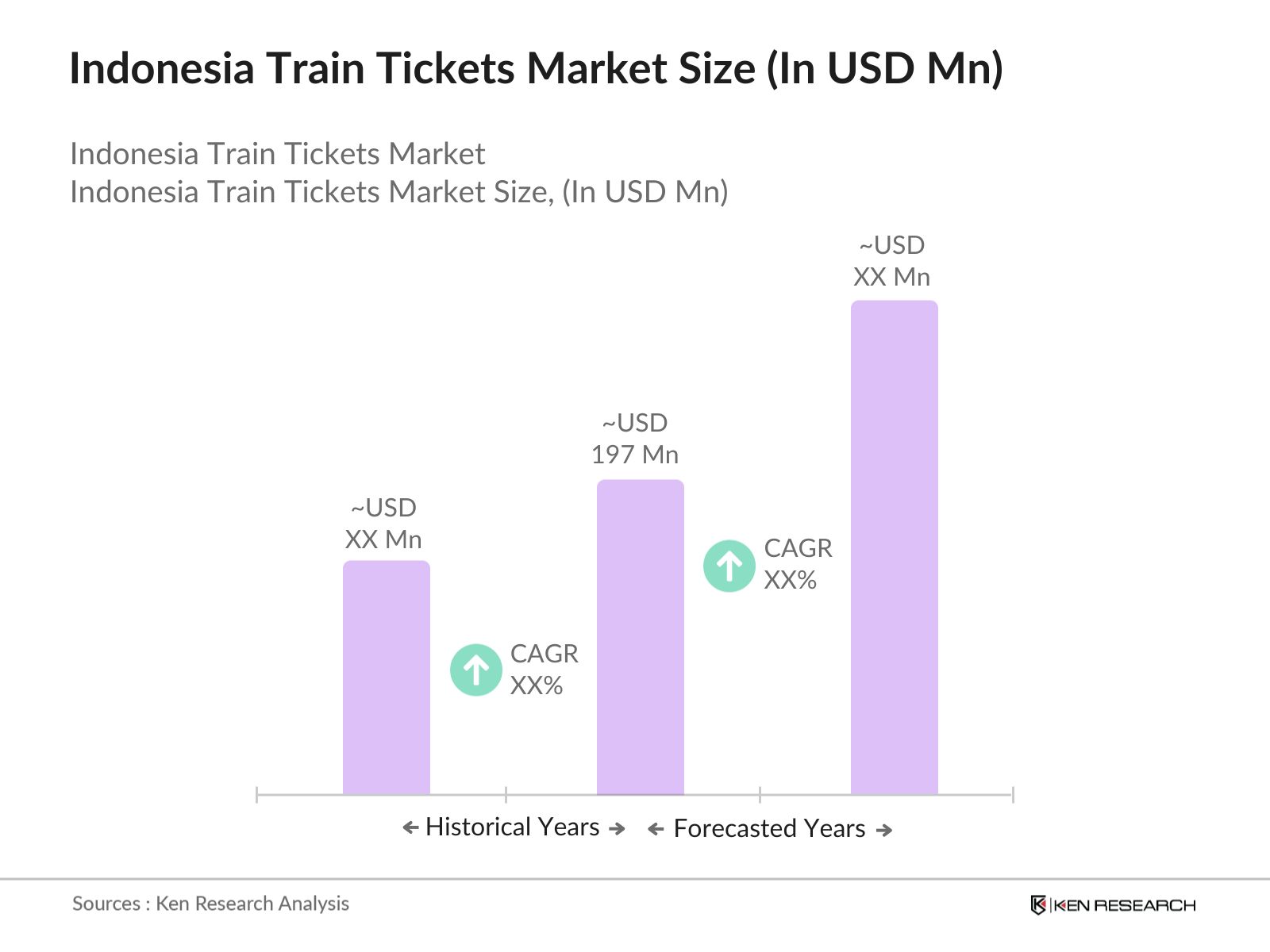
- The Indonesia Train Tickets Market, valued at USD 197 Million, has seen substantial growth driven by the rising demand for affordable transportation solutions among both local commuters and long-distance travelers. This market is highly influenced by government investments in rail infrastructure, particularly in urban centers like Jakarta, which have benefited from projects such as the MRT (Mass Rapid Transit) and LRT (Light Rail Transit). The adoption of digital payment solutions and online ticket booking platforms has also spurred market growth, simplifying the ticket purchasing process and attracting a broader customer base.
- Jakarta and Java dominate the Indonesia train tickets market due to their dense population and developed rail networks. These regions have a high concentration of daily commuters, driving significant demand for rail services, particularly for short-distance travel. Jakarta's ongoing rail infrastructure developments, such as the Jabodetabek commuter rail system, enhance connectivity within Greater Jakarta, further contributing to the region's dominance. Additionally, Javas intercity rail network, connecting major cities like Surabaya and Bandung, ensures consistent demand from business and leisure travelers.
- The Indonesian governments ongoing commitment to infrastructure development includes substantial funding for high-speed rail. The JakartaBandung high-speed rail is scheduled for completion in 2024 with a total investment of IDR 60 trillion. This project marks a key milestone in modernizing Indonesias rail network and is expected to stimulate the demand for train tickets.
Indonesia Train Tickets Market Segmentation
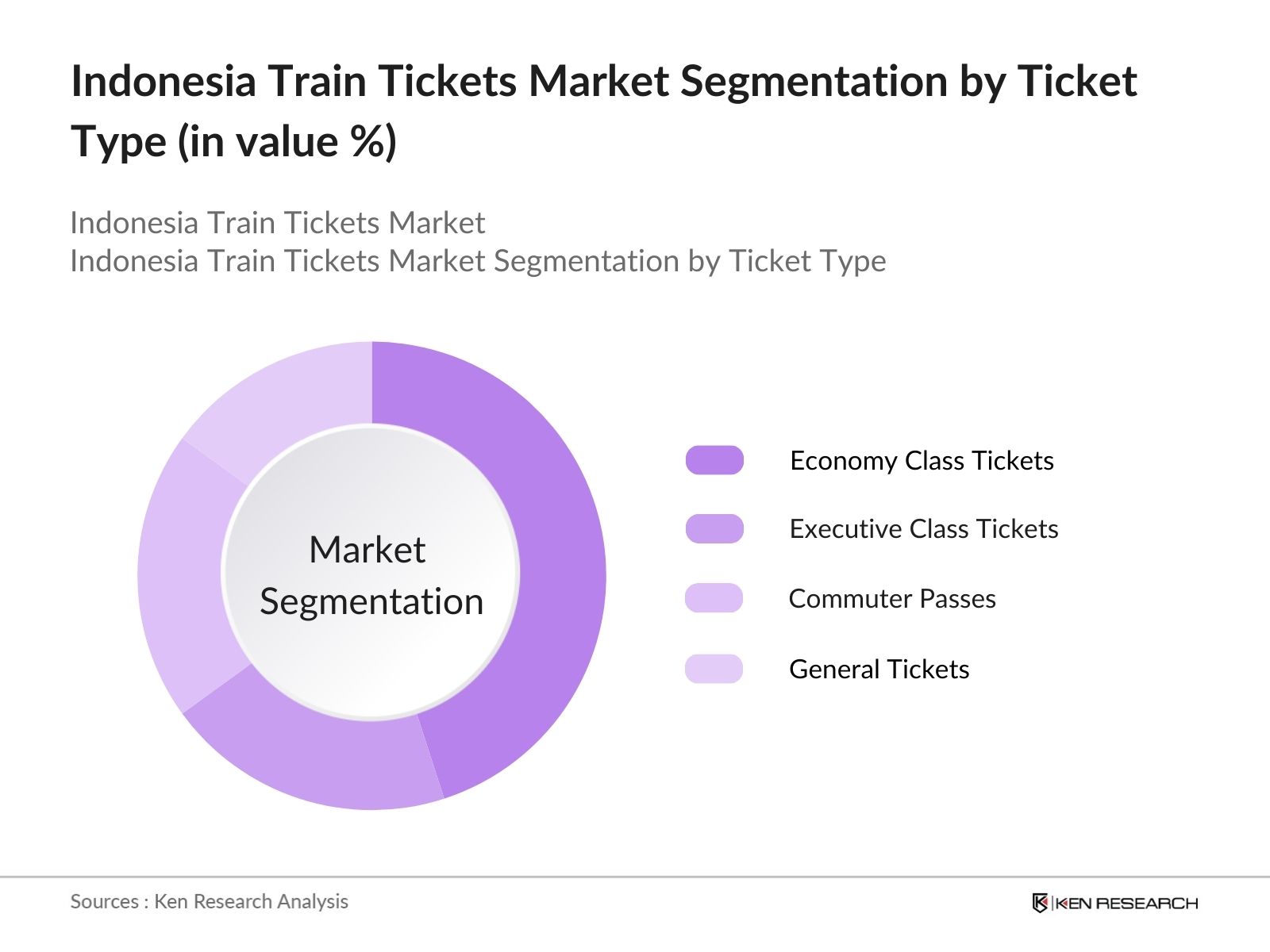
- By Ticket Type: The Indonesia Train Tickets market is segmented by ticket type into general tickets, executive class tickets, economy class tickets, and commuter passes. Among these, economy class tickets have a dominant market share due to their affordability and accessibility for the general public. The high number of daily commuters using the economy class service, particularly on popular routes like Jakarta to Surabaya, is the main contributor to the segment's dominance. The demand for cost-effective travel solutions in densely populated regions like Java supports the strong performance of this segment.
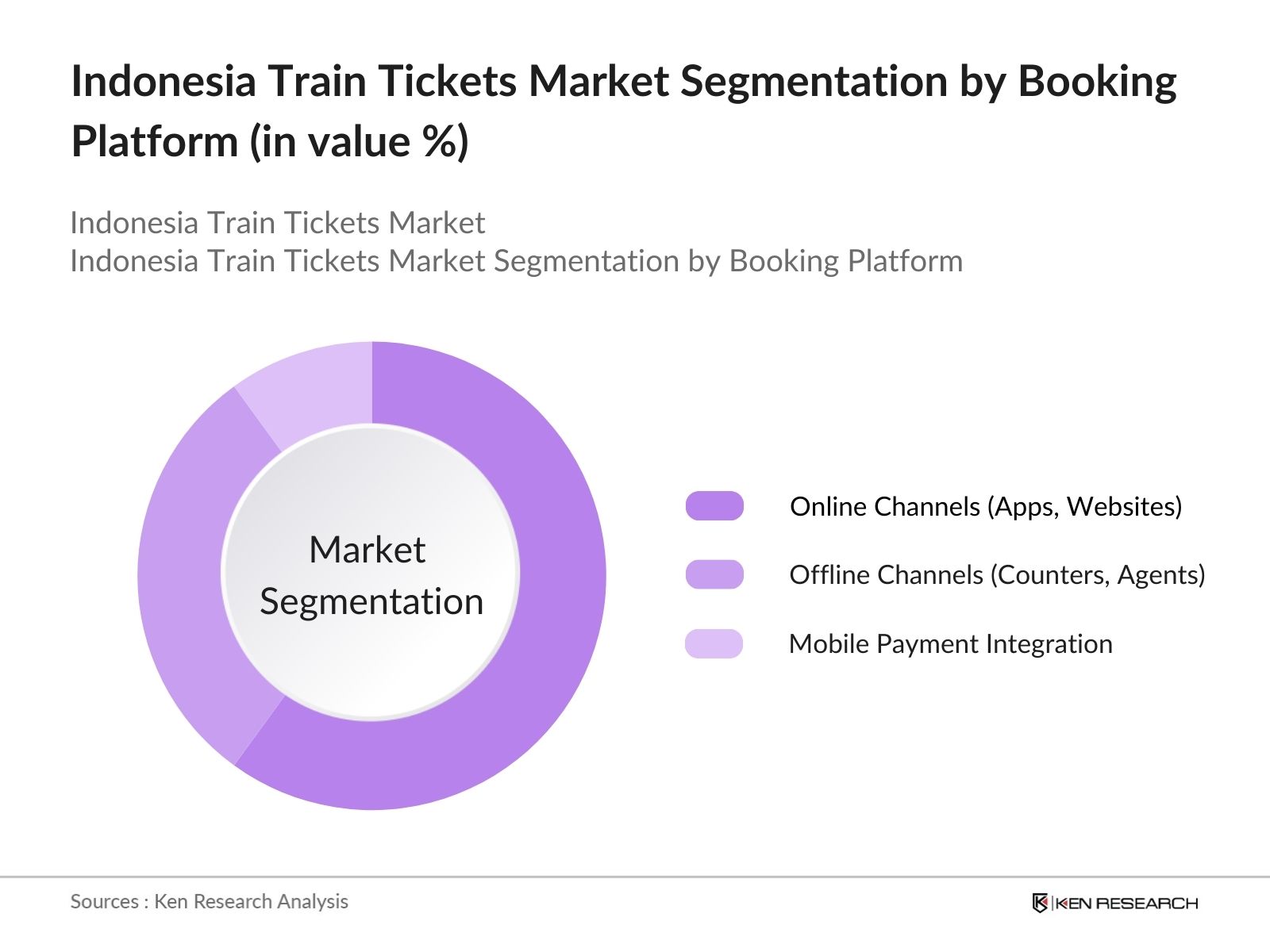
- By Booking Platform: The market is also segmented by booking platforms into online channels (apps, websites), offline channels (counters, agents), and mobile payment integrations. Online channels are the leading sub-segment, representing the largest market share. The convenience of purchasing tickets online, combined with the increasing smartphone penetration and mobile payment adoption, has led to the prominence of this platform. Leading apps like KAI Access and Traveloka provide users with easy access to real-time seat availability, schedules, and payment options, driving the widespread use of online booking.
Indonesia Train Tickets Market Competitive Landscape
The Indonesia Train Tickets market is characterized by the presence of key players who dominate the market, with a mixture of state-owned enterprises and private platforms. The competition is centered around providing better customer experiences through digital platforms, service reliability, and expanding route coverage. The Indonesia Train Tickets market features a mix of established state-owned enterprises and rapidly growing private digital platforms. Key players dominate by offering diverse services, reliable infrastructure, and expanding digital platforms. The competition is heavily influenced by factors such as customer service quality, technological integration, and route expansion.
|
Company Name |
Established Year |
Headquarters |
Ownership |
Main Service |
Digital Presence |
Mobile App |
Coverage |
Partnerships |
Recent Developments |
|
PT Kereta Api Indonesia (KAI) |
1945 |
Bandung |
- | - | - | - | - | - | - |
|
Traveloka |
2012 |
Jakarta |
- | - | - | - | - | - | - |
|
Tiket.com |
2011 |
Jakarta |
- | - | - | - | - | - | - |
|
KAI Commuter Jabodetabek (KCJ) |
2008 |
Jakarta |
- | - | - | - | - | - | - |
|
RedBus |
2006 |
Singapore |
- | - | - | - | - | - | - |
Indonesia Train Tickets Market Analysis
Market Growth Drivers
- Government Investment in Rail Infrastructure: The Indonesian government has allocated significant funds towards improving the countrys railway network. For example, the Ministry of Transportation announced plans to invest over IDR 320 trillion in the construction and upgrading of railways by 2024, particularly focused on improving connectivity in Java and Sumatra. The 2024 budget includes IDR 7.3 trillion specifically earmarked for the high-speed rail project from Jakarta to Bandung, enhancing long-distance rail travel, which directly boosts ticket sales.
- Rising Adoption of Digital Payment Platforms: Indonesia's growing digital economy has contributed to increased use of online train ticket booking platforms. In 2024, over 150 million Indonesians are expected to use mobile wallets or digital payment platforms such as GoPay and OVO for transportation services, driving the ease and accessibility of train travel. This rapid adoption is creating a seamless ticket-purchasing experience and expanding the customer base.
- Demand for Low-Cost Travel Solutions: Train travel continues to be an affordable and reliable mode of transportation for Indonesians. In 2024, the average one-way train ticket for popular routes such as Jakarta to Yogyakarta is priced at IDR 200,000, which remains a highly competitive alternative to air and bus travel. Government subsidies for public transport, including rail, ensure that train tickets remain accessible, especially for lower-income groups.
Market Challenges
- Overcrowding on Major Routes (Java, Sumatra): Major train routes such as JakartaBandung and JakartaSurabaya experience frequent overcrowding, particularly during holidays. In 2024, Javas primary rail lines are expected to handle over 300,000 passengers daily, exceeding their current operational capacity, which results in customer dissatisfaction and limited ticket availability. Overcrowding reduces the appeal of train travel, particularly for those seeking comfortable and timely transport.
- Aging Railway Infrastructure: Much of Indonesias railway infrastructure, especially outside urban hubs, is aging and requires substantial upgrades. In 2024, over 40% of the countrys rail tracks are more than 40 years old, leading to frequent delays and increased maintenance costs. Despite ongoing investment, the pace of modernization is slow, which continues to affect the efficiency of rail services.
Indonesia Train Tickets Market Future Outlook
The Indonesia Train Tickets market is expected to undergo significant growth over the next five years. This growth will be driven by continuous government support for expanding rail infrastructure, including ongoing projects for high-speed rail and MRT systems. The rapid urbanization and growing middle-class population are further contributing to an increase in demand for reliable and affordable public transport. Additionally, advancements in digital platforms and the integration of payment gateways are expected to facilitate a seamless ticketing experience for customers, further driving market expansion.
Market Opportunities
- Introduction of High-Speed Rail: The JakartaBandung high-speed rail, set to launch commercial operations in 2024, will revolutionize train travel in Indonesia. Covering 142 kilometers, it will reduce travel time between the two cities to under 45 minutes, compared to the current 3-hour train journey. This new service is expected to drive substantial demand for high-speed rail tickets, particularly among business travelers and tourists.
- Expansion of Intermodal Ticketing Platforms: The integration of train tickets with other transportation services, such as buses and ride-hailing, presents a key growth opportunity. In 2024, companies like Kereta Api Indonesia (KAI) plan to launch intermodal ticketing platforms, allowing customers to book entire journeys across multiple modes of transport with a single ticket. This innovation is expected to increase ticket sales by offering greater convenience to passengers.
Scope of the Report
|
By Ticket Type |
General Tickets Executive Class Tickets Economy Class Tickets Commuter Passes |
|
By Booking Platform |
Online Channels (Apps, Websites) Offline Channels (Counters, Agents) Mobile Payment Integration |
|
By Distance |
Long Distance (Inter-city) Short Distance (Commuter) Tourist Trains |
|
By Customer Type |
Business Travelers Leisure Travelers Students & Educational Commuters |
|
By Region |
Java Sumatra Kalimantan Sulawesi |
Products
Key Target Audience
PT Kereta Api Indonesia (KAI)
Online Booking Platforms
Transportation Operators
Investors and Venture Capitalist Firms
Government and Regulatory Bodies (Ministry of Transportation, Directorate General of Railways)
Railway Infrastructure Developers
Mobile Payment Platforms
Consumer and Travel Groups
Companies
Players Mentioned in the Report:
PT Kereta Api Indonesia (KAI)
Traveloka
Tiket.com
KAI Commuter Jabodetabek (KCJ)
RedBus
Pegipegi
NusaTrans
Citilink
KAI Access
Blibli
Table of Contents
1. Indonesia Train Tickets Market Overview
1.1. Definition and Scope
1.2. Market Taxonomy
1.3. Overview of Indonesian Railways Network
1.4. Key Market Stakeholders (Railway Operators, Ticketing Platforms, etc.)
1.5. Market Segmentation Overview
2. Indonesia Train Tickets Market Size (In IDR Mn)
2.1. Historical Market Size
2.2. Year-On-Year Growth Analysis
2.3. Key Market Developments and Milestones
3. Indonesia Train Tickets Market Analysis
3.1. Growth Drivers
3.1.1. Increasing Urbanization and Mobility Demand
3.1.2. Government Investment in Rail Infrastructure
3.1.3. Rising Adoption of Digital Payment Platforms
3.1.4. Demand for Low-Cost Travel Solutions
3.2. Market Challenges
3.2.1. Overcrowding on Major Routes (Java, Sumatra)
3.2.2. Maintenance and Aging Railway Infrastructure
3.2.3. Competition from Low-Cost Airlines
3.2.4. Limited Connectivity to Remote Regions
3.3. Opportunities
3.3.1. Introduction of High-Speed Rail
3.3.2. Expansion of Intermodal Ticketing Platforms
3.3.3. Enhanced Customer Service and Loyalty Programs
3.3.4. Integration with Tourism Packages
3.4. Trends
3.4.1. Growth of Mobile Ticketing Platforms
3.4.2. Implementation of Smart Rail Systems
3.4.3. Increasing Use of QR Codes and E-Tickets
3.4.4. Rising Focus on Sustainable Rail Travel
3.5. Government Regulations
3.5.1. National Railway Safety Standards (SOP)
3.5.2. Infrastructure Development Plans under RPJMN
3.5.3. Local Government Transportation Policies
3.5.4. Rail Ticket Subsidy Programs
3.6. SWOT Analysis
3.7. Stakeholder Ecosystem (Rail Operators, Ticket Aggregators, Digital Platforms)
3.8. Porters Five Forces Analysis
3.9. Competition Ecosystem
4. Indonesia Train Tickets Market Segmentation
4.1. By Ticket Type (In Value %)
4.1.1. General Tickets
4.1.2. Executive Class Tickets
4.1.3. Economy Class Tickets
4.1.4. Commuter Passes
4.2. By Booking Platform (In Value %)
4.2.1. Online Channels (Apps, Websites)
4.2.2. Offline Channels (Counters, Agents)
4.2.3. Mobile Payment Integration
4.3. By Distance (In Value %)
4.3.1. Long Distance (Inter-city)
4.3.2. Short Distance (Commuter)
4.3.3. Tourist Trains
4.4. By Customer Type (In Value %)
4.4.1. Business Travelers
4.4.2. Leisure Travelers
4.4.3. Students & Educational Commuters
4.5. By Region (In Value %)
4.5.1. Java
4.5.2. Sumatra
4.5.3. Kalimantan
4.5.4. Sulawesi
5. Indonesia Train Tickets Market Competitive Analysis
5.1. Detailed Profiles of Major Competitors
5.1.1. PT Kereta Api Indonesia
5.1.2. KAI Commuter Jabodetabek
5.1.3. Traveloka
5.1.4. Tiket.com
5.1.5. Pegipegi
5.1.6. RedBus
5.1.7. PT Railink (Airport Rail Service)
5.1.8. NusaTrans
5.1.9. Citilink (Intermodal Packages)
5.1.10. KAI Access
5.1.11. Bukalapak
5.1.12. Gojek (Train Ticket Integration)
5.1.13. Indomaret (Ticket Counters)
5.1.14. Blibli
5.1.15. Tokopedia
5.2. Cross Comparison Parameters (Market Presence, Inception Year, Technology Adoption, Route Coverage, Mobile App Ratings, Customer Service, No. of Active Users, Revenue)
5.3. Market Share Analysis
5.4. Strategic Initiatives
5.5. Mergers and Acquisitions
5.6. Investment Analysis
5.7. Partnerships and Collaborations
6. Indonesia Train Tickets Market Regulatory Framework
6.1. Licensing and Compliance for Ticketing Platforms
6.2. National Transportation Safety Board Guidelines
6.3. Regulations on Ticket Pricing and Subsidies
6.4. Consumer Rights and Rail Travel Protection
7. Indonesia Train Tickets Future Market Size (In USD Mn)
7.1. Future Market Size Projections
7.2. Key Factors Driving Future Market Growth
8. Indonesia Train Tickets Future Market Segmentation
8.1. By Ticket Type (In Value %)
8.2. By Booking Platform (In Value %)
8.3. By Distance (In Value %)
8.4. By Customer Type (In Value %)
8.5. By Region (In Value %)
9. Indonesia Train Tickets Market Analysts' Recommendations
9.1. TAM/SAM/SOM Analysis
9.2. Marketing Strategies for Different Customer Segments
9.3. Strategic Partnerships for Market Expansion
9.4. Technology Integration Opportunities (AI, Mobile Ticketing, etc.)
Research Methodology
Step 1: Identification of Key Variables
The first step involves identifying the key stakeholders in the Indonesia Train Tickets market, including railway operators, digital platforms, and government bodies. Desk research is conducted to gather critical variables that influence the market, such as booking trends, passenger preferences, and regional rail network coverage.
Step 2: Market Analysis and Construction
In this phase, historical data on rail ticket sales, infrastructure developments, and passenger demographics is analyzed. The goal is to understand how these factors contribute to market dynamics, including revenue generation from different ticket types and regions.
Step 3: Hypothesis Validation and Expert Consultation
Market hypotheses are validated through expert consultations and interviews with industry insiders from major railway operators and ticketing platforms. These interviews provide valuable insights into operational challenges and consumer preferences, further refining the market data.
Step 4: Research Synthesis and Final Output
The final stage involves synthesizing data from railway operators and digital booking platforms to ensure accuracy. This synthesis validates the findings and provides a comprehensive view of the market, ensuring that the report delivers reliable and actionable insights.
Frequently Asked Questions
01. How big is the Indonesia Train Tickets Market?
The Indonesia Train Tickets Market is valued at USD 197 Million, driven by increasing urbanization, government investments in rail infrastructure, and the growing adoption of online booking platforms.
02. What are the challenges in the Indonesia Train Tickets Market?
Challenges in the Indonesia Train Tickets Market include overcrowding on key routes, particularly in Java, aging rail infrastructure, and competition from low-cost airlines. Maintenance issues and limited rail connectivity to certain regions also hinder the market's growth potential.
03. Who are the major players in the Indonesia Train Tickets Market?
Key players in the Indonesia Train Tickets Market include PT Kereta Api Indonesia (KAI), Traveloka, Tiket.com, KAI Commuter Jabodetabek (KCJ), and RedBus. These companies lead the market in both rail operations and digital ticketing services.
04. What are the growth drivers of the Indonesia Train Tickets Market?
Growth drivers in the Indonesia Train Tickets Market include government support for rail infrastructure projects, the increasing demand for cost-effective travel solutions, and the widespread use of online ticketing platforms. The rise in daily commuter demand also contributes to the market's growth.
Why Buy From Us?

What makes us stand out is that our consultants follows Robust, Refine and Result (RRR) methodology. i.e. Robust for clear definitions, approaches and sanity checking, Refine for differentiating respondents facts and opinions and Result for presenting data with story

We have set a benchmark in the industry by offering our clients with syndicated and customized market research reports featuring coverage of entire market as well as meticulous research and analyst insights.

While we don't replace traditional research, we flip the method upside down. Our dual approach of Top Bottom & Bottom Top ensures quality deliverable by not just verifying company fundamentals but also looking at the sector and macroeconomic factors.

With one step in the future, our research team constantly tries to show you the bigger picture. We help with some of the tough questions you may encounter along the way: How is the industry positioned? Best marketing channel? KPI's of competitors? By aligning every element, we help maximize success.

Our report gives you instant access to the answers and sources that other companies might choose to hide. We elaborate each steps of research methodology we have used and showcase you the sample size to earn your trust.

If you need any support, we are here! We pride ourselves on universe strength, data quality, and quick, friendly, and professional service.