Ken Research Logo

Indonesia Two-Wheeler Market Outlook to 2030

Region:Asia

Author(s):Sanjeev

Product Code:KROD1930

Published On

November 2024

Total pages

95

About the Report

Indonesia Two-Wheeler Market Overview

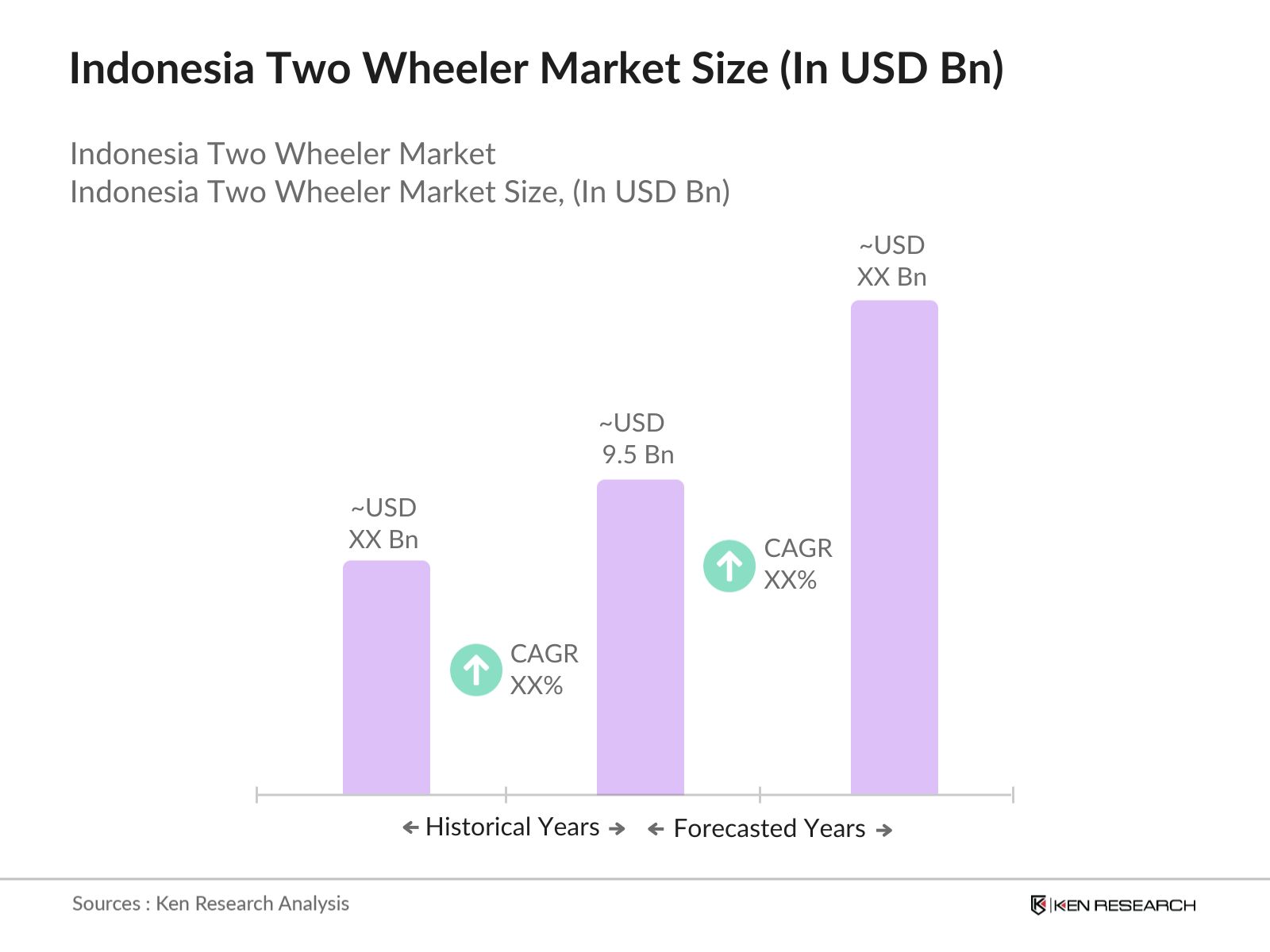
  • The Indonesia two-wheeler market, valued at USD 9.5 billion, is primarily driven by rapid urbanization, increasing demand for affordable and fuel-efficient vehicles, and a growing middle-class population. The country's dense urban centers and limited public transport infrastructure make two-wheelers an attractive option for daily commuting. Additionally, the rising cost of fuel has prompted consumers to turn to more economical two-wheeled transportation options.Indonesia Two-Wheeler Market Size
  • Java and Sumatra dominate the two-wheeler market due to their high population density and growing urban sprawl. The majority of the market activity is concentrated in these regions, where road congestion and limited parking spaces make motorcycles and scooters the preferred choice for daily commuting. The increasing adoption of motorcycles for commercial use in these areas, particularly for e-commerce and last-mile delivery services, further solidifies their dominance.
  • In 2024, Indonesia is enforcing Euro IV emission standards for all two-wheelers, with plans to transition to Euro V by 2026. These stringent emission standards require manufacturers to adopt more efficient engine technologies to reduce pollutants, such as nitrogen oxides and carbon monoxide. The Ministry of Environment and Forestry reported that compliance with Euro IV standards has already led to a 12% reduction in vehicular emissions compared to 2022. The shift to cleaner technologies is expected to further reduce the environmental impact of Indonesia's growing two-wheeler market.

Indonesia Two-Wheeler Market Segmentation

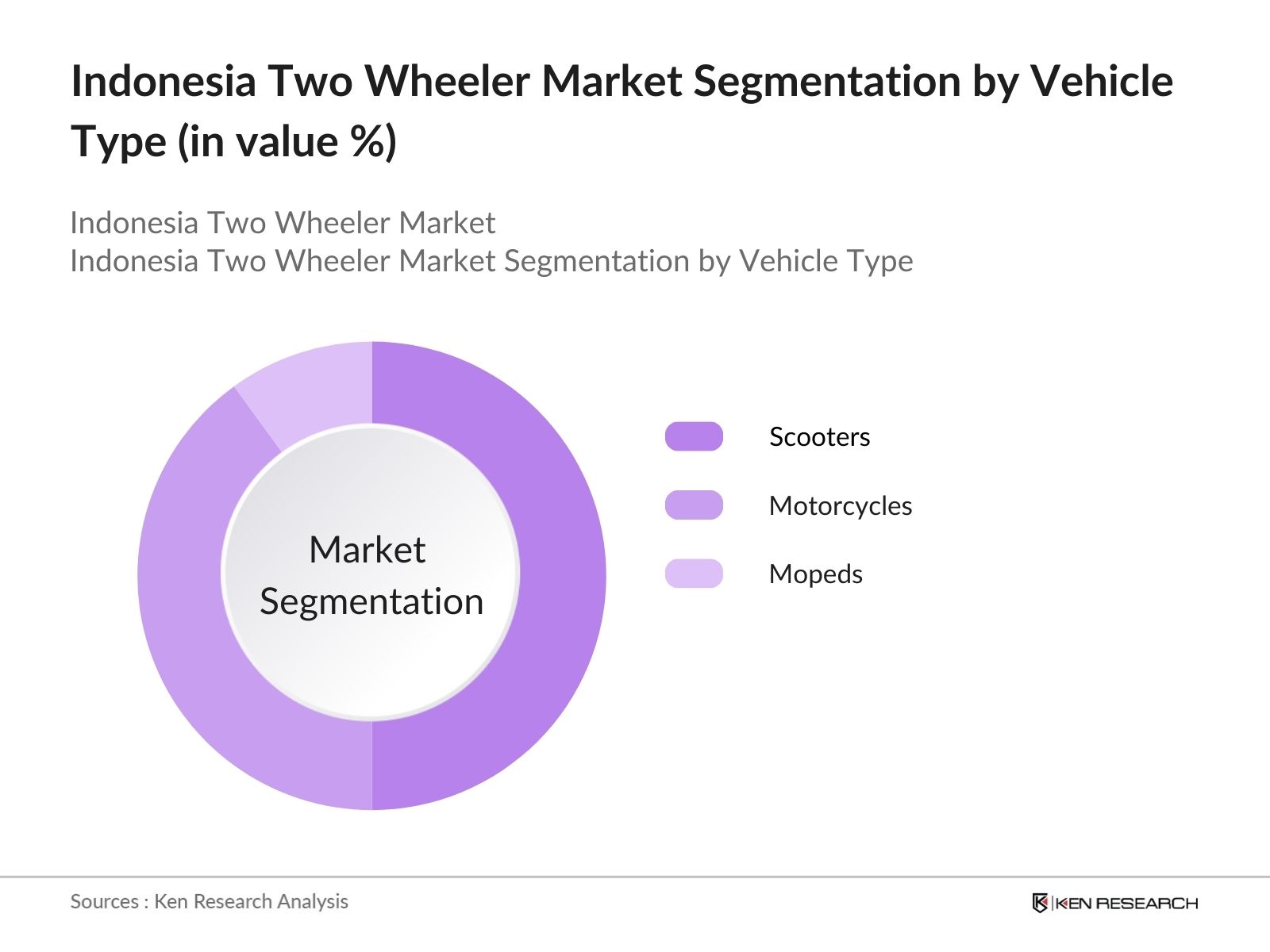
  • By Vehicle Type: The Indonesia two-wheeler market is segmented by vehicle type into scooters, motorcycles, and mopeds. Among these, scooters hold the dominant market share, attributed to their ease of use, fuel efficiency, and suitability for urban commuting. The convenience offered by automatic transmission, lightweight build, and affordable pricing makes scooters popular among younger consumers and women. The growing trend of using scooters for delivery services also boosts this segment. Indonesia Two-Wheeler Market Segmentation by Vehicle Type
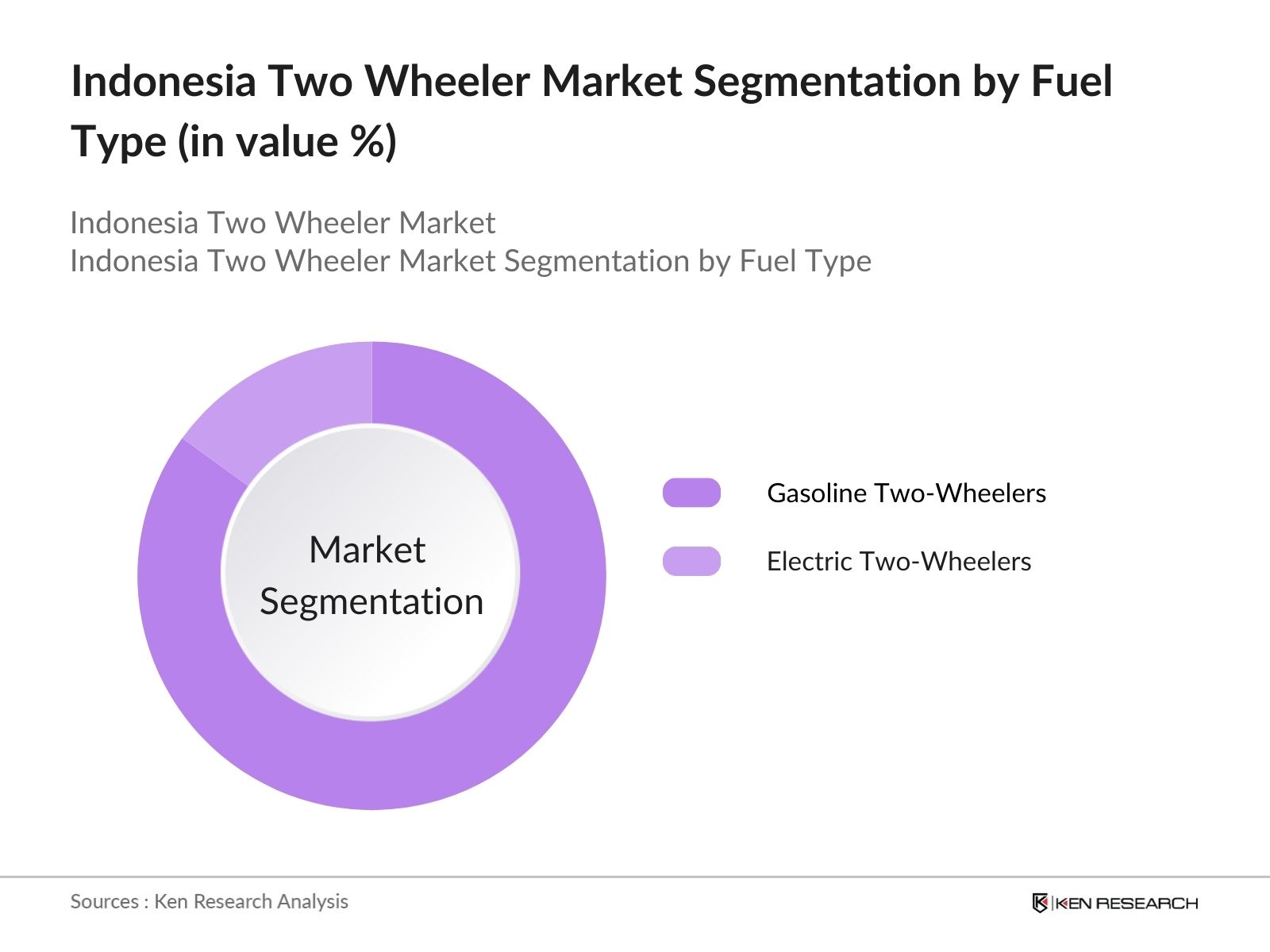
  • By Fuel Type: The market is segmented by fuel type into gasoline two-wheelers and electric two-wheelers. While gasoline two-wheelers dominate the market with a significant share, the electric two-wheeler segment is witnessing rapid growth. Gasoline vehicles are preferred due to their established infrastructure and lower upfront costs, while electric vehicles are gaining traction due to environmental concerns and government incentives. However, the relatively higher cost of electric models and limited charging infrastructure currently restricts their widespread adoption. Indonesia Two-Wheeler Market Segmentation by Fuel Type

Indonesia Two-Wheeler Market Competitive Landscape

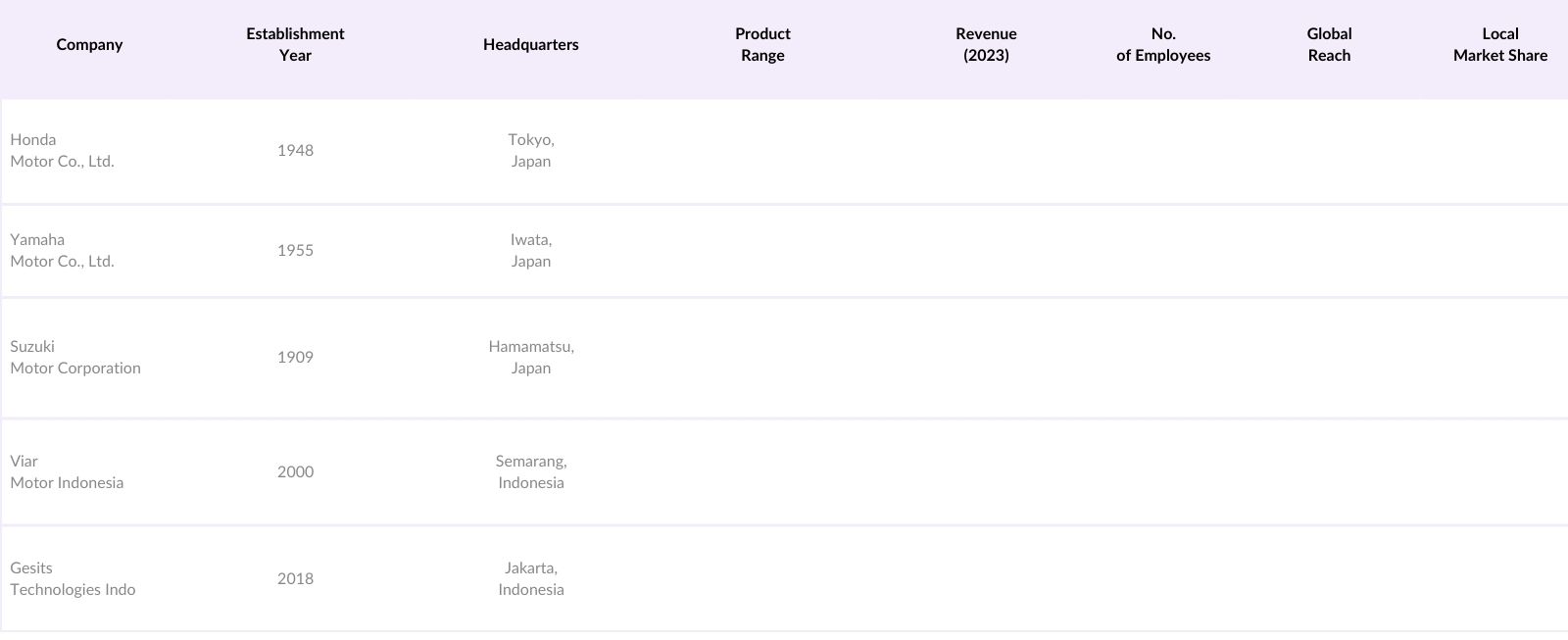
The Indonesia two-wheeler market is highly competitive, with a mix of local and international players. Major companies focus on enhancing their product offerings, expanding production capacities, and adopting new technologies to remain competitive. The market is dominated by a few key players with well-established brand recognition and strong distribution networks.

The competitive landscape is characterized by the presence of global giants like Honda and Yamaha, who dominate the market through their extensive dealer networks, reliable product offerings, and strong after-sales services. Local players, such as Viar Motor Indonesia and Gesits, are making significant strides in the electric two-wheeler segment, leveraging government incentives and the rising demand for eco-friendly transportation.Indonesia Two-Wheeler Market Competitive Landscape
Indonesia Two-Wheeler Market Analysis

Growth Drivers

  • Rapid Urbanization: Indonesia has been experiencing rapid urbanization, with its urban population projected to reach 60% by 2025. This growth is driving increased demand for two-wheelers, particularly in densely populated cities like Jakarta and Surabaya. According to the World Bank, urbanization is directly linked to transportation demands, especially in countries with congested infrastructure. Motorcycles offer an affordable and agile alternative to cars, enabling faster navigation through urban traffic. Data from the Ministry of Transportation indicates that Indonesia had over 110 million registered motorcycles by the end of 2023, further supporting the surge in two-wheeler usage.
  • Expanding Middle-Class Population: Indonesia's middle class is rapidly expanding, with an estimated 52 million people classified as middle-income earners in 2024, according to the Asian Development Bank. This growing segment has led to increased discretionary spending on mobility solutions, with motorcycles being a preferred choice due to their affordability and low operating costs. The increasing disposable income allows middle-class families to invest in personal transport, with two-wheelers being the most cost-effective option for daily commuting. In 2023 alone, over 6 million two-wheelers were sold across Indonesia, highlighting the market's resilience.
  • Rising Fuel Prices: Indonesia has witnessed consistent increases in fuel prices due to global market fluctuations, which has led to higher operating costs for cars. In 2024, fuel prices in Indonesia averaged $1.08 per liter, prompting many consumers to shift towards more fuel-efficient options like two-wheelers. Motorcycles, especially those with smaller engines, are known for their lower fuel consumption, making them an attractive alternative for budget-conscious individuals. This trend is expected to continue as fuel prices remain volatile, pushing more consumers towards affordable transportation options like motorcycles.

Market Challenges

  • Regulatory Hurdles (Emission Standards, Safety Regulations): Indonesia has stringent regulations concerning emissions and vehicle safety, particularly for two-wheelers. In 2024, the government mandated compliance with Euro IV emission standards, which requires motorcycles to adopt more efficient and cleaner technologies. This shift poses a challenge for manufacturers, as upgrading vehicle designs to meet regulatory standards incurs additional costs. Additionally, safety regulations, including mandatory helmet laws and vehicle inspections, create barriers for consumers and manufacturers. Non-compliance penalties can significantly affect business operations and market dynamics.
  • High Competition from Local and International Players: The Indonesian two-wheeler market is highly competitive, with both local manufacturers like Astra Honda and international brands such as Yamaha vying for market share. In 2023, Honda and Yamaha accounted for over 80% of total two-wheeler sales in Indonesia. This intense competition creates pricing pressures and limits profitability for smaller players trying to penetrate the market. Furthermore, aggressive marketing strategies and loyalty programs from established brands make it challenging for new entrants to gain a foothold in this already saturated market.

Indonesia Two-Wheeler Market Future Outlook

Over the next five years, the Indonesia two-wheeler market is expected to experience significant growth, driven by increasing consumer demand for fuel-efficient vehicles, growing adoption of electric vehicles, and the expansion of e-commerce and delivery services. Government initiatives, such as incentives for electric vehicle adoption and investments in infrastructure, will further accelerate market growth. Additionally, technological advancements in two-wheeler manufacturing, such as smart features and improved fuel efficiency, are anticipated to contribute to the markets expansion.

Market Opportunities

  • Growth in E-commerce & Last-Mile Delivery Services: Indonesia's booming e-commerce sector, which reached $77 billion in 2023, has led to a surge in demand for two-wheelers, particularly for last-mile delivery services. Major platforms such as Gojek and Grab are heavily reliant on motorcycles for fast and efficient deliveries. This growing demand presents a lucrative opportunity for two-wheeler manufacturers, as delivery companies continue to expand their fleets. The Ministry of Communication and Informatics reported a 25% increase in delivery service registrations in 2024, further emphasizing the need for motorcycles in this expanding sector.
  • Electric Two-Wheeler Adoption: The Indonesian government is actively promoting the adoption of electric vehicles (EVs), including two-wheelers, as part of its national energy policy. By 2024, it is estimated that there will be over 500,000 electric two-wheelers on Indonesian roads, driven by government incentives such as tax breaks and subsidies. These incentives have made electric motorcycles more accessible to consumers, with the Ministry of Industry projecting a 35% increase in electric motorcycle sales by 2025. The government's focus on reducing carbon emissions through electrification presents significant growth opportunities for manufacturers.

Scope of the Report

By Vehicle Type

Scooters

Motorcycles

Mopeds

By Fuel Type

Gasoline Two Wheelers

Electric Two Wheelers

By Engine Capacity

Up to 125cc

126-250cc

Above 250cc

By End-User

Personal Use

Commercial Use

By Region

North

East

West

South


Products

Key Target Audience

  • Two-Wheeler Manufacturers

  • E-Commerce and Delivery Companies

  • Investors and Venture Capitalist Firms

  • Government and Regulatory Bodies (Ministry of Industry, Ministry of Transportation)

  • Automotive Dealership Networks

  • Logistics and Transportation Companies

  • Fleet Operators

  • Electric Vehicle Charging Infrastructure Providers

Companies

Players Mention in the Report:

  • Honda Motor Co., Ltd.

  • Yamaha Motor Co., Ltd.

  • Suzuki Motor Corporation

  • Kawasaki Heavy Industries, Ltd.

  • TVS Motor Company

  • Bajaj Auto Ltd.

  • Piaggio & C. SpA

  • Hero MotoCorp Ltd.

  • KTM AG

  • Ducati Motor Holding S.p.A

  • Harley-Davidson, Inc.

  • Royal Enfield

  • Benelli Q.J.

  • Viar Motor Indonesia

  • Gesits Technologies Indo

Table of Contents

1. Indonesia Two-Wheeler Market Overview

1.1. Definition and Scope
1.2. Market Taxonomy
1.3. Market Dynamics Overview
1.4. Market Segmentation Overview

2. Indonesia Two-Wheeler Market Size (In USD Mn)

2.1. Historical Market Size
2.2. Year-On-Year Growth Analysis
2.3. Key Market Developments and Milestones

3. Indonesia Two-Wheeler Market Analysis

3.1. Growth Drivers
3.1.1. Rapid Urbanization
3.1.2. Expanding Middle-Class Population
3.1.3. Rising Fuel Prices
3.1.4. Shift Towards Affordable Transportation
3.2. Market Challenges
3.2.1. Regulatory Hurdles (Emission Standards, Safety Regulations)
3.2.2. High Competition from Local and International Players
3.2.3. Supply Chain Disruptions (Raw Materials)
3.3. Opportunities
3.3.1. Growth in E-commerce & Last-Mile Delivery Services
3.3.2. Electric Two Wheeler Adoption
3.3.3. Financial Support from Government Policies (Tax Benefits, Subsidies)
3.4. Trends
3.4.1. Rising Demand for Electric Two Wheelers
3.4.2. Technological Innovations in Two Wheeler Manufacturing
3.4.3. Integration of Smart Features (GPS, Connectivity)
3.5. Government Regulations
3.5.1. Emission Standards (Euro IV Compliance, Transition to Euro V)
3.5.2. Subsidies and Incentives for Electric Two Wheelers
3.5.3. Import Tariffs and Trade Restrictions
3.6. SWOT Analysis
3.7. Industry Value Chain
3.8. Porters Five Forces
3.9. Competitive Landscape and Market Positioning

4. Indonesia Two Wheeler Market Segmentation

4.1. By Vehicle Type (In Value %)
4.1.1. Scooters
4.1.2. Motorcycles
4.1.3. Mopeds
4.2. By Fuel Type (In Value %)
4.2.1. Gasoline Two Wheelers
4.2.2. Electric Two Wheelers
4.3. By Engine Capacity (In Value %)
4.3.1. Up to 125cc
4.3.2. 126-250cc
4.3.3. Above 250cc
4.4. By End-User (In Value %)
4.4.1. Personal Use
4.4.2. Commercial Use (Delivery Services, Rentals)
4.5. By Region (In Value %)
4.5.1. North
4.5.2. East
4.5.3. West
4.5.4. South

5. Indonesia Two Wheeler Market Competitive Analysis

5.1. Detailed Profiles of Major Companies
5.1.1. Honda Motor Co., Ltd.
5.1.2. Yamaha Motor Co., Ltd.
5.1.3. Suzuki Motor Corporation
5.1.4. Kawasaki Heavy Industries, Ltd.
5.1.5. TVS Motor Company
5.1.6. Bajaj Auto Ltd.
5.1.7. Piaggio & C. SpA
5.1.8. Hero MotoCorp Ltd.
5.1.9. KTM AG
5.1.10. Ducati Motor Holding S.p.A
5.1.11. Harley-Davidson, Inc.
5.1.12. Royal Enfield
5.1.13. Benelli Q.J.
5.1.14. Viar Motor Indonesia
5.1.15. Gesits Technologies Indo
5.2. Cross Comparison Parameters (Headquarters, Market Share, Manufacturing Capacity, Sales Volume, Product Offerings, Technological Innovations, Regional Penetration, After-Sales Service)
5.3. Market Share Analysis
5.4. Strategic Initiatives (Partnerships, Collaborations, and Alliances)
5.5. Mergers and Acquisitions
5.6. Investment Analysis
5.7. Venture Capital Funding
5.8. Government Grants and Incentives
5.9. Private Equity Investments

6. Indonesia Two Wheeler Market Regulatory Framework

6.1. Two Wheeler Licensing and Registration Norms
6.2. Emission Standards Compliance
6.3. Safety Standards and Regulations
6.4. Import and Export Restrictions

7. Indonesia Two Wheeler Future Market Size (In USD Mn)

7.1. Future Market Size Projections
7.2. Key Factors Driving Future Market Growth

8. Indonesia Two Wheeler Future Market Segmentation

8.1. By Vehicle Type (In Value %)
8.2. By Fuel Type (In Value %)
8.3. By Engine Capacity (In Value %)
8.4. By End-User (In Value %)
8.5. By Region (In Value %)

9. Indonesia Two Wheeler Market Analysts Recommendations

9.1. Total Addressable Market (TAM)/Serviceable Available Market (SAM)/Serviceable Obtainable Market (SOM) Analysis
9.2. Market Entry Strategies for New Players
9.3. Distribution Channel Optimization
9.4. Technological Innovation and Product Development Recommendations

Disclaimer Contact Us

Research Methodology

Step 1: Identification of Key Variables

The first step involved mapping the two-wheeler market's ecosystem, identifying major stakeholders including manufacturers, distributors, and regulatory bodies. Through extensive secondary research using government databases, industry reports, and proprietary databases, key market dynamics such as supply chain patterns, regulatory frameworks, and consumption behavior were identified.

Step 2: Market Analysis and Construction

Historical data pertaining to the Indonesia two-wheeler market, including vehicle sales, fuel consumption, and product innovations, was analyzed. This data was cross-referenced with regional market penetration and industry sales trends to assess overall market growth, identifying key revenue-generating segments.

Step 3: Hypothesis Validation and Expert Consultation

To validate the data and insights, consultations with industry experts were conducted using CATIS. These included professionals from leading manufacturers, automotive distributors, and government officials. The input received provided an in-depth understanding of market trends, supply chain challenges, and future opportunities.

Step 4: Research Synthesis and Final Output

Finally, the gathered data was synthesized to provide comprehensive insights into product segments, emerging trends, and key drivers. This bottom-up approach ensured that market estimates were accurate, and recommendations were tailored to business professionals seeking to enter or expand within the Indonesia two-wheeler market.

Frequently Asked Questions

01. How big is the Indonesia Two-Wheeler Market?

The Indonesia two-wheeler market was valued at USD 9.5 billion, primarily driven by increasing demand for affordable and fuel-efficient vehicles, urban congestion, and expanding delivery services.

02. What are the challenges in the Indonesia Two-Wheeler Market?

Challenges in Indonesia two-wheeler market include stringent emission regulations, fluctuating fuel prices, and competition from low-cost local manufacturers. Additionally, infrastructure limitations for electric two-wheelers remain a barrier to adoption.

03. Who are the major players in the Indonesia Two-Wheeler Market?

Key players in Indonesia two-wheeler market include Honda Motor Co., Ltd., Yamaha Motor Co., Ltd., Suzuki Motor Corporation, Viar Motor Indonesia, and Gesits Technologies Indo. These companies dominate the market due to their extensive distribution networks, strong brand presence, and focus on innovation.

04. What are the growth drivers of the Indonesia Two-Wheeler Market?

The Indonesia two-wheeler market is driven by the increasing demand for affordable transportation options, urban congestion, government incentives for electric vehicles, and the rising trend of last-mile delivery services.

05. How are government regulations impacting the Indonesia Two-Wheeler Market?

Government regulations, including stringent emission standards and incentives for electric vehicle adoption, are reshaping the market. Import tariffs and subsidies for electric vehicles are also influencing consumer preferences.

Why Buy From Us?

RRR
Refine Robust Result (RRR) Framework

What makes us stand out is that our consultants follows Robust, Refine and Result (RRR) methodology. i.e. Robust for clear definitions, approaches and sanity checking, Refine for differentiating respondents facts and opinions and Result for presenting data with story

Our Reach Is Unmatched

We have set a benchmark in the industry by offering our clients with syndicated and customized market research reports featuring coverage of entire market as well as meticulous research and analyst insights.

Research
Shifting the Research Paradigm

While we don't replace traditional research, we flip the method upside down. Our dual approach of Top Bottom & Bottom Top ensures quality deliverable by not just verifying company fundamentals but also looking at the sector and macroeconomic factors.

Insite
More Insights-Better Decisions

With one step in the future, our research team constantly tries to show you the bigger picture. We help with some of the tough questions you may encounter along the way: How is the industry positioned? Best marketing channel? KPI's of competitors? By aligning every element, we help maximize success.

Trust
Transparency and Trust

Our report gives you instant access to the answers and sources that other companies might choose to hide. We elaborate each steps of research methodology we have used and showcase you the sample size to earn your trust.

support
Round the Clock Support

If you need any support, we are here! We pride ourselves on universe strength, data quality, and quick, friendly, and professional service.

Why Client Choose Us?

400000+ Reports in repository
150+ Consulting project a year
100+ Analysts
8000+ Client Queries in 2022