
Indonesia Wind Energy Market Outlook to 2030
Region:Indonesia
Author(s):Vijay Kumar
Product Code:KROD3607
Region:Indonesia
Author(s):Vijay Kumar
Product Code:KROD3607
October 2024
89
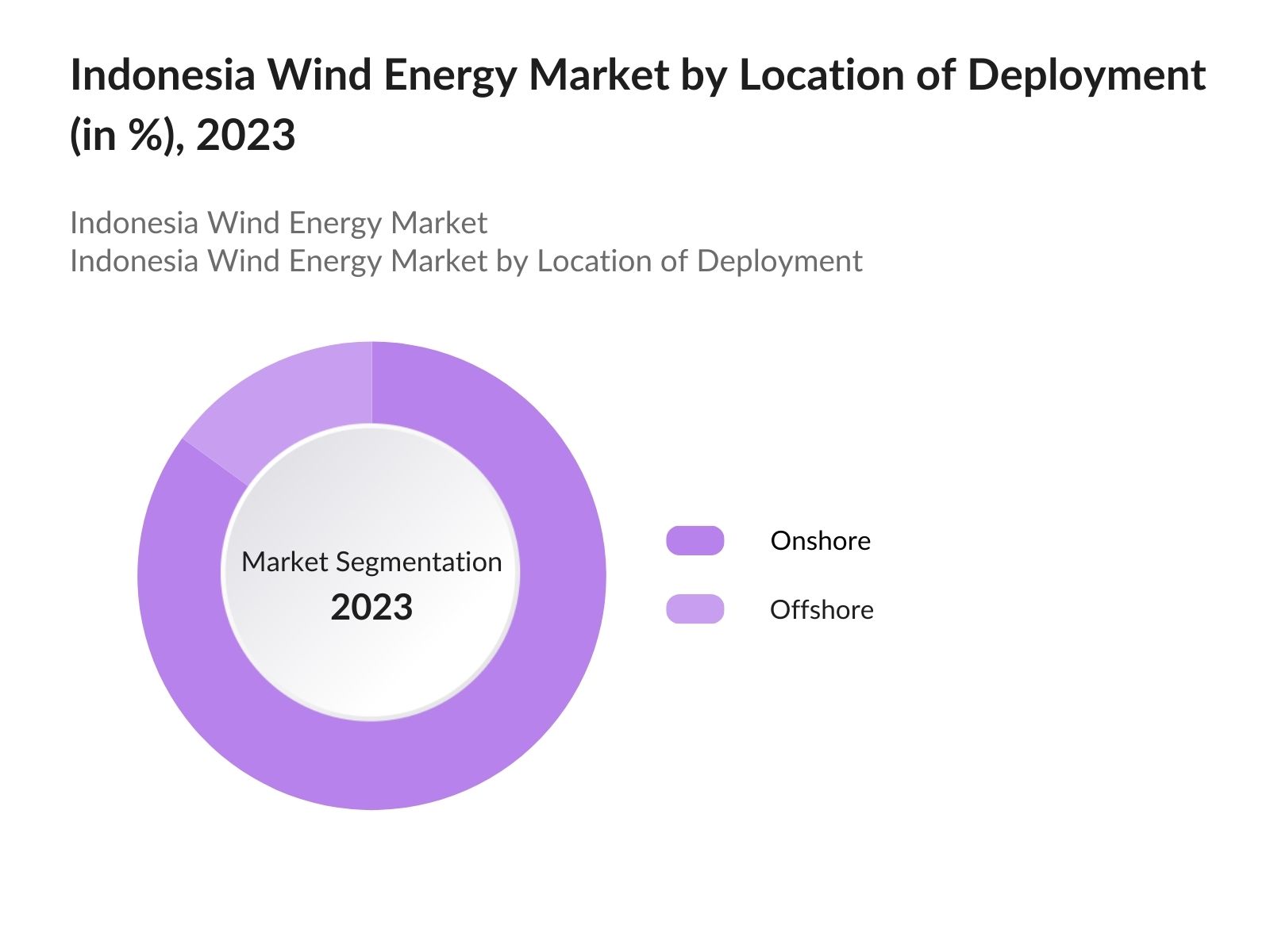
By Location of Deployment: The market is segmented by location into onshore and offshore installations. Onshore wind energy projects currently dominate the market, driven by their relatively lower capital expenditure (CAPEX) compared to offshore projects. The established infrastructure in regions like Java and Sumatra supports onshore developments, with major projects such as the Sidrap Wind Farm in South Sulawesi becoming benchmarks in this segment.
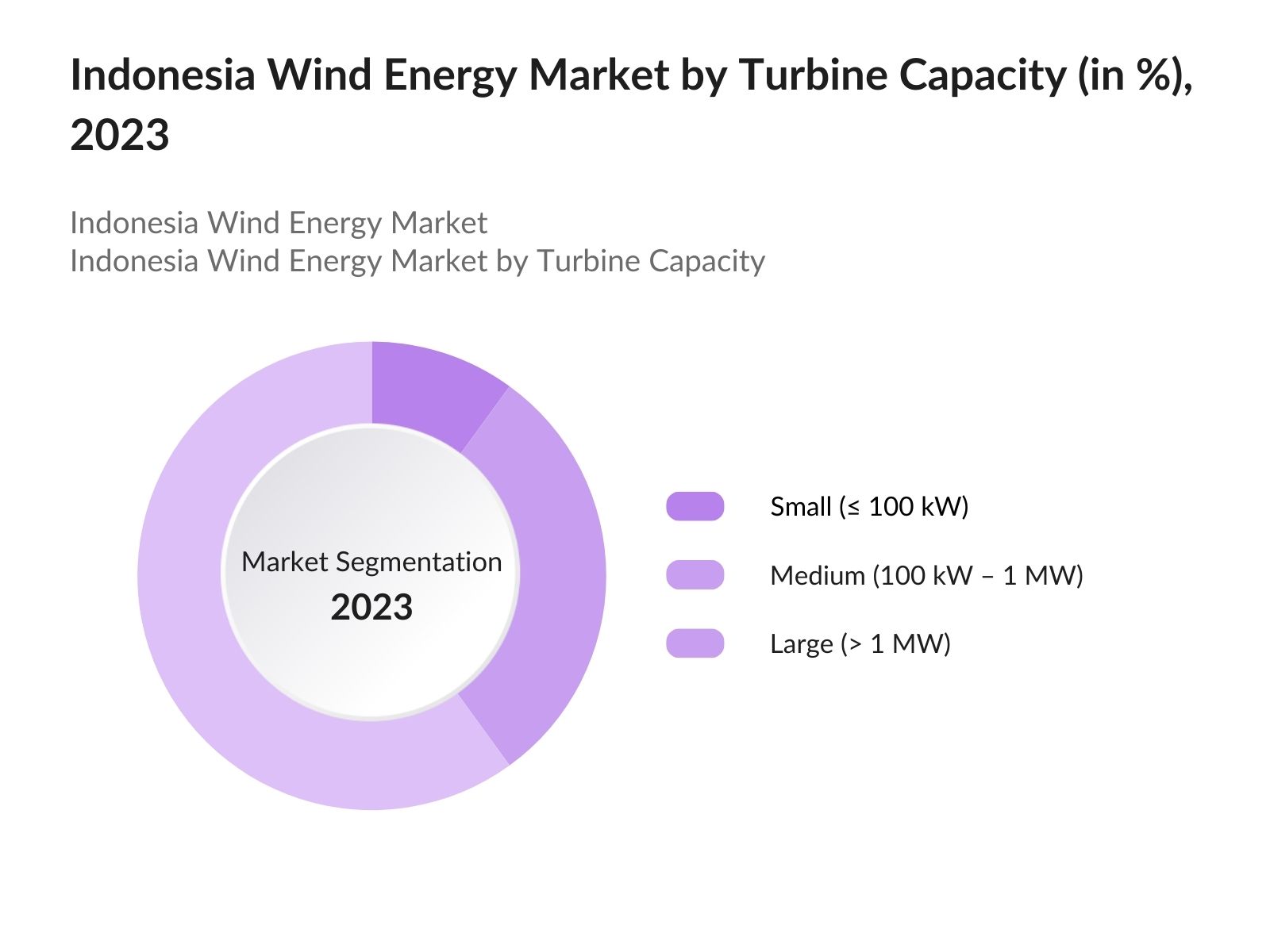
By Turbine Capacity: The market is also segmented based on turbine capacity, which includes small ( 100 kW), medium (100 kW 1 MW), and large (> 1 MW) turbines. Large capacity turbines dominate the market due to their higher energy output and efficiency, making them ideal for utility-scale projects. The adoption of large turbines has been driven by projects in regions with high wind speeds, such as South Sulawesi and parts of Sumatra. The increasing availability of financing options for large-scale projects further enhances this segments position.
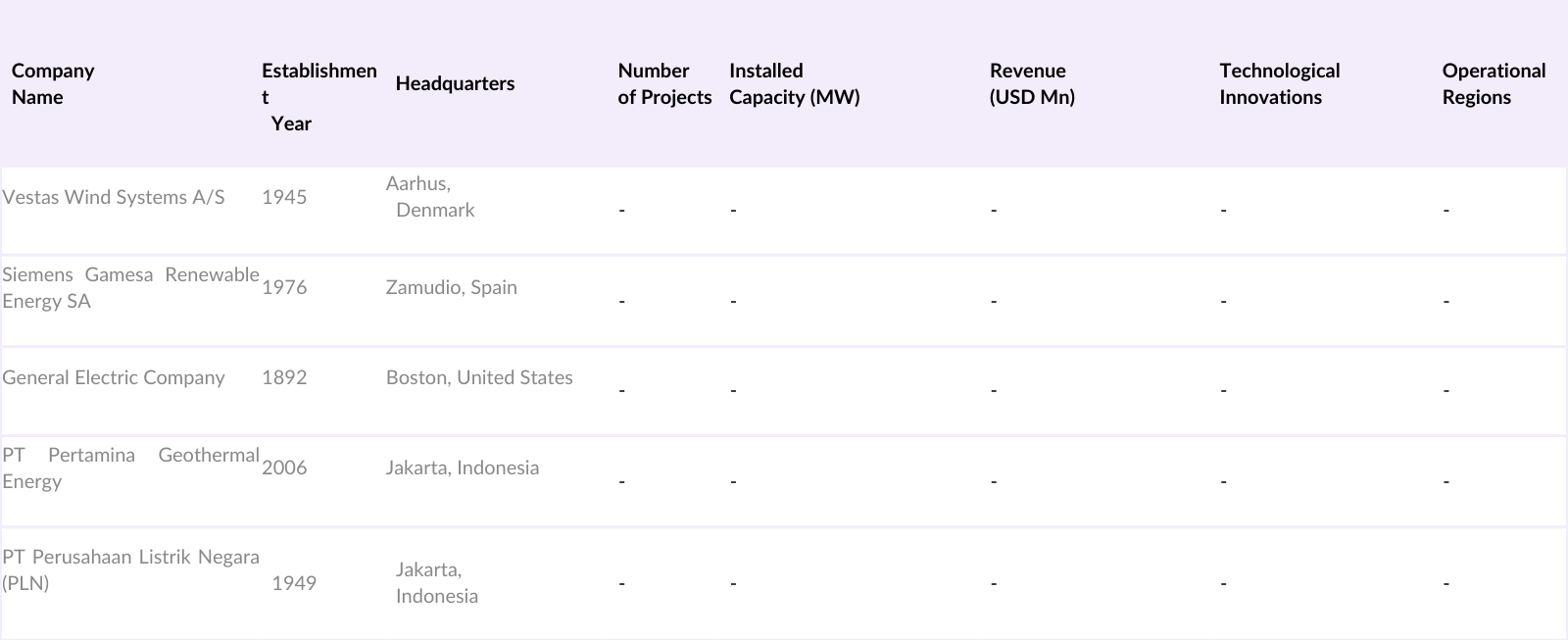
The Indonesia wind energy market is dominated by a few key players that contribute significantly to its growth and development. The presence of both international and local companies indicates a competitive market landscape. The competitive landscape is characterized by collaborations and joint ventures between local players and international giants. The recent focus on advanced wind turbine technologies, such as larger rotor diameters and energy storage integration, is making key players more competitive.
Over the next five years, the Indonesia wind energy market is expected to grow significantly, driven by the governments ambitious renewable energy targets and technological advancements in wind turbine efficiency. The introduction of floating wind turbines, coupled with increased investments from both public and private sectors, is anticipated to further expand the market. The Indonesian governments efforts to decentralize energy production and ensure energy security in remote regions will also play a crucial role in driving growth.
|
By Location |
Onshore Offshore |
|
By Application |
Utility-Scale Projects Community-Based Wind Projects Hybrid Systems |
|
By Turbine Capacity |
Small ( 100 kW), Medium (100 kW 1 MW) Large (> 1 MW) |
|
By Component |
Turbines Towers Blades Nacelles |
|
By Region |
Java Sumatra Sulawesi Kalimantan Papua |
1.1. Definition and Scope
1.2. Market Taxonomy
1.3. Market Growth Rate
1.4. Market Segmentation Overview
2.1. Historical Market Size
2.2. Year-On-Year Growth Analysis
2.3. Key Market Developments and Milestones
3.1. Growth Drivers
3.1.1. Government Initiatives and Renewable Energy Targets
3.1.2. Increase in Power Demand in Remote and Island Regions
3.1.3. Decrease in Cost of Wind Turbines (CAPEX and OPEX Analysis)
3.1.4. International Investment and Partnerships
3.2. Market Challenges
3.2.1. Complex Land Acquisition and Permitting Processes
3.2.2. High Initial Capital Costs
3.2.3. Dependence on Import of Wind Turbine Components
3.2.4. Grid Connectivity and Transmission Issues
3.3. Opportunities
3.3.1. Offshore Wind Project Potential
3.3.2. Technological Innovations in Wind Energy (Blade Designs, Storage Integration)
3.3.3. Development of Hybrid Systems (Wind-Solar or Wind-Biomass)
3.4. Trends
3.4.1. Hybrid Renewable Energy Projects
3.4.2. Floating Wind Turbine Projects
3.4.3. Rise in Corporate Power Purchase Agreements (PPAs)
3.5. Government Regulations
3.5.1. Indonesia's National Energy Policy (KEN)
3.5.2. Feed-In Tariff Policies for Renewable Energy
3.5.3. Licensing and Environmental Compliance Regulations
3.6. SWOT Analysis
3.7. Stakeholder Ecosystem
3.8. Porter’s Five Forces Analysis
3.9. Competitive Ecosystem Analysis
4.1. By Location
4.1.1. Onshore
4.1.2. Offshore
4.2. By Application
4.2.1. Utility-Scale Projects
4.2.2. Community-Based Wind Projects
4.2.3. Hybrid Systems
4.3. By Turbine Capacity
4.3.1. Small (≤ 100 kW)
4.3.2. Medium (100 kW – 1 MW)
4.3.3. Large (> 1 MW)
4.4. By Component
4.4.1. Turbines
4.4.2. Towers
4.4.3. Blades
4.4.4. Nacelles
4.5. By Region
4.5.1. Java
4.5.2. Sumatra
4.5.3. Sulawesi
4.5.4. Kalimantan
4.5.5. Papua
5.1. Detailed Profiles of Major Companies
5.1.1. Vestas Wind Systems A/S
5.1.2. Siemens Gamesa Renewable Energy SA
5.1.3. General Electric Company
5.1.4. Nordex SE
5.1.5. Suzlon Energy Limited
5.1.6. Goldwind
5.1.7. PT Pertamina Geothermal Energy
5.1.8. PT Perusahaan Listrik Negara (PLN)
5.1.9. Canadian Solar Inc.
5.1.10. BCPG Public Company Limited
5.1.11. Sindicatum Renewable Energy Company Pte Ltd
5.1.12. PT PP Persero Tbk
5.1.13. Acciona Energia SA
5.1.14. Orsted A/S
5.1.15. EDF SA
5.2. Cross Comparison Parameters
5.2.1. Installed Capacity
5.2.2. Number of Projects
5.2.3. Revenue
5.2.4. CAPEX and OPEX
5.2.5. Market Share (%)
5.2.6. Employees
5.2.7. Operational Regions
5.2.8. Technological Innovations
5.3. Market Share Analysis
5.4. Strategic Initiatives
5.5. Mergers and Acquisitions
5.6. Investment Analysis
5.7. Venture Capital Funding
5.8. Government Grants
5.9. Private Equity Investments
6.1. Environmental Standards
6.2. Compliance Requirements
6.3. Certification Processes
7.1. Future Market Size Projections
7.2. Key Factors Driving Future Market Growth
8.1. By Location
8.2. By Application
8.3. By Capacity
8.4. By Component
8.5. By Region
9.1. Total Addressable Market (TAM)/Serviceable Available Market (SAM)/Serviceable Obtainable Market (SOM) Analysis
9.2. Customer Cohort Analysis
9.3. Marketing Initiatives
9.4. White Space Opportunity Analysis
This initial phase involves constructing an ecosystem map encompassing all major stakeholders within the Indonesia Wind Energy Market. This step is underpinned by extensive desk research, utilizing a combination of secondary and proprietary databases to gather comprehensive industry-level information. The primary objective is to identify and define the critical variables that influence market dynamics.
In this phase, we compile and analyze historical data pertaining to the Indonesia Wind Energy Market. This includes assessing market penetration, the ratio of marketplaces to service providers, and the resultant revenue generation. Furthermore, an evaluation of service quality statistics is conducted to ensure the reliability and accuracy of the revenue estimates.
Market hypotheses are developed and subsequently validated through computer-assisted telephone interviews (CATIS) with industry experts representing a diverse array of companies. These consultations provide valuable operational and financial insights directly from industry practitioners, which are instrumental in refining and corroborating the market data.
The final phase involves direct engagement with multiple wind energy companies to acquire detailed insights into product segments, sales performance, consumer preferences, and other pertinent factors. This interaction serves to verify and complement the statistics derived from the bottom-up approach, thereby ensuring a comprehensive, accurate, and validated analysis of the Indonesia Wind Energy Market.
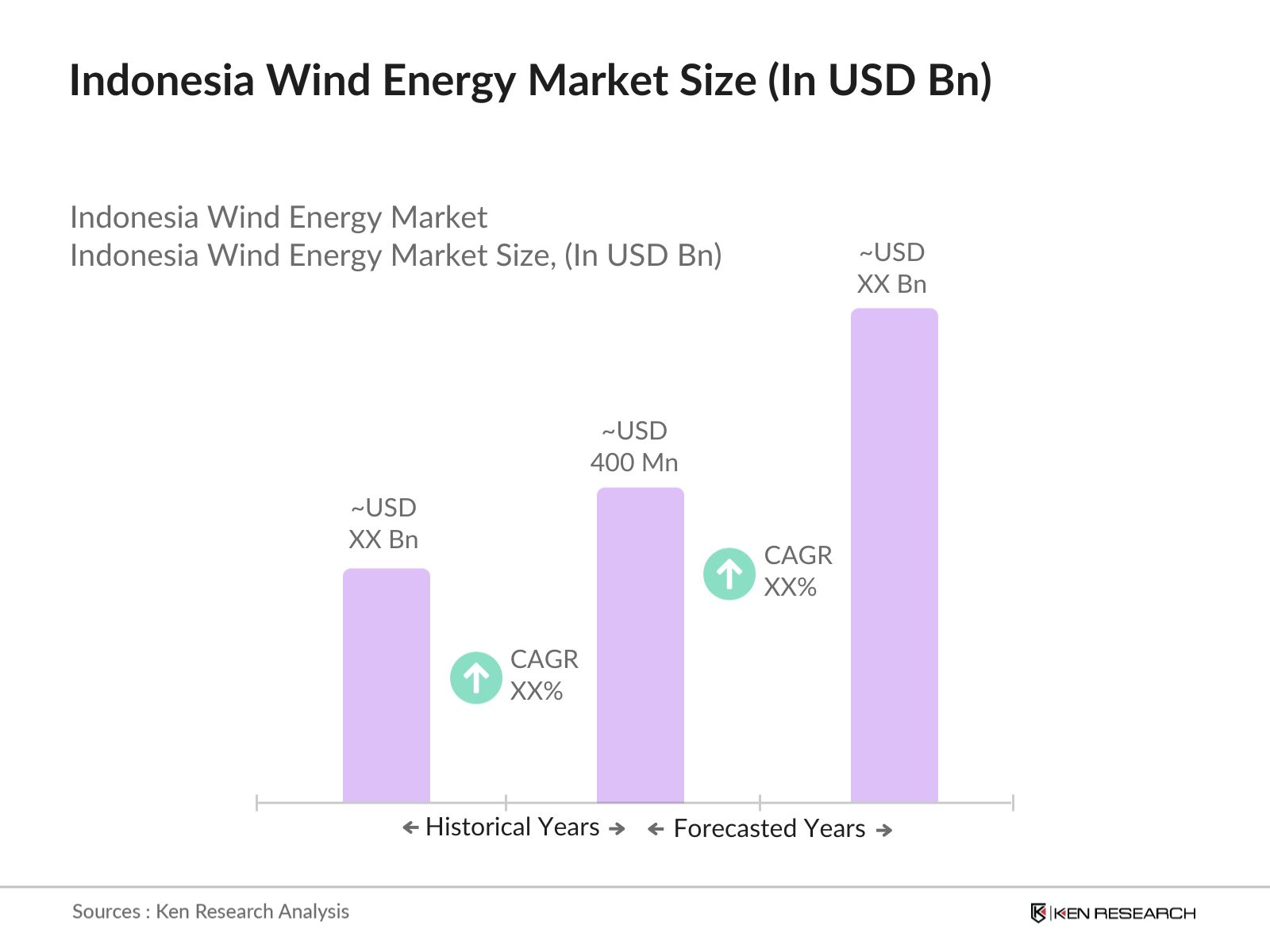
The Indonesia Wind Energy market is valued at USD 400 million, based on a five-year historical analysis. This market is primarily driven by the governments commitment to increasing the share of renewable energy in its energy mix and the growing demand for sustainable energy sources in remote and rural areas.
Challenges include complex land acquisition processes, high initial capital costs, and dependence on imported wind turbine components, which affect project feasibility and implementation.
Key players in the market include Vestas Wind Systems A/S, Siemens Gamesa Renewable Energy SA, General Electric Company, PT Pertamina Geothermal Energy, and PT Perusahaan Listrik Negara (PLN).
The market is propelled by government incentives, technological advancements, and increasing demand for renewable energy in remote and rural regions of Indonesia.

What makes us stand out is that our consultants follows Robust, Refine and Result (RRR) methodology. i.e. Robust for clear definitions, approaches and sanity checking, Refine for differentiating respondents facts and opinions and Result for presenting data with story

We have set a benchmark in the industry by offering our clients with syndicated and customized market research reports featuring coverage of entire market as well as meticulous research and analyst insights.

While we don't replace traditional research, we flip the method upside down. Our dual approach of Top Bottom & Bottom Top ensures quality deliverable by not just verifying company fundamentals but also looking at the sector and macroeconomic factors.

With one step in the future, our research team constantly tries to show you the bigger picture. We help with some of the tough questions you may encounter along the way: How is the industry positioned? Best marketing channel? KPI's of competitors? By aligning every element, we help maximize success.

Our report gives you instant access to the answers and sources that other companies might choose to hide. We elaborate each steps of research methodology we have used and showcase you the sample size to earn your trust.

If you need any support, we are here! We pride ourselves on universe strength, data quality, and quick, friendly, and professional service.