
Indonesia Women’s Apparel Market Outlook to 2030
Region:Asia
Author(s):Sanjeev
Product Code:KROD8693
December 2024
85
About the Report
Indonesia Womens Apparel Market Overview
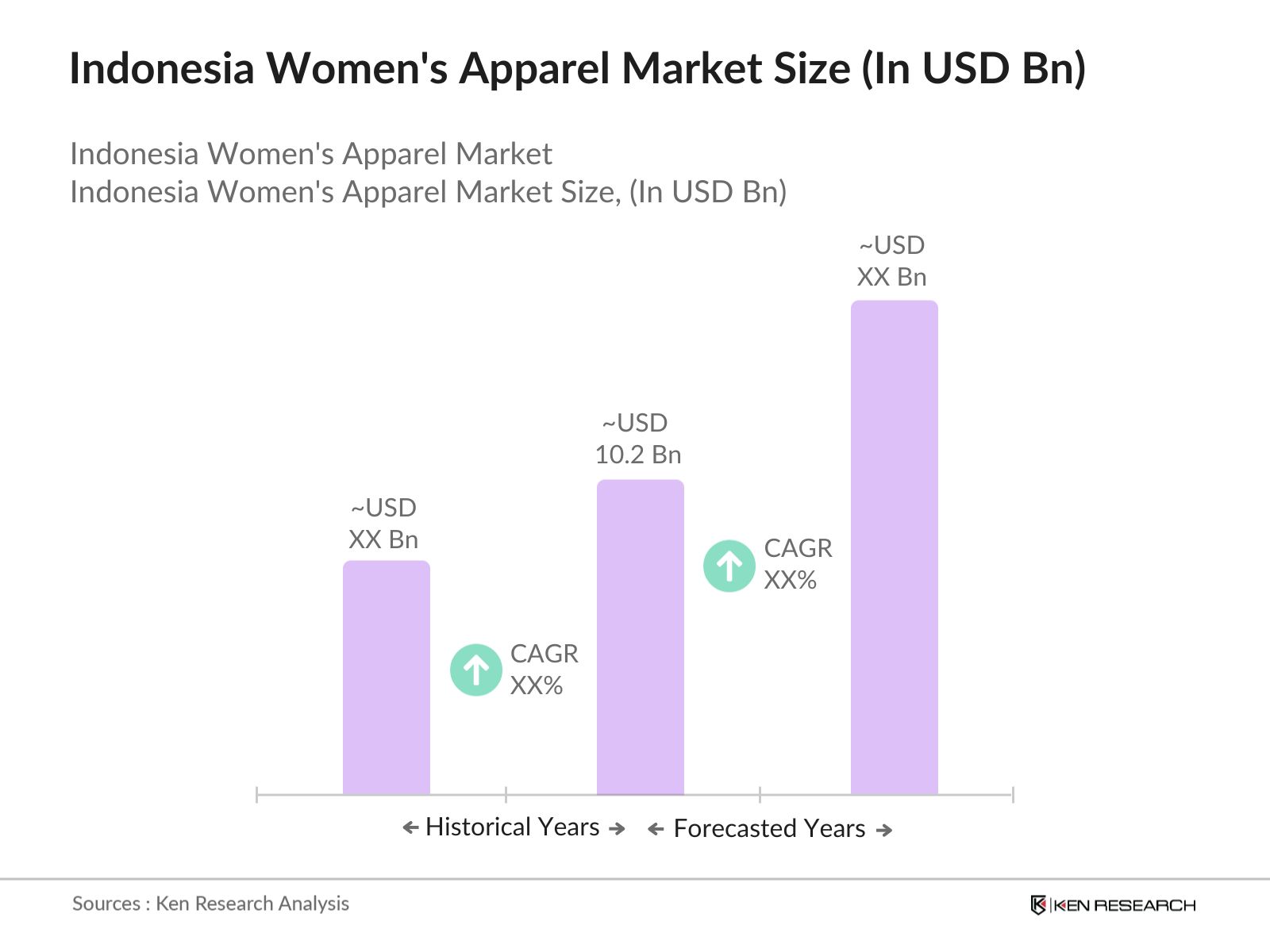
- The Indonesia womens apparel market is valued at USD 10.2 billion. This market is driven by the rising purchasing power among women and the growth of e-commerce platforms, allowing for a broader reach of apparel brands across the country. The increased presence of global fashion brands in Indonesia, along with the rising adoption of Western fashion trends, has further fueled market growth. Additionally, the rise of fast fashion and the increased focus on sustainability have begun to shape consumer preferences, pushing companies to adapt quickly to changing trends.
- The most dominant regions in Indonesias womens apparel market are Jakarta and Bali. Jakarta, being the capital and largest city, dominates due to its high population density, affluent consumer base, and widespread fashion culture. Bali's dominance, on the other hand, comes from its tourist influx, especially from countries that influence fashion trends globally. The fashion-forward crowd in these regions and a flourishing retail environment help these cities remain ahead in the market, making them key hubs for fashion brands.
- Indonesia's export of textiles and apparel is governed by stringent regulations, which include compliance with trade agreements and import tariffs. In 2023, Indonesia exported over USD 12 billion worth of apparel, but tariffs imposed by destination countries pose a challenge for exporters. Trade agreements, such as the ASEAN Free Trade Agreement, aim to reduce these barriers and enhance market access, but compliance with export standards remains a critical requirement for local manufacturers.
Indonesia Womens Apparel Market Segmentation
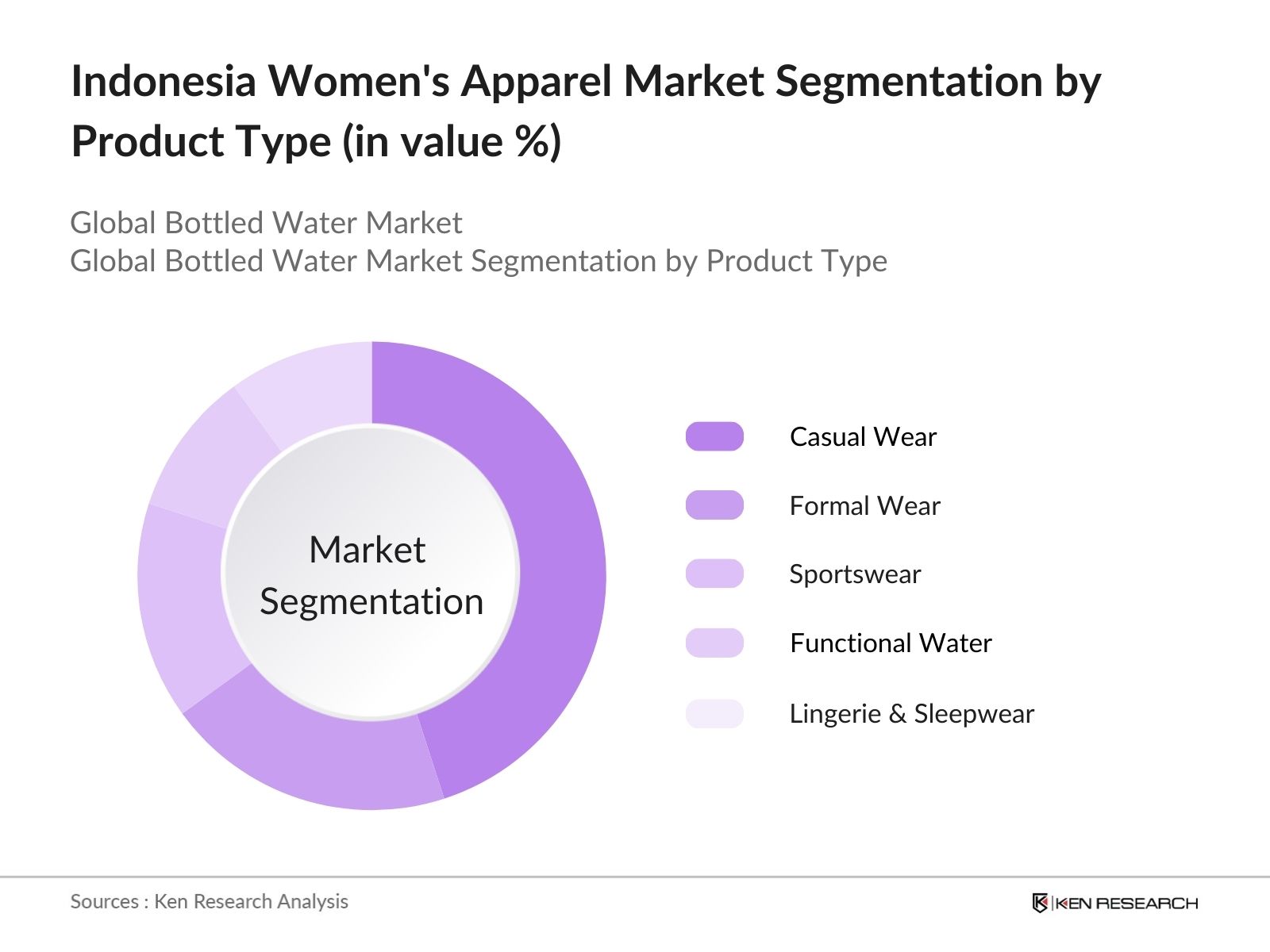
- By Product Type: The market is segmented by product type into casual wear, formal wear, sportswear, ethnic wear, and lingerie & sleepwear. Casual wear holds a dominant market share, largely due to its broad appeal among women of various age groups. The increasing preference for comfort and versatility in everyday wear, combined with the proliferation of casual fashion brands, drives this segments popularity. Furthermore, the shift towards work-from-home lifestyles has also increased the demand for comfortable yet fashionable casual clothing.
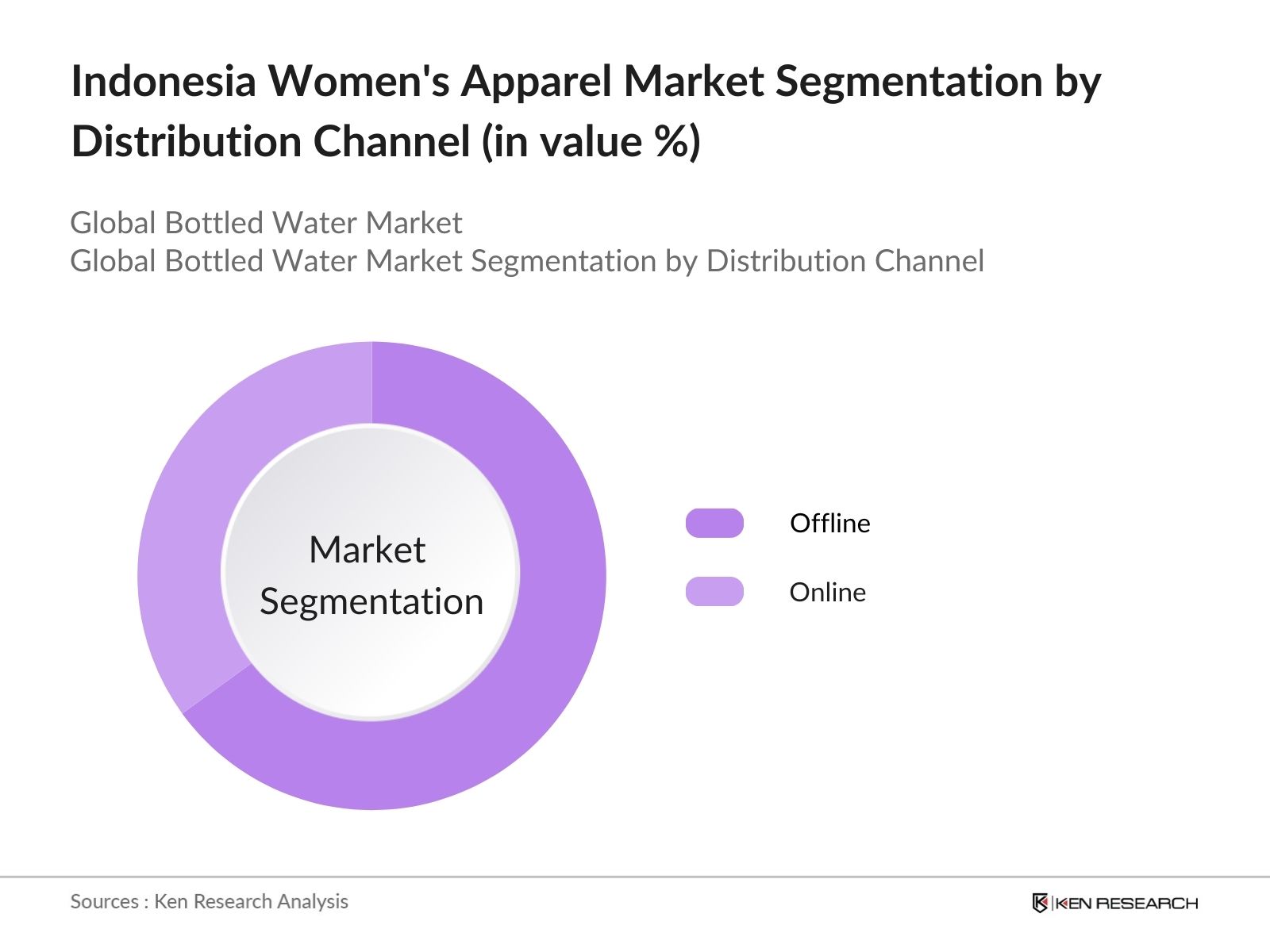
- By Distribution Channel: The market is also segmented by distribution channel into offline and online channels. Offline retail, which includes department stores, boutiques, and shopping malls, continues to dominate. Despite the rapid growth of e-commerce, offline shopping remains popular due to the importance of trying apparel before purchase, especially in a fashion-conscious market like Indonesia. Brands have also been investing heavily in creating engaging in-store experiences that resonate with consumers.
Indonesia Womens Apparel Market Competitive Landscape
The Indonesia womens apparel market is dominated by both domestic and international players, creating a competitive environment where companies strive to capture consumer attention through innovation and brand loyalty. Major players have established themselves as key trendsetters, leveraging their global and local influence to maintain their market positions.
The Indonesian market features a competitive landscape that includes both international giants like Uniqlo and H&M, and local brands such as Matahari and Berrybenka. These brands have successfully built a strong retail presence both online and offline, catering to the diverse fashion needs of Indonesian consumers. Their extensive distribution networks and continuous product innovations have allowed them to sustain their market positions.
|
Company Name |
Establishment Year |
Headquarters |
Market Presence |
Sustainability Initiatives |
Brand Penetration |
|
Matahari Department Store |
1958 |
Jakarta, Indonesia |
|||
|
Zalora Indonesia |
2012 |
Jakarta, Indonesia |
|||
|
H&M Indonesia |
1947 |
Stockholm, Sweden |
|||
|
Berrybenka |
2012 |
Jakarta, Indonesia |
|||
|
Uniqlo Indonesia |
1984 |
Tokyo, Japan |
Indonesia Womens Apparel Industry Analysis
Growth Drivers
- Increasing Female Workforce Participation: Indonesias female labor force participation rate stood at 53% in 2022, reflecting a steady increase in womens contribution to the workforce, particularly in urban areas. The countrys Gender Development Index (GDI) has shown improvements, with a score of 0.911 in 2022, indicating better gender parity in employment opportunities. This rise correlates with the demand for women's apparel, as more women enter formal and corporate sectors requiring professional attire. Government programs, such as the Ministry of Women Empowerment's initiatives, further boost women's economic inclusion, thereby driving apparel consumption
- Rise of E-commerce Platforms: Indonesia's e-commerce market grew rapidly, with over 180 million internet users in 2023, boosting online shopping for womens apparel. Digital payment transactions exceeded USD 25 billion, reflecting increased online consumer activity. Major platforms like Tokopedia and Shopee have tailored services for women, offering diverse fashion collections. With mobile penetration reaching 80%, online apparel sales, supported by convenient payment systems such as GoPay and OVO, have become increasingly accessible to women. This shift continues to reshape consumer habits, driving growth in the women's fashion segment.
- Growing Disposable Income: Indonesias GDP per capita reached USD 4,256 in 2023, reflecting rising household incomes and increased consumer spending on non-essential goods, including apparel. The average household consumption expenditure on clothing and footwear increased by 7% annually, driven by a growing middle class. This trend is supported by a stable economic outlook, with increased purchasing power leading to more frequent clothing purchases. Women's apparel benefits from this, as consumers seek both functionality and fashion, spurred by social mobility and economic confidence.
Market Challenges
- Rising Raw Material Costs: Indonesia's textile and fabric prices have seen volatility due to global supply chain disruptions and rising import costs. In 2023, the cost of cotton imports surged to USD 2.5 per kilogram, affecting apparel production costs. Local manufacturers have struggled with fluctuating material prices, which impacts their ability to maintain competitive pricing in the domestic market. This challenge is exacerbated by Indonesias reliance on imported raw materials, making the womens apparel sector sensitive to international market shifts. Source: IMF.
- Intense Local and Global Competition: The womens apparel market in Indonesia is highly fragmented, with both local players and global brands vying for market share. Local brands face competition from established global names like H&M and Zara, who benefit from economies of scale and brand recognition. The market's competitive landscape has led to aggressive pricing strategies, making it difficult for smaller players to thrive. This intense competition limits profit margins for local manufacturers and retailers.
Indonesia Womens Apparel Market Future Outlook
Over the next five years, the Indonesia womens apparel market is expected to witness substantial growth. This will be driven by the rise of e-commerce, increased consumer spending, and the adoption of Western fashion trends. Sustainability will also be a major focus, as consumers become more conscious of their purchases and demand eco-friendly clothing options. In addition, the expansion of fast fashion and customization services will continue to reshape the market landscape, providing brands with numerous opportunities to innovate.
Future Market Opportunities
- Sustainable and Ethical Fashion: Consumer demand for sustainable apparel has risen in Indonesia, with 70% of young consumers showing a preference for eco-friendly products in 2023. This shift aligns with the government's environmental regulations, such as Indonesias Green Industry Law, which promotes sustainable production practices. Apparel companies focusing on organic fabrics and environmentally friendly manufacturing processes are well-positioned to capitalize on this growing trend, appealing to a conscious consumer base.
- Customization and Personalization: Demand for customizable women's apparel has grown, supported by the rise of online tailoring services. In 2023, platforms offering made-to-order services saw a 15% increase in orders, particularly for formal and wedding attire. Digital platforms allow consumers to design and customize their apparel, providing a unique shopping experience. This trend is driven by the desire for individuality, particularly among younger, tech-savvy consumers who seek tailored fits and personalized fashion solutions. Source: IMF.
Scope of the Report
|
By Product Type |
Casual Wear Formal Wear Sportswear Ethnic Wear Lingerie & Sleepwear |
|
By Distribution Channel |
Offline (Retail Stores, Shopping Malls) Online (E-commerce Platforms, DTC) |
|
By Material Type |
Cotton Polyester Silk Synthetic Fibers Organic Fabrics |
|
By Price Range |
Premium Apparel Mid-Range Apparel Budget Apparel |
|
By Region |
North East West South |
Products
Key Target Audience
Fashion Retail Chains
Apparel Manufacturers
Online Retailers and Marketplaces
Banks and Financial Institutes
Government and Regulatory Bodies (Ministry of Trade of Indonesia)
Investment and Venture Capitalist Firms
Textile and Raw Material Suppliers
E-commerce Solution Providers
Import/Export Traders
Companies
Indonesia Womens Apparel Market Major Players
Matahari Department Store
Zalora Indonesia
H&M Indonesia
Berrybenka
Uniqlo Indonesia
Mango Indonesia
Love, Bonito
Pomelo Fashion
Marks & Spencer Indonesia
The Executive
Adelles
Cotton Ink
Minimal
SOGO Indonesia
Lea Jeans
Table of Contents
1. Indonesia Womens Apparel Market Overview
1.1. Definition and Scope
1.2. Market Taxonomy
1.3. Market Growth Rate
1.4. Market Segmentation Overview
2. Indonesia Womens Apparel Market Size (In USD Bn)
2.1. Historical Market Size
2.2. Year-On-Year Growth Analysis
2.3. Key Market Developments and Milestones
3. Indonesia Womens Apparel Market Analysis
3.1. Growth Drivers
3.1.1. Increasing Female Workforce Participation (Labor Participation Rate, Female Empowerment Index)
3.1.2. Rise of E-commerce Platforms (E-commerce Penetration, Digital Payment Usage)
3.1.3. Growing Disposable Income (GDP Per Capita, Household Consumption)
3.1.4. Fashion Consciousness and Western Influence (Fashion Trends Adoption Rate, Social Media Influence)
3.2. Market Challenges
3.2.1. Rising Raw Material Costs (Textile and Fabric Pricing Volatility)
3.2.2. Intense Local and Global Competition (Market Fragmentation, Competitive Landscape)
3.2.3. Supply Chain Disruptions (Logistics Bottlenecks, Import Tariffs)
3.2.4. Regulatory Barriers (Import Regulations, Apparel Safety Standards)
3.3. Opportunities
3.3.1. Sustainable and Ethical Fashion (Consumer Preference for Sustainable Apparel, Environmental Regulations Compliance)
3.3.2. Customization and Personalization (Customizable Apparel Demand, Online Tailoring Services)
3.3.3. Expansion into Tier-2 and Tier-3 Cities (Urbanization Trends, Infrastructure Development)
3.4. Trends
3.4.1. Influence of Celebrity Endorsements (Celebrity Collaborations, Social Media Campaigns)
3.4.2. Shift to Fast Fashion (Fast Fashion Penetration, Consumer Behavior Analysis)
3.4.3. Adoption of Digital Fashion Shows and Virtual Fitting Rooms (Technological Adoption, Virtual Reality Usage)
3.5. Government Regulations
3.5.1. Textile and Apparel Export Regulations (Trade Agreements, Import Tariffs)
3.5.2. Standards for Eco-friendly Materials (Regulatory Compliance for Sustainable Fabrics)
3.5.3. Labor Laws and Worker Welfare (Minimum Wage, Workplace Conditions Compliance)
3.6. SWOT Analysis
3.7. Stakeholder Ecosystem
3.8. Porters Five Forces
3.9. Competition Ecosystem
4. Indonesia Womens Apparel Market Segmentation
4.1. By Product Type (In Value %)
4.1.1. Casual Wear
4.1.2. Formal Wear
4.1.3. Sportswear
4.1.4. Ethnic Wear
4.1.5. Lingerie and Sleepwear
4.2. By Distribution Channel (In Value %)
4.2.1. Offline (Retail Stores, Shopping Malls, Boutiques)
4.2.2. Online (E-commerce Platforms, Direct-to-Consumer Websites)
4.3. By Material Type (In Value %)
4.3.1. Cotton
4.3.2. Polyester
4.3.3. Silk
4.3.4. Synthetic Fibers
4.3.5. Organic Fabrics
4.4. By Price Range (In Value %)
4.4.1. Premium Apparel
4.4.2. Mid-Range Apparel
4.4.3. Budget Apparel
4.5. By Region (In Value %)
4.5.1. Java
4.5.2. Sumatra
4.5.3. Bali
4.5.4. Kalimantan
4.5.5. Sulawesi
5. Indonesia Womens Apparel Market Competitive Analysis
5.1. Detailed Profiles of Major Companies
5.1.1. Matahari Department Store
5.1.2. Zalora Indonesia
5.1.3. Berrybenka
5.1.4. H&M Indonesia
5.1.5. Uniqlo Indonesia
5.1.6. The Executive
5.1.7. Love, Bonito
5.1.8. Pomelo Fashion
5.1.9. Adelles
5.1.10. Minimal
5.1.11. Mango Indonesia
5.1.12. Marks & Spencer Indonesia
5.1.13. SOGO Indonesia
5.1.14. Cotton Ink
5.1.15. Lea Jeans
5.2. Cross Comparison Parameters (No. of Employees, Headquarters, Inception Year, Revenue, Fashion Lines, Sustainability Initiatives, Market Penetration, Brand Perception)
5.3. Market Share Analysis
5.4. Strategic Initiatives
5.5. Mergers and Acquisitions
5.6. Investment Analysis
5.7. Venture Capital Funding
5.8. Government Grants
5.9. Private Equity Investments
6. Indonesia Womens Apparel Market Regulatory Framework
6.1. Textile Manufacturing Standards
6.2. Environmental Impact and Compliance
6.3. Labor Laws and Apparel Sector Guidelines
7. Indonesia Womens Apparel Future Market Size (In USD Bn)
7.1. Future Market Size Projections
7.2. Key Factors Driving Future Market Growth
8. Indonesia Womens Apparel Future Market Segmentation
8.1. By Product Type (In Value %)
8.2. By Distribution Channel (In Value %)
8.3. By Material Type (In Value %)
8.4. By Price Range (In Value %)
8.5. By Region (In Value %)
9. Indonesia Womens Apparel Market Analysts Recommendations
9.1. TAM/SAM/SOM Analysis
9.2. Customer Cohort Analysis
9.3. Marketing Initiatives
9.4. White Space Opportunity Analysis
Research Methodology
Step 1: Identification of Key Variables
The initial phase involved constructing an ecosystem map of the Indonesia womens apparel market. This step utilized extensive desk research with secondary and proprietary databases to gather relevant industry-level data and identify key variables such as product types, consumer behavior, and distribution channels that impact market dynamics.
Step 2: Market Analysis and Construction
Historical data related to the market, such as trends in womens apparel sales, consumer preferences, and growth in online platforms, was compiled and analyzed. This phase also included an assessment of offline vs. online retail penetration to provide a comprehensive view of the market structure.
Step 3: Hypothesis Validation and Expert Consultation
Market hypotheses were validated through interviews with industry experts, including representatives from leading fashion brands and apparel manufacturers. This step was crucial in confirming the operational insights gained from the initial research and ensured the reliability of the data.
Step 4: Research Synthesis and Final Output
The final step involved synthesizing the insights gained from both qualitative and quantitative research. This included feedback from industry practitioners and further consultations with key market players to verify data accuracy. The final output represents a thorough, validated analysis of the Indonesia womens apparel market.
Frequently Asked Questions
01. How big is the Indonesia Womens Apparel Market?
The Indonesia womens apparel market is valued at USD 10.2 billion, driven by increased purchasing power among female consumers and the growing influence of global fashion trends.
02. What are the challenges in the Indonesia Womens Apparel Market?
Challenges in the Indonesia womens apparel market include rising raw material costs, regulatory barriers concerning imports, and the growing competition from both domestic and international brands.
03. Who are the major players in the Indonesia Womens Apparel Market?
Key players in the Indonesia womens apparel market include Matahari Department Store, Zalora Indonesia, H&M, Berrybenka, and Uniqlo, which maintain their market presence through innovation, strong distribution networks, and brand loyalty.
04. What are the growth drivers of the Indonesia Womens Apparel Market?
The Indonesia womens apparel market is driven by factors such as the rise of e-commerce platforms, the increasing adoption of Western fashion trends, and a growing focus on sustainable and ethical fashion.
05. What trends are shaping the future of the Indonesia Womens Apparel Market?
Key trends in the Indonesia womens apparel market include the growing demand for fast fashion, the shift toward sustainable apparel, and the increasing use of digital technologies like virtual fitting rooms to enhance customer experiences.
Why Buy From Us?

What makes us stand out is that our consultants follows Robust, Refine and Result (RRR) methodology. i.e. Robust for clear definitions, approaches and sanity checking, Refine for differentiating respondents facts and opinions and Result for presenting data with story

We have set a benchmark in the industry by offering our clients with syndicated and customized market research reports featuring coverage of entire market as well as meticulous research and analyst insights.

While we don't replace traditional research, we flip the method upside down. Our dual approach of Top Bottom & Bottom Top ensures quality deliverable by not just verifying company fundamentals but also looking at the sector and macroeconomic factors.

With one step in the future, our research team constantly tries to show you the bigger picture. We help with some of the tough questions you may encounter along the way: How is the industry positioned? Best marketing channel? KPI's of competitors? By aligning every element, we help maximize success.

Our report gives you instant access to the answers and sources that other companies might choose to hide. We elaborate each steps of research methodology we have used and showcase you the sample size to earn your trust.

If you need any support, we are here! We pride ourselves on universe strength, data quality, and quick, friendly, and professional service.