
KSA Agricultural Equipment Market Outlook to 2030
Region:Saudi Arabia
Author(s):Sanjna
Product Code:KROD8727
Region:Saudi Arabia
Author(s):Sanjna
Product Code:KROD8727
December 2024
128
Listen to the audio summary
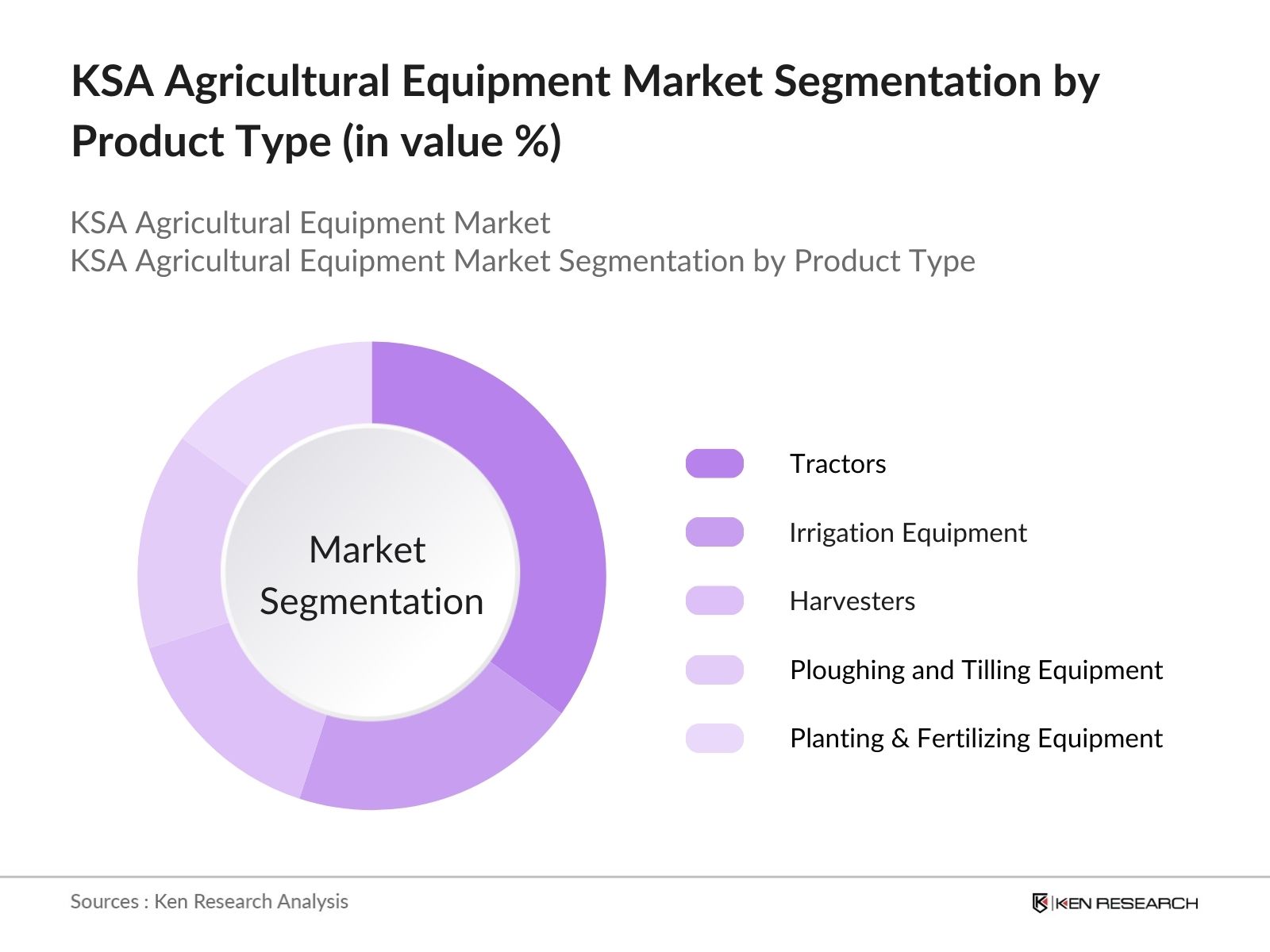
By Equipment Type: The KSA Agricultural Equipment market is segmented by equipment type into tractors, irrigation equipment, harvesters, ploughing and tilling equipment, and planting and fertilizing equipment. Recently, tractors have captured a dominant market share due to their versatility and essential role in various agricultural operations such as plowing, planting, and harvesting. The rising adoption of mechanized farming practices across the Kingdom has led to a surge in tractor sales, especially as farms modernize to improve efficiency.
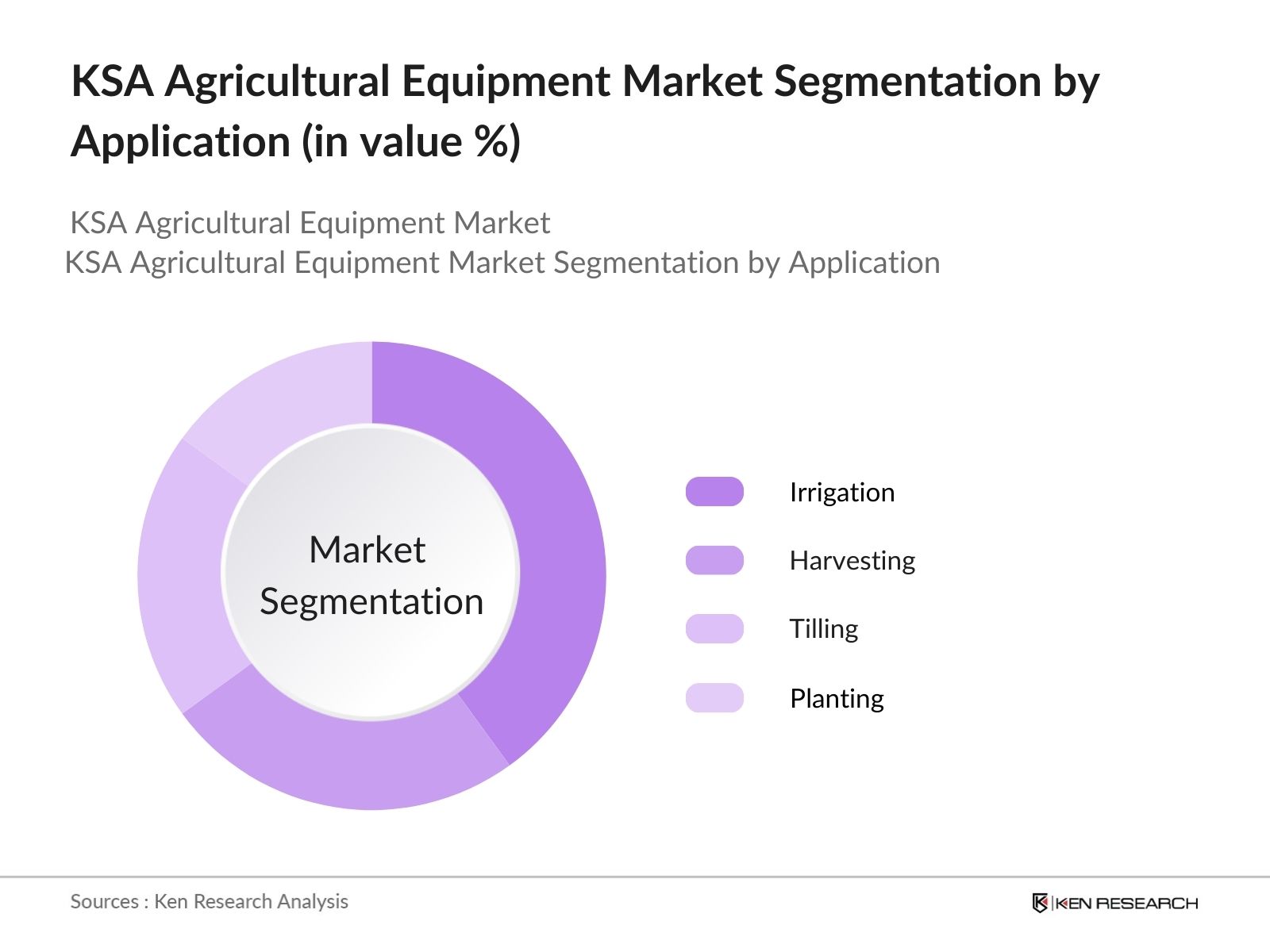
By Application: The market is also segmented by application into irrigation, harvesting, tilling, and planting. Irrigation has emerged as a key segment due to the Kingdom's arid environment and the need for efficient water management systems. The Saudi government has been investing heavily in irrigation technologies to combat water scarcity and ensure sustainable agricultural practices, which has led to the dominance of irrigation equipment in this category.
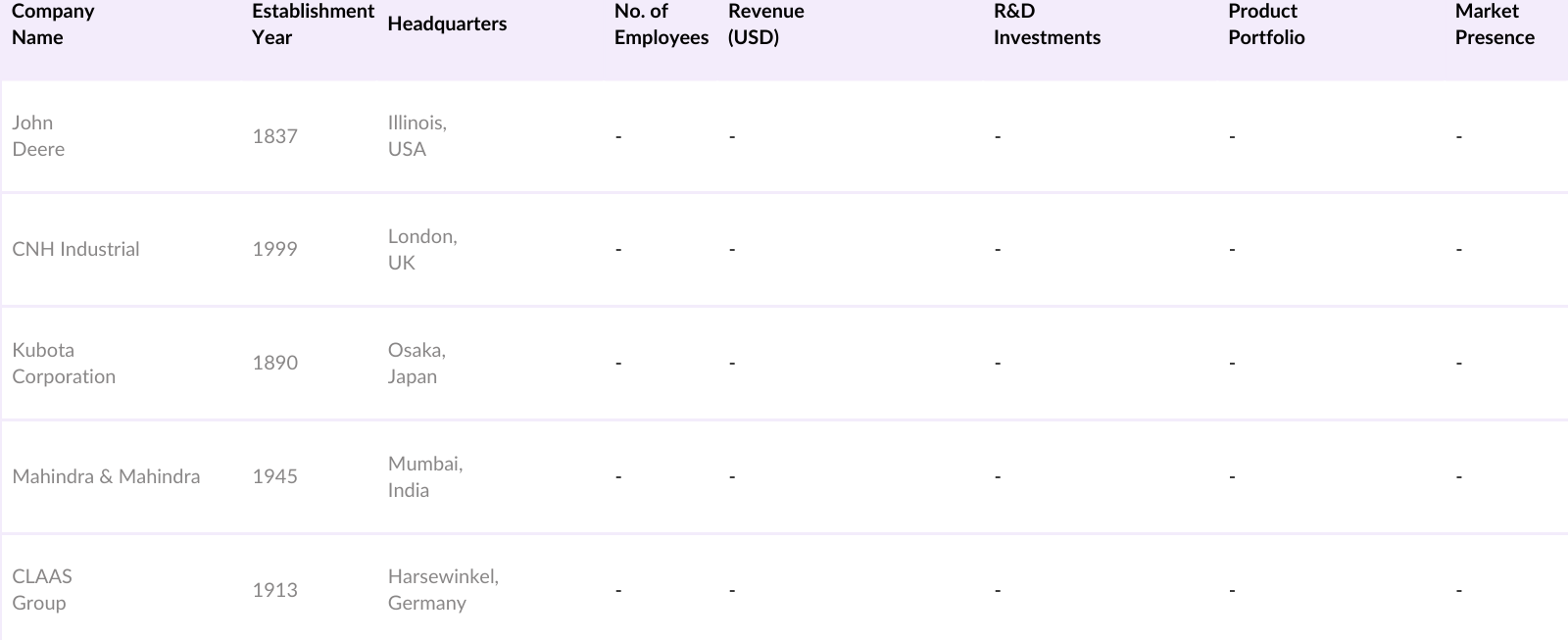
The KSA Agricultural Equipment market is dominated by both global and local players, with companies competing on the basis of technological advancements, product reliability, and after-sales services. Major international brands have a strong foothold in the market due to their extensive product portfolios and superior technology. Local companies are increasingly collaborating with global players to bring advanced machinery into the market.
KSA Agricultural Equipment market is expected to witness significant growth driven by ongoing government initiatives to modernize agriculture, the increasing need for sustainable farming practices, and the growing adoption of smart farming technologies. The emphasis on achieving food security through enhanced agricultural productivity will further fuel demand for advanced equipment. As technology continues to evolve, equipment integrating IoT, robotics, and AI for precision farming will become more prevalent, contributing to the expansion of the market.
|
Segment |
Subsegments |
|
Equipment Type |
Tractors Harvesters Irrigation Equipment Ploughing and Tilling Equipment Planting and Fertilizing Equipment |
|
Power Output |
Low Power Equipment Medium Power Equipment High Power Equipment |
|
Drive Type |
Two-Wheel Drive Four-Wheel Drive |
|
Application |
Irrigation Harvesting Tilling Planting |
|
Region |
Riyadh Jeddah Dammam Other Regions |
1.1 Definition and Scope
1.2 Market Taxonomy
1.3 Market Growth Rate
1.4 Market Segmentation Overview
2.1 Historical Market Size
2.2 Year-On-Year Growth Analysis
2.3 Key Market Developments and Milestones
3.1 Growth Drivers (e.g., Government Support Programs, Agricultural Modernization)
3.1.1 Government Agricultural Policies
3.1.2 Increasing Mechanization of Agriculture
3.1.3 Shift to Sustainable Agriculture
3.2 Market Challenges (e.g., High Cost of Equipment, Water Scarcity Issues)
3.2.1 High Initial Investment
3.2.2 Maintenance and Technical Expertise Shortage
3.3 Opportunities (e.g., Precision Farming, Smart Farming Initiatives)
3.3.1 Growing Adoption of IoT and AI in Agriculture
3.3.2 Rise in Agritech Startups
3.4 Trends (e.g., Use of Drones in Agriculture, Data-driven Farming)
3.4.1 Integration of Drones and Satellite Imaging
3.4.2 Robotics in Agricultural Practices
3.5 Government Regulation (e.g., Import Tariffs, Subsidy Programs)
3.5.1 National Agricultural Development Strategy
3.5.2 Government Subsidies for Equipment Purchase
3.6 SWOT Analysis
3.7 Stake Ecosystem
3.8 Porters Five Forces Analysis
3.9 Competition Ecosystem
4.1 By Equipment Type (In Value %)
4.1.1 Tractors
4.1.2 Harvesters
4.1.3 Irrigation Equipment
4.1.4 Ploughing and Tilling Equipment
4.1.5 Planting and Fertilizing Equipment
4.2 By Power Output (In Value %)
4.2.1 Low Power Equipment
4.2.2 Medium Power Equipment
4.2.3 High Power Equipment
4.3 By Drive Type (In Value %)
4.3.1 Two-Wheel Drive
4.3.2 Four-Wheel Drive
4.4 By Application (In Value %)
4.4.1 Irrigation
4.4.2 Harvesting
4.4.3 Tilling
4.4.4 Planting
4.5 By Region (In Value %)
4.5.1 Riyadh
4.5.2 Jeddah
4.5.3 Dammam
4.5.4 Other Regions
5.1 Detailed Profiles of Major Companies
5.1.1 John Deere
5.1.2 CNH Industrial
5.1.3 Kubota Corporation
5.1.4 AGCO Corporation
5.1.5 Mahindra & Mahindra Ltd.
5.1.6 CLAAS Group
5.1.7 Yanmar Co., Ltd.
5.1.8 SDF Group
5.1.9 Iseki & Co., Ltd.
5.1.10 New Holland Agriculture
5.2 Cross Comparison Parameters (No. of Employees, Market Presence, Technology Adoption, Product Portfolio, Revenue, Market Share, Strategic Initiatives, Innovation Index)
5.3 Market Share Analysis
5.4 Strategic Initiatives
5.5 Mergers and Acquisitions
5.6 Investment Analysis
5.7 Joint Ventures and Collaborations
6.1 Environmental Regulations
6.2 Compliance Requirements
6.3 Subsidy and Incentive Programs
6.4 Certification Processes
7.1 Future Market Size Projections
7.2 Key Factors Driving Future Market Growth
8.1 By Equipment Type (In Value %)
8.2 By Power Output (In Value %)
8.3 By Drive Type (In Value %)
8.4 By Application (In Value %)
8.5 By Region (In Value %)
9.1 TAM/SAM/SOM Analysis
9.2 Customer Cohort Analysis
9.3 Marketing Strategies
9.4 White Space Opportunity Analysis
Disclaimer Contact UsThe initial step involved mapping all key stakeholders within the KSA Agricultural Equipment Market. Secondary research from proprietary databases and industry publications was conducted to identify critical variables affecting the market.
Historical data from 2018 onwards was analyzed to assess trends in market size, product penetration, and equipment adoption rates. This data was cross-verified using multiple sources to ensure reliability.
Industry experts were consulted to validate the identified trends and market projections. These experts provided insights into the future market trajectory and the impact of government policies on the markets growth.
After hypothesis validation, data from various stakeholders were synthesized to provide an accurate representation of the market. This phase also included interviews with leading manufacturers to corroborate data and gain deeper insights into market dynamics.
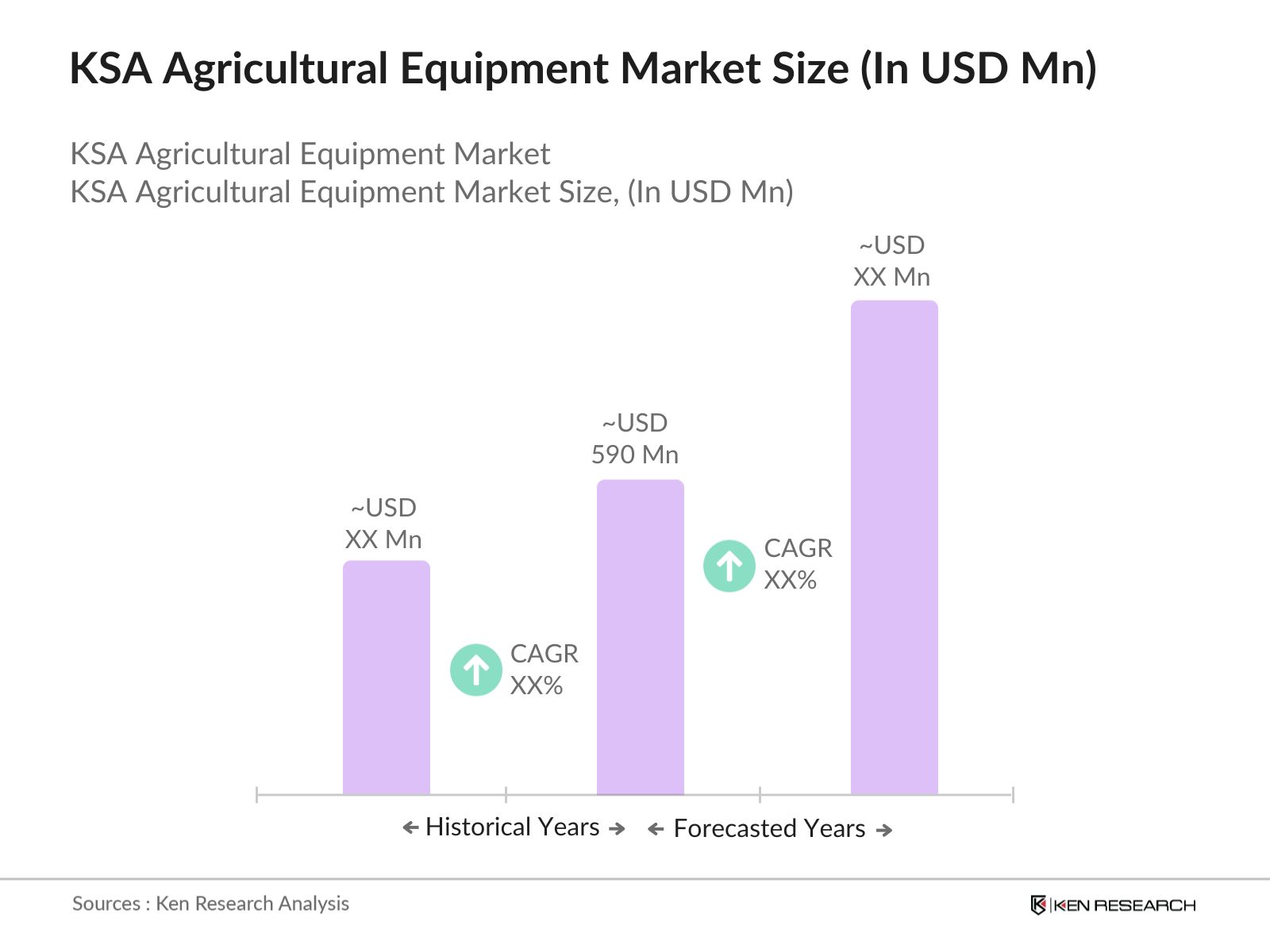
The KSA Agricultural Equipment market is valued at USD 280 million, primarily driven by government investments in agricultural modernization and the increasing adoption of mechanized farming.
Challenges in KSA Agricultural Equipment Market include high initial investment costs, water scarcity issues affecting crop productivity, and a lack of skilled labor to operate advanced machinery.
Major players in KSA Agricultural Equipment Market include John Deere, CNH Industrial, Kubota Corporation, Mahindra & Mahindra, and CLAAS Group, all of whom have extensive product portfolios and significant market presence in the Kingdom.
Key drivers in KSA Agricultural Equipment Market include government support through Vision 2030, the push for food security, the rising adoption of precision farming technologies, and the growing focus on sustainable agricultural practices.

What makes us stand out is that our consultants follows Robust, Refine and Result (RRR) methodology. i.e. Robust for clear definitions, approaches and sanity checking, Refine for differentiating respondents facts and opinions and Result for presenting data with story

We have set a benchmark in the industry by offering our clients with syndicated and customized market research reports featuring coverage of entire market as well as meticulous research and analyst insights.

While we don't replace traditional research, we flip the method upside down. Our dual approach of Top Bottom & Bottom Top ensures quality deliverable by not just verifying company fundamentals but also looking at the sector and macroeconomic factors.

With one step in the future, our research team constantly tries to show you the bigger picture. We help with some of the tough questions you may encounter along the way: How is the industry positioned? Best marketing channel? KPI's of competitors? By aligning every element, we help maximize success.

Our report gives you instant access to the answers and sources that other companies might choose to hide. We elaborate each steps of research methodology we have used and showcase you the sample size to earn your trust.

If you need any support, we are here! We pride ourselves on universe strength, data quality, and quick, friendly, and professional service.