















KSA AI Diagnostics Market Outlook 2030
Region:Middle East
Author(s):Shivani Mehra
Product Code:KROD5239
November 2024
93
About the Report
KSA AI Diagnostics Market Overview
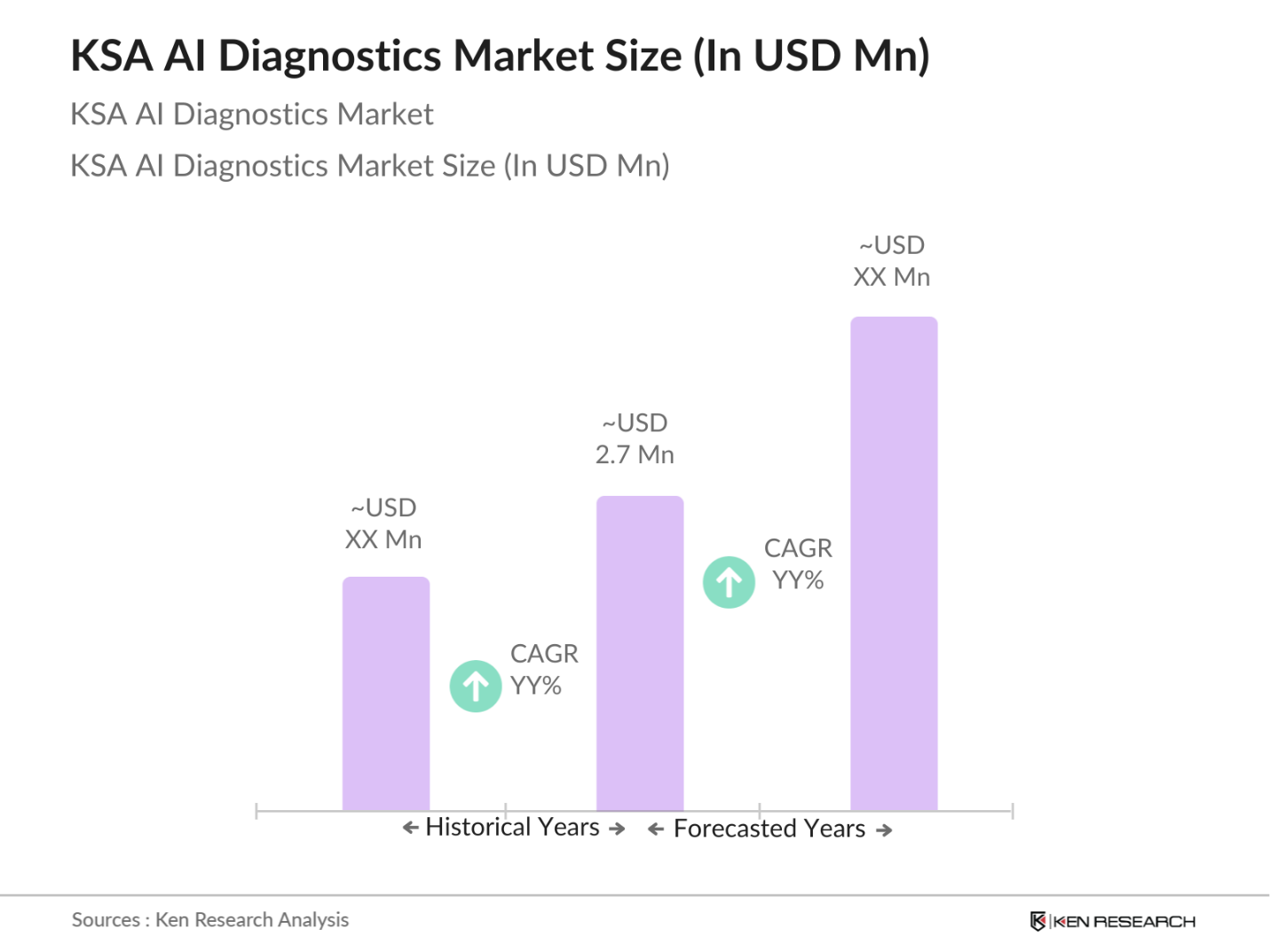
- The KSA AI diagnostics market is valued at USD 2.7 million, based on a five-year historical analysis. The market is primarily driven by the increasing adoption of AI technologies in healthcare, particularly in diagnostic imaging and pathology. AI-driven diagnostics offer faster, more accurate detection of diseases, which is critical in managing the rising prevalence of chronic diseases in the region.
- Riyadh and Jeddah are the dominant cities in the KSA AI diagnostics market due to their advanced healthcare facilities and concentrated population of high-income residents. These cities house some of the most prominent hospitals and research institutions that are adopting AI technologies for diagnostic purposes. The governments focus on making Riyadh a regional hub for AI-driven healthcare services also contributes to the dominance of this city in the market.
- The Saudi Food and Drug Authority (SFDA) oversees the approval process for AI-based diagnostic tools in the healthcare sector. AI clinical trials are subject to rigorous evaluations to ensure the safety and effectiveness of diagnostic solutions. In 2023, the SFDA approved over 10 AI-based diagnostic tools, including those for cancer detection and cardiovascular disease monitoring. This reflects significant progress in integrating AI into Saudi Arabia's healthcare system, aligning with the government's initiative for healthcare modernization.
KSA AI Diagnostics Market Segmentation
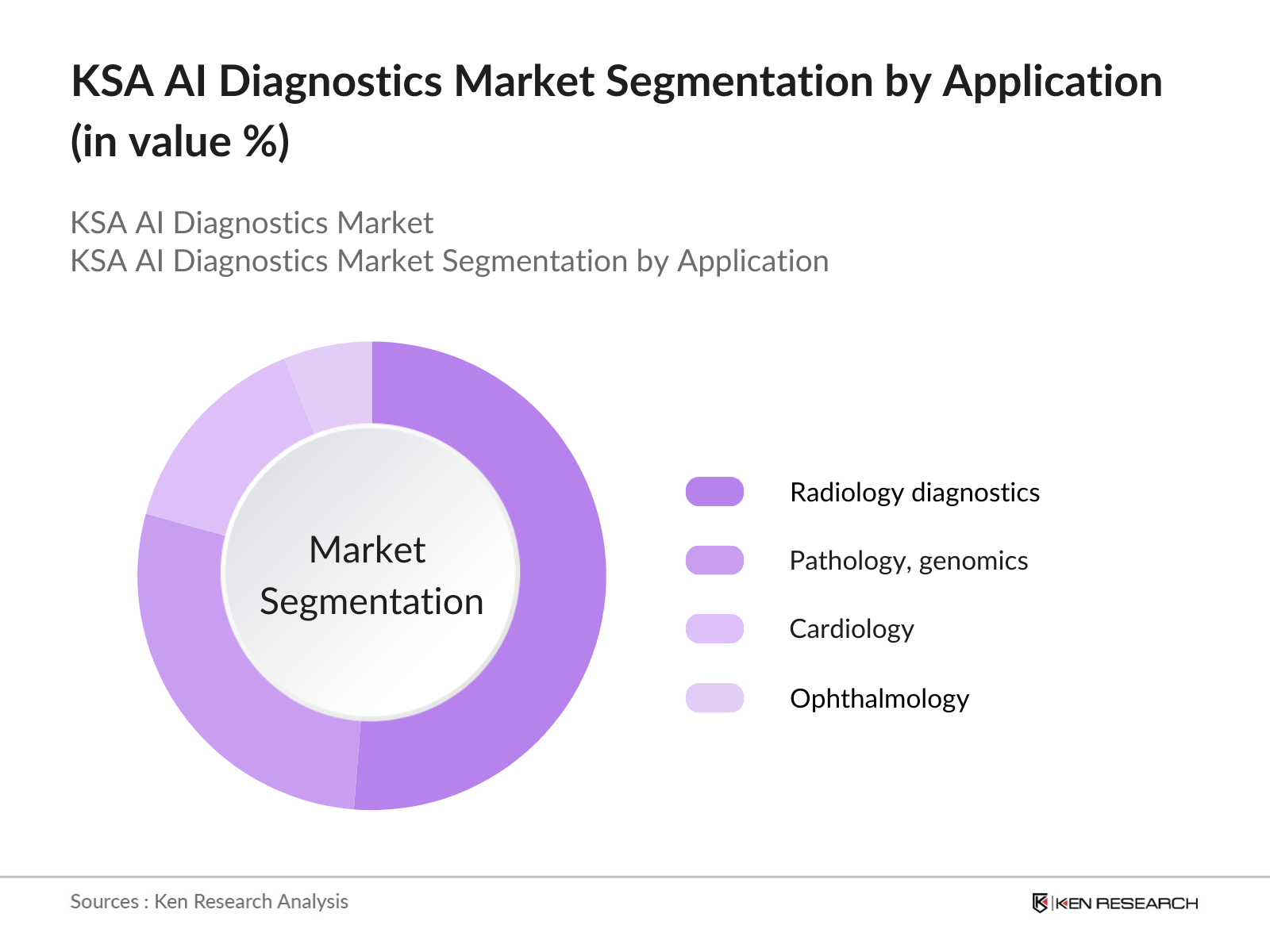
- By Application: The KSA AI diagnostics market is segmented by application into radiology diagnostics, pathology, genomics, cardiology, and ophthalmology. Radiology diagnostics have a dominant market share due to their significant role in early disease detection, especially in imaging tests like X-rays, MRI, and CT scans. The application of AI in this segment allows for faster image processing and increased accuracy, making it indispensable in high-volume diagnostic facilities. The increasing demand for early diagnosis of diseases like cancer further boosts the demand for AI-driven radiology solutions.
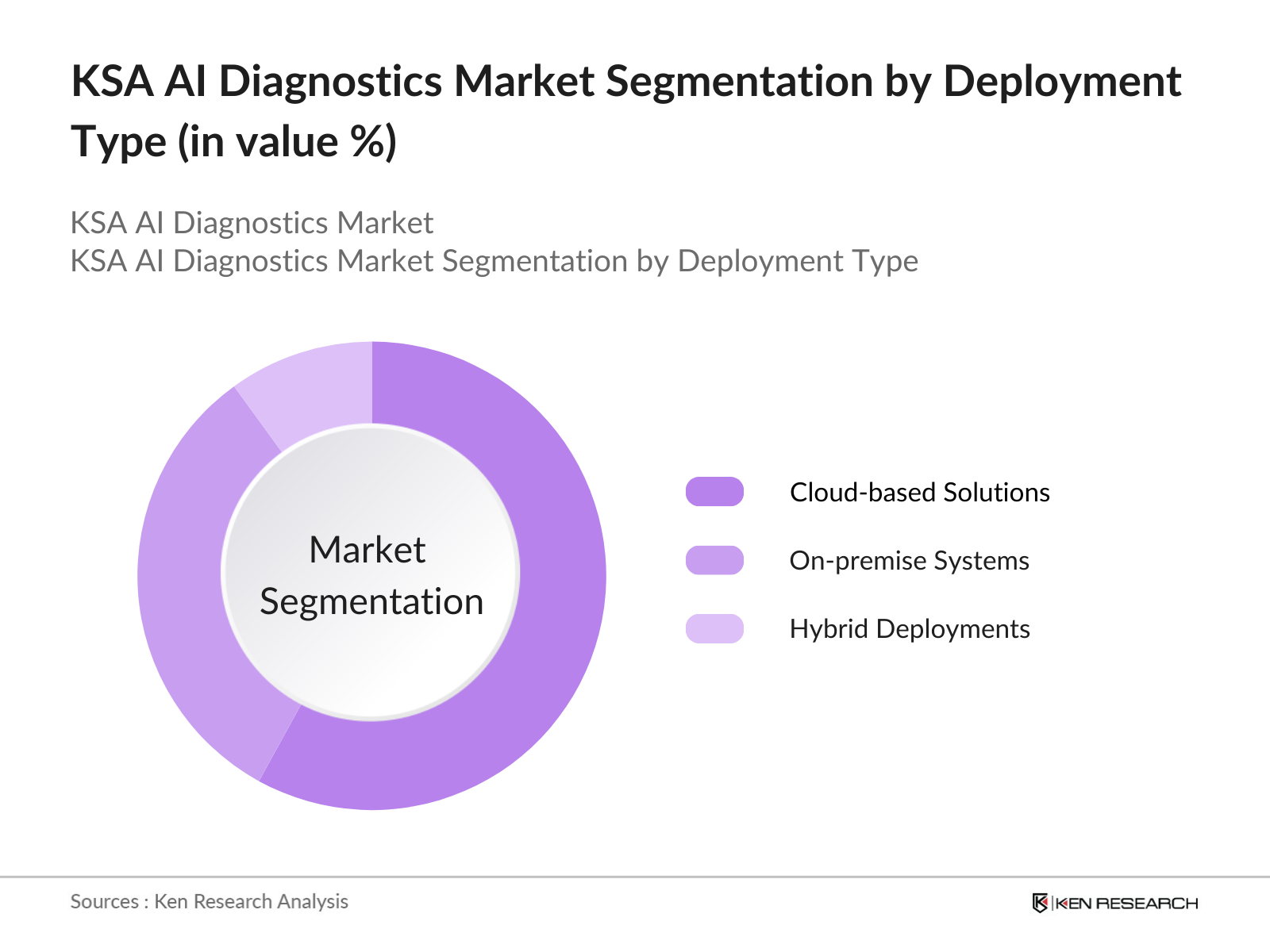
- By Deployment Type: The KSA AI diagnostics market is also segmented by deployment type into cloud-based solutions, on-premise systems, and hybrid deployments. Cloud-based solutions hold the largest market share because of their scalability, cost-effectiveness, and ease of integration with existing healthcare systems. Cloud-based AI diagnostics enable hospitals and clinics to store and analyze vast amounts of patient data efficiently, making them a popular choice, especially for larger healthcare institutions that handle significant diagnostic workloads.
KSA AI Diagnostics Market Competitive Landscape
The KSA AI diagnostics market is dominated by both global and regional players who are driving the innovation and adoption of AI technologies in healthcare. Major companies are focusing on partnerships and collaborations with local healthcare providers to expand their market presence. The competitive landscape is shaped by advancements in AI technology, regulatory compliance, and the ability to meet specific healthcare needs within the region.
|
Company |
Established |
Headquarters |
Key Products |
AI Diagnostic Solutions |
Market Presence |
R&D Focus |
Collaborations |
|
IBM Watson Health |
2015 |
New York, USA |
- |
- |
- |
- |
- |
|
Siemens Healthineers |
1847 |
Erlangen, Germany |
- |
- |
- |
- |
- |
|
Philips Healthcare |
1891 |
Amsterdam, Netherlands |
- |
- |
- |
- |
- |
|
PathAI |
2016 |
Boston, USA |
- |
- |
- |
- |
- |
|
Zebra Medical Vision |
2014 |
Tel Aviv, Israel |
- |
- |
- |
- |
- |
KSA AI Diagnostics IndustryAnalysis
KSA AI Diagnostics Market Growth Driver
- Government Initiatives: The Saudi government has prioritized AI in diagnostics as part of its healthcare modernization efforts. The country has invested over USD 1.5 billion in digital health initiatives, according to the Ministry of Health. These initiatives aim to integrate AI solutions in at least 50 hospitals nationwide by 2025 to enhance diagnostic accuracy and efficiency. Supported by the Saudi Data and AI Authority (SDAIA), these efforts are expected to significantly drive the adoption of AI in the healthcare sector.
- Increasing Prevalence of Chronic Diseases: Chronic diseases like diabetes and cardiovascular conditions are rising in Saudi Arabia, driving demand for AI-based diagnostic solutions. With millions of people diagnosed with these conditions, there is a growing need for advanced diagnostic technologies like AI, which can offer earlier detection and improved patient outcomes. The burden of chronic diseases is expected to significantly boost the adoption of AI diagnostics in healthcare systems across the country.
- Investments in Healthcare Infrastructure: Saudi Arabia is investing heavily in healthcare infrastructure to enhance the capabilities of diagnostic services. The government has allocated USD 19 billion for healthcare improvements, with a significant portion aimed at digital health and AI-driven solutions. The Ministry of Health aims to establish AI-powered diagnostic centers in at least 10 major cities, facilitating the use of predictive analytics for patient care. These investments reflect the country's ambition to become a global leader in healthcare innovation by improving diagnostic accuracy and reducing waiting times.
KSA AI Diagnostics Market Challenges
- High Cost of AI Solutions Implementation: The cost of integrating AI diagnostics into healthcare systems remains a challenge for many hospitals and clinics in Saudi Arabia. Implementation costs for AI solutions can exceed USD 1 million for large-scale hospital networks, according to the Ministry of Health. Smaller healthcare providers face difficulties in acquiring and maintaining AI technologies due to limited budgets. The high initial investment required for AI infrastructure, including hardware, software, and training, creates a financial barrier for many institutions, slowing down the widespread adoption of AI diagnostics.
- Data Privacy and Security Concerns: The rapid adoption of AI in healthcare diagnostics raises significant concerns regarding data privacy and security. The Saudi Data & AI Authority (SDAIA) reported that healthcare data breaches increased by 25% in 2023, putting sensitive patient information at risk. As AI relies heavily on data for machine learning and diagnostic accuracy, maintaining the security of healthcare data is crucial. Hospitals and AI providers in Saudi Arabia are required to comply with strict data protection regulations, but ensuring robust cybersecurity measures remains a persistent challenge.
KSA AI Diagnostics Market Future Outlook
Over the next five years, the KSA AI diagnostics market is expected to show substantial growth, driven by continuous government support under Vision 2030, the rising prevalence of chronic diseases, and advancements in AI technology. Increasing investments in healthcare infrastructure, coupled with partnerships between global AI diagnostic firms and local healthcare providers, are set to propel the market forward.
Market Opportunities:
- AI for Early Detection of Cancers and Neurological Disorders: AI technologies are proving to be highly effective in the early detection of complex diseases like cancer and neurological disorders. AI algorithms can analyze imaging data with greater precision, enabling earlier detection of cancers such as breast, lung, and prostate. Similarly, AI-based tools are being utilized to diagnose neurological disorders like Alzheimers and Parkinsons disease, improving treatment outcomes through earlier intervention.
- Adoption of Predictive Analytics for Patient Monitoring: The adoption of predictive analytics for patient monitoring is gaining momentum in Saudi Arabia. AI-driven models are increasingly used to monitor chronic patients, particularly those with conditions like diabetes and heart disease. Predictive analytics helps healthcare providers anticipate complications before they arise, improving patient outcomes and reducing hospital readmissions. This trend is expected to continue as healthcare systems in the Kingdom adopt more AI-powered monitoring tools.
Scope of the Report
|
Segmentation |
Sub-segmentation |
|---|---|
|
By Application |
Radiology Diagnostics |
|
By Deployment |
Cloud-based Solutions |
|
By End-User |
Hospitals & Clinics |
|
By Technology |
Machine Learning |
|
By Region |
Riyadh |
Products
Key Target Audience
Hospitals and Clinics
Telemedicine Providers
Diagnostic Centers
Research Laboratories
Medical Device Manufacturers
Government and Regulatory Bodies (Saudi Data & AI Authority, Ministry of Health)
Investment and Venture Capitalist Firms
Insurance Providers
Companies
Players mentioned in the report
IBM Watson Health
Siemens Healthineers
Philips Healthcare
PathAI
Zebra Medical Vision
Medtronic
GE Healthcare
Aidoc
Arterys
Viz.ai
Tempus
Butterfly Network
Enlitic
Freenome
Health Fidelity
Table of Contents
1. KSA AI Diagnostics Market Overview
1.1. Definition and Scope
1.2. Market Taxonomy
1.3. Market Growth Rate (Incorporating AI-driven diagnostics penetration in KSA healthcare systems)
1.4. Market Segmentation Overview
2. KSA AI Diagnostics Market Size (In USD Bn)
2.1. Historical Market Size (Diagnostic Solutions via AI for Imaging, Pathology, and Genomics)
2.2. Year-On-Year Growth Analysis (Adoption Rates among Major Healthcare Providers)
2.3. Key Market Developments and Milestones (AI Integration in KSA Hospitals and Healthcare Facilities)
3. KSA AI Diagnostics Market Analysis
3.1. Growth Drivers
3.1.1. Government Initiatives (Saudi Vision 2030 and National Transformation Program)
3.1.2. Increasing Prevalence of Chronic Diseases
3.1.3. Investments in Healthcare Infrastructure
3.1.4. Rising Demand for Telemedicine and AI Solutions
3.2. Market Challenges
3.2.1. High Cost of AI Solutions Implementation
3.2.2. Data Privacy and Security Concerns
3.2.3. Lack of Skilled Workforce for AI Management
3.3. Opportunities
3.3.1. AI Integration in Primary Care Diagnostics
3.3.2. Growing R&D Initiatives in AI Healthcare
3.3.3. Collaborations with Global AI Diagnostic Firms
3.4. Trends
3.4.1. AI for Early Detection of Cancers and Neurological Disorders
3.4.2. Adoption of Predictive Analytics for Patient Monitoring
3.4.3. Cloud-based AI Solutions for Remote Diagnostics
3.5. Government Regulation
3.5.1. Health Data Governance and AI Ethics (MOH and Saudi Data & AI Authority)
3.5.2. AI Clinical Trials and Regulatory Approvals
3.5.3. AI Adoption Guidelines in Medical Practices
3.6. SWOT Analysis (AI Diagnostics Specific)
3.7. Stake Ecosystem (AI Developers, Healthcare Providers, and Regulators)
3.8. Porters Five Forces (Impact of AI Solutions on the Healthcare Diagnostics Market)
3.9. Competition Ecosystem (Emerging Startups and Global AI Providers in KSA)
4. KSA AI Diagnostics Market Segmentation
4.1. By Application (In Value %)
4.1.1. Radiology Diagnostics (CT, MRI, X-ray)
4.1.2. Pathology (AI-based Screening for Tumors and Cancers)
4.1.3. Genomics (AI-driven Gene Sequencing Diagnostics)
4.1.4. Cardiology (AI Solutions for Cardiac Imaging)
4.1.5. Ophthalmology (AI-enhanced Retina Diagnostics)
4.2. By Deployment Type (In Value %)
4.2.1. Cloud-based Solutions
4.2.2. On-Premise Systems
4.2.3. Hybrid Deployments
4.3. By End-User (In Value %)
4.3.1. Hospitals & Clinics
4.3.2. Research Laboratories
4.3.3. Diagnostic Centers
4.3.4. Telemedicine Providers
4.4. By Technology (In Value %)
4.4.1. Machine Learning
4.4.2. Deep Learning
4.4.3. Natural Language Processing (NLP)
4.4.4. Computer Vision
4.5. By Region (In Value %)
4.5.1. Riyadh
4.5.2. Jeddah
4.5.3. Dammam
4.5.4. Makkah
4.5.5. Madinah
5. KSA AI Diagnostics Market Competitive Analysis
5.1. Detailed Profiles of Major Companies (Including AI Diagnostic Tool Providers and Collaborators)
5.1.1. IBM Watson Health
5.1.2. GE Healthcare
5.1.3. Siemens Healthineers
5.1.4. Philips Healthcare
5.1.5. Medtronic
5.1.6. PathAI
5.1.7. Zebra Medical Vision
5.1.8. Aidoc
5.1.9. Tempus
5.1.10. Butterfly Network
5.1.11. Arterys
5.1.12. Viz.ai
5.1.13. Enlitic
5.1.14. Health Fidelity
5.1.15. Freenome
5.2. Cross Comparison Parameters (Headquarters, AI Diagnostic Products, Collaborations with Healthcare Providers, R&D Focus, Cloud vs On-Premise Solutions, Revenue, AI Accuracy Rate, Global Presence)
5.3. Market Share Analysis (Top 5 Players and Market Penetration in KSA)
5.4. Strategic Initiatives
5.5. Mergers and Acquisitions
5.6. Investment Analysis
5.7. Venture Capital Funding
5.8. Government Grants
5.9. Private Equity Investments
6. KSA AI Diagnostics Market Regulatory Framework
6.1. AI Diagnostic Standards in KSA
6.2. Compliance with Health Data Protection Laws
6.3. AI Certification Processes for Diagnostic Tools
7. KSA AI Diagnostics Future Market Size (In USD Bn)
7.1. Future Market Size Projections
7.2. Key Factors Driving Future Market Growth
8. KSA AI Diagnostics Future Market Segmentation
8.1. By Application (In Value %)
8.2. By Deployment Type (In Value %)
8.3. By Technology (In Value %)
8.4. By End-User (In Value %)
8.5. By Region (In Value %)
9. KSA AI Diagnostics Market Analysts Recommendations
9.1. TAM/SAM/SOM Analysis (Total Addressable Market, Serviceable Available Market, Serviceable Obtainable Market)
9.2. Customer Cohort Analysis
9.3. Marketing Initiatives
9.4. White Space Opportunity Analysis
Disclaimer Contact UsResearch Methodology
Step 1: Identification of Key Variables
The initial step involves mapping out the healthcare ecosystem in KSA, identifying major stakeholders such as AI solution providers, healthcare institutions, and regulatory bodies. Desk research is conducted using secondary databases to gather key industry-level data points and define the critical variables that shape the market dynamics.
Step 2: Market Analysis and Construction
This phase includes the analysis of historical data, focusing on the adoption rate of AI diagnostics in healthcare. We compile data on the deployment of AI technologies in key diagnostic applications such as radiology and pathology, analyzing the resultant impact on revenue generation and market penetration.
Step 3: Hypothesis Validation and Expert Consultation
Market hypotheses are developed and validated through expert consultations. Interviews with key industry players, such as AI solution providers and healthcare institutions, offer insights into operational practices, enabling the refinement of market estimates and understanding of market trends.
Step 4: Research Synthesis and Final Output
In the final stage, data is synthesized from multiple healthcare providers to ensure the accuracy of market trends and revenue estimates. Engagements with hospitals and clinics provide first-hand insights into the use of AI diagnostics in clinical practices, ensuring a validated market analysis.
Frequently Asked Questions
01. How big is the KSA AI Diagnostics Market?
The KSA AI diagnostics market is valued at USD 2.7 million, driven by increased adoption of AI technologies in healthcare for diagnostic applications like radiology, pathology, and genomics.
02. What are the challenges in the KSA AI Diagnostics Market?
Key challenges include the high cost of implementing AI diagnostic solutions, concerns regarding data privacy, and the lack of skilled professionals to manage AI technologies within healthcare settings.
03. Who are the major players in the KSA AI Diagnostics Market?
Major players include IBM Watson Health, Siemens Healthineers, Philips Healthcare, PathAI, and Zebra Medical Vision, all of which dominate due to their strong partnerships with local healthcare institutions.
04. What are the growth drivers of the KSA AI Diagnostics Market?
Growth is propelled by government initiatives such as Vision 2030, rising demand for efficient diagnostics in managing chronic diseases, and the increasing investment in healthcare infrastructure in KSA.
Why Buy From Us?

What makes us stand out is that our consultants follows Robust, Refine and Result (RRR) methodology. i.e. Robust for clear definitions, approaches and sanity checking, Refine for differentiating respondents facts and opinions and Result for presenting data with story

We have set a benchmark in the industry by offering our clients with syndicated and customized market research reports featuring coverage of entire market as well as meticulous research and analyst insights.

While we don't replace traditional research, we flip the method upside down. Our dual approach of Top Bottom & Bottom Top ensures quality deliverable by not just verifying company fundamentals but also looking at the sector and macroeconomic factors.

With one step in the future, our research team constantly tries to show you the bigger picture. We help with some of the tough questions you may encounter along the way: How is the industry positioned? Best marketing channel? KPI's of competitors? By aligning every element, we help maximize success.

Our report gives you instant access to the answers and sources that other companies might choose to hide. We elaborate each steps of research methodology we have used and showcase you the sample size to earn your trust.

If you need any support, we are here! We pride ourselves on universe strength, data quality, and quick, friendly, and professional service.