
KSA Beverages Market Outlook to 2030
Region:Saudi Arabia
Author(s):Naman Rohilla
Product Code:KROD4515
Region:Saudi Arabia
Author(s):Naman Rohilla
Product Code:KROD4515
October 2024
89
The KSA Beverages market is dominated by a mix of local and international players. Almarai and Nadec represent strong local companies, whereas global brands like PepsiCo and Coca-Cola have maintained their foothold through strategic partnerships and widespread distribution channels. The market competition is intense, with brands vying for a larger consumer base by expanding their product lines and focusing on innovation in flavours and functional ingredients.
| Company | Year of Establishment | Headquarters | Market Share | Product Portfolio | Distribution Network | Innov ation Index |
Sustaina bility Initiatives |
Custo mer Loyalty |
Brand Penetra tion |
|---|---|---|---|---|---|---|---|---|---|
| Almarai | 1977 | Riyadh, Saudi Arabia | High | ||||||
| PepsiCo | 1965 | New York, USA | High | ||||||
| Coca-Cola | 1892 | Atlanta, USA | High | ||||||
| National Agricultural Development Company (Nadec) | 1981 | Riyadh, Saudi Arabia | Medium | ||||||
| Nestlé Middle East | 1934 | Vevey, Switzerland | Medium |
Over the next five years, the KSA Beverages market is expected to show steady growth driven by increasing consumer interest in health-conscious products, expanding urban populations, and government regulations aimed at promoting healthier living. The demand for organic and functional beverages is set to rise as consumers become more health-aware and prefer beverages that offer additional nutritional benefits. Furthermore, the growing e-commerce sector will play a major role in reshaping distribution channels and expanding the consumer base.
| By Product Type |
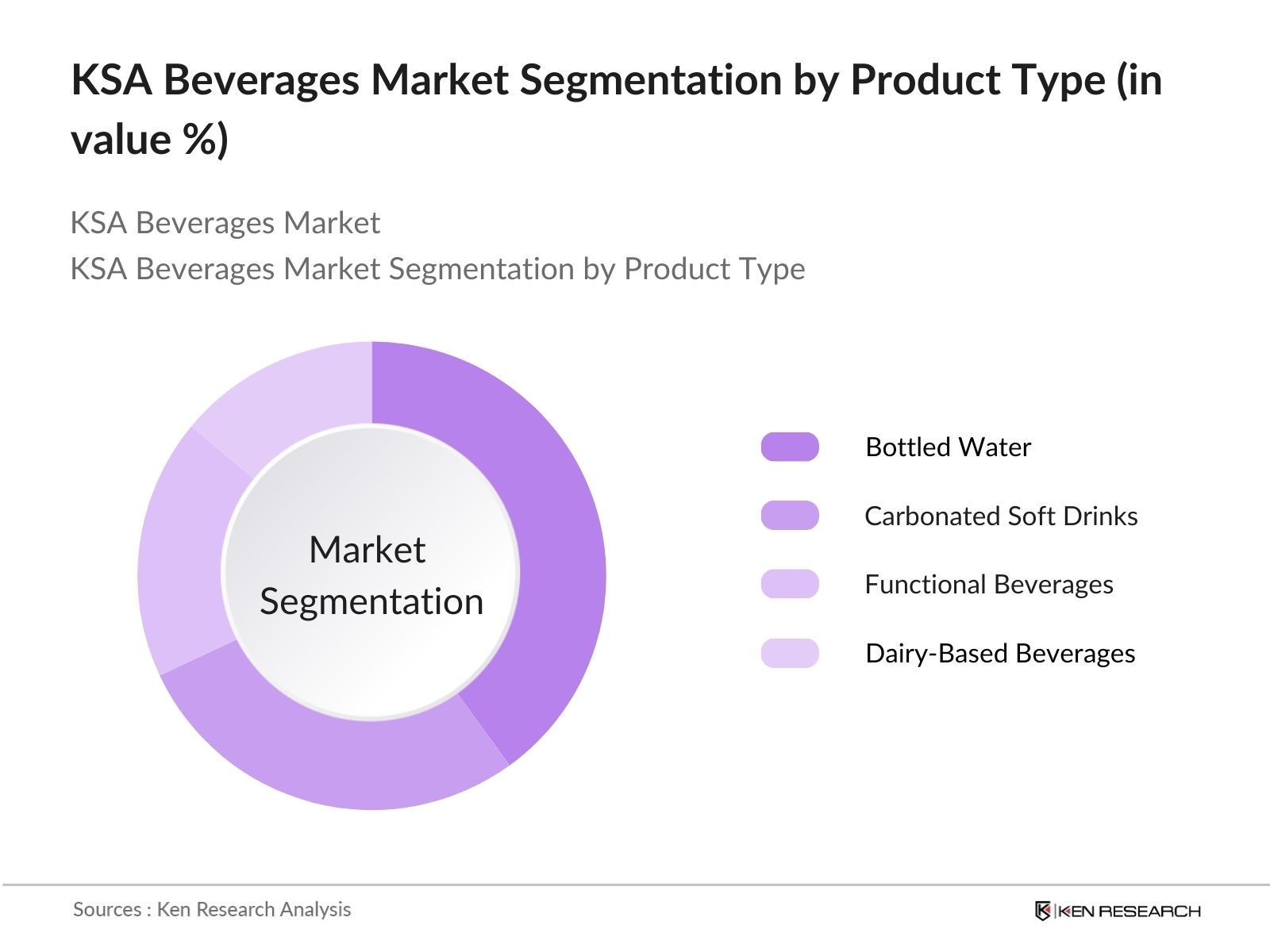
Carbonated Soft Drinks Non-Carbonated Beverages Functional Beverages Dairy-Based Beverages Coffee and Tea |
| By Distribution Channel |
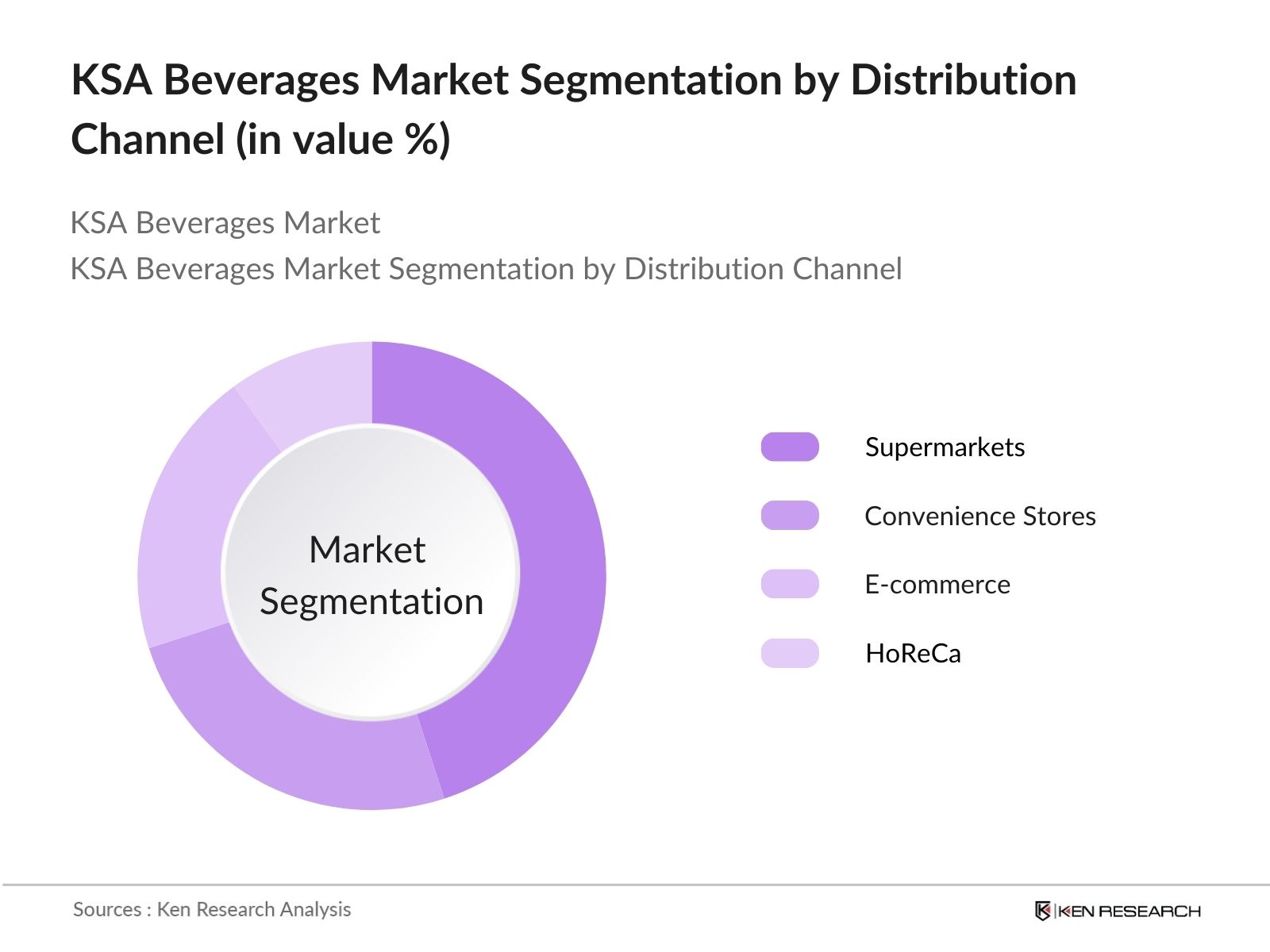
Supermarkets/Hypermarkets Convenience Stores Online Channels HoReCa Specialized Retailers |
| By Packaging Type |
Bottles Cans Cartons Pouches Kegs |
| By Consumer Group |
Kids and Teenagers Adults Seniors |
| By Region |
Riyadh Jeddah Eastern Province Mecca Other Regions |
1.1. Definition and Scope
1.2. Market Taxonomy
1.3. Market Growth Rate
1.4. Market Segmentation Overview
2.1. Historical Market Size
2.2. Year-On-Year Growth Analysis
2.3. Key Market Developments and Milestones
3.1. Growth Drivers
3.1.1. Increased Health Consciousness
3.1.2. Rising Disposable Income
3.1.3. Government Health Initiatives
3.1.4. Growing Demand for Organic Beverages
3.2. Market Challenges
3.2.1. High Production Costs (Ingredient Sourcing, Logistics)
3.2.2. Stringent Regulatory Environment (Saudi FDA, SFDA)
3.2.3. Market Fragmentation (Local vs. International Brands)
3.3. Opportunities
3.3.1. Expansion of Premium and Functional Beverages
3.3.2. Development of Alcohol-Free Beverage Alternatives
3.3.3. Partnerships with Local Retailers (Market Penetration Strategies)
3.4. Trends
3.4.1. Rise in Ready-to-Drink (RTD) Beverages
3.4.2. Increasing Demand for Flavored Water and Juices
3.4.3. Growing E-commerce Sales Channel for Beverage Distribution
3.5. Government Regulations
3.5.1. Excise Taxes on Sugary Beverages
3.5.2. Halal Certification Standards (KSA-Specific Certification)
3.5.3. Nutritional Labeling Regulations
3.5.4. Environmental Policies for Sustainable Packaging
3.6. SWOT Analysis
3.7. Stakeholder Ecosystem
3.8. Porter’s Five Forces
3.9. Competition Ecosystem
4.1. By Product Type (In Value %)
4.1.1. Carbonated Soft Drinks
4.1.2. Non-Carbonated Beverages (Juices, Sports Drinks, Flavored Water)
4.1.3. Functional and Health Beverages (Energy Drinks, Probiotic Drinks)
4.1.4. Dairy-Based Beverages
4.1.5. Coffee and Tea (Ready-to-Drink, Instant)
4.2. By Distribution Channel (In Value %)
4.2.1. Supermarkets and Hypermarkets
4.2.2. Convenience Stores
4.2.3. Online Channels (E-commerce Platforms)
4.2.4. HoReCa (Hotel, Restaurant, Café)
4.2.5. Specialized Retailers
4.3. By Packaging Type (In Value %)
4.3.1. Bottles (Glass, Plastic)
4.3.2. Cans (Aluminum, Metal)
4.3.3. Cartons and Tetrapaks
4.3.4. Pouches
4.3.5. Kegs (For HoReCa Use)
4.4. By Consumer Group (In Value %)
4.4.1. Kids and Teenagers
4.4.2. Adults (Health-Conscious, Working Professionals)
4.4.3. Seniors (Nutritional and Specialty Beverages)
4.5. By Region (In Value %)
4.5.1. Riyadh
4.5.2. Jeddah
4.5.3. Eastern Province
4.5.4. Mecca
4.5.5. Other Regions
5.1 Detailed Profiles of Major Companies
5.1.1. Almarai
5.1.2. PepsiCo
5.1.3. Coca-Cola
5.1.4. National Agricultural Development Company (Nadec)
5.1.5. Al Rabie Saudi Foods Co.
5.1.6. Aujan Coca-Cola Beverages Company
5.1.7. Nestlé Middle East
5.1.8. Suntory Beverage & Food Ltd.
5.1.9. Masafi
5.1.10. Red Bull GmbH
5.1.11. Khalijia Water
5.1.12. Juhayna Food Industries
5.1.13. Fonterra Co-operative Group
5.1.14. Danone Saudi Arabia
5.1.15. Harmless Harvest
5.2 Cross Comparison Parameters (Market Share, Brand Penetration, Product Portfolio, Distribution Strength, Sustainability Initiatives, Pricing Strategy, Innovation Index, Customer Loyalty)
5.3 Market Share Analysis
5.4 Strategic Initiatives
5.5 Mergers and Acquisitions
5.6 Investment Analysis
5.7 Government Grants and Incentives
5.8 Private Equity Investments
6.1. Saudi Food and Drug Authority (SFDA) Standards
6.2. Compliance with Halal Certification
6.3. Excise Taxes on Sugar-Sweetened Beverages
6.4. Import Tariffs and Local Production Regulations
7.1. Future Market Size Projections
7.2. Key Factors Driving Future Market Growth
8.1. By Product Type (In Value %)
8.2. By Distribution Channel (In Value %)
8.3. By Consumer Group (In Value %)
8.4. By Packaging Type (In Value %)
8.5. By Region (In Value %)
9.1. TAM/SAM/SOM Analysis
9.2. Customer Cohort Analysis
9.3. Marketing Initiatives
9.4. White Space Opportunity Analysis
The initial phase involves mapping key stakeholders within the KSA Beverages market. We utilize both secondary and proprietary databases to gather industry information and define variables influencing market dynamics, such as consumption patterns and product innovations.
In this stage, historical data for the KSA Beverages market is compiled and analyzed. This includes an assessment of revenue generation, market penetration, and key market milestones. We also evaluate consumer behaviour and brand preference trends to construct a reliable market model.
Through interviews with industry professionals and analysts, we validate market hypotheses and refine the gathered data. These consultations are conducted using structured questionnaires to gain insights into the operational and financial aspects of major market players.
The final stage involves integrating insights from interviews and secondary data to produce a detailed analysis. This output is verified through a bottom-up approach to ensure an accurate reflection of the KSA Beverages market landscape.
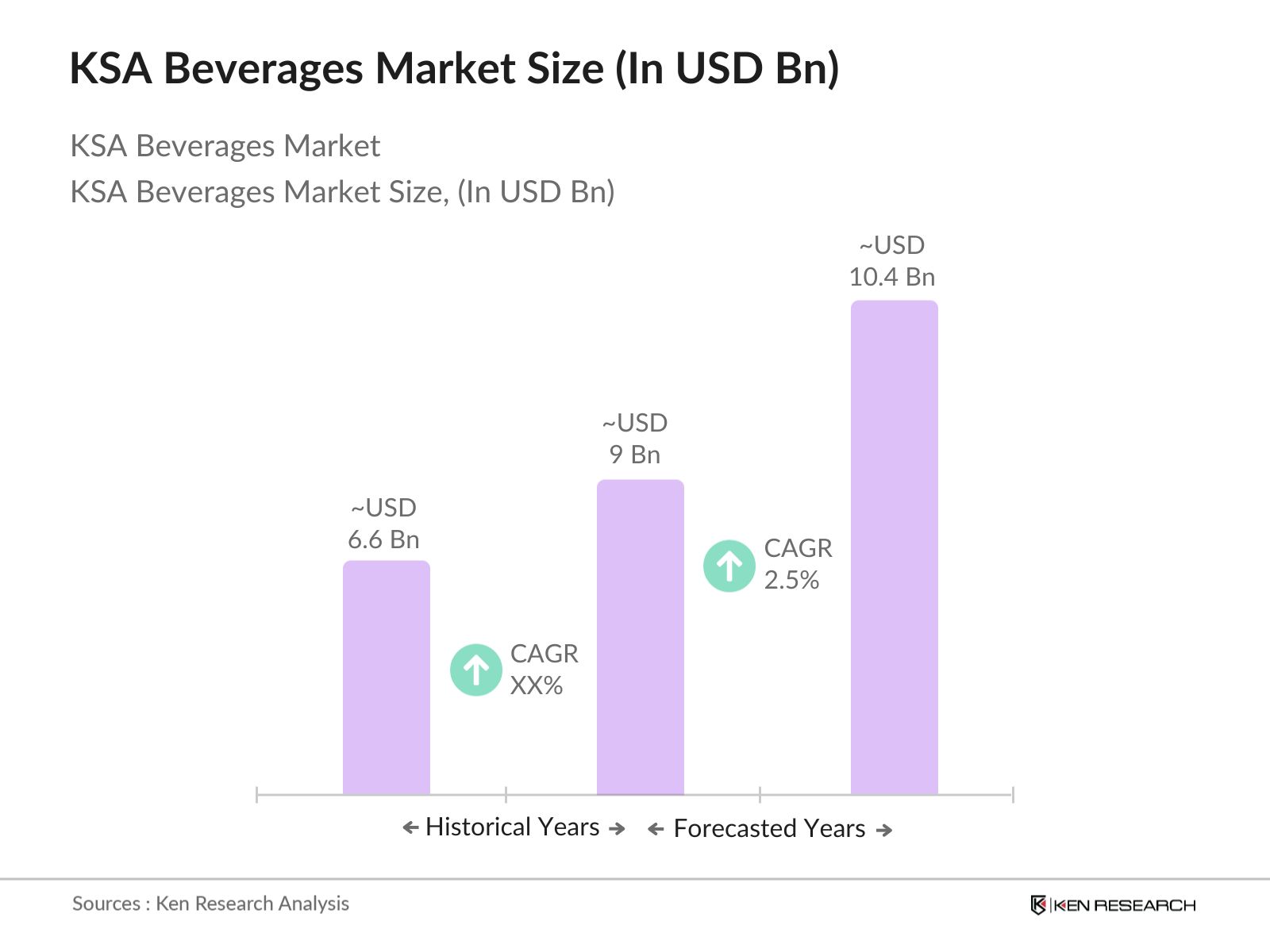
The KSA Beverages market is valued at USD 9 billion, driven by rising health consciousness, increased urbanization, and demand for premium and functional beverages.
Challenges in the KSA Beverages market include high production costs due to the arid climate, regulatory pressures such as sugar taxes, and competition between local and international brands.
Key players in the KSA Beverages market include Almarai, PepsiCo, Coca-Cola, National Agricultural Development Company (Nadec), and Nestlé Middle East. These companies dominate due to their extensive product portfolios, strong distribution networks, and brand loyalty.
KSA Beverages market growth drivers include increasing consumer preference for healthier options, government health initiatives, and the rapid rise in e-commerce as a distribution channel for beverages.

What makes us stand out is that our consultants follows Robust, Refine and Result (RRR) methodology. i.e. Robust for clear definitions, approaches and sanity checking, Refine for differentiating respondents facts and opinions and Result for presenting data with story

We have set a benchmark in the industry by offering our clients with syndicated and customized market research reports featuring coverage of entire market as well as meticulous research and analyst insights.

While we don't replace traditional research, we flip the method upside down. Our dual approach of Top Bottom & Bottom Top ensures quality deliverable by not just verifying company fundamentals but also looking at the sector and macroeconomic factors.

With one step in the future, our research team constantly tries to show you the bigger picture. We help with some of the tough questions you may encounter along the way: How is the industry positioned? Best marketing channel? KPI's of competitors? By aligning every element, we help maximize success.

Our report gives you instant access to the answers and sources that other companies might choose to hide. We elaborate each steps of research methodology we have used and showcase you the sample size to earn your trust.

If you need any support, we are here! We pride ourselves on universe strength, data quality, and quick, friendly, and professional service.