
KSA Building Automation & Control System Market Outlook 2030
Region:Middle East
Author(s):Shivani Mehra
Product Code:KROD11428
November 2024
86
About the Report
KSA Building Automation & Control System Market Overview
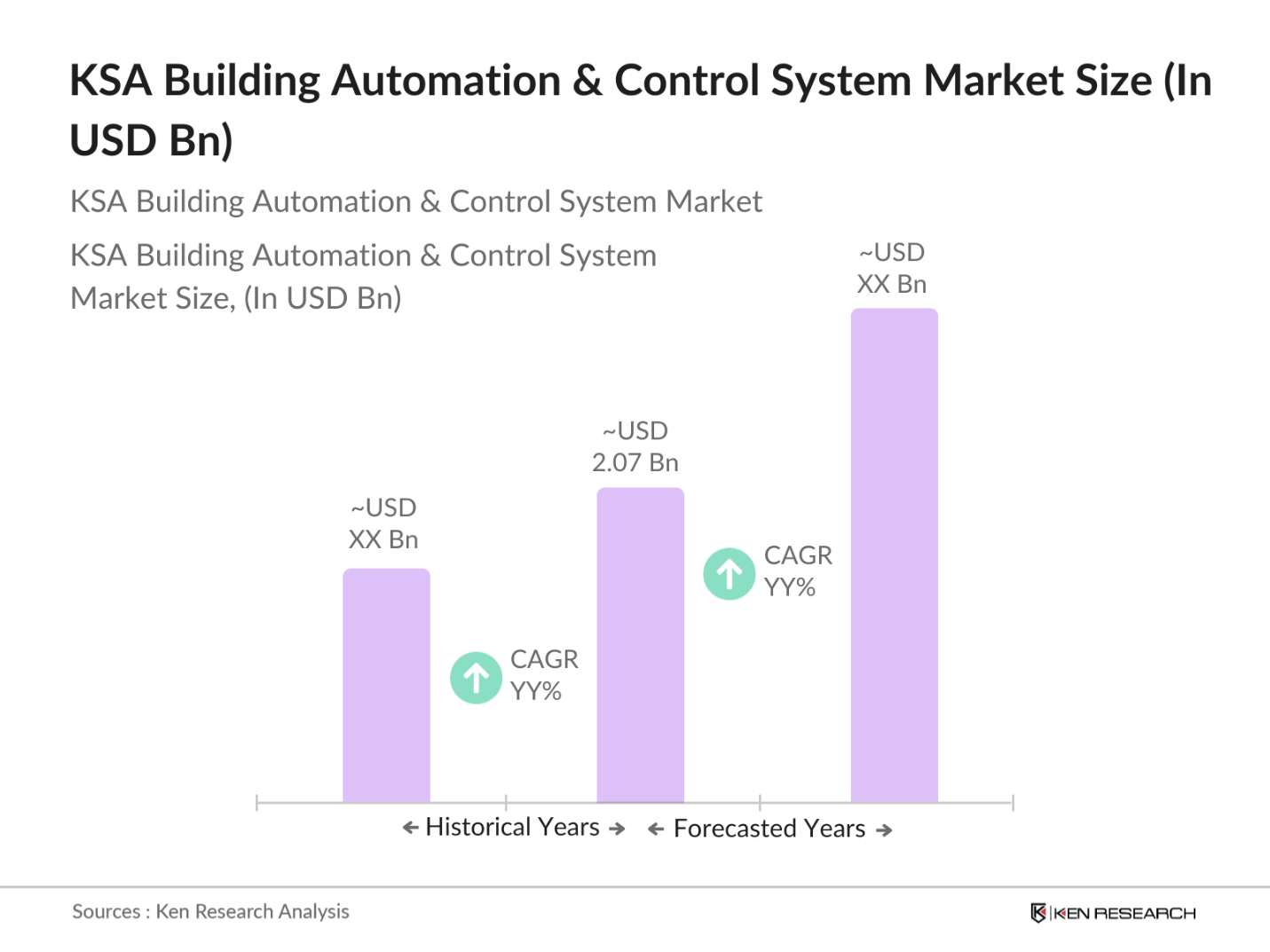
- The KSA Building Automation & Control System (BACS) market is valued at USD 2.07 billion, driven by a surge in demand for energy-efficient technologies and large-scale projects aimed at developing smart cities and sustainable infrastructure. These projects incorporate BACS to enhance building operations. The integration of IoT and AI technologies has significantly contributed to optimizing energy consumption and overall system performance, making it a key driver of the markets growth.
- Riyadh is the dominant city in the KSA BACS market, driven by its rapid urbanization and focus on modernizing infrastructure. As the economic hub of Saudi Arabia, Riyadh attracts international companies and major investments in building automation technologies. Other cities, like Makkah and the Eastern Province, are also experiencing growth due to government-backed initiatives, energy efficiency mandates, and the development of smart city projects.
- The Saudi government has introduced various Vision Realization Programs (VRPs) as part of its broader development plans, particularly through the National Transformation Program. These programs focus on enhancing infrastructure and improving energy efficiency across sectors, driving the adoption of BAS solutions to modernize construction and promote sustainable development. Projects under the VRPs are aimed at fostering smart infrastructure, with the government actively encouraging the integration of BAS technologies to meet its strategic goals.
KSA Building Automation & Control System Market Segmentation
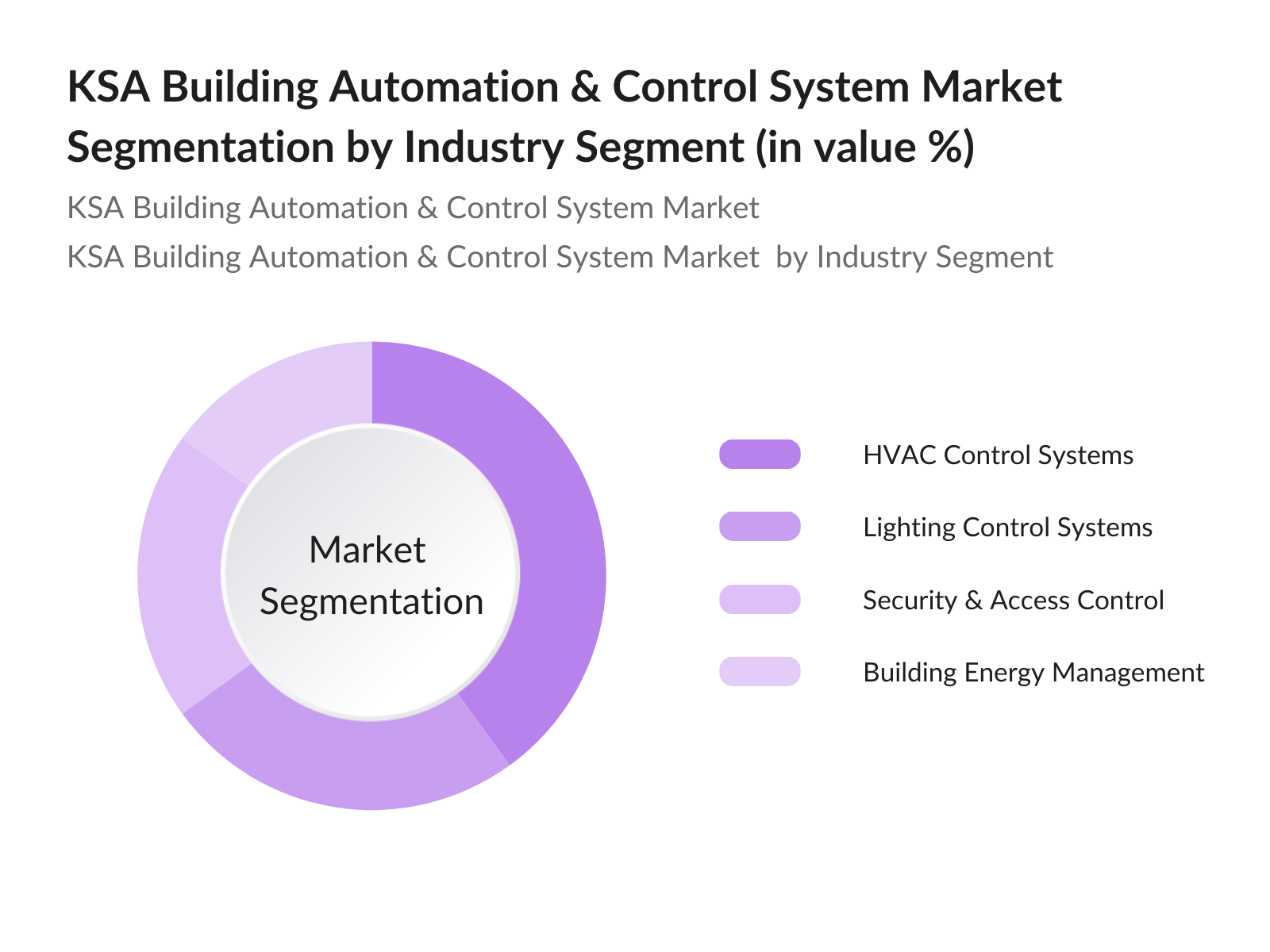
- By Industry Segment: The KSA BACS market is segmented by industry into HVAC control systems, lighting control systems, security and access control, and building energy management systems (BEMS). HVAC control systems dominate due to the high demand for energy-efficient solutions in Saudi Arabias extreme climate. These systems optimize heating and cooling processes, especially in commercial and residential buildings, reducing energy waste and operational costs.
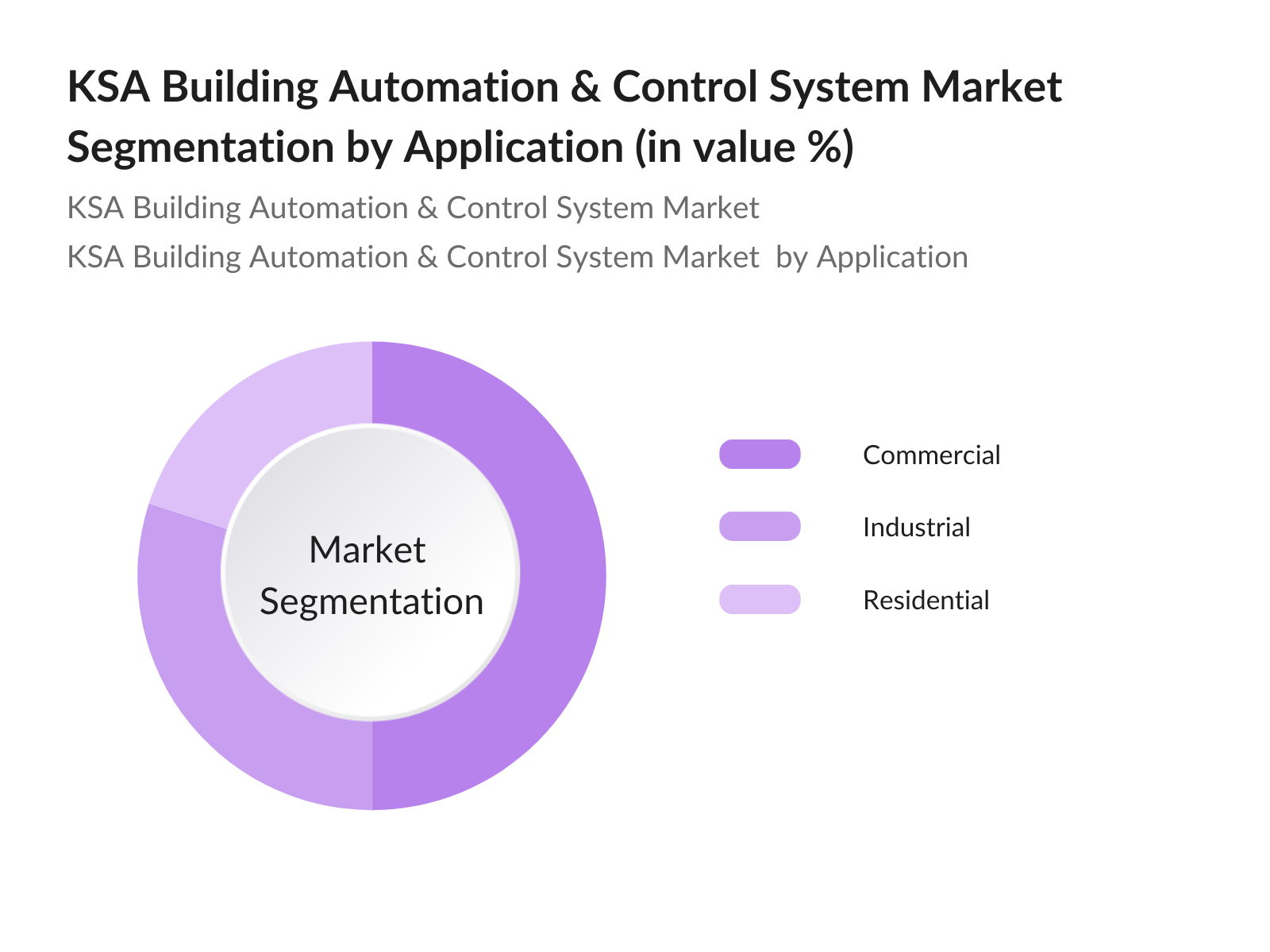
- By Application: The market is segmented by application into commercial, industrial, and residential sectors. Commercial buildings hold the dominant share, as malls, hospitals, and office spaces increasingly integrate BACS for energy efficiency, security, and operational management. The push for green certifications and cost optimization further drives the adoption of these systems in large commercial structures.
KSA Building Automation & Control System Competitive Landscape
The KSA BACS market is dominated by global and regional players, each bringing unique technological advancements and solutions to the market. These companies are heavily involved in smart city initiatives, energy management projects.
|
Company |
Established |
Headquarters |
Employees |
Technological Focus |
Key Projects |
Revenue (2023) |
Green Certifications |
IoT Integration |
BEMS Specialization |
|
Siemens AG |
1847 |
Munich, Germany |
385,000 |
- |
- |
- |
- |
- |
- |
|
Honeywell International Inc. |
1906 |
Charlotte, USA |
103,000 |
- |
- |
- |
- |
- |
- |
|
Schneider Electric SE |
1836 |
Rueil-Malmaison, France |
135,000 |
- |
- |
- |
- |
- |
- |
|
Johnson Controls Intl. |
1885 |
Cork, Ireland |
105,000 |
- |
- |
- |
- |
- |
- |
|
ABB Limited |
1988 |
Zurich, Switzerland |
105,600 |
- |
- |
- |
- |
- |
- |
KSA Building Automation & Control System Industry Analysis
Market Growth Drivers
- Government Initiatives: Government-backed programs in Saudi Arabia continue to play a crucial role in driving demand for Building Automation Systems (BAS). These initiatives are driving modernization and smart infrastructure development across the country. The National Renewable Energy Program (NREP) encourages energy efficiency in the construction sector, fueling demand for smart systems. These programs are accelerating the adoption of BAS technologies across various sectors, contributing to the growing importance of energy management and automation systems in the country.
- Energy Efficiency Regulations (Saudi Green Building Code): The Saudi Green Building Code, which mandates energy-efficient construction, directly influences the adoption of BAS technologies. This regulation aims to reduce energy consumption across various sectors. Buildings adhering to these regulations have already saved approximately 300 million kWh of energy annually, underlining the necessity of advanced control systems like BAS. These savings are expected to increase with ongoing construction projects, including the retrofit of existing structures, further driving the adoption of energy-efficient technologies.
- Sustainability Trends: With sustainability becoming a global priority, Saudi Arabia is investing significantly in sustainable building initiatives. The countrys construction sector is mandated to implement eco-friendly technologies, including BAS, to support sustainability goals. The adoption of BAS solutions is essential in meeting energy management objectives, contributing to a greener environment by optimizing energy use and reducing emissions in various sectors. This focus on sustainability is driving the integration of smart systems across new and existing infrastructure projects.
Market Challenges:
- High Initial Costs of BAS Systems: The high upfront cost of deploying Building Automation Systems is a key challenge, especially for small-to-medium enterprises (SMEs) in Saudi Arabia. For example, the installation of a standard BAS system in a mid-sized commercial building can range from USD 250,000 to USD 500,000, making it less accessible to businesses with tighter budgets. The Saudi government's subsidy programs have helped to mitigate this, but the majority of smaller firms remain hesitant to adopt due to these financial barriers.
- Cybersecurity Concerns: As BAS solutions increasingly rely on IoT and cloud-based systems, cybersecurity threats have become a significant concern. Saudi Arabia has experienced a rise in cyberattacks targeting infrastructure, highlighting the vulnerability of BAS systems integrated into critical building operations. These security risks pose a growing deterrent to adoption. The National Cybersecurity Authority has launched programs to address these challenges, but securing BAS environments remains a complex and costly endeavor, especially as the reliance on connected systems continues to grow.
KSA Building Automation & Control System Market Future Outlook
The KSA BACS market is poised for significant growth over the next five years, driven by advancements in IoT, AI, and sustainable building practices. with its emphasis on smart cities, will continue to propel the demand for building automation systems. Growing awareness of energy efficiency and the adoption of renewable energy sources further strengthens the outlook for the market.
Market Opportunities:
- Smart Cities Initiatives (NEOM): Saudi Arabia's NEOM project, with an estimated budget of over USD 500 billion, is one of the largest smart city developments globally. In 2023, NEOM allocated USD 10 billion toward smart infrastructure, including building automation technologies. BAS plays a critical role in managing energy consumption and enhancing sustainability in smart cities, and this demand is projected to grow as construction progresses in NEOM and similar projects like the Red Sea Development. These initiatives present significant growth opportunities for BAS providers in the region.
- Increasing Adoption of Wireless Control Systems: Wireless control systems are becoming more prevalent in Saudi Arabia's building automation market. These systems offer flexibility in installation without the need for extensive wiring, making them particularly suitable for retrofitting older buildings. The rise of 5G connectivity in the region, with over 10,000 new 5G towers installed, has significantly facilitated the adoption of wireless BAS solutions. This trend is expected to continue as more buildings transition to advanced automation technologies, taking advantage of the benefits offered by wireless control systems.
Scope of the Report
|
By Industry Segment |
HVAC Control Lighting Control Security Fire Protection |
|
By Application |
Commercial Industrial Residential |
|
By Technology |
Wired Wireless (IoT Integration) |
|
By End-User |
Hospitality Retail BFSI Utilities |
|
By Region |
North-East Midwest West Coast Southern States |
Products
Key Target Audience
Government and regulatory bodies (SASO, Ministry of Energy)
Construction firms and building contractors
Real estate developers
Facility management companies
Smart city project developers
Investors and venture capital firms
BACS solution providers and technology firms
Energy consultants and sustainability advisors
Companies
Players Mentioned in the report
Siemens AG
Honeywell International Inc.
Schneider Electric SE
Johnson Controls International
ABB Limited
Delta Controls Inc.
Cisco Systems, Inc.
Crestron Electronics, Inc.
Mitsubishi Electric Corporation
Legrand
Emerson Electric Co.
UTC Climate, Controls & Security
Lutron Electronics
Schneider Electric
RTX Corporation
Table of Contents
1. KSA Building Automation & Control System Market Overview
1.1 Definition and Scope
1.2 Market Taxonomy
1.3 Key Market Developments
2. KSA Building Automation & Control System Market Size (In USD Mn)
2.1 Market Value and Growth Analysis
2.2 Value Chain and Key Milestones
3. . KSA Building Automation & Control System Market Dynamics
3.1 Drivers
3.1.1 Government Initiatives (Vision 2030)
3.1.2 Energy Efficiency Regulations (Saudi Green Building Code)
3.1.3 Sustainability Trends
3.2 Challenges
3.2.1 High Initial Costs of BAS Systems
3.2.2 Cybersecurity Concerns
3.2.3 Shortage of Skilled Labor
3.3 Opportunities
3.3.1 Smart Cities Initiatives (NEOM)
3.3.2 IoT Integration and AI-Driven Automation
3.3.3 Expansion in Retrofitting Projects
3.4 Trends
3.4.1 Cloud-Based BAS Solutions
3.4.2 Demand for Real-Time Energy Analytics
3.4.3 Increasing Adoption of Wireless Control Systems
4. . KSA Building Automation & Control System Market Regulatory Framework
4.1 Building Codes (Saudi Green Building Standards)
4.2 Energy Efficiency Regulations
4.3 Certification Requirements (SASO Compliance)
5. KSA Building Automation & Control System Market Segmentation
5.1 By Industry Segment (In Value %)
5.1.1 HVAC Control Systems
5.1.2 Lighting Control Systems
5.1.3 Security & Access Control Systems
5.1.4 Fire Protection Systems
5.1.5 Building Energy Management Systems (BEMS)
5.2 By Application (In Value %)
5.2.1 Commercial (Offices, Shopping Malls, Hospitals)
5.2.2 Industrial (Manufacturing Plants, Warehouses)
5.2.3 Residential (Luxury Apartments, Villas)
5.3 By Technology (In Value %)
5.3.1 Wired Technology
5.3.2 Wireless Technology (IoT)
5.4 By End User (In Value %)
5.4.1 Hospitality
5.4.2 IT & Data Centers
5.4.3 Retail
5.4.4 BFSI (Banks and Financial Institutions)
5.4.5 Utilities (Water, Power Plants)
6. KSA Building Automation & Control System Competitive Landscape
6.1 Profiles of Major Companies
6.1.1 Siemens AG
6.1.2 Honeywell International Inc.
6.1.3 Schneider Electric SE
6.1.4 Johnson Controls International plc
6.1.5 ABB Limited
6.1.6 Delta Controls Inc.
6.1.7 Crestron Electronics, Inc
6.1.8 Cisco Systems, Inc.
6.1.9 RTX Corporation
6.1.10 Emerson Electric Co.
6.1.11 Schneider Electric
6.1.12 Legrand
6.1.13 Mitsubishi Electric Corporation
6.1.14 UTC Climate, Controls & Security
6.1.15 Lutron Electronics
6.2 Cross Comparison Parameters
(No. of Employees, Market Share, Regional Presence, Revenue, Key Projects, Technological Advancements, Market Strategies, Environmental Certifications)
7. KSA Building Automation & Control System Future Market Size (In USD Mn)
7.1 Future Market Size Projections
7.2 Key Growth Drivers for Future Market Expansion
8. KSA Building Automation & Control System Market Analyst Recommendations
8.1 Total Addressable Market (TAM)
8.2 Investment Opportunities
8.3 Strategic Insights for Market Entry and Growth
Disclaimer Contact UsResearch Methodology
Step 1: Identification of Key Variables
In the initial phase, we conducted a comprehensive mapping of stakeholders within the KSA Building Automation & Control System market. This involved extensive desk research, utilizing secondary sources such as industry databases and government reports to identify the key variables influencing market dynamics.
Step 2: Market Analysis and Construction
In this phase, historical data on BACS adoption, market penetration, and end-user preferences were compiled. We analyzed the ratio of service providers to commercial and residential buildings to estimate revenue and demand growth across different sectors.
Step 3: Hypothesis Validation and Expert Consultation
We validated the initial hypotheses by conducting interviews with industry experts, including executives from major BACS providers, to ensure accuracy in market projections and growth factors.
Step 4: Research Synthesis and Final Output
The final phase involved synthesizing the insights from both primary and secondary sources, resulting in a fully validated report that accurately reflects the current and future state of the KSA BACS market.
Frequently Asked Questions
01. How big is the KSA Building Automation & Control System Market?
The KSA Building Automation & Control System market is valued at USD 2.07 billion, driven by growing demand for smart technologies and energy efficiency in line with Vision 2030
02. What are the key challenges in the KSA BACS Market?
Challenges include high initial costs for implementation, cybersecurity concerns related to IoT integration, and a lack of skilled professionals to manage these advanced systems
03. Who are the major players in the KSA BACS Market?
Key players include Siemens AG, Honeywell International Inc., Schneider Electric, Johnson Controls, and ABB Limited, all of which have a strong focus on energy management and sustainability initiatives
04. What is driving the growth of the KSA BACS Market?
The market is primarily driven by government-backed initiatives like Vision 2030, which promotes the development of smart cities and energy-efficient buildings. Additionally, the integration of IoT and AI in automation systems is accelerating growth
Why Buy From Us?

What makes us stand out is that our consultants follows Robust, Refine and Result (RRR) methodology. i.e. Robust for clear definitions, approaches and sanity checking, Refine for differentiating respondents facts and opinions and Result for presenting data with story

We have set a benchmark in the industry by offering our clients with syndicated and customized market research reports featuring coverage of entire market as well as meticulous research and analyst insights.

While we don't replace traditional research, we flip the method upside down. Our dual approach of Top Bottom & Bottom Top ensures quality deliverable by not just verifying company fundamentals but also looking at the sector and macroeconomic factors.

With one step in the future, our research team constantly tries to show you the bigger picture. We help with some of the tough questions you may encounter along the way: How is the industry positioned? Best marketing channel? KPI's of competitors? By aligning every element, we help maximize success.

Our report gives you instant access to the answers and sources that other companies might choose to hide. We elaborate each steps of research methodology we have used and showcase you the sample size to earn your trust.

If you need any support, we are here! We pride ourselves on universe strength, data quality, and quick, friendly, and professional service.