
KSA Cargo Handling Market Outlook to 2030
Region:Saudi Arabia
Author(s):Abhinav kumar
Product Code:KROD6444
Region:Saudi Arabia
Author(s):Abhinav kumar
Product Code:KROD6444
November 2024
82
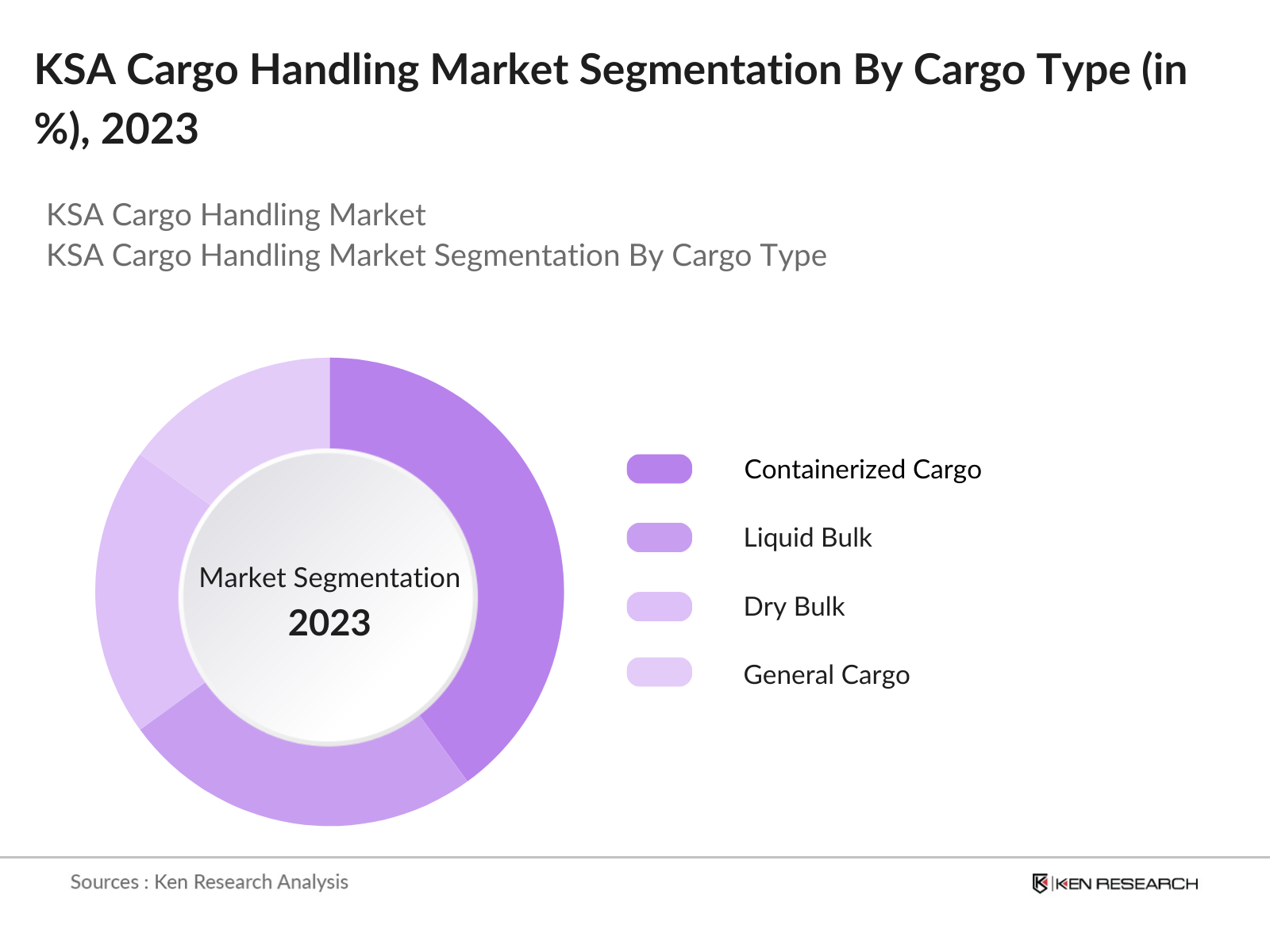
By Cargo Type: The KSA Cargo Handling Market is segmented by cargo type, including containerized cargo, liquid bulk, dry bulk, general cargo, and special cargo. Containerized cargo dominates due to its widespread use in e-commerce and industrial shipments. Leading logistics providers prioritize containerization for ease of handling and storage, which enhances throughput efficiency in major ports.
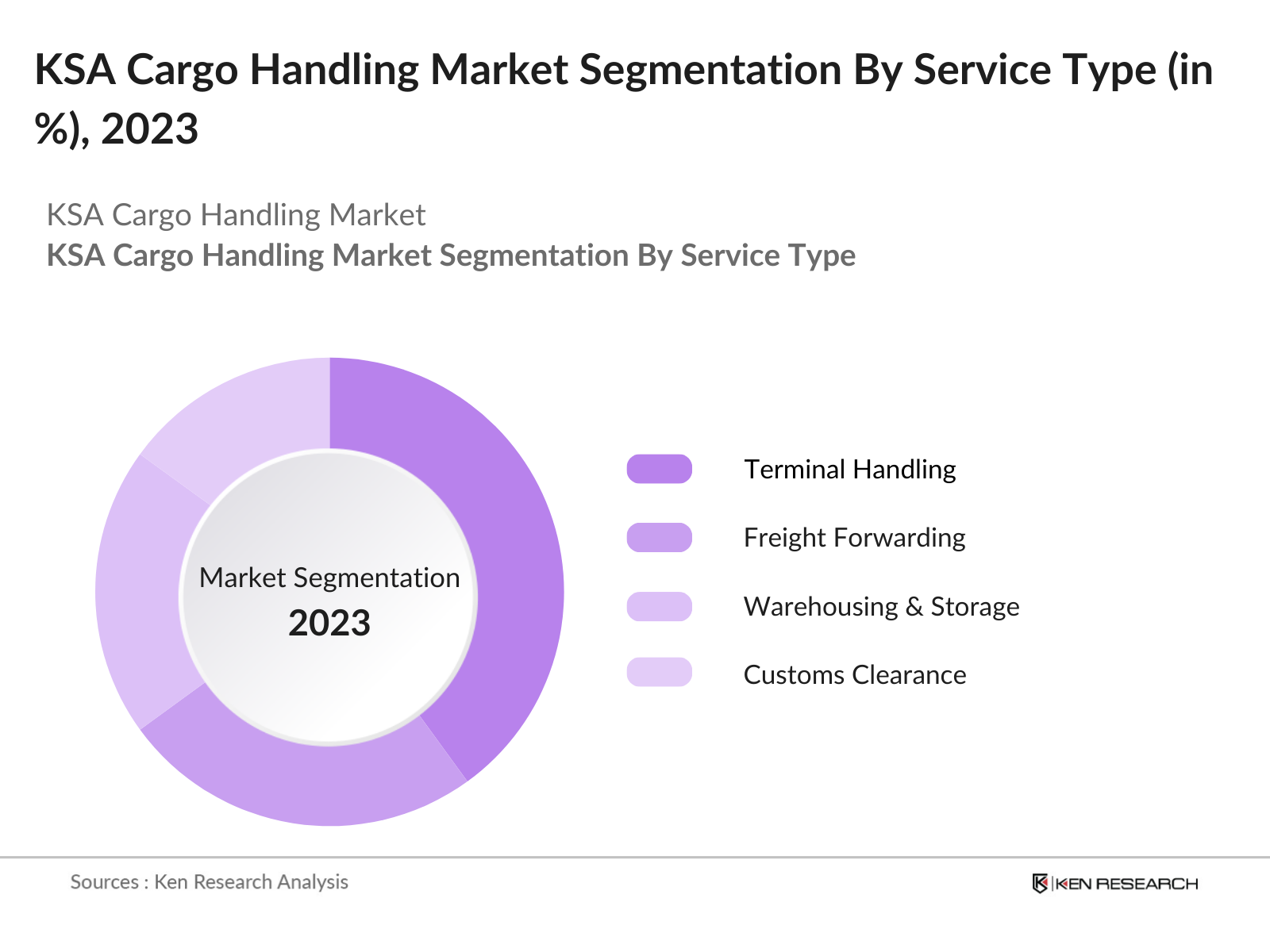
By Service Type: By service type, the KSA Cargo Handling Market includes terminal handling, freight forwarding, warehousing and storage, and customs clearance. Terminal handling holds the largest share due to its integral role in port and airport operations. This service segment benefits from government initiatives to expand terminal capacity, enhancing overall logistics performance and reducing turnaround times.
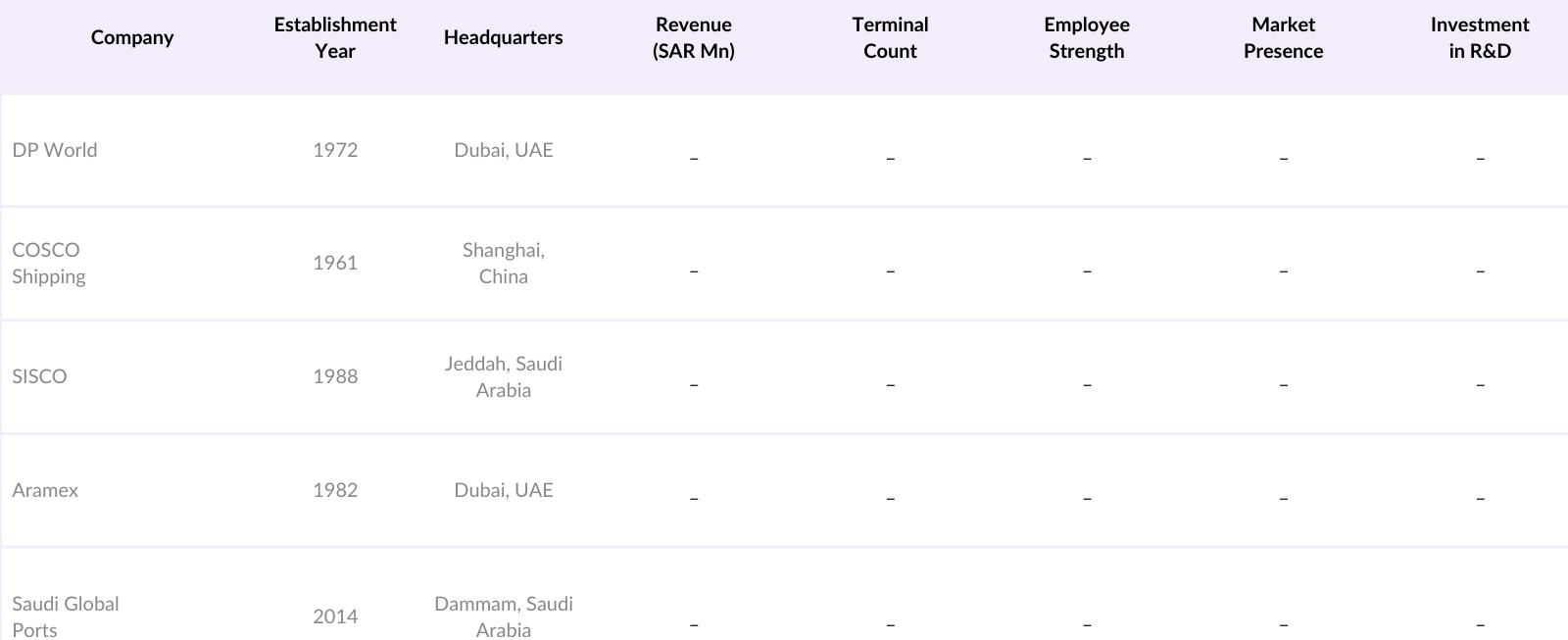
The KSA Cargo Handling Market is dominated by both international and local players, with DP World, COSCO Shipping, and local firms like SISCO holding substantial influence. This consolidation demonstrates the role of key players who leverage advanced technologies and deep industry expertise to control a significant share of cargo operations.
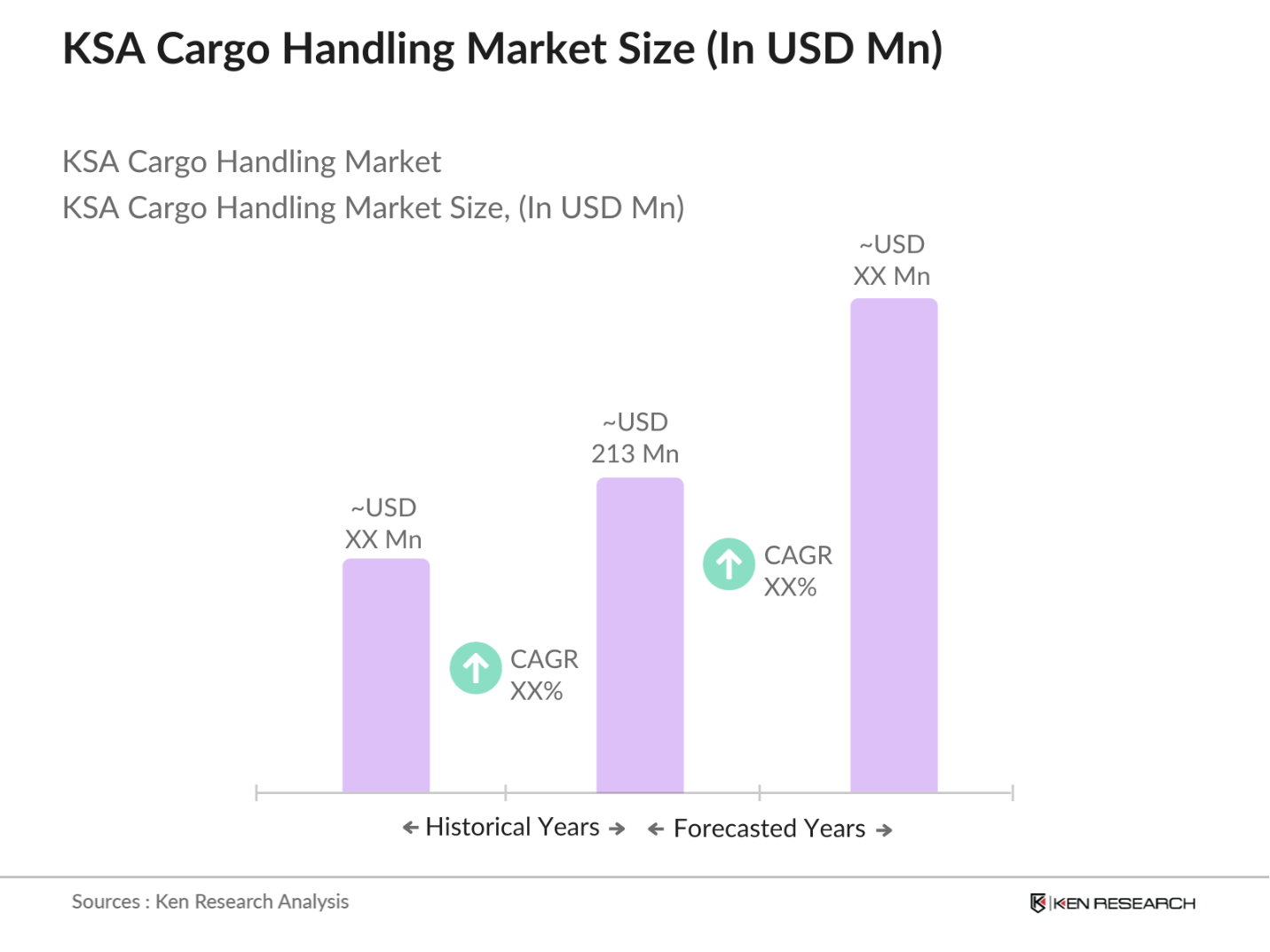
Over the next five years, the KSA Cargo Handling Market is projected to witness substantial growth, driven by continuous infrastructure development, technology integration, and government-backed initiatives under Vision 2030. Increasing digitalization across logistics platforms, automation of cargo processes, and enhancements in storage facilities will accelerate the market trajectory, responding to growing trade volumes and the regions evolving logistical needs.
|
Cargo Type |
Containerized Cargo Liquid Bulk Dry Bulk, General Cargo Other Special Cargo |
|
Service Type |
Terminal Handling Freight Forwarding Warehousing and Storage Custom Clearance |
|
Technology |
Automated Guided Vehicles (AGVs) Robotics, Cargo Tracking Solutions Warehouse Management Systems (WMS) |
|
End-User Industry |
Oil & Gas, Retail & E-commerce Automotive Industrial Manufacturing Pharmaceuticals |
|
Region |
Western Region Central Region Eastern Region |
1.1 Definition and Scope
1.2 Market Taxonomy
1.3 Key Performance Indicators (KPIs)
1.4 Market Segmentation Overview
2.1 Historical Market Size
2.2 Market Size Analysis (SAR Mn)
2.3 Year-On-Year Growth Metrics
2.4 Key Market Developments
3.1 Growth Drivers
3.1.1 Trade Agreements (Import/Export Data)
3.1.2 Port and Infrastructure Expansion (Capacity Utilization Rates)
3.1.3 Industrialization and Urbanization Trends
3.1.4 Government Initiatives in Logistics Sector
3.2 Market Challenges
3.2.1 High Initial Investments (Capital Costs)
3.2.2 Operational Efficiency Concerns
3.2.3 Regulatory Compliance (Safety & Environmental Standards)
3.3 Opportunities
3.3.1 Automation in Cargo Handling (Technology Adoption)
3.3.2 Expanding E-commerce Demand
3.3.3 International Partnerships (Trade Corridors)
3.4 Trends
3.4.1 Digitalization in Logistics
3.4.2 Adoption of AI and Machine Learning (Predictive Analytics)
3.4.3 Rise of Eco-Friendly Cargo Solutions
3.5 Government Regulations
3.5.1 KSA Vision 2030 Compliance
3.5.2 Customs Procedures and Trade Laws
3.5.3 Health & Safety Regulations in Cargo Operations
3.6 SWOT Analysis
3.7 Stakeholder Ecosystem
3.8 Porters Five Forces Analysis
3.9 Competitive Ecosystem
4.1 By Cargo Type (In Value %)
4.1.1 Containerized Cargo
4.1.2 Liquid Bulk
4.1.3 Dry Bulk
4.1.4 General Cargo
4.1.5 Other Special Cargo
4.2 By Service Type (In Value %)
4.2.1 Terminal Handling
4.2.2 Freight Forwarding
4.2.3 Warehousing and Storage
4.2.4 Custom Clearance
4.3 By Technology (In Value %)
4.3.1 Automated Guided Vehicles (AGVs)
4.3.2 Robotics
4.3.3 Cargo Tracking Solutions
4.3.4 Warehouse Management Systems (WMS)
4.4 By End-User Industry (In Value %)
4.4.1 Oil & Gas
4.4.2 Retail & E-commerce
4.4.3 Automotive
4.4.4 Industrial Manufacturing
4.4.5 Pharmaceuticals
4.5 By Region (In Value %)
4.5.1 Western Region
4.5.2 Central Region
4.5.3 Eastern Region
5.1 Detailed Profiles of Major Companies
5.1.1 DP World
5.1.2 Hutchison Ports
5.1.3 COSCO Shipping
5.1.4 SISCO (Saudi Industrial Services Company)
5.1.5 Gulf Stevedoring Contracting Company
5.1.6 Red Sea Gateway Terminal
5.1.7 Saudi Global Ports
5.1.8 Agility Logistics
5.1.9 Aramex
5.1.10 Bahri (The National Shipping Company of Saudi Arabia)
5.1.11 Hellmann Worldwide Logistics
5.1.12 FedEx Express
5.1.13 DB Schenker
5.1.14 Maersk
5.1.15 Saudi Ports Authority
5.2 Cross Comparison Parameters (Employee Strength, Global Presence, Revenue, Investment in R&D, Market Share, Number of Terminals Operated, Volume Capacity, Technological Investments)
5.3 Market Share Analysis
5.4 Strategic Initiatives
5.5 Mergers and Acquisitions
5.6 Investment Analysis
5.7 Venture Capital & Private Equity Funding
5.8 Government Incentives and Grants
6.1 Environmental Standards for Ports
6.2 Customs Compliance Requirements
6.3 Safety and Quality Certifications
6.4 Labor Laws in the Logistics Sector
7.1 Future Market Size Projections
7.2 Key Factors Driving Future Growth
8.1 By Cargo Type
8.2 By Service Type
8.3 By Technology
8.4 By End-User Industry
8.5 By Region
9.1 Total Addressable Market Analysis
9.2 Strategic Marketing Insights
9.3 Targeted Customer Segment Insights
9.4 White Space Analysis for Expansion
Disclaimer Contact UsOur initial research phase involved constructing a comprehensive ecosystem map for the KSA Cargo Handling Market. This process included extensive desk research across reputable industry databases to identify and define key variables that influence the market.
In this stage, we compiled historical market data to analyze trends and determine revenue generation rates, assessing market penetration and the contribution of each cargo type and service.
Market hypotheses were developed and validated through computer-assisted telephone interviews (CATI) with logistics professionals and experts across the KSA region. These insights provided operational data and grounded market estimations.
Our final synthesis phase included direct engagements with prominent cargo handling providers to acquire insights on service trends, technology utilization, and future growth opportunities, ensuring the analysiss accuracy.
The KSA Cargo Handling Market is valued at SAR 213 million, primarily driven by the countrys infrastructure development and increased trade activities supported by Vision 2030 initiatives.
Key challenges include regulatory compliance, high operational costs, and the need for skilled labor to operate technologically advanced handling systems.
Leading companies include DP World, COSCO Shipping, SISCO, Saudi Global Ports, and Aramex, each holding a strong presence due to their extensive networks and technological adoption.
The market is driven by rising demand for efficient logistics solutions, rapid industrialization, and government policies focused on expanding KSAs position as a logistics hub.

What makes us stand out is that our consultants follows Robust, Refine and Result (RRR) methodology. i.e. Robust for clear definitions, approaches and sanity checking, Refine for differentiating respondents facts and opinions and Result for presenting data with story

We have set a benchmark in the industry by offering our clients with syndicated and customized market research reports featuring coverage of entire market as well as meticulous research and analyst insights.

While we don't replace traditional research, we flip the method upside down. Our dual approach of Top Bottom & Bottom Top ensures quality deliverable by not just verifying company fundamentals but also looking at the sector and macroeconomic factors.

With one step in the future, our research team constantly tries to show you the bigger picture. We help with some of the tough questions you may encounter along the way: How is the industry positioned? Best marketing channel? KPI's of competitors? By aligning every element, we help maximize success.

Our report gives you instant access to the answers and sources that other companies might choose to hide. We elaborate each steps of research methodology we have used and showcase you the sample size to earn your trust.

If you need any support, we are here! We pride ourselves on universe strength, data quality, and quick, friendly, and professional service.