
KSA Cosmetic Market Outlook to 2030
Region:Middle East
Author(s):Sanjana
Product Code:KROD3142
October 2024
95
About the Report
KSA Cosmetic Market Overview
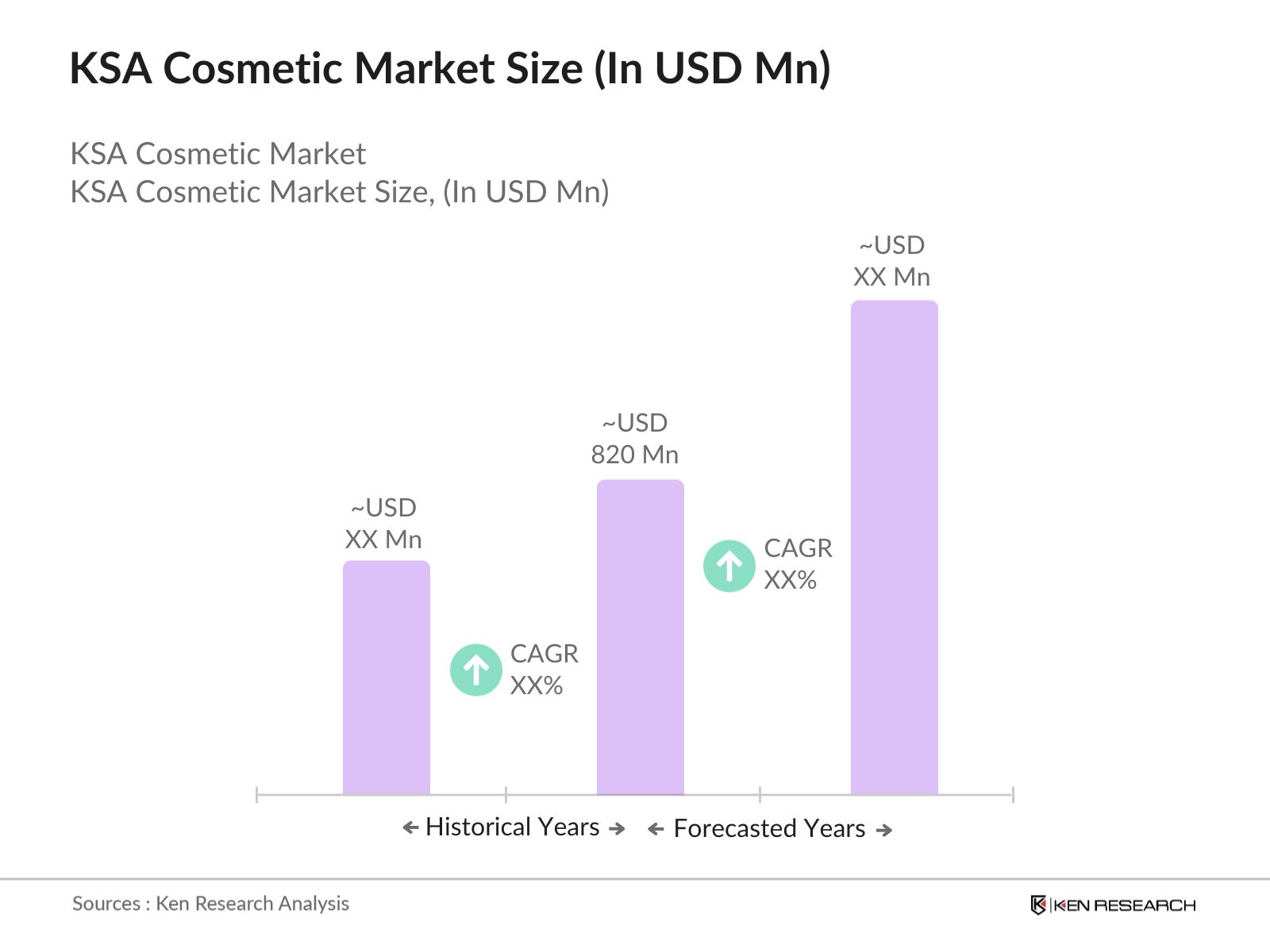
- The KSA Cosmetic Market is valued at USD 820 million, driven primarily by increasing consumer awareness of personal grooming and beauty products, particularly among the youth and female population. The market has witnessed steady growth due to rising disposable incomes, a shift towards premium and luxury cosmetics, and growing demand for halal and organic products. The rise of e-commerce platforms has further fueled market expansion, making a wide variety of international and local brands more accessible to consumers.
- The market is dominated by major cities such as Riyadh, Jeddah, and Dammam due to their large urban populations, higher per capita incomes, and an increasing focus on fashion and beauty trends. These cities also benefit from the presence of upscale retail outlets, luxury shopping malls, and a strong tourism sector, which further drives the demand for premium and luxury cosmetic products.
- KSA maintains strict import policies for cosmetics to ensure the safety and quality of products entering the market. Importers must obtain a Certificate of Conformity from an SFDA-approved body, demonstrating that their products meet the GSO 1943:2016 Safety Requirements of Cosmetics and Personal Care Products. This includes compliance with specific standards regarding prohibited substances, labeling, and packaging.
KSA Cosmetic Market Segmentation
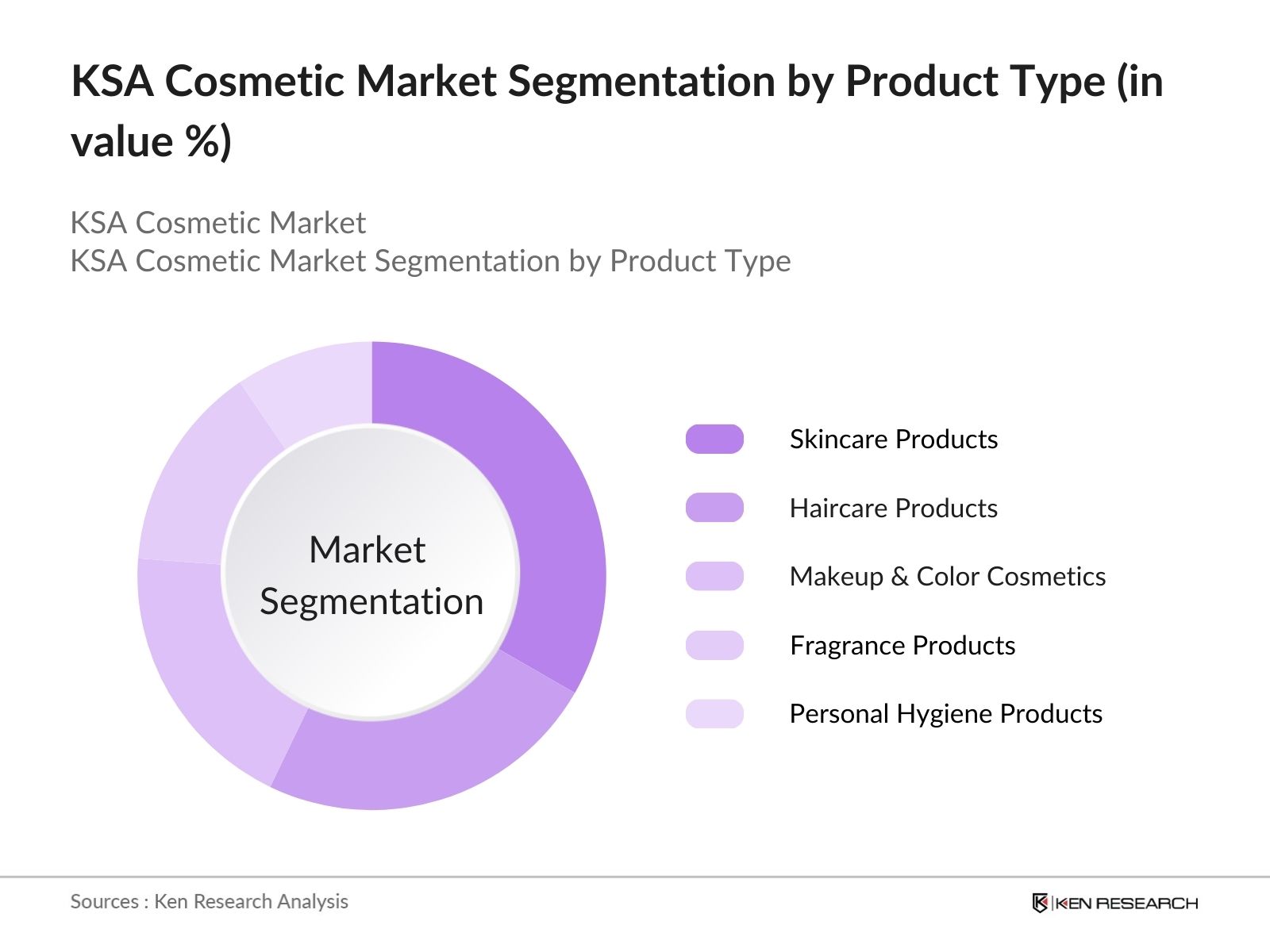
By Product Type: The KSA cosmetic market is segmented by product type into skincare products, haircare products, makeup, and fragrance products. Among these, skincare products hold the dominant market share due to the high demand for moisturizers, anti-aging creams, and sun protection products in the region. The harsh climatic conditions in KSA have contributed to a significant increase in the use of skincare products, particularly for hydration and protection against sun damage. Consumers in urban areas are increasingly inclined towards premium skincare products, including organic and halal-certified products, which further strengthens this segments dominance.
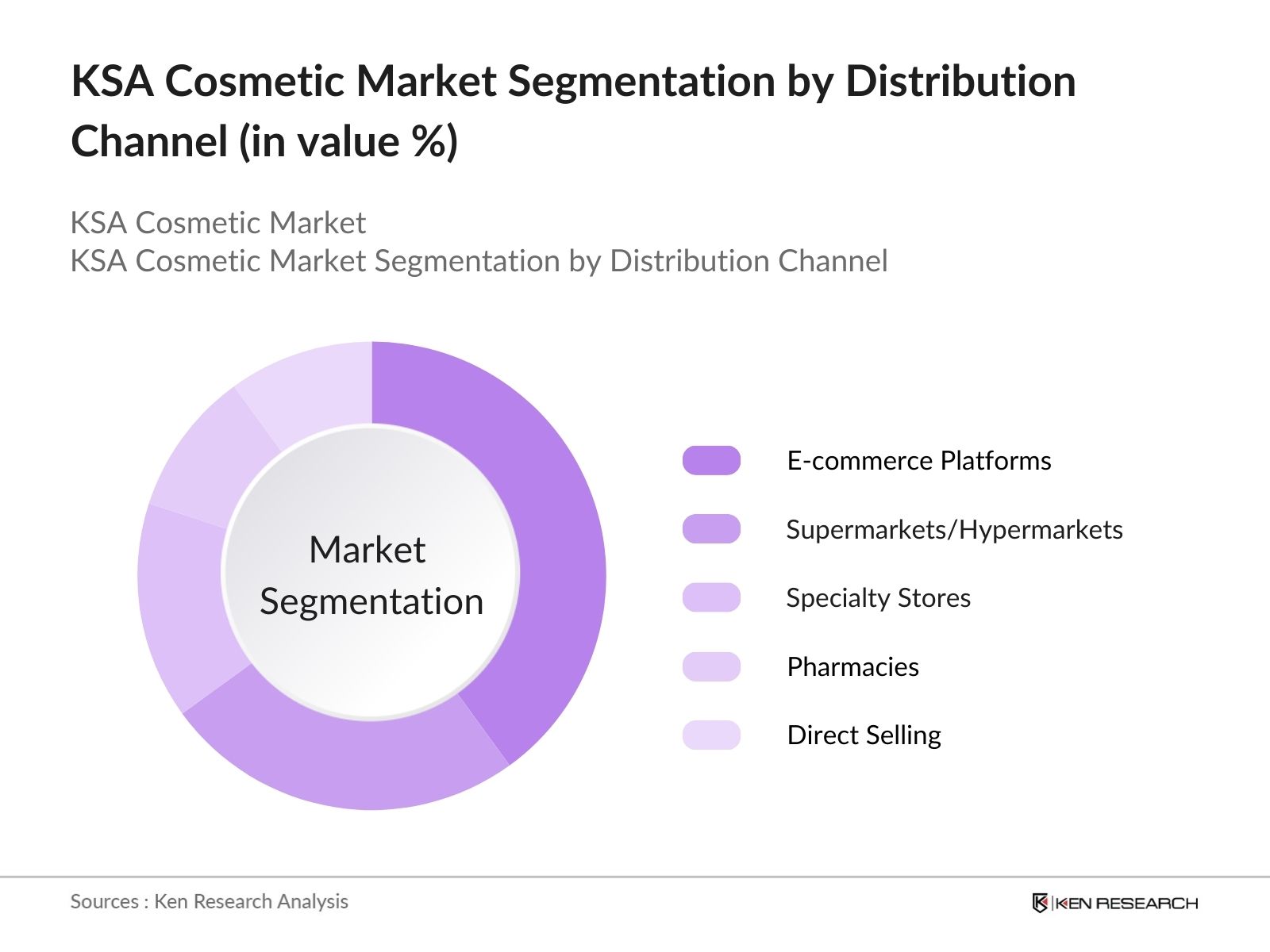
By Distribution Channel: The market is also segmented by distribution channels, including e-commerce platforms, supermarkets/hypermarkets, specialty stores, and pharmacies. E-commerce platforms currently dominate the market as more consumers shift towards online shopping for convenience, broader product availability, and competitive pricing. The growth of digital platforms such as Amazon.sa, Noon, and local beauty-specific e-commerce sites has driven this shift, with consumers being attracted by exclusive online offers, personalized beauty recommendations, and the ease of home delivery services.
KSA Cosmetic Market Competitive Landscape
The KSA cosmetic market is consolidated, with a few dominant players exerting significant influence over the market. Leading companies such as L'Oral, Este Lauder, and Unilever continue to maintain strong market positions due to their extensive distribution networks, well-established brand portfolios, and investment in research and development for localized products that cater to the regions specific needs. Local brands like Joelle Paris have also made a significant impact by leveraging their understanding of the local market and focusing on halal and organic products.
|
Company Name |
Establishment Year |
Headquarters |
No. of Stores |
Market Share |
Local Partnerships |
Product Innovation |
Social Media Influence |
R&D Investments |
Distribution Network |
|
LOral Middle East |
1909 |
Paris, France |
- |
- |
- |
- |
- |
- |
- |
|
Este Lauder Middle East |
1946 |
New York, USA |
- |
- |
- |
- |
- |
- |
- |
|
Unilever Arabia |
1930 |
London, UK |
- |
- |
- |
- |
- |
- |
- |
|
Joelle Paris |
2010 |
Riyadh, Saudi Arabia |
- |
- |
- |
- |
- |
- |
- |
|
Shiseido Middle East |
1872 |
Tokyo, Japan |
- |
- |
- |
- |
- |
- |
- |
KSA Cosmetic Market Analysis
Growth Drivers
- Rise in Consumer Awareness: Consumer awareness regarding halal and organic beauty products is rising rapidly in KSA. This trend is primarily driven by the countrys cultural inclination toward Islamic guidelines and the global push for sustainability. According to the World Bank, KSA's population includes a significant segment of young consumers, with 67% under the age of 35. These consumers are more educated about the ingredients and ethical considerations of beauty products.
- Increased Disposable Income: KSA has one of the highest rates of disposable income in the region, particularly among youth and women. The International Monetary Fund (IMF) noted that in 2024, the country's GDP per capita stood at approximately USD 26,000. This high disposable income allows for more discretionary spending on beauty and skincare products, especially luxury items. The youth segment also exhibits a strong tendency to invest in premium cosmetic brands.
- E-commerce Growth: The e-commerce market in KSA is booming, with the Ministry of Communications and Information Technology noting that online retailing accounted for over USD 9 billion in sales in 2023. A large proportion of these sales came from cosmetics and personal care products, driven by the convenience of online shopping and the growing tech-savvy youth population.
Challenges
- Price Sensitivity: Despite the rise in disposable income, Saudi consumers are increasingly price-conscious when it comes to cosmetics. This is reflective of broader economic caution among consumers, driven by global inflationary pressures and shifts in spending priorities. Budget brands offering good quality have seen a marked increase in demand.
- Regulatory Restrictions: KSA enforces strict regulations on cosmetic products, particularly those containing certain chemicals and non-halal ingredients. The Saudi Food and Drug Authority (SFDA) has stringent import policies that restrict products with harmful chemicals such as parabens, sulfates, and non-halal animal by-products. These regulations have impacted the availability of some international cosmetic brands in the market.
KSA Cosmetic Future Market Outlook
Over the next five years, the KSA cosmetic market is expected to experience substantial growth, driven by the increasing influence of social media, the rise of personalized beauty products, and growing demand for halal-certified cosmetics. The continuous expansion of e-commerce platforms, coupled with innovations in skincare and organic products, will also contribute to market expansion. Moreover, the government's focus on Vision 2030, which encourages local manufacturing and tourism, is expected to further boost the market as more international brands enter the region through collaborations and investments.
Market Opportunities
- Innovation in Product Development: There is growing interest in localized skincare solutions that cater specifically to the climate and skin types found in KSA. The Saudi Authority for Intellectual Property (SAIP) has been actively enhancing its intellectual property framework and promoting innovation, which could imply an increase in patent applications across various sectors, including skincare. Local and international brands alike are investing in research and development to produce products that are better suited to the region's harsh climate.
- Expanding Retail Channels: Pharmacies and supermarket chains have become vital retail channels for cosmetics in KSA. A report from the Saudi Ministry of Health showed that over 7,000 pharmacies now offer a wide range of skincare and beauty products, providing accessibility to consumers across both urban and rural areas. Additionally, major supermarket chains like Panda and Carrefour are expanding their cosmetics sections, offering more affordable options for everyday consumers.
Scope of the Report
|
Segment |
Sub-segments |
|
By Product Type |
Skincare Products Haircare Products Makeup, Fragrance Personal Hygiene Products |
|
By Distribution Channel |
E-commerce Supermarkets Specialty Stores Pharmacies Direct Selling |
|
By Consumer Demographics |
Female Consumers Male Consumers Youth (18-30) Adults (30-50) Senior Population |
|
By Price Range |
Luxury Products Premium Products Mass-Market Products |
|
By Region |
Riyadh Jeddah Dammam Makkah Medina |
Products
Key Target Audience
Cosmetic Manufacturers
Pharmaceutical and Dermatology Companies
Packaging Companies
Beauty and Personal Care Companies
E-commerce Providers
Government and Regulatory Bodies (Saudi Food and Drug Authority, SFDA)
Investors and Venture Capitalist Firms
Companies
Major Players in the KSA Cosmetic Market
LOral Middle East
Este Lauder Middle East
Unilever Arabia
Joelle Paris
Avon KSA
Shiseido Middle East
MAC Cosmetics KSA
Beiersdorf (Nivea)
Procter & Gamble Middle East
Coty Arabia
Olay Arabia
Johnson & Johnson Middle East
Dabur Arabia
Revlon Middle East
Almarai (Herbal Beauty Products)
Table of Contents
1. Saudi Arabia Cosmetic Market Overview
1.1. Definition and Scope
1.2. Market Taxonomy
1.3. Market Growth Rate
1.4. Market Segmentation Overview
2. Saudi Arabia Cosmetic Market Size (In USD Mn)
2.1. Historical Market Size
2.2. Year-On-Year Growth Analysis
2.3. Key Market Developments and Milestones
3. Saudi Arabia Cosmetic Market Analysis
3.1. Growth Drivers
3.1.1. Rise in Consumer Awareness (Awareness of Halal and Organic Beauty Products)
3.1.2. Increased Disposable Income (High Disposable Income Among Youth and Women)
3.1.3. E-commerce Growth (Online Cosmetics Sales Channels)
3.1.4. Tourism and Luxury Spending (Influence of Expanding Tourism Sector and Luxury Retailing)
3.2. Market Challenges
3.2.1. Price Sensitivity (Increased Demand for Value-for-Money Products)
3.2.2. Regulatory Restrictions (Import Regulations on Certain Cosmetic Ingredients)
3.2.3. Consumer Skepticism (Concerns about Product Authenticity in Online Channels)
3.3. Opportunities
3.3.1. Innovation in Product Development (Focus on Localized Skincare Solutions)
3.3.2. Expanding Retail Channels (Rise of Pharmacies and Supermarket Chains for Cosmetic Sales)
3.3.3. Strategic Collaborations (International Cosmetic Brands Partnering with Local Influencers)
3.4. Trends
3.4.1. Shift Towards Natural & Organic Products (Demand for Halal-Certified and Vegan Cosmetics)
3.4.2. Rise of Male Grooming Segment (Increased Demand for Men's Skincare and Grooming Products)
3.4.3. Personalization (Customization and Tailored Beauty Products)
3.5. Government Regulation
3.5.1. Saudi Food and Drug Authority (SFDA) Cosmetic Regulations
3.5.2. Import Policies (Strict Compliance on Cosmetic Imports and Certifications)
3.5.3. Halal Certification Guidelines for Cosmetic Products
3.5.4. Localization and Employment Laws (Focus on Local Manufacturing Initiatives)
3.6. SWOT Analysis
3.7. Stakeholder Ecosystem (Manufacturers, Distributors, Retailers, Consumers)
3.8. Porters Five Forces
3.9. Competition Ecosystem (Influence of Multinational Corporations, Local Brands)
4. Saudi Arabia Cosmetic Market Segmentation
4.1. By Product Type (In Value %)
4.1.1. Skincare Products
4.1.2. Haircare Products
4.1.3. Makeup & Color Cosmetics
4.1.4. Fragrance Products
4.1.5. Personal Hygiene Products
4.2. By Distribution Channel (In Value %)
4.2.1. E-commerce Platforms
4.2.2. Supermarkets/Hypermarkets
4.2.3. Specialty Stores
4.2.4. Pharmacies
4.2.5. Direct Selling
4.3. By Consumer Demographics (In Value %)
4.3.1. Female Consumers
4.3.2. Male Consumers
4.3.3. Youth (18-30)
4.3.4. Adults (30-50)
4.3.5. Senior Population
4.4. By Price Range (In Value %)
4.4.1. Luxury Products
4.4.2. Premium Products
4.4.3. Mass-Market Products
4.5. By Region (In Value %)
4.5.1. Riyadh
4.5.2. Jeddah
4.5.3. Dammam
4.5.4. Makkah
4.5.5. Medina
5. Saudi Arabia Cosmetic Market Competitive Analysis
5.1. Detailed Profiles of Major Companies
5.1.1. LOral Middle East
5.1.2. Este Lauder Middle East
5.1.3. Unilever Arabia
5.1.4. Procter & Gamble Middle East
5.1.5. Beiersdorf (Nivea)
5.1.6. Coty Arabia
5.1.7. Shiseido Middle East
5.1.8. Avon Saudi Arabia
5.1.9. Revlon Middle East
5.1.10. MAC Cosmetics KSA
5.1.11. Almarai (Herbal Beauty Products)
5.1.12. Dabur Arabia (Herbal & Natural Cosmetics)
5.1.13. Olay Arabia
5.1.14. Johnson & Johnson Middle East
5.1.15. Joelle Paris
5.2. Cross Comparison Parameters (Market Share, Annual Revenue, Brand Perception, No. of Stores, R&D Investments, Distribution Network, Marketing Spend, Social Media Engagement)
5.3. Market Share Analysis
5.4. Strategic Initiatives
5.5. Mergers and Acquisitions
5.6. Investment Analysis
5.7. Private Equity and Venture Capital Funding
6. Saudi Arabia Cosmetic Market Regulatory Framework
6.1. Cosmetic Product Safety and Compliance
6.2. Labeling and Packaging Standards
6.3. Environmental and Sustainability Regulations
6.4. Import and Export Regulations
7. Saudi Arabia Cosmetic Market Future Size (In USD Mn)
7.1. Future Market Size Projections
7.2. Key Factors Driving Future Market Growth
8. Saudi Arabia Cosmetic Market Future Segmentation
8.1. By Product Type (In Value %)
8.2. By Distribution Channel (In Value %)
8.3. By Consumer Demographics (In Value %)
8.4. By Price Range (In Value %)
8.5. By Region (In Value %)
9. Saudi Arabia Cosmetic Market Analysts Recommendations
9.1. TAM/SAM/SOM Analysis
9.2. Customer Cohort Analysis
9.3. Marketing Initiatives
9.4. White Space Opportunity Analysis
Disclaimer
Contact Us
Research Methodology
Step 1: Identification of Key Variables
The initial stage involved mapping all key stakeholders in the KSA cosmetic market, supported by extensive desk research. This included analyzing proprietary databases, industry reports, and regulatory frameworks to identify critical factors that influence market dynamics.
Step 2: Market Analysis and Construction
Historical data on the cosmetic industry in KSA was compiled and analyzed. Key metrics such as market penetration, consumer preferences, and sales data were evaluated to ensure accuracy in revenue estimates. This phase also involved assessing competitive benchmarks to understand market positioning.
Step 3: Hypothesis Validation and Expert Consultation
Primary interviews were conducted with industry experts from leading cosmetic brands, e-commerce platforms, and local distributors. These insights helped validate the market assumptions and provided a clear understanding of operational challenges and growth opportunities.
Step 4: Research Synthesis and Final Output
The final stage involved synthesizing all collected data into a comprehensive market analysis. Direct consultations with cosmetic manufacturers allowed for refining product segmentation, sales performance, and consumer behavior insights, ensuring an accurate and complete report for the KSA cosmetic market.
Frequently Asked Questions
01. How big is the KSA Cosmetic Market?
The KSA cosmetic market is valued at USD 820 million, driven by increased consumer interest in personal grooming and beauty, as well as a shift towards premium skincare and organic products.
02. What are the challenges in the KSA Cosmetic Market?
Challenges include the growing demand for value-for-money products, regulatory hurdles related to cosmetic imports, and consumer skepticism about product authenticity, especially when purchasing through e-commerce platforms.
03. Who are the major players in the KSA Cosmetic Market?
Key players in the market include L'Oral Middle East, Este Lauder, Unilever Arabia, Joelle Paris, and Avon KSA. These companies dominate due to their extensive distribution networks, strong brand presence, and tailored product offerings for local consumers.
04. What are the growth drivers of the KSA Cosmetic Market?
Growth in the KSA cosmetic market is propelled by increasing disposable incomes, rising consumer awareness, and the popularity of halal-certified beauty products. The rapid expansion of e-commerce and social media influence also play a significant role.
05. Which product segment dominates the KSA Cosmetic Market?
Skincare products dominate the KSA cosmetic market, with high demand for moisturizers, anti-aging creams, and sun protection products, largely due to the country's harsh climatic conditions and rising consumer interest in premium skincare solutions.
Why Buy From Us?

What makes us stand out is that our consultants follows Robust, Refine and Result (RRR) methodology. i.e. Robust for clear definitions, approaches and sanity checking, Refine for differentiating respondents facts and opinions and Result for presenting data with story

We have set a benchmark in the industry by offering our clients with syndicated and customized market research reports featuring coverage of entire market as well as meticulous research and analyst insights.

While we don't replace traditional research, we flip the method upside down. Our dual approach of Top Bottom & Bottom Top ensures quality deliverable by not just verifying company fundamentals but also looking at the sector and macroeconomic factors.

With one step in the future, our research team constantly tries to show you the bigger picture. We help with some of the tough questions you may encounter along the way: How is the industry positioned? Best marketing channel? KPI's of competitors? By aligning every element, we help maximize success.

Our report gives you instant access to the answers and sources that other companies might choose to hide. We elaborate each steps of research methodology we have used and showcase you the sample size to earn your trust.

If you need any support, we are here! We pride ourselves on universe strength, data quality, and quick, friendly, and professional service.