KSA Cotton Market Outlook to 2030

Region:Middle East

Author(s):Shambhavi Awasthi

Product Code:KROD897

Published On

July 2024

Total pages

100

About the Report

KSA Cotton Market Overview

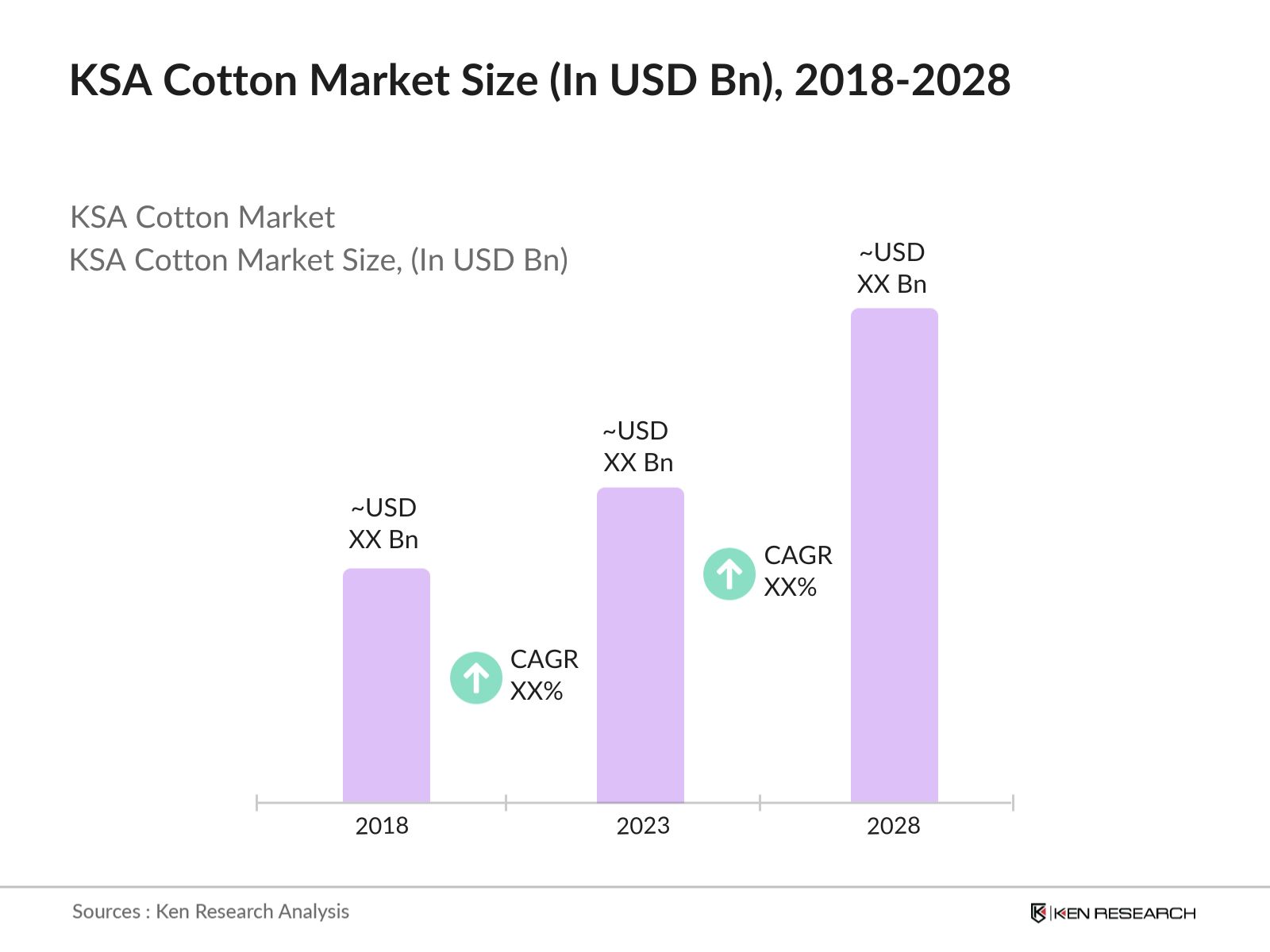
  • Saudi Arabia's cotton market is growing positively from 2018-2023. The global cotton market size was at USD 40 Bn in 2023 driven by increasing demand for cotton in the textile and apparel industry, government initiatives to boost local cotton production. In 2022-2023, the total global production of cotton amounted to some 118.3 million bales.
  • The market is fragmented and is dominated by a few large players including Al Rajhi Holding Group and Almarai, which have invested heavily in cotton cultivation technology to maximize yield and efficiency.
  • In 2023, Al Rajhi Agricultural Investment Company (RAII) announced the expansion of its cotton farming operations in the Al-Qassim region. The expansion includes the introduction of advanced irrigation systems and high-yield cotton varieties to increase production capacity.

KSA-Cotton-Market-Size

KSA Cotton Current Market Analysis

  • The Ministry of Environment, Water, and Agriculture has introduced subsidies and incentives for cotton farmers, including financial support for the adoption of advanced farming techniques and technologies. In 2023, the government allocated USD 50 Mn to support cotton farming projects, focusing on improving irrigation systems and providing high-quality seeds.
  • The introduction of advanced farming techniques has led to higher yields and better-quality cotton, making Saudi cotton competitive in international markets. In 2023, KSA's cotton exports increased by 12%, contributing significantly to the country's GDP.
  • The Al-Qassim region is the dominant area for cotton production in Saudi Arabia. This region is known for its fertile soil, favourable climate, and well-developed agricultural infrastructure, making it ideal for cotton farming. The Al-Qassim region accounts for 40% of the total cotton production in Saudi Arabia, driven by the presence of large-scale farms and advanced farming practices.

KSA Cotton Market Segmentation

The KSA Cotton Market can be segmented based on several factors:

By Cotton Type: KSA Cotton Market is segmented by type of cotton into short-staple, medium-staple and long-staple. Long Staple were the dominant type of cotton in the market. It is Used primarily in higher-end textiles due to its shorter fibre length and affordability. This type is cotton is grown easily on the type of soil KSA has. The demand for short-staple cotton is higher in KSA because of its extensive properties.
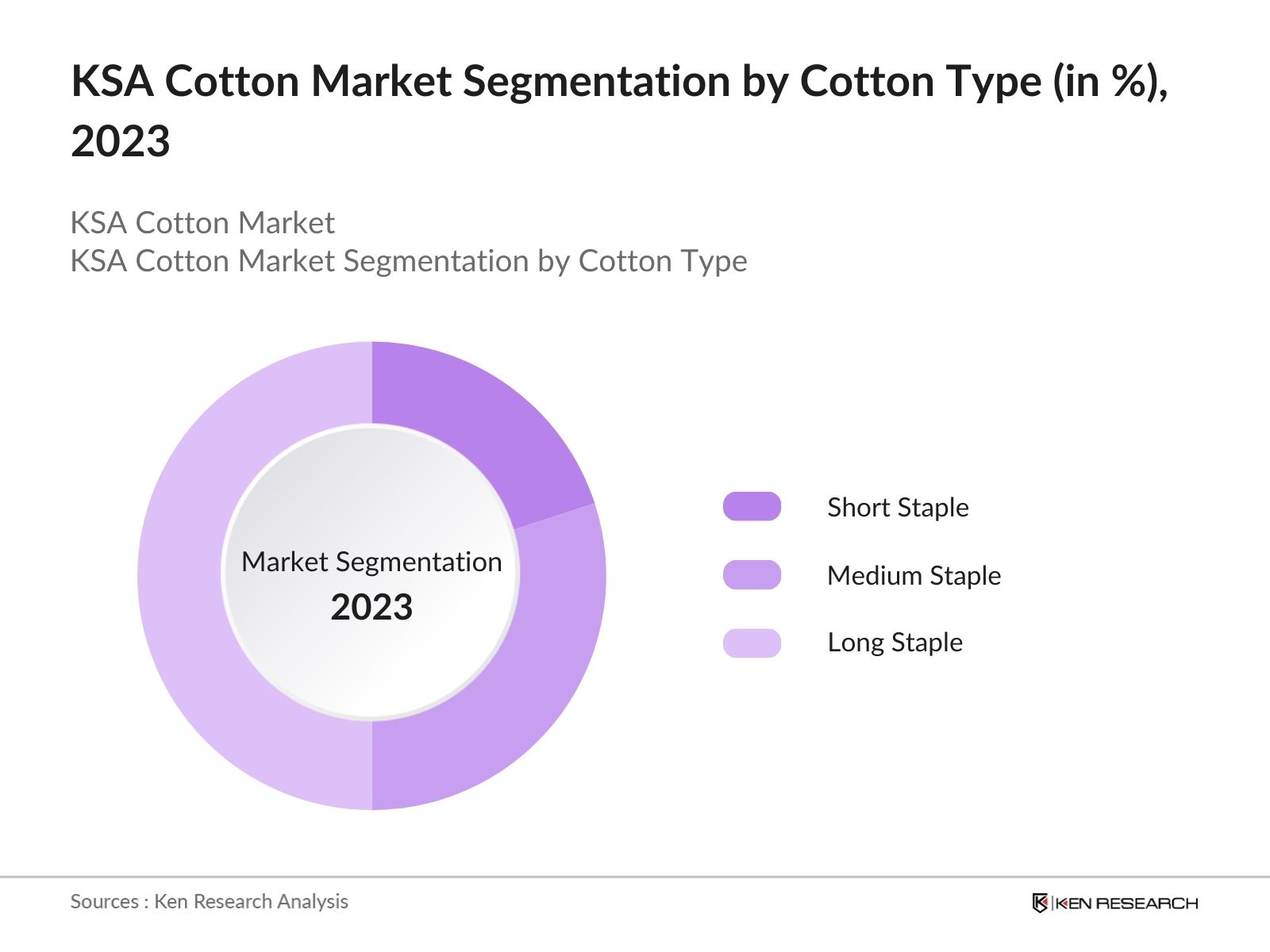
KSA-Cotton-Market-Segmentation-By-Cotton-Product

By End-User: KSA Cotton Market is segmented by end user into textile and non-textile. Non-textile was the dominant segment by end user in KSA Cotton market. The primary consumer of cotton, textiles use it extensively for various applications, driving bulk of the demand.
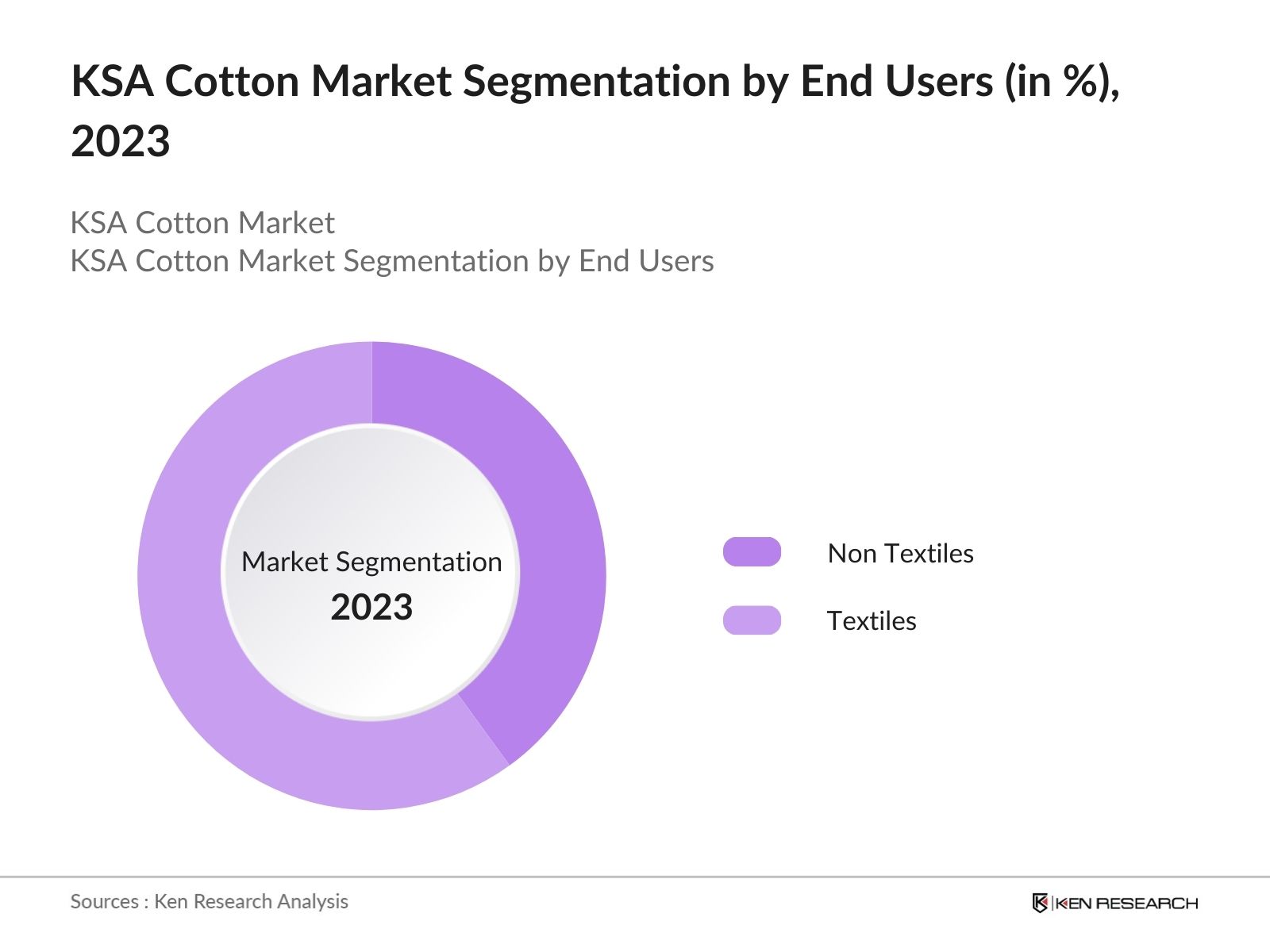
KSA-Cotton-Market-Segmentation-By-End-users

By Region: KSA Cotton Market is segmented by region into north, south, east, west and central. In 2023, the Central region of the Kingdom of Saudi Arabia emerged as the dominant sub-segment in the cotton market. This region, which includes the capital city Riyadh, led the market due to the high demand for cotton in its thriving textile and garment manufacturing sectors.
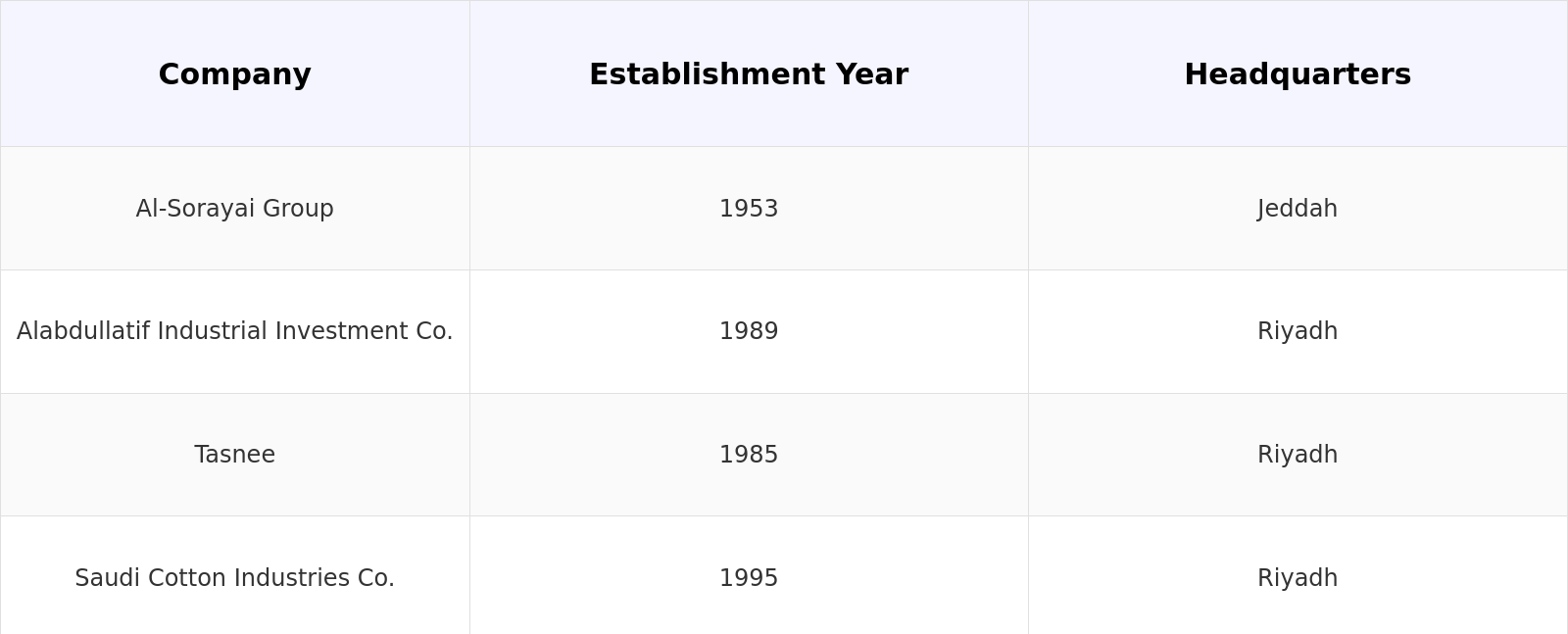
KSA Cotton Market Competitive Landscape

Competitive Landscape Table


  • Saudi Cotton Factory: In 2023, Saudi Cotton Factory announced the expansion of its production facility in Riyadh, increasing its production capacity by 20%. This expansion aims to meet the growing demand for cotton products and support the company's growth strategy.
  • Expansion of Cotton Farms by Saudi Cotton Group: In 2024, the Saudi Cotton Group announced the expansion of its cotton farms by 2,000 hectares. This expansion is expected to increase production capacity by 15,000 metric tons annually, meeting the growing demand from the textile industry.
  • Introduction of New Cotton Varieties: In 2024, Al Rajhi Group introduced a new drought-resistant cotton variety, which can thrive with 30% less water compared to traditional varieties. This innovation is anticipated to significantly reduce water consumption in cotton farming.
  • Partnership for Sustainable Practices by Saudi Textile Company: In 2024, the Saudi Textile Company partnered with an international NGO to promote sustainable cotton farming practices. This partnership aims to certify 5,000 hectares of cotton farms as sustainable by 2025, enhancing the marketability of Saudi cotton.

KSA Cotton Industry Analysis

KSA Cotton Growth Drivers

  • Increasing Consumer population for Textiles: The domestic demand for textiles in Saudi Arabia has been on the rise, driven by a growing population and increasing disposable income. The Saudi General Authority for Statistics reported a population growth rate of 2.3% in 2023, contributing to higher consumption of cotton-based products.
  • Government Initiatives to Boost Cotton Production: The Saudi government has implemented several initiatives to enhance local cotton production, aiming to reduce dependence on imports and promote self-sufficiency. The Ministry of Environment, Water, and Agriculture launched the "Sustainable Agriculture Initiative" in 2022, providing subsidies and technical support to cotton farmers.
  • Advancements in Agricultural Technology: Technological advancements in agriculture have played a crucial role in increasing cotton yield and quality in Saudi Arabia. According to the Saudi Agricultural and Livestock Investment Company (SALIC), the use of GM cotton varieties has led to a 15% increase in cotton yield and a 20% reduction in water usage, contributing to the sustainability and profitability of cotton farming.

KSA Cotton Market Challenges

  • Water Scarcity and Irrigation Issues: Water scarcity is a significant challenge for cotton production in Saudi Arabia, as cotton is a water-intensive crop. The country's arid climate and limited water resources make efficient irrigation crucial for sustainable cotton farming.
  • Competition from Synthetic Fibers: The cotton market faces competition from synthetic fibers, which are often cheaper and more versatile. Synthetic fibers, such as polyester and nylon, have gained popularity due to their durability and low cost.
  • Fluctuations in Global Cotton Prices: Global cotton prices can be volatile, influenced by factors such as weather conditions, trade policies, and market demand. Fluctuations in cotton prices can impact the profitability of cotton farming and processing in Saudi Arabia.

KSA Cotton Market Government Initiatives

  • Sustainable Agriculture Initiative (2022): The Ministry of Environment, Water, and Agriculture launched the "Sustainable Agriculture Initiative" in 2022, providing subsidies and technical support to cotton farmers. This initiative focuses on promoting sustainable farming practices, improving irrigation systems, and providing access to high-quality seeds. The goal is to enhance the productivity and sustainability of cotton farming in Saudi Arabia, contributing to the overall growth of the cotton market.
  • National Water Strategy (2020): The Saudi government implemented the National Water Strategy in 2020, aiming to address water scarcity and improve water management in agriculture. The strategy includes measures to enhance irrigation efficiency, promote the use of treated wastewater, and support research and development in water-saving technologies.
  • Vision 2030 Initiative (2016): As part of the Vision 2030 initiative, the Saudi government is committed to diversifying the economy and reducing dependence on oil revenues. The initiative includes significant investments in the agricultural sector, including cotton farming.

KSA Cotton Market Future Outlook

The KSA cotton market is expected to continue its robust growth, driven by increasing domestic demand for textiles, advancements in agricultural technology, and government initiatives to support the cotton industry. The adoption of sustainable farming practices and the development of high-yield cotton varieties will further enhance productivity and sustainability, shaping the future of the market.

Future Market Trends

  • Increased Adoption of Sustainable Farming Practices: The trend towards sustainable farming practices is expected to drive significant advancements in the cotton sector. Sustainable practices, such as organic farming, precision agriculture, and efficient water management, will enhance productivity.
  • Development of Smart Farming Techniques: The integration of smart farming techniques, such as the use of IoT, drones, and data analytics, is expected to revolutionize cotton farming. These technologies enable real-time monitoring of crop health, soil conditions, and weather patterns.

Scope of the Report

By Type

Short-Staple

Medium-Staple

Long-Staple

By End User

Textile

Non-Textile

By Region

North

South

East

West

Central

Products

Key Target Audience – Organizations and Entities Who Can Benefit by Subscribing This Report: 

  • Textile Manufacturers

  • Fashion and Apparel Brands

  • Agricultural Equipment Firms

  • Government Agricultural Agencies

  • Agriculture Traders

  • Agricultural Consultants

  • Seed and Agricultural Input Suppliers

  • Government Institutions and Regulatory Bodies (NADEC, SFDA etc.)

Time Period Captured in the Report: 

  • Historical Period: 2018-2023

  • Base Year: 2023

  • Forecast Period: 2023-2028

Companies

Players Mentioned in the Report: 

  • Al Rajhi Holding Group

  • Almarai

  • Saudi Cotton Company

  • Arabian Agricultural Services Company (ARASCO)

  • Saudi Basic Industries Corporation (SABIC)

  • Al Kadi Commerce & Industry

  • National Industrialization Company (Tasnee)

  • Middle East Fiber Company

  • Jeddah Farms

  • Tabuk Agricultural Development Co.

  • Riyadh Agricultural Development Co.

  • Al Jouf Agricultural Development Co.

  • Saudi Organic Farming Association

  • Al Dahra Agriculture

  • Hail Agricultural Development Co

Table of Contents

1. KSA Cotton Market Overview

1.1 KSA Cotton Market Taxonomy

2. KSA Cotton Market Size (in USD Bn), 2018-2023

3. KSA Cotton Market Analysis

3.1 KSA Cotton Market Growth Drivers

3.2 KSA Cotton Market Challenges and Issues

3.3 KSA Cotton Market Trends and Development

3.4 KSA Cotton Market Government Regulation

3.5 KSA Cotton Market SWOT Analysis

3.6 KSA Cotton Market Stake Ecosystem

3.7 KSA Cotton Market Competition Ecosystem

4. KSA Cotton Market Segmentation, 2023

4.1 KSA Cotton Market Segmentation by Type (in value %), 2023

4.2 KSA Cotton Market Segmentation by End User (in value %), 2023

4.3 KSA Cotton Market Segmentation by Region (in value %), 2023

5. KSA Cotton Market Competition Benchmarking

5.1 KSA Cotton Market Cross-Comparison (no. of employees, company overview, business strategy, USP, recent development, operational parameters, financial parameters and advanced analytics)

6. KSA Cotton Future Market Size (in USD Bn), 2023-2028

7. KSA Cotton Future Market Segmentation, 2028

7.1 KSA Cotton Market Segmentation by Type (in value %), 2028

7.2 KSA Cotton Market Segmentation by End User (in value %), 2028

7.3 KSA Cotton Market Segmentation by Region (in value %), 2028

8. KSA Cotton Market Analysts’ Recommendations

8.1 KSA Cotton Market TAM/SAM/SOM Analysis

8.2 KSA Cotton Market Customer Cohort Analysis

8.3 KSA Cotton Market Marketing Initiatives

8.4 KSA Cotton Market White Space Opportunity Analysis

Disclaimer Contact Us

Research Methodology

Step 1: Identifying Key Variables:

Ecosystem creation for all the major entities and referring to multiple secondary and proprietary databases to perform desk research around market to collate industry level information. 

Step 2: Market Building:

Collating statistics on KSA cotton market over the years, penetration of marketplaces and service providers ratio to compute revenue generated for KSA cotton market. We will also review service quality statistics to understand revenue generated which can ensure accuracy behind the data points shared. 

Step 3: Validating and Finalizing:

Building market hypothesis and conducting CATIs with industry experts belonging to different companies to validate statistics and seek operational and financial information from company representatives. 

Step 4: Research Output:

Our team will approach multiple cotton companies and understand nature of product segments and sales, consumer preference and other parameters, which will support us validate statistics derived through bottom to top approach from cotton companies.

Frequently Asked Questions

01 How big is Cotton Market?

The Global Cotton Market was valued at USD 40 Bn in 2023 driven by increasing demand for cotton in the textile and apparel industry, government initiatives to boost local cotton production, and the growing preference for natural fibres.

02 What are the growth drivers for KSA cotton market?

KSA Cotton Market is driven by technological advancements in agriculture and increasing demand for sustainable products.

03 Who are the major players in the KSA cotton market?

The major players in KSA cotton market are Al Rajhi Holding Group, Almarai. Al-Sorayai Group, Alabdullatif Industrial Investment Co., Tasnee and Saudi Cotton Industries Co.

05 What types of cotton are primarily produced in KSA?

KSA focuses on producing high-quality, long-staple cotton, suitable for luxury textiles and high-end apparel.

Why Buy From Us?

RRR
Refine Robust Result (RRR) Framework

What makes us stand out is that our consultants follows Robust, Refine and Result (RRR) methodology. i.e. Robust for clear definitions, approaches and sanity checking, Refine for differentiating respondents facts and opinions and Result for presenting data with story

Our Reach Is Unmatched

We have set a benchmark in the industry by offering our clients with syndicated and customized market research reports featuring coverage of entire market as well as meticulous research and analyst insights.

Research
Shifting the Research Paradigm

While we don't replace traditional research, we flip the method upside down. Our dual approach of Top Bottom & Bottom Top ensures quality deliverable by not just verifying company fundamentals but also looking at the sector and macroeconomic factors.

Insite
More Insights-Better Decisions

With one step in the future, our research team constantly tries to show you the bigger picture. We help with some of the tough questions you may encounter along the way: How is the industry positioned? Best marketing channel? KPI's of competitors? By aligning every element, we help maximize success.

Trust
Transparency and Trust

Our report gives you instant access to the answers and sources that other companies might choose to hide. We elaborate each steps of research methodology we have used and showcase you the sample size to earn your trust.

support
Round the Clock Support

If you need any support, we are here! We pride ourselves on universe strength, data quality, and quick, friendly, and professional service.

Why Client Choose Us?

400000+ Reports in repository
150+ Consulting project a year
100+ Analysts
8000+ Client Queries in 2022