
KSA Cryogenic Equipment Market Outlook to 2030
Region:Saudi Arabia
Author(s):Shambhavi Awasthi
Product Code:KROD2358
Region:Saudi Arabia
Author(s):Shambhavi Awasthi
Product Code:KROD2358
December 2024
97
|
Company Name |
Establishment Year |
Headquarters |
|
Chart Industries |
1859 |
Ball Ground, USA |
|
Air Liquide |
1902 |
Paris, France |
|
Linde Group |
1879 |
Munich, Germany |
|
Cryofab |
1971 |
New Jersey, USA |
|
Saudi Arabian Industrial Gas (SAGC) |
1956 |
Al-Khobar, Saudi Arabia |
Growth Drivers
Challenges
Government Initiatives
The future of the KSA Cryogenic Equipment Market is poised for robust growth, driven by Saudi Arabia’s economic diversification efforts and increasing investments in the LNG, healthcare, and industrial sectors. The National Gas Initiative and Vision 2030 will continue to play a crucial role in expanding the kingdom’s natural gas production and export capabilities, leading to higher demand for cryogenic equipment. The healthcare sector, with its growing need for liquid oxygen and nitrogen in medical applications, will also contribute to the market’s expansion.
Future Trends
|
By Product Type |
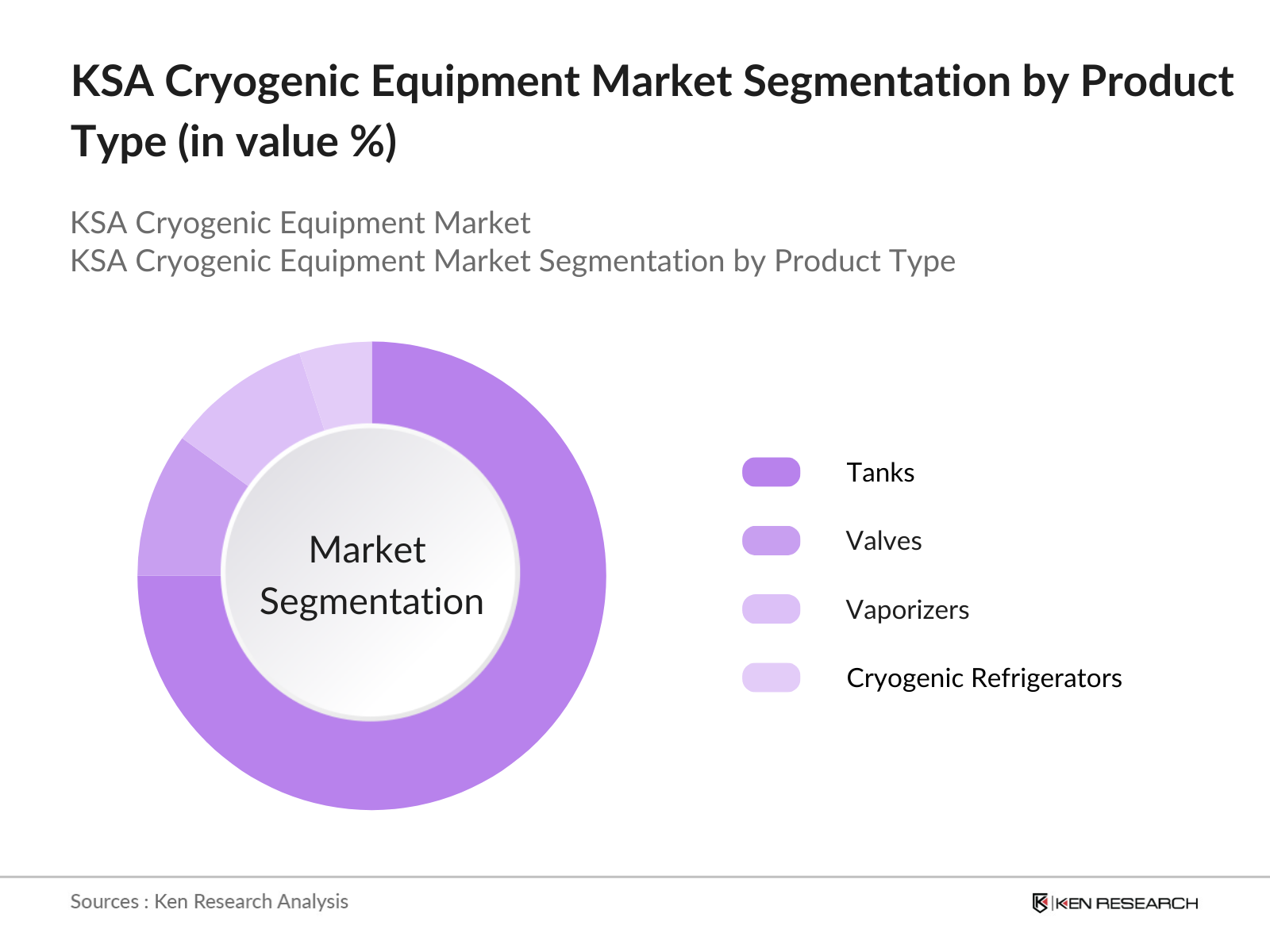
Tanks Valves Vaporizers Cryogenic Refrigerators |
|
By End User |
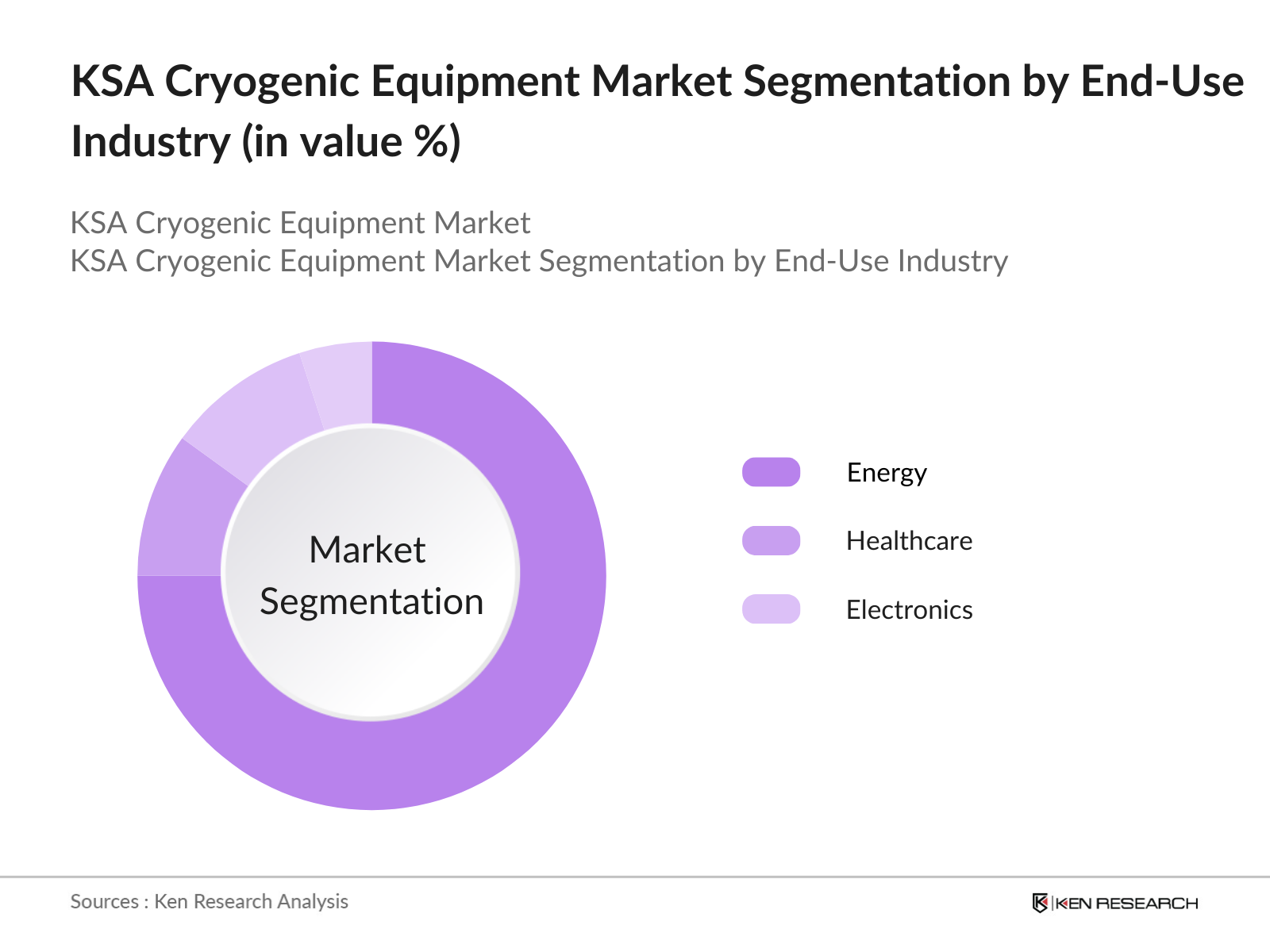
Energy Healthcare Electronics |
|
By Cryogen Type |
Liquefied Natural Gas (LNG) |
|
By Region |
North South West East |
1.1. Definition and Scope
1.2. Market Taxonomy (Cryogenic Equipment Types, End-Use Industries, Geographies)
1.3. Market Growth Rate (Historical and Current)
1.4. Overview of Cryogenic Equipment Applications in Key Sectors (LNG, Healthcare, Petrochemicals, and Electronics)
1.5. Strategic Importance of Cryogenic Equipment in the Saudi Economy (Vision 2030 Alignment)
2.1. Historical Market Size (Market Data for Key Years)
2.2. Year-on-Year Growth Analysis
2.3. Market Milestones (Government Projects, Major Investments, and Industry Developments)
2.4. Market Forecast and Projections (Next 5 Years Growth Projection in USD)
3.1. Growth Drivers
3.1.1. LNG Production Expansion
3.1.2. Increased Healthcare Spending
3.1.3. Vision 2030 and Industrial Diversification
3.2. Market Restraints
3.2.1. High Initial Setup Costs
3.2.2. Technical and Maintenance Complexities
3.2.3. Volatility in Energy Prices
3.3. Opportunities
3.3.1. Rising Demand for Carbon Capture Storage (CCS) Solutions
3.3.2. Government Support for Clean Energy Projects
3.3.3. Expansion of Petrochemical Facilities
3.4. Trends
3.4.1. Digital Monitoring and IoT Integration
3.4.2. Focus on Sustainable Cryogenic Solutions
3.4.3. Development of LNG Export Terminals
3.5. SWOT Analysis
3.6. Competitive Ecosystem
3.7. Market Stakeholders (Government, Industrial, Healthcare, LNG Transport Companies)
4.1. By Product Type (in value %) 4.1.1. Cryogenic Storage Tanks
4.1.2. Cryogenic Valves
4.1.3. Vaporizers
4.1.4. Cryogenic Refrigerators
4.2. By End-Use Industry (in value %)
4.2.1. Energy (LNG, Oil & Gas)
4.2.2. Healthcare (Medical Gases, Liquid Oxygen)
4.2.3. Petrochemical Industry
4.2.4. Electronics Industry
4.3. By Technology (in value %)
4.3.1. Continuous Monitoring Systems
4.3.2. Intermittent Monitoring Systems
4.4. By Cryogen Type (in value %)
4.4.1. Liquefied Natural Gas (LNG)
4.4.2. Liquid Oxygen (LOX)
4.4.3. Liquid Nitrogen (LN2)
4.4.4. Liquid Argon
4.5. By Region (in value %)
4.5.1. East
4.5.2. North
4.5.3. West
4.5.4 South
5.1. Market Share Analysis (Product and Service Providers)
5.2. Strategic Initiatives (Expansion, Partnerships, and Collaborations)
5.3. Mergers and Acquisitions (Recent Activities)
5.4. Investment Analysis
5.4.1. Venture Capital Investments
5.4.2. Government Funding and Grants (Saudi Industrial Development Fund, Ministry of Energy Initiatives)
5.4.3. Private Equity Investments
5.5. Competitive Landscape – Profiles of Key Players
5.5.1. Chart Industries
5.5.2. Air Liquide
5.5.3. Linde Group
5.5.4. Cryofab
5.5.5. Saudi Arabian Industrial Gas (SAGC)
5.5.6. Technex
5.5.7. INOXCVA
5.5.8. Air Products and Chemicals, Inc.
5.5.9. Taylor-Wharton
5.5.10. Hunan Kaimeite Gases Co., Ltd.
5.5.11. Cryogenmash
5.5.12. BOC Cryotech
5.5.13. Emerson Electric
5.5.14. TSI Incorporated
5.5.15. Hunan Kaimeite Gases
6.1. Government Initiatives and Regulations (Vision 2030, NIDLP)
6.2. Energy and Environmental Compliance (Saudi Green Initiative, National Gas Initiative)
6.3. Industrial Standards and Certifications (ISO Standards for Cryogenic Equipment)
6.4. Safety and Handling Regulations for Cryogenic Gases
7.1. Projections for Market Growth
7.2. Impact of Future Government Policies and Initiatives
7.3. Future Demand for LNG Infrastructure and Clean Energy Solutions
7.4. Expansion into New Industrial and Healthcare Segments
7.5. Technological Innovations and Their Market Impact
8.1. Company Profiles and Financial Data (Revenue, Operating Margins, CapEx)
8.2. Cross-Comparison of Product Offerings (Cryogenic Tanks, Valves, Vaporizers)
8.3. Market Positioning by Region and Industry Segment
8.4. Technological Leadership Comparison (R&D Investments, Innovation Capabilities)
9.1. Supply Chain Analysis (Manufacturing, Distribution, End-User)
9.2. Key Stakeholders and Market Participants (LNG Producers, Healthcare Providers, Petrochemical Industry)
9.3. Collaboration and Partnership Opportunities (Government-Private Sector Synergies)
9.4. Investment and Funding Opportunities (Private Sector, Government, International Investors)
10.1. TAM (Total Addressable Market), SAM (Serviceable Available Market), SOM (Serviceable Obtainable Market) Analysis
10.2. Customer Cohort and Behavioral Analysis (Energy, Healthcare, and Petrochemical Sectors)
10.3. Strategic Marketing Recommendations for Penetrating Key Segments
10.4. White-Space Opportunity Analysis (Emerging Markets and Technological Gaps)
11.1. Operational Metrics (Number of Employees, Manufacturing Capabilities)
11.2. Financial Metrics (Revenue, Profitability, Capital Expenditure)
11.3. Technological Capabilities (Patents, Innovation Index, R&D Spending)
11.4. Cross-Comparison of Product Pricing (Cost vs. Value for Different Cryogenic Products)
Ecosystem creation for all major entities and referring to multiple secondary and proprietary databases to perform desk research around the market to collate market-level information.
Collating statistics on the KSA Cyrogenic Equipment Market over the years, analyzing the penetration of Cyrogenic Equipment technologies, and computing the revenue generated for the market. This step also involves reviewing technology adoption rates and application effectiveness to ensure accuracy behind the data points shared.
Building market hypotheses and conducting CATIs with market experts belonging to different companies to validate statistics and seek operational and financial information from company representatives.
Our team will approach multiple Cyrogenic Equipment companies to understand the nature of technology segments, consumer preferences, and other parameters. This supports validating statistics derived through a bottom-to-top approach from these Cyrogenic Equipment companies, ensuring accuracy and reliability in the report.
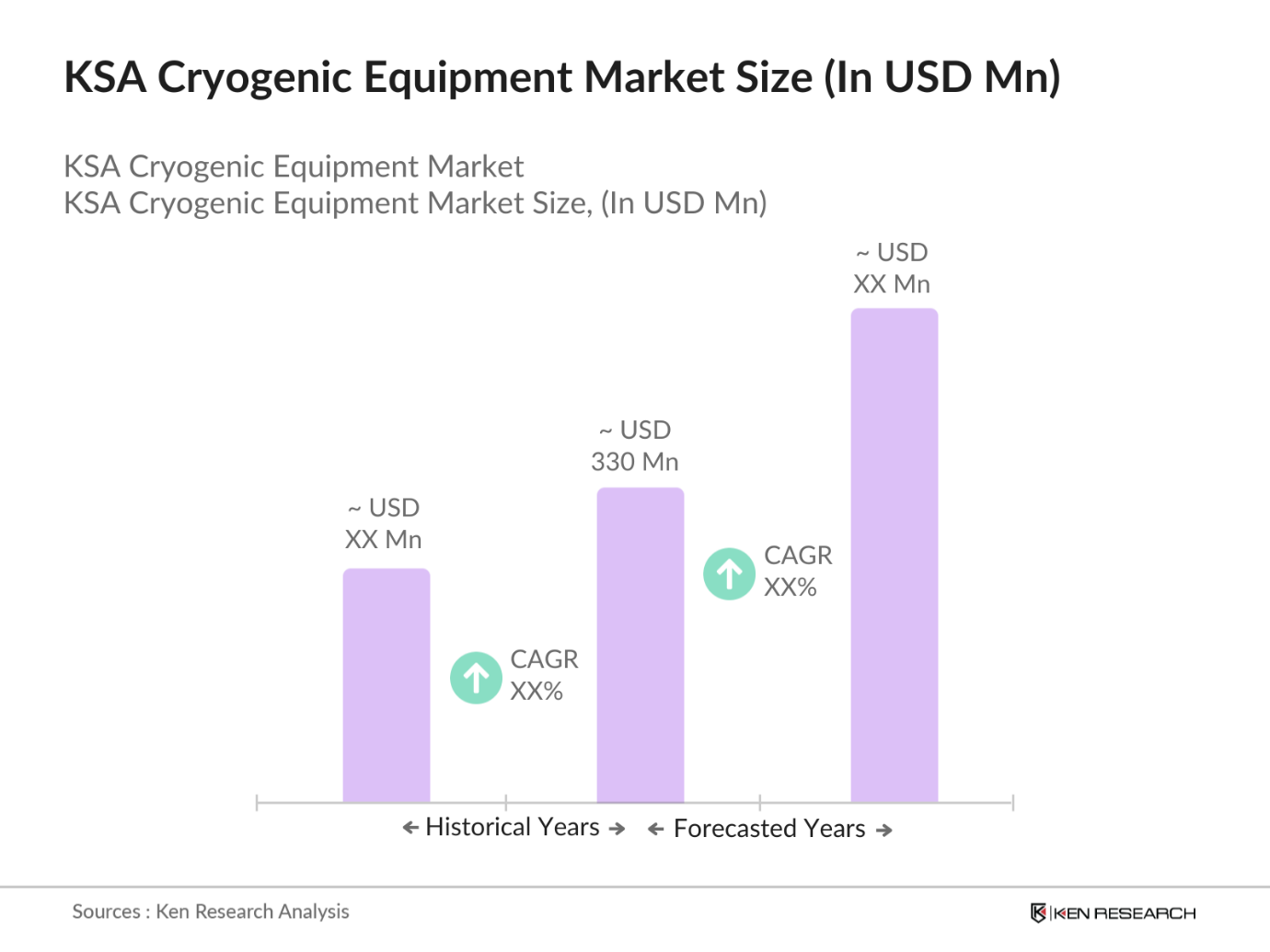
The KSA Cryogenic Equipment Market was valued at USD 330 million in 2023, driven by increased investments in LNG infrastructure, rising healthcare demand, and expanding petrochemical industries, as part of the government's Vision 2030 strategy.
Challenges in the KSA Cryogenic Equipment Market include high initial investment costs for infrastructure, technical complexities in handling and maintaining cryogenic systems, and volatility in global energy prices, which can affect investment decisions in key sectors.
Key players in the market include Chart Industries, Air Liquide, Linde Group, Cryofab, and Saudi Arabian Industrial Gas (SAGC). These companies dominate the market due to their advanced technology offerings and strong presence in Saudi Arabias energy and healthcare sectors.
The market is driven by the expansion of LNG infrastructure, growing demand for cryogenic gases in healthcare, and increasing investments in petrochemical and industrial sectors. Government initiatives like Vision 2030 and the National Gas Initiative further propel market growth.

What makes us stand out is that our consultants follows Robust, Refine and Result (RRR) methodology. i.e. Robust for clear definitions, approaches and sanity checking, Refine for differentiating respondents facts and opinions and Result for presenting data with story

We have set a benchmark in the industry by offering our clients with syndicated and customized market research reports featuring coverage of entire market as well as meticulous research and analyst insights.

While we don't replace traditional research, we flip the method upside down. Our dual approach of Top Bottom & Bottom Top ensures quality deliverable by not just verifying company fundamentals but also looking at the sector and macroeconomic factors.

With one step in the future, our research team constantly tries to show you the bigger picture. We help with some of the tough questions you may encounter along the way: How is the industry positioned? Best marketing channel? KPI's of competitors? By aligning every element, we help maximize success.

Our report gives you instant access to the answers and sources that other companies might choose to hide. We elaborate each steps of research methodology we have used and showcase you the sample size to earn your trust.

If you need any support, we are here! We pride ourselves on universe strength, data quality, and quick, friendly, and professional service.