
KSA Dairy-Free Infant Formula Market Outlook to 2030
Region:Saudi Arabia
Author(s):Ananya Singh
Product Code:KROD8840
Region:Saudi Arabia
Author(s):Ananya Singh
Product Code:KROD8840
November 2024
88
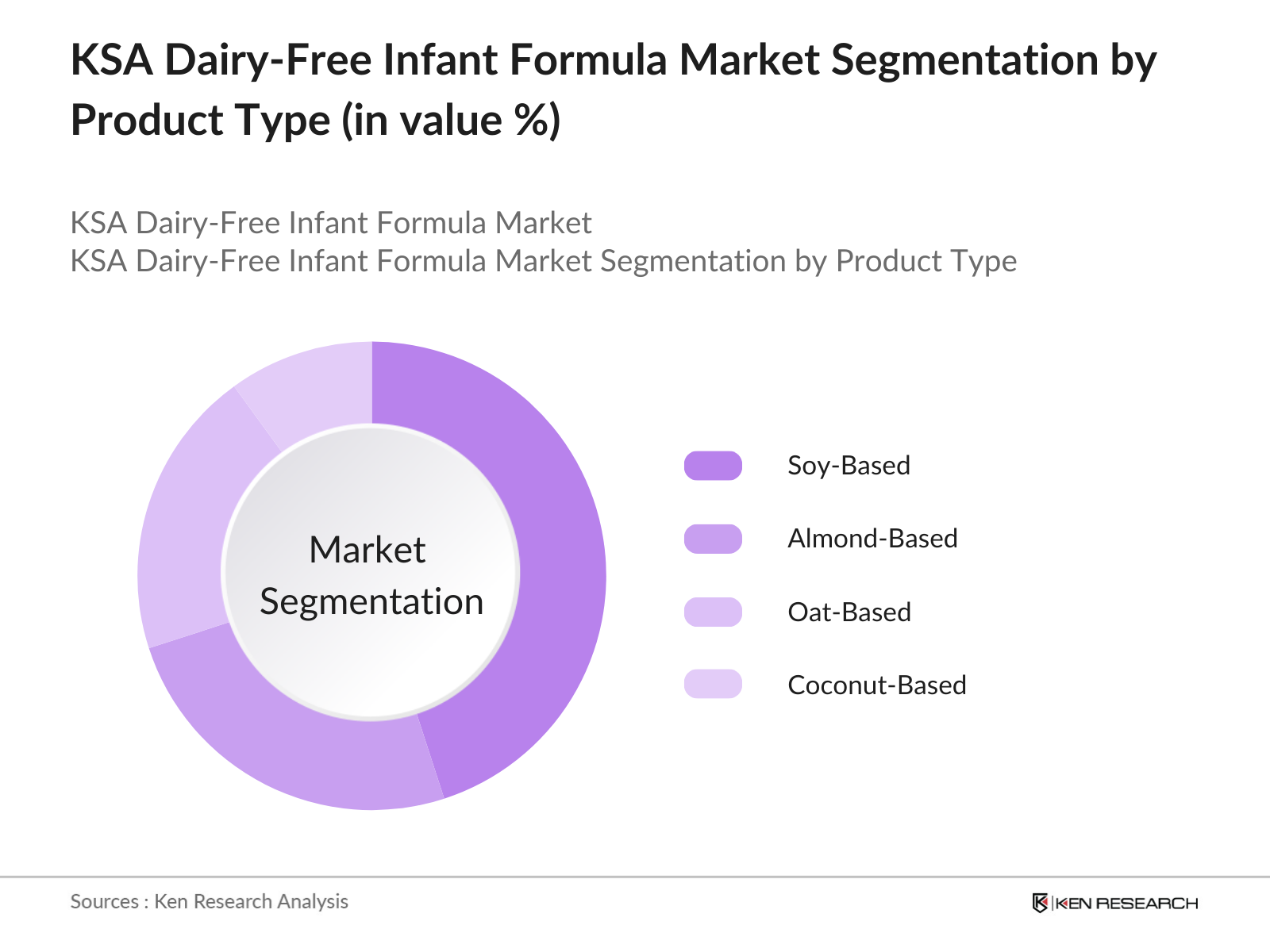
By Product Type: The KSA dairy-free infant formula market is segmented by product type into soy-based, almond-based, oat-based, and coconut-based formulas. Among these, soy-based formulas hold the dominant market share due to their well-established acceptance as a safe and nutritious dairy-free alternative. Parents often choose soy-based options as they closely mimic the nutrient profile of traditional dairy formulas, ensuring infants receive essential nutrients for growth and development. Brands providing soy-based options continue to attract demand due to the reliable protein source and affordability in comparison to other dairy-free products.
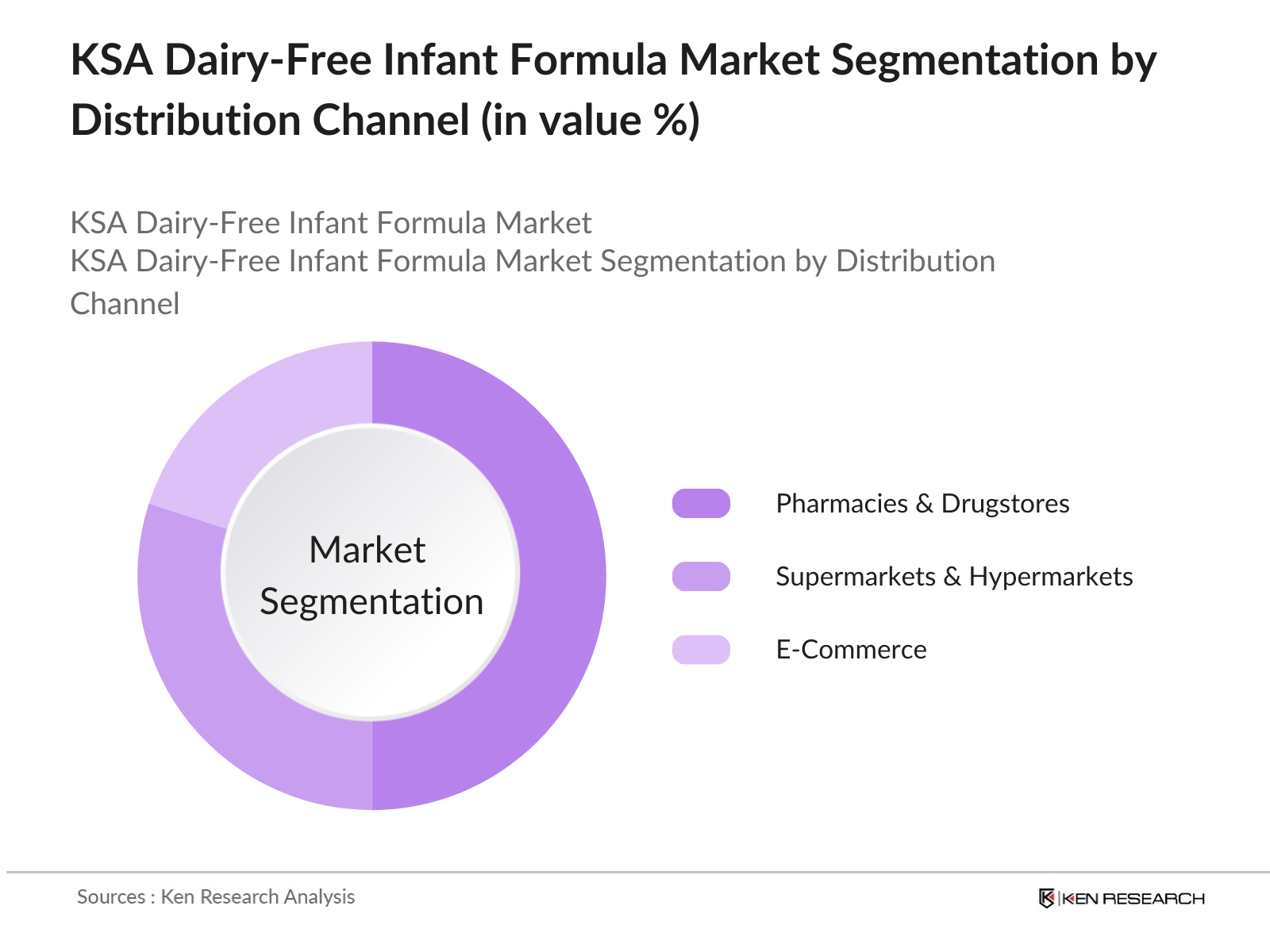
By Distribution Channel: The market is segmented by distribution channel into supermarkets & hypermarkets, pharmacies & drugstores, and e-commerce. Pharmacies and drugstores hold a dominant market share due to their strong positioning as trusted points of sale for infant nutrition products. Parents often rely on the expertise and recommendations provided by pharmacy professionals, which encourages purchases through this channel. Additionally, pharmacies provide easy access to a range of products catering to specific dietary needs, making them a preferred choice for dairy-free infant formulas.
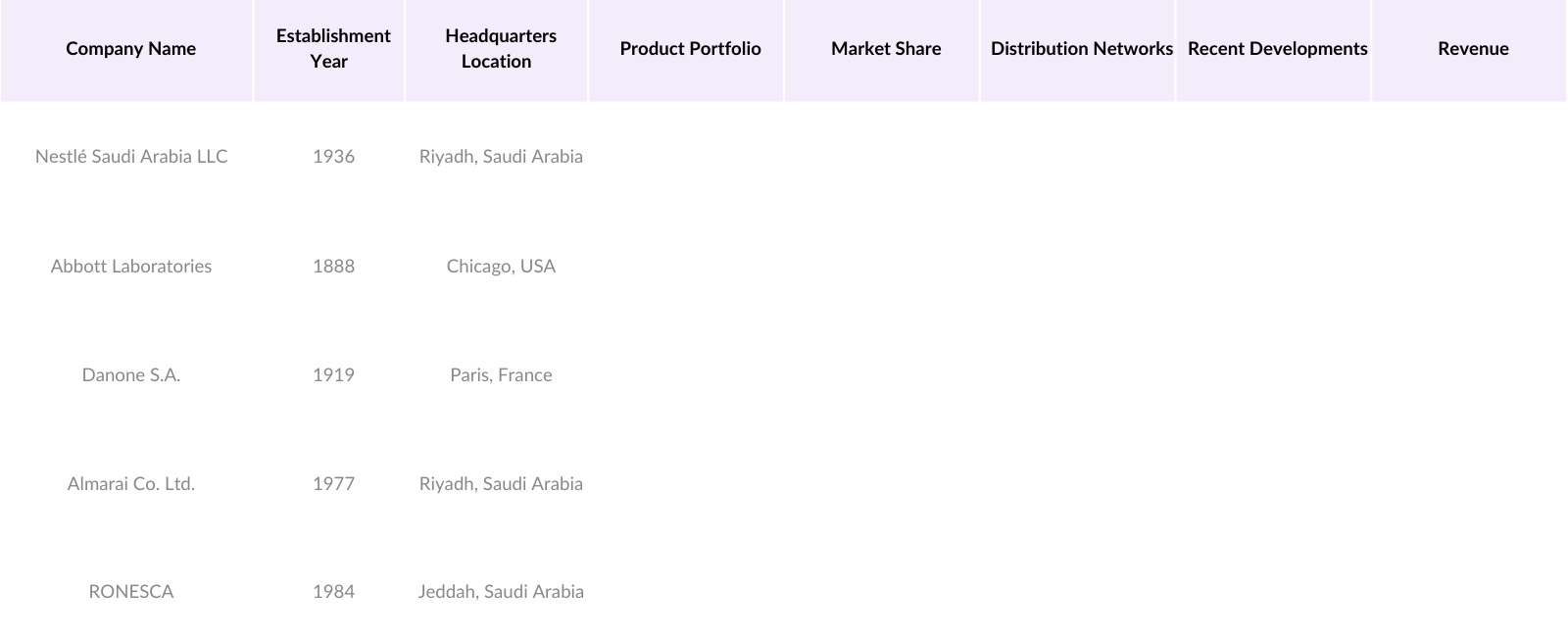
The KSA dairy-free infant formula market is characterized by the presence of several leading global and regional players. Companies such as Abbott Laboratories and Nestl S.A. maintain significant influence, while local entities are emerging with specialized plant-based offerings tailored to the Middle Eastern market. This competitive consolidation illustrates the influence of established and trusted players within the industry, where brand reputation and distribution reach are key determinants of market presence.
Challenges
KSA dairy-free infant formula market is anticipated to grow as dietary preferences shift towards lactose-free alternatives. Increased urbanization, a rise in disposable income, and growing parental awareness of dairy-free nutritional benefits for infants are expected to drive this trend. The role of e-commerce is also projected to expand, with more consumers turning to online channels for a wider selection of infant formula options.
|
By Product Type |
Soy-Based |
|
By Age Group |
0-6 Months |
|
By Ingredients |
Protein Blend |
|
By Distribution Channel |
Supermarkets & Hypermarkets Pharmacy & Drugstores |
|
By Region |
Central |
1.1. Definition and Scope (Target Consumer Group, Lactose-Free Requirement)
1.2. Market Taxonomy (Organic, Conventional)
1.3. Market Growth Rate
1.4. Market Segmentation Overview (Product Type, Distribution Channel, Ingredients)
2.1. Historical Market Size
2.2. Year-On-Year Growth Analysis
2.3. Key Market Developments and Milestones
3.1. Growth Drivers
3.1.1. Rising Lactose Intolerance in Infants
3.1.2. Increase in Health Conscious Parents
3.1.3. Expanding Retail Network for Specialty Products
3.2. Restraints
3.2.1. Higher Cost Compared to Dairy-Based Formulas
3.2.2. Limited Product Awareness
3.3. Opportunities
3.3.1. Innovation in Plant-Based Ingredients
3.3.2. Growth in E-Commerce for Baby Products
3.4. Trends
3.4.1. Organic and Non-GMO Formulations
3.4.2. Preference for Soy-Based and Almond-Based Formulas
3.5. Government Regulations
3.5.1. Import Regulations and Quality Standards
3.5.2. Labeling Requirements
3.6. SWOT Analysis
3.7. Stakeholder Ecosystem
3.8. Porters Five Forces Analysis
3.9. Competitive Ecosystem
4.1. By Product Type (In Value %)
4.1.1. Soy-Based
4.1.2. Almond-Based
4.1.3. Oat-Based
4.1.4. Coconut-Based
4.2. By Age Group (In Value %)
4.2.1. 0-6 Months
4.2.2. 6-12 Months
4.2.3. 12-24 Months
4.3. By Ingredients (In Value %)
4.3.1. Protein Blend
4.3.2. Vitamins & Minerals
4.3.3. Fats & Oils
4.4. By Distribution Channel (In Value %)
4.4.1. Supermarkets & Hypermarkets
4.4.2. Pharmacy & Drugstores
4.4.3. E-Commerce
4.5. By Region (In Value %)
4.5.1. Central
4.5.2. Eastern
4.5.3. Western
5.1. Detailed Profiles of Major Companies
5.1.1. Abbott Laboratories
5.1.2. Nestle S.A.
5.1.3. Danone S.A.
5.1.4. Mead Johnson & Company, LLC
5.1.5. Else Nutrition
5.1.6. Earth's Best Organic
5.1.7. Nature's One
5.1.8. Holle Baby Food AG
5.1.9. Perrigo Company plc
5.1.10. Bellamy's Organic
5.2. Cross Comparison Parameters (Product Portfolio, Distribution Reach, Product Innovation, Key Product Certifications, Revenue, Market Share, Marketing Channels)
5.3. Market Share Analysis
5.4. Strategic Initiatives (Expansion, Product Innovation, Marketing Campaigns)
5.5. Mergers and Acquisitions
5.6. Investment Analysis
6.1. Import Restrictions
6.2. Nutritional Content Requirements
6.3. Labeling and Packaging Regulations
6.4. Organic and Non-GMO Certifications
7.1. Future Market Size Projections
7.2. Key Factors Driving Future Market Growth
8.1. By Product Type (In Value %)
8.2. By Age Group (In Value %)
8.3. By Ingredients (In Value %)
8.4. By Distribution Channel (In Value %)
8.5. By Region (In Value %)
9.1. Target Audience Segmentation
9.2. Marketing Strategies
9.3. Investment Opportunities
9.4. White Space Analysis
Disclaimer Contact UsIn the initial phase, an ecosystem map is constructed to include all major stakeholders in the KSA dairy-free infant formula market. Comprehensive desk research is conducted utilizing both proprietary and public data sources to outline the significant variables influencing market performance.
Historical data specific to the dairy-free infant formula market is aggregated and assessed. Analysis of market penetration by product type and distribution channel allows for accurate revenue projections. The data is cross-referenced with local dietary trends and consumer behavior in Saudi Arabia.
Key hypotheses concerning consumer preference and market barriers are developed and validated through interviews with market experts and company representatives. These insights help refine the assumptions underlying the growth potential of the market.
The final phase synthesizes the research, providing a well-rounded analysis of the market. This includes primary insights from leading manufacturers, coupled with secondary data to present a validated, comprehensive outlook of the KSA dairy-free infant formula market.
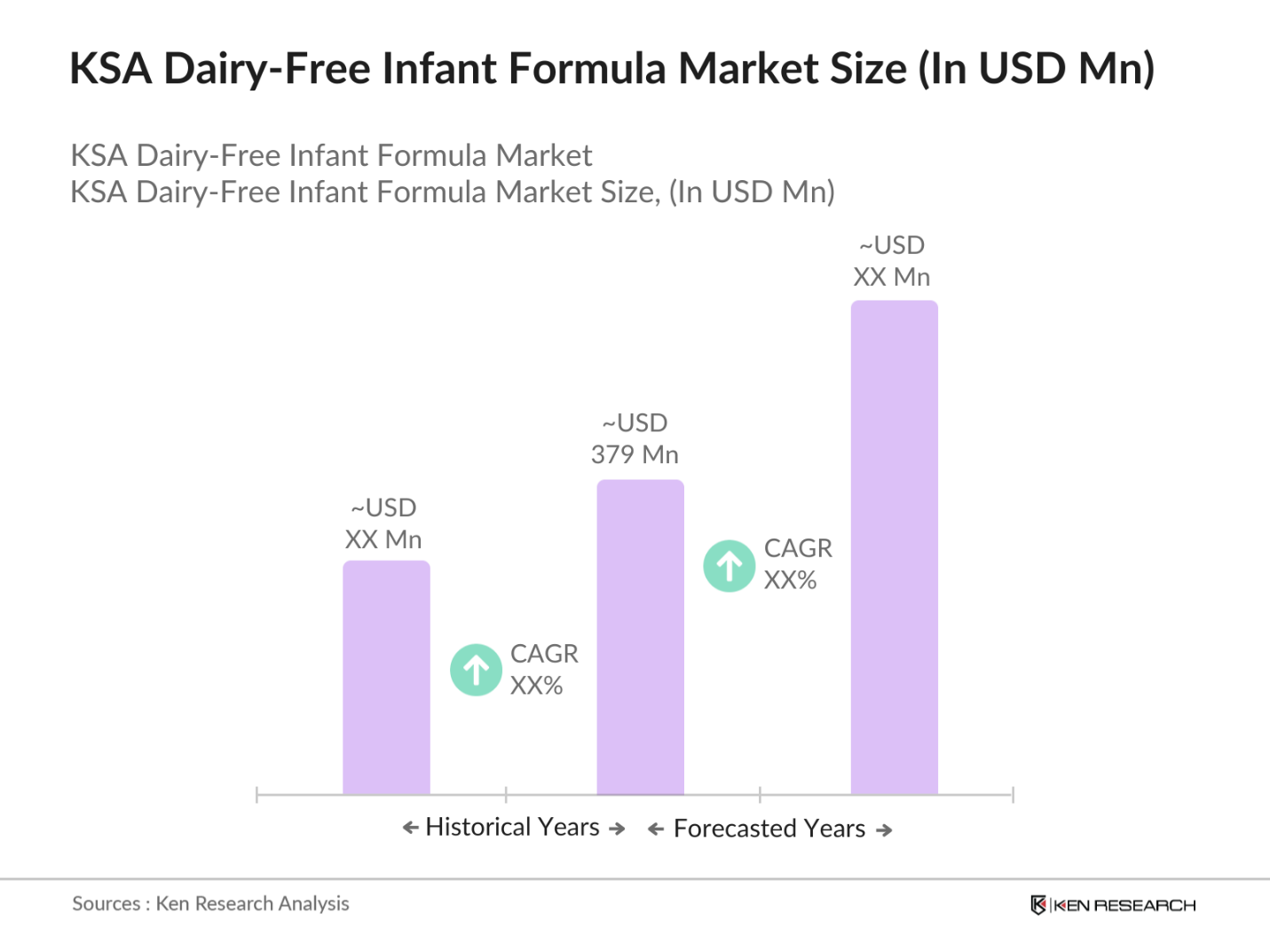
The KSA dairy-free infant formula market was valued at USD 379 million, driven by increasing awareness among parents about lactose intolerance and demand for specialized nutrition options.
Key growth in KSA dairy-free infant formula market drivers include rising lactose intolerance in infants, increasing consumer awareness about plant-based nutrition, and a growing preference for dairy-free dietary solutions.
The KSA dairy-free infant formula market includes prominent players such as Abbott Laboratories, Nestl S.A., Danone S.A., and Else Nutrition, who dominate due to their established distribution networks and trusted product lines.
Challenges in KSA dairy-free infant formula market include the high cost of dairy-free formulas relative to traditional options and limited consumer awareness in certain regions, which impacts market penetration.

What makes us stand out is that our consultants follows Robust, Refine and Result (RRR) methodology. i.e. Robust for clear definitions, approaches and sanity checking, Refine for differentiating respondents facts and opinions and Result for presenting data with story

We have set a benchmark in the industry by offering our clients with syndicated and customized market research reports featuring coverage of entire market as well as meticulous research and analyst insights.

While we don't replace traditional research, we flip the method upside down. Our dual approach of Top Bottom & Bottom Top ensures quality deliverable by not just verifying company fundamentals but also looking at the sector and macroeconomic factors.

With one step in the future, our research team constantly tries to show you the bigger picture. We help with some of the tough questions you may encounter along the way: How is the industry positioned? Best marketing channel? KPI's of competitors? By aligning every element, we help maximize success.

Our report gives you instant access to the answers and sources that other companies might choose to hide. We elaborate each steps of research methodology we have used and showcase you the sample size to earn your trust.

If you need any support, we are here! We pride ourselves on universe strength, data quality, and quick, friendly, and professional service.