
KSA Dairy Products Market Outlook to 2030
Region:Saudi Arabia
Author(s):Shambhavi
Product Code:KROD7513
Region:Saudi Arabia
Author(s):Shambhavi
Product Code:KROD7513
December 2024
80
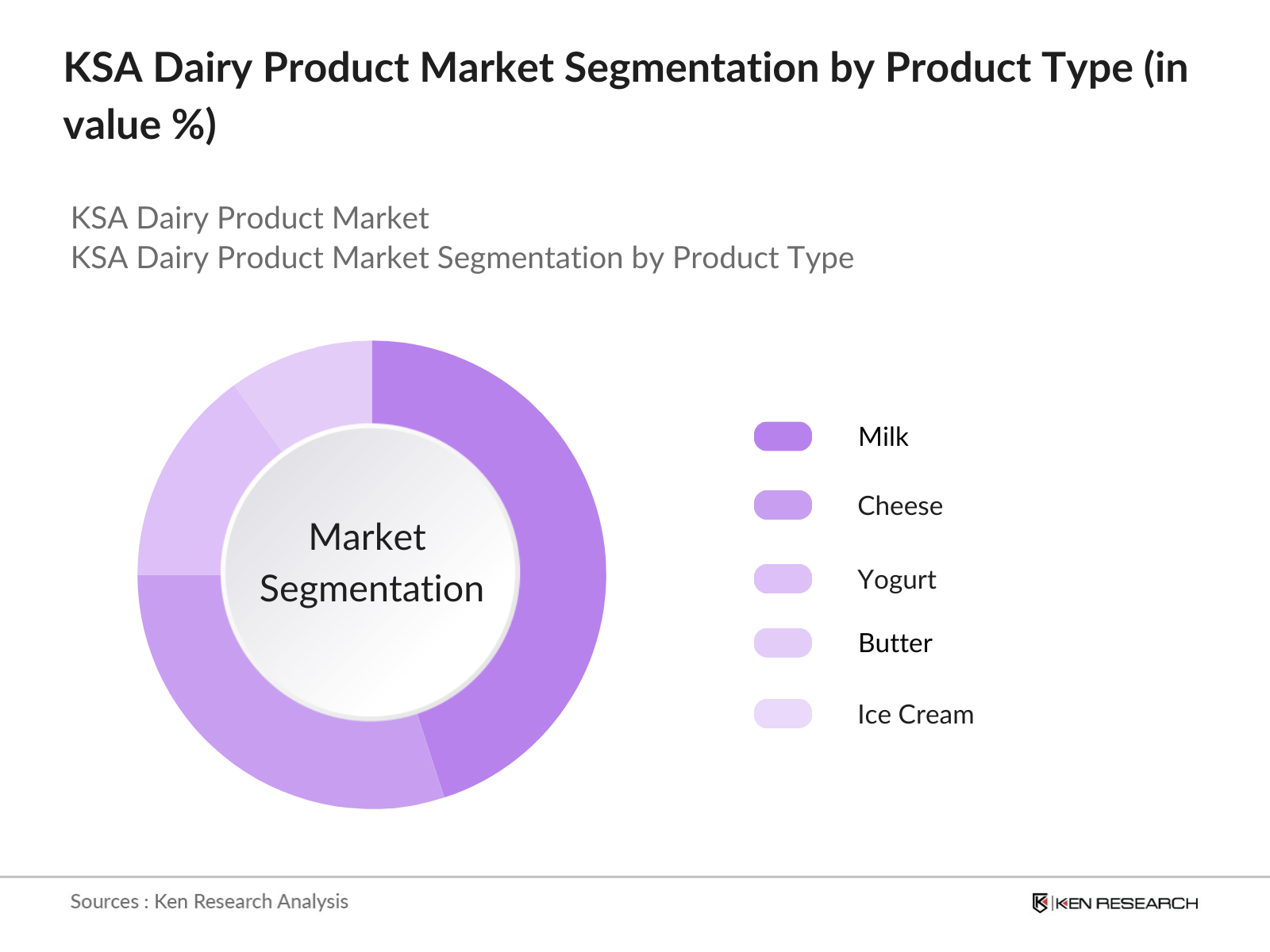
By Product Type: The KSA Dairy Products market is segmented by product type into milk, cheese, yogurt, butter, and ice cream. Currently, milk holds a dominant market share in the product type segment due to its widespread daily consumption and availability in various formats, such as fresh, UHT, and powdered milk. The increasing preference for fortified milk varieties among health-conscious consumers also supports this segment's growth, with leading brands capitalizing on consumer demand for nutritional options.
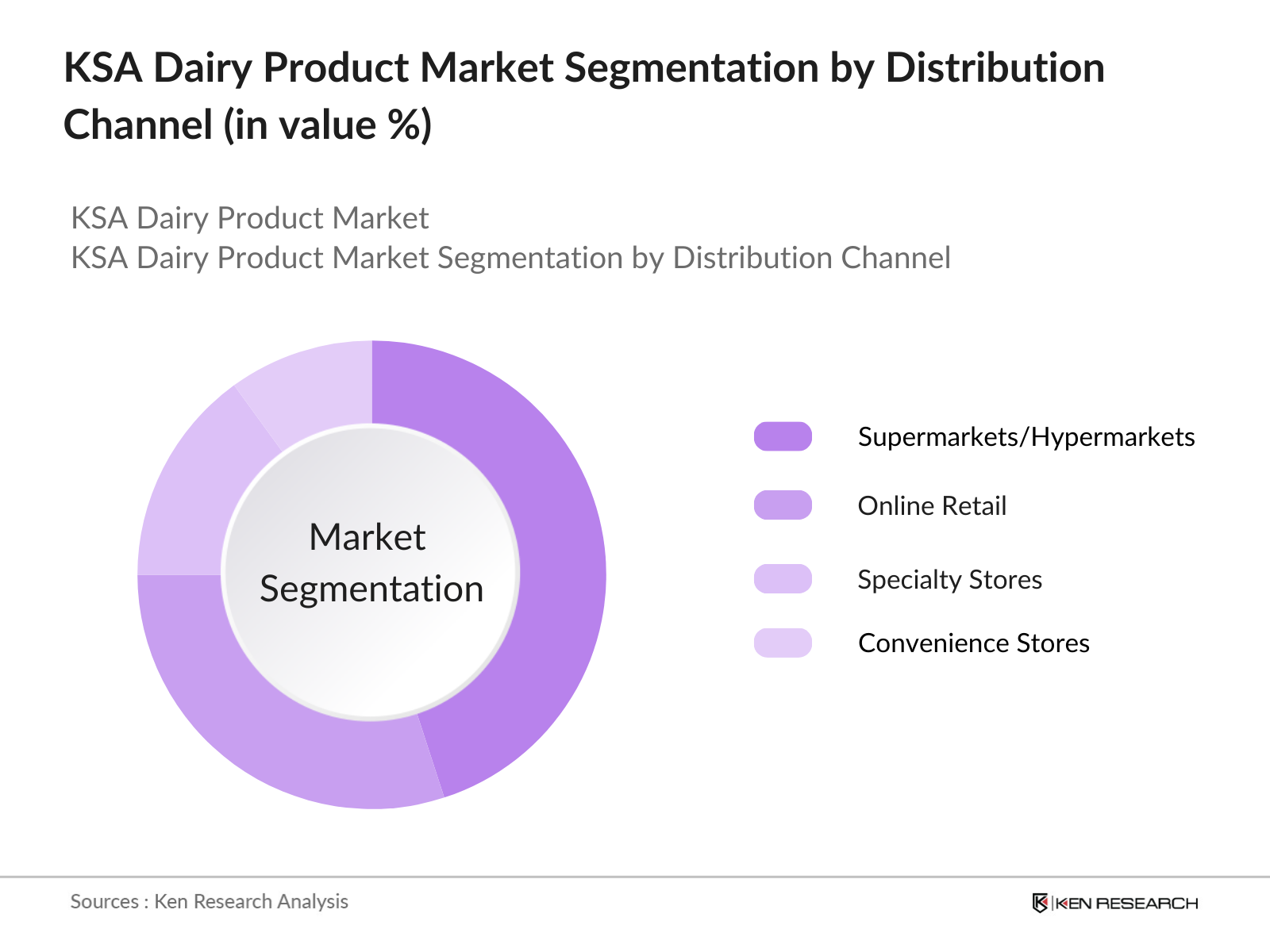
By Distribution Channel: The distribution channel for KSA dairy products includes supermarkets/hypermarkets, online retail, specialty stores, and convenience stores. Supermarkets and hypermarkets dominate the market share in this segment due to their large footprint in urban areas and the variety of dairy products they offer. Consumers preference for purchasing groceries from these outlets, combined with their ability to ensure product freshness, drives this dominance. Hypermarkets also cater to bulk buyers, which appeals to families and institutional consumers.
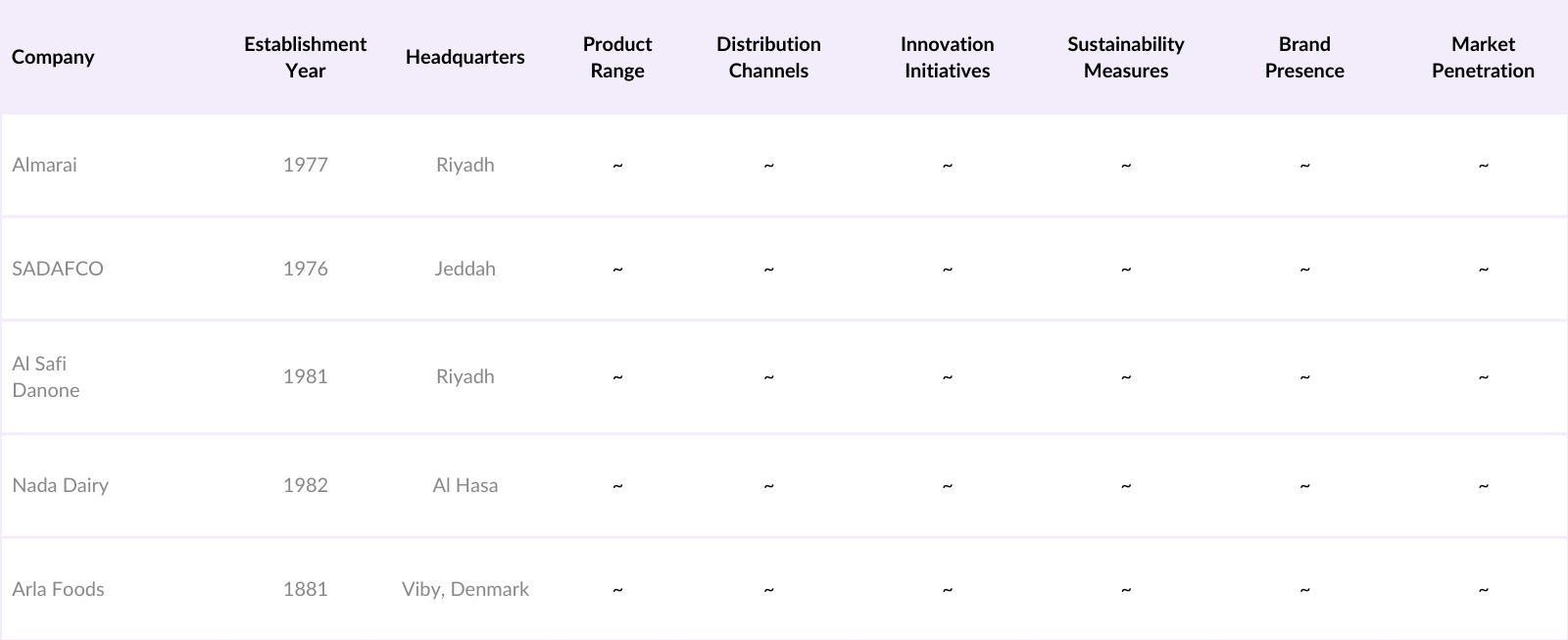
The KSA Dairy Products market is dominated by prominent local and international players who leverage established brands, extensive product portfolios, and efficient distribution channels. Key companies include Almarai, SADAFCO, and Al Safi Danone, showcasing the strength of local brands alongside global competitors, which enhances market competitiveness.
Over the next five years, the KSA Dairy Products market is set to witness substantial growth, driven by a combination of factors including government support for food security, advancements in cold chain logistics, and an increasing consumer preference for nutritional and fortified dairy products. Expanding distribution networks in both urban and rural areas will further facilitate market penetration, supporting robust demand across the country. Continued investments in sustainable dairy farming practices will be crucial as the market adapts to evolving consumer expectations for environmentally friendly products.
|
Segment |
Sub-segments |
|
Product Type |
Milk Cheese Yogurt Butter Cream |
|
Distribution Channel |
Supermarkets and Hypermarkets Convenience Stores Online Retail Direct Sales |
|
Region |
Riyadh Jeddah Dammam Khobar Other Regions |
1.1. Definition and Scope
1.2. Market Taxonomy
1.3. Market Growth Rate
1.4. Market Segmentation Overview
2.1. Historical Market Size
2.2. Year-On-Year Growth Analysis
2.3. Key Market Developments and Milestones
3.1. Growth Drivers
3.1.1. Rising Population and Urbanization (Population Growth Rate, Urban Population Percentage)
3.1.2. Increasing Health Awareness (Healthcare Expenditure Growth)
3.1.3. Expansion of Retail Infrastructure (Number of Retail Outlets)
3.1.4. Government Initiatives (National Food Security Program)
3.2. Market Challenges
3.2.1. Fluctuating Raw Material Prices (Milk Price Trends)
3.2.2. Stringent Regulations (Food Safety Standards Compliance)
3.2.3. Competition from Imported Products (Market Share of Imports)
3.3. Opportunities
3.3.1. Growth of E-commerce Channels (Online Retail Growth Rate)
3.3.2. Demand for Organic Dairy Products (Organic Market Growth)
3.3.3. Innovations in Product Offerings (New Product Launch Statistics)
3.4. Trends
3.4.1. Adoption of Sustainable Practices (Sustainability Initiatives)
3.4.2. Shift Toward Plant-based Alternatives (Market Growth of Alternatives)
3.4.3. Enhanced Product Packaging (Packaging Innovations)
3.5. Government Regulations
3.5.1. Food Safety Authority Regulations (Compliance Requirements)
3.5.2. National Dietary Guidelines (Nutrition Standards)
3.5.3. Support for Local Dairy Farmers (Subsidy Programs)
3.6. SWOT Analysis
3.7. Stakeholder Ecosystem
3.8. Porters Five Forces
3.9. Competition Ecosystem
4.1. By Product Type (In Value %)
4.1.1. Milk
4.1.2. Cheese
4.1.3. Yogurt
4.1.4. Butter
4.1.5. Cream
4.2. By Distribution Channel (In Value %)
4.2.1. Supermarkets and Hypermarkets
4.2.2. Convenience Stores
4.2.3. Online Retail
4.2.4. Direct Sales
4.3. By Region (In Value %)
4.3.1. Riyadh
4.3.2. Jeddah
4.3.3. Dammam
4.3.4. Khobar
4.3.5. Other Regions
5.1. Detailed Profiles of Major Companies
5.1.1. Almarai Company
5.1.2. National Agricultural Development Company (Nadec)
5.1.3. Al Safi Danone
5.1.4. Lactalis Group
5.1.5. FrieslandCampina
5.1.6. Al Ain Dairy
5.1.7. Dara Food Products Company
5.1.8. Mondelez International
5.1.9. Nestle S.A.
5.1.10. Saudi Dairy & Foodstuff Company (SADAFCO)
5.1.11. Al Othaim Foods Company
5.1.12. Juhayna Food Industries
5.1.13. Al-Watania Agriculture
5.1.14. Savola Group
5.1.15. Pure Harvest Smart Farms
5.2. Cross Comparison Parameters (No. of Employees, Headquarters, Inception Year, Revenue, Product Range, Market Share, Distribution Network, Sustainability Practices)
5.3. Market Share Analysis
5.4. Strategic Initiatives
5.5. Mergers and Acquisitions
5.6. Investment Analysis
5.7. Venture Capital Funding
5.8. Government Grants
5.9. Private Equity Investments
6.1. Food Safety Standards
6.2. Compliance Requirements
6.3. Certification Processes
7.1. Future Market Size Projections
7.2. Key Factors Driving Future Market Growth
8.1. By Product Type (In Value %)
8.2. By Distribution Channel (In Value %)
8.3. By Region (In Value %)
8.4. By Consumer Demographics (In Value %)
8.5. By Packaging Type (In Value %)
9.1. TAM/SAM/SOM Analysis
9.2. Customer Cohort Analysis
9.3. Marketing Initiatives
9.4. White Space Opportunity Analysis
Disclaimer Contact Us
This initial phase included mapping all major stakeholders within the KSA Dairy Products Market ecosystem, drawing from industry databases and extensive desk research. Key variables such as consumer demand patterns, regulatory policies, and production costs were defined to understand market dynamics.
This phase involved historical data compilation on market trends, assessing revenue generation, and analyzing dairy product segmentation by type and distribution. Metrics such as sales volume, product reach, and customer preference were examined to ensure data accuracy.
Key hypotheses were validated through industry expert interviews using computer-assisted telephone interviews (CATIs) across major dairy product manufacturers and distributors, offering insights into operational challenges and market trends.
The final phase involved synthesizing data and insights from interviews and proprietary sources, combined with bottom-up data calculations to confirm the accuracy of dairy product demand estimates. The final report presents a detailed, validated analysis of the KSA Dairy Products market.
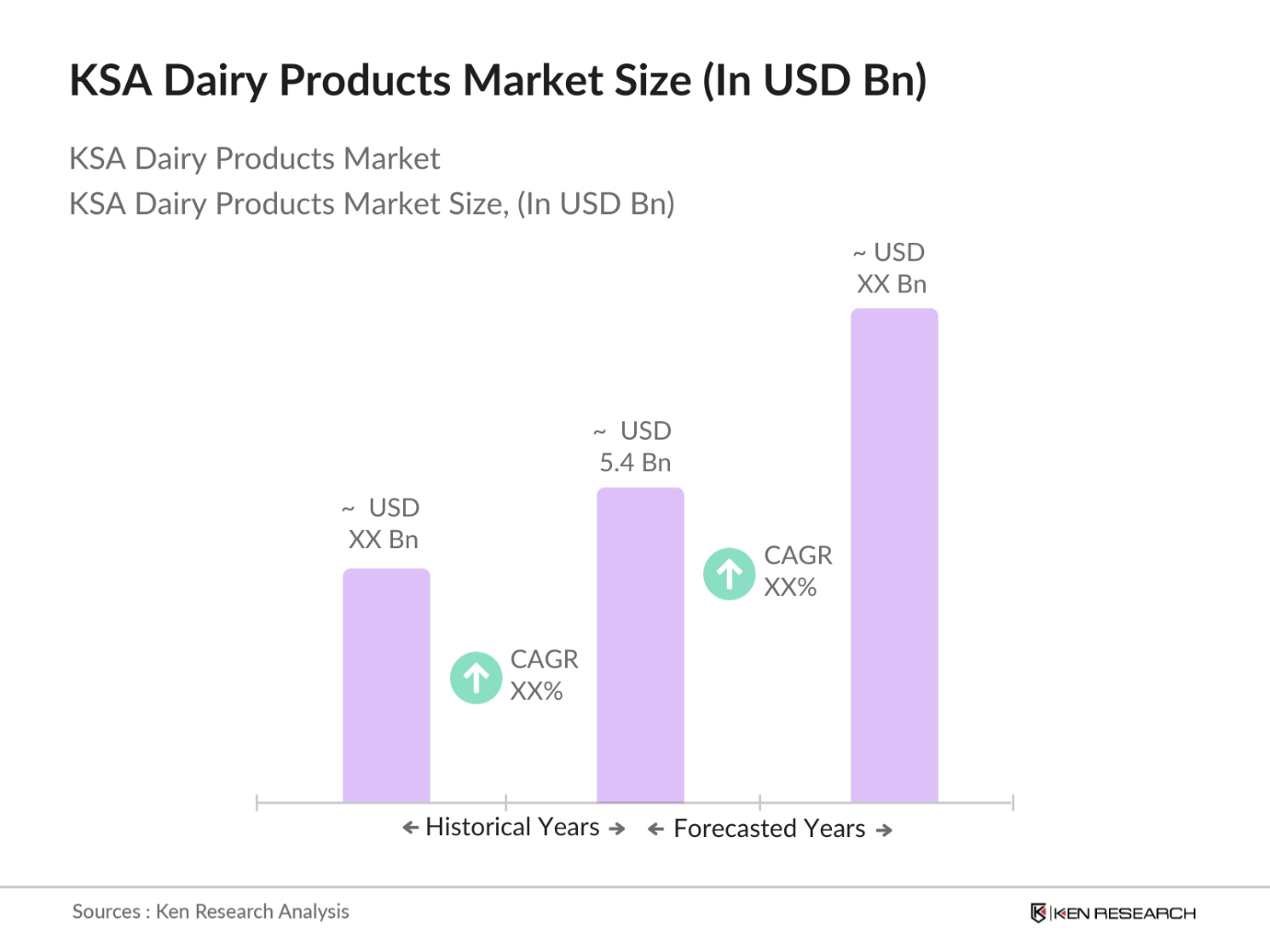
The KSA Dairy Products market is valued at USD 5.4 billion, driven by a steady rise in consumer demand for nutritious dairy options and the support of local dairy initiatives to enhance food security.
Challenges include high production costs due to climate constraints, reliance on imported feed, and a need for advanced cold chain logistics, which impacts the supply chain and distribution costs.
Key players include Almarai, SADAFCO, Al Safi Danone, and Arla Foods, which dominate the market with strong brand presence, diverse product portfolios, and extensive distribution channels.
The market growth is propelled by increasing health awareness, rising disposable incomes, and government support for local dairy production to achieve food security goals in the Kingdom.

What makes us stand out is that our consultants follows Robust, Refine and Result (RRR) methodology. i.e. Robust for clear definitions, approaches and sanity checking, Refine for differentiating respondents facts and opinions and Result for presenting data with story

We have set a benchmark in the industry by offering our clients with syndicated and customized market research reports featuring coverage of entire market as well as meticulous research and analyst insights.

While we don't replace traditional research, we flip the method upside down. Our dual approach of Top Bottom & Bottom Top ensures quality deliverable by not just verifying company fundamentals but also looking at the sector and macroeconomic factors.

With one step in the future, our research team constantly tries to show you the bigger picture. We help with some of the tough questions you may encounter along the way: How is the industry positioned? Best marketing channel? KPI's of competitors? By aligning every element, we help maximize success.

Our report gives you instant access to the answers and sources that other companies might choose to hide. We elaborate each steps of research methodology we have used and showcase you the sample size to earn your trust.

If you need any support, we are here! We pride ourselves on universe strength, data quality, and quick, friendly, and professional service.