
KSA Diabetes Drugs Market Outlook to 2030
Region:Saudi Arabia
Author(s):Abhinav kumar
Product Code:KROD7563
Region:Saudi Arabia
Author(s):Abhinav kumar
Product Code:KROD7563
December 2024
100
Listen to the audio summary
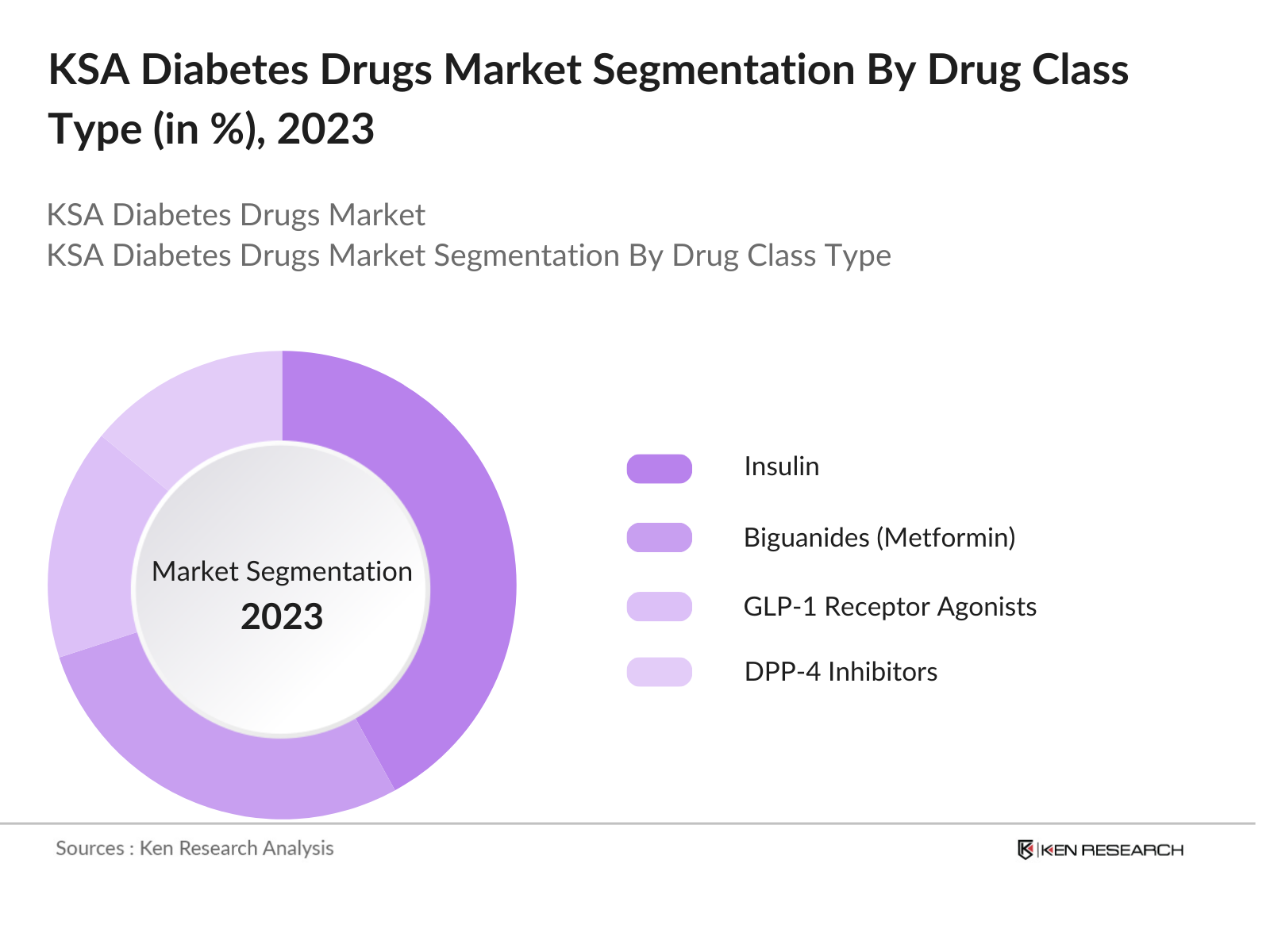
By Drug Class: The KSA diabetes drugs market is segmented by drug class into insulin, biguanides (metformin), GLP-1 receptor agonists, DPP-4 inhibitors, and SGLT-2 inhibitors. Recently, insulin has a dominant market share in KSA under this segmentation, primarily due to its widespread use in managing both Type 1 and advanced Type 2 diabetes. With advancements in insulin analogs and their improved efficacy and ease of administration, insulin continues to be the treatment of choice for many patients requiring intensive glucose control. The high prevalence of Type 1 diabetes also contributes significantly to the demand for insulin in the KSA market.
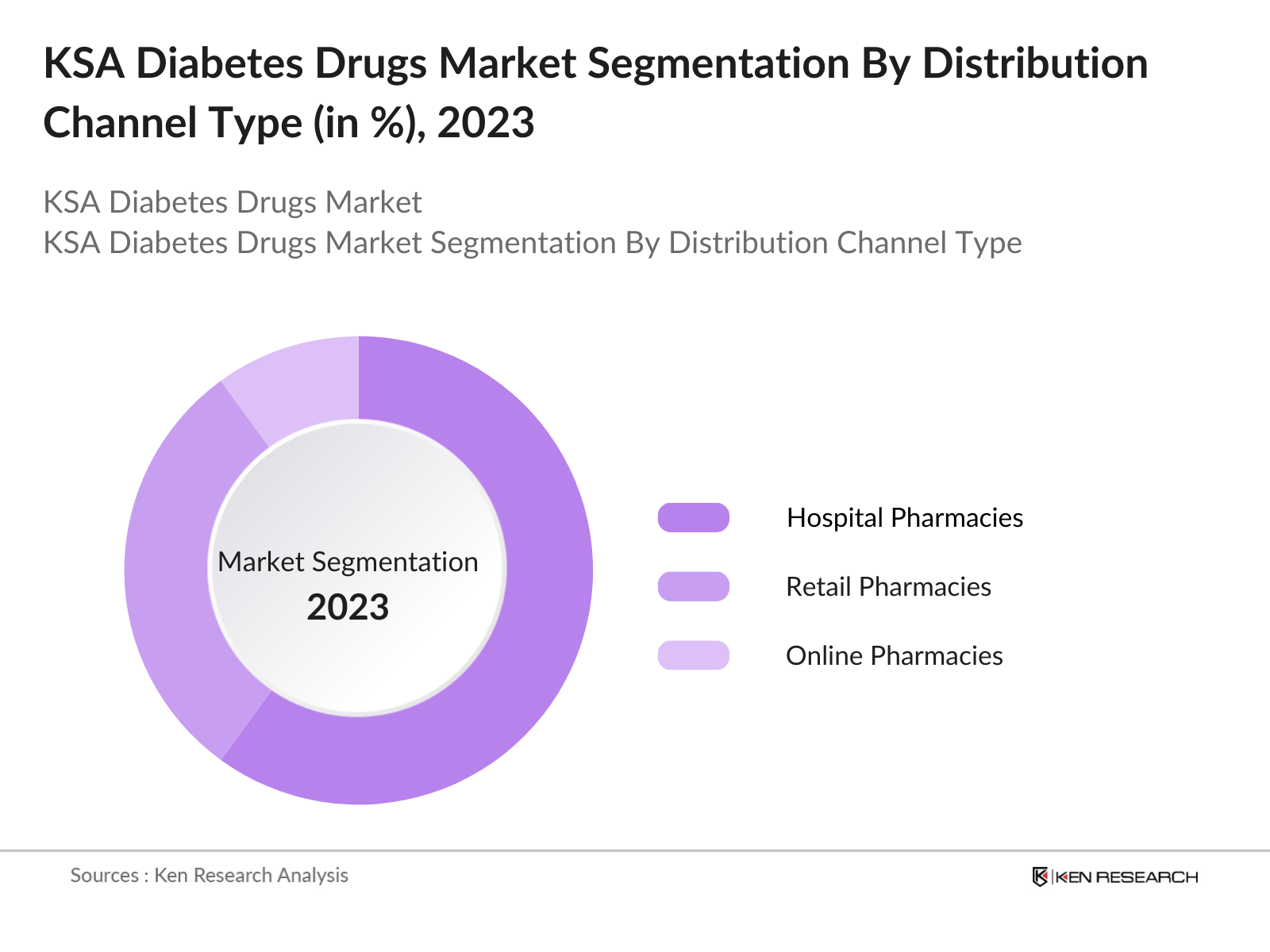
By Distribution Channel: The market is also segmented by distribution channels into hospital pharmacies, retail pharmacies, and online pharmacies. Hospital pharmacies hold the largest market share due to the centralized healthcare system in Saudi Arabia, where most diabetes patients receive prescriptions and treatments directly from hospitals. As healthcare access is expanding through the Vision 2030 initiative, hospital pharmacies remain the primary point of distribution for insulin and other diabetes medications. The convenience and trust patients place in hospitals for their chronic disease management contribute to the dominance of this sub-segment.
The KSA diabetes drugs market is dominated by a few major international and regional players, reflecting the concentrated nature of the pharmaceutical industry in the region. Key companies such as Novo Nordisk and Sanofi lead in insulin production and advanced diabetes treatments, while local players are increasingly focusing on oral antidiabetic drugs. This consolidation highlights the significant influence of these key companies, which dominate the market through their established distribution networks, brand recognition, and partnerships with healthcare providers.
|
Company |
Establishment Year |
Headquarters |
Number of Employees |
Revenue (USD Bn) |
Product Portfolio |
Market Entry Date in KSA |
R&D Investments |
Local Partnerships |
Key Diabetes Drugs |
|
Novo Nordisk |
1923 |
Denmark |
_ |
_ |
_ |
_ |
_ |
_ |
_ |
|
Sanofi |
1973 |
France |
_ |
_ |
_ |
_ |
_ |
_ |
_ |
|
AstraZeneca |
1999 |
UK |
_ |
_ |
_ |
_ |
_ |
_ |
_ |
|
Eli Lilly |
1876 |
USA |
_ |
_ |
_ |
_ |
_ |
_ |
_ |
|
Merck & Co. |
1891 |
USA |
_ |
_ |
_ |
_ |
_ |
_ |
_ |
Over the next five years, the KSA diabetes drugs market is expected to witness significant growth driven by government efforts to improve diabetes care, advancements in drug delivery systems, and increased awareness about diabetes management. The introduction of innovative drug classes, such as SGLT-2 inhibitors and GLP-1 receptor agonists, is anticipated to further boost the market. Additionally, Saudi Vision 2030s focus on healthcare development, along with increased private investments in the healthcare sector, is expected to create new opportunities for market players. The shift towards more personalized diabetes treatment approaches, including digital health solutions, is also likely to fuel future market growth.
|
Drug Class |
Insulin Biguanides GLP-1 Receptor Agonists DPP-4 Inhibitors SGLT-2 Inhibitors |
|
Diabetes Type |
Type 1 Diabetes Type 2 Diabetes |
|
Distribution Channel |
Hospital Pharmacies Retail Pharmacies Online Pharmacies |
|
Route of Administration |
Oral Drugs Injectable Drugs |
|
Region |
Riyadh Jeddah Eastern Province Mecca Medina |
1.1. Definition and Scope
1.2. Market Taxonomy
1.3. Market Growth Rate (Based on Prevalence of Diabetes in Population)
1.4. Market Segmentation Overview
2.1. Historical Market Size
2.2. Year-On-Year Growth Analysis (Impact of Diabetes Awareness Campaigns)
2.3. Key Market Developments and Milestones (e.g., Adoption of Innovative Drugs, Regulatory Approvals)
3.1. Growth Drivers
3.1.1. Increasing Prevalence of Type 2 Diabetes
3.1.2. Rising Geriatric Population
3.1.3. Government Healthcare Initiatives (Vision 2030 Health Focus)
3.1.4. Growing Awareness on Early Diagnosis
3.2. Market Challenges
3.2.1. High Cost of Innovative Therapies
3.2.2. Limited Access to Healthcare in Remote Areas
3.2.3. Regulatory and Pricing Pressures
3.3. Opportunities
3.3.1. Expanding Healthcare Infrastructure
3.3.2. Increased Focus on Personalized Medicine
3.3.3. Strategic Collaborations with Global Pharma Companies
3.4. Trends
3.4.1. Adoption of Biosimilars
3.4.2. Shift Towards Digital Therapeutics (Mobile Apps for Diabetes Management)
3.4.3. Growth in GLP-1 Receptor Agonists and SGLT-2 Inhibitors Usage
3.5. Government Regulations
3.5.1. Saudi Food and Drug Authority (SFDA) Guidelines for Diabetes Drugs
3.5.2. National Diabetes Control Program
3.5.3. Public-Private Partnerships in Healthcare Initiatives
3.6. SWOT Analysis (Market-Specific Factors for KSA)
3.7. Stakeholder Ecosystem (Pharma Companies, Healthcare Providers, Regulatory Bodies)
3.8. Porters Five Forces (Competition, Buyer Power, Regulatory Influence)
3.9. Competitive Ecosystem
4.1. By Drug Class (In Value %)
4.1.1. Insulin
4.1.2. Biguanides (Metformin)
4.1.3. GLP-1 Receptor Agonists
4.1.4. DPP-4 Inhibitors
4.1.5. SGLT-2 Inhibitors
4.2. By Diabetes Type (In Value %)
4.2.1. Type 1 Diabetes
4.2.2. Type 2 Diabetes
4.3. By Distribution Channel (In Value %)
4.3.1. Hospital Pharmacies
4.3.2. Retail Pharmacies
4.3.3. Online Pharmacies
4.4. By Route of Administration (In Value %)
4.4.1. Oral Drugs
4.4.2. Injectable Drugs (Insulin, GLP-1 Agonists)
4.5. By Region (In Value %)
4.5.1. Riyadh
4.5.2. Jeddah
4.5.3. Eastern Province
4.5.4. Mecca
4.5.5. Medina
5.1 Detailed Profiles of Major Companies
5.1.1. Sanofi
5.1.2. Novo Nordisk
5.1.3. AstraZeneca
5.1.4. Eli Lilly
5.1.5. Merck & Co.
5.1.6. Boehringer Ingelheim
5.1.7. Johnson & Johnson
5.1.8. Pfizer
5.1.9. GlaxoSmithKline (GSK)
5.1.10. Novartis
5.1.11. Medtronic
5.1.12. Takeda Pharmaceuticals
5.1.13. Cipla
5.1.14. Biocon
5.1.15. Abbott Laboratories
5.2 Cross Comparison Parameters (Number of Employees, Market Share, Product Portfolio, Global Presence, Market Entry Date, KSA-Specific Partnerships, Distribution Network, Innovation in Drug Delivery Systems)
5.3 Market Share Analysis (Key Competitors)
5.4 Strategic Initiatives (Partnerships, Licensing Deals, Joint Ventures)
5.5 Mergers and Acquisitions
5.6 Investment Analysis (Focus on KSA Market)
5.7 Venture Capital Funding (Focus on Diabetes Management Startups)
5.8 Government Grants (KSA Healthcare Initiatives)
5.9 Private Equity Investments
6.1 SFDA Regulatory Landscape
6.2 Compliance Requirements (Drug Approval, Clinical Trials)
6.3 Certification Processes (Pharmaceutical Manufacturing Standards)
7.1 Future Market Size Projections
7.2 Key Factors Driving Future Market Growth (e.g., Prevalence of Diabetes, Rising Demand for New Treatments)
8.1 By Drug Class (In Value %)
8.2 By Diabetes Type (In Value %)
8.3 By Distribution Channel (In Value %)
8.4 By Route of Administration (In Value %)
8.5 By Region (In Value %)
9.1 TAM/SAM/SOM Analysis
9.2 Marketing Initiatives (Targeting Healthcare Providers, Consumer Awareness Campaigns)
9.3 Customer Cohort Analysis (By Diabetes Type, Age Group)
9.4 White Space Opportunity Analysis (Underserved Patient Segments)
This initial phase involves constructing a comprehensive ecosystem map of the KSA diabetes drugs market. It includes identifying major stakeholders, such as drug manufacturers, healthcare providers, and regulatory bodies. Extensive desk research utilizing government data, industry reports, and proprietary databases is conducted to pinpoint critical market variables, including diabetes prevalence rates and regulatory guidelines.
Historical data related to market size, drug adoption rates, and diabetes prevalence is analyzed to assess growth patterns. Market penetration ratios are calculated to determine the level of drug accessibility in different regions. We also assess the market's operational framework and distribution networks to ensure accuracy in revenue projections.
Market hypotheses, such as the demand for innovative diabetes drugs, are developed and validated through consultations with key market experts. These experts, representing pharmaceutical companies and healthcare institutions, provide practical insights that enrich our data and validate market projections.
The final phase synthesizes data from multiple sources, including direct consultations with industry stakeholders. A bottom-up approach is used to validate the data, and insights on future market trends are drawn. This ensures that the final report provides an accurate and comprehensive view of the KSA diabetes drugs market.
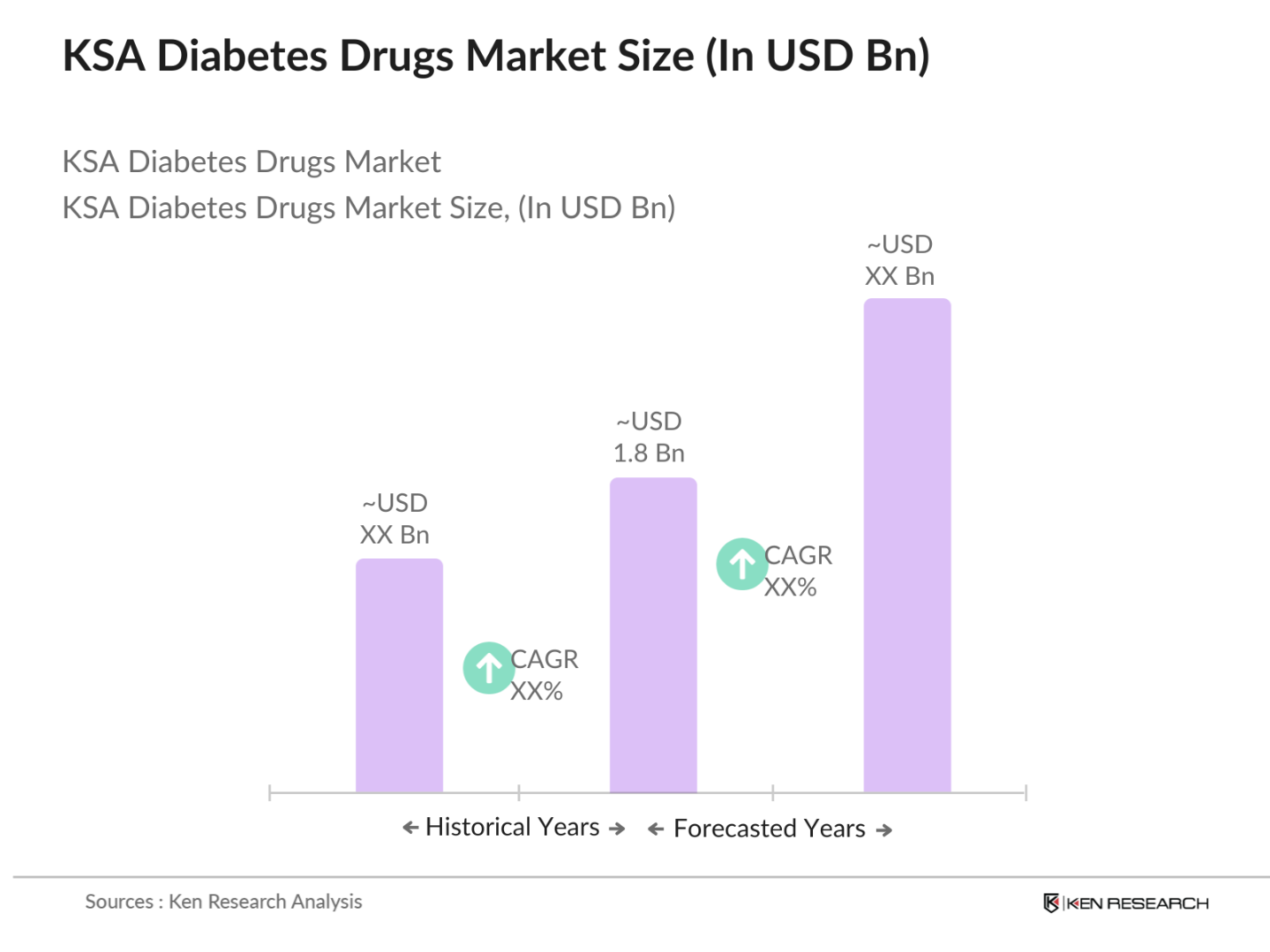
The KSA diabetes drugs market is valued at USD 1.8 billion, driven by the increasing prevalence of diabetes and government initiatives aimed at improving healthcare infrastructure.
Challenges in the market include high costs of innovative therapies, limited healthcare access in rural areas, and stringent regulatory processes for new drug approvals.
Key players in the market include Novo Nordisk, Sanofi, AstraZeneca, Eli Lilly, and Merck & Co. These companies dominate due to their established drug portfolios and partnerships with healthcare providers.
The market is propelled by the rising prevalence of Type 2 diabetes, increased healthcare access through Vision 2030 initiatives, and growing awareness of advanced diabetes treatments.

What makes us stand out is that our consultants follows Robust, Refine and Result (RRR) methodology. i.e. Robust for clear definitions, approaches and sanity checking, Refine for differentiating respondents facts and opinions and Result for presenting data with story

We have set a benchmark in the industry by offering our clients with syndicated and customized market research reports featuring coverage of entire market as well as meticulous research and analyst insights.

While we don't replace traditional research, we flip the method upside down. Our dual approach of Top Bottom & Bottom Top ensures quality deliverable by not just verifying company fundamentals but also looking at the sector and macroeconomic factors.

With one step in the future, our research team constantly tries to show you the bigger picture. We help with some of the tough questions you may encounter along the way: How is the industry positioned? Best marketing channel? KPI's of competitors? By aligning every element, we help maximize success.

Our report gives you instant access to the answers and sources that other companies might choose to hide. We elaborate each steps of research methodology we have used and showcase you the sample size to earn your trust.

If you need any support, we are here! We pride ourselves on universe strength, data quality, and quick, friendly, and professional service.