
KSA Diabetes Market Outlook to 2030
Region:Saudi Arabia
Author(s):Sanjeev
Product Code:KROD7056
Region:Saudi Arabia
Author(s):Sanjeev
Product Code:KROD7056
December 2024
90
The KSA diabetes market is characterized by the presence of global pharmaceutical giants as well as prominent regional players. Leading companies focus on innovative product development, strategic collaborations, and partnerships with healthcare providers to expand their market share. The competition is influenced by both pricing strategies and the ability to offer a comprehensive diabetes management solution, including medication, monitoring devices, and digital health platforms.
Major players include Novo Nordisk, Sanofi, Eli Lilly, AstraZeneca, and Medtronic, all of which have established themselves as leaders in diabetes care through their extensive product portfolios and research and development activities.
|
Company Name |
Establishment Year |
Headquarters |
Revenue |
R&D Expenditure |
Product Portfolio |
|
Novo Nordisk |
1923 |
Denmark |
|||
|
Sanofi |
1973 |
France |
|||
|
Eli Lilly |
1876 |
USA |
|||
|
AstraZeneca |
1999 |
UK |
|||
|
Medtronic |
1949 |
USA |
Over the next five years, the KSA diabetes market is expected to witness sustained growth due to continuous government investment in healthcare infrastructure and increasing public awareness of diabetes management. The adoption of advanced technologies, such as continuous glucose monitoring systems and insulin pumps, will further accelerate growth. Additionally, the focus on early diagnosis, preventive care, and lifestyle management, in line with Vision 2030, will play a significant role in shaping the future of diabetes care in Saudi Arabia.
|
By Type of Diabetes |
Type 1 Diabetes Type 2 Diabetes Gestational Diabetes Pre-Diabetes |
|
By Product Type |
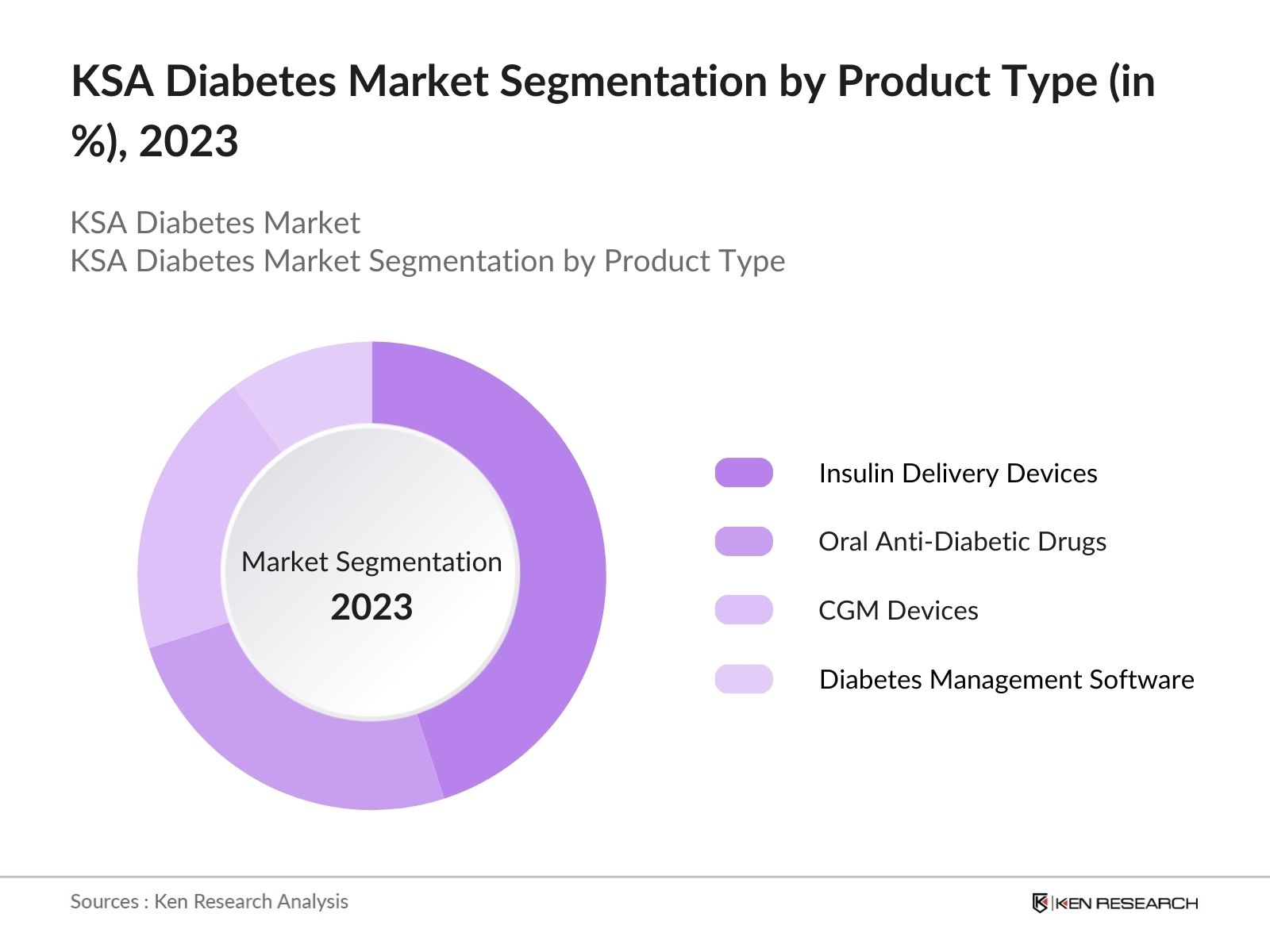
Insulin Delivery Devices Oral Anti-Diabetic Drugs Continuous Glucose Monitoring Devices Mobile Apps |
|
By Treatment Type |
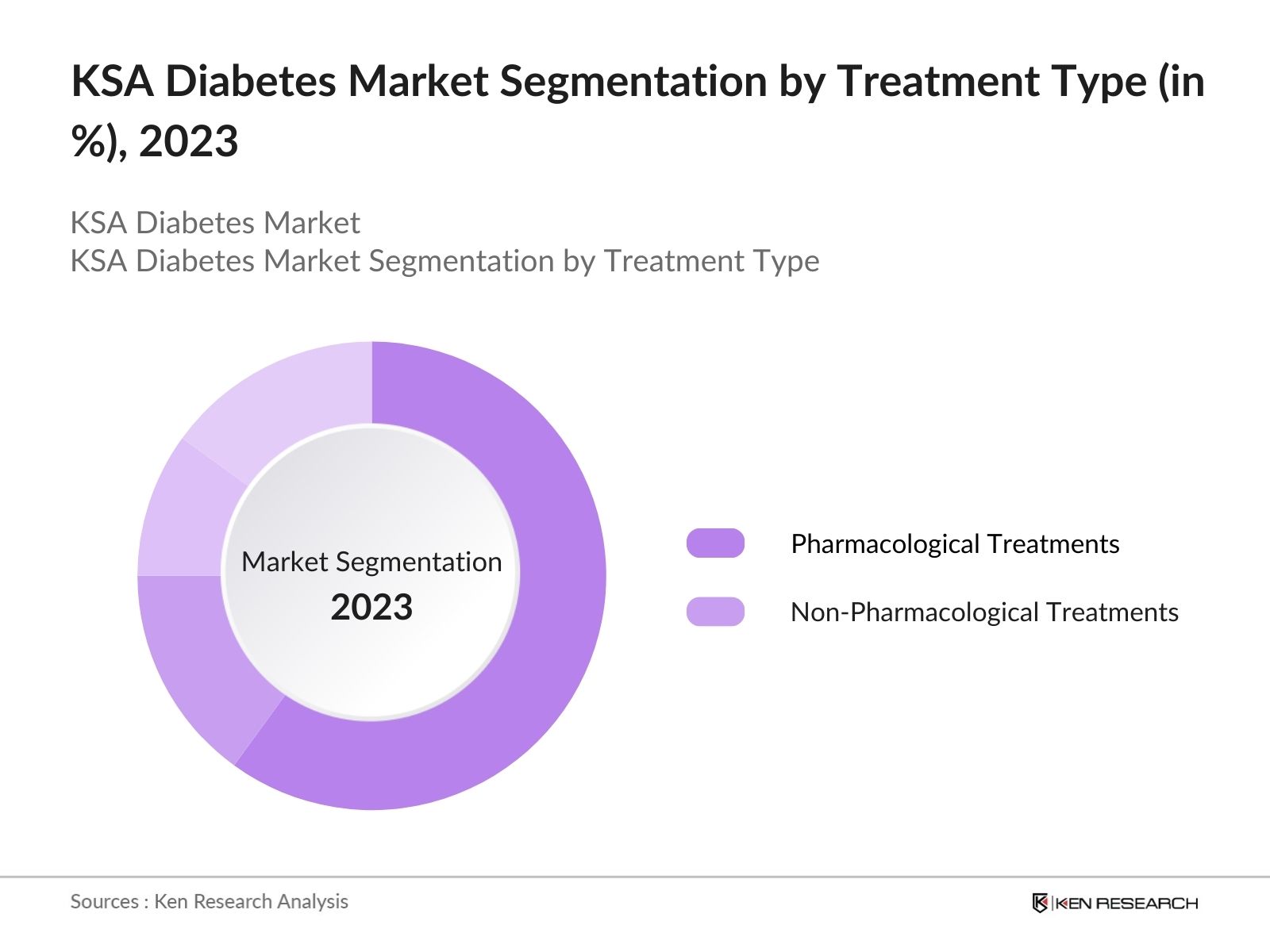
Pharmacological (Insulin, Metformin, SGLT2 Inhibitors), Non-Pharmacological (Diet, Exercise) |
|
By End-User |
Hospitals Clinics Home Care Settings Retail Pharmacies |
|
By Region |
North East West South |
1.1. Definition and Scope
1.2. Market Taxonomy
1.3. Market Growth Rate
1.4. Market Segmentation Overview
2.1. Historical Market Size
2.2. Year-on-Year Growth Analysis
2.3. Key Market Developments and Milestones
3.1. Growth Drivers (Prevalence of Diabetes, Rising Healthcare Expenditure, Government Initiatives, Growing Obesity Rates)
3.1.1. Increasing Prevalence of Type 2 Diabetes
3.1.2. Rising Obesity and Lifestyle Changes
3.1.3. Government Healthcare Reforms and Vision 2030
3.1.4. Aging Population and Genetic Predisposition
3.2. Market Challenges (Lack of Awareness, Healthcare Access, High Treatment Costs)
3.2.1. Limited Access to Specialist Care
3.2.2. High Cost of Insulin and Devices
3.2.3. Low Awareness in Rural Areas
3.2.4. Fragmented Regulatory Environment
3.3. Opportunities (Technological Innovation, Market Penetration, Telemedicine, Self-Management Tools)
3.3.1. Adoption of Digital Health Solutions and Mobile Apps
3.3.2. Investment in Telemedicine and Remote Patient Monitoring
3.3.3. Expanding Healthcare Infrastructure and Accessibility
3.3.4. Personalized Treatment Protocols
3.4. Trends (Wearable Devices, Artificial Intelligence, Continuous Glucose Monitoring)
3.4.1. Increasing Adoption of Continuous Glucose Monitoring (CGM) Systems
3.4.2. Artificial Intelligence in Diabetes Management
3.4.3. Integration of Telemedicine for Diabetes Care
3.4.4. Growth of Diabetes Self-Management Education and Support (DSMES)
3.5. Government Regulations (National Diabetes Control Program, Price Regulations, Medical Device Regulations)
3.5.1. KSAs National Diabetes Control Strategy
3.5.2. Regulation of Insulin Pricing by SFDA
3.5.3. Medical Device Import and Distribution Regulations
3.5.4. Public-Private Partnerships in Diabetes Care
3.6. SWOT Analysis (Strengths, Weaknesses, Opportunities, Threats)
3.7. Stakeholder Ecosystem (Public Health Institutions, Insurance Providers, Pharma Companies, Tech Startups)
3.8. Porters Five Forces (Competitive Rivalry, Supplier Power, Buyer Power, Threat of Substitution, Threat of New Entrants)
3.9. Competition Ecosystem (Global and Local Market Players)
4.1. By Type of Diabetes (In Value %)
4.1.1. Type 1 Diabetes
4.1.2. Type 2 Diabetes
4.1.3. Gestational Diabetes
4.1.4. Pre-Diabetes
4.2. By Product Type (In Value %)
4.2.1. Insulin Delivery Devices
4.2.2. Oral Anti-Diabetic Drugs
4.2.3. Continuous Glucose Monitoring Devices
4.2.4. Diabetes Management Software and Mobile Apps
4.3. By Treatment Type (In Value %)
4.3.1. Pharmacological (Insulin Therapy, Metformin, SGLT2 Inhibitors, GLP-1 Receptor Agonists)
4.3.2. Non-Pharmacological (Dietary Intervention, Exercise Plans, Behavioral Support)
4.4. By End-User (In Value %)
4.4.1. Hospitals
4.4.2. Clinics
4.4.3. Home Care Settings
4.4.4. Retail Pharmacies
4.5. By Region (In Value %)
4.5.1. North
4.5.2. South
4.5.3. East
4.5.4. South
5.1. Detailed Profiles of Major Companies (Headquarters, Employee Strength, Revenue, Market Share)
5.1.1. Novo Nordisk
5.1.2. Sanofi
5.1.3. Eli Lilly
5.1.4. AstraZeneca
5.1.5. Merck & Co.
5.1.6. Boehringer Ingelheim
5.1.7. Abbott Laboratories
5.1.8. Medtronic
5.1.9. Roche Diabetes Care
5.1.10. Ascensia Diabetes Care
5.1.11. Dexcom
5.1.12. Al-Dawaa Pharmacies
5.1.13. Nahdi Medical Company
5.1.14. GlaxoSmithKline
5.1.15. Julphar
5.2. Cross Comparison Parameters (Market Share, Revenue, R&D Expenditure, Partnerships, Geographic Presence, Therapeutic Area, Growth Strategy, Product Portfolio)
5.3. Market Share Analysis (By Product Type, By Therapy Type, By Region)
5.4. Strategic Initiatives (Partnerships, Collaborations, Product Launches)
5.5. Mergers and Acquisitions (Recent M&A Activity, Key Transactions)
5.6. Investment Analysis (Private Equity, Venture Capital, Public Funding)
5.7. Venture Capital Funding (Notable Investors, Funding Rounds)
5.8. Government Grants and Subsidies (Public Health Funding Programs)
5.9. Private Equity Investments (Significant Market Investments)
6.1. Diabetes Care Standards (International and Local Guidelines)
6.2. Licensing and Compliance Requirements (SFDA Approvals, Import Regulations)
6.3. Certification Processes (Medical Device Certifications, Healthcare Facility Accreditation)
7.1. Future Market Size Projections
7.2. Key Factors Driving Future Market Growth
8.1. By Type of Diabetes (In Value %)
8.2. By Product Type (In Value %)
8.3. By Treatment Type (In Value %)
8.4. By End-User (In Value %)
8.5. By Region (In Value %)
9.1. Total Addressable Market (TAM), Serviceable Available Market (SAM), Serviceable Obtainable Market (SOM)
9.2. Customer Cohort Analysis (Age, Gender, Risk Factors)
9.3. Marketing Initiatives (Awareness Campaigns, Digital Marketing)
9.4. White Space Opportunity Analysis (Unmet Needs, Innovative Solutions)
The initial phase involves mapping out all key stakeholders in the KSA diabetes market. This includes manufacturers, healthcare providers, and government bodies. Extensive desk research is conducted to define and understand the variables that drive market dynamics.
Historical data is analyzed to assess the penetration of diabetes management products and services in KSA. This analysis also considers the relationship between service providers and end-users, resulting in revenue estimates for the market.
Interviews are conducted with industry experts, including medical practitioners and product manufacturers, to validate market assumptions. These discussions help to refine the understanding of diabetes treatment trends and innovations in KSA.
The final output is synthesized by combining secondary data with inputs from direct consultations, ensuring an accurate representation of the diabetes market. This process also incorporates a bottom-up analysis to ensure data accuracy and comprehensiveness.
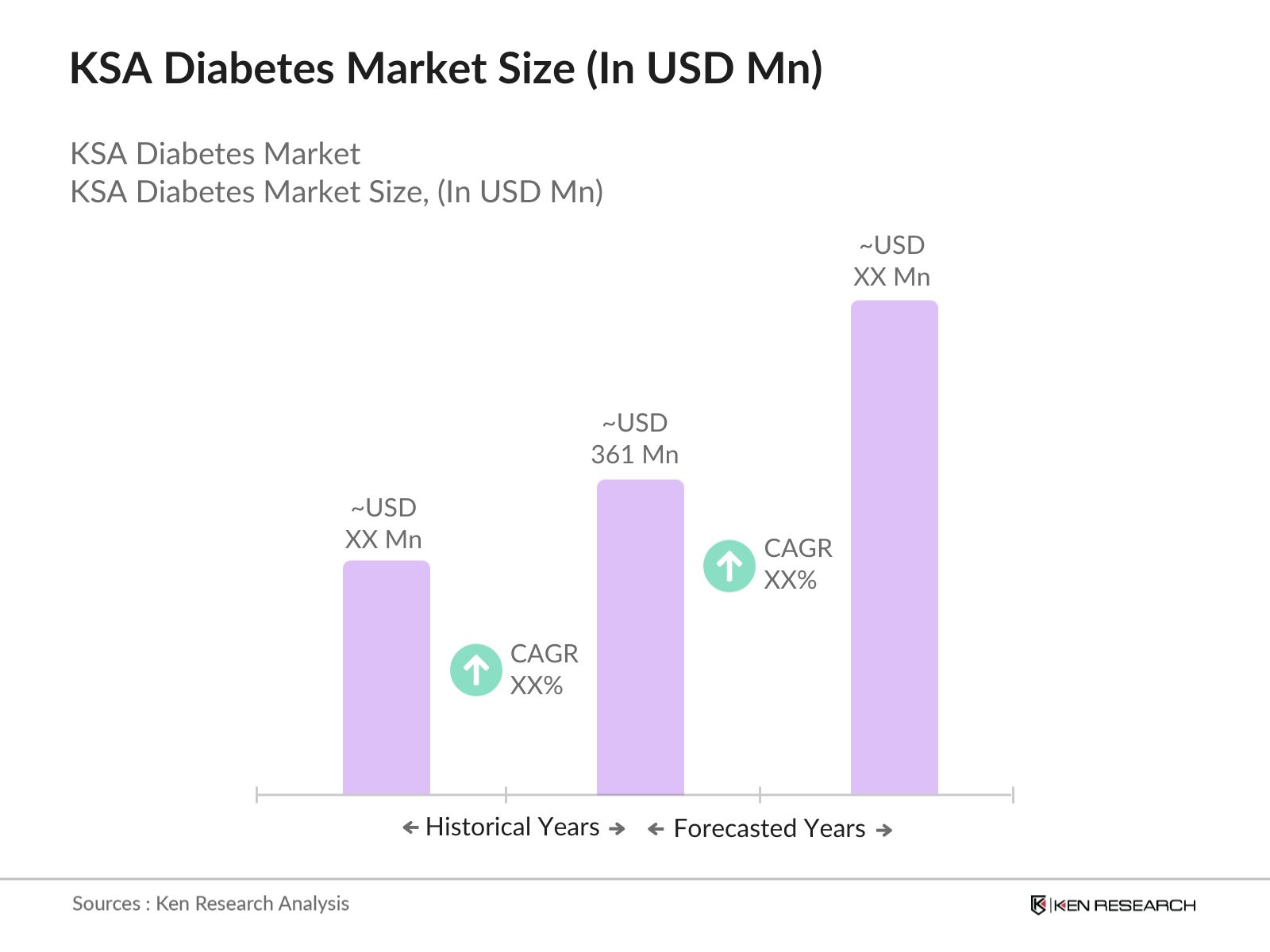
The KSA diabetes market is valued at USD 361 million, driven by the increasing prevalence of diabetes, technological advancements, and government healthcare reforms.
KSA diabetes market Challenges include high treatment costs, lack of awareness in rural areas, and limited access to specialist care. The fragmented regulatory environment also poses difficulties for market entrants.
KSA diabetes market Key players in the market include Novo Nordisk, Sanofi, Eli Lilly, AstraZeneca, and Medtronic, all of which hold significant influence due to their comprehensive product portfolios and innovations in diabetes care.
Growth in KSA diabetes market is propelled by rising obesity rates, increasing healthcare expenditure, and government initiatives such as Vision 2030. The demand for continuous glucose monitoring systems and insulin delivery devices is also driving the market.
Current trends in KSA diabetes market include the adoption of continuous glucose monitoring devices, the integration of artificial intelligence into diabetes management, and the expansion of telemedicine for remote patient care.

What makes us stand out is that our consultants follows Robust, Refine and Result (RRR) methodology. i.e. Robust for clear definitions, approaches and sanity checking, Refine for differentiating respondents facts and opinions and Result for presenting data with story

We have set a benchmark in the industry by offering our clients with syndicated and customized market research reports featuring coverage of entire market as well as meticulous research and analyst insights.

While we don't replace traditional research, we flip the method upside down. Our dual approach of Top Bottom & Bottom Top ensures quality deliverable by not just verifying company fundamentals but also looking at the sector and macroeconomic factors.

With one step in the future, our research team constantly tries to show you the bigger picture. We help with some of the tough questions you may encounter along the way: How is the industry positioned? Best marketing channel? KPI's of competitors? By aligning every element, we help maximize success.

Our report gives you instant access to the answers and sources that other companies might choose to hide. We elaborate each steps of research methodology we have used and showcase you the sample size to earn your trust.

If you need any support, we are here! We pride ourselves on universe strength, data quality, and quick, friendly, and professional service.