
KSA Diagnostic Imaging Market Outlook to 2030
Region:Saudi Arabia
Author(s):Meenakshi
Product Code:KROD3564
Region:Saudi Arabia
Author(s):Meenakshi
Product Code:KROD3564
November 2024
98
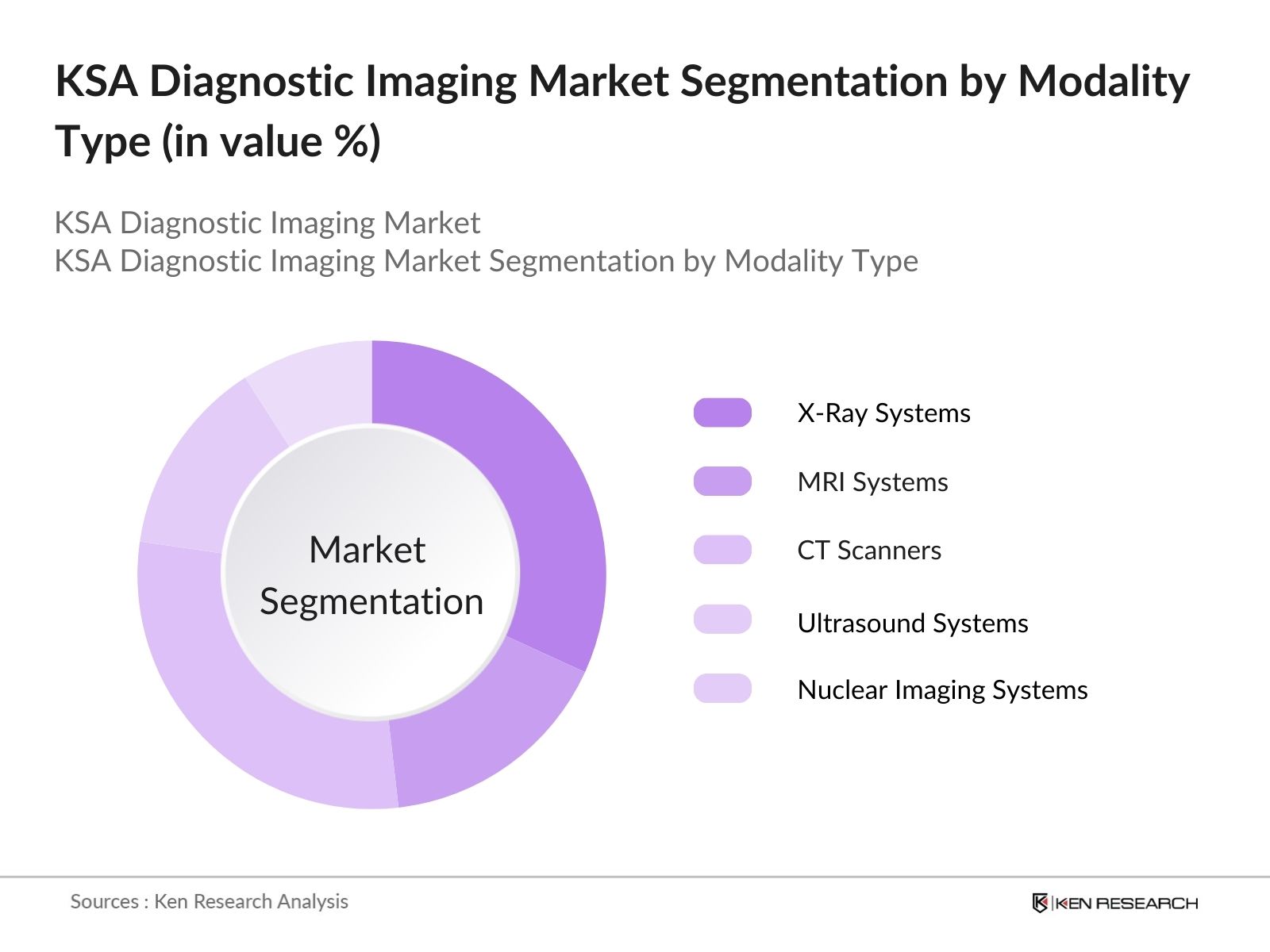
By Modality Type: The KSA diagnostic imaging market is segmented by modality type into X-Ray Systems, MRI Systems, CT Scanners, Ultrasound Systems, and Nuclear Imaging Systems. The CT Scanners hold a dominant market share under the modality type segment due to their widespread use in the detection of complex medical conditions like cardiovascular diseases, cancer, and neurological disorders. CT scanners provide rapid and highly detailed imaging, which is crucial for accurate diagnosis and treatment planning, making them an indispensable tool in both emergency and routine diagnostics. Their ability to combine high resolution with quick processing times has contributed significantly to their dominance.
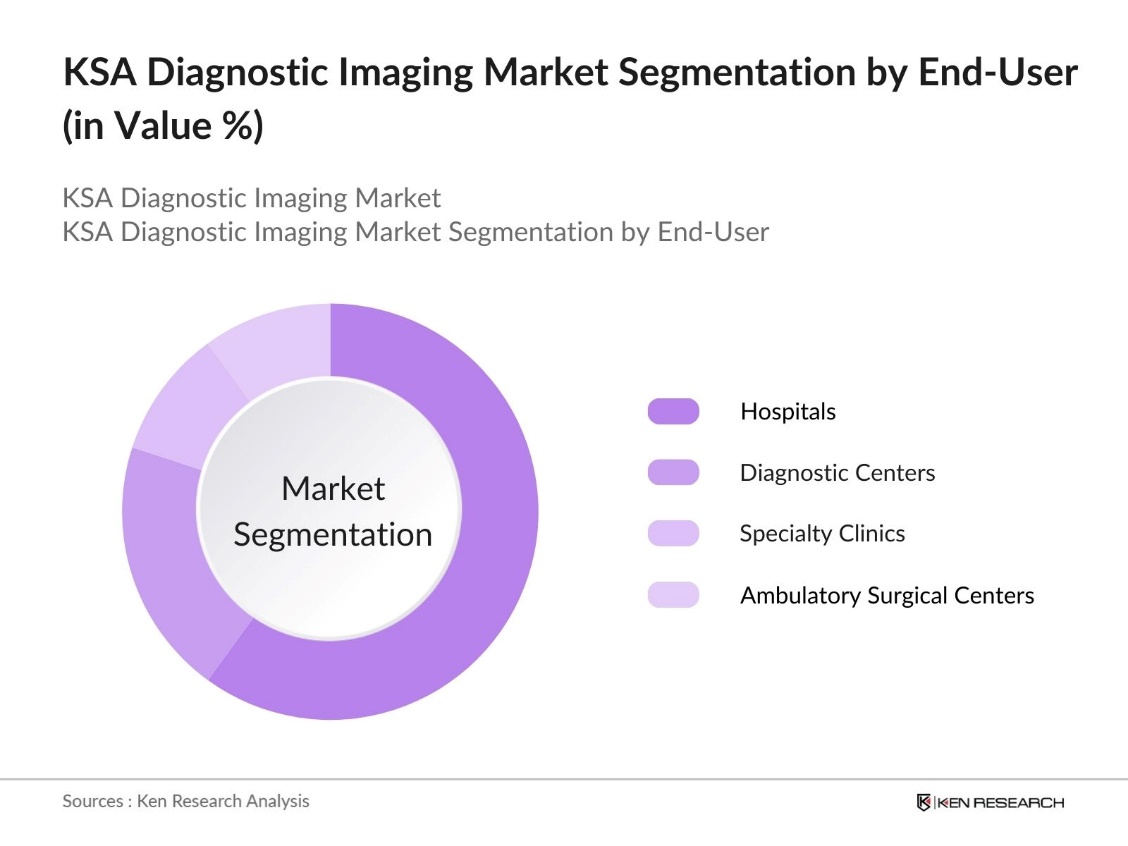
By End-User: The market is segmented by end-user into Hospitals, Diagnostic Centers, Specialty Clinics, and Ambulatory Surgical Centers. The Hospitals are the dominant end-user in the KSA diagnostic imaging market due to their extensive infrastructure and capacity to handle a high volume of patients. Large hospitals, particularly in urban areas, invest heavily in advanced diagnostic imaging equipment to ensure they meet the complex healthcare needs of patients. Hospitals also benefit from government initiatives and funding, allowing them to acquire cutting-edge imaging technologies, which helps solidify their position as the primary end-user segment.
The KSA diagnostic imaging market is dominated by a mix of global and regional players. These companies are investing heavily in R&D and forming strategic partnerships to maintain their foothold in this growing market. The competitive landscape is characterized by innovation in imaging technologies, strategic collaborations, and a focus on expanding into rural and underserved areas to increase market penetration.
|
Company Name |
Establishment Year |
Headquarters |
Product Range |
Global Presence |
R&D Investment |
Recent Acquisition |
Local Partnerships |
AI Integration |
Modality Innovation |
|
GE Healthcare |
1892 |
Chicago, USA |
|||||||
|
Siemens Healthineers |
1847 |
Erlangen, Germany |
|||||||
|
Philips Healthcare |
1891 |
Amsterdam, Netherlands |
|||||||
|
Canon Medical Systems |
1930 |
Otawara, Japan |
|||||||
|
Mindray Medical International |
1991 |
Shenzhen, China |
The KSA diagnostic imaging market is poised for significant growth, driven by continuous advancements in imaging technologies, a rising prevalence of chronic diseases, and strong governmental support through healthcare reforms under Vision 2030. Increasing public-private partnerships and foreign investment will also accelerate the market's growth, particularly in underpenetrated regions of the country. In addition, the growing use of AI and machine learning in diagnostic imaging will revolutionize the accuracy and speed of diagnoses, further enhancing the demand for advanced imaging systems across KSA.
|
By Modality Type |
X-Ray Systems MRI Systems CT Scanners Ultrasound Systems Nuclear Imaging Systems |
|
By End-User |
Hospitals Diagnostic Centers Specialty Clinics Ambulatory Surgical Centers |
|
By Application |
Oncology Cardiology Neurology Orthopedics Obstetrics & Gynecology |
|
By Technology |
2D Imaging 3D and 4D Imaging AI-Powered Imaging Digital Imaging |
|
By Region |
Central Western Eastern Northern Southern Region |
1.1. Definition and Scope
1.2. Market Taxonomy
1.3. Market Growth Rate
1.4. Market Segmentation Overview
2.1. Historical Market Size
2.2. Year-On-Year Growth Analysis
2.3. Key Market Developments and Milestones
3.1. Growth Drivers
3.1.1. Government Healthcare Initiatives (e.g., Vision 2030)
3.1.2. Rise in Non-Communicable Diseases (e.g., Cardiovascular, Cancer)
3.1.3. Technological Advancements in Imaging Systems (e.g., AI Integration)
3.1.4. Increased Medical Tourism
3.2. Market Challenges
3.2.1. High Cost of Diagnostic Imaging Equipment
3.2.2. Lack of Skilled Radiologists and Technicians
3.2.3. Regulatory Compliance and Certification Barriers
3.3. Opportunities
3.3.1. Expansion of Radiology Centers in Rural Areas
3.3.2. Public-Private Partnerships for Healthcare Infrastructure
3.3.3. Growing Demand for Mobile and Point-of-Care Imaging
3.4. Trends
3.4.1. Adoption of AI and Machine Learning in Diagnostics
3.4.2. Shift from 2D to 3D and 4D Imaging Technologies
3.4.3. Increased Investment in Digital Radiography (DR) Systems
3.5. Government Regulations
3.5.1. Saudi FDA Regulations for Medical Devices
3.5.2. Health Sector Transformation Program (Vision 2030)
3.5.3. Licensing and Certification Requirements for Diagnostic Equipment
3.6. SWOT Analysis
3.7. Stakeholder Ecosystem
3.7.1. Hospitals and Clinics
3.7.2. Diagnostic Centers
3.7.3. Imaging Equipment Manufacturers
3.7.4. Government Health Authorities
3.8. Porters Five Forces
3.8.1. Bargaining Power of Suppliers
3.8.2. Bargaining Power of Buyers
3.8.3. Threat of New Entrants
3.8.4. Threat of Substitutes
3.8.5. Industry Rivalry
3.9. Competition Ecosystem
4.1. By Modality Type (In Value %)
4.1.1. X-Ray Systems
4.1.2. MRI Systems
4.1.3. CT Scanners
4.1.4. Ultrasound Systems
4.1.5. Nuclear Imaging Systems
4.2. By End-User (In Value %)
4.2.1. Hospitals
4.2.2. Diagnostic Centers
4.2.3. Specialty Clinics
4.2.4. Ambulatory Surgical Centers
4.3. By Application (In Value %)
4.3.1. Oncology
4.3.2. Cardiology
4.3.3. Neurology
4.3.4. Orthopedics
4.3.5. Obstetrics & Gynecology
4.4. By Technology (In Value %)
4.4.1. 2D Imaging
4.4.2. 3D and 4D Imaging
4.4.3. AI-Powered Imaging
4.4.4. Digital Imaging
4.5. By Region (In Value %)
4.5.1. Central Region
4.5.2. Western Region
4.5.3. Eastern Region
4.5.4. Northern Region
4.5.5. Southern Region
5.1. Detailed Profiles of Major Competitors
5.1.1. GE Healthcare
5.1.2. Siemens Healthineers
5.1.3. Philips Healthcare
5.1.4. Canon Medical Systems
5.1.5. Fujifilm Holdings Corporation
5.1.6. Hitachi Medical Systems
5.1.7. Carestream Health
5.1.8. Mindray Medical International
5.1.9. Agfa HealthCare
5.1.10. Esaote S.p.A
5.1.11. Samsung Medison
5.1.12. Shimadzu Corporation
5.1.13. Hologic Inc.
5.1.14. Neusoft Medical Systems
5.1.15. Planmed Oy
5.2. Cross Comparison Parameters
(Revenue, Headquarters, Employees, Product Portfolio, Innovation Capabilities, Distribution Network, Regional Focus, Service Offerings)
5.3. Market Share Analysis
5.4. Strategic Initiatives
5.5. Mergers and Acquisitions
5.6. Investment Analysis
5.7. Venture Capital Funding
5.8. Government Grants
5.9. Private Equity Investments
6.1. Healthcare Standards Compliance
6.2. Equipment Certification Process
6.3. Reimbursement Policies
7.1. Future Market Size Projections
7.2. Key Factors Driving Future Market Growth
8.1. By Modality Type (In Value %)
8.2. By End-User (In Value %)
8.3. By Application (In Value %)
8.4. By Technology (In Value %)
8.5. By Region (In Value %)
9.1. TAM/SAM/SOM Analysis
9.2. Customer Cohort Analysis
9.3. Marketing Initiatives
9.4. White Space Opportunity Analysis
Disclaimer Contact UsIn the initial phase, an extensive ecosystem mapping was conducted to identify the primary stakeholders in the KSA Diagnostic Imaging Market. This step included comprehensive desk research using secondary databases, market reports, and government publications to capture a detailed understanding of market dynamics.
In this step, historical data on the market was gathered and analyzed, focusing on market penetration and the revenue generation potential across various diagnostic imaging modalities. Market penetration ratios, equipment usage, and adoption trends were assessed to ensure data reliability.
Market hypotheses were developed based on the gathered data and validated through interviews with healthcare providers, medical device distributors, and equipment manufacturers. These insights from industry experts helped in fine-tuning the market estimates and segmentation analysis.
The final phase of the research involved synthesizing the gathered data with insights obtained from industry stakeholders. This ensured the creation of a robust and well-validated market report that accurately reflects the trends, challenges, and opportunities in the KSA diagnostic imaging market.
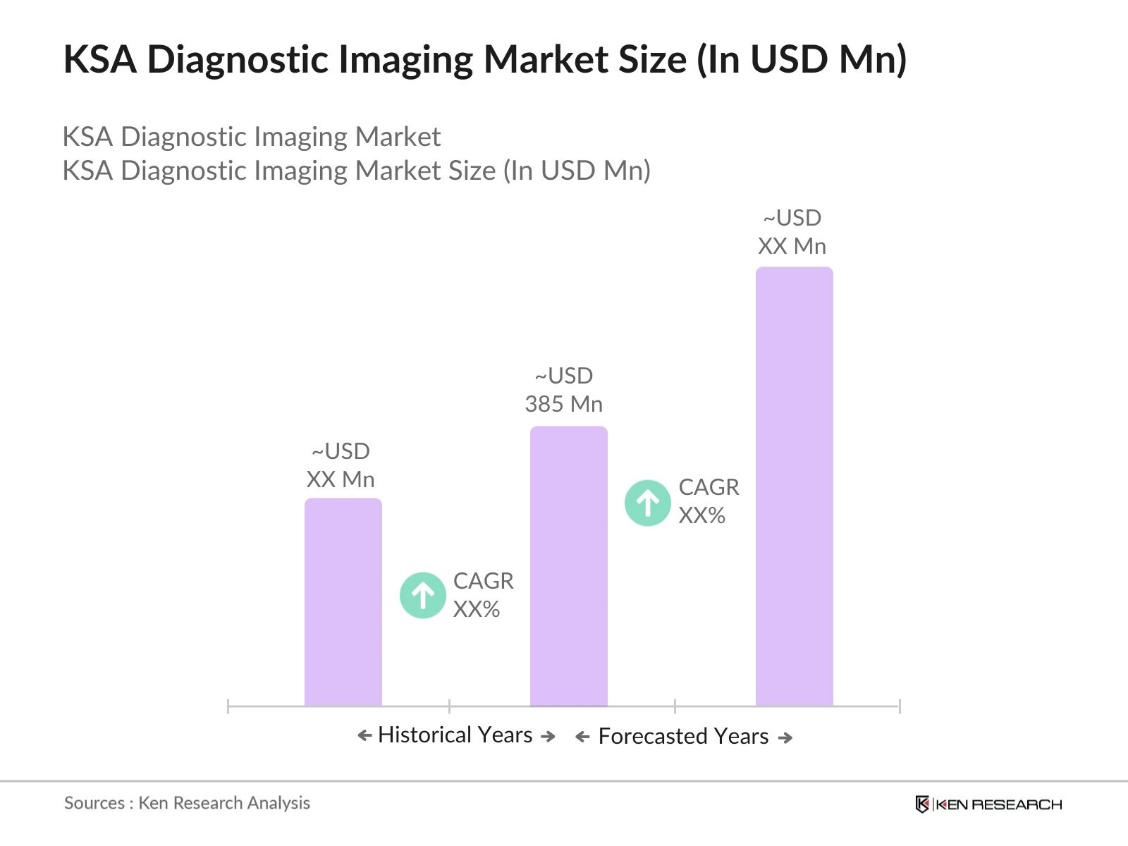
The KSA diagnostic imaging market is valued at USD 385 million, primarily driven by advancements in medical technology and an increase in non-communicable diseases requiring diagnostic imaging.
Challenges in KSA diagnostic imaging market include high equipment costs, regulatory compliance hurdles, and a shortage of skilled radiologists to operate advanced diagnostic imaging systems.
Key players in the KSA diagnostic imaging market include GE Healthcare, Siemens Healthineers, Philips Healthcare, Canon Medical Systems, and Mindray Medical International.
The KSA diagnostic imaging market growth drivers include government healthcare initiatives under Vision 2030, increasing demand for advanced diagnostic tools for chronic disease management, and significant technological advancements such as AI integration in imaging.

What makes us stand out is that our consultants follows Robust, Refine and Result (RRR) methodology. i.e. Robust for clear definitions, approaches and sanity checking, Refine for differentiating respondents facts and opinions and Result for presenting data with story

We have set a benchmark in the industry by offering our clients with syndicated and customized market research reports featuring coverage of entire market as well as meticulous research and analyst insights.

While we don't replace traditional research, we flip the method upside down. Our dual approach of Top Bottom & Bottom Top ensures quality deliverable by not just verifying company fundamentals but also looking at the sector and macroeconomic factors.

With one step in the future, our research team constantly tries to show you the bigger picture. We help with some of the tough questions you may encounter along the way: How is the industry positioned? Best marketing channel? KPI's of competitors? By aligning every element, we help maximize success.

Our report gives you instant access to the answers and sources that other companies might choose to hide. We elaborate each steps of research methodology we have used and showcase you the sample size to earn your trust.

If you need any support, we are here! We pride ourselves on universe strength, data quality, and quick, friendly, and professional service.