















KSA E-commerce Market Outlook to 2030
Region:Middle East
Author(s):Sanjeev
Product Code:KROD4810
December 2024
92
About the Report
KSA E-commerce Market Overview
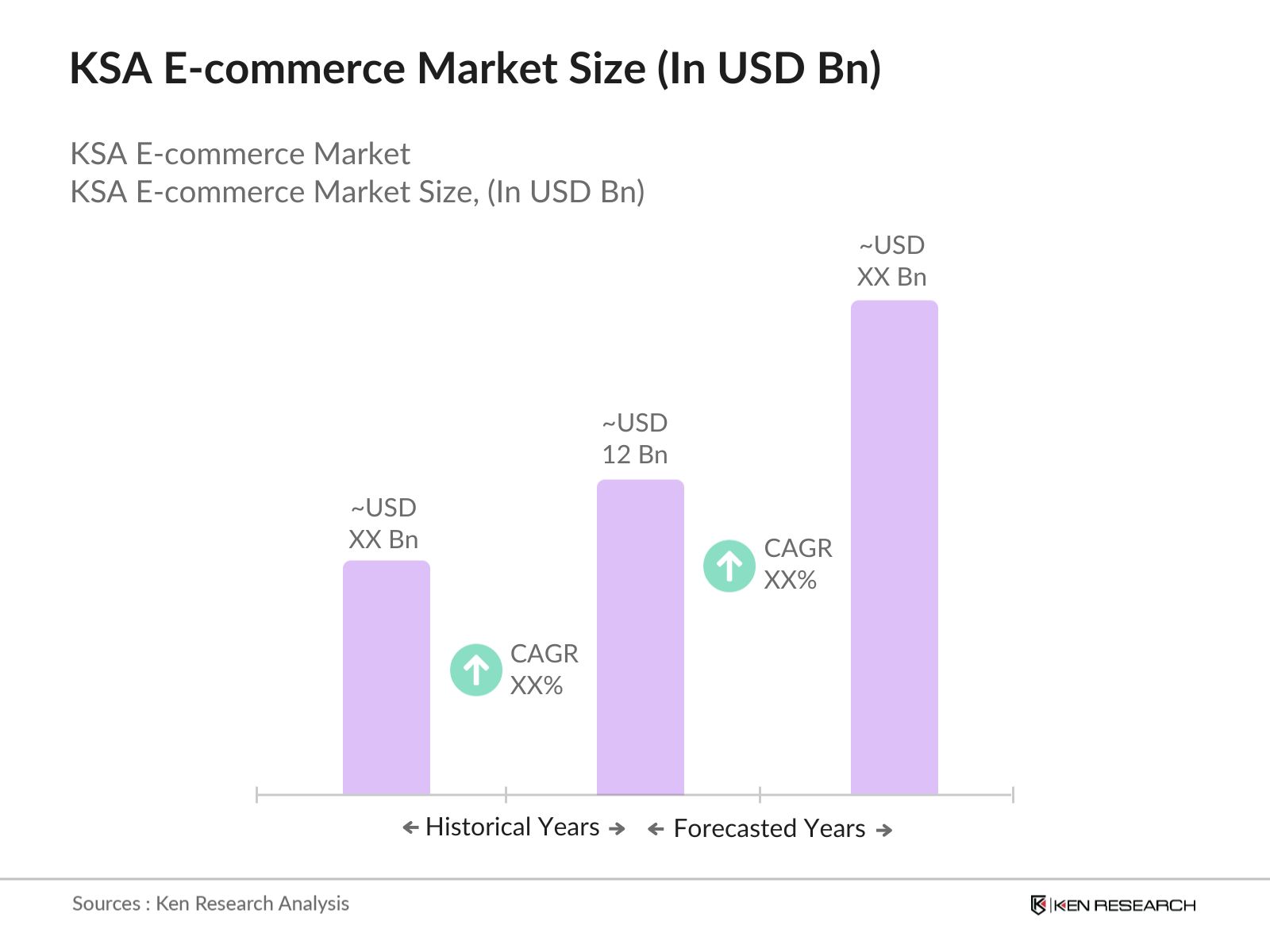
- The KSA e-commerce market is valued at USD 12 billion, driven primarily by rising internet penetration and a strong digital infrastructure supported by Saudi Vision 2030. The rapid adoption of mobile payment solutions, along with the growing preference for online shopping, has been pivotal in driving this growth. Furthermore, the COVID-19 pandemic accelerated the shift towards digital channels, transforming the e-commerce landscape in Saudi Arabia into one of the fastest-growing sectors in the Middle East.
- The dominant cities in the KSA e-commerce market are Riyadh, Jeddah, and Dammam. These cities dominate due to their larger populations, higher disposable incomes, and advanced logistics infrastructure. Riyadh, being the capital, also serves as a commercial hub with a highly developed retail ecosystem. The increasing urbanization and tech-savvy youth population in these cities contribute to their leadership in e-commerce activity.
- Saudi Arabias Personal Data Protection Law, enacted in 2022, ensures that consumers personal information is safeguarded in online transactions. This law, which is actively enforced in 2024, requires e-commerce businesses to implement stringent data protection measures, including encryption and secure payment gateways. Non-compliance can result in penalties of up to SAR 5 million. The emphasis on data privacy has bolstered consumer confidence in online shopping, further facilitating the growth of e-commerce in the Kingdom.
KSA E-commerce Market Segmentation
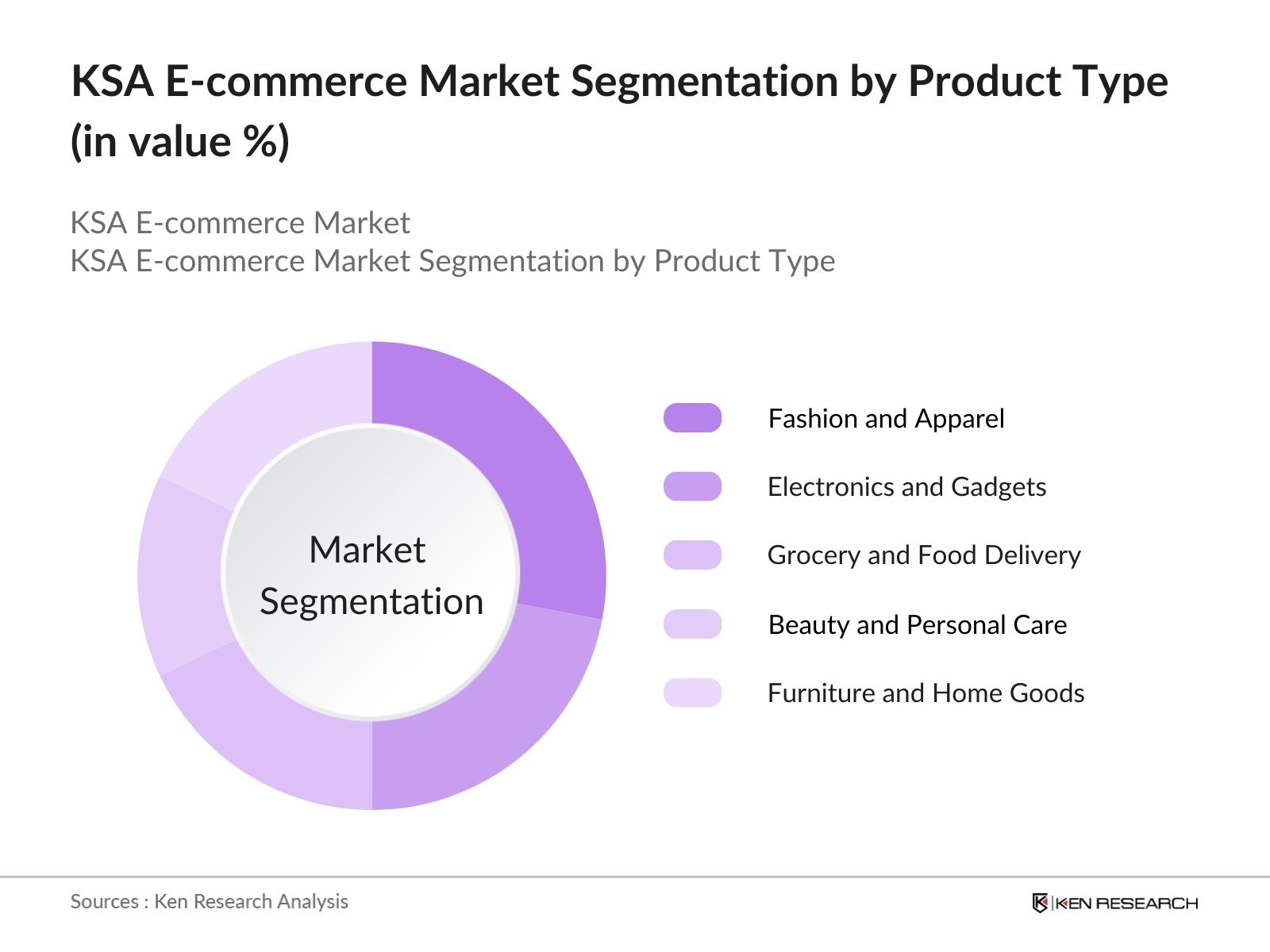
- By Product Type: The KSA e-commerce market is segmented by product type into fashion and apparel, electronics and gadgets, grocery and food delivery, beauty and personal care, and furniture and home goods.
Fashion and apparel hold a dominant market share in the KSA under the product type segmentation. The segment's dominance is driven by the population's growing interest in global fashion trends and the convenience of online shopping. Fashion retailers have successfully integrated their online and offline channels, offering attractive discounts and exclusive collections to increase online sales. Moreover, local and international brands like Namshi and Noon have tailored their offerings to cater to local tastes, further boosting this segment.
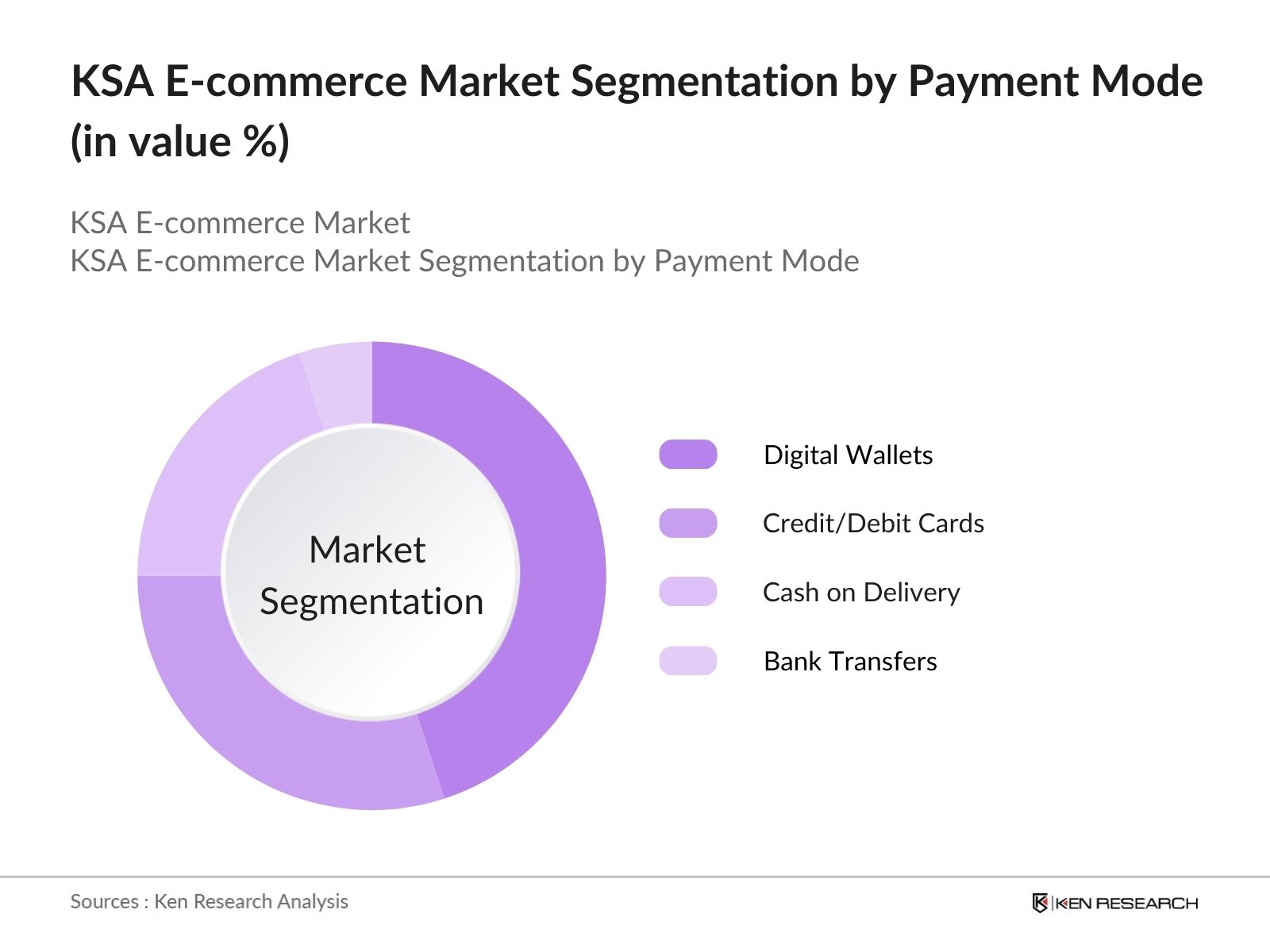
- By Payment Mode: The KSA e-commerce market is segmented by payment mode into digital wallets, credit/debit cards, cash on delivery, and bank transfers.
Digital wallets have emerged as the leading payment method, capturing a significant market share. The preference for digital wallets is fueled by their ease of use, security features, and the growing trust among consumers. Initiatives by the Saudi government to promote cashless transactions, as part of the Saudi Vision 2030, have accelerated the adoption of digital wallets. Additionally, leading platforms such as Apple Pay and STC Pay have gained widespread popularity among both merchants and consumers. - \
KSA E-commerce Market Competitive Landscape
The KSA e-commerce market is dominated by major players, both local and international. Key players such as Noon, Amazon (formerly Souq), and Jarir Bookstore hold substantial influence, driving innovation and providing a seamless shopping experience. These companies have invested heavily in logistics, digital infrastructure, and customer-centric features, setting the bar for other competitors in the market. The competitive landscape is characterized by significant consolidation as these key players continue to expand their customer base, strengthen digital infrastructure, and form strategic partnerships to enhance their supply chain and delivery networks.
|
Company |
Establishment Year |
Headquarters |
Revenue (USD) |
Employees |
Customer Base |
Digital Infrastructure |
Logistics Efficiency |
Partnerships |
|
Noon |
2017 |
Riyadh |
||||||
|
Amazon (Souq) |
2005 |
Seattle |
||||||
|
Jarir Bookstore |
1974 |
Riyadh |
||||||
|
Namshi |
2011 |
Dubai |
||||||
|
Lulu Hypermarket |
2000 |
Abu Dhabi |
KSA E-commerce Industry Analysis
Growth Drivers
- Increased Internet Penetration: As of 2024, Saudi Arabia has seen significant growth in internet penetration, with 98% of the population connected to the internet, driven by government efforts to build strong digital infrastructure. The rapid urbanization rate, standing at 84%, along with high smartphone adoption, has spurred the expansion of e-commerce. These factors align with the Kingdoms Vision 2030, aiming to foster a knowledge-based economy. With increased access to 5G services, over 60% of internet users in Saudi Arabia now shop online, significantly driving e-commerce activity.
- Expanding Digital Payment Ecosystem: Saudi Arabias digital payment ecosystem has grown considerably, supported by the Saudi Central Banks (SAMA) development of Fintech solutions and regulatory frameworks. In 2024, the volume of digital transactions increased to over 1.5 billion annually, and more than 70% of retail payments are now made digitally, reducing the reliance on cash. The governments efforts, such as the "Fintech Saudi" initiative, are improving financial inclusion and boosting e-commerce growth by enabling secure, efficient, and widespread adoption of digital payments across urban and rural regions.
- Government Support (Saudi Vision 2030): The Saudi governments Vision 2030, a roadmap for economic diversification, has positioned e-commerce as a key sector for growth. Under this initiative, policies promoting digital transformation, such as the National Industrial Development and Logistics Program, have led to a 40% reduction in e-commerce regulatory barriers. Additionally, government investment in logistics, infrastructure, and digital services has increased the ease of doing business, making Saudi Arabia a leading digital economy in the Middle East. The e-commerce sector has benefited from relaxed foreign ownership laws and a push to improve last-mile delivery solutions.
Market Challenges
- Logistics and Last-Mile Delivery Costs: Saudi Arabias vast geography presents a major challenge for e-commerce logistics. In 2024, the average cost of last-mile delivery accounted for 28% of total delivery costs in the sector, driven by the high fuel prices and distance between urban centers. Logistics infrastructure, although improving, faces inefficiencies in remote areas, adding further complexity. While efforts to develop smart logistics hubs are underway, maintaining cost-effective and efficient delivery networks remains one of the primary hurdles for e-commerce players in the Kingdom.
- Payment Fraud and Cybersecurity Threats: With the rise in digital transactions, Saudi Arabia has seen an increase in payment fraud and cybersecurity threats. In 2024, there were over 25,000 reported cases of online fraud, with e-commerce being one of the most targeted sectors. The lack of robust cybersecurity infrastructure among smaller e-commerce firms has further exacerbated this issue. Despite government efforts, such as SAMAs cybersecurity initiatives, challenges remain in building trust and ensuring secure digital transactions across all regions.
KSA E-commerce Market Future Outlook
Over the next five years, the KSA e-commerce market is expected to experience robust growth, driven by increasing consumer demand, government initiatives such as the promotion of digital payments, and enhanced logistical capabilities. The market is set to benefit from further technological advancements, such as artificial intelligence (AI) and augmented reality (AR), which will enhance the online shopping experience. Additionally, increased smartphone penetration and the rise of social commerce platforms will further propel the market forward.
Future Market Opportunities
- Emerging AI and Machine Learning Applications: Artificial Intelligence (AI) and Machine Learning (ML) are creating substantial opportunities for the e-commerce sector in Saudi Arabia. In 2024, the government invested over $500 million in AI development, with a focus on enhancing personalized shopping experiences, optimizing supply chains, and improving customer service. E-commerce companies are increasingly using AI for predictive analytics and customer behavior analysis, providing customized product recommendations and streamlining operations. This trend positions Saudi Arabia as a leader in digital innovation, fostering growth opportunities in the sector.
- Growth in B2B E-commerce: B2B e-commerce is becoming a key growth avenue in Saudi Arabia. In 2024, it is estimated that over 40% of small and medium enterprises (SMEs) are engaged in online transactions with suppliers, facilitated by platforms that offer digital procurement and invoicing services. The expansion of digital payment systems and improvements in supply chain integration have further accelerated this shift. B2B e-commerce is also benefiting from government incentives for SMEs, offering significant opportunities for local and international businesses to tap into this growing market.
Scope of the Report
| By Product Type | Fashion and Apparel Electronics and Gadgets Grocery and Food Delivery Beauty and Personal Care Furniture and Home Goods |
| By Payment Mode | Digital Wallets Credit/Debit Cards Cash on Delivery Bank Transfers |
| By Platform Type | Website E-commerce Mobile App E-commerce |
| By Delivery Speed | Same-Day Delivery Next-Day Delivery Standard Delivery |
| By Region | North East West South |
Products
Key Target Audience
Government and Regulatory Bodies (Ministry of Commerce, Saudi Arabian Monetary Authority)
E-commerce Platforms
Retailers and Wholesalers
Logistics Providers
Banks and Financial Institutes
Payment Solution Providers
Investments and Venture Capitalist Firms
FMCG Manufacturers
Fashion Brands and Retailers
Companies
Major Players in the KSA E-commerce Market
Noon
Amazon (Souq)
Jarir Bookstore
Namshi
Lulu Hypermarket
Fordeal
Carrefour
AliExpress
Wadi
Virgin Megastore
Mumzworld
eXtra
Al Nahdi
Sary
Danube Online
Table of Contents
KSA E-commerce Market Overview
1.1. Definition and Scope
1.2. Market Taxonomy
1.3. Market Growth Rate
1.4. Market Segmentation Overview
KSA E-commerce Market Size (In USD Bn)
2.1. Historical Market Size
2.2. Year-On-Year Growth Analysis
2.3. Key Market Developments and Milestones
KSA E-commerce Market Analysis
3.1. Growth Drivers
3.1.1. Increased Internet Penetration
3.1.2. Expanding Digital Payment Ecosystem
3.1.3. Government Support (Saudi Vision 2030)
3.1.4. Rising Demand for Convenience
3.2. Market Challenges
3.2.1. Logistics and Last-Mile Delivery Costs
3.2.2. Payment Fraud and Cybersecurity Threats
3.2.3. Limited E-commerce Awareness in Rural Areas
3.3. Opportunities
3.3.1. Emerging AI and Machine Learning Applications
3.3.2. Growth in B2B E-commerce
3.3.3. Potential Expansion in Untapped Regional Markets
3.4. Trends
3.4.1. Growth of Social Commerce
3.4.2. Integration of AR and VR Technologies
3.4.3. Increasing Popularity of Subscription Services
3.5. Government Regulations
3.5.1. Saudi E-commerce Law
3.5.2. Data Protection and Privacy Laws
3.5.3. Customs and Trade Regulations
3.5.4. VAT Compliance and Digital Taxation
3.6. SWOT Analysis
3.7. Stakeholder Ecosystem
3.8. Porters Five Forces
3.9. Competition Ecosystem
KSA E-commerce Market Segmentation
4.1. By Product Type (In Value %)
4.1.1. Fashion and Apparel
4.1.2. Electronics and Gadgets
4.1.3. Grocery and Food Delivery
4.1.4. Beauty and Personal Care
4.1.5. Furniture and Home Goods
4.2. By Payment Mode (In Value %)
4.2.1. Digital Wallets
4.2.2. Credit/Debit Cards
4.2.3. Cash on Delivery
4.2.4. Bank Transfers
4.3. By Platform Type (In Value %)
4.3.1. Website E-commerce
4.3.2. Mobile App E-commerce
4.4. By Delivery Speed (In Value %)
4.4.1. Same-Day Delivery
4.4.2. Next-Day Delivery
4.4.3. Standard Delivery
4.5. By Region (In Value %)
4.5.1. North
4.5.2. East
4.5.3. West
4.5.4. South
KSA E-commerce Market Competitive Analysis
5.1. Detailed Profiles of Major Companies
5.1.1. Noon
5.1.2. Souq (Amazon)
5.1.3. Jarir Bookstore
5.1.4. Carrefour
5.1.5. Namshi
5.1.6. Extra Stores
5.1.7. Lulu Hypermarket
5.1.8. Fordeal
5.1.9. AliExpress
5.1.10. Wadi
5.1.11. Virgin Megastore
5.1.12. Sary
5.1.13. Mumzworld
5.1.14. eXtra
5.1.15. Al Nahdi
5.2. Cross Comparison Parameters (Market Presence, Customer Base, Revenue, Digital Infrastructure, Shipping Capabilities, Marketing Spend, Customer Retention Rate, Partnerships)
5.3. Market Share Analysis
5.4. Strategic Initiatives
5.5. Mergers and Acquisitions
5.6. Investment Analysis
5.7. Venture Capital Funding
5.8. Government Grants
5.9. Private Equity Investments
KSA E-commerce Market Regulatory Framework
6.1. E-commerce Law Compliance
6.2. Data Privacy Regulations
6.3. Payment Security Standards
6.4. Import and Customs Regulations
KSA E-commerce Future Market Size (In USD Bn)
7.1. Future Market Size Projections
7.2. Key Factors Driving Future Market Growth
KSA E-commerce Future Market Segmentation
8.1. By Product Type (In Value %)
8.2. By Payment Mode (In Value %)
8.3. By Platform Type (In Value %)
8.4. By Delivery Speed (In Value %)
8.5. By Region (In Value %)
KSA E-commerce Market Analysts' Recommendations
9.1. TAM/SAM/SOM Analysis
9.2. Customer Cohort Analysis
9.3. Marketing Initiatives
9.4. White Space Opportunity Analysis
Disclaimer Contact UsResearch Methodology
Step 1: Identification of Key Variables
In the initial stage, we mapped the key stakeholders in the KSA e-commerce market, including online platforms, logistics companies, and payment providers. This step included extensive desk research using secondary and proprietary databases to gather data on market dynamics and trends.
Step 2: Market Analysis and Construction
We gathered and analyzed historical data on the KSA e-commerce market, focusing on consumer behavior, market penetration rates, and revenue generation across different e-commerce platforms. We also evaluated service quality and logistical efficiency to ensure the accuracy of revenue forecasts.
Step 3: Hypothesis Validation and Expert Consultation
Our hypotheses were validated through interviews with industry experts from various companies operating in the KSA market. These consultations helped us understand the current challenges and opportunities faced by key stakeholders in the market.
Step 4: Research Synthesis and Final Output
Finally, we engaged directly with major e-commerce players to verify the data collected through a bottom-up approach. This synthesis ensured a comprehensive and reliable analysis of the KSA e-commerce market.
Frequently Asked Questions
How big is the KSA E-commerce Market?
The KSA e-commerce market is valued at USD 12 billion, driven by growing internet penetration and increased demand for online shopping, particularly in key cities such as Riyadh and Jeddah.
What are the challenges in the KSA E-commerce Market?
Key challenges include high logistics and last-mile delivery costs, as well as cybersecurity concerns related to online transactions. The market is also constrained by low e-commerce awareness in rural areas.
Who are the major players in the KSA E-commerce Market?
The major players in the KSA e-commerce market include Noon, Amazon (Souq), Jarir Bookstore, Namshi, and Lulu Hypermarket, all of which have a significant presence in the region.
What are the growth drivers for the KSA E-commerce Market?
The growth of the KSA e-commerce market is driven by increasing mobile and internet penetration, the rise of digital payment solutions, and government initiatives promoting digital infrastructure as part of Saudi Vision 2030.
What are the key opportunities in the KSA E-commerce Market?
Opportunities include the potential for further expansion into untapped regions, technological advancements like AI integration, and the growing popularity of social commerce and mobile shopping platforms.
Why Buy From Us?

What makes us stand out is that our consultants follows Robust, Refine and Result (RRR) methodology. i.e. Robust for clear definitions, approaches and sanity checking, Refine for differentiating respondents facts and opinions and Result for presenting data with story

We have set a benchmark in the industry by offering our clients with syndicated and customized market research reports featuring coverage of entire market as well as meticulous research and analyst insights.

While we don't replace traditional research, we flip the method upside down. Our dual approach of Top Bottom & Bottom Top ensures quality deliverable by not just verifying company fundamentals but also looking at the sector and macroeconomic factors.

With one step in the future, our research team constantly tries to show you the bigger picture. We help with some of the tough questions you may encounter along the way: How is the industry positioned? Best marketing channel? KPI's of competitors? By aligning every element, we help maximize success.

Our report gives you instant access to the answers and sources that other companies might choose to hide. We elaborate each steps of research methodology we have used and showcase you the sample size to earn your trust.

If you need any support, we are here! We pride ourselves on universe strength, data quality, and quick, friendly, and professional service.