
KSA Electric Vehicle Market Outlook to 2030
Region:Middle East
Author(s):Yogita Sahu
Product Code:KROD3065
October 2024
86
About the Report
KSA Electric Vehicle Market Overview
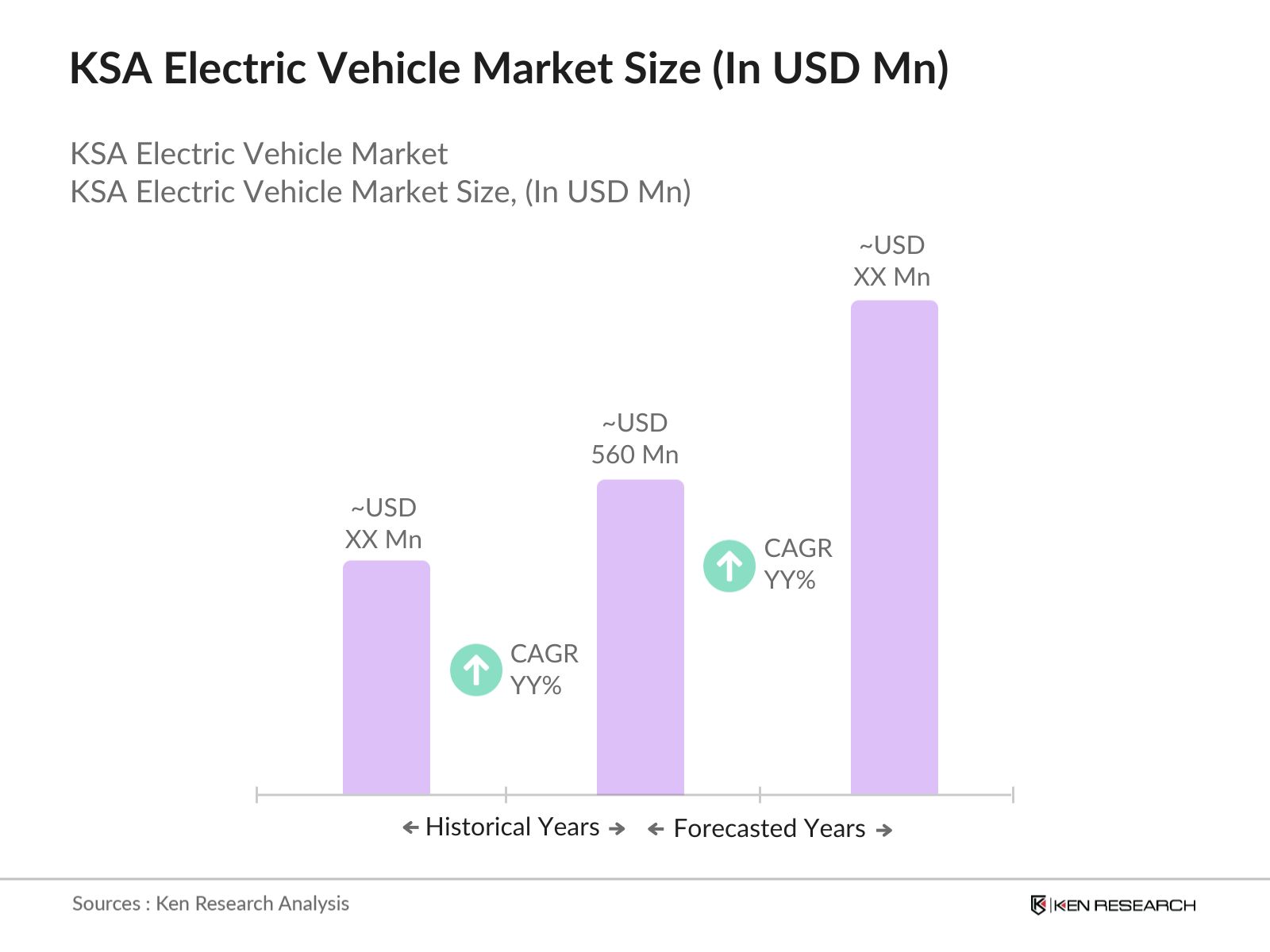
- The KSA electric vehicle (EV) market is valued at USD 560 million, based on a five-year historical analysis. The market's growth is driven by several factors, including significant government investment in renewable energy initiatives and electric mobility, particularly under the Vision 2030 program. This push toward sustainability, coupled with consumer awareness of environmental issues.
- Key cities such as Riyadh, Jeddah, and Dammam dominate the market due to their strategic economic importance and the governments prioritization of these areas for infrastructure development. The growing affluence of consumers in these cities and their greater awareness of green technologies make them prime regions for EV adoption.
- Saudi Arabia's Vision 2030 initiative aims to transform its transportation sector by investing $133.3 billion in infrastructure, targeting a 30% electric vehicle share in Riyadh by 2030. The Kingdom is also electrifying public transport and enhancing charging networks, promoting sustainable mobility and reducing carbon emissions. This initiative is expected to lead to the electrification of 25% of public transport systems in major cities by 2025, positioning Saudi Arabia as a leader in clean energy adoption within the Middle East.
KSA Electric Vehicle Market Segmentation
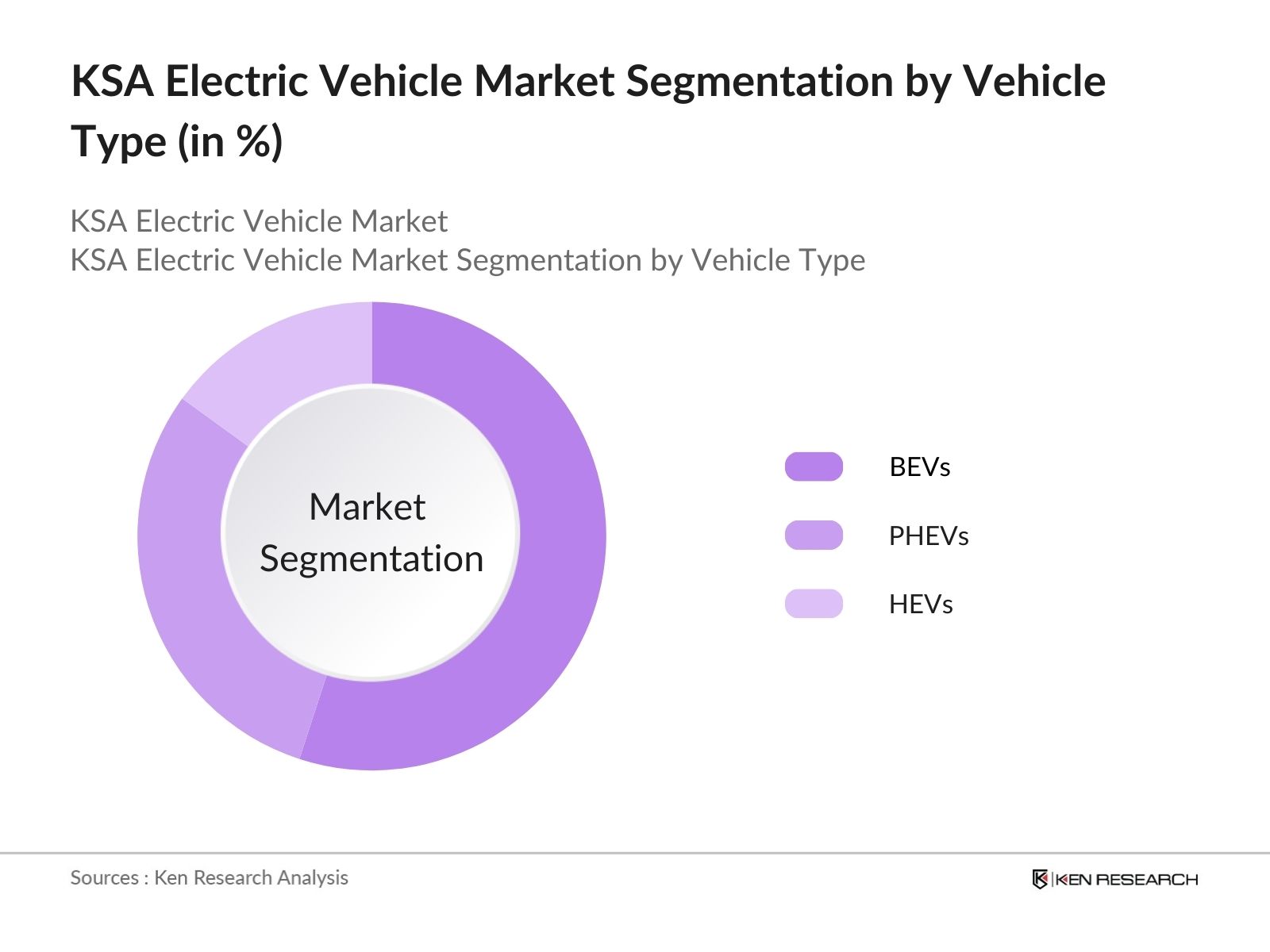
- By Vehicle Type: The market is segmented by vehicle type into battery electric vehicles (BEVs), plug-in hybrid electric vehicles (PHEVs), and hybrid electric vehicles (HEVs). BEVs dominate this segment due to their alignment with the Kingdom's sustainability goals and their lower long-term operational costs.
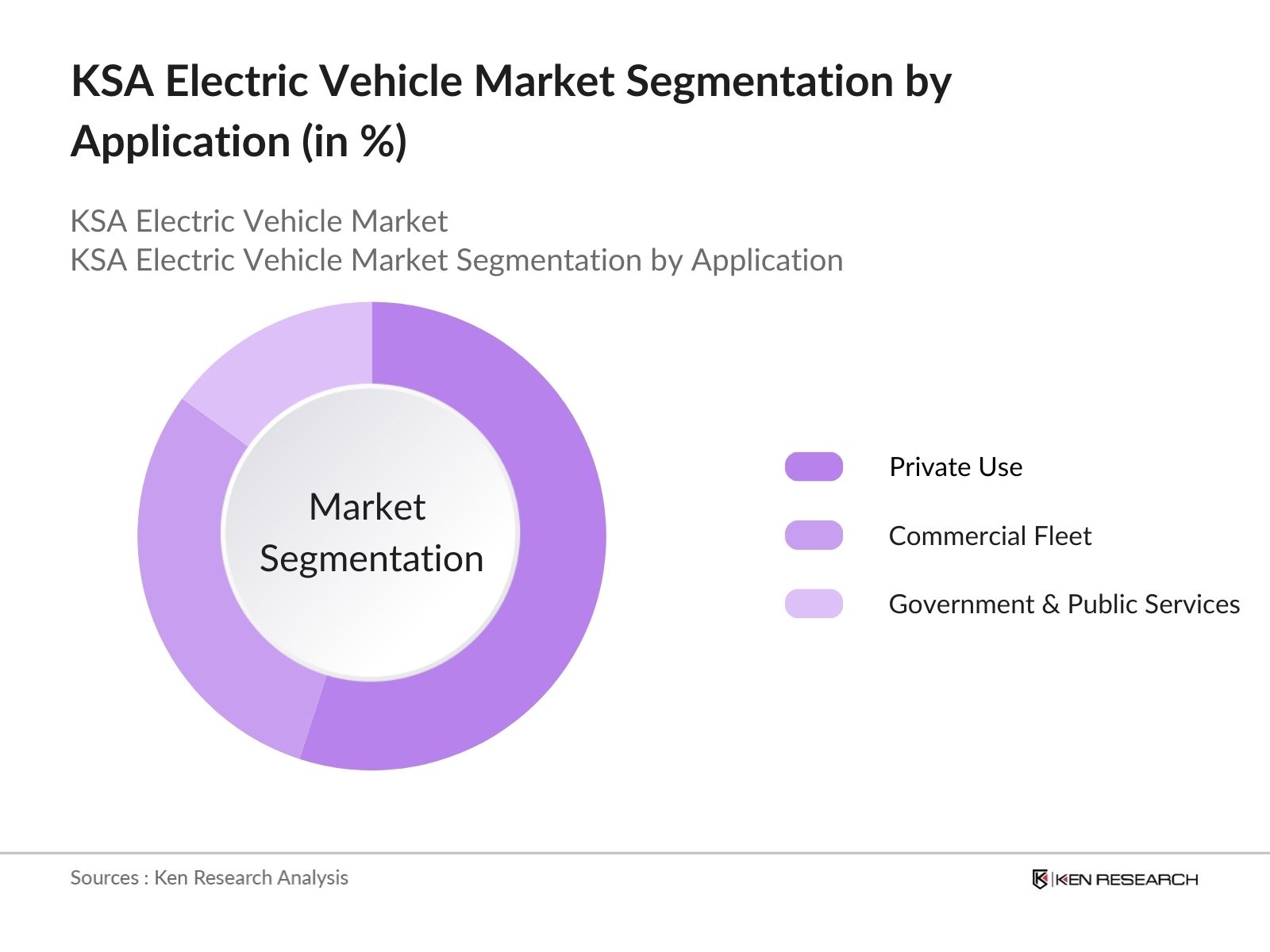
- By Application: The market is also segmented by application into private use, commercial fleet, and government and public services. Private use leads in market share due to increased disposable incomes and the growing appeal of eco-friendly vehicles among individual consumers. Government and public services are quickly catching up, driven by government electrification projects for public transportation.
KSA Electric Vehicle Market Competitive Landscape
The market is dominated by both local and international players. The consolidation of these players highlights their significant role in shaping the market. Companies such as Tesla, BYD, and Lucid Motors lead the market, driven by their cutting-edge technology and substantial R&D investments.
|
Company |
Establishment Year |
Headquarters |
Vehicle Type Focus |
Production Capacity |
Battery Technology |
Charging Network |
R&D Investments |
Strategic Alliances |
Revenue (2023) |
|
Tesla |
2003 |
Palo Alto, USA |
|||||||
|
Lucid Motors |
2007 |
California, USA |
|||||||
|
BYD |
1995 |
Shenzhen, China |
|||||||
|
Hyundai Motor Company |
1967 |
Seoul, South Korea |
|||||||
|
Abdul Latif Jameel |
1945 |
Jeddah, Saudi Arabia |
KSA Electric Vehicle Market Analysis
Market Growth Drivers
- Government Support for Electric Vehicles (EVs): The Saudi Arabian government's proactive policies are playing a significant role in driving the growth of the electric vehicle market. In 2023, the government allocated SAR 5 billion to promote green technologies, including electric vehicles. Incentives such as tax reductions, free charging for the first three years, and import duty exemptions on EVs have been introduced to make EVs more affordable.
- Development of Charging Infrastructure: Saudi Arabia is heavily investing in EV charging infrastructure to support the growing number of electric vehicles. By 2030, the government plans to install over 10,000 public charging stations in major cities, an increase from the current 1,200 stations available in 2023. This expansion is essential for reducing range anxiety among potential EV buyers. Furthermore, these stations will be powered by renewable energy, aligning with the countrys broader sustainability goals.
- Decline in Oil Dependency: The Saudi Arabian government is actively reducing its dependence on oil revenues, a key driver of EV market growth. In 2023, oil revenues accounted for 65% of the national budget, down from 75% in 2015. This reduction is part of the broader Vision 2030 strategy, which emphasizes diversification into sustainable sectors such as electric vehicles. This shift in focus is encouraging public and private investment in EV manufacturing and infrastructure.
Market Challenges
- Limited Charging Network: Despite government efforts, the EV charging infrastructure in Saudi Arabia remains limited, especially in rural areas. As of 2023, less than 10% of charging stations are located outside major urban centers like Riyadh and Jeddah. This uneven distribution hinders long-distance travel for EV owners and affects the adoption rate among rural populations.
- Lack of Consumer Awareness: The EV market in Saudi Arabia faces a significant challenge in terms of consumer awareness. A survey conducted by the General Authority for Statistics in 2023 revealed that 40% of respondents had little to no knowledge about the long-term benefits of EV ownership. Misconceptions regarding EV performance, battery life, and maintenance costs persist, especially in rural areas.
KSA Electric Vehicle Market Future Outlook
Over the next five years, the KSA electric vehicle industry is expected to witness growth. This growth is anticipated to be driven by continuous government support for green initiatives, advancements in EV technology, and increased demand for sustainable transportation solutions.
Future Market Opportunities
- Rise of Autonomous Electric Vehicles: Over the next five years, Saudi Arabia is expected to witness a significant increase in the adoption of autonomous electric vehicles. By 2025, NEOM plans to have a fully autonomous electric vehicle fleet for public transportation, setting a benchmark for other cities. This shift will reduce human error and increase transportation efficiency, aligning with the Kingdom's Vision 2030 objective of becoming a global leader in smart and sustainable cities.
- Integration with Renewable Energy Sources: By 2028, Saudi Arabia aims to fully integrate its EV charging stations with renewable energy sources such as solar and wind power. The National Renewable Energy Program plans to generate 15 gigawatts of renewable energy by 2028, a portion of which will be used to power EV infrastructure. This trend will reduce the carbon footprint of EVs and promote cleaner transportation solutions in line with global sustainability goals.
Scope of the Report
|
By Vehicle Type |
Battery Electric Vehicles (BEVs) Plug-In Hybrid Electric Vehicles (PHEVs) Hybrid Electric Vehicles (HEVs) |
|
By Application |
Private Use Commercial Fleet Government and Public Services |
|
By Charging Type |
Slow Charging Fast Charging Home-Based Charging |
|
By Battery Capacity |
Up to 30 kWh 30-60 kWh Above 60 kWh |
|
By Region |
North East West South |
Products
Key Target Audience Organizations and Entities Who Can Benefit by Subscribing This Report:
Electric Vehicle Manufacturers
Battery Manufacturers
Automobile Dealerships
Government and Regulatory Bodies (Ministry of Transport, Saudi Standards, Metrology, and Quality Organization)
Electric Charging Infrastructure Providers
Logistics and Fleet Management Companies
Investors and Venture Capital Firms
Automotive Technology Providers
Companies
Players Mentioned in the Report:
Tesla, Inc.
BYD Company Ltd.
Lucid Motors
Hyundai Motor Company
Abdul Latif Jameel
Nissan Motor Corporation
General Motors
Rivian Automotive
Volkswagen AG
BMW Group
Ford Motor Company
Mercedes-Benz Group AG
Kia Corporation
Geely Auto Group
Audi AG
Table of Contents
1. KSA Electric Vehicle Market Overview
1.1. Definition and Scope
1.2. Market Taxonomy
1.3. Market Growth Rate
1.4. Market Segmentation Overview
2. KSA Electric Vehicle Market Size (In USD Mn)
2.1. Historical Market Size
2.2. Year-on-Year Growth Analysis
2.3. Key Market Developments and Milestones
3. KSA Electric Vehicle Market Analysis
3.1. Growth Drivers
3.1.1. National Renewable Energy Strategy
3.1.2. Government EV Subsidies and Incentives
3.1.3. Increased Environmental Awareness (Electric Charging Infrastructure, Carbon Reduction Policies)
3.1.4. Rising Disposable Income & Affordability (Income Growth)
3.2. Market Challenges
3.2.1. High Initial Cost of EVs
3.2.2. Insufficient Charging Infrastructure (Geographical Distribution, Availability)
3.2.3. Battery Disposal and Recycling Concerns (Regulatory and Environmental Challenges)
3.2.4. Consumer Skepticism and Range Anxiety (Market Penetration Rate)
3.3. Opportunities
3.3.1. Integration with Smart Cities and Urban Mobility Plans
3.3.2. Development of EV Manufacturing Units (Localization, Production Capacity)
3.3.3. Government Initiatives for Green Transportation (EV-Only Zones, Electric Public Transport)
3.3.4. Collaboration with Global Automakers (Joint Ventures, Partnerships)
3.4. Trends
3.4.1. Increasing Adoption of Battery Electric Vehicles (BEVs vs PHEVs)
3.4.2. Rise in Home-Based Charging Solutions (Home Charging Adoption Rate)
3.4.3. Advancements in EV Battery Technology (Solid-State, High-Density Batteries)
3.4.4. Expansion of EV-Focused Retail and Dealership Networks
3.5. Government Regulations
3.5.1. Vision 2030 and Its Impact on EV Adoption
3.5.2. Emission Reduction Targets (Carbon Footprint Reduction, Penalties for High Emission)
3.5.3. EV Import Duty Reductions
3.5.4. Standardization of EV Charging Stations
3.6. SWOT Analysis
3.7. Stakeholder Ecosystem (Manufacturers, Charging Operators, Local Suppliers)
3.8. Porters Five Forces (Electric Vehicle Manufacturing, Market Dynamics)
3.9. Competition Ecosystem
4. KSA Electric Vehicle Market Segmentation
4.1. By Vehicle Type (In Value %)
4.1.1. Battery Electric Vehicles (BEVs)
4.1.2. Plug-In Hybrid Electric Vehicles (PHEVs)
4.1.3. Hybrid Electric Vehicles (HEVs)
4.2. By Application (In Value %)
4.2.1. Private Use
4.2.2. Commercial Fleet
4.2.3. Government and Public Services
4.3. By Charging Type (In Value %) 4.3.1. Slow Charging
4.3.2. Fast Charging
4.3.3. Home-Based Charging
4.4. By Battery Capacity (In Value %)
4.4.1. Up to 30 kWh
4.4.2. 30-60 kWh
4.4.3. Above 60 kWh
4.5. By Region (In Value %)
4.5.1. North
4.5.2. East
4.5.3. West
4.5.4. South
5. KSA Electric Vehicle Market Competitive Analysis
5.1. Detailed Profiles of Major Companies
5.1.1. Tesla, Inc.
5.1.2. BYD Company Ltd.
5.1.3. Nissan Motor Corporation
5.1.4. Hyundai Motor Company
5.1.5. General Motors
5.1.6. Rivian Automotive
5.1.7. Lucid Motors
5.1.8. Volkswagen AG
5.1.9. BMW Group
5.1.10. Ford Motor Company
5.1.11. Mercedes-Benz Group AG
5.1.12. Audi AG
5.1.13. Kia Corporation
5.1.14. SAIC Motor Corporation Limited
5.1.15. Geely Auto Group
5.2. (Production Capacity, Battery Technology, Charging Network, Manufacturing Cost Efficiency, Product Portfolio, Revenue, Market Penetration, Strategic Alliances)
5.3. Market Share Analysis
5.4. Strategic Initiatives
5.5. Mergers and Acquisitions
5.6. Investment Analysis
5.7. Venture Capital Funding
5.8. Government Grants
5.9. Private Equity Investments
6. KSA Electric Vehicle Market Regulatory Framework
6.1. EV Certification and Approval Process
6.2. Compliance with Global Emission Standards
6.3. Environmental Standards for EV Battery Disposal
6.4. Regulations Governing EV Charging Stations
7. KSA Electric Vehicle Future Market Size (In USD Mn)
7.1. Future Market Size Projections
7.2. Key Factors Driving Future Market Growth
8. KSA Electric Vehicle Future Market Segmentation
8.1. By Vehicle Type (In Value %)
8.2. By Application (In Value %)
8.3. By Charging Type (In Value %)
8.4. By Battery Capacity (In Value %)
8.5. By Region (In Value %)
9. KSA Electric Vehicle Market Analysts Recommendations
9.1. TAM/SAM/SOM Analysis
9.2. Customer Cohort Analysis
9.3. Marketing Initiatives
9.4. White Space Opportunity Analysis
Contact Us
Research Methodology
Step 1: Identification of Key Variables
The initial phase focuses on constructing an ecosystem map covering all major stakeholders within the KSA Electric Vehicle Market. This stage involves comprehensive desk research, utilizing both secondary and proprietary databases to gather industry-level data. The objective is to identify critical variables that influence market dynamics.
Step 2: Market Analysis and Construction
This step compiles historical data on the KSA Electric Vehicle Market, evaluating market penetration and service-provider ratios. Additionally, revenue generation is analyzed alongside service quality statistics to ensure accurate estimates.
Step 3: Hypothesis Validation and Expert Consultation
Market hypotheses are formulated and validated via interviews with industry experts. These consultations provide operational and financial insights from industry practitioners, which help refine and validate market data.
Step 4: Research Synthesis and Final Output
The final step involves direct consultations with multiple electric vehicle manufacturers to acquire insights into product segments, sales performance, and consumer preferences. This interaction ensures a comprehensive, validated analysis of the KSA Electric Vehicle market.
Frequently Asked Questions
01. How big is the KSA Electric Vehicle Market?
The KSA electric vehicle market is valued at USD 560 million, driven by government initiatives under Vision 2030 and increased consumer awareness regarding environmental sustainability.
02. What are the challenges in the KSA Electric Vehicle Market?
Challenges in the KSA electric vehicle market include insufficient charging infrastructure, high initial costs for consumers, and battery disposal concerns, which are major hurdles for market growth.
03. Who are the major players in the KSA Electric Vehicle Market?
Key players in the KSA electric vehicle market include Tesla, BYD Company Ltd., Lucid Motors, Hyundai Motor Company, and Abdul Latif Jameel, among others, dominating due to their technological advancements and government backing.
04. What are the growth drivers of the KSA Electric Vehicle Market?
The KSA electric vehicle market is driven by government initiatives under Vision 2030, advancements in electric vehicle technology, and the development of EV charging infrastructure across the country.
05. What is the future of the KSA Electric Vehicle Market?
The KSA electric vehicle market is expected to grow significantly over the next five years, propelled by government investments in renewable energy, local manufacturing, and increased demand for eco-friendly vehicles.
Why Buy From Us?

What makes us stand out is that our consultants follows Robust, Refine and Result (RRR) methodology. i.e. Robust for clear definitions, approaches and sanity checking, Refine for differentiating respondents facts and opinions and Result for presenting data with story

We have set a benchmark in the industry by offering our clients with syndicated and customized market research reports featuring coverage of entire market as well as meticulous research and analyst insights.

While we don't replace traditional research, we flip the method upside down. Our dual approach of Top Bottom & Bottom Top ensures quality deliverable by not just verifying company fundamentals but also looking at the sector and macroeconomic factors.

With one step in the future, our research team constantly tries to show you the bigger picture. We help with some of the tough questions you may encounter along the way: How is the industry positioned? Best marketing channel? KPI's of competitors? By aligning every element, we help maximize success.

Our report gives you instant access to the answers and sources that other companies might choose to hide. We elaborate each steps of research methodology we have used and showcase you the sample size to earn your trust.

If you need any support, we are here! We pride ourselves on universe strength, data quality, and quick, friendly, and professional service.