
KSA Energy Management System Market Outlook to 2030
Region:Middle East
Author(s):Meenakshi Bisht
Product Code:KROD4964
December 2024
97
About the Report
KSA Energy Management System Market Overview
- The KSA Energy Management System (EMS) Market is valued at USD 378.4 million, driven by the increasing implementation of smart energy solutions and Saudi Arabia's commitment to reducing energy consumption through strategic initiatives such as Vision 2030. The adoption of EMS has been accelerated by government policies focusing on improving energy efficiency across industries, commercial establishments, and public infrastructure. Moreover, technological advancements in IoT and AI have further enhanced energy monitoring, boosting market demand
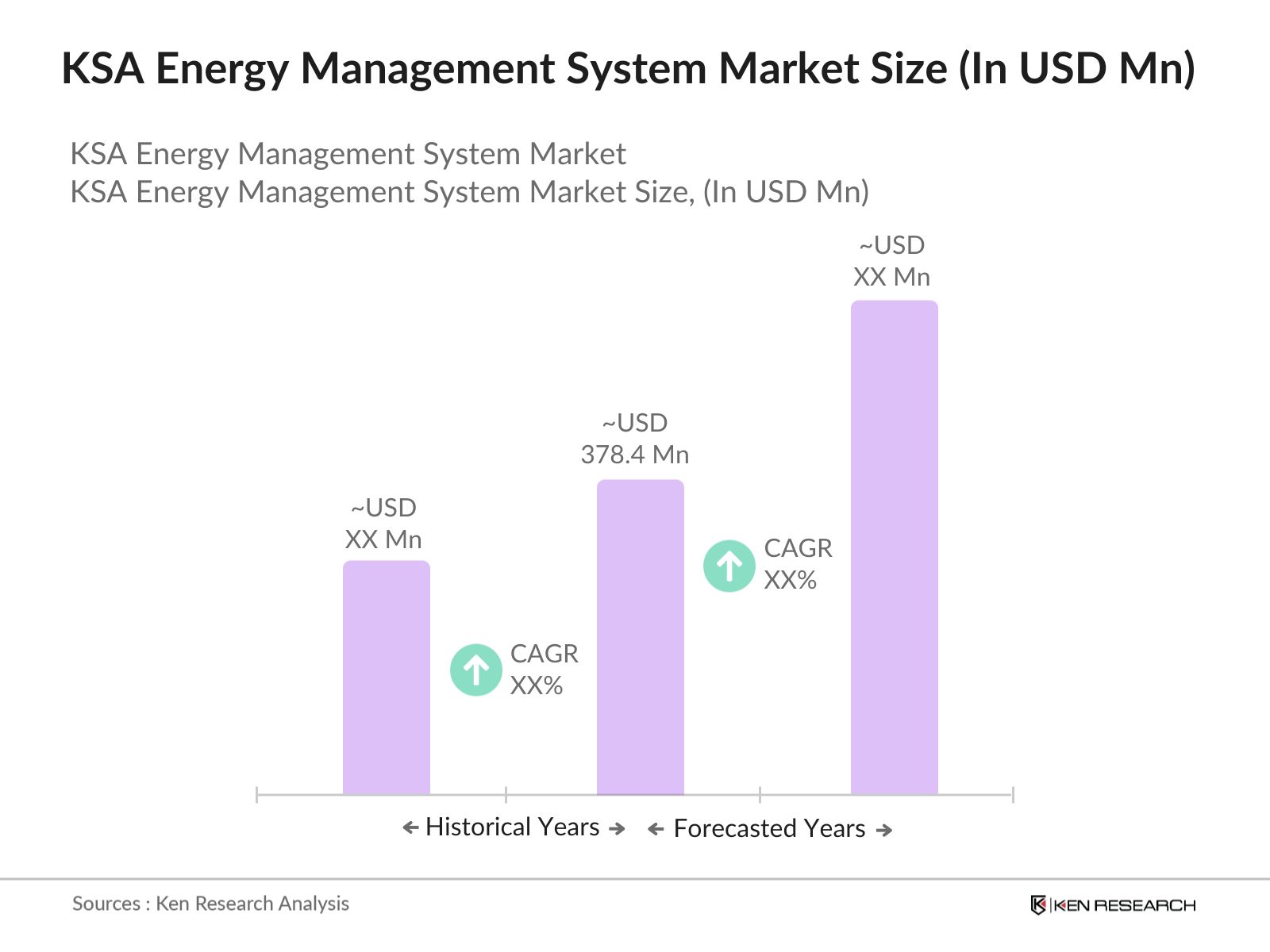
- Riyadh and Jeddah dominate the EMS market due to the concentration of large industrial sectors and ongoing infrastructure developments. These cities are focal points for commercial and industrial activities, which necessitate effective energy management solutions. Additionally, the expansion of smart cities projects in these regions has increased the demand for advanced EMS to optimize energy consumption
- Saudi Arabia has emerged as a leader in public-private partnership (PPP) activity in the Middle East and North Africa (MENA) region, particularly in the fourth quarter of 2023. The Kingdom is actively pursuing significant investments across various sectors, notably in airport expansion, renewable energy, and water projects. A key component of this initiative is Saudi Arabia's new civil aviation strategy, which aims to attract investments totaling $100 billion from both public and private sectors by 2030.
KSA Energy Management System Market Segmentation
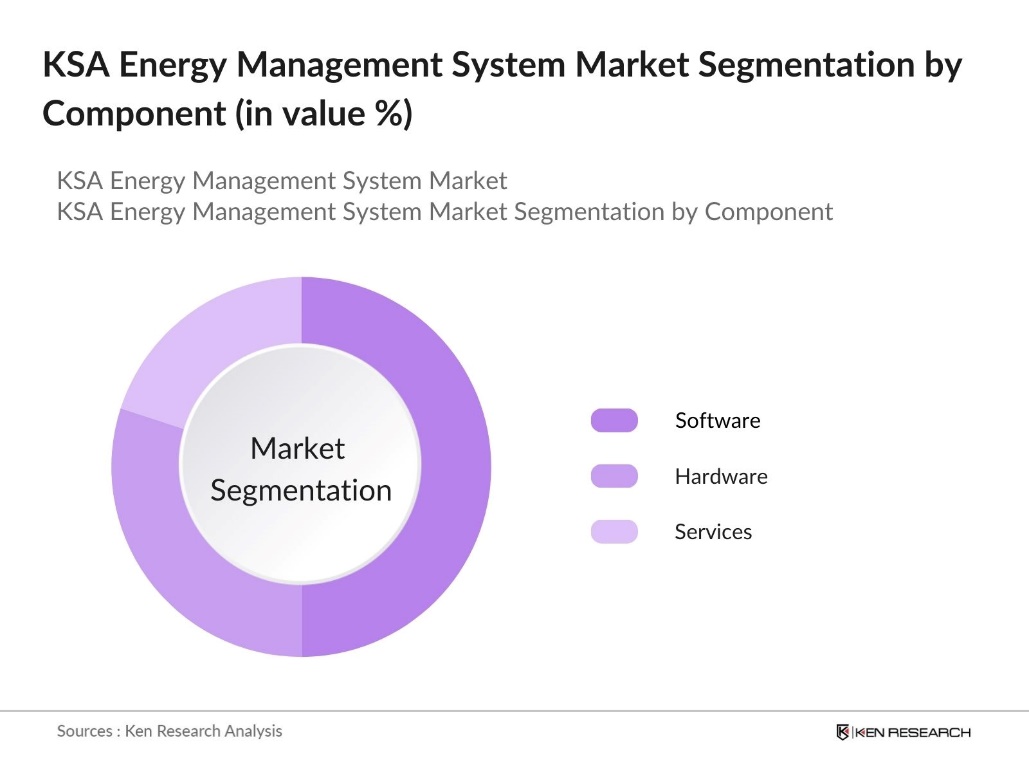
By Component: The KSA EMS market is segmented by component into hardware, software, and services. Recently, software has dominated the market share under the component segmentation due to the increasing reliance on cloud-based and AI-driven platforms for real-time energy monitoring and optimization. This dominance is driven by the need for data analytics, remote access, and automation capabilities, which provide flexibility and enhance energy efficiency in diverse sectors, including industrial and commercial settings.
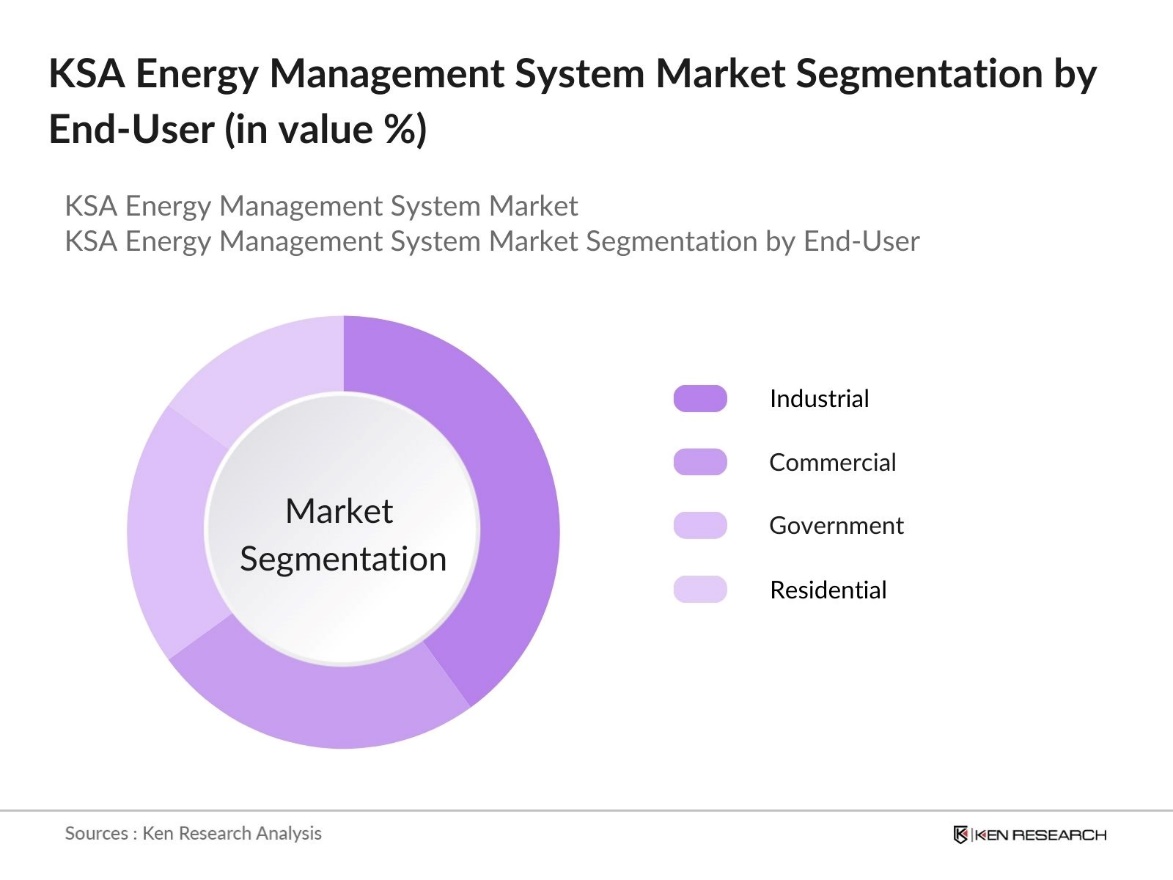
By End-User: The KSA EMS market is segmented by end-user into residential, commercial, industrial, and government. The industrial segment dominates the market share, primarily due to high energy consumption in manufacturing sectors. Energy management solutions are critical in optimizing operations, reducing costs, and meeting sustainability targets. Government mandates to reduce carbon emissions and improve energy efficiency across industrial sectors have further propelled the adoption of EMS.
KSA Energy Management System Market Competitive Landscape
The market is dominated by several key players, including both global giants and local firms. Companies such as Schneider Electric and Siemens AG hold significant market share, providing end-to-end EMS solutions with a focus on innovation and sustainability. The competition in the market revolves around technological advancements, product differentiation, and strategic collaborations to capture the growing demand for energy efficiency solutions.
|
Company |
Establishment Year |
Headquarters |
Revenue |
R&D Expenditure |
Product Portfolio |
Global Reach |
Sustainability Initiatives |
Technology Innovation |
|
Schneider Electric |
1836 |
France |
||||||
|
Siemens AG |
1847 |
Germany |
||||||
|
Honeywell International |
1906 |
USA |
||||||
|
ABB Ltd. |
1883 |
Switzerland |
||||||
|
General Electric |
1892 |
USA |
KSA Energy Management System Industry Analysis
Growth Drivers
- Rising Demand for Smart Energy Management: The increasing demand for smart energy management solutions is closely tied to rising energy consumption levels. In 2022, Saudi Arabia's electricity consumption was reported at approximately 298.7 terawatt-hours (TWh), with a growing focus on optimizing consumption through smart technologies. Industries are adopting smart EMS to monitor, control, and optimize energy usage in real-time, which has led to significant cost savings and operational efficiency.
- Saudi Vision 2030 and Renewable Energy Expansion: Saudi Vision 2030 aims to increase the share of renewable energy in the country's power mix, which was 130 gigawatts (GW) in 2022, and to grow this significantly over the coming years. The Renewable Energy Project Development Office (REPDO) is actively expanding renewable energy projects like solar and wind farms. The integration of energy management systems is critical to optimize the performance of these renewable energy sources, which is driving market demand for advanced EMS.
- Increasing Energy Efficiency Regulations: The Kingdom of Saudi Arabia (KSA) has implemented stricter energy efficiency regulations through the Saudi Energy Efficiency Center (SEEC), focusing on reducing consumption in buildings, industries, and transportation sectors. These regulations are driving the adoption of Energy Management Systems (EMS) as businesses seek compliance and cost savings. The push for greater efficiency across industries positions EMS as a critical tool in supporting the nations sustainability and energy goals.
Market Challenges
- High Installation and Maintenance Costs: The installation and maintenance of Energy Management Systems (EMS) in Saudi Arabia involve significant costs, particularly for large-scale industrial systems. These high costs can be a barrier, especially for small and medium enterprises (SMEs), making it difficult for them to adopt these technologies. The financial burden of both initial setup and ongoing maintenance creates a significant challenge for broader EMS market penetration, particularly in sectors with limited financial resources.
- Complexity in System Integration: Integrating Energy Management Systems (EMS) with existing infrastructure in Saudi Arabia presents challenges due to the complexity of legacy systems. Many sectors, such as oil and gas, rely on outdated control systems, making seamless integration with modern EMS difficult. This complexity limits the ability to fully utilize advanced energy-saving technologies, reducing the overall efficiency of energy management efforts in industries with older infrastructure.
KSA Energy Management System Market Future Outlook
Over the next five years, the KSA Energy Management System market is expected to show substantial growth driven by government initiatives aimed at energy efficiency, the expansion of smart city projects, and increased adoption of IoT and AI technologies. The Saudi government's commitment to reducing energy consumption as part of Vision 2030, along with investments in renewable energy and industrial efficiency, will further boost market demand for EMS solutions across various sectors.
Market Opportunities
- Integration with Smart Grid Infrastructure: The Saudi government is making significant investments in smart grid infrastructure to modernize the country's energy distribution system. Energy Management Systems (EMS) can seamlessly integrate with these smart grids, enabling real-time monitoring and control of energy usage. This integration offers substantial opportunities for EMS providers to develop more advanced solutions that optimize energy efficiency and enhance the overall performance of the national energy infrastructure.
- Technological Advancements in IoT and AI: Advancements in IoT and AI are transforming energy management in Saudi Arabia, allowing industries to implement predictive analytics, real-time monitoring, and automation. These technologies enhance the capabilities of Energy Management Systems (EMS), making them more efficient and cost-effective. As industries continue to adopt IoT and AI in energy management processes, the EMS market benefits from improved optimization and decision-making capabilities, driving further growth.
Scope of the Report
|
Component |
Hardware Software Services |
|
End-User |
Residential Commercial Industrial Government |
|
Application |
Monitoring and Control Demand Response Automation Energy Analytics |
|
Deployment Mode |
Cloud-Based On-Premise |
|
Region |
Riyadh Jeddah Dammam Makkah |
Products
Key Target Audience
Energy Utility Companies
Industrial Manufacturing Firms
Oil & Gas Companies
Construction and Infrastructure Companies
Telecommunications Companies
Facility Management Firms
Investment and Venture Capitalist Firms
Government and Regulatory Bodies (Saudi Energy Efficiency Center, Saudi Vision 2030)
Banks and Financial Institutions
Companies
Players Mentioned in the Report
Schneider Electric
Siemens AG
Honeywell International
ABB Ltd.
General Electric
Cisco Systems
Rockwell Automation
Eaton Corporation
Mitsubishi Electric Corporation
IBM Corporation
Yokogawa Electric Corporation
Azbil Corporation
Invensys
Trane Technologies
Emerson Electric Co.
Table of Contents
1. KSA Energy Management System Market Overview
1.1. Definition and Scope
1.2. Market Taxonomy
1.3. Market Growth Rate
1.4. Market Segmentation Overview
2. KSA Energy Management System Market Size (In USD Mn)
2.1. Historical Market Size
2.2. Year-On-Year Growth Analysis
2.3. Key Market Developments and Milestones
3. KSA Energy Management System Market Analysis
3.1. Growth Drivers
3.1.1. Increasing Energy Efficiency Regulations
3.1.2. Rising Demand for Smart Energy Management
3.1.3. Saudi Vision 2030 and Renewable Energy Expansion
3.1.4. Government Incentives for Energy Efficiency
3.2. Market Challenges
3.2.1. High Installation and Maintenance Costs
3.2.2. Complexity in System Integration
3.2.3. Cybersecurity Threats in Energy Management Systems
3.3. Opportunities
3.3.1. Integration with Smart Grid Infrastructure
3.3.2. Technological Advancements in IoT and AI
3.3.3. Expansion of Renewable Energy Projects
3.4. Trends
3.4.1. Adoption of Cloud-Based Energy Management Solutions
3.4.2. Increasing Demand for Data Analytics in Energy Management
3.4.3. Rise of Decentralized Energy Systems
3.5. Government Regulation
3.5.1. Saudi Energy Efficiency Program (SEEP)
3.5.2. Building Codes and Energy Auditing Mandates
3.5.3. National Renewable Energy Program (NREP)
3.5.4. Public-Private Partnerships in Energy Infrastructure
3.6. SWOT Analysis
3.7. Stakeholder Ecosystem
3.8. Porters Five Forces Analysis
3.9. Competition Ecosystem
4. KSA Energy Management System Market Segmentation
4.1. By Component (In Value %)
4.1.1. Hardware
4.1.2. Software
4.1.3. Services
4.2. By End-User (In Value %)
4.2.1. Residential
4.2.2. Commercial
4.2.3. Industrial
4.2.4. Government
4.3. By Application (In Value %)
4.3.1. Monitoring and Control
4.3.2. Demand Response
4.3.3. Automation
4.3.4. Energy Analytics
4.4. By Deployment Mode (In Value %)
4.4.1. Cloud-Based
4.4.2. On-Premise
4.5. By Region (In Value %)
4.5.1. Riyadh
4.5.2. Jeddah
4.5.3. Dammam
4.5.4. Makkah
5. KSA Energy Management System Market Competitive Analysis
5.1. Detailed Profiles of Major Competitors
5.1.1. Schneider Electric
5.1.2. Siemens AG
5.1.3. Honeywell International
5.1.4. ABB Ltd.
5.1.5. General Electric
5.1.6. Johnson Controls
5.1.7. Rockwell Automation
5.1.8. Cisco Systems
5.1.9. Eaton Corporation
5.1.10. Mitsubishi Electric Corporation
5.1.11. IBM Corporation
5.1.12. Yokogawa Electric Corporation
5.1.13. Azbil Corporation
5.1.14. Invensys
5.1.15. Trane Technologies
5.2. Cross Comparison Parameters (Revenue, Headquarters, Number of Employees, R&D Investments, Global Reach, Product Offerings, Energy Management Specialization, Sustainability Initiatives)
5.3. Market Share Analysis
5.4. Strategic Initiatives
5.5. Mergers And Acquisitions
5.6. Investment Analysis
5.7. Venture Capital Funding
5.8. Government Grants
5.9. Private Equity Investments
6. KSA Energy Management System Market Regulatory Framework
6.1. Energy Efficiency Standards
6.2. Compliance Requirements
6.3. Certification Processes
7. KSA Energy Management System Future Market Size (In USD Mn)
7.1. Future Market Size Projections
7.2. Key Factors Driving Future Market Growth
8. KSA Energy Management System Future Market Segmentation
8.1. By Component (In Value %)
8.2. By End-User (In Value %)
8.3. By Application (In Value %)
8.4. By Deployment Mode (In Value %)
8.5. By Region (In Value %)
9. KSA Energy Management System Market Analysts Recommendations
9.1. TAM/SAM/SOM Analysis
9.2. Customer Cohort Analysis
9.3. Market Entry Strategy
9.4. White Space Opportunity Analysis
Research Methodology
Step 1: Identification of Key Variables
The initial phase involves constructing a comprehensive ecosystem map that includes all key stakeholders in the KSA Energy Management System Market. Desk research, coupled with proprietary databases, is used to gather critical information on industry dynamics and define essential market variables such as market size, revenue generation, and major players.
Step 2: Market Analysis and Construction
Historical data pertaining to market trends, energy consumption patterns, and system adoption rates are analyzed. This phase includes evaluating the ratio of EMS implementation across industrial, commercial, and government sectors, which provides a foundation for understanding market growth and opportunities.
Step 3: Hypothesis Validation and Expert Consultation
Market hypotheses are validated through interviews with industry experts and major companies in the EMS domain. Insights from stakeholders help in refining market forecasts and understanding operational challenges and opportunities directly from the field.
Step 4: Research Synthesis and Final Output
The final phase involves integrating feedback from industry practitioners with secondary data to provide a complete and validated analysis of the KSA Energy Management System Market. This approach ensures the report is both accurate and relevant for business professionals seeking to understand the market dynamics.
Frequently Asked Questions
01. How big is the KSA Energy Management System Market?
The KSA Energy Management System Market is valued at USD 378.4 billion. The growth is driven by government initiatives such as Vision 2030, which emphasizes energy efficiency and the adoption of renewable energy solutions.
02. What are the challenges in the KSA Energy Management System Market?
Challenges in KSA Energy Management System Market include high installation costs, system integration complexities, and cybersecurity threats. These issues can limit the adoption of advanced EMS solutions, particularly in smaller commercial sectors.
03. Who are the major players in the KSA Energy Management System Market?
Major players in the KSA Energy Management System Market include Schneider Electric, Siemens AG, Honeywell International, ABB Ltd., and General Electric. These companies dominate due to their comprehensive EMS portfolios and significant investments in R&D.
04. What are the growth drivers of the KSA Energy Management System Market?
Key growth drivers in KSA Energy Management System Market include the Saudi government's focus on energy efficiency, the rise of smart city projects, and the integration of advanced technologies such as IoT and AI into energy management systems.
Why Buy From Us?

What makes us stand out is that our consultants follows Robust, Refine and Result (RRR) methodology. i.e. Robust for clear definitions, approaches and sanity checking, Refine for differentiating respondents facts and opinions and Result for presenting data with story

We have set a benchmark in the industry by offering our clients with syndicated and customized market research reports featuring coverage of entire market as well as meticulous research and analyst insights.

While we don't replace traditional research, we flip the method upside down. Our dual approach of Top Bottom & Bottom Top ensures quality deliverable by not just verifying company fundamentals but also looking at the sector and macroeconomic factors.

With one step in the future, our research team constantly tries to show you the bigger picture. We help with some of the tough questions you may encounter along the way: How is the industry positioned? Best marketing channel? KPI's of competitors? By aligning every element, we help maximize success.

Our report gives you instant access to the answers and sources that other companies might choose to hide. We elaborate each steps of research methodology we have used and showcase you the sample size to earn your trust.

If you need any support, we are here! We pride ourselves on universe strength, data quality, and quick, friendly, and professional service.