
KSA Fertilizer Market Outlook to 2030
Region:Saudi Arabia
Author(s):Abhinav kumar
Product Code:KROD3433
Region:Saudi Arabia
Author(s):Abhinav kumar
Product Code:KROD3433
December 2024
90
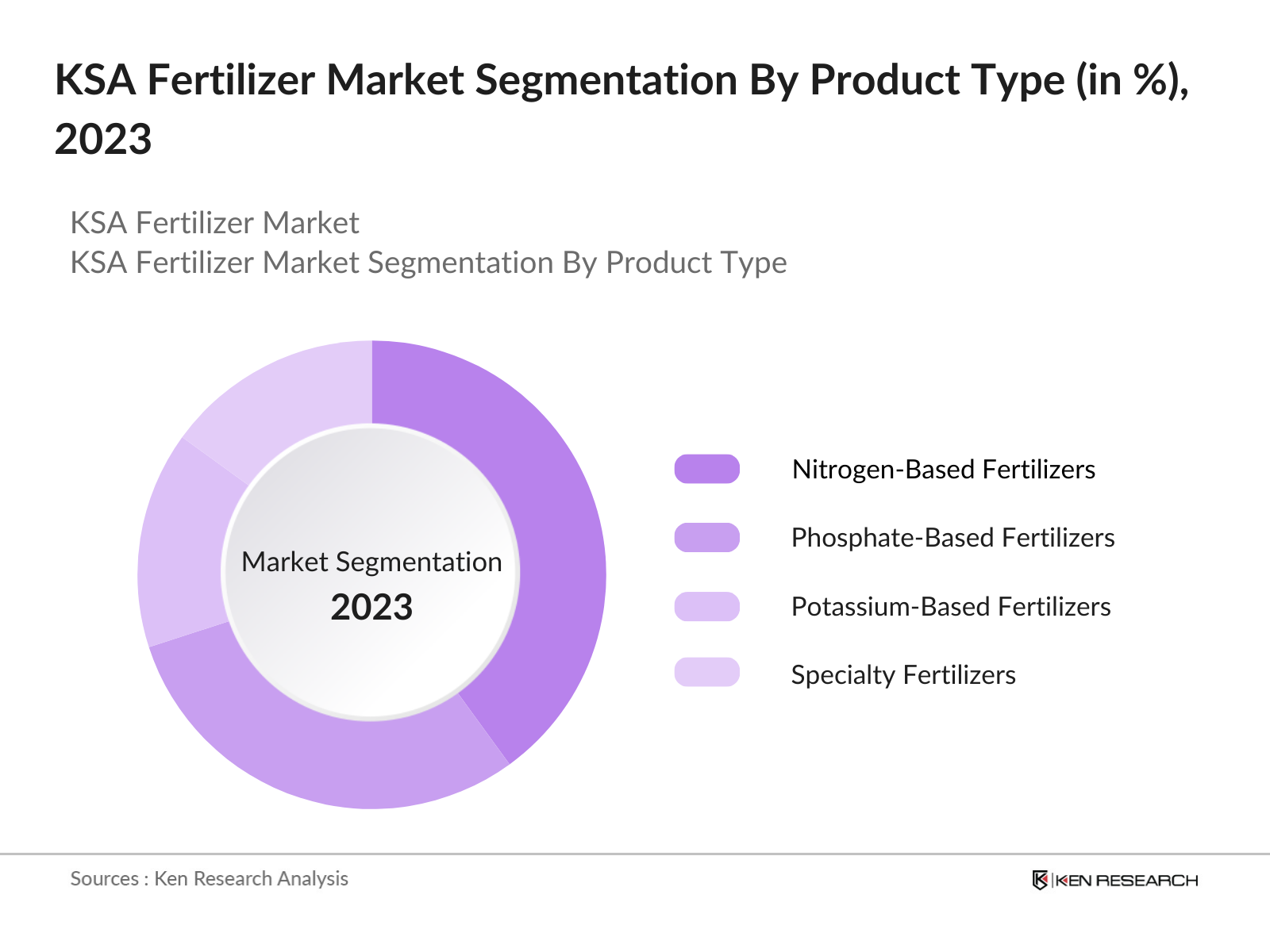
By Product Type: The KSA fertilizer market is segmented by product type into nitrogen-based fertilizers, phosphate-based fertilizers, potassium-based fertilizers, specialty fertilizers, and organic fertilizers. Nitrogen-based fertilizers hold a dominant market share due to their essential role in increasing crop yields in the countrys predominantly dry soil conditions. Urea, ammonia, and nitrate fertilizers are widely used because they provide vital nutrients that stimulate plant growth, especially in wheat and barley farming. Their cost-effectiveness and easy availability in the market further contribute to their dominance.
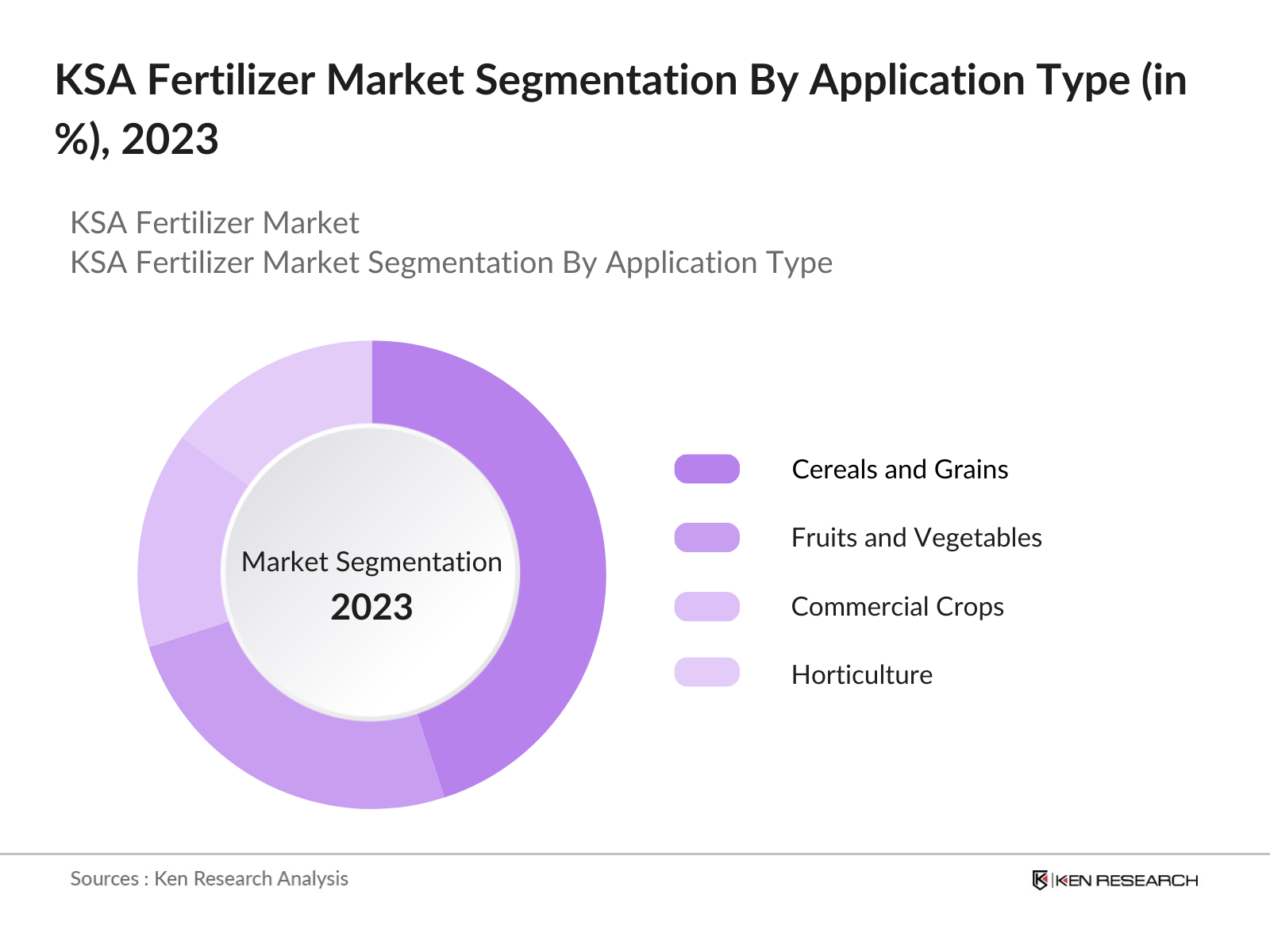
By Application: The market is also segmented by application into cereals and grains, fruits and vegetables, commercial crops, horticulture, and turf and ornamentals. Cereals and grains dominate the application segment due to the large-scale cultivation of wheat, barley, and corn in KSA. Fertilizers are heavily used in these crops to maximize yield, given the challenging growing conditions in the region. The governments initiatives to enhance food security and reduce imports have further increased the demand for fertilizers in the cereals and grains sector.
The KSA fertilizer market is characterized by a few major players, including both domestic and international companies. Major companies such as Saudi Basic Industries Corporation (SABIC) and Maaden dominate the local market, while international players like Yara International and The Mosaic Company have established their presence through partnerships and distribution networks. The dominance of these companies highlights the markets consolidated structure, with key players focusing on expansion through innovation and sustainability practices.
|
Company Name |
Establishment Year |
Headquarters |
Product Portfolio |
Market Reach |
Production Capacity |
Technological Innovation |
Sustainability Initiatives |
Strategic Partnerships |
R&D Investments |
|
Saudi Basic Industries Corporation (SABIC) |
1976 |
Riyadh |
- |
- |
- |
- |
- |
- |
- |
|
Maaden Phosphate Company |
2008 |
Ras Al-Khair |
- |
- |
- |
- |
- |
- |
- |
|
Yara International |
1905 |
Oslo |
- |
- |
- |
- |
- |
- |
- |
|
The Mosaic Company |
2004 |
Florida |
- |
- |
- |
- |
- |
- |
- |
|
IFFCO Group |
1975 |
Dubai |
- |
- |
- |
- |
- |
- |
- |
Over the next five years, the KSA fertilizer market is expected to experience significant growth driven by increasing investments in sustainable agricultural practices, technological advancements in fertilizer production, and a heightened focus on food security. As the government continues to promote self-sufficiency in food production through Vision 2030, demand for fertilizers is set to rise. Additionally, innovations such as bio-fertilizers and precision agriculture technologies are anticipated to revolutionize the market, offering more efficient and eco-friendly solutions for Saudi farmers.
|
By Product Type |
Nitrogen-based Fertilizers Phosphate-based Fertilizers Potassium-based Fertilizers Specialty Fertilizers Organic and Bio-Fertilizers |
|
By Application |
Cereals and Grains Fruits and Vegetables Turf and Ornamentals Commercial Crops (Dates, Palm) Horticulture |
|
By Technology |
Conventional Fertilizers Controlled-Release Fertilizers Liquid Fertilizers Nano Fertilizers |
|
By Nutrient Type |
Primary Nutrients Secondary Nutrients Micronutrients |
|
By Region |
Central Region Eastern Region Western Region Northern Region Southern Region |
1.1. Definition and Scope
1.2. Market Taxonomy
1.3. Market Growth Rate
1.4. Market Segmentation Overview
2.1. Historical Market Size
2.2. Year-On-Year Growth Analysis
2.3. Key Market Developments and Milestones
3.1. Growth Drivers
3.1.1. Agricultural Modernization
3.1.2. Government Initiatives
3.1.3. Increasing Food Demand
3.1.4. Soil Fertility Depletion
3.2. Market Challenges
3.2.1. Water Scarcity and Resource Management
3.2.2. High Cost of Raw Materials
3.2.3. Environmental Concerns
3.3. Opportunities
3.3.1. Shift Towards Bio-Fertilizers
3.3.2. Advanced Fertilizer Solutions
3.3.3. Expansion into Arid and Marginal Lands
3.4. Trends
3.4.1. Adoption of Precision Agriculture
3.4.2. Increasing Focus on Eco-Friendly Fertilizers
3.4.3. Technological Advancements in Fertilizer Production
3.5. Government Regulation
3.5.1. Fertilizer Usage Standards
3.5.2. Environmental Permits and Compliance
3.5.3. Subsidies and Incentives for Sustainable Practices
3.5.4. Trade and Tariff Policies
3.6. SWOT Analysis
3.7. Stakeholder Ecosystem (Farmers, Distributors, Regulatory Bodies)
3.8. Porters Five Forces Analysis
3.9. Competition Ecosystem
4.1. By Product Type (In Value %)
4.1.1. Nitrogen-based Fertilizers (Ammonia, Urea)
4.1.2. Phosphate-based Fertilizers (Superphosphates, Phosphoric Acid)
4.1.3. Potassium-based Fertilizers (Potash)
4.1.4. Specialty Fertilizers (Liquid Fertilizers, Micro-Nutrients)
4.1.5. Organic and Bio-Fertilizers
4.2. By Application (In Value %)
4.2.1. Cereals and Grains
4.2.2. Fruits and Vegetables
4.2.3. Turf and Ornamentals
4.2.4. Commercial Crops (Dates, Palm)
4.2.5. Horticulture
4.3. By Technology (In Value %)
4.3.1. Conventional Fertilizers
4.3.2. Controlled-Release Fertilizers
4.3.3. Liquid Fertilizers
4.3.4. Nano Fertilizers
4.4. By Nutrient Type (In Value %)
4.4.1. Primary Nutrients (N, P, K)
4.4.2. Secondary Nutrients (Sulfur, Magnesium, Calcium)
4.4.3. Micronutrients (Zinc, Copper, Manganese)
4.5. By Region (In Value %)
4.5.1. Central Region (Riyadh, Qassim)
4.5.2. Eastern Region (Dammam, Jubail)
4.5.3. Western Region (Jeddah, Makkah)
4.5.4. Northern Region
4.5.5. Southern Region
5.1. Detailed Profiles of Major Companies
5.1.1. Saudi Basic Industries Corporation (SABIC)
5.1.2. KSAn Fertilizer Company (SAFCO)
5.1.3. Maaden Phosphate Company
5.1.4. The Mosaic Company
5.1.5. Yara International
5.1.6. PhosAgro
5.1.7. EuroChem Group
5.1.8. Nutrien Ltd.
5.1.9. OCP Group
5.1.10. IFFCO Group
5.1.11. CF Industries
5.1.12. OCI Nitrogen
5.1.13. Haifa Group
5.1.14. Qatar Fertilizer Company (QAFCO)
5.1.15. Indian Farmers Fertiliser Cooperative Limited (IFFCO)
5.2. Cross Comparison Parameters
5.2.1. Product Portfolio
5.2.2. Market Share
5.2.3. Geographic Reach
5.2.4. Revenue (SAR Bn)
5.2.5. Fertilizer Production Capacity (Tons)
5.2.6. Technological Innovation (Product Development)
5.2.7. Sustainability Initiatives
5.2.8. Strategic Alliances and Partnerships
5.3. Market Share Analysis
5.4. Strategic Initiatives
5.5. Mergers and Acquisitions
5.6. Investment Analysis
5.7. Government Grants and Subsidies
5.8. Private Equity Investments
6.1. Environmental Standards and Fertilizer Regulation
6.2. Compliance Requirements for Manufacturers
6.3. Certification and Quality Control Processes
7.1. Future Market Size Projections
7.2. Key Factors Driving Future Market Growth (Sustainability, Water-Efficient Fertilizers)
8.1. By Product Type (In Value %)
8.2. By Application (In Value %)
8.3. By Technology (In Value %)
8.4. By Nutrient Type (In Value %)
8.5. By Region (In Value %)
9.1. TAM/SAM/SOM Analysis
9.2. Customer Cohort Analysis
9.3. Strategic Marketing Initiatives
9.4. White Space Opportunity Analysis
The initial phase involves creating a comprehensive ecosystem map of the KSA fertilizer market. This step includes extensive desk research, utilizing secondary sources and proprietary databases to gather market insights. The goal is to define key market variables such as product types, application sectors, and regional usage trends.
This phase compiles and analyzes historical data on fertilizer production, sales, and market penetration in KSA. Factors such as agricultural expansion, government policies, and fertilizer usage efficiency are evaluated to ensure accurate market construction.
Market hypotheses are developed based on historical trends and projections, then validated through expert consultations via telephone interviews. Industry professionals provide real-world insights into operational dynamics, financial performance, and technology adoption in the fertilizer industry.
This final step synthesizes data from multiple sources, including direct interviews with industry players, to ensure a well-rounded analysis. The result is a comprehensive, validated report on the KSA fertilizer market, highlighting key growth areas, challenges, and future opportunities.
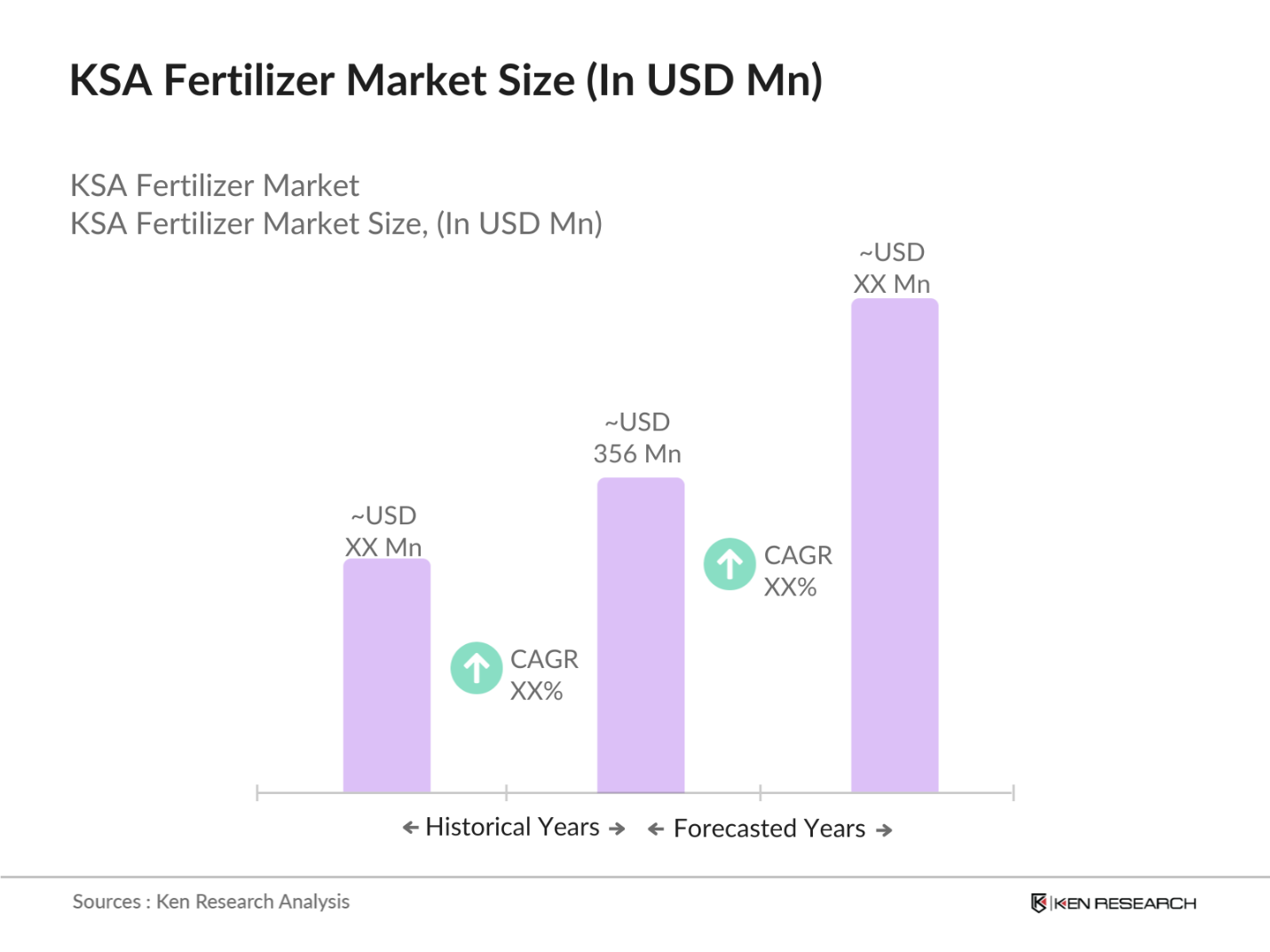
The KSA fertilizer market is valued at USD 356 million, driven by increasing government investments in sustainable agriculture and the rising need to boost crop yields in the arid environment of the country.
Challenges include water scarcity, high production costs for fertilizers, and environmental concerns surrounding the overuse of chemical fertilizers. Additionally, dependency on imported raw materials can affect cost stability.
Key players include Saudi Basic Industries Corporation (SABIC), Maaden Phosphate Company, Yara International, The Mosaic Company, and PhosAgro, all of which have strong market presence through production capacity and distribution networks.
The market is propelled by increased agricultural productivity goals, government subsidies for farming, and advancements in fertilizer technologies like slow-release and organic fertilizers, which are gaining traction due to their environmental benefits.
Nitrogen-based fertilizers dominate the market, particularly urea and ammonia, due to their essential role in improving crop yields in challenging soil conditions. Their wide availability and cost-effectiveness also contribute to their dominance.

What makes us stand out is that our consultants follows Robust, Refine and Result (RRR) methodology. i.e. Robust for clear definitions, approaches and sanity checking, Refine for differentiating respondents facts and opinions and Result for presenting data with story

We have set a benchmark in the industry by offering our clients with syndicated and customized market research reports featuring coverage of entire market as well as meticulous research and analyst insights.

While we don't replace traditional research, we flip the method upside down. Our dual approach of Top Bottom & Bottom Top ensures quality deliverable by not just verifying company fundamentals but also looking at the sector and macroeconomic factors.

With one step in the future, our research team constantly tries to show you the bigger picture. We help with some of the tough questions you may encounter along the way: How is the industry positioned? Best marketing channel? KPI's of competitors? By aligning every element, we help maximize success.

Our report gives you instant access to the answers and sources that other companies might choose to hide. We elaborate each steps of research methodology we have used and showcase you the sample size to earn your trust.

If you need any support, we are here! We pride ourselves on universe strength, data quality, and quick, friendly, and professional service.