
KSA Gas Sensors Market Outlook to 2030
Region:Saudi Arabia
Author(s):Abhinav
Product Code:KROD5786
Region:Saudi Arabia
Author(s):Abhinav
Product Code:KROD5786
November 2024
90
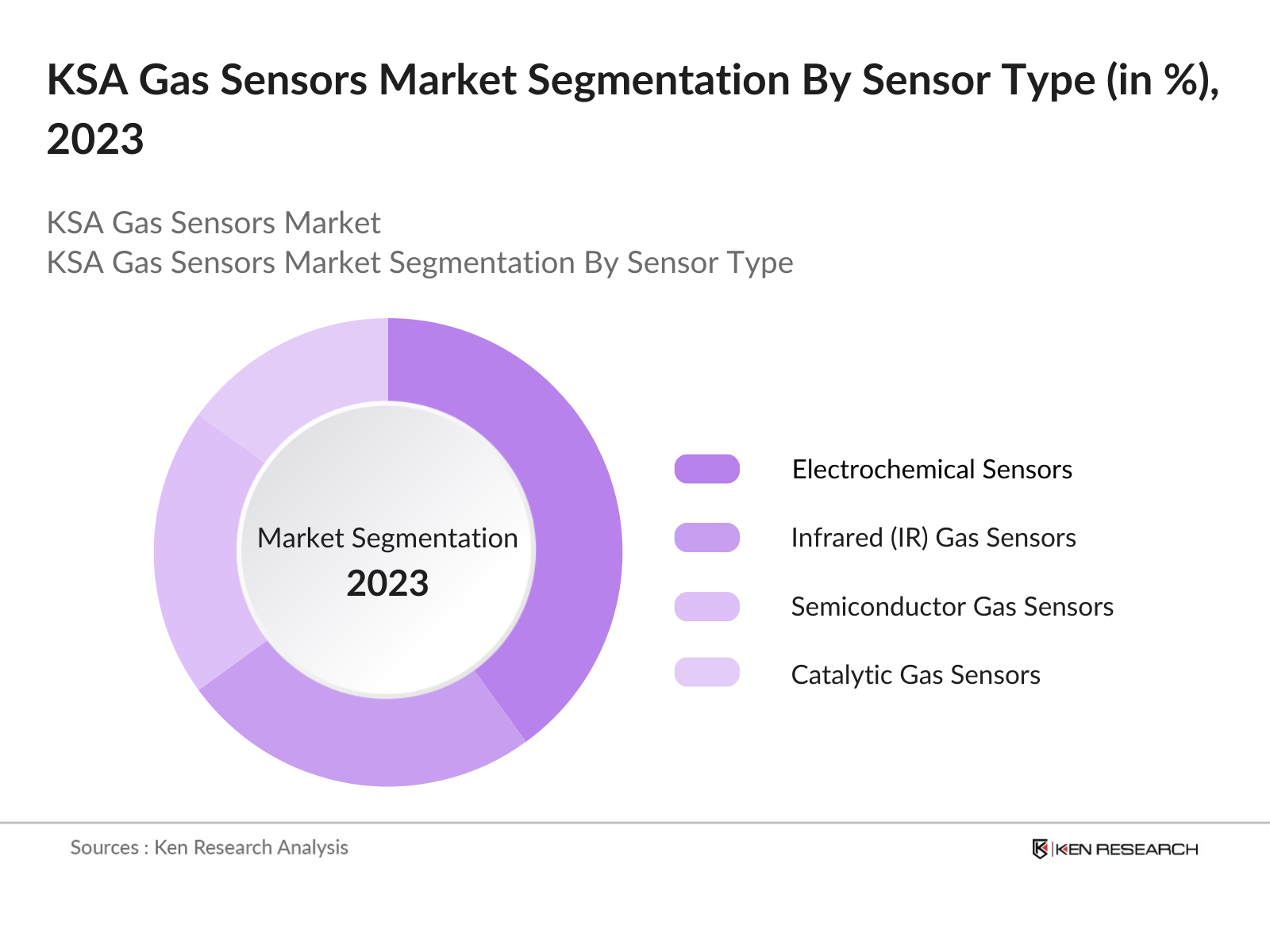
By Sensor Type: The KSA gas sensors market is segmented by sensor type into electrochemical sensors, infrared (IR) gas sensors, semiconductor gas sensors, catalytic gas sensors, and photoionization detectors (PID). Electrochemical sensors hold the dominant market share due to their widespread use in industrial safety and emission monitoring. These sensors are highly sensitive to gases such as carbon monoxide (CO) and nitrogen dioxide (NO), making them essential in oil refineries and petrochemical plants. Furthermore, their cost-effectiveness and reliability contribute to their strong position in the market.
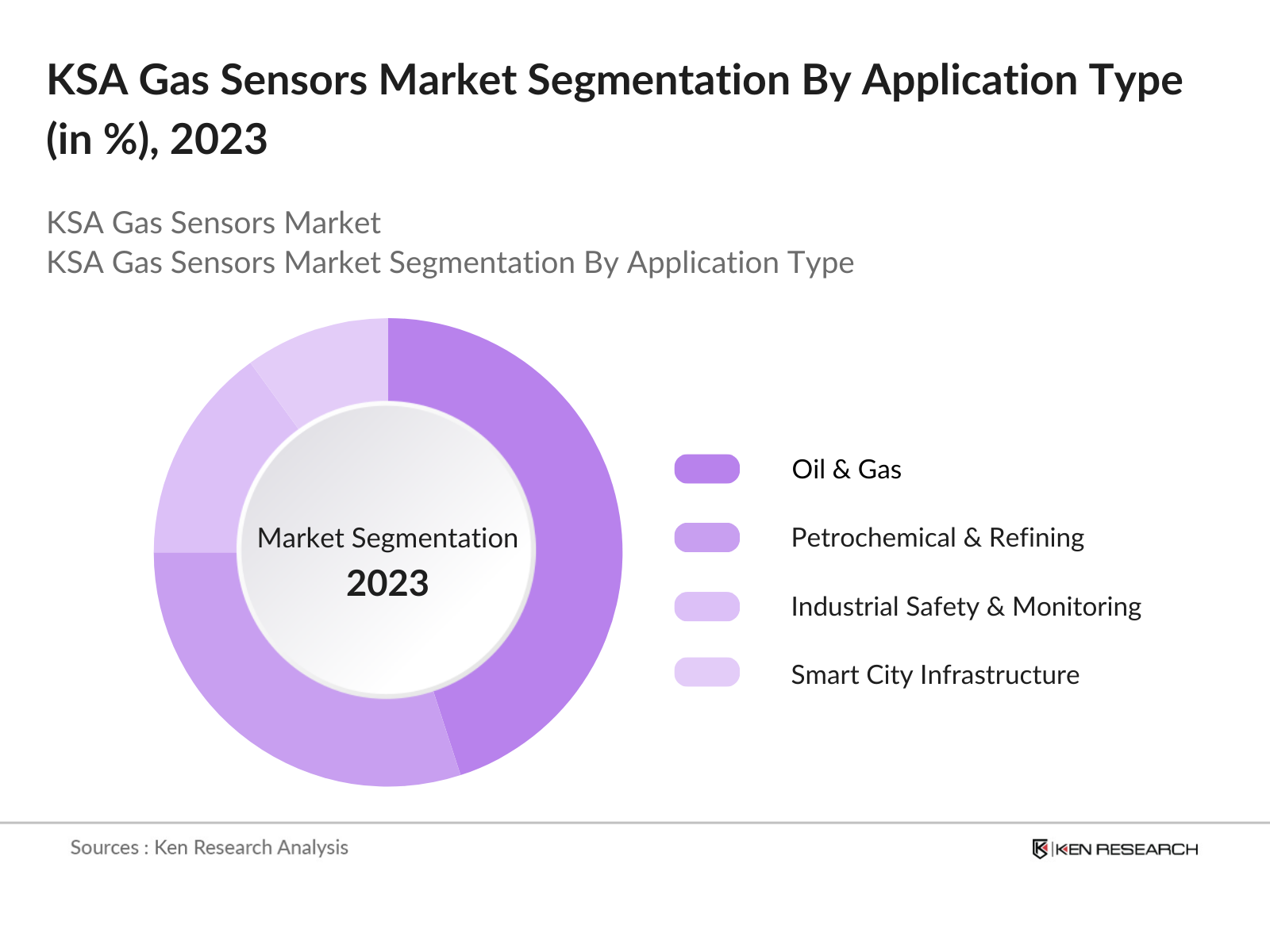
By Application: The market is segmented by application into oil & gas, petrochemical & refining, industrial safety & monitoring, smart city infrastructure, and automotive. The oil & gas segment dominates the market, driven by the high concentration of gas production and processing facilities in the region. Gas sensors are indispensable in detecting hazardous gases and ensuring compliance with stringent safety regulations in this sector. The demand for reliable and precise monitoring systems in the petrochemical industry also contributes to the segment's dominance.
The KSA gas sensors market is characterized by the presence of both global and regional players. Major international companies have established a strong foothold in the region due to their advanced technological offerings and comprehensive product portfolios. Local manufacturers, while fewer in number, are increasingly entering the market to cater to region-specific needs. The market is dominated by key players such as Honeywell International Inc. and Siemens AG, both of which have extensive experience in producing high-quality gas sensors for industrial applications. Their strong distribution networks and longstanding relationships with local industries contribute to their dominance. New entrants face significant challenges in competing with these established players, particularly in terms of technological expertise and brand recognition.
|
Company Name |
Establishment Year |
Headquarters |
No. of Employees |
Revenue (USD Mn) |
Product Portfolio |
Regional Presence |
R&D Investments |
Technology Focus |
|
Honeywell International Inc. |
1906 |
Charlotte, USA |
_ |
_ |
_ |
_ |
_ |
_ |
|
Siemens AG |
1847 |
Munich, Germany |
_ |
_ |
_ |
_ |
_ |
_ |
|
Amphenol Advanced Sensors |
1932 |
Wallingford, USA |
_ |
_ |
_ |
_ |
_ |
_ |
|
Figaro Engineering Inc. |
1968 |
Osaka, Japan |
_ |
_ |
_ |
_ |
_ |
_ |
|
AlphaSense Inc. |
1996 |
Essex, UK |
_ |
_ |
_ |
_ |
_ |
_ |
Over the next five years, the KSA gas sensors market is expected to experience steady growth driven by the continued development of the oil and gas sector, increased environmental regulation, and the expansion of smart city projects. The government's commitment to reducing emissions and improving industrial safety under its Vision 2030 initiative will create significant demand for advanced gas sensor technologies. Furthermore, advancements in wireless sensor technology and IoT integration are expected to improve the accuracy and efficiency of gas monitoring systems, thereby enhancing their adoption in various sectors. Technological advancements in the miniaturization of gas sensors, coupled with increased R&D investments by global players, will play a key role in shaping the market's future. Additionally, the adoption of gas sensors in the automotive and healthcare sectors presents new growth opportunities for market players.
|
Sensor Type |
Electrochemical Sensors Infrared (IR) Semiconductor Catalytic PID |
|
Technology |
Wired Sensors Wireless Sensors MEMS-based Optical |
|
Application |
Oil & Gas, Petrochemical Industrial Safety Smart Cities Automotive |
|
Gas Type |
Oxygen (O) Carbon Monoxide (CO) Nitrogen Dioxide (NO) Sulfur Dioxide (SO) VOCs |
|
Region |
Riyadh Jeddah Eastern Provinc Makkah Tabuk |
1.1. Definition and Scope
1.2. Market Taxonomy
1.3. Market Growth Rate
1.4. Market Segmentation Overview
2.1. Historical Market Size
2.2. Year-On-Year Growth Analysis
2.3. Key Market Developments and Milestones
3.1. Growth Drivers
3.1.1. Industrial Growth
3.1.2. Rising Air Quality Concerns
3.1.3. Government Regulations
3.1.4. Increased Adoption in Smart Cities
3.2. Market Challenges
3.2.1. Cost Sensitivity
3.2.2. Technological Limitations
3.2.3. Dependency on Imports
3.3. Opportunities
3.3.1. Technological Advancements
3.3.2. Expansion in New Sectors
3.3.3. Public-Private Partnerships
3.4. Trends
3.4.1. Integration with IoT
3.4.2. Miniaturization of Sensors
3.4.3. Advanced Analytics for Predictive Maintenance
3.5. Government Regulation
3.5.1. Environmental and Industrial Safety Standards
3.5.2. National Industrial Development Program (NIDP)
3.5.3. Public-Private Partnerships (PPP) Initiatives
3.5.4. Emission Reduction Targets under Vision 2030
3.6. SWOT Analysis
3.7. Stakeholder Ecosystem
3.8. Porters Five Forces Analysis
3.9. Competition Ecosystem
4.1. By Sensor Type (In Value %)
4.1.1. Electrochemical Sensors
4.1.2. Infrared (IR) Gas Sensors
4.1.3. Semiconductor Gas Sensors
4.1.4. Catalytic Gas Sensors
4.1.5. Photoionization Detectors (PID)
4.2. By Technology (In Value %)
4.2.1. Wired Sensors
4.2.2. Wireless Sensors
4.2.3. MEMS-based Sensors
4.2.4. Optical Sensors
4.3. By Application (In Value %)
4.3.1. Oil & Gas
4.3.2. Petrochemical & Refining
4.3.3. Industrial Safety & Monitoring
4.3.4. Smart City Infrastructure
4.3.5. Automotive
4.4. By Gas Type (In Value %)
4.4.1. Oxygen (O) Sensors
4.4.2. Carbon Monoxide (CO) Sensors
4.4.3. Nitrogen Dioxide (NO) Sensors
4.4.4. Sulfur Dioxide (SO) Sensors
4.4.5. Volatile Organic Compounds (VOC)
4.5. By Region (In Value %)
4.5.1. Riyadh
4.5.2. Jeddah
4.5.3. Eastern Province (Dammam, Jubail)
4.5.4. Makkah
4.5.5. Tabuk
5.1 Detailed Profiles of Major Companies
5.1.1. Honeywell International Inc.
5.1.2. Siemens AG
5.1.3. Amphenol Advanced Sensors
5.1.4. Figaro Engineering Inc.
5.1.5. SGX Sensortech Ltd.
5.1.6. Ametek Inc.
5.1.7. AlphaSense Inc.
5.1.8. Membrapor AG
5.1.9. SenseAir AB
5.1.10. Dynament Ltd.
5.2 Cross Comparison Parameters
5.2.1. Number of Employees
5.2.2 Headquarters
5.2.3 Revenue (In USD)
5.2.4 Market Share (In %)
5.2.5 R&D Investments (In % of Revenue)
5.2.6 Product Portfolio Breadth
5.2.7 Regional Presence
5.2.8 Technological Capabilities
5.3 Market Share Analysis
5.4 Strategic Initiatives
5.5 Mergers and Acquisitions
5.6 Investment Analysis
5.7 Venture Capital Funding
5.8 Government Grants
5.9 Private Equity Investments
6.1 Industry Standards Compliance
6.2 Certification Requirements (ISO, ATEX, etc.)
6.3 Environmental Regulations
6.4 Health & Safety Regulations
7.1 Future Market Size Projections
7.2 Key Factors Driving Future Market Growth
8.1 By Sensor Type (In Value %)
8.2 By Technology (In Value %)
8.3 By Application (In Value %)
8.4 By Gas Type (In Value %)
8.5 By Region (In Value %)
9.1 TAM/SAM/SOM Analysis
9.2 Customer Cohort Analysis
9.3 Marketing Initiatives
9.4 White Space Opportunity Analysis
The initial step in our research process involved mapping the entire KSA gas sensors ecosystem, identifying key market players and stakeholders. Extensive desk research was carried out using proprietary databases to define the critical variables that influence market growth.
Historical data on the KSA gas sensors market was compiled to analyze market trends, sensor penetration across different industries, and their respective revenue contributions. We also examined key industry developments to ensure a robust market forecast.
We validated our market hypotheses through detailed consultations with industry experts, including manufacturers, distributors, and government representatives. These consultations provided us with essential insights into market dynamics and operational challenges.
The final phase involved synthesizing the collected data and expert insights into a comprehensive report, ensuring accuracy and validation through cross-verification with industry standards. The report presents a well-rounded analysis of the KSA gas sensors market.
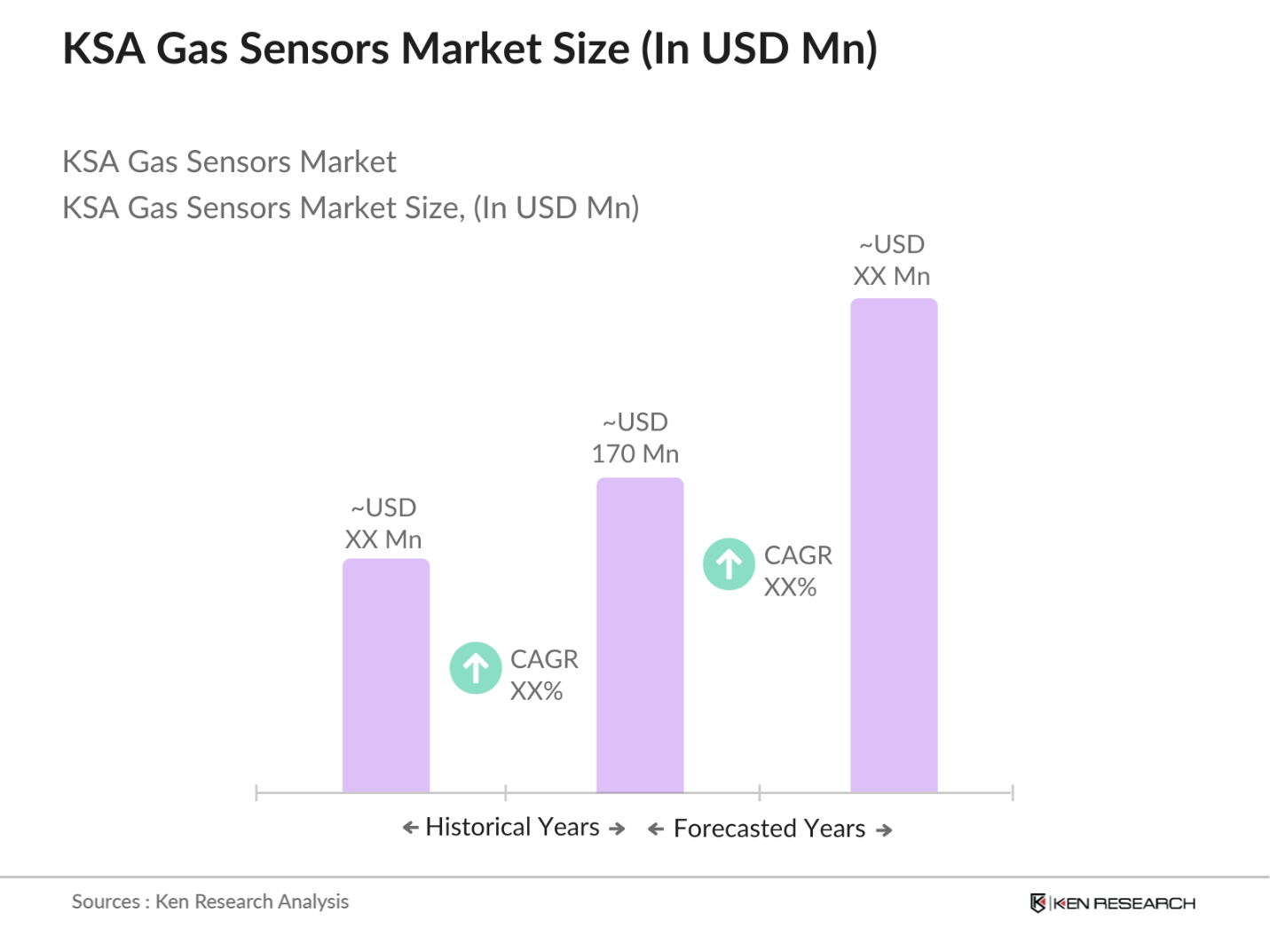
The KSA gas sensors market is valued at approximately USD 170 million, driven by the oil and gas industry's significant demand for advanced gas monitoring systems and stringent environmental regulations.
Challenges include high initial costs for sensor installations, maintenance issues due to harsh environmental conditions, and a dependency on imported technology, which affects the cost-efficiency of local industries.
Key players include Honeywell International Inc., Siemens AG, Amphenol Advanced Sensors, Figaro Engineering Inc., and AlphaSense Inc., who lead the market due to their technological expertise and extensive distribution networks.
Growth drivers include increasing demand from the oil & gas and petrochemical sectors, stricter environmental regulations under Vision 2030, and the adoption of gas sensors in smart city initiatives for enhanced air quality monitoring.

What makes us stand out is that our consultants follows Robust, Refine and Result (RRR) methodology. i.e. Robust for clear definitions, approaches and sanity checking, Refine for differentiating respondents facts and opinions and Result for presenting data with story

We have set a benchmark in the industry by offering our clients with syndicated and customized market research reports featuring coverage of entire market as well as meticulous research and analyst insights.

While we don't replace traditional research, we flip the method upside down. Our dual approach of Top Bottom & Bottom Top ensures quality deliverable by not just verifying company fundamentals but also looking at the sector and macroeconomic factors.

With one step in the future, our research team constantly tries to show you the bigger picture. We help with some of the tough questions you may encounter along the way: How is the industry positioned? Best marketing channel? KPI's of competitors? By aligning every element, we help maximize success.

Our report gives you instant access to the answers and sources that other companies might choose to hide. We elaborate each steps of research methodology we have used and showcase you the sample size to earn your trust.

If you need any support, we are here! We pride ourselves on universe strength, data quality, and quick, friendly, and professional service.