
KSA Home Automation Market Outlook to 2030
Region:Middle East
Author(s):Vijay Kumar
Product Code:KROD354
July 2024
85
About the Report
KSA Home Automation Market Overview
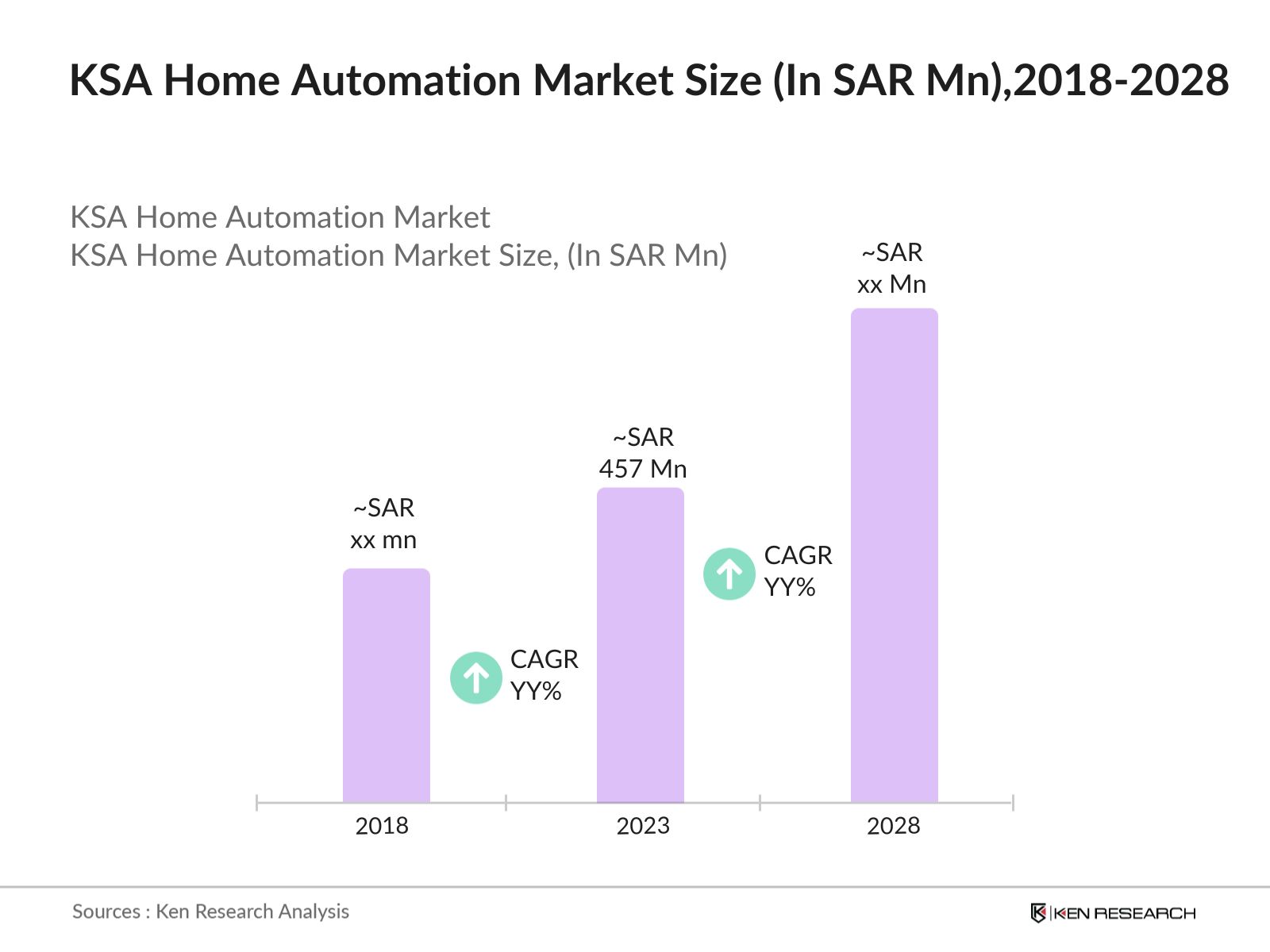
- The KSA home automation market reached a valuation of SAR 457 Mn in 2023, driven by increasing demand for smart home solutions and advanced technologies in residential buildings.
- Key players in the market include Siemens, Schneider Electric, Honeywell, ABB, and Control4. These companies are noted for their innovative products, comprehensive service offerings, and extensive distribution networks.
- In 2023, Siemens introduced a new range of smart home devices tailored for the KSA market, aiming to enhance energy efficiency and user convenience. This move is part of Siemens' strategy to strengthen its presence in the Middle East.
KSA Home Automation Current Market Analysis
- Rising disposable income among Saudi consumers has led to higher spending on smart home technologies. Saudi Arabia's GDP per capita increased from SAR 89,000 in 2018 to SAR 95,000 in 2023, indicating enhanced purchasing power and demand for sophisticated home automation devices.
- Rapid urbanization and the development of smart cities are key drivers for the home automation market. Saudi Arabia’s Vision 2030 initiative has remarkably boosted investments in smart infrastructure, with the construction of smart cities like NEOM and The Red Sea Project.
- The central region, particularly Riyadh, dominates the home automation market due to higher urbanization rates, a growing expatriate population, and important investments in residential projects.
KSA Home Automation Market Segmentation
The KSA home automation market can be segmented by various factors like product type, technology, and end-user.
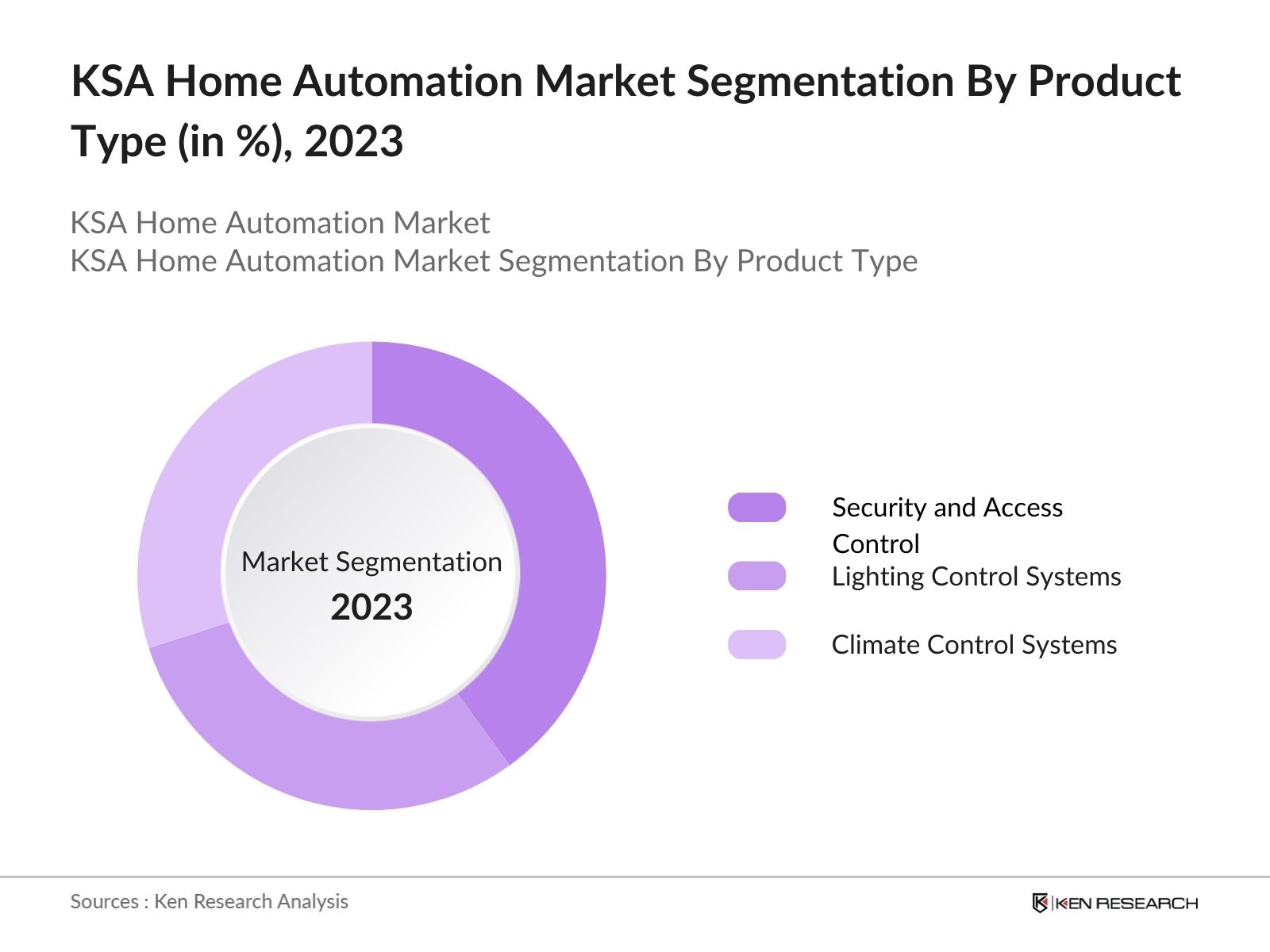
By Product Type: The market is segmented into security and access control, HVAC control, lighting control, and entertainment control. In 2023, security and access control systems dominated the market, driven by increasing concerns over safety and security in residential areas.
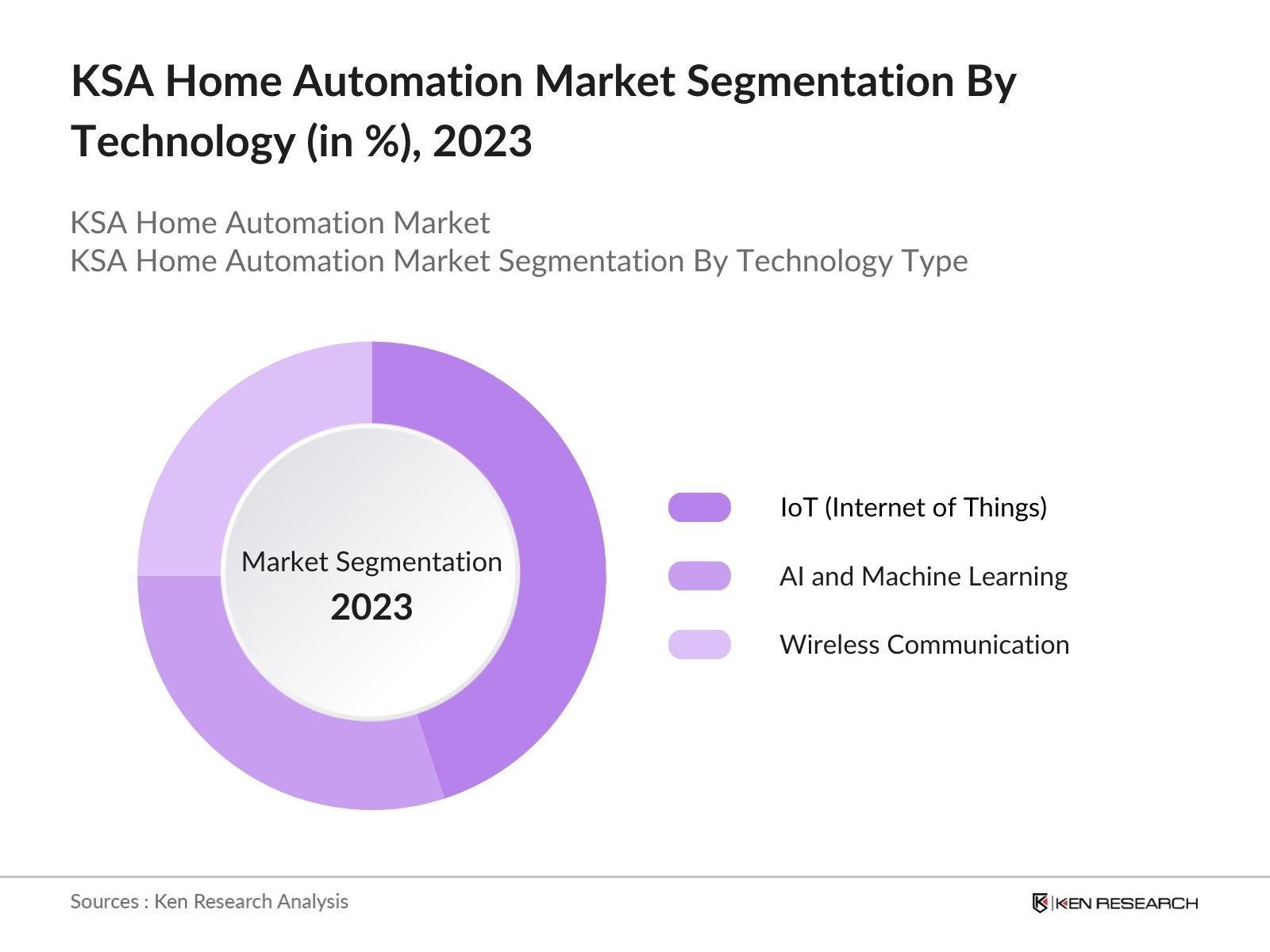
By Technology: The market is segmented into wired and wireless systems. In 2023, wireless systems dominate the market due to their ease of installation, flexibility, and compatibility with various smart devices.
By Region: The KSA home automation market is segmented by region into North, South, East, and West. In 2023, the Western region dominated the market. The Western region's dominance is due to its high population density, affluent residents, and numerous luxury housing projects.
Competitive Landscape Overview
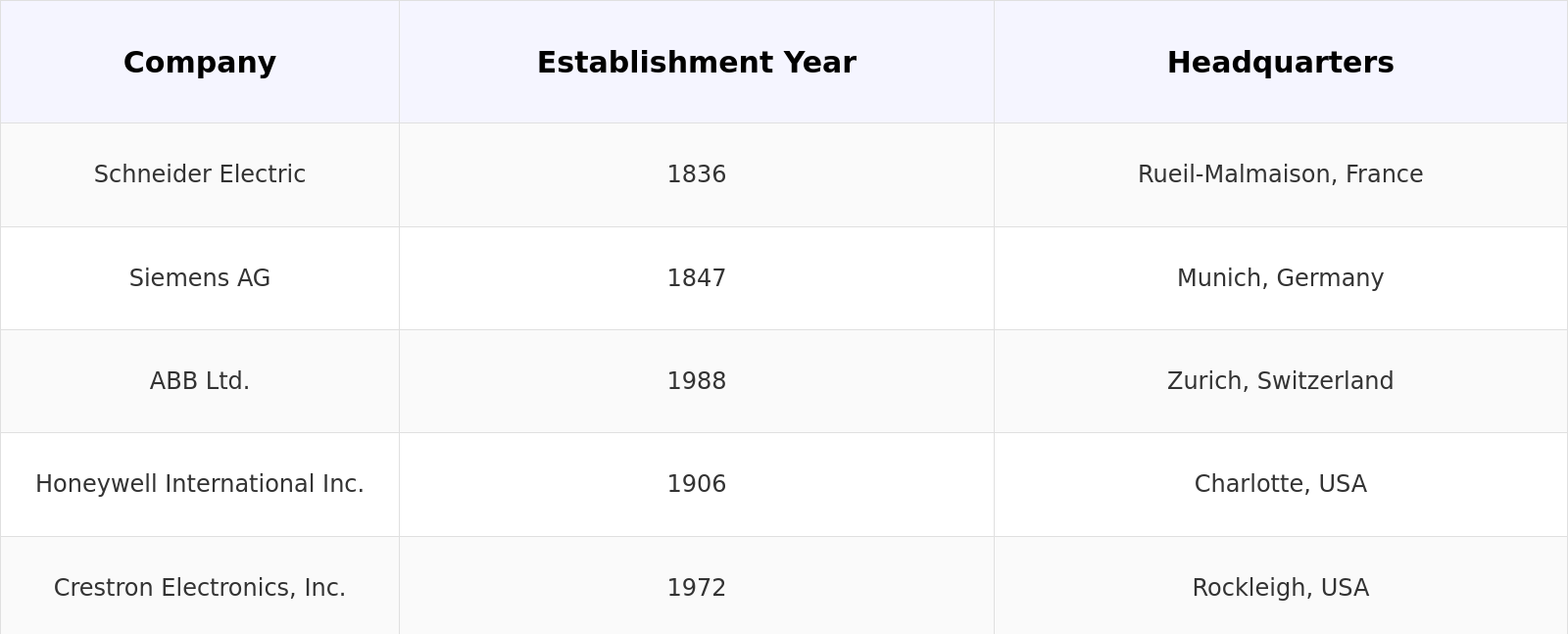
Schneider: In 2023, Schneider Electric launched its Wiser Home automation system in Saudi Arabia. This system integrates lighting, climate control, and energy management into a single platform. According to the company,
Honeywell and STC Partnership: In 2023, Honeywell International Inc. partnered with Saudi Telecom Company (STC) to provide advanced home automation solutions. This collaboration aims to enhance the smart home experience for STC's customers by integrating Honeywell's technologies with STC's telecommunications infrastructure, accelerating the adoption of smart home technologies.
Siemens' AI-Powered Smart Thermostats: In 2024, Siemens AG introduced a new range of AI-powered smart thermostats tailored for the Middle Eastern market. These thermostats feature advanced algorithms that learn users' preferences and adjust temperature settings accordingly, enhancing comfort and energy efficiency.
KSA Home Automation Industry Analysis
KSA Home Automation Market Growth Drivers
- Growing Awareness of Energy Efficiency: In 2023, over 600,000 households in KSA adopted smart thermostats and automated lighting systems to optimize energy consumption and reduce utility bills. This trend is supported by awareness campaigns and incentives, making energy-efficient solutions more accessible and contributing to the kingdom's sustainability goals.
- Increased Investment in Smart City Projects: Several major smart city initiatives are currently underway, including the $500 billion NEOM project, the $500 million Al Nama Smart City, and the $500 million Qiddya Entertainment City. This substantial investment is driving the integration of home automation systems into new residential developments, significantly boosting the market. The smart city projects are designed to incorporate advanced technologies, including IoT devices, which facilitate the adoption of home automation solutions.
- Rising Adoption of Smart Security Systems: The demand for advanced security systems has surged in KSA, with approximately 1.2 million smart security devices installed in residential properties in 2022. These include smart locks, surveillance cameras, and motion detectors, which are becoming essential components of modern homes. The rising concerns over safety and the need for real-time monitoring are driving the growth of the home automation market.
KSA Home Automation Market Challenges
- High Installation Costs: The high cost of installing advanced home automation systems is a significant barrier to market growth. In 2024, the average cost of a comprehensive home automation setup in KSA was SAR 18,000. Many consumers are hesitant to invest in these technologies due to the initial financial outlay required.
- Technical Complexity: Compatibility issues with existing home infrastructure present another challenge. In 2024, homes in KSA faced difficulties integrating new smart devices due to outdated electrical systems and insufficient wiring. These technical challenges require additional investments in home upgrades, which can be prohibitive for many consumers. The complexity of integrating various smart devices and systems can be a challenge for users, requiring professional installation and maintenance services.
- Limited Technical Expertise Among Users: One of the notable challenges in the KSA home automation market is the limited technical expertise among users. Many consumers find it challenging to install, operate, and maintain advanced home automation systems due to their complexity. This lack of expertise can lead to underutilization of the systems' capabilities and potential dissatisfaction with the technology.
KSA Home Automation Market Government Initiatives
- Smart City Projects: The Saudi government’s investment in smart city projects like NEOM and The Red Sea Project has remarkably boosted the demand for home automation technologies. In 2023, the government allocated SAR 150 billion towards these projects.
- Energy Efficiency Programs: The Saudi government's energy efficiency programs are actively encouraging the adoption of smart home technologies as a means to significantly reduce energy consumption and lower the carbon footprint of residential areas. By integrating smart thermostats, automated lighting systems, and energy management solutions, these programs aim to optimize energy use, providing households with advanced tools to monitor and control their energy consumption more effectively.
- Energy Efficiency Subsidy Program: In 2024, the government introduced an energy efficiency subsidy program worth SAR 500 million. This program provides financial incentives to households adopting energy-efficient home automation solutions, such as smart thermostats and automated lighting systems.
KSA Home Automation Future Market Outlook
The KSA home automation market is expected to continue its growth in the coming years. The market is anticipated to see increased adoption in various sectors, driven by technological advancements and rising demand for high-performance home automation solutions.
Future Market Trends
-
- Growing Demand for Energy-Efficient Systems: The demand for energy-efficient home automation systems is expected to rise significantly as consumers become more environmentally conscious. By 2028, manufacturers will likely focus on developing systems with lower power consumption and longer lifespans.
- Integration of AI and Machine Learning: The integration of artificial intelligence (AI) and machine learning (ML) in home automation systems is anticipated to become increasingly prevalent. These technologies will enhance the capabilities of smart home systems, enabling more accurate and automated control and monitoring.
Scope of the Report
|
By Product Type |
Security and Access Control HVAC Control Lighting Control Entertainment Control |
|
By Technology |
Wired Systems Wireless Systems |
|
By Region |
North South East West |
Products
Key Target Audience – Organizations and Entities Who Can Benefit by Subscribing This Report:
Home Automation System Manufacturers
Smart Device Manufacturers
Residential Property Developers
Commercial Building Developers
Industrial Equipment Manufacturers
Government and Regulatory Bodies
Banks and Financial Institutions
Time Period Captured in the Report
Historical Period: 2018-2023
Base Year: 2023
Forecast Period: 2023-2028
Companies
Players Mentioned in the Report
ABB Group
Honeywell International Inc.
Siemens AG
Schneider Electric SE
Legrand SA
Crestron Electronics, Inc.
Johnson Controls International plc
Control4 Corporation
Savant Systems, LLC
Lutron Electronics Co., Inc.
Belkin International, Inc.
Google LLC (Nest)
Amazon.com, Inc. (Amazon Alexa)
Samsung Electronics Co., Ltd.
SmartThings, Inc.
Table of Contents
1. KSA Home Automation Market Overview
1.1 KSA Home Automation Market Taxonomy
2. KSA Home Automation Market Size (in SAR Bn), 2018-2023
3. KSA Home Automation Market Analysis
3.1 KSA Home Automation Market Growth Drivers
3.2 KSA Home Automation Market Challenges and Issues
3.3 KSA Home Automation Market Trends and Development
3.4 KSA Home Automation Market Government Regulation
3.5 KSA Home Automation Market SWOT Analysis
3.6 KSA Home Automation Market Stake Ecosystem
3.7 KSA Home Automation Market Competition Ecosystem
4. KSA Home Automation Market Segmentation, 2023
4.1 KSA Home Automation Market Segmentation by Product Type (in %), 2023
4.2 KSA Home Automation Market Segmentation by Technology (in %), 2023
4.3 KSA Home Automation Market Segmentation by Region (in %), 2023
5. KSA Home Automation Market Competition Benchmarking
5.1 KSA Home Automation Market Cross-Comparison (no. of employees, company overview,Â
business strategy, USP, recent development, operational parameters, financialÂ
parameters, and advanced analytics)
6. KSA Home Automation Future Market Size (in SAR Bn), 2023-2028
7. KSA Home Automation Future Market Segmentation, 2028
7.1 KSA Home Automation Market Segmentation by Product Type (in %), 2028
7.2 KSA Home Automation Market Segmentation by Technology (in %), 2028
7.3 KSA Home Automation Market Segmentation by Region (in %), 2028
8. KSA Home Automation Market Analysts’ Recommendations
8.1 KSA Home Automation Market TAM/SAM/SOM Analysis
8.2 KSA Home Automation Market Customer Cohort Analysis
8.3 KSA Home Automation Market Marketing Initiatives
8.4 KSA Home Automation Market White Space Opportunity Analysis
Disclaimer Contact UsResearch Methodology
Step 1: Identifying Key Variables:
Ecosystem creation for all major entities and referring to multiple secondary and proprietary databases to perform desk research around the market to collate industry-level information.
Step 2: Market Building:
Collating statistics on the KSA Home Automation Market over the years, penetration of marketplaces, and service providers ratio to compute revenue generated for the KSA Home Automation Industry. Service quality statistics are reviewed to ensure accuracy behind the data points shared.
Step 3: Validating and Finalizing:
Building market hypotheses and conducting CATIs with industry experts from different companies to validate statistics and seek operational and financial information from company representatives.
Step 4: Research Output:
Approaching multiple home automation companies to understand product segments, sales, consumer preferences, and other parameters to validate statistics derived through the bottom-up approach from home automation companies.
Frequently Asked Questions
01 How big is the KSA Home Automation Market?
The KSA Home Automation Market was valued at SAR 457 billion in 2023, demonstrating significant growth driven by rising urbanization, increased income levels, and growing interest in smart home technologies.
02 Who are the major players in the KSA Home Automation Market?
Some of the major players in the market include Honeywell International, Schneider Electric, Siemens AG, Johnson Controls, ABB Ltd., which dominate the market owing to their extensive distribution networks, strong brand presence, and diverse product portfolios.
03 What are the growth drivers for the KSA Home Automation Market?
The market is propelled by increased investment in smart city projects, rising adoption of smart security systems, government subsidies for energy-efficient solutions, and increasing consumer awareness and education programs.
04 What are the challenges in the KSA Home Automation Market?
The home automation market in KSA has been significantly impacted by fluctuations in the prices of raw materials, such as semiconductors and sensors. This environment calls for strategic adjustments by organized players to navigate these challenges effectively.
Why Buy From Us?

What makes us stand out is that our consultants follows Robust, Refine and Result (RRR) methodology. i.e. Robust for clear definitions, approaches and sanity checking, Refine for differentiating respondents facts and opinions and Result for presenting data with story

We have set a benchmark in the industry by offering our clients with syndicated and customized market research reports featuring coverage of entire market as well as meticulous research and analyst insights.

While we don't replace traditional research, we flip the method upside down. Our dual approach of Top Bottom & Bottom Top ensures quality deliverable by not just verifying company fundamentals but also looking at the sector and macroeconomic factors.

With one step in the future, our research team constantly tries to show you the bigger picture. We help with some of the tough questions you may encounter along the way: How is the industry positioned? Best marketing channel? KPI's of competitors? By aligning every element, we help maximize success.

Our report gives you instant access to the answers and sources that other companies might choose to hide. We elaborate each steps of research methodology we have used and showcase you the sample size to earn your trust.

If you need any support, we are here! We pride ourselves on universe strength, data quality, and quick, friendly, and professional service.